Immigration Medical Exam in Florida: What You Need to Know
Facing the immigration medical exam in Orlando, Florida? Learn about the requirements, how to find a USCIS-certified civil surgeon, and what to expect. This guide covers everything you need to know to prepare for this essential step in your immigration journey.
The immigration medical exam is a crucial step in the U.S. immigration process, conducted by a designated civil surgeon. In Florida, particularly Orlando, finding the right doctor is key. The examination includes a physical assessment, vaccinations, and completion of Form I-693, crucial for your green card application.
- Conducted by a USCIS-designated civil surgeon
- Includes physical exam and vaccinations
- Form I-693 completion is mandatory
- Vital for green card application
Introduction
Facing the immigration medical exam can be daunting. If you're in Orlando, Florida, and preparing for this step, it's essential to understand what it involves and how to choose the right doctor. This article provides a comprehensive guide on the immigration medical exam, including details on requirements, timelines, and common pitfalls. Call Florida Immigration Lawyers at 1-844-YO-PELEO for a free case review.
The immigration medical exam is a critical juncture for many aspiring immigrants, serving as a gateway to permanent residency in the United States. While it might seem like just another hurdle, a thorough understanding and meticulous preparation can significantly streamline the process. This examination is not merely a routine check-up; it's a specific assessment designed to meet U.S. public health and immigration standards, ensuring the safety and well-being of the wider community.
For individuals navigating the complex immigration landscape in Florida, particularly in vibrant cities like Orlando, knowing the specifics of this exam is paramount. From identifying a qualified civil surgeon to understanding the documentation required and anticipating potential challenges, every detail matters. This guide aims to demystify the process, offering practical advice and expert insights to help you approach your medical exam with confidence and clarity.
Successfully completing the immigration medical exam is a non-negotiable step for your green card application. Any misstep, whether it's choosing an uncertified doctor, failing to provide complete vaccination records, or submitting an incorrectly filled form, can lead to significant delays or even denial of your application. Therefore, arming yourself with accurate information and considering professional legal guidance from experts like Florida Immigration Lawyers at 1-844-YO-PELEO can make all the difference.
What is the Immigration Medical Exam?
The immigration medical exam is a health check required by U.S. Citizenship and Immigration Services (USCIS) to ensure applicants do not pose a public health risk. Conducted by a USCIS-designated civil surgeon, this exam includes a physical examination, medical history review, and necessary vaccinations.
The primary purpose is to identify any medical conditions that may make an applicant inadmissible under immigration law (8 U.S.C. §1182). Specifically, USCIS is concerned with communicable diseases of public health significance (such as active tuberculosis, syphilis, gonorrhea, and Hansen's disease), certain physical or mental disorders with associated harmful behavior, and drug abuse or addiction. The civil surgeon's role is to meticulously screen for these conditions, ensuring that all findings are accurately documented and reported to USCIS.
The civil surgeon is a medical doctor who has been specifically authorized by USCIS to perform these examinations. They undergo a rigorous application and training process to ensure they are familiar with the specific requirements and protocols set forth by the U.S. Department of Health and Human Services (HHS) and the Centers for Disease Control and Prevention (CDC). Their designation means they are equipped to conduct the exam according to federal guidelines, which differ significantly from a standard annual physical. Choosing a doctor who is not USCIS-designated will invalidate your exam results, leading to costly and time-consuming re-examinations.
Applicants must provide a completed Form I-693, Report of Medical Examination and Vaccination Record. This form is a critical component for those seeking adjustment of status to lawful permanent resident. The civil surgeon will complete this form based on their findings, including the results of any required tests and confirmation of vaccination status. Once completed, the form is sealed in an envelope by the civil surgeon and must remain sealed until submitted to USCIS. Breaking this seal will render the form invalid, underscoring the importance of handling it with care. This meticulous process ensures the integrity and confidentiality of your medical information while fulfilling a vital legal requirement for your immigration journey.
How to Find a USCIS-Certified Civil Surgeon in Florida?
To find a certified civil surgeon in Florida, particularly in Orlando, you can use the USCIS Find a Doctor tool on their official website. This tool helps locate authorized professionals based on your zip code. Ensure the doctor is USCIS-approved to avoid delays in your immigration process.
When selecting a civil surgeon, consider their experience with immigration exams and reviews from previous patients. It's also advisable to ask about the costs upfront, as fees can vary among practitioners. While insurance might cover some vaccinations, check with your provider in advance.
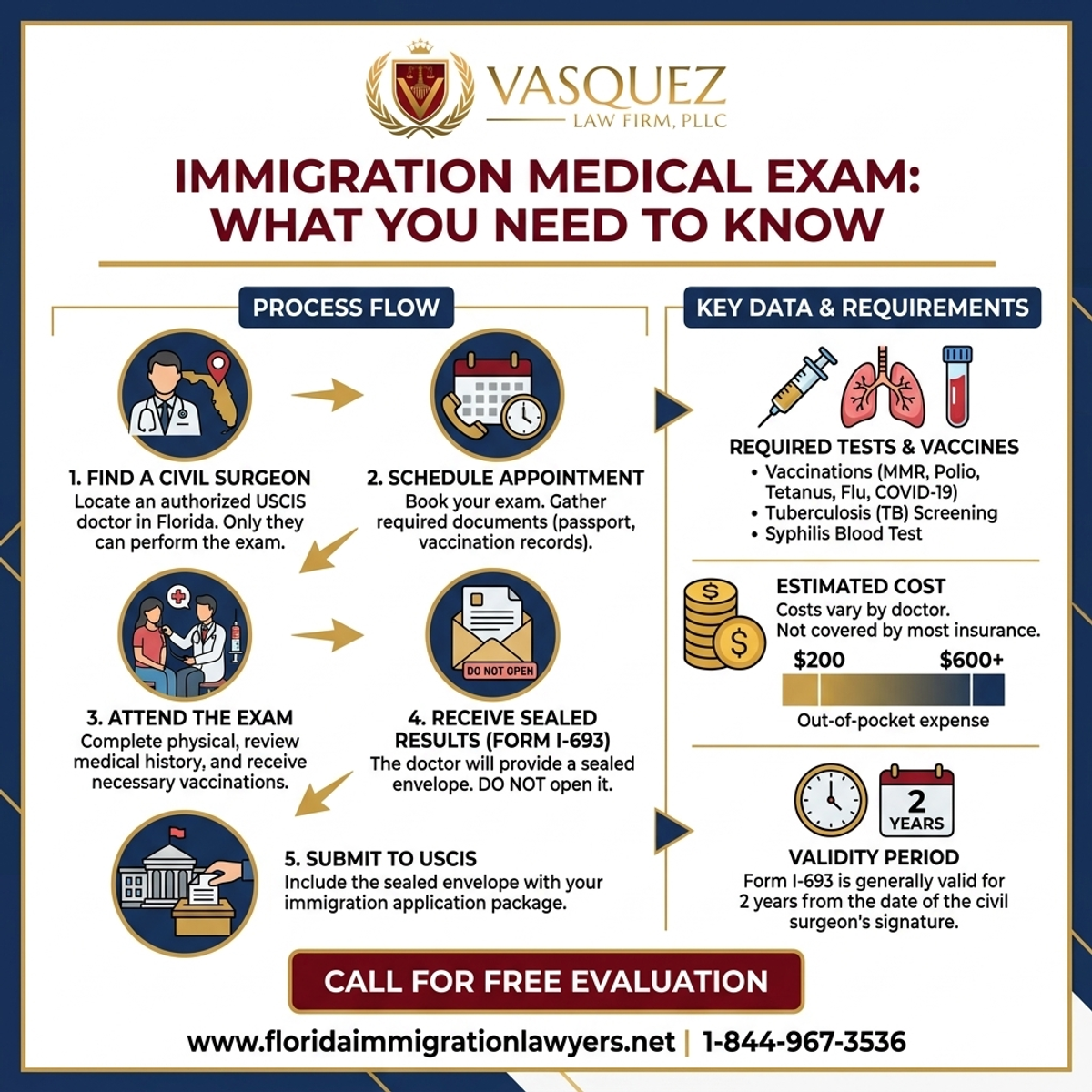
Step-by-Step Process — Immigration Medical Exam in Florida: What You Need to Know
To find a certified civil surgeon in Florida, particularly in Orlando, you can use the USCIS Find a Doctor tool on their official website. This user-friendly tool allows you to search by zip code or city, providing a list of designated doctors in your area. It's crucial to use this official resource to ensure the doctor you choose is genuinely USCIS-approved, as using an uncertified physician will lead to the rejection of your Form I-693 and necessitate a complete re-examination. This simple step can save you significant time, money, and stress in the long run.
When selecting a civil surgeon, consider their experience with immigration exams and reviews from previous patients. Look for doctors who specialize in immigration medicals, as they will be more familiar with the specific requirements, documentation, and reporting protocols. Online reviews can offer valuable insights into a clinic's efficiency, staff helpfulness, and the doctor's bedside manner. For example, a civil surgeon with a high volume of immigration cases is likely more adept at navigating complex medical histories or advising on vaccination schedules required by USCIS, potentially preventing unnecessary follow-up appointments.
Beyond cost and experience, consider practical factors such as the clinic's location, availability of appointments, and language services. If English is not your first language, finding a civil surgeon or clinic staff who speak your native language can significantly ease communication and reduce misunderstandings during the exam. Confirming the clinic's turnaround time for completing and sealing Form I-693 is also important, especially if you have an upcoming interview or a tight submission deadline. A well-chosen civil surgeon can make this mandatory step a smooth and efficient part of your journey to permanent residency. Remember, a comprehensive consultation with Florida Immigration Lawyers at 1-844-YO-PELEO can also provide clarity on the entire immigration process, including this crucial medical step.
What Documents Do You Need for the Immigration Medical Exam?
- Government-issued photo ID (passport or driver's license)
- Vaccination records
- Medical history, including past surgeries or treatments
- Form I-693, available on the USCIS website
Having these documents ready will ensure a smoother examination process. Incomplete documentation can lead to delays or additional appointments.
- Government-issued photo ID (passport or driver's license): This is essential for identity verification. Ensure your ID is valid and the name on it matches your immigration application exactly. If your name has changed or there are discrepancies, bring supporting legal documents (e.g., marriage certificate, court order) to avoid confusion. For applicants without a passport, a national identity card or driver's license is usually acceptable, but always confirm with the civil surgeon's office beforehand.
- Vaccination records: Bring all available immunization records, especially for measles, mumps, rubella (MMR), polio, tetanus and diphtheria toxoids (Td or Tdap), pertussis, Haemophilus influenzae type b (Hib), hepatitis A, hepatitis B, rotavirus, meningococcal disease, varicella (chickenpox), pneumococcal disease, and influenza. If you lack records, the civil surgeon can perform blood tests to check for immunity or administer necessary vaccines during your visit. This is a common situation, so don't worry if your records are incomplete; the important thing is to be prepared to address any vaccination gaps.
- Medical history, including past surgeries or treatments: Be prepared to discuss your complete medical history, including any chronic conditions (e.g., diabetes, hypertension), past hospitalizations, major surgeries, mental health diagnoses, and any history of substance abuse. Honesty and thoroughness are crucial here. If you have medical records (e.g., doctor's notes, lab results, X-rays) pertaining to serious conditions, bring them along. This information helps the civil surgeon assess your overall health and determine if any conditions require further evaluation or a waiver.
- Form I-693, available on the USCIS website: While the civil surgeon will complete this form, you should download and print it to review its contents beforehand. Do not fill it out yourself. The form must be completed and signed by the civil surgeon, then sealed in an envelope. It's advisable to bring two passport-style photos with you, as some civil surgeons may require them to be attached to the form. Double-check with your chosen clinic regarding their specific photo requirements.
Timeline and Processing Expectations
| Stage | Typical Timeframe | Notes |
|---|---|---|
| Finding a Civil Surgeon | 1-2 weeks | Depends on availability |
| Scheduling the Exam | 1-3 weeks | Varies by clinic |
| Conducting the Exam | 1 day | Expect 1-2 hours |
| Receiving I-693 | 1-2 weeks | Ensure no errors |
| Submitting I-693 | Concurrently with application | Include with green card application |
As of 2026, be aware of potential backlogs in appointment availability. Early scheduling is recommended.
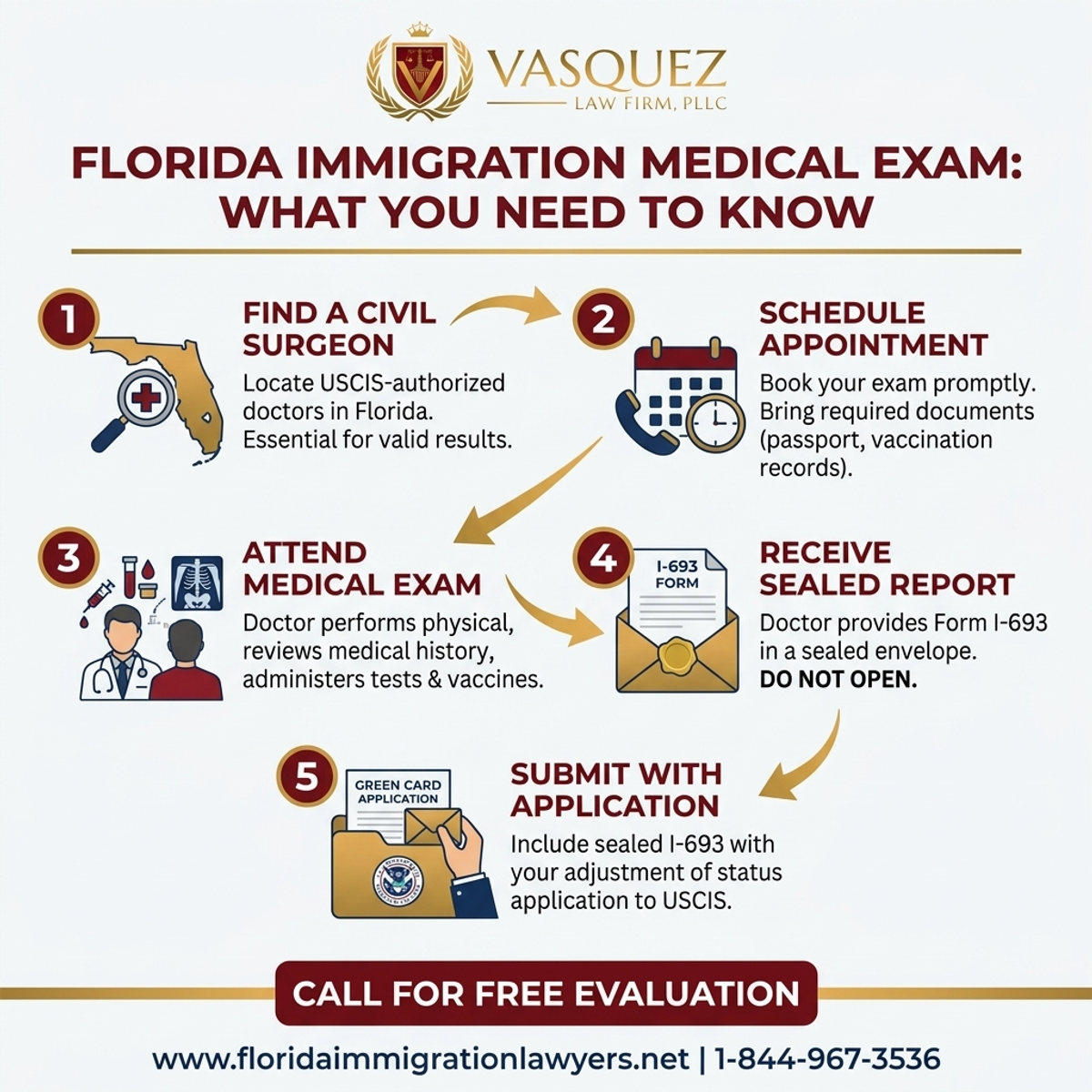
Key Statistics — Immigration Medical Exam in Florida: What You Need to Know
| Stage | Typical Timeframe | Notes |
|---|---|---|
| Finding a Civil Surgeon | 1-2 weeks | Depends on availability and research effort |
| Scheduling the Exam | 1-3 weeks | Varies by clinic and time of year |
| Conducting the Exam | 1 day | Expect 1-2 hours for the physical exam, more if labs/vaccinations are done on-site |
| Receiving I-693 | 1-2 weeks | After all lab results are back; ensure no errors before sealing |
| Submitting I-693 | Concurrently with application or upon RFE | Adhere to validity period; include with green card application |
As of 2026, be aware of potential backlogs in appointment availability, especially in densely populated areas like Orlando. Early scheduling is highly recommended to avoid unnecessary delays in your immigration process. For instance, if your green card interview is approaching, you'll want to have your sealed I-693 form ready well in advance.
Sources and References
- U.S. Citizenship and Immigration Services (USCIS)
- Executive Office for Immigration Review (EOIR)
- U.S. Department of State
- Immigration and Nationality Act (INA), 8 U.S.C. Chapter 12
Do Not Navigate This Process Alone
Our experienced immigration attorneys are ready to fight for you. Get a free, confidential case review today.
Se Habla Español
Or leave your details and we’ll call you:
Free Evaluation in 24 Hours
Or talk to us right now
AI voice assistant — available 24/7
FreeFrequently Asked Questions

William J. Vásquez
Founding Attorney · Vasquez Law Firm
U.S. Air Force veteran and immigration attorney with years of hands-on U.S. immigration experience. J.D., NCCU School of Law. AILA member. Admitted to the 4th, 5th, and 11th Circuit Courts.
Available 24/7 - Free Evaluations
Reviewed for legal accuracy by William J. Vásquez
Licensed in North Carolina; U.S. immigration is federal practice.
Related Legal Services
Our Florida immigration attorneys can help you with asylum protection, citizenship and naturalization and immigration practice areas. Call today at 1-844-YO-PELEO for a free case review.
Related Links
Related Topics
Free Legal Case Review
Discuss your case with our experienced attorneys. We're available 24/7.
Se Habla Español - Estamos aquí para ayudarle.
Related Articles
DUI Immigration Consequences in Florida 2026
A DUI conviction in Florida can have severe immigration consequences, potentially leading to inadmissibility, deportation, or denial of immigration benefits. For non-citizens, a DUI is not just a traffic offense but a serious criminal matter that federal immigration law scrutinizes closely. Factors like multiple offenses, injury, or property damage can escalate a simple DUI to a Crime Involving Moral Turpitude (CIMT) or even an aggravated felony, triggering mandatory detention and removal proceedings. Understanding the specific nature of your Florida conviction and its interpretation under the Immigration and Nationality Act (INA) is crucial. This article outlines how DUIs impact immigration status, the grounds for inadmissibility and deportation, a step-by-step guide to navigating the process, essential documentation, and expected timelines for 2026. We also highlight common mistakes to avoid and when to seek legal counsel from an experienced immigration attorney. Florida Immigration Lawyers offers comprehensive support for individuals facing these challenging situations, providing expert guidance through complex legal landscapes.
Immigration Lawyer Orlando Free Consultation in Florida
For individuals and families in Orlando, Florida, navigating the complexities of U.S. immigration law requires expert guidance. An immigration lawyer in Orlando offers crucial support for everything from visa applications and green card processes to naturalization and deportation defense. This comprehensive guide details what a free consultation covers, providing a step-by-step overview of immigration pathways, essential document checklists, and expected timelines in 2026. We also highlight common mistakes to avoid, discuss the critical role of legal counsel in deportation and asylum cases, and explain why choosing a local Orlando immigration attorney is beneficial. Florida Immigration Lawyers is dedicated to serving the diverse community of Orlando with compassionate, effective legal solutions, ensuring you receive personalized advice and robust representation for a successful immigration journey.
EAD Advance Parole Combo Card in Florida 2026
For individuals with a pending Form I-485, Application to Register Permanent Residence or Adjust Status, the EAD Advance Parole Combo Card is an essential document. This single card combines the authorization to work legally in the U.S. (Employment Authorization Document - EAD) with permission to travel internationally and re-enter without abandoning your green card application (Advance Parole). This guide from Florida Immigration Lawyers provides a comprehensive overview for applicants in Florida in 2026, covering eligibility, the step-by-step application process, required documents, expected processing times, and associated costs. We also highlight common mistakes to avoid and when to seek legal counsel to ensure a smooth and successful immigration journey. Understanding this vital card is key to maintaining stability while awaiting your permanent residency approval.
EAD Advance Parole Combo Card in Florida: What You Need
An EAD advance parole combo card allows individuals with pending adjustment applications to both work and travel abroad without jeopardizing their green card application. Learn how to apply in Florida, what documents you need, and common mistakes to avoid.