2026 Immigration Policy Changes in Florida: What to Know
Explore how 2026 immigration policy changes affect Florida, particularly Tampa. Understand new rules, timelines, and costs. Call Florida Immigration Lawyers for guidance today.
- Changes to asylum applications
- Stricter visa renewal criteria
- Updated deportation defense strategies
Introduction
As we enter 2026, Florida's immigration policies are undergoing significant changes that could affect thousands of immigrants across the state, particularly in areas like Tampa. With recent federal court rulings and policy shifts, understanding these changes is crucial for anyone navigating the immigration system. This article explores the new rules, their implications, and offers guidance on how to proceed. Call Florida Immigration Lawyers at 1-844-YO-PELEO for a free consultation to understand how these changes might affect you.
Florida, a state with a diverse immigrant population, often finds itself at the forefront of immigration debates and policy implementation. The interplay between federal mandates and state-level enforcement initiatives creates a complex environment that demands careful attention from both immigrants and legal professionals. These 2026 policy changes are not isolated events but rather part of a broader national effort to refine and, in many cases, tighten immigration controls, making legal guidance more vital than ever.
Navigating these evolving regulations can be daunting. From the initial application stages to potential appeals, every step requires precision and a deep understanding of the law. Proactive engagement with these changes, coupled with professional legal advice, is the best strategy to ensure compliance and protect your rights. Our goal is to provide a clear overview, empowering you with the knowledge needed to face these new challenges confidently.
What Are the New Immigration Policies in Florida in 2026?
As of 2026, Florida's immigration policies have seen several updates. These include stricter criteria for visa renewals and changes in asylum application processes. The newly enforced guidelines aim to streamline immigration procedures while ensuring national security.
These changes reflect a broader national shift towards more stringent immigration controls, as seen in recent news from various states. It's essential to stay informed and consult legal experts to understand how these might impact individual cases.
Specifically, the stricter criteria for visa renewals often involve increased financial thresholds, deeper background checks, and a more rigorous examination of an applicant's intent to return to their home country. This means demonstrating a stronger ties to one's home country and a clear, legitimate purpose for the stay in the U.S. will be paramount. For businesses sponsoring employees, this could translate into additional documentation requirements to prove the necessity and specialized nature of the foreign worker's role.
Regarding asylum applications, the process has become more challenging with new credible fear interview standards and a heightened burden of proof for applicants. This means individuals seeking protection must present an even more compelling and well-substantiated case, often within tighter deadlines. These policy shifts are influenced by a combination of national security concerns, economic factors, and federal directives, creating a more challenging environment for both new applicants and those seeking extensions.
Beyond visas and asylum, these changes may also subtly impact other areas, such as family-based petitions, certain employment visas, and internal enforcement actions within the state. Florida's unique position often means state-level actions can complement or even intensify federal immigration law enforcement. Understanding these nuances requires specialized knowledge, which Florida Immigration Lawyers are equipped to provide, ensuring you are prepared for any eventuality. Call us at 1-844-YO-PELEO for a detailed assessment.
How Do These Changes Affect Asylum Seekers in Tampa?
Asylum seekers in Tampa will experience a more rigorous application process in 2026. The federal government's tightening of policies has led to a decrease in approvals, making legal representation more critical than ever.
Applicants must now provide more comprehensive evidence supporting their claims and face additional scrutiny during interviews. With the recent plunge in asylum approvals, having a knowledgeable attorney can significantly improve the chances of success.
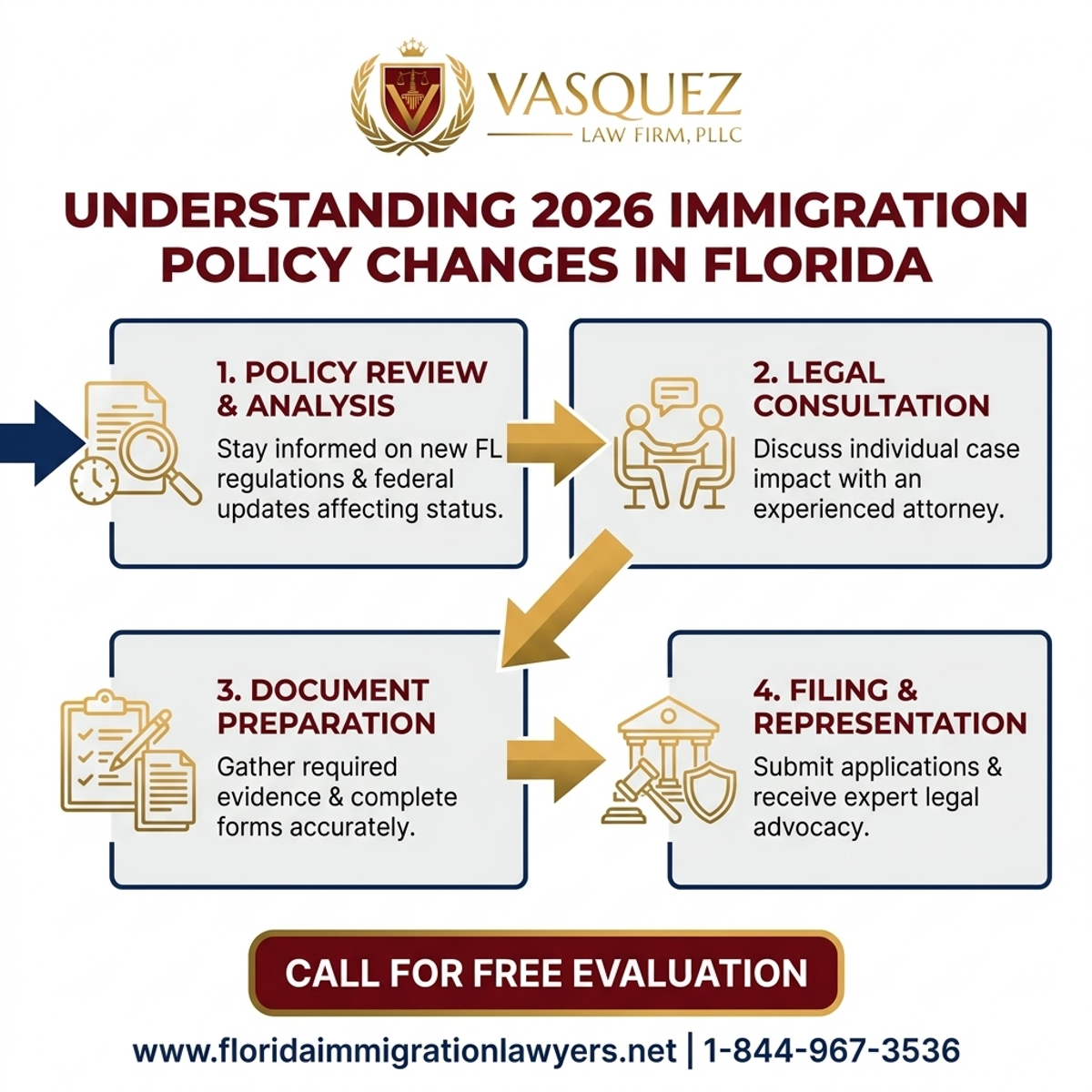
Step-by-Step Process — Understanding 2026 Immigration Policy Changes in Florida
The demand for "more comprehensive evidence" means going beyond a simple personal narrative. Asylum seekers are now expected to gather detailed affidavits, medical records, police reports from their home country (if applicable), human rights reports from reputable organizations, and even expert testimonies to corroborate their claims of persecution. Consistency across all submitted documents and during interviews is absolutely crucial, as any discrepancy can lead to severe skepticism from immigration officials.
Increased scrutiny during interviews means asylum officers are trained to probe deeper into inconsistencies, evaluate demeanor, and verify every detail of an applicant's story. Preparation for these interviews is paramount; practical tips include undergoing mock interviews with your attorney, practicing articulating your story clearly and consistently, and being ready to answer challenging questions about your past experiences and fears. Understanding the nuances of what constitutes a credible fear and a well-founded fear of persecution is essential.
Consider the real-world example of Maria, an asylum seeker from a politically unstable country. She faced a rigorous interview process where every aspect of her narrative was questioned. Her attorney from Florida Immigration Lawyers helped her organize extensive documentation, including news articles, human rights reports, and detailed personal affidavits from family members. This meticulous preparation and comprehensive evidence proved crucial in substantiating her claim, ultimately leading to a favorable outcome. Without this detailed guidance, her case might have been denied, highlighting the indispensable role of legal counsel from Florida Immigration Lawyers at 1-844-YO-PELEO.
What Documents Are Required for Visa Renewals Under the New Rules?
Under the 2026 policy changes, visa renewal applicants in Florida, including Tampa, must present a detailed set of documents. These include updated financial records, employment verification, and proof of residency.
- Valid passport
- Proof of continuous residence
- Employment records
- Updated financial documentation
It's vital to prepare these documents meticulously to avoid delays or denials. Consulting with a legal expert can ensure your paperwork meets all new requirements.
The government's rationale behind demanding stricter documentation for visa renewals is multi-faceted. It aims to ensure that applicants continue to meet all eligibility requirements, possess stable means of financial support, and adhere strictly to the original purpose of their visa. This helps in preventing overstays, unauthorized employment, and potential security risks. The goal is to maintain the integrity of the immigration system by verifying that individuals are legitimate visitors or temporary residents.
Practical tips for gathering these crucial documents include starting the process well in advance of your renewal deadline. Create a comprehensive checklist and organize all documents both digitally and physically. Ensure that all financial documents, such as bank statements, tax returns, and pay stubs, are current, complete, and consistently reflect a stable financial standing. Any gaps or inconsistencies in your employment history or financial records could trigger a Request for Evidence (RFE) or even a denial.
A real-world case scenario highlights this importance: John, renewing his H1B visa, encountered an unexpected challenge when his sponsoring employer underwent a recent merger. This corporate change required additional documentation to prove his continuous employment, consistent salary, and the new entity's legal standing. His attorney from Florida Immigration Lawyers guided him through gathering the complex new corporate records and updated employment verification letters, preventing a potential RFE and significant delays that could have jeopardized his status. This proactive legal support is invaluable.
Timeline and Processing Expectations for Immigration Applications in 2026
Processing times for immigration applications can vary significantly in 2026. Applicants in Florida should anticipate longer wait times due to increased scrutiny and policy changes.
| Stage | Typical Timeframe | Notes |
|---|---|---|
| Initial Application | 6-12 months | Subject to change based on case complexity |
| Asylum Interview | 8-14 months | Delays possible due to increased demand |
| Visa Renewal | 4-8 months | Ensure all documentation is complete |
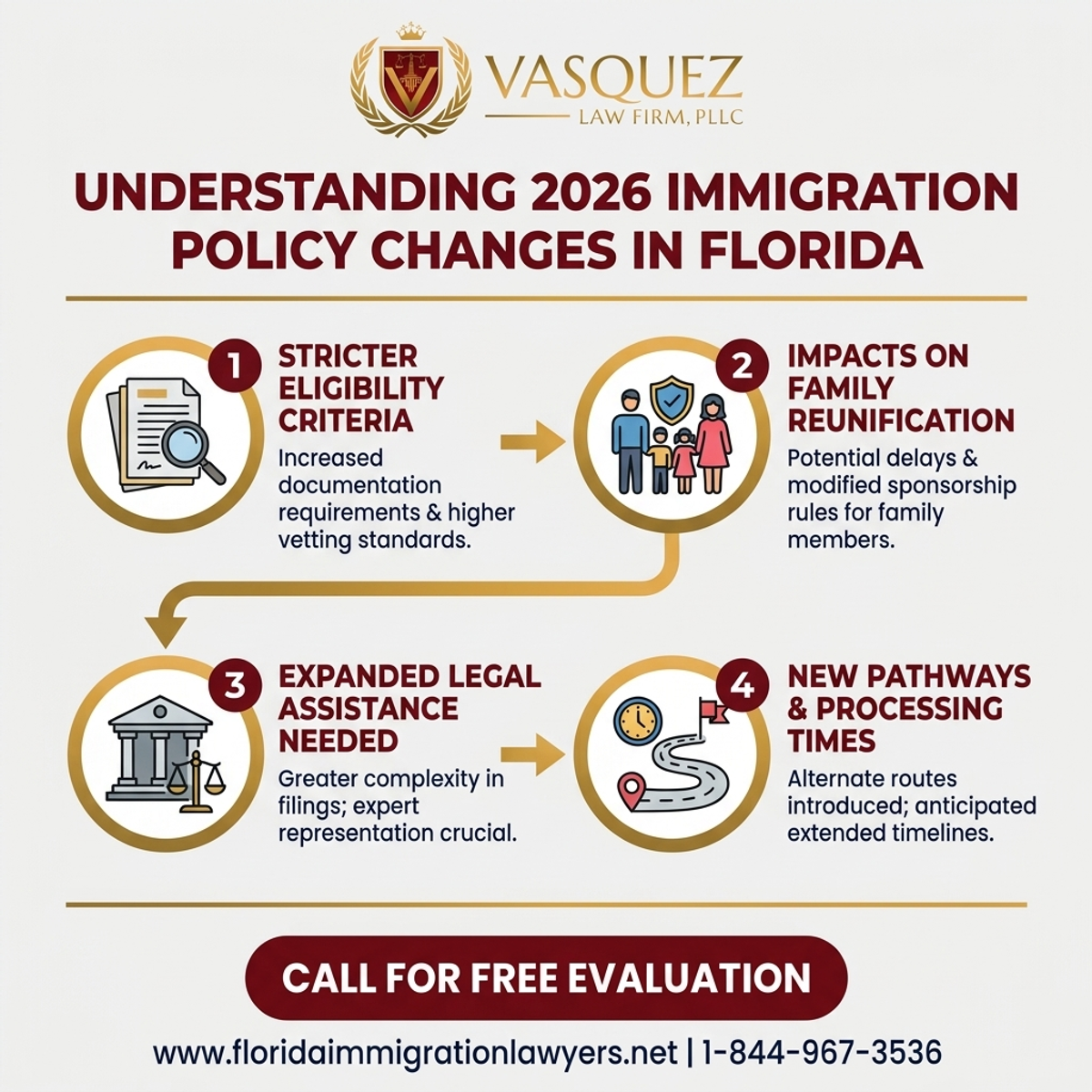
Key Statistics — Understanding 2026 Immigration Policy Changes in Florida
Staying informed about these timelines can help manage expectations and plan accordingly.
Several factors contribute to these varying and often extended processing times. Increased application volume, coupled with potential staffing shortages at U.S. Citizenship and Immigration Services (USCIS) and the Executive Office for Immigration Review (EOIR), can create significant backlogs. The complexity of individual cases, such as those requiring waivers, additional evidence, or involving prior immigration violations, also naturally extends the review period. Furthermore, shifts in administrative priorities or political directives can lead to changes in processing focus, further impacting timelines.
While delays can be frustrating, there are strategies to mitigate them. Applicants should respond promptly and thoroughly to any Requests for Evidence (RFEs) or Notices of Intent to Deny (NOIDs). Regularly checking your case status online through the USCIS website is advisable, and maintaining open communication with your attorney from Florida Immigration Lawyers is crucial. Your attorney can often inquire about undue delays through official channels or escalate issues when appropriate, leveraging their professional access and expertise.
Consider the Garcia family, who were applying for family-based visas. They experienced an unexpected delay when USCIS issued an RFE regarding an authenticated birth certificate from their home country, which was difficult to obtain due to civil unrest. Their attorney from Florida Immigration Lawyers at 1-844-YO-PELEO quickly advised them on how to secure an acceptable alternative document and submitted it promptly, preventing further setbacks that could have added months to their wait. This proactive and informed approach underscores the significant value of legal guidance in navigating unpredictable processing timelines.
Cost Factors and Fee Breakdown for Immigration Services in 2026
Immigration-related costs in Florida can vary based on the type of service and complexity of the case. Understanding these costs can help in budgeting and planning your immigration journey.
| Item | Typical Fee | Notes |
|---|---|---|
| Visa Renewal | Varies | Consult with an attorney for specifics |
| Asylum Application | Varies | Legal fees can vary based on case |
| Deportation Defense | Varies | Highly dependent on complexity and duration |
These costs are subject to change, and consulting with an immigration attorney is recommended to get the most accurate estimates.
The term "Varies" for legal fees reflects several contributing factors. An attorney's experience and reputation, the specific complexity of your case (e.g., whether it involves appeals, multiple waivers, or court appearances), the estimated amount of time and resources required, and the specific services provided all play a role. Some law firms, including Florida Immigration Lawyers, may offer flat fees for standard, straightforward services, while others might charge hourly, especially for more complex or protracted cases like deportation defense.
It's important to distinguish between government filing fees and legal fees. Government filing fees are mandatory payments made directly to agencies like USCIS or the Department of State for processing your application. These fees are non-refundable and are subject to change by the government. Legal fees, on the other hand, cover the professional representation, guidance, document preparation, and advocacy provided by your immigration attorney. Budgeting for both categories of expenses is crucial for a realistic financial plan for your immigration journey.
For practical advice on managing these costs, always request a clear and comprehensive fee agreement from your attorney at the outset. This agreement should outline all anticipated costs, including both government filing fees and legal fees, ensuring transparency and preventing surprises. If financial constraints are a concern, inquire about potential payment plans or explore whether your case might qualify for pro bono or low-cost services offered by certain non-profit organizations, though these resources are often limited. Understanding the full financial picture upfront is a critical step in your immigration planning.
Common Mistakes to Avoid When Navigating Immigration Policy Changes
- Failing to update documents in line with new policies can lead to denial.
- Neglecting to seek legal advice for complex cases increases risks.
- Incorrect filing of forms due to misunderstanding new rules.
- Missing deadlines due to unawareness of timeline changes.
- Providing outdated information or documentation.
- Relying on non-official sources for legal advice.
- Not preparing adequately for interviews under new scrutiny levels.
- Ignoring changes in asylum application requirements.
- Misunderstanding the impact of policy changes on deportation defenses.
- Overlooking the importance of continuous residency documentation.
- Attempting to navigate the process without professional assistance.
When to Call a Lawyer
Given the complexity of the 2026 immigration policy changes, consulting with a lawyer is advisable in several scenarios. These include facing deportation, needing visa renewals, or applying for asylum. A lawyer's expertise can guide you through these processes and improve your chances of a favorable outcome.
Florida Immigration Lawyers can provide the necessary support and guidance, ensuring you navigate these changes effectively. Contact us for advice and assistance.
Beyond deportation and routine visa renewals, a lawyer becomes indispensable in more complex situations. This includes navigating intricate family petitions, especially if there are prior immigration violations, criminal histories, or children born abroad. Similarly, employment-based visas with highly specific requirements, or the appeals process for previously denied applications, demand specialized legal knowledge. Any situation that involves a court appearance, such as proceedings in immigration court, absolutely necessitates professional legal representation to protect your rights and present your case effectively.
The value a lawyer brings extends far beyond simply filling out forms. An experienced immigration attorney provides strategic advice tailored to your unique circumstances, ensuring all documentation is correctly prepared and filed according to the latest regulations. They can represent you in interviews or court, advocate on your behalf, and act as a crucial buffer, protecting you from potential missteps or misunderstandings with immigration officials. Their deep understanding of evolving laws and procedures can prevent costly mistakes, mitigate risks, and significantly improve your chances of a successful outcome in an increasingly complex legal landscape. Call Florida Immigration Lawyers at 1-844-YO-PELEO for a free consultation.
About Florida Immigration Lawyers
Florida Immigration Lawyers is a leading firm dedicated to assisting clients with their immigration needs. We offer comprehensive services, including asylum, deportation defense, and family immigration. Our experienced team is ready to help you navigate the complexities of immigration law. Call us at 1-844-YO-PELEO or visit our website at floridaimmigrationlawyers.net. We are available 24/7 and offer free consultations.
Sources and References
- U.S. Citizenship and Immigration Services (USCIS)
- Executive Office for Immigration Review (EOIR)
- 8 U.S.C. Chapter 12 - Immigration and Nationality Act
Related services: immigration practice areas, family immigration services, citizenship and naturalization.
This article provides general legal information and is not intended as legal advice. Every case is unique, and outcomes depend on specific facts and circumstances. Contact an attorney for advice about your particular situation.
For personalized assistance with your immigration needs, call Florida Immigration Lawyers at 1-844-YO-PELEO today for a free consultation. Se Habla Español - Estamos aquí para ayudarle.
If you need legal assistance, learn more about our immigration legal services, or call us at 1-844-YO-PELEO for a free consultation.
Do Not Navigate This Process Alone
Our experienced immigration attorneys are ready to fight for you. Get a free, confidential case review today.
Se Habla Español
Or leave your details and we’ll call you:
Free Evaluation in 24 Hours
Or talk to us right now

AI voice assistant — available 24/7
FreeFrequently Asked Questions

William J. Vásquez
Founding Attorney · Vasquez Law Firm
U.S. Air Force veteran and immigration attorney with years of hands-on U.S. immigration experience. J.D., NCCU School of Law. AILA member. Admitted to the 4th, 5th, and 11th Circuit Courts.
Available 24/7 - Free Evaluations
Reviewed for legal accuracy by William J. Vásquez
Licensed in North Carolina; U.S. immigration is federal practice.
Related Legal Services
Our Florida immigration attorneys can help you with citizenship and naturalization, immigration practice areas and free immigration consultation. Call today at 1-844-YO-PELEO for a free case review.
Related Links
Related Topics
Free Legal Case Review
Discuss your case with our experienced attorneys. We're available 24/7.
Se Habla Español - Estamos aquí para ayudarle.
Related Articles
Dual Citizenship Lawyer in Florida: What You Need to Know
For Florida residents, the concept of dual citizenship, or holding two passports, offers a compelling blend of opportunities and challenges. While the U.S. generally permits dual nationality, the path to achieving this status requires a meticulous understanding of both U.S. immigration laws and the citizenship policies of your country of origin. This guide explores the definition of dual citizenship, the detailed step-by-step process for U.S. naturalization, and the significant benefits and potential pitfalls involved. We cover essential documentation, typical timelines, and cost considerations for 2026, providing crucial insights for anyone in Orlando, Miami, or across Florida considering this important legal step. Learn about common mistakes to avoid and understand when to seek professional legal counsel to navigate this complex process successfully. Florida Immigration Lawyers is here to provide expert, bilingual support for your dual citizenship journey.
Immigration Lawyer Orlando Free Consultation in Florida
For individuals and families in Orlando, Florida, navigating the complexities of U.S. immigration law requires expert guidance. An immigration lawyer in Orlando offers crucial support for everything from visa applications and green card processes to naturalization and deportation defense. This comprehensive guide details what a free consultation covers, providing a step-by-step overview of immigration pathways, essential document checklists, and expected timelines in 2026. We also highlight common mistakes to avoid, discuss the critical role of legal counsel in deportation and asylum cases, and explain why choosing a local Orlando immigration attorney is beneficial. Florida Immigration Lawyers is dedicated to serving the diverse community of Orlando with compassionate, effective legal solutions, ensuring you receive personalized advice and robust representation for a successful immigration journey.
EAD Advance Parole Combo Card in Florida 2026
For individuals with a pending Form I-485, Application to Register Permanent Residence or Adjust Status, the EAD Advance Parole Combo Card is an essential document. This single card combines the authorization to work legally in the U.S. (Employment Authorization Document - EAD) with permission to travel internationally and re-enter without abandoning your green card application (Advance Parole). This guide from Florida Immigration Lawyers provides a comprehensive overview for applicants in Florida in 2026, covering eligibility, the step-by-step application process, required documents, expected processing times, and associated costs. We also highlight common mistakes to avoid and when to seek legal counsel to ensure a smooth and successful immigration journey. Understanding this vital card is key to maintaining stability while awaiting your permanent residency approval.
F-1 to H-4 Change of Status Processing in Florida
Explore the F-1 to H-4 change of status process in Florida, including I-539 processing times, steps involved, and common pitfalls. Call Florida Immigration Lawyers for a free case review.