Immigration Lawyer Cost in Florida 2026
Navigating the complexities of U.S. immigration law in Florida often raises concerns about the associated legal fees. As of 2026, the cost of an immigration lawyer can vary significantly based on the type of case, its complexity, and the attorney's experience. This comprehensive guide from Florida Immigration Lawyers explores common fee structures like flat fees and hourly rates, providing typical cost breakdowns for various immigration processes, including family petitions, naturalization, and deportation defense. We also outline the step-by-step immigration process, expected timelines, and essential documents, while highlighting crucial mistakes to avoid. Understanding these factors will help you budget effectively and make informed decisions about securing expert legal representation for your immigration journey in Florida.
The immigration lawyer cost in Florida for 2026 varies significantly based on the type and complexity of the immigration case, the attorney's experience, and the fee structure (flat fee vs. hourly). While government filing fees are separate, legal fees for common cases like family petitions or naturalization typically range from $2,000 to $8,000, with more complex matters such as deportation defense potentially exceeding $15,000. It is crucial to have a clear understanding of all costs upfront to budget effectively for your immigration journey.
- Costs depend on case type (family, employment, asylum, deportation).
- Fee structures include flat fees, hourly rates, and retainers.
- Government filing fees are separate from attorney fees.
- Complex cases, like deportation, often incur higher costs.
- Consultation with an attorney provides a personalized cost estimate.
Navigating the complex landscape of U.S. immigration law can be one of the most significant challenges an individual or family faces. For those in Florida, understanding the associated costs, particularly the immigration lawyer cost, is a critical first step. Many individuals seeking to live, work, or gain citizenship in the United States often find themselves overwhelmed by the legal procedures, extensive documentation, and the financial implications involved. As of 2026, the cost of legal representation for immigration matters continues to be a primary concern, and rightly so.
This comprehensive guide aims to demystify the attorney fees Florida residents can expect when seeking immigration assistance. We will explore the various factors that influence these costs, common fee structures, and typical price ranges for different types of cases, providing you with a clearer picture of your potential financial commitment. Our goal is to equip you with the knowledge needed to make informed decisions about your immigration journey in Florida, ensuring transparency about the investment required for expert legal support. Remember, while costs are an important consideration, the value of experienced legal counsel in securing your future cannot be overstated.
Do you have questions about the potential immigration lawyer cost for your specific situation in Florida? Don't navigate this complex process alone. Call Florida Immigration Lawyers at 1-844-967-3536 for a free case review and clear guidance.
What Factors Influence Immigration Lawyer Cost in Florida in 2026?
The immigration lawyer cost in Florida in 2026 is not a one-size-fits-all figure; it is shaped by several dynamic factors. Understanding these variables is key to anticipating your legal expenses.
As of 2026, the primary factors influencing immigration attorney fees include the specific type of immigration case, its inherent complexity, the attorney's level of experience and reputation, and the geographic location of the law firm within Florida. Each of these elements plays a significant role in determining the final cost of legal representation.
Firstly, the type of immigration case is paramount. Family-based petitions (such as I-130 for relatives), employment-based visas (like H-1B or L-1), naturalization applications (N-400), asylum claims, and deportation defense cases each have distinct legal requirements and procedural steps, leading to varied legal fees. For instance, a straightforward naturalization application might incur a flat fee, whereas a complex deportation defense case involving multiple court hearings will almost certainly be billed at an hourly rate, accumulating higher costs. Cases involving asylum or deportation defense, due to their adversarial nature and the high stakes involved, typically command higher fees.
Secondly, the complexity of your case is a major determinant. Factors that increase complexity include a history of immigration violations, criminal convictions, previous visa denials, or complicated family situations. If your case requires extensive research, multiple filings, waivers, or appeals, the attorney will spend more time on it, directly impacting the final immigration pricing 2026. For example, a client with a clean record and a clear path to naturalization will likely pay less than someone with a past deportation order or a criminal record requiring a waiver of inadmissibility.
Thirdly, the attorney's experience and reputation play a significant role. Highly experienced immigration lawyers, particularly those specializing in niche areas or with a strong track record of success in Florida's immigration courts (such as the Orlando Immigration Court or the Miami Immigration Court), often charge higher fees than less experienced practitioners. Their expertise, however, can be invaluable in navigating complex legal challenges and increasing the likelihood of a positive outcome. A seasoned attorney understands the nuances of the USCIS system and the Executive Office for Immigration Review (EOIR).
Finally, geographic location within Florida can influence fees. While Florida Immigration Lawyers serves clients statewide, the general cost of living and operating a law firm in metropolitan areas like Orlando or Miami may translate to slightly higher hourly rates or flat fees compared to smaller towns. However, the expertise offered by a firm like ours, serving all of Florida from our Central Florida base, often provides consistent and competitive rates regardless of your specific city within the state.
How Do Immigration Attorneys Charge for Services?
Understanding the common fee structures used by immigration attorneys is crucial for budgeting your immigration journey effectively. As of 2026, most Florida immigration law firms utilize flat fees, hourly rates, or a combination of both.
As of 2026, immigration attorneys in Florida primarily charge for their services using two main methods: flat fees for predictable cases and hourly rates for more complex or ongoing matters. Some firms also utilize retainer agreements, which are essentially upfront deposits.
Flat Fee Structure: This is the most common and often preferred method for predictable immigration cases. With a flat fee, the attorney charges a single, fixed amount for a specific service, regardless of the hours spent. This provides clients with cost certainty and peace of mind. Flat fees are typically applied to cases with well-defined processes and outcomes, such as:
- Family-based petitions (e.g., I-130 Petition for Alien Relative)
- Adjustment of Status applications (I-485)
- Naturalization applications (N-400)
- Certain visa applications (e.g., K-1 fiancé visa)
- Removal of conditions on permanent residence (I-751)
The specific flat fee will still vary based on the complexity of that particular case type. For example, an I-130 petition for a spouse with no prior immigration issues will likely have a lower flat fee than one involving a complex marital history or previous denials. Our firm, Florida Immigration Lawyers, aims to provide clear flat fees for many of our services, helping clients understand their full immigration pricing 2026 upfront.
Hourly Rate Structure: For cases that are less predictable in terms of time commitment and legal strategy, attorneys often charge an hourly rate. This is common for:
- Deportation or removal defense
- Appeals to the Board of Immigration Appeals (BIA) or federal courts
- Complex waiver applications
- Responding to extensive Requests for Evidence (RFEs)
- Litigation in immigration court
Hourly rates for immigration attorneys in Florida can range significantly, typically from $250 to $500+ per hour, depending on the attorney's experience, specialization, and the firm's overhead. When billed hourly, clients typically pay a retainer upfront, from which legal fees are drawn as work is performed. Clients receive regular billing statements detailing the work completed and the time spent. This method ensures that clients only pay for the exact amount of legal service they receive, but it requires careful monitoring of hours to manage costs.
Retainer Agreements: A retainer is an upfront payment made to an attorney to secure their services. For flat-fee cases, the retainer might be the full flat fee or a significant portion of it. For hourly cases, the retainer acts as a deposit against which hourly fees and expenses are billed. Once the retainer is depleted, the client typically replenishes it or pays for services as they are rendered. This practice ensures that the attorney is compensated for ongoing work and helps manage the financial aspect of the case.
What is the Typical Immigration Lawyer Cost Breakdown in Florida?
When considering the immigration lawyer cost in Florida, it's essential to differentiate between attorney fees and government filing fees. Attorney fees compensate your legal counsel for their expertise and time, while government fees are paid directly to agencies like USCIS or the State Department.
As of 2026, the total cost for an immigration case in Florida will comprise both attorney fees and various government filing fees. Attorney fees, as detailed below, vary by case type and complexity, while government fees are standardized but subject to change. It is crucial to understand that these two components are separate and distinct.
Here is a general breakdown of typical attorney fees for common immigration cases in Florida, as of 2026. Please note these are estimates and can vary based on the specific circumstances of your case and the attorney's fee structure. Government filing fees are *not* included in these estimates and must be paid separately.
| Item | Typical Attorney Fee (As of 2026) | Notes |
|---|---|---|
| Family-Based Petition (I-130) | $3,000 - $6,000 | Flat fee often, varies with complexity of family relationships. |
| Adjustment of Status (I-485) | $4,000 - $8,000 | Can be combined with I-130; includes preparing for interview. |
| Naturalization (N-400) | $2,000 - $4,500 | Flat fee common, includes interview preparation. |
| K-1 Fiancé(e) Visa Petition (I-129F) | $3,000 - $5,500 | Covers initial petition, separate from Adjustment of Status later. |
| Deportation Defense (Per Hearing/Phase) | $5,000 - $15,000+ | Hourly or per phase, highly variable based on court process and number of hearings in Orlando Immigration Court. |
| Asylum Application (I-589) | $3,500 - $7,000 | Flat fee, may increase with additional hearings or appeals. |
| Work Visa (H-1B, L-1, O-1) | $5,000 - $10,000+ | Flat fee or hourly, depends on business size and complexity of position. |
| Waiver Applications (I-601, I-212) | $3,000 - $7,000+ | Often complex, requiring extensive documentation and legal arguments. |
Government Filing Fees: In addition to attorney fees, you will incur fees paid directly to the U.S. government. These are non-refundable and can add a significant amount to your overall cost. As of 2026, typical fees for USCIS applications can range from a few hundred dollars to over a thousand for a single petition or application. For example, an I-485 Adjustment of Status application often includes fees for the application itself, biometrics, and sometimes a work permit or travel document. It is critical to check the official USCIS website for current filing fees, as they are subject to change. These fees are separate from the legal fees paid to your attorney.
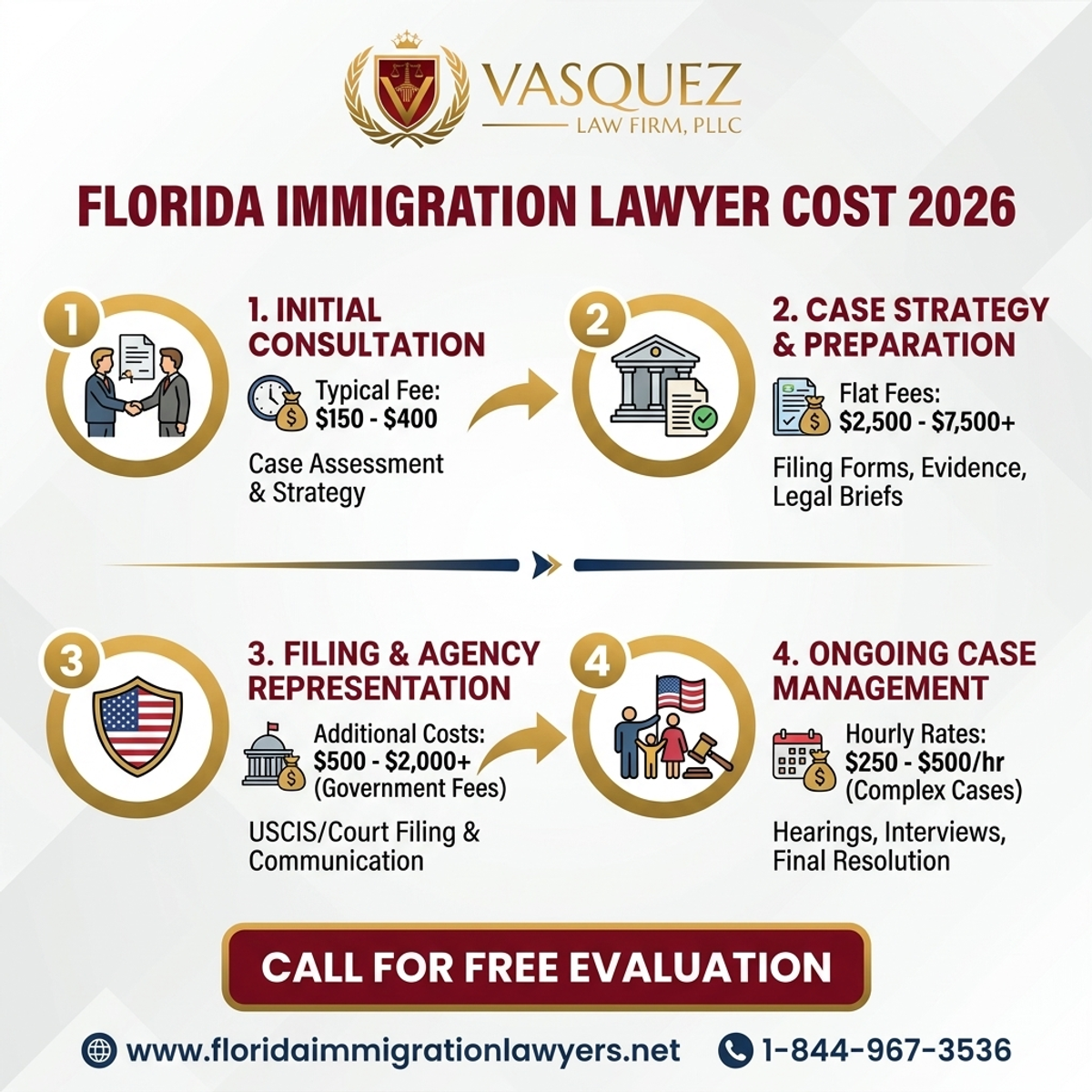
Step-by-Step Process — Immigration Lawyer Cost in Florida 2026
Other Potential Costs: Beyond attorney and government fees, be prepared for other expenses. These may include:
- Translation services for foreign documents.
- Courier and mailing fees.
- Fees for obtaining supporting documents (e.g., birth certificates, police records).
- Medical examination fees (required for many green card applications).
- Expert witness fees, if required for complex cases.
A transparent law firm like Florida Immigration Lawyers will provide a clear breakdown of all anticipated costs during your initial consultation, ensuring you have a full understanding of the financial commitment before proceeding.
Navigating the Immigration Process: A Step-by-Step Guide
Embarking on an immigration journey requires a clear understanding of the process. While each case is unique, a general step-by-step guide can help you prepare for what lies ahead, especially when working with an attorney in Florida. This structured approach helps manage expectations regarding timelines and necessary actions.
As of 2026, the immigration process, while varying by case type, generally follows a predictable series of steps. Engaging with an experienced immigration lawyer from Florida Immigration Lawyers can streamline this journey significantly, helping you avoid common pitfalls and delays. Understanding these stages is crucial for anticipating the immigration lawyer cost and overall timeline.
-
Initial Consultation and Case Evaluation: Your journey begins with a thorough consultation with an immigration attorney. During this meeting, you will discuss your immigration goals, personal history, and any relevant background information. The attorney will assess your eligibility for various immigration benefits, identify potential challenges, and outline a strategic plan. This is also when you'll receive an estimate of the attorney fees Florida may entail for your specific case.
-
Document Gathering and Preparation: Once a strategy is set, your attorney will provide a detailed list of required documents. This phase is critical and often time-consuming, involving collecting personal records, financial statements, employment letters, birth certificates, marriage licenses, and sometimes police clearances. Accuracy and completeness are paramount to avoid delays or Requests for Evidence (RFEs) from USCIS.
-
Petition/Application Filing: With all documents prepared and forms completed, your attorney will meticulously review and submit your petition or application to the appropriate government agency, typically U.S. Citizenship and Immigration Services (USCIS) or the Department of State. This includes paying the necessary government filing fees.
-
Receipt Notice and Biometrics Appointment: After filing, you will receive a receipt notice from USCIS. For many applications, a biometrics appointment at an Application Support Center (ASC) like the one in Orlando, Florida, will be scheduled. Here, your fingerprints, photograph, and signature are collected for background checks.
-
Interview (If Applicable): Depending on your case type (e.g., Adjustment of Status, naturalization), you may be scheduled for an interview at a local USCIS field office, such as the one in Orlando or Miami. Your attorney will help you prepare thoroughly for this interview, reviewing potential questions and ensuring you understand the process.
-
Decision and Follow-up: Following the interview or after all documentation is reviewed, USCIS will issue a decision. If approved, you will receive your immigration benefit (e.g., Green Card, Certificate of Naturalization). If a Request for Evidence (RFE) or Notice of Intent to Deny (NOID) is issued, your attorney will help you respond promptly and effectively. In the event of a denial, your attorney can advise on appeal options.
Document Checklist for Common Immigration Cases
While specific requirements vary, preparing these general categories of documents is a good starting point for most immigration applications:
- Proof of Identity and Nationality (Passport, Birth Certificate)
- Marriage Certificate (if applicable)
- Divorce Decrees (if applicable)
- Financial Documents (Tax Returns, Employment Letters, Pay Stubs, Affidavits of Support)
- Police Clearances from all countries of residence
- Medical Examination Records
- Photographs (passport-style)
- Proof of Relationship (for family-based petitions: photos, joint accounts, shared bills)
- Educational and Professional Credentials (for employment-based visas)
- Any previous immigration documents (visas, I-94 records, prior applications)
Do not navigate the complexities of immigration law alone. Contact Florida Immigration Lawyers today at 1-844-967-3536 for dedicated legal support and a free case review.
What is the Immigration Case Processing Timeline in Florida for 2026?
Understanding the processing timeline for immigration cases in Florida is crucial for setting realistic expectations. As of 2026, these timelines can vary significantly based on the specific type of application, the volume of cases at USCIS service centers and field offices, and the efficiency of the immigration courts.
As of 2026, immigration case processing times in Florida are dynamic and subject to change by USCIS and EOIR. While some straightforward applications may be resolved within months, more complex cases, particularly those involving interviews, extensive background checks, or court proceedings, can extend to several years. It is important to consult official government websites for the most current estimates.
Here is a general overview of typical processing timeframes for various immigration cases. Please remember these are estimates, and actual times can be shorter or longer. Always check the official USCIS Processing Times page for the most up-to-date information, specifically selecting the relevant service center or field office (e.g., Orlando Field Office, Miami Field Office, or the National Benefits Center).
| Stage/Application Type | Typical Timeframe (As of 2026) | Notes |
|---|---|---|
| Initial Consultation & Document Prep | 1-4 Weeks | Time spent gathering documents and developing case strategy with your attorney. |
| Family-Based Petition (I-130) | 10-18 Months | Varies significantly by relationship category and USCIS service center. |
| Adjustment of Status (I-485) | 12-36 Months | Includes interview scheduling, background checks, and often EAD/AP processing. Timelines for the Orlando Field Office can vary. |
| Naturalization (N-400) | 8-24 Months | From filing to oath ceremony. Heavily depends on the specific USCIS field office (e.g., Orlando, Tampa, Miami). |
| Removal of Conditions (I-751) | 18-36 Months | Often lengthy, with an automatic extension of conditional status while pending. |
| Asylum Application (I-589) | 6 Months - Several Years | Initial interview may be scheduled quickly, but final decision can take years, especially if referred to an immigration judge at the Orlando Immigration Court. |
| Deportation Proceedings | 1-5+ Years | Highly variable, depends on court docket, number of hearings, and complexity of legal arguments before an immigration judge. Cases in the Orlando Immigration Court may vary. |
| Work Visas (H-1B, L-1, O-1) | 3-12 Months | Excluding lottery processes; Premium Processing can expedite to 15-45 days for an additional fee. |
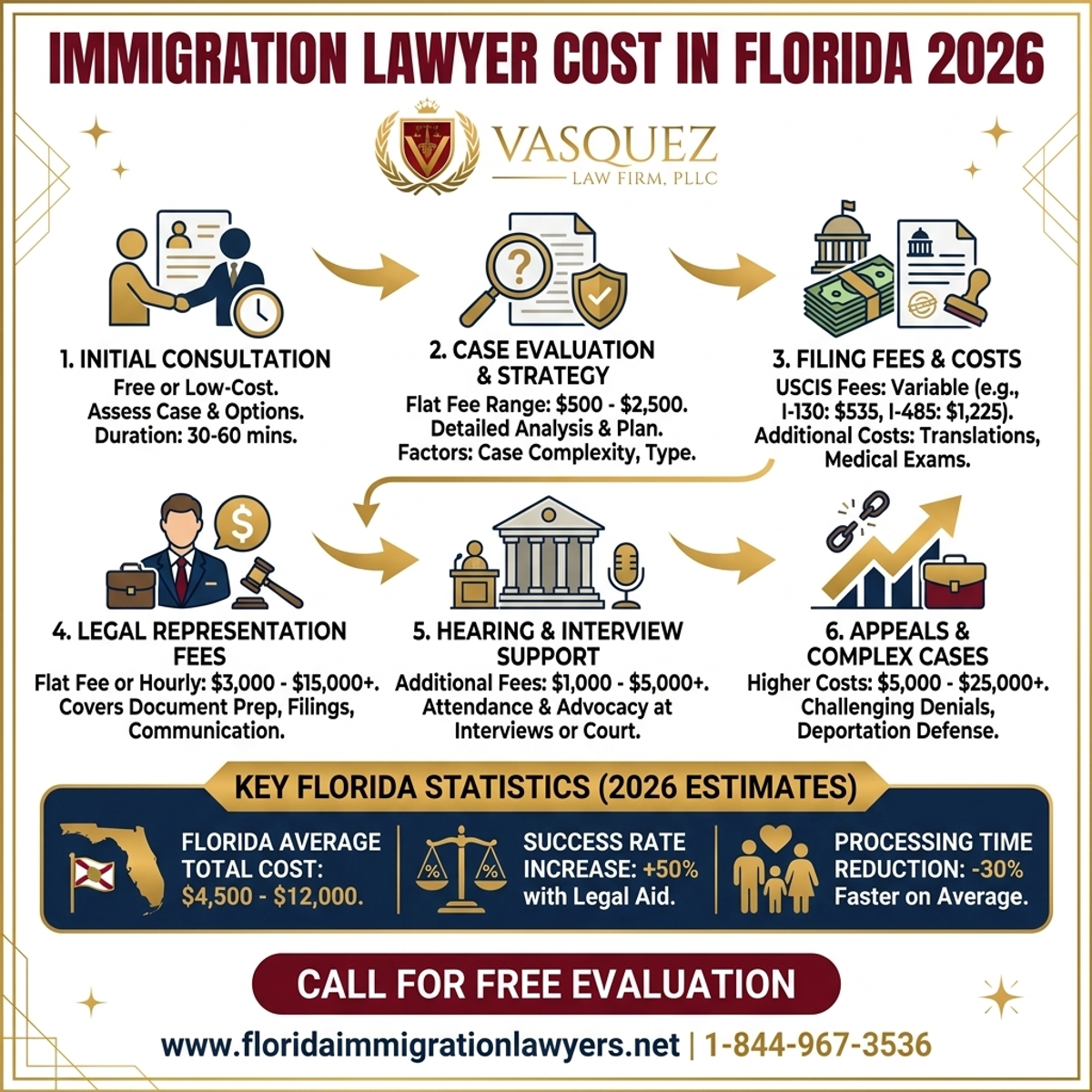
Key Statistics — Immigration Lawyer Cost in Florida 2026
Factors that can influence these timelines include:
- USCIS Workload: High volumes of applications can lead to backlogs.
- Requests for Evidence (RFEs): If USCIS requests additional information, your case will be paused until a response is received.
- Background Checks: Extensive security checks can prolong processing.
- Interview Scheduling: Availability at local field offices in Florida affects interview wait times.
- Court Dockets: For cases in immigration court, the schedule of immigration judges and the complexity of the case dictate the pace.
Your immigration attorney at Florida Immigration Lawyers will closely monitor your case status and advise you on any potential delays or actions needed, providing realistic expectations about your unique timeline, referencing the USCIS Policy Manual for guidance.
Common Mistakes to Avoid When Dealing with Immigration Cases
Navigating immigration law without expert guidance can lead to costly and time-consuming errors. Avoiding these common mistakes is crucial for a successful outcome in your immigration journey in Florida.
-
Filing Incomplete or Inaccurate Applications: Submitting forms with missing information or errors is one of the most frequent reasons for delays, Requests for Evidence (RFEs), or outright denials. Even minor omissions can cause significant setbacks. Consequences include prolonged processing times, additional fees, or even case denial, forcing you to reapply.
-
Missing Deadlines: Immigration processes are strict about deadlines for filing applications, responding to RFEs, or appearing for interviews. Missing a deadline can result in your case being closed, denied, or even lead to deportation proceedings. For example, failing to respond to an RFE within the specified timeframe typically leads to denial.
-
Failing to Disclose All Relevant Information: Hiding or misrepresenting facts, even seemingly minor ones like past arrests or previous immigration applications, can be considered fraud. This can lead to severe consequences, including permanent bars from the U.S., criminal charges, and deportation. Transparency with your attorney is vital.
-
Not Updating Your Address with USCIS: If you move, you are legally required to notify USCIS of your new address within 10 days using Form AR-11. Failing to do so can result in important notices, interview appointments, or even Green Cards being sent to the wrong address, potentially leading to missed appointments, delays, or case abandonment.
-
Ignoring Government Filing Fees: Many applicants overlook the separate government filing fees, which are often substantial and non-refundable. Failing to include the correct fees with your application will result in it being rejected and returned, causing significant delays. Always check the current USCIS filing fees before submission.
-
Using Unqualified Notaries or "Immigration Consultants": In Florida, "notarios públicos" or immigration consultants are NOT attorneys and cannot provide legal advice. Relying on them for complex legal matters often leads to incorrect filings, missed opportunities, and severe immigration consequences. Only a licensed attorney can provide legal counsel.
-
Traveling Internationally Without Proper Authorization: For certain immigration statuses (e.g., pending Adjustment of Status), traveling outside the U.S. without an Advance Parole document can be considered abandonment of your application, making it impossible to re-enter. Always consult your attorney before making international travel plans.
-
Attending Interviews Unprepared: An immigration interview is a critical step. Attending without understanding the questions, your application, or the purpose of the interview can lead to misunderstandings, inconsistencies, or even denial. Proper preparation with your attorney is essential.
-
Failing to Seek Legal Counsel for Complex Cases: While some very simple cases might seem manageable alone, any case involving criminal history, previous denials, deportation orders, or complex family situations absolutely requires an attorney. Attempting to handle these complexities yourself almost always leads to detrimental outcomes.
When to Call a Florida Immigration Lawyer
Deciding when to seek legal counsel is a critical aspect of a successful immigration journey. While some individuals attempt to navigate the system alone, the complexities of U.S. immigration law often necessitate the expertise of a seasoned attorney, especially in a diverse state like Florida.
You should call a Florida immigration lawyer as soon as possible if your case involves any complexity, such as a criminal record, previous deportation, or if you are facing removal proceedings. An attorney can provide crucial guidance, ensure compliance with the Immigration and Nationality Act (INA), and protect your rights throughout the process.
Here are specific scenarios where contacting Florida Immigration Lawyers is highly recommended:
-
Deportation or Removal Proceedings: If you or a loved one has received a Notice to Appear (NTA) in immigration court (e.g., Orlando Immigration Court), immediate legal representation is paramount. Facing an immigration judge without counsel significantly reduces your chances of a favorable outcome. An attorney can help you understand your rights, identify potential defenses, and navigate court procedures, including applying for relief from removal under 8 U.S.C. § 1229b.
-
Criminal History: Any past arrests or convictions, even minor ones, can have severe immigration consequences, potentially rendering you inadmissible or deportable. An attorney can assess the impact of your criminal record on your immigration case, explore waivers (e.g., I-601, I-212), and represent you before USCIS or the Executive Office for Immigration Review (EOIR).
-
Previous Denials or Complex Case History: If your prior immigration applications have been denied, or if you have a history of overstays, misrepresentations, or other immigration violations, your case is inherently complex. A lawyer can analyze the reasons for past issues and strategize the best path forward.
-
Asylum and Refugee Claims: These cases are highly sensitive and require compelling evidence and legal arguments to demonstrate a well-founded fear of persecution. An attorney can help you prepare a strong application, gather necessary documentation, and represent you during interviews with an asylum officer or in immigration court.
-
Business and Employment-Based Immigration: For employers seeking to sponsor foreign workers or individuals seeking specialized work visas (e.g., H-1B, L-1), the process is intricate and requires compliance with specific labor and immigration laws. An attorney ensures proper documentation and adherence to regulations, potentially referencing the Department of State (www.state.gov) for visa bulletins.
-
Requests for Evidence (RFEs) or Notices of Intent to Deny (NOIDs): Receiving one of these notices indicates that USCIS has concerns about your application. A prompt and comprehensive legal response is crucial to prevent denial. An attorney can help you gather the necessary evidence and craft a persuasive legal argument.
-
Family-Based Immigration Challenges: While many family petitions seem straightforward, issues like complex family relationships, prior marriages, or questions about the legitimacy of a relationship can arise. An attorney can help navigate these sensitive areas.
Florida Immigration Lawyers has extensive experience assisting individuals and families throughout Florida with a wide range of immigration matters. We understand the unique challenges faced by immigrants in Central Florida and beyond, and we are dedicated to providing compassionate, effective legal solutions. Don't wait until problems escalate; proactive legal advice can save you time, money, and stress.
About Florida Immigration Lawyers
Florida Immigration Lawyers is a leading immigration law firm dedicated to serving individuals and families across the entire state of Florida. With a deep understanding of the complexities of U.S. immigration law, our experienced attorneys provide comprehensive, compassionate, and effective legal representation for a wide array of immigration matters.
From our base in Central Florida, we pride ourselves on offering personalized attention and strategic guidance to each client. Our practice areas include family immigration, employment-based visas, asylum, deportation defense, naturalization and citizenship, and more. We understand that every immigration journey is unique, and we are committed to achieving the best possible outcomes for our clients.
Choosing Florida Immigration Lawyers means partnering with a team that is available 24/7, offers free case reviews, and speaks both English and Spanish to ensure clear communication. We are known for our meticulous approach, our commitment to client education, and our unwavering advocacy in navigating the often-challenging immigration system. Let us be your trusted guide in securing your future in the United States.
To learn more about how we can assist you, please explore our immigration practice areas or schedule a free consultation with our team. You can reach us directly at 1-844-967-3536.
Sources and References
- U.S. Citizenship and Immigration Services (USCIS)
- Executive Office for Immigration Review (EOIR)
- U.S. Department of State (State Department)
- 8 U.S.C. Chapter 12 - Immigration and Nationality Act (INA)
- 8 Code of Federal Regulations (CFR)
- USCIS Policy Manual
Related services: family immigration services, business immigration.
This article provides general legal information and is not intended as legal advice. Every case is unique, and outcomes depend on specific facts and circumstances. Contact an attorney for advice about your particular situation.
Understanding the immigration lawyer cost in Florida for 2026 is the first step towards a successful immigration journey. While costs are an investment, the value of expert legal guidance is immeasurable in protecting your rights and achieving your goals. Don't leave your future to chance.
Contact Florida Immigration Lawyers today for a free and confidential case review. We are available 24/7 to answer your questions and provide the dedicated support you deserve. Call us at 1-844-967-3536. Se Habla Español - Estamos aquí para ayudarle.
Do Not Navigate This Process Alone
Our experienced immigration attorneys are ready to fight for you. Get a free, confidential case review today.
Se Habla Español
Or leave your details and we’ll call you:
Free Evaluation in 24 Hours
Or talk to us right now

AI voice assistant — available 24/7
FreeFrequently Asked Questions

William J. Vásquez
Founding Attorney · Vasquez Law Firm
U.S. Air Force veteran and immigration attorney with years of hands-on U.S. immigration experience. J.D., NCCU School of Law. AILA member. Admitted to the 4th, 5th, and 11th Circuit Courts.
Available 24/7 - Free Evaluations
Reviewed for legal accuracy by William J. Vásquez
Licensed in North Carolina; U.S. immigration is federal practice.
Related Legal Services
Our Florida immigration attorneys can help you with business immigration, deportation defense and family immigration services. Call today at 1-844-967-3536 for a free case review.
Related Links
Related Topics
Free Legal Case Review
Discuss your case with our experienced attorneys. We're available 24/7.
Se Habla Español - Estamos aquí para ayudarle.
Related Articles
Immigration Lawyer Orlando Free Consultation in Florida
For individuals and families in Orlando, Florida, navigating the complexities of U.S. immigration law requires expert guidance. An immigration lawyer in Orlando offers crucial support for everything from visa applications and green card processes to naturalization and deportation defense. This comprehensive guide details what a free consultation covers, providing a step-by-step overview of immigration pathways, essential document checklists, and expected timelines in 2026. We also highlight common mistakes to avoid, discuss the critical role of legal counsel in deportation and asylum cases, and explain why choosing a local Orlando immigration attorney is beneficial. Florida Immigration Lawyers is dedicated to serving the diverse community of Orlando with compassionate, effective legal solutions, ensuring you receive personalized advice and robust representation for a successful immigration journey.
Immigration Lawyer Cost in Florida 2026: What to Expect
Navigating the U.S. immigration system can be daunting, and understanding the associated legal fees is often a primary concern. This comprehensive guide from Florida Immigration Lawyers delves into the costs of hiring an immigration attorney in Florida for 2026. We break down the factors influencing attorney fees, such as case complexity, attorney experience, and geographic location within Florida, including Orlando. You'll learn about common fee structures like flat fees and hourly rates, and find a detailed table outlining typical costs for various immigration services, from family petitions to deportation defense. We also provide a step-by-step guide to hiring an attorney, a document checklist, and an estimated timeline for different immigration processes. Crucially, the article highlights the invaluable benefits of legal representation, emphasizing how expert guidance can prevent costly mistakes, streamline your application, and significantly improve your chances of success. We discuss common pitfalls to avoid and specific scenarios where legal counsel is essential, ensuring you make informed decisions about your immigration future in Florida. Florida Immigration Lawyers offers free case reviews and bilingual services to assist you.
U Visa for Crime Victims in Florida: Your 2026 Guide
For crime victims in Florida, the U visa offers a critical pathway to legal status and protection. This humanitarian immigration relief is available to individuals who have suffered substantial physical or mental abuse as a result of certain serious crimes and are willing to assist law enforcement in their investigation or prosecution. From domestic violence to human trafficking, understanding your eligibility and the complex application process is vital. This guide provides a comprehensive overview of the U visa, including specific qualifying crimes, the step-by-step application process, required documentation, and current processing timelines and fees for 2026. We also highlight common mistakes to avoid and explain when seeking legal counsel from experienced immigration attorneys at Florida Immigration Lawyers is essential. Our firm, based in Orlando, serves all of Florida, offering compassionate guidance and strategic advocacy to help crime victims achieve safety and legal residency.
Application for Re-Entry Permit: A Florida LPR Guide 2026
For Lawful Permanent Residents (LPRs) in Florida, extended international travel can pose a risk to their green card status. An application for re-entry permit (Form I-131) is a vital document designed to prevent the presumption of green card abandonment, which can occur after prolonged absences from the U.S. This permit demonstrates your intent to maintain permanent residency and facilitates your re-entry without issues at U.S. ports of entry. This comprehensive guide covers everything Florida LPRs need to know about the I-131 re-entry permit in 2026, including eligibility, the step-by-step application process, required documents, typical processing timelines, and associated costs. We also highlight common mistakes to avoid and crucial factors that can lead to green card abandonment. Understanding these nuances is essential for safeguarding your LPR status and ensuring a smooth return to your home in Florida. Florida Immigration Lawyers is ready to assist you in navigating this critical process.