Immigration Documents Checklist Florida: Your 2026 Guide
Navigating immigration documents in Florida, especially in Jacksonville, can be a complex process. This 2026 guide provides a comprehensive checklist for essential USCIS forms and supporting paperwork, covering everything from personal identification to financial proofs and relationship evidence. Learn about common mistakes to avoid, processing timelines, and when expert legal assistance from Florida Immigration Lawyers is crucial. Our goal is to simplify your immigration journey and help you prepare a successful application. Call us for a free consultation.

Navigating **immigration documents** in Florida requires careful attention to USCIS requirements. A comprehensive **checklist** helps ensure you gather all necessary paperwork for your application, whether for a green card, citizenship, or other immigration benefits. Proper organization and adherence to guidelines are crucial for a smooth process in 2026.
- USCIS forms are essential for all applications.
- Gather identity, financial, and relationship proofs meticulously.
- Consult an immigration attorney for accuracy and guidance.
- Timely and complete submission is critical for success.
Are you an immigrant or aspiring immigrant living in Jacksonville, Florida, or anywhere across the Sunshine State, facing the often-complex world of **immigration documents** and **paperwork**? The journey through the U.S. immigration system can feel overwhelming, with countless forms, strict deadlines, and specific requirements from USCIS. Understanding exactly what documents you need is the first critical step toward achieving your immigration goals in **Florida**.
This comprehensive guide provides a detailed 2026 **immigration documents checklist** tailored for Florida residents. We will break down common requirements for various USCIS processes, offering actionable insights to help you prepare your application effectively. Our goal is to demystify the process and empower you with the knowledge you need.
Do not navigate this intricate path alone. For personalized assistance and to ensure your application is flawless, Call Florida Immigration Lawyers at 1-844-967-3536 for a free consultation. We are here to help you every step of the way.
Understanding Your Immigration Documents in Florida
Florida is a vibrant, diverse state, home to millions of immigrants from all corners of the globe. From the bustling streets of Miami to the growing communities in Jacksonville, immigrants contribute significantly to our state's economy and culture. However, securing your legal status requires meticulous attention to every detail of your **immigration documents**.
The U.S. Citizenship and Immigration Services (USCIS) is the primary federal agency overseeing lawful immigration to the United States. Every application, whether for a green card, work permit, or citizenship, requires specific **USCIS forms** and supporting documentation. Understanding these requirements is paramount for anyone living in **Florida**.
The Role of USCIS and Other Agencies in Florida
USCIS operates several field offices and asylum offices across Florida, including major locations in Jacksonville, Orlando, and Miami. These offices process applications, conduct interviews, and provide services to immigrants residing in their jurisdictions. Other agencies, such as U.S. Immigration and Customs Enforcement (ICE) and the Executive Office for Immigration Review (EOIR), also play roles in enforcement and immigration court proceedings.
The legal framework governing immigration is primarily found in the Immigration and Nationality Act (INA), specifically 8 U.S.C. § 1101 et seq., and related regulations in 8 CFR. These laws dictate the types of **immigration documents** required and the eligibility criteria for various benefits. Our firm stays current with all legal changes to best advise our clients.
Step-by-Step Guide to Gathering Your Immigration Paperwork
Preparing your **immigration paperwork** can be a daunting task, but a structured approach makes it manageable. Follow these steps to systematically gather and organize your essential **immigration documents** for your 2026 application.
-
Identify Your Immigration Goal: The first step is to clearly define what immigration benefit you are seeking. Are you applying for a family-based green card, employment authorization, naturalization, or asylum? Each path has its own set of required **USCIS forms** and supporting **immigration documents**.
-
Consult Official Checklists and Instructions: Always start with the official USCIS website (uscis.gov) for the most current forms and instructions. Each form comes with specific instructions that detail the required supporting **paperwork**. These instructions are your primary guide.
-
Gather Personal Identification Documents: These are fundamental for any application. You will typically need your valid passport, birth certificate, marriage certificate (if applicable), and any previous visas or I-94 Arrival/Departure Records. Ensure all names match across your **immigration documents**.
-
Collect Financial Support Proof: For many family-based applications, an Affidavit of Support (Form I-864) is required. This means gathering your sponsor's tax returns, employment letters, and bank statements to prove they meet the federal poverty guidelines. This is a critical piece of **paperwork**.
-
Obtain Evidence of Relationship (if applicable): If you are applying for a family-based petition, you will need to prove your relationship to the petitioner. This could include marriage certificates, birth certificates of children, joint bank accounts, property deeds, photographs, and affidavits from friends and family. These **immigration documents** strengthen your case.
-
Acquire Police Clearances/Background Checks: Depending on your application type and personal history, you may need police clearance certificates from countries you have lived in, or court disposition records for any arrests or convictions. This **paperwork** helps USCIS assess your admissibility.
-
Complete All USCIS Forms Accurately: Fill out every section of the required **USCIS forms** completely and accurately. Do not leave any questions blank; if a question does not apply, write "N/A." Inaccurate or incomplete forms are a leading cause of delays or denials. Be especially careful with the immigration documents you submit.
-
Organize and Make Copies: Before submitting anything, organize all your **immigration documents** neatly. Make at least one complete copy of your entire application package for your records. You should always keep original documents safe and only submit copies unless USCIS explicitly requests originals.
-
Attend Biometrics Appointment: Most applications require a biometrics appointment at a local Application Support Center (ASC) in **Florida**. This involves submitting fingerprints, photographs, and a signature for background checks. Bring your appointment notice and a valid photo ID.
-
Prepare for Interview: If an interview is scheduled, bring all your original **immigration documents** and copies of your entire application package. Be prepared to answer questions about your application truthfully and consistently. A lawyer can help you prepare for this crucial step.
Special Considerations for Florida Residents
For those living in Florida, certain state-specific requirements might also come into play, especially when proving **Florida residency proof** for services like a driver's license or in-state tuition. While not directly part of your federal immigration application, these state **immigration documents** are important for daily life. Documents such as utility bills, lease agreements, bank statements, and employment records can serve as proof of residency. Always check with the relevant Florida state agency for their specific requirements.
Essential Immigration Documents Checklist for 2026
This general **immigration documents checklist** covers many common requirements. Remember, your specific application may require additional or different **paperwork**. Always refer to the official USCIS instructions for your particular form.
- ✅ Valid Passport and Birth Certificate: Your primary identity documents.
- ✅ Visa (if applicable) and I-94 Arrival/Departure Record: Proof of lawful entry and status.
- ✅ Green Card (Form I-551) or Employment Authorization Document (EAD, Form I-766): If you already hold these, for renewals or adjustments.
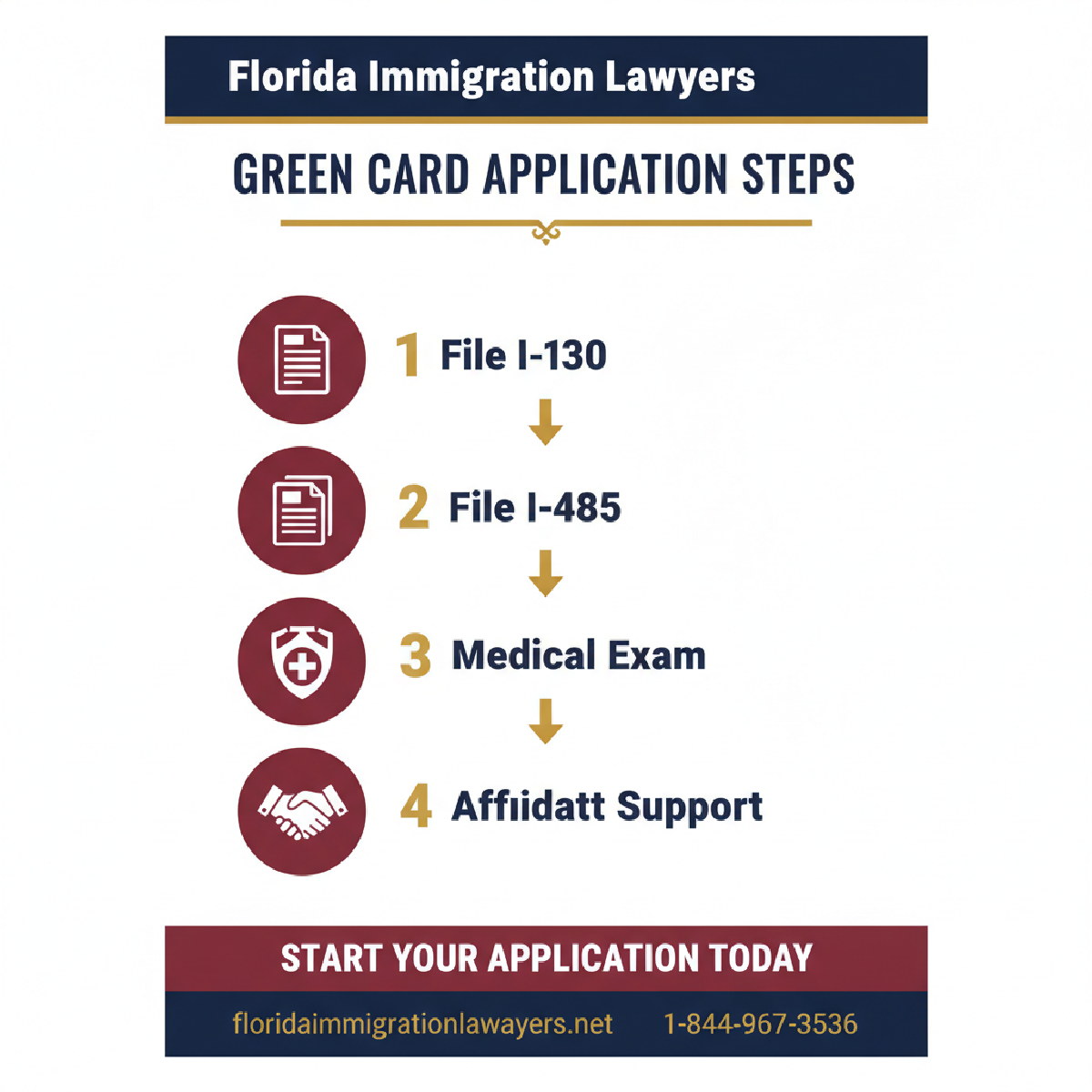
- ✅ Completed USCIS Forms: Such as I-130 (Petition for Alien Relative), I-485 (Adjustment of Status), N-400 (Application for Naturalization), I-765 (Application for Employment Authorization), and others relevant to your case.
- ✅ Passport-style Photos: Usually two per application, meeting specific USCIS photo requirements.
- ✅ Medical Examination Report (Form I-693): Completed by a USCIS-approved civil surgeon.
- ✅ Affidavit of Support (Form I-864) and Financial Documents: Including tax returns, employment verification letters, and bank statements for sponsors. This is crucial **paperwork** for many family applications.
- ✅ Marriage Certificate, Divorce Decrees: If applicable, to prove marital status or termination of previous marriages.
- ✅ Birth Certificates of All Children: If applying for family members.
- ✅ Police Clearance Certificates: From countries where you have lived for six months or more since age 16.
- ✅ Proof of Florida Residency: Utility bills, lease agreements, bank statements, or driver's license to establish your domicile in **Florida**.
- ✅ Any Prior Immigration Court Documents or Decisions: If you have a history with immigration court (e.g., deportation defense).
- ✅ Certified Translations: For any **immigration documents** not in English.
Immigration Processing Timelines and Expectations in Florida
Understanding the potential timeline for your immigration application is crucial for planning your future in **Florida**. USCIS processing times can vary significantly based on the form type, the specific service center or field office (like Jacksonville or Miami), and the overall volume of applications. These times are subject to change and can often be lengthy.
For example, processing times for Form I-130 (Petition for Alien Relative) can range from several months to over a year. Form I-485 (Adjustment of Status) often takes a year or more, depending on the visa category and whether an interview is required. Naturalization applications (Form N-400) typically take 8-14 months. You can check current processing times on the USCIS website for your specific **USCIS forms** and location.
What to Expect After Filing Your Application
Once you submit your application and accompanying **immigration documents**, you will generally receive a receipt notice (Form I-797C) within a few weeks. This notice confirms that USCIS has received your application. Next, most applicants will receive a biometrics appointment notice. Following this, you may receive a Request for Evidence (RFE) if USCIS needs more information or **paperwork**.
Finally, many applications, especially those for green cards or naturalization, will involve an interview at a USCIS field office in **Florida**. It is vital to prepare thoroughly for this interview, bringing all original **immigration documents** and copies of your entire application. Being prepared can help prevent further delays in your processing.
Cost Factors and Fee Breakdown for Immigration Applications
Beyond the time commitment, there are significant financial costs associated with submitting **immigration documents** to USCIS. These fees are subject to change, so always verify the current amounts on the USCIS website or with an attorney. It is important to budget for these expenses as part of your immigration journey in **Florida**.
The primary cost is the USCIS filing fee for each form. For example, applying for adjustment of status often involves fees for Form I-485, Form I-130 (if filed concurrently), and biometrics. Naturalization (Form N-400) also has a substantial filing fee. These fees are non-refundable, even if your application is denied.
Other potential costs include fees for the required medical examination (Form I-693), which can vary significantly by civil surgeon. If any of your supporting **immigration documents** are not in English, you will also incur costs for certified translations. Lastly, legal fees for an experienced immigration attorney are an investment in ensuring your **paperwork** is correctly prepared and submitted, potentially saving you time and money in the long run.
Some applicants may be eligible for a fee waiver (Form I-912) if they meet specific low-income guidelines. It is important to consult with an attorney to determine if you qualify and how to properly apply for a fee waiver, as incorrect submissions can delay your case.
Do not navigate this process alone. The complexities of **immigration documents** and procedures demand expert attention. Contact Florida Immigration Lawyers today for comprehensive legal support and guidance.
Common Mistakes to Avoid When Submitting Immigration Paperwork
Errors in your application can lead to delays, Requests for Evidence (RFEs), or even denials. Avoiding these common mistakes is crucial for a successful outcome when submitting your **immigration documents** in **Florida**.
-
Incomplete or Inaccurate Forms: Failing to fill out every section, providing incorrect information, or signing in the wrong place can cause immediate rejections or significant delays. Every question on **USCIS forms** must be addressed.
-
Missing Required Documents: Not including all necessary supporting **immigration documents** as specified in the form instructions. Even a single missing document can lead to an RFE or denial.
-
Failing to Provide Certified Translations: Any document not in English must be accompanied by a complete and accurate English translation, certified by the translator. This is a common oversight with foreign **paperwork**.
-
Submitting Outdated Forms or Incorrect Fees: USCIS regularly updates its forms and fee schedules. Using an old form or sending an incorrect fee will result in your application being rejected. Always check the USCIS website for the current versions and amounts.
-
Not Keeping Copies of Everything: Always make a complete copy of your entire application package, including all **immigration documents** and forms, before sending it to USCIS. This protects you if the original is lost or if you need to reference it later.
-
Missing Deadlines: Strict deadlines apply to many immigration processes, especially for responses to RFEs or appeals. Missing a deadline can have severe consequences, including the denial of your application.
-
Failing to Disclose Past Immigration Issues: Attempting to hide previous denials, deportations, or criminal history will almost certainly lead to a denial for misrepresentation. Full disclosure is always the best policy, even if it seems complicated.
-
Incorrectly Mailing Applications: Sending your application to the wrong USCIS Lockbox facility or service center can cause significant delays. Always use the specific mailing address listed in the instructions for your particular **USCIS forms**.
-
Skipping the Medical Examination: For adjustment of status, a medical exam (Form I-693) by a USCIS-approved civil surgeon is mandatory. Failing to submit this with your application or bringing it to your interview can lead to delays.
-
Not Preparing for Interviews: Appearing at an interview unprepared, without all original **immigration documents**, or unable to answer questions truthfully and consistently can jeopardize your case. Practice answering potential questions beforehand.
When to Call a Florida Immigration Lawyer
While this **immigration documents checklist** provides a strong foundation, many immigration cases are complex and benefit immensely from professional legal guidance. Florida Immigration Lawyers are dedicated to helping individuals and families navigate the intricacies of U.S. immigration law, especially for those in Jacksonville and throughout **Florida**.
You should consider contacting our firm if you encounter any of the following scenarios:
- Complex Case History: If you have a criminal record, prior immigration violations, previous denials, or a history of deportation proceedings (deportation defense).
- Asylum Claims: These cases are highly sensitive and require expert legal representation (asylum).
- Family Immigration with Unique Circumstances: If your family situation is not straightforward, such as stepchildren, adopted children, or complex marital histories (family immigration).
- Business or Investment Immigration: These paths involve specific corporate and financial **immigration documents** and compliance requirements (business immigration).
- Citizenship and Naturalization Issues: If you have questions about continuous residence, good moral character, or potential disqualifiers for citizenship.
- Any Doubt or Confusion: If you are unsure about which **USCIS forms** to use, how to answer specific questions, or what **immigration documents** are required.
- Facing an Interview: Preparing for an interview with USCIS can be stressful; our attorneys can help you practice and understand what to expect.
Our experienced attorneys at Florida Immigration Lawyers can provide personalized advice, review your **immigration documents**, prepare your application, and represent you throughout the process. We understand the specific nuances of immigration law in **Florida** and are committed to protecting your rights and helping you achieve your immigration goals.
Frequently Asked Questions About Immigration Documents in Florida
What documents are needed for an immigration application?
The specific **immigration documents** needed depend entirely on the type of application you are filing. Generally, you will need identity documents like a passport and birth certificate, proof of lawful entry (like an I-94), completed USCIS forms, photos, and evidence supporting your eligibility (e.g., marriage certificates for family petitions, employment letters for work visas, financial proof like tax returns for affidavits of support). For Florida residents, specific state-level documents might also be relevant for proving residency for other purposes. Always consult the official USCIS instructions for your specific form to ensure you gather every required piece of **paperwork**.
What documents are needed to prove residency in Florida?
To prove residency in Florida for state-level purposes (like a driver's license, in-state tuition, or certain benefits), you will typically need a combination of documents. These can include a Florida driver's license or ID card, utility bills in your name (electricity, water, gas), a residential lease agreement or property deed, bank statements, voter registration card, or an employment verification letter from a Florida-based employer. It's important to note that these are separate from the federal **immigration documents** you submit to USCIS but are crucial for establishing your life in **Florida**. Always check with the specific state agency for their exact requirements.
What documents are needed at US immigration?
When arriving at a U.S. port of entry (airport, seaport, or land border), you will need your valid passport and the appropriate visa for your travel purpose. For lawful permanent residents, your valid Green Card (Form I-551) is essential. If you are a U.S. citizen, your U.S. passport or passport card is sufficient. It is also advisable to carry any supporting **immigration documents** related to your status or the purpose of your visit, such as an I-797 approval notice, especially if you are returning after a long absence or have a pending application. Always have these **immigration documents** readily available for inspection by Customs and Border Protection (CBP) officers.
What documents do immigrants need?
Immigrants in the U.S. need a range of **immigration documents** depending on their status and goals. Initially, they need documents proving their identity and legal entry, such as passports, visas, and I-94 records. For those seeking permanent residency (green card), a comprehensive set of **paperwork** including birth certificates, marriage certificates, affidavits of support, medical exam results, and completed **USCIS forms** (like I-485) are required. Once a green card holder, the I-551 is their primary document. For naturalization, a green card, N-400 form, and proof of continuous residence are necessary. Maintaining all these **immigration documents** and keeping them updated is crucial for legal standing in **Florida**.
Can I use Form I-797 to get a driver's license in Florida?
In Florida, you generally cannot use only a Form I-797 (Notice of Action) to obtain a driver's license. The I-797 is an approval or receipt notice, not typically a primary identification document for the Department of Highway Safety and Motor Vehicles (DHSMV). You will need a combination of primary identification (like a valid passport with a visa, Green Card, or Employment Authorization Document), proof of social security number, and two proofs of **Florida residency proof**. The DHSMV has a specific list of acceptable **immigration documents**, and it's best to check their official website or visit a local office to confirm what you need based on your specific immigration status.
What if I don't have my original birth certificate?
If you do not have your original birth certificate, you may be able to obtain a certified copy from the vital records office in your country or state of birth. If that is impossible, USCIS may accept secondary evidence. This could include a baptismal certificate, school records, census records, or affidavits from individuals who can attest to your birth. You may also need to provide a statement explaining why the primary document is unavailable. This is a common challenge, and it is highly advisable to consult with an immigration attorney from Florida Immigration Lawyers to ensure you submit acceptable alternative **immigration documents** and a proper explanation.
How long should I keep copies of my immigration paperwork?
You should keep copies of all your **immigration documents** and applications indefinitely. This includes all USCIS forms, supporting evidence, receipt notices, approval notices, and any correspondence from immigration authorities. These records are vital for future applications, proving your immigration history, or in case of any legal challenges. Even after becoming a U.S. citizen, retaining records of your naturalization process and previous **immigration documents** is a good practice. Maintaining a well-organized file of your **paperwork** is a key part of responsible immigration management.
Is an immigration interview always required for a green card?
Typically, an immigration interview is required for most adjustment of status (green card) applications. The interview is conducted by a USCIS officer at a local field office in **Florida**, such as Jacksonville or Orlando. During the interview, the officer will review your application, verify your **immigration documents**, and ask questions to confirm your eligibility and the truthfulness of your statements. However, USCIS may waive the interview requirement for certain employment-based adjustment of status cases or for immediate relatives of U.S. citizens if sufficient evidence is already on file and no red flags exist. Your attorney can advise you on the likelihood of an interview for your specific case.
About Florida Immigration Lawyers
Florida Immigration Lawyers is a leading immigration law firm dedicated to serving individuals and families across all of Florida, including Jacksonville, Orlando, Miami, and beyond. We understand the profound impact immigration matters have on your life and are committed to providing compassionate, effective, and results-driven legal representation.
Our experienced attorneys specialize in a wide range of immigration services, including family-based visas, business immigration, deportation defense, asylum, citizenship and naturalization, and all aspects of general immigration law. We pride ourselves on our client-focused approach, ensuring you receive personalized attention and strategic advice tailored to your unique situation.
Why choose Florida Immigration Lawyers? We offer free consultations, are available 24/7 to address your urgent needs, and our team is fully bilingual, providing services in both English and Spanish. Let us be your trusted guide through the complex U.S. immigration system. Your future in **Florida** is our priority.
Contact us today: 1-844-967-3536
Visit our website: https://www.floridaimmigrationlawyers.net
Sources and References
- U.S. Citizenship and Immigration Services (USCIS)
- Executive Office for Immigration Review (EOIR)
- U.S. Department of State (travel.state.gov)
- 8 U.S.C. Chapter 12 - Immigration and Nationality Act (INA)
- 8 CFR - Code of Federal Regulations, Title 8 (Aliens and Nationality)
- USCIS Policy Manual
This article provides general legal information and is not intended as legal advice. Every case is unique, and outcomes depend on specific facts and circumstances. Contact an attorney for advice about your particular situation. Immigration laws are subject to change.
Ready to secure your future in **Florida**? Don't let the complexity of **immigration documents** or **USCIS forms** deter you. Contact Florida Immigration Lawyers for a free consultation. Call 1-844-967-3536 today. Se Habla Español - Estamos aquí para ayudarle.
Do Not Navigate This Process Alone
Our experienced immigration attorneys are ready to fight for you. Get a free, confidential consultation today.
Se Habla Español
Frequently Asked Questions
Florida Immigration Lawyers
Immigration Attorney | Founder, Vasquez Law Firm
U.S. Air Force veteran and immigration attorney with thousands of cases resolved. J.D., NCCU School of Law. AILA member. Admitted to the 4th, 5th, and 11th Circuit Courts.
Available 24/7 - Free Evaluations
Related Legal Services
Our Florida immigration attorneys can help you with asylum protection, deportation defense and citizenship and naturalization. Call today at 1-844-967-3536 for a free consultation.
Related Links
Related Topics
Free Legal Consultation
Discuss your case with our experienced attorneys. We're available 24/7.
Se Habla Español - Estamos aquí para ayudarle.
Related Articles
Stokes Interview: Navigating Marriage Fraud in Florida
A Stokes interview is a specialized, separate interview conducted by USCIS when there are suspicions of marriage fraud in a green card application. This rigorous process involves individual questioning of spouses, focusing on inconsistencies in their testimonies to determine the authenticity of their marital bond. For couples in Florida, navigating this high-stakes interview requires meticulous preparation, extensive documentation, and often the strategic guidance of an experienced immigration lawyer. Understanding the process, preparing for detailed questions, and presenting a strong case are crucial for overcoming marriage fraud allegations and securing your immigration future. Florida Immigration Lawyers stands ready to assist you.
Immigration Attorney Gainesville: North Florida Legal Help
For those in Gainesville, Alachua County, and throughout North Florida, navigating U.S. immigration law requires expert guidance. An experienced immigration attorney can simplify complex processes, from family-based petitions and employment visas to critical asylum claims and deportation defense. This comprehensive guide outlines the essential services provided by an immigration attorney, details necessary documentation, clarifies processing timelines, and discusses associated costs. We also highlight common mistakes to avoid and crucial scenarios where legal counsel is indispensable. Florida Immigration Lawyers serves all of Florida, including Gainesville and St. Petersburg, providing dedicated legal support to help you achieve your immigration goals. Contact us for a free consultation to discuss your specific needs.
Military Naturalization Expedited at Florida Bases
Explore expedited military naturalization processes for service members at Florida bases like MacDill. Learn about eligibility, steps, and common mistakes. Contact Florida Immigration Lawyers for a free consultation.
Protect Yourself from Immigration Scams in Florida
Learn how to protect against immigration scams in Florida, focusing on St. Petersburg. This guide covers identifying scams, verifying credentials, and getting legal help. Call Florida Immigration Lawyers at 1-844-967-3536 for assistance.
