Immigration Documents Checklist for Florida Applicants
Navigating the immigration process in Florida requires a detailed checklist of documents. Learn about the essential paperwork needed for successful applications and common mistakes to avoid. Call Florida Immigration Lawyers at 1-844-YO-PELEO for expert assistance.
Immigration Documents Checklist for Florida Applicants
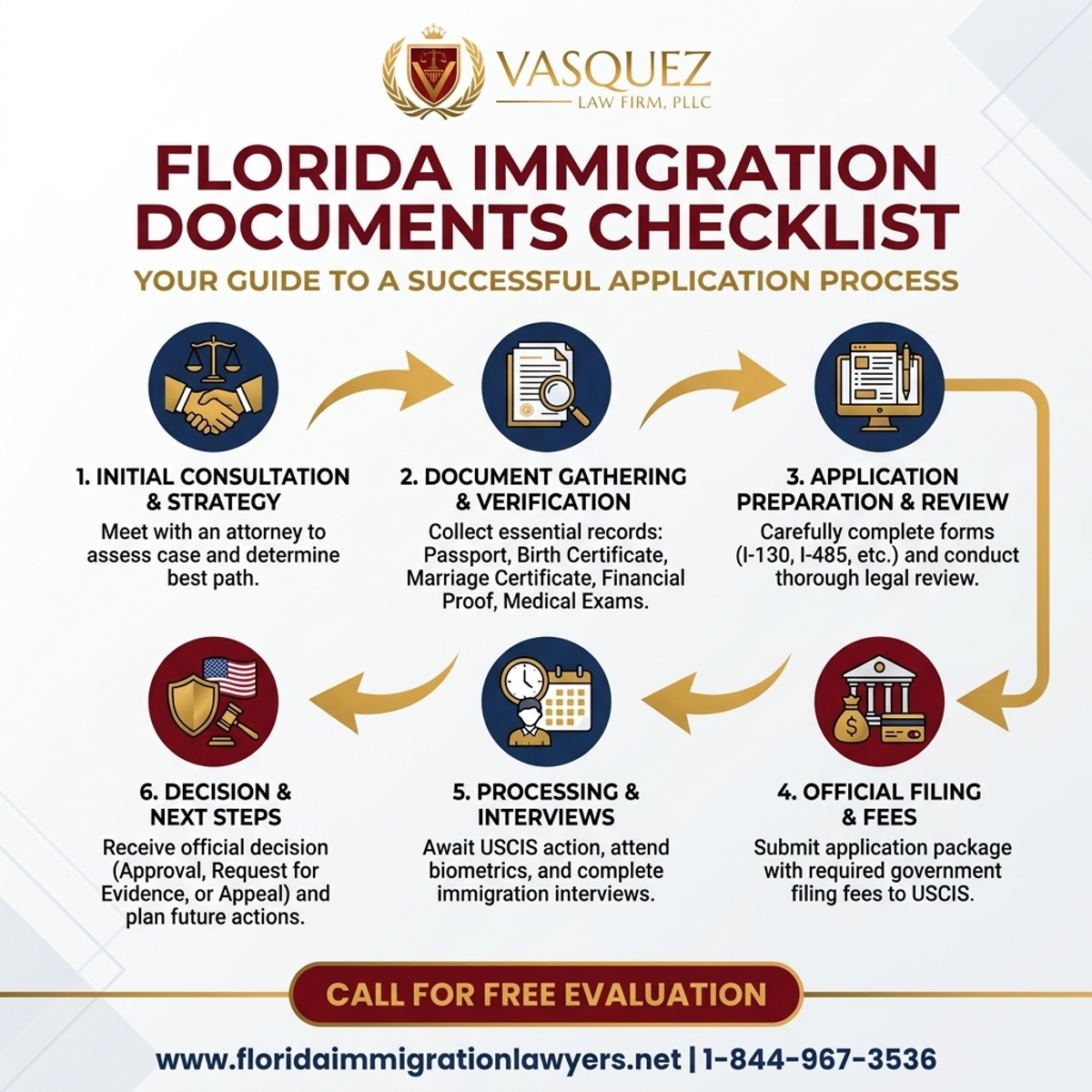
Navigating the complex world of U.S. immigration can be daunting, especially when it comes to gathering all the necessary paperwork. For applicants residing in Florida, understanding the specific requirements and ensuring every document is meticulously prepared is crucial for a successful application. A single missing or incorrectly submitted document can lead to significant delays, requests for evidence (RFEs), or even denial of your application. This comprehensive guide provides an essential checklist to help you prepare for your immigration journey in Florida.
If you find yourself overwhelmed or unsure about any part of this process, remember that expert legal assistance is invaluable. Contact Florida Immigration Lawyers at 1-844-YO-PELEO for personalized guidance tailored to your specific situation.
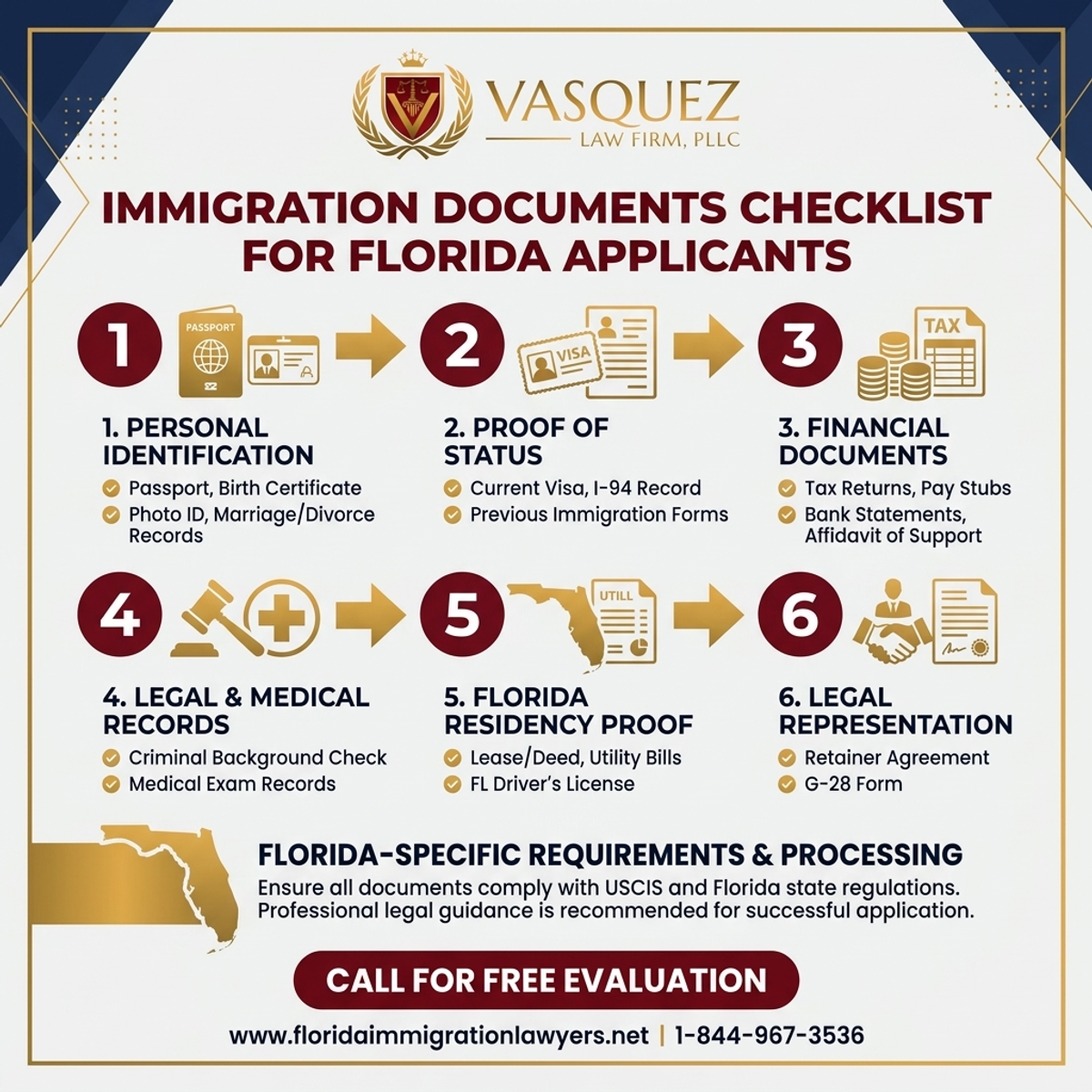
1. Personal Identification Documents
These are the foundational documents that establish your identity and nationality. Accuracy and validity are paramount.
Valid Passport
Your passport must be current and valid for at least six months beyond your intended period of stay or adjustment of status. Ensure all personal details match other submitted documents. It's also wise to keep multiple copies, both physical and digital, in a secure location.
Birth Certificate
An original or certified copy of your birth certificate is required. If it's not in English, it must be accompanied by a certified English translation. The translation must include a statement from the translator certifying that the translation is accurate and complete, and that they are competent to translate from the foreign language into English. This certification is a non-negotiable requirement for USCIS.
National Identity Card (if applicable)
Some countries issue national ID cards which may be required in addition to or in place of a passport for certain steps. Always check the specific requirements for your country of origin and the type of application you are filing.
Marriage Certificate (if applicable)
If you are married and your application is family-based, your original or certified marriage certificate is essential. Again, certified English translations are necessary if the original is not in English. Ensure the certificate is from the civil authority, not just a religious ceremony.
Divorce Decrees or Death Certificates (if applicable)
If you or your spouse have been previously married, you must provide proof of termination of all prior marriages (e.g., divorce decrees or death certificates). This is crucial for proving the legality of your current marriage and avoiding bigamy issues. All documents must be certified copies.
2. Proof of Relationship (for Family-Based Petitions)
For family-based immigration, demonstrating a legitimate relationship is critical. USCIS scrutinizes these relationships to prevent fraud.
Spousal Relationships
Beyond the marriage certificate, evidence of a bona fide marriage may include joint bank accounts, property deeds, utility bills, insurance policies, photographs together, affidavits from friends and family, and birth certificates of shared children. The more comprehensive your evidence, the stronger your case. Include a timeline of your relationship, showing its progression and commitment.
Parent-Child Relationships
Birth certificates listing both parents are usually sufficient. For step-parent relationships, marriage certificates and divorce decrees proving the legal formation of the step-relationship are needed. DNA testing may be requested in some complex cases, especially if birth records are unavailable or disputed.
Other Family Relationships
Depending on the specific petition (e.g., siblings, parent of an adult child), a combination of birth certificates, marriage certificates, and other civil documents will be required to establish the familial link. Genealogical records or affidavits may be necessary for older or less direct relationships.
3. Financial Support Documents
Applicants must demonstrate they will not become a public charge in the U.S. This is a critical component for many immigration pathways.
Affidavit of Support (Form I-864)
For most family-based and some employment-based immigrants, a U.S. citizen or lawful permanent resident sponsor must complete Form I-864, Affidavit of Support. This legally binding document ensures the immigrant will have adequate financial support and will not rely on public assistance. The sponsor must meet specific income thresholds.
Sponsor's Financial Evidence
The sponsor must provide proof of income, typically including federal income tax returns (Form 1040) for the most recent three years, W-2 forms, and pay stubs. Bank statements, employment verification letters, and proof of assets (e.g., property deeds, stock certificates) may also be required if income alone is insufficient to meet the poverty guidelines.
Step-by-Step Process — Immigration Documents Checklist for Florida Applicants
Applicant's Financial Evidence (if applicable)
If the applicant has assets or income that can be legally transferred to the U.S. or demonstrated as available, these can also be included to strengthen the financial standing of the application. This is particularly relevant for employment-based applications or those with significant personal wealth.
4. Medical Examination Records
All applicants for adjustment of status or immigrant visas must undergo a medical examination by a USCIS-approved civil surgeon to ensure they do not pose a public health risk.
Form I-693, Report of Medical Examination and Vaccination Record
This form must be completed by the civil surgeon and submitted in a sealed envelope directly to USCIS or given to you to submit with your application. It includes results of physical and mental examinations, tests for communicable diseases (like tuberculosis, syphilis, and gonorrhea), and vaccination records. Ensure all required vaccinations are up-to-date according to CDC guidelines for immigrants. The sealed envelope must not be opened by the applicant.
5. Police Clearance Certificates and Criminal Records
To assess admissibility, USCIS requires information about an applicant's criminal history from both domestic and international jurisdictions.
Police Certificates
Applicants generally need to obtain police certificates from their country of nationality or current residence, and from any country where they have lived for six months or more since the age of 16. These certificates must be translated if not in English. The process for obtaining these varies by country and can sometimes be time-consuming.
Key Statistics — Immigration Documents Checklist for Florida Applicants
Court and Prison Records
If you have ever been arrested or convicted of a crime, you must provide certified copies of all court and police records, including disposition documents. Even minor infractions should be disclosed. Failure to disclose can lead to severe consequences, including findings of inadmissibility or misrepresentation. An attorney can help determine what needs to be disclosed and how to present it.
6. Photographs
Specific photo requirements must be met for USCIS applications, as incorrect photos can lead to delays.
Passport-Style Photographs
You will need two identical passport-style color photographs taken within the last six months. They must meet specific USCIS guidelines regarding size (2x2 inches), background (white or off-white), head position, and facial expression (neutral). Do not submit photos that are digitally altered or older than six months, as this can lead to an RFE. Write your name and A-number (if known) lightly on the back of each photo.
7. Application Forms and Supporting Documents
The specific forms required will depend on your immigration pathway (e.g., family-based, employment-based, asylum). Each form is critical and must be filled out accurately.
Primary Application Forms
Common forms include Form I-130 (Petition for Alien Relative), Form I-485 (Application to Register Permanent Residence or Adjust Status), Form I-765 (Application for Employment Authorization), and Form I-131 (Application for Travel Document). Each form has its own set of instructions and supporting documents, which must be followed precisely.
Biographic Information (Form G-325A/I-130A)
This form provides essential personal and historical information about the applicant and, if applicable, the petitioner. It is used for background checks and identity verification.
Educational and Employment Records (for certain visas)
For employment-based visas or certain waivers, you may need to provide diplomas, transcripts, professional licenses, employment verification letters, and resumes. These documents prove your qualifications for the position or waiver sought.
Navigating these forms and ensuring every detail is correct can be overwhelming. For comprehensive assistance with your immigration application, consider reaching out to experienced Florida Immigration Lawyers at 1-844-YO-PELEO.
8. Understanding USCIS Processing Times and Communication
Once your application is submitted, the waiting period can be lengthy and unpredictable. It's crucial to understand how USCIS communicates and what to expect during this time.
Processing Times
USCIS publishes estimated processing times on its website, which vary significantly by form type and service center. These times are estimates and can change frequently due to workload and policy shifts. It's important to monitor these times but also to be prepared for potential delays and maintain patience.
Receipt Notices
After filing, you will typically receive a Form I-797C, Notice of Action, acknowledging receipt of your application. This notice will contain your receipt number, which you can use to track your case online through the USCIS website. Keep this notice safe as it is your proof of filing.
Biometrics Appointment
Most applicants will receive an appointment notice for a biometrics (fingerprints, photos, signature) collection at an Application Support Center (ASC). This is a mandatory step for identity verification and background checks. Missing this appointment without rescheduling can lead to application denial.
Requests for Evidence (RFEs) and Notices of Intent to Deny (NOIDs)
If USCIS determines that your application is missing information or requires further clarification, they will send an RFE. A NOID is issued if USCIS intends to deny your application but gives you a final chance to submit additional evidence or arguments. Responding promptly and thoroughly to RFEs and NOIDs is critical, often requiring legal expertise to provide the exact information requested in the correct format.
Interviews
Many immigration applications, particularly for adjustment of status, require an interview with a USCIS officer. This is an opportunity for the officer to verify information, assess credibility, and ensure admissibility. Preparation for an interview is vital, and having legal counsel present can be highly beneficial, providing support and ensuring fair treatment.
9. Navigating Complex Immigration Scenarios and Legal Support
The immigration process can present unique challenges, particularly when dealing with complex cases or unexpected issues. Understanding when and how to seek legal support can make a significant difference in the outcome of your application.
Common Pitfalls and How to Avoid Them
Applicants often encounter issues such as:
- Missing or Incorrect Documents: The most common reason for delays. Double-check every requirement against the official USCIS instructions and this checklist.
- Inaccurate Information: Any discrepancies across forms or documents, even minor ones, can raise red flags and lead to suspicions of misrepresentation.
- Missed Deadlines: Failing to respond to RFEs or attend appointments on time can lead to automatic denial of your application.
- Admissibility Issues: Past criminal history, immigration violations, or certain health conditions can make an applicant inadmissible to the U.S. These issues require careful legal analysis.
- Changes in Circumstances: Marriage dissolution, job loss, or changes in family status during the process must be reported to USCIS, as they can impact your eligibility.
An experienced immigration lawyer can help you anticipate these issues and prepare accordingly, ensuring your application is as robust as possible from the outset and mitigating potential problems.
Sources and References
- U.S. Citizenship and Immigration Services (USCIS)
- Executive Office for Immigration Review (EOIR)
- U.S. Department of State
- Immigration and Nationality Act (INA), 8 U.S.C. Chapter 12
Do Not Navigate This Process Alone
Our experienced immigration attorneys are ready to fight for you. Get a free, confidential case review today.
Se Habla Español
Or leave your details and we’ll call you:
Free Evaluation in 24 Hours
Or talk to us right now
AI voice assistant — available 24/7
FreeFrequently Asked Questions

William J. Vásquez
Founding Attorney · Vasquez Law Firm
U.S. Air Force veteran and immigration attorney with years of hands-on U.S. immigration experience. J.D., NCCU School of Law. AILA member. Admitted to the 4th, 5th, and 11th Circuit Courts.
Available 24/7 - Free Evaluations
Reviewed for legal accuracy by William J. Vásquez
Licensed in North Carolina; U.S. immigration is federal practice.
Related Legal Services
Our Florida immigration attorneys can help you with experienced immigration attorneys, asylum protection and citizenship and naturalization. Call today at 1-844-YO-PELEO for a free case review.
Related Links
Related Topics
Free Legal Case Review
Discuss your case with our experienced attorneys. We're available 24/7.
Se Habla Español - Estamos aquí para ayudarle.
Related Articles
PERM Labor Certification in Florida: A 2026 Guide
Learn all about the PERM labor certification process in Florida, essential for employers sponsoring green card applicants. Understand the steps, document requirements, and common mistakes to avoid in this 2026 guide.
Dual Citizenship Lawyer in Florida: What You Need to Know
For Florida residents, the concept of dual citizenship, or holding two passports, offers a compelling blend of opportunities and challenges. While the U.S. generally permits dual nationality, the path to achieving this status requires a meticulous understanding of both U.S. immigration laws and the citizenship policies of your country of origin. This guide explores the definition of dual citizenship, the detailed step-by-step process for U.S. naturalization, and the significant benefits and potential pitfalls involved. We cover essential documentation, typical timelines, and cost considerations for 2026, providing crucial insights for anyone in Orlando, Miami, or across Florida considering this important legal step. Learn about common mistakes to avoid and understand when to seek professional legal counsel to navigate this complex process successfully. Florida Immigration Lawyers is here to provide expert, bilingual support for your dual citizenship journey.
EAD Advance Parole Combo Card in Florida: What You Need
An EAD advance parole combo card allows individuals with pending adjustment applications to both work and travel abroad without jeopardizing their green card application. Learn how to apply in Florida, what documents you need, and common mistakes to avoid.
Immigration Lawyer Orlando Free Consultation in Florida
For individuals and families in Orlando, Florida, navigating the complexities of U.S. immigration law requires expert guidance. An immigration lawyer in Orlando offers crucial support for everything from visa applications and green card processes to naturalization and deportation defense. This comprehensive guide details what a free consultation covers, providing a step-by-step overview of immigration pathways, essential document checklists, and expected timelines in 2026. We also highlight common mistakes to avoid, discuss the critical role of legal counsel in deportation and asylum cases, and explain why choosing a local Orlando immigration attorney is beneficial. Florida Immigration Lawyers is dedicated to serving the diverse community of Orlando with compassionate, effective legal solutions, ensuring you receive personalized advice and robust representation for a successful immigration journey.