Immigration Bond Hearing Florida: Your Comprehensive...
An immigration bond hearing in Florida offers a pathway to freedom for detained individuals. This comprehensive guide from Florida Immigration Lawyers explains the entire process for 2026, from understanding bond eligibility and the step-by-step hearing procedure to essential documentation, timelines, and cost factors. Learn how an experienced attorney can significantly improve your chances of release. We cover common mistakes to avoid and when to seek legal help, emphasizing the importance of expert representation when facing detention. Contact us for a free consultation to protect your rights and fight for your freedom in Florida.

An immigration bond hearing in Florida determines if a detained individual can be released from ICE custody on a monetary bond. An Immigration Judge assesses factors like flight risk and danger to the community to set a bond amount, or deny bond altogether. Securing release allows individuals to pursue their immigration case outside of detention.
- Eligibility for an immigration bond hearing depends on your immigration history and criminal record.
- An Immigration Judge evaluates factors like community ties and flight risk during the hearing.
- Legal representation significantly improves your chances of a favorable bond decision.
- Bond amounts vary widely, typically ranging from a few thousand to tens of thousands of dollars.
- The process generally takes a few weeks to secure a hearing and potential release.
Immigration Bond Hearing Florida: Your Guide to Freedom in 2026
Facing immigration detention in Florida can be an incredibly stressful and frightening experience, not just for you but for your entire family. The thought of being separated from loved ones, especially in a foreign country, brings immense anxiety. Fortunately, for many, an immigration bond hearing offers a path to temporary freedom while your case proceeds.
Understanding the complexities of an immigration bond hearing Florida is crucial. This process, often held at facilities like the Krome Service Processing Center or Glades County Detention Center, can be daunting without proper guidance. Our goal at Florida Immigration Lawyers is to demystify this process, explain your rights, and provide the expert legal representation you need.
This comprehensive guide will walk you through everything you need to know about immigration bond hearings in Florida for 2026. We cover eligibility, the step-by-step process, necessary documents, timelines, and cost factors. If you or a loved one is detained, do not wait. Call Florida Immigration Lawyers at 1-844-967-3536 for a free consultation and immediate assistance.
Understanding Immigration Bonds in Florida
An immigration bond is a sum of money paid to the Department of Homeland Security (DHS) to secure the release of an individual from immigration detention. This payment acts as a guarantee that the individual will appear for all future immigration court hearings.
The Immigration and Nationality Act (INA) governs who is eligible for bond. Generally, individuals who are not considered a flight risk or a danger to the community may be eligible for an immigration bond. However, certain criminal convictions or prior immigration violations can make an individual ineligible for bond.
In Florida, immigration bond hearings typically take place before an Immigration Judge at one of the state's Immigration Courts, such as the Miami Immigration Court. The judge has the authority to determine if a bond should be granted and, if so, what the appropriate bond amount should be.
It's important to differentiate between different types of bonds. A delivery bond is the most common, ensuring appearance at hearings. A voluntary departure bond ensures departure from the U.S. if voluntary departure is granted.
Understanding these initial concepts is the first step in navigating the complex world of immigration detention and release. Your eligibility for an immigration bond hearing Florida depends heavily on your specific circumstances and immigration history.
The Immigration Bond Hearing Process: A Step-by-Step Guide
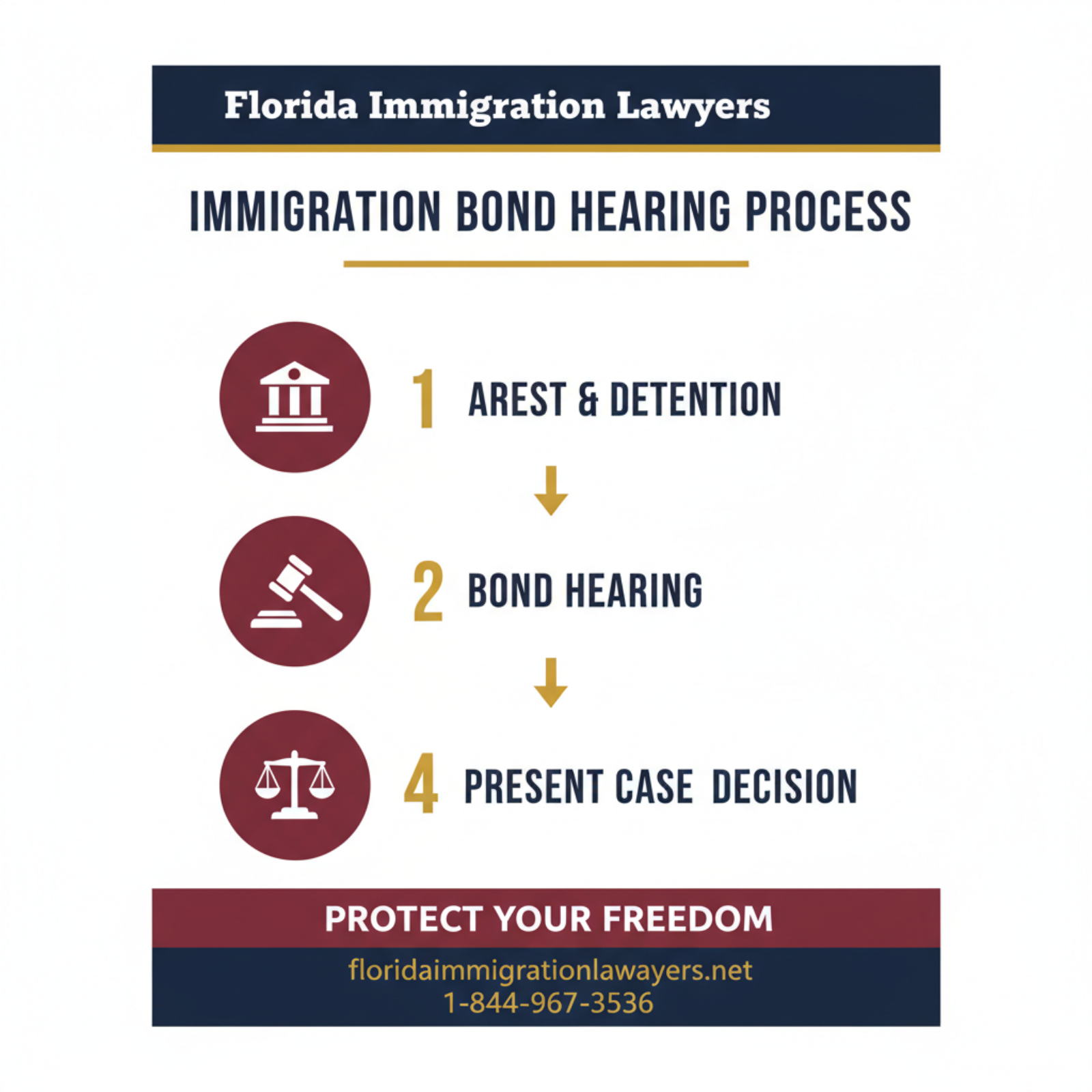
What happens during an immigration bond hearing? The process generally follows a structured path, designed to allow an Immigration Judge to make an informed decision about your release.
-
Initial Detention and Notice: When an individual is detained by Immigration and Customs Enforcement (ICE) in Florida, they are typically held at a detention facility. Within a reasonable time, ICE should issue a Notice to Appear (NTA), which formally begins removal proceedings and informs the individual of their charges.
-
Bond Eligibility Review: ICE may initially set a bond amount, or determine that the individual is not eligible for bond. If ICE denies bond or sets an unreasonably high amount, you have the right to request a bond hearing before an Immigration Judge. This is a crucial step for many detained individuals.
-
Requesting a Bond Hearing: To request a bond hearing, a motion must be filed with the Immigration Court. This motion formally asks the Immigration Judge to review ICE's bond decision or to set a bond where none was offered. An experienced attorney can prepare and file this request efficiently.
-
The Bond Hearing: What happens at a bond hearing in Florida? The hearing takes place at an Immigration Court, often via video conference if the detainee is at a remote facility. During the hearing, the Immigration Judge will hear arguments from your attorney and the ICE attorney. Your attorney will present evidence demonstrating you are not a flight risk and not a danger to the community.
The judge considers factors such as your ties to the community, employment history, family in the U.S., immigration history, and any criminal record. The goal is to show that you are a responsible individual who will appear for all future court dates. This is where a strong legal strategy makes a significant difference.
-
Judge's Decision: After hearing all arguments and reviewing evidence, the Immigration Judge will make a decision. The judge may grant bond, deny bond, or set a bond amount. If a bond is granted, the judge will specify the amount. The bond amount must be paid to ICE to secure release.
-
Posting the Bond and Release: If bond is granted, a U.S. citizen or lawful permanent resident typically posts the bond at an ICE ERO field office. Once the bond is paid, ICE will process the release of the detained individual. This process can take several hours to a few days depending on the facility and time of day.
Essential Documents for Your Immigration Bond Hearing
To succeed at an immigration bond hearing Florida, presenting compelling evidence is critical. A well-prepared document checklist can significantly strengthen your case. These documents help demonstrate your ties to the community and show you are not a flight risk.
- Proof of Identity: Passport, birth certificate, national identity card.
- Proof of Residence: Utility bills, lease agreements, property deeds showing your address in Florida.
- Family Ties: Birth certificates of U.S. citizen or LPR children/spouse, marriage certificates, affidavits from family members.
- Employment History: Pay stubs, employment letters, tax returns, demonstrating stable employment in Florida.
- Financial Assets: Bank statements, property ownership documents, showing financial stability and ties to the U.S.
- Community Involvement: Letters from community leaders, church members, or employers attesting to your good character and involvement.
- Medical Records: If you have significant health issues requiring ongoing treatment, these can show a need to remain in the community.
- Criminal History Documentation: If applicable, certified disposition records for any past arrests or convictions. This is important for the judge to understand the full context.
- Affidavits of Support: Letters from family or friends willing to support you financially and ensure your appearance in court.
- Proof of Sponsor's Status: Documents for the person posting the bond, demonstrating their legal status in the U.S. (e.g., U.S. passport, green card).
Gathering these documents can be challenging while a loved one is detained. Florida Immigration Lawyers can guide your family through this process, helping to collect and organize the necessary evidence to present a strong case to the Immigration Judge.
Navigating Timelines and Processing for Immigration Bonds
How long does it take for an immigration bond to be approved? The timeline for an immigration bond hearing Florida can vary significantly based on several factors, including the specific detention facility, court docket congestion, and the complexity of the case.
Typically, once a request for a bond hearing is filed, it can take anywhere from a few days to a few weeks for the hearing to be scheduled. In busy courts like Miami, wait times might be slightly longer. However, attorneys often work to expedite these hearings, especially in urgent situations.
After a bond is granted, the process of posting the bond and securing release usually takes 24 to 72 hours. This involves the bond obligor (the person paying the bond) traveling to an ICE ERO office to make the payment. The release process itself then depends on the detention center's internal procedures.
Factors that can influence the timeline include:
- Court Availability: The schedule of the Immigration Judges and the availability of courtrooms.
- Detention Facility Location: Remote facilities might have less frequent hearings.
- Case Complexity: Cases with extensive criminal histories or prior immigration violations may require more time for review.
- Attorney's Efficiency: A skilled attorney can ensure all filings are correct and timely, avoiding unnecessary delays.
Staying informed about your immigration bond status is important. Your attorney can provide updates and help you track the progress of your case. While no attorney can guarantee specific outcomes or timelines, we strive to make the process as efficient as possible for our clients in Florida.
Understanding the Costs of an Immigration Bond
The cost of an immigration bond involves two main components: the bond amount set by the Immigration Judge and legal fees for representation. Both are critical considerations for families seeking the release of a loved one.
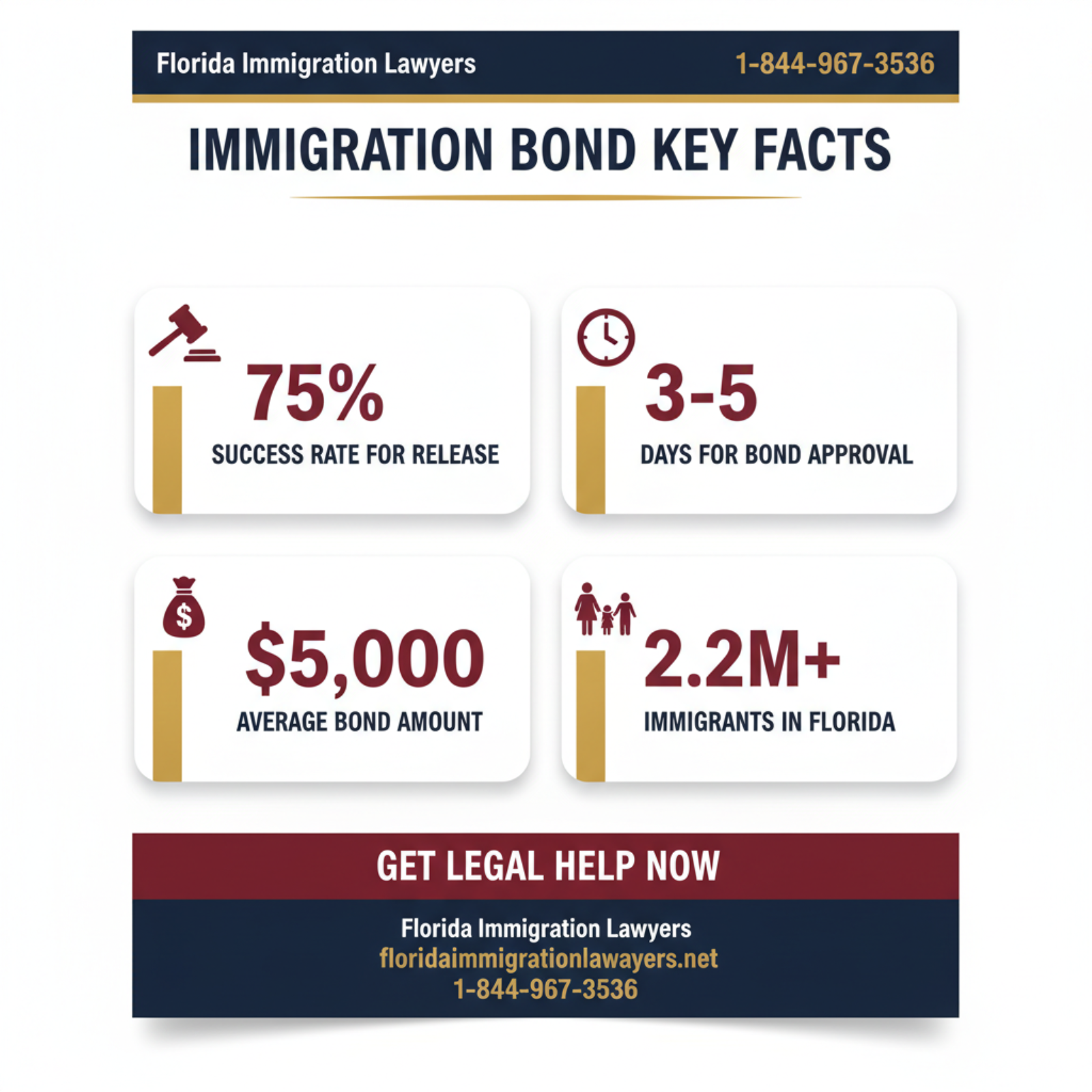
The bond amount itself is determined by the Immigration Judge. There is a statutory minimum bond of $1,500, but in Florida, bond amounts typically range from $2,500 to $25,000, and sometimes even higher for individuals deemed a higher flight risk or danger. This money is held by ICE and is returned once the immigration case is concluded, provided all court appearances were met.
Legal fees cover the services of an immigration attorney who will represent the detained individual. This includes filing the motion for a bond hearing, preparing the case, gathering evidence, and arguing before the Immigration Judge. While legal fees are an additional cost, having an attorney significantly increases the likelihood of a lower bond amount or even bond approval, potentially saving families money in the long run.
Other potential costs may include:
- Travel Expenses: For family members to visit the detained individual or to post bond at an ICE office.
- Document Fees: Costs associated with obtaining certified copies of records.
- Translation Services: If documents are not in English, translation may be required.
Florida Immigration Lawyers offers free consultations to discuss your specific situation and provide clear information about potential legal fees. We understand the financial strain these situations can create and are committed to transparent pricing and effective advocacy.
Do not navigate this process alone. The complexities of an immigration bond hearing Florida demand experienced legal counsel. Contact Florida Immigration Lawyers today at 1-844-967-3536 to discuss your options and secure dedicated representation.
Common Mistakes to Avoid in Immigration Bond Hearings
An immigration bond hearing Florida is a critical juncture in an immigration case. Mistakes made during this phase can have severe consequences, potentially leading to prolonged detention or a higher bond amount. Avoiding these common pitfalls is essential for a successful outcome.
-
Not Requesting a Bond Hearing: Some individuals or families mistakenly believe that if ICE denies bond, there are no other options. This is incorrect. You have the right to request a bond hearing before an Immigration Judge, who can override ICE's decision. Failing to request one means missing a crucial opportunity for release.
-
Attempting Self-Representation: Immigration law is incredibly complex. Representing yourself, especially while detained, makes it very difficult to effectively argue your case, present evidence, or understand legal nuances. An attorney knows the law and how to present your best arguments.
-
Lack of Preparedness and Documentation: Showing up to a bond hearing without sufficient documentation to prove community ties, stable employment, or good character weakens your case significantly. Judges rely on evidence to make their decisions.
-
Failing to Disclose Criminal History: Attempting to hide or misrepresent past arrests or convictions will severely damage your credibility with the Immigration Judge. It is always best to be truthful and allow your attorney to address these issues proactively.
-
Missing Court Dates: If released on bond, failing to appear for any scheduled immigration court hearing will result in the forfeiture of your bond and likely a new detention order. This can have long-term negative consequences for your immigration case.
-
Not Understanding the Charges: It is vital to understand the reasons for detention and the specific charges against you. Without this understanding, it is impossible to formulate an effective defense or argument for bond. Your attorney will explain these details.
-
Providing Inconsistent Information: Any inconsistencies in statements to ICE officers, during credible fear interviews, or in court can be used against you. Always provide accurate and consistent information, ideally after consulting with an attorney.
When to Call a Lawyer for Your Immigration Bond Hearing
The moment you or a loved one is detained by ICE in Florida, it is the right time to contact an immigration lawyer. Early intervention can make a significant difference in the outcome of an immigration bond hearing Florida. Here are specific scenarios where legal assistance is not just recommended, but often critical:
- Any Detention by ICE: If you or a family member is taken into custody by ICE, immediate legal counsel is paramount. An attorney can quickly assess eligibility for bond and initiate the process.
- ICE Denies Bond or Sets High Bond: If ICE determines you are not eligible for bond or sets an unreasonably high amount, an attorney can challenge this decision before an Immigration Judge.
- Complex Immigration History: If you have previous deportations, multiple entries, or a complicated immigration record, an attorney can navigate these complexities and present your case effectively.
- Criminal History: Even minor criminal offenses can impact bond eligibility. An immigration lawyer specializing in deportation defense can explain the implications and argue for your release.
- Lack of Documentation: If you struggle to gather the necessary documents or understand what evidence is needed, an attorney's guidance is invaluable.
- Language Barriers: If English is not your primary language, an attorney can ensure effective communication with the court and ICE, and that your voice is heard accurately.
Florida Immigration Lawyers has extensive experience in handling immigration bond hearings across Florida, including at the Miami Immigration Court. We are dedicated to protecting your rights and fighting for your freedom. Our team understands the local courts and the nuances of Florida immigration law. We also assist with other critical areas such as asylum cases, family immigration, and citizenship applications, offering a holistic approach to your immigration needs. Do not face this challenging situation alone; let our expert attorneys advocate for you.
About Florida Immigration Lawyers
Florida Immigration Lawyers is a leading immigration law firm dedicated to serving individuals and families across the entire state of Florida. With years of specialized experience, our attorneys are committed to providing compassionate, effective, and results-driven legal representation for all types of immigration matters.
We understand the profound impact immigration issues have on your life and your family. Our comprehensive services range from general immigration and visa applications to complex deportation defense, asylum claims, family-based petitions, and business immigration. We pride ourselves on offering personalized strategies tailored to each client's unique circumstances.
Why choose Florida Immigration Lawyers? Our firm is known for its unwavering dedication, deep legal knowledge, and a strong track record of success. We offer free consultations to assess your case and are available 24/7 to address urgent concerns. We serve all Florida cities, from Miami to Jacksonville, Orlando to Tampa, ensuring that expert legal help is always within reach.
For immediate assistance or to schedule your free consultation, please call us at 1-844-967-3536. You can also learn more about our team and services by visiting our website: https://www.floridaimmigrationlawyers.net. Let us be your trusted advocates in your immigration journey.
Sources and References
- U.S. Citizenship and Immigration Services (USCIS)
- Executive Office for Immigration Review (EOIR)
- 8 U.S.C. Chapter 12 - Immigration and Nationality Act (INA)
- 8 U.S.C. § 1229a - Removal Proceedings
- 8 C.F.R. § 1003.19 - Custody and Bond
- U.S. Immigration and Customs Enforcement (ICE) Detention
This article provides general legal information and is not intended as legal advice. Every case is unique, and outcomes depend on specific facts and circumstances. Contact an attorney for advice about your particular situation. Immigration laws are subject to change.
Navigating an immigration bond hearing Florida requires strategic legal representation. Do not leave your freedom to chance. Contact Florida Immigration Lawyers today for a confidential, free consultation. We are here to help you and your family every step of the way. Call us now at 1-844-967-3536. Se Habla Español - Estamos aquí para ayudarle.
Do Not Navigate This Process Alone
Our experienced immigration attorneys are ready to fight for you. Get a free, confidential consultation today.
Se Habla Español
Frequently Asked Questions
Florida Immigration Lawyers
Immigration Attorney | Founder, Vasquez Law Firm
U.S. Air Force veteran and immigration attorney with thousands of cases resolved. J.D., NCCU School of Law. AILA member. Admitted to the 4th, 5th, and 11th Circuit Courts.
Available 24/7 - Free Evaluations
Related Legal Services
Our Florida immigration attorneys can help you with free immigration consultation, experienced immigration attorneys and business immigration. Call today at 1-844-967-3536 for a free consultation.
Related Links
Related Topics
Free Legal Consultation
Discuss your case with our experienced attorneys. We're available 24/7.
Se Habla Español - Estamos aquí para ayudarle.
Related Articles
Stokes Interview: Navigating Marriage Fraud in Florida
A Stokes interview is a specialized, separate interview conducted by USCIS when there are suspicions of marriage fraud in a green card application. This rigorous process involves individual questioning of spouses, focusing on inconsistencies in their testimonies to determine the authenticity of their marital bond. For couples in Florida, navigating this high-stakes interview requires meticulous preparation, extensive documentation, and often the strategic guidance of an experienced immigration lawyer. Understanding the process, preparing for detailed questions, and presenting a strong case are crucial for overcoming marriage fraud allegations and securing your immigration future. Florida Immigration Lawyers stands ready to assist you.
Immigration Attorney Gainesville: North Florida Legal Help
For those in Gainesville, Alachua County, and throughout North Florida, navigating U.S. immigration law requires expert guidance. An experienced immigration attorney can simplify complex processes, from family-based petitions and employment visas to critical asylum claims and deportation defense. This comprehensive guide outlines the essential services provided by an immigration attorney, details necessary documentation, clarifies processing timelines, and discusses associated costs. We also highlight common mistakes to avoid and crucial scenarios where legal counsel is indispensable. Florida Immigration Lawyers serves all of Florida, including Gainesville and St. Petersburg, providing dedicated legal support to help you achieve your immigration goals. Contact us for a free consultation to discuss your specific needs.
Military Naturalization Expedited at Florida Bases
Explore expedited military naturalization processes for service members at Florida bases like MacDill. Learn about eligibility, steps, and common mistakes. Contact Florida Immigration Lawyers for a free consultation.
Protect Yourself from Immigration Scams in Florida
Learn how to protect against immigration scams in Florida, focusing on St. Petersburg. This guide covers identifying scams, verifying credentials, and getting legal help. Call Florida Immigration Lawyers at 1-844-967-3536 for assistance.