Immigration Bond Hearing Florida: Secure Release from Detent
Facing an immigration bond hearing in Florida can be one of the most stressful experiences for individuals and their families. When a loved one is detained by ICE, understanding the path to their release is paramount. This detailed guide from Florida Immigration Lawyers explains the entire process, from initial detention and bond eligibility to preparing for your hearing and securing release. We cover essential documents, timelines, cost factors, and common mistakes to avoid. With offices serving all of Florida, including Hialeah, our expert attorneys are ready to provide the compassionate and effective legal representation you need to navigate these complex challenges. Learn how strong legal advocacy can make a difference in securing freedom from detention.

An immigration bond hearing in Florida is a crucial legal proceeding where an immigration judge determines if a detained individual can be released from U.S. Immigration and Customs Enforcement (ICE) custody by posting a bond. This hearing assesses factors like flight risk and danger to the community. Securing a bond allows individuals to fight their immigration case from outside detention, often leading to better outcomes. Understanding the process and presenting a strong case with legal representation is vital for a successful release.
- Immigration bonds allow release from ICE detention.
- Judges consider flight risk and public safety.
- Strong ties to Florida and good moral character are key.
- Legal representation significantly improves chances of release.
- Bond hearings occur in Florida immigration courts like Miami, Orlando, and Hialeah.
The fear and uncertainty of immigration detention can be overwhelming for individuals and their families across Florida, especially in communities like Hialeah. When a loved one is detained by U.S. Immigration and Customs Enforcement (ICE), the primary goal is often to secure their release as quickly as possible. This process typically involves an immigration bond hearing in Florida, a critical step that can determine whether an individual remains in custody or is released to pursue their case from home.
Navigating the complexities of immigration law, particularly when facing detention, requires specialized knowledge and experience. From understanding bond eligibility to presenting a compelling case before an immigration judge, every detail matters. This comprehensive guide from Florida Immigration Lawyers will walk you through the entire process, providing essential information to help you or your loved one secure release.
Do not face this challenging time alone. Call Florida Immigration Lawyers at 1-844-967-3536 for a free consultation. Our dedicated attorneys are here to help you understand your options and fight for your freedom.
Understanding Immigration Bonds and Detention in Florida
When an individual is taken into custody by ICE, they are often held in one of Florida's immigration detention centers, such as Krome Service Processing Center in Miami, Glades County Detention Center, or Broward Transitional Center. The first step towards release is often through an immigration bond. An immigration bond is a sum of money paid to the government to ensure that an individual will appear for all future immigration court hearings.
Not everyone is eligible for a bond. Under the Immigration and Nationality Act (INA), specifically INA Section 236(a) (8 U.S.C. § 1226(a)), certain individuals, particularly those with serious criminal convictions or specific national security concerns, may be deemed ineligible for bond and subject to mandatory detention. However, for many others, a bond hearing offers a path to temporary freedom. The recent news regarding federal judges blocking ICE from making arrests at courthouses highlights the ongoing complexities and legal challenges within the immigration system, underscoring the need for expert legal counsel.
There are typically two types of bonds: a delivery bond and a voluntary departure bond. A delivery bond is the most common, allowing release while the individual's immigration case proceeds. A voluntary departure bond is posted to ensure that a person will leave the U.S. by a specific date if ordered to do so. The amount of the bond is set by ICE or an immigration judge, ranging from a few thousand dollars to significantly higher sums, depending on the case's specifics. Our firm regularly handles cases involving ICE detention across Florida, including those originating from arrests in Hialeah and other South Florida areas.
Who is Eligible for an Immigration Bond?
Eligibility for an immigration bond primarily depends on whether the individual poses a flight risk or a danger to the community. Factors considered include criminal history, ties to the community (family, employment, property), length of residence in the U.S., and immigration history. Individuals with no criminal record and strong community ties in Florida are generally strong candidates for bond. Conversely, those with serious criminal convictions, a history of failing to appear in court, or prior deportation orders may face an uphill battle.
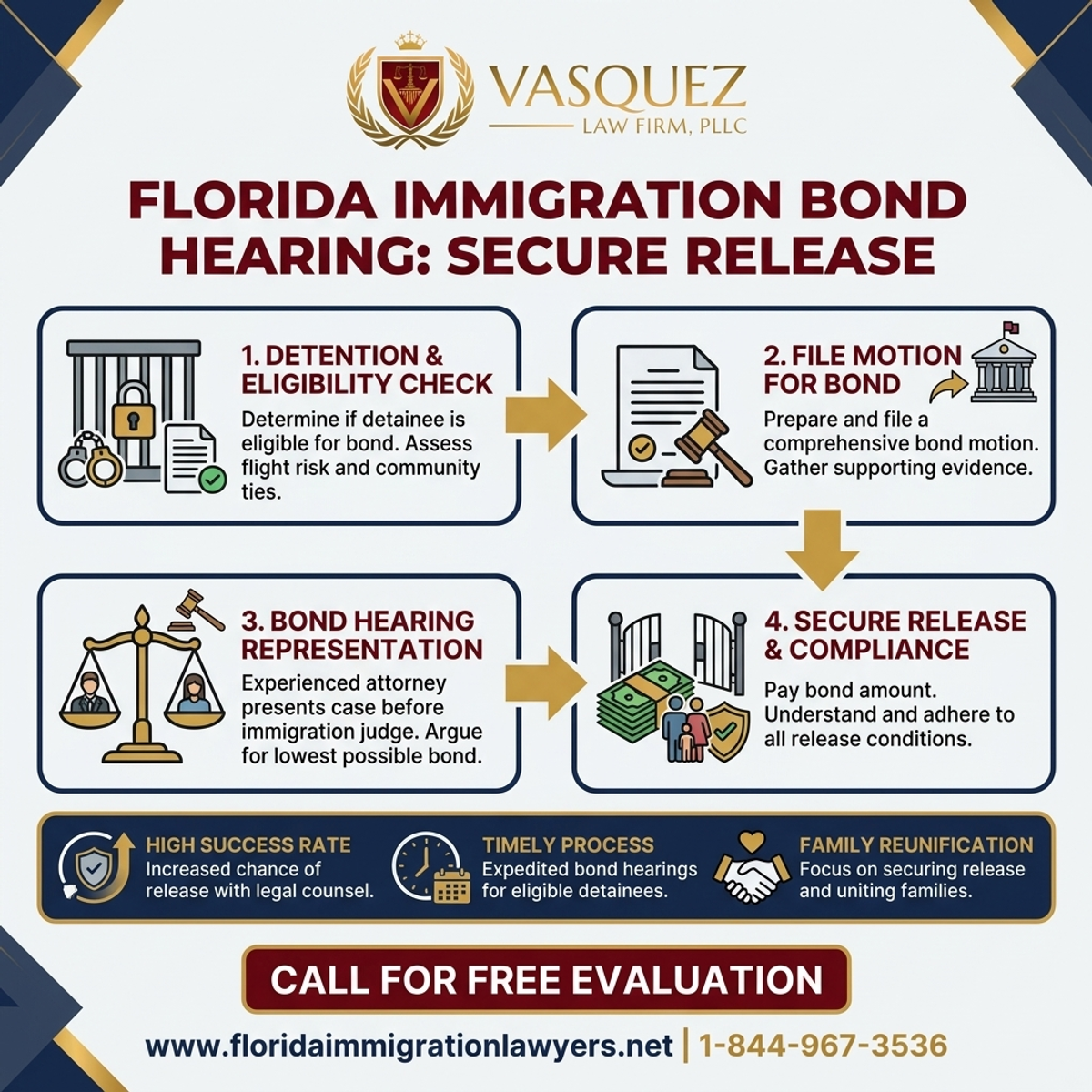
An immigration judge has broad discretion in setting bond amounts. They will weigh the evidence presented by the detained individual and the government to make a determination. Having a knowledgeable immigration attorney in Florida is crucial to present the most compelling case for bond eligibility and a reasonable bond amount, significantly improving the chances of a favorable outcome for individuals detained by ICE.
Step-by-Step Guide: Navigating Your Immigration Bond Hearing in Florida
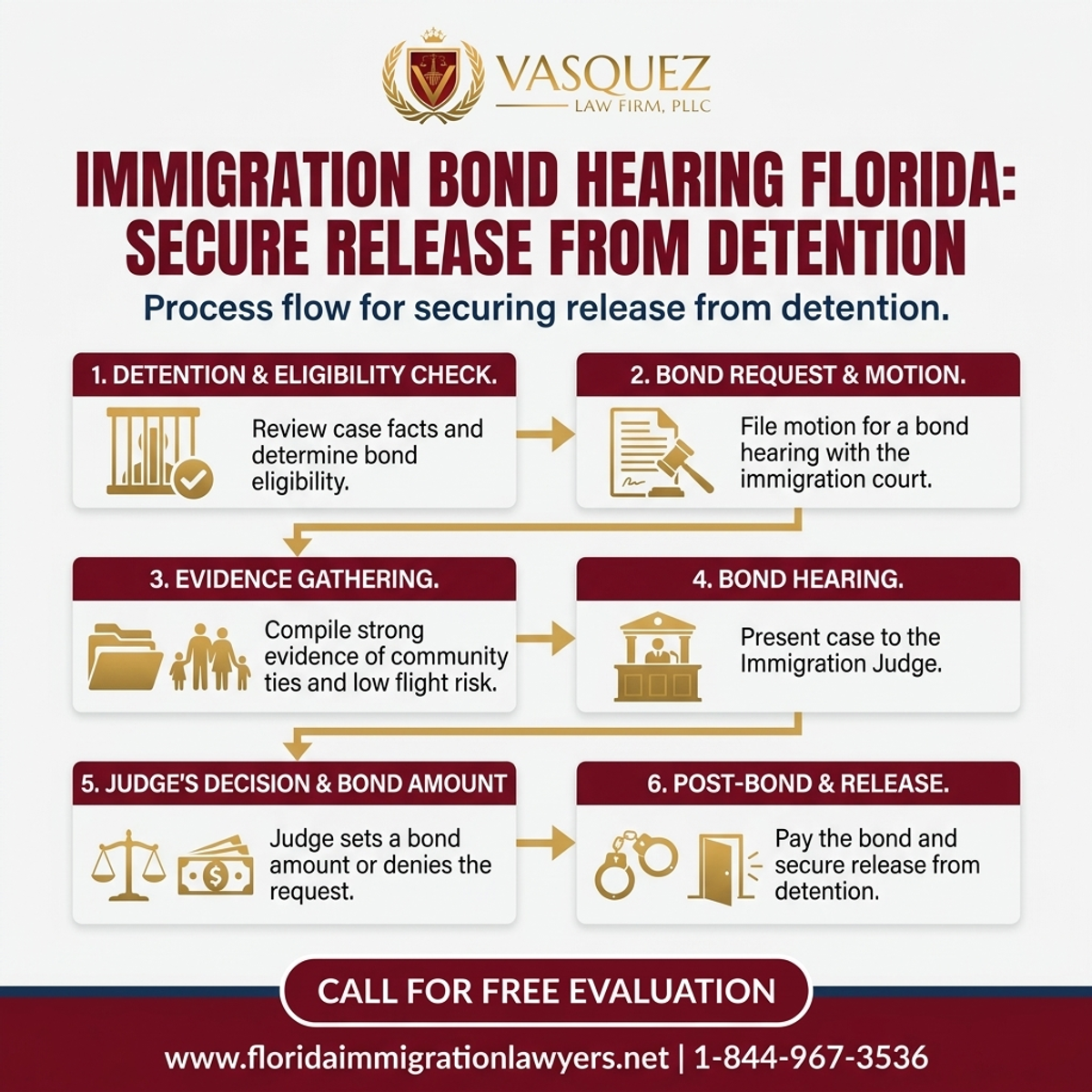
The process of securing an immigration bond can be intricate, but understanding each step can demystify the journey. Here is a detailed guide to navigating an immigration bond hearing in Florida:
-
Detention and Notice to Appear (NTA): After an individual is arrested by ICE, they will typically be processed and issued a Notice to Appear (Form I-862). This document initiates removal proceedings and contains the allegations against the individual and the charges of removability. The NTA will also indicate the immigration court where the hearings will take place, which for many in South Florida will be the Miami Immigration Court or the Orlando Immigration Court for those in Central Florida.
-
Initial Bond Determination by ICE: In some cases, ICE may set a bond amount shortly after detention without a formal hearing. If this amount is affordable, the bond can be posted, and the individual released. However, if ICE denies bond or sets an unreasonably high amount, the next step is to request a bond redetermination hearing.
-
Requesting a Bond Hearing: If ICE does not set a bond or sets an amount that is too high, the detained individual, or their attorney, can request a bond hearing before an immigration judge. This request is typically made verbally during an initial master calendar hearing or by filing a written motion. For individuals detained in facilities serving the Hialeah area, this hearing would likely be held at the Miami Immigration Court.
-
Preparing for the Bond Hearing: This is a critical stage. Your attorney will gather all necessary evidence to demonstrate your ties to the community, good moral character, and lack of flight risk or danger. This includes collecting documents, affidavits from family and friends, and any other supporting materials. A strong presentation is key to convincing the judge.
-
The Bond Hearing Itself: During the hearing, which typically takes place at an immigration court like the Miami Immigration Court or Orlando Immigration Court, the judge will hear arguments from both your attorney and the ICE attorney. Your attorney will present evidence supporting your eligibility for bond and argue for a low bond amount. You may be asked to testify. The judge will then make a decision regarding bond eligibility and the bond amount. These hearings are often quick, so a well-prepared case is paramount.
-
Bond Payment and Release: If the judge grants bond, the specified amount must be paid to ICE. This can be done by a U.S. citizen or lawful permanent resident through a money order or cashier's check at an ICE ERO field office. Once the bond is posted and processed, typically within 24-72 hours, the individual will be released from detention. It's important to note that the bond is returned once the immigration case is concluded and all court appearances have been made.
Essential Documents for a Successful Immigration Bond Hearing
Presenting a robust collection of documents is vital for a successful immigration bond hearing. These documents serve as tangible proof of your ties to the community, good character, and financial stability, all of which are critical factors an immigration judge will consider. A strong document portfolio can significantly influence the judge's decision regarding bond eligibility and the bond amount.
Here is a list of essential documents and information you should prepare:
- Identity and Immigration Documents: Passport, birth certificate, any previous visas, I-94 arrival/departure record, Notice to Appear (NTA), and any other relevant immigration forms.
- Proof of Family Ties in Florida: Marriage certificate, birth certificates of U.S. citizen or lawful permanent resident children, affidavits from family members confirming your relationship and support. This demonstrates strong family connections within the U.S.
- Proof of Residence in Florida: Lease agreements, mortgage statements, utility bills, or driver's license showing your address, particularly if you reside in areas like Hialeah or Miami-Dade County.
- Employment History and Financial Solvency: Employment verification letters, pay stubs, tax returns (Form W-2s or 1099s), bank statements. These demonstrate financial stability and a reason to remain in the community.
- Character Letters: Letters from employers, religious leaders, community members, or friends attesting to your good moral character, community involvement, and reliability. These letters should be signed and dated.
- Medical Records: If you or a family member depend on you for medical care, provide relevant medical records. This can highlight humanitarian concerns.
- Proof of Property Ownership: If you own property in Florida, provide deeds or property tax statements. This further establishes strong ties to the U.S.
- Past Court Appearances: Evidence of compliance with previous court orders or appearances, if applicable, to counter any flight risk concerns.
Step-by-Step Process — Immigration Bond Hearing Florida: Secure Release from Detention
Organizing these documents systematically with the help of an experienced attorney from Florida Immigration Lawyers can make a significant difference. We can help you identify, gather, and present the most impactful evidence for your specific situation.
Timelines and Processing Expectations for Immigration Bond Cases
Understanding the typical timelines and processing expectations can help manage anxieties during the immigration bond process. While every case is unique, there are general timeframes associated with securing an immigration bond hearing in Florida and subsequent release from detention.
After an individual is detained, ICE typically conducts an initial bond determination. If ICE sets a bond, it can often be paid relatively quickly, leading to release within 24-72 hours of payment. However, if ICE denies bond or sets an amount that is unaffordable, requesting a bond hearing before an immigration judge becomes necessary. The time from requesting a bond hearing to actually having one can vary significantly.
In busy immigration courts like Miami and Orlando, it might take several days to a few weeks for a bond hearing to be scheduled. Factors influencing this timeline include the court's current caseload, the availability of judges, and whether the detainee is held in a facility that has direct video conferencing capabilities with the court. For instance, bond hearings for individuals detained at Krome or Glades will be heard by the Miami Immigration Court, while those at Broward Transitional Center often appear before the Orlando Immigration Court.
Once a bond is granted by an immigration judge, the payment process generally involves a U.S. citizen or Legal Permanent Resident paying the bond at an ICE Enforcement and Removal Operations (ERO) field office. In Florida, these offices are located in cities like Miami, Tampa, and Jacksonville. After payment, it typically takes another 24-72 hours for ICE to process the payment and physically release the individual from the detention facility. This period allows for administrative procedures and transportation. For the most current information on court dockets and processing, individuals can refer to the Executive Office for Immigration Review (EOIR) website.
It is important to remember that these are general expectations. Delays can occur due to administrative backlogs, holiday periods, or specific complexities of an individual's case. An experienced Florida immigration attorney can provide a more precise estimate based on current court conditions and the specifics of your situation, helping you prepare for the waiting period.
Cost Factors and Fee Breakdown for Immigration Bond Hearings
Understanding the financial aspects of an immigration bond hearing in Florida is crucial for families seeking to reunite with their detained loved ones. The costs involved can primarily be categorized into the immigration bond itself, attorney fees, and potential fees for bond companies.
The immigration bond amount is set either by ICE or an immigration judge. These amounts vary widely, typically ranging from a minimum of $1,500 to $25,000 or even higher, depending on the specifics of the case. Factors influencing the bond amount include the individual's criminal history, immigration history, ties to the community, and the perceived flight risk. The bond is a security deposit, fully refundable once the individual's immigration case is concluded and they have complied with all court orders. It is important to note that specific filing fee amounts are subject to change and should be verified with official sources or an attorney.
Attorney fees represent the cost of legal representation. An experienced immigration attorney is invaluable during a bond hearing, as they prepare the case, gather evidence, and advocate powerfully before the judge. Fees can vary based on the attorney's experience, the complexity of the case, and the amount of work involved. Some attorneys charge a flat fee for bond hearings, while others may bill hourly. Investing in qualified legal counsel is often the most critical factor in securing a favorable bond determination and ultimately, release from detention.
Key Statistics — Immigration Bond Hearing Florida: Secure Release from Detention
Lastly, if a family cannot afford to pay the full cash bond, they might opt to use an immigration bond company. These companies act as sureties, guaranteeing the bond amount to ICE. In exchange, the family pays the bond company a non-refundable premium, typically 10-20% of the total bond amount, along with collateral. While this option can make release more accessible, it means a portion of the bond money is not returned, even if the individual appears for all hearings. Our firm can discuss all these financial considerations and help you make informed decisions for your unique situation in Florida, from Hialeah to Jacksonville.
Do not navigate this process alone. Contact Florida Immigration Lawyers today at 1-844-967-3536 for a free consultation. Our team is ready to provide the guidance and support you need.
Common Mistakes to Avoid in an Immigration Bond Hearing
Navigating an immigration bond hearing can be fraught with potential pitfalls. Avoiding common mistakes is as important as presenting a strong case. Here are 7-12 crucial errors to steer clear of:
-
Representing Yourself Without Legal Counsel: This is arguably the biggest mistake. Immigration law is highly complex, and bond hearings move quickly. Without an attorney, you are at a significant disadvantage against experienced ICE prosecutors. Consequences: Higher bond amount or denial of bond.
-
Not Gathering Sufficient Evidence: Failing to provide comprehensive documentation of your ties to Florida, good moral character, and financial stability weakens your case. Consequences: The judge may perceive you as a flight risk or danger, leading to a higher bond or denial.
-
Providing Inconsistent Statements: Any discrepancies between your testimony, initial statements to ICE, or documents can undermine your credibility. Consequences: Loss of trust from the judge, negatively impacting your bond decision.
-
Missing Deadlines or Court Appearances: Even during the bond process, missing any scheduled court date or deadline can have severe repercussions. Consequences: Automatic denial of bond, or if already released, bond forfeiture and re-detention.
-
Ignoring Criminal History Issues: Attempting to conceal or downplay past criminal offenses, even minor ones, can be detrimental. Consequences: Mandatory detention or an extremely high bond, as it demonstrates a lack of candor.
-
Failing to Understand Eligibility Criteria: Not knowing if you are statutorily eligible for bond can lead to wasted effort and false hope. Consequences: Pursuing a bond hearing when you are mandatorily detained, leading to immediate denial.
-
Choosing the Wrong Bond Sponsor: The person posting your bond (sponsor) must be a U.S. citizen or Legal Permanent Resident and show financial stability. Choosing an ineligible or unreliable sponsor can delay or prevent release. Consequences: Inability to post bond even if granted, prolonging detention.
-
Making Emotional, Unsubstantiated Arguments: While emotional appeals are understandable, immigration judges require factual evidence and legal arguments. Consequences: Your pleas may be dismissed without proper legal basis, weakening your overall presentation.
-
Not Appealing an Unfavorable Bond Decision: If the judge sets an excessively high bond or denies it, there are avenues for appeal (bond redetermination or appeal to the BIA). Consequences: Remaining in detention longer than necessary due to a missed opportunity for review.
-
Discussing Your Case with Others in Detention: Information shared with other detainees or even detention center staff can sometimes be used against you. Consequences: Unintentionally providing information that harms your case, especially regarding criminal or immigration history.
-
Assuming ICE Will Provide All Necessary Information: ICE's role is enforcement, not necessarily to assist you in securing release. Consequences: You might miss out on crucial information or opportunities for bond if you rely solely on ICE.
By being aware of these common mistakes and actively working with an experienced Florida immigration attorney, you can significantly improve your chances of a positive outcome at your bond hearing.
When to Call Florida Immigration Lawyers for Your Bond Hearing
The decision to seek legal counsel for an immigration bond hearing in Florida is critical. While some cases might seem straightforward, the complexities of immigration law and the high stakes involved make professional representation almost always advisable. Here are specific scenarios where contacting Florida Immigration Lawyers is not just helpful, but essential:
- ICE Denies Bond or Sets a High Amount: If ICE initially denies bond or sets an amount that is unaffordable, an attorney can request a bond redetermination hearing and present a compelling case to an immigration judge for a lower amount or release without bond.
- Complex Criminal History: Any prior arrests or convictions, even minor ones, can significantly impact bond eligibility. An attorney can analyze your criminal record, explain its implications under immigration law, and argue for your release despite past issues.
- Prior Deportation Orders or Immigration Violations: If you have previous deportation orders, voluntary departure agreements, or a history of overstaying visas, your case is inherently more challenging. An attorney can assess whether you are eligible for any relief and present mitigating factors.
- Mandatory Detention Concerns: If there's a possibility you fall under mandatory detention provisions of the INA due to certain criminal offenses, an attorney can review your case to determine if you are truly mandatorily detained or if there's an argument for bond eligibility.
- Language Barriers or Lack of Legal Understanding: Navigating court proceedings in a foreign language or without understanding legal jargon is incredibly difficult. Our bilingual attorneys can bridge this gap, ensuring your rights are protected and your case is clearly presented.
- Fear of Persecution (Asylum Claims): If your detention is linked to an asylum claim, an attorney can help you articulate your fear of return and connect it to your bond eligibility, arguing that release is necessary to prepare your asylum case effectively.
- Detention in Remote Facilities: Being detained far from family or legal resources, such as in rural Florida detention centers, makes it harder to gather evidence and prepare. Our firm serves all of Florida, ensuring you have access to quality representation regardless of your detention location.
Florida Immigration Lawyers has extensive experience representing individuals in bond hearings across all Florida immigration courts, including Miami, Orlando, and for those detained in facilities like Krome or Glades. We understand the local legal landscape, the judges, and the ICE prosecutors. Our goal is to fight for your release, allowing you to reunite with your family and pursue your immigration case from outside detention. Don't wait; protect your rights and future.
About Florida Immigration Lawyers
Florida Immigration Lawyers is a leading law firm dedicated to providing exceptional legal representation to immigrants and their families throughout the state of Florida. With years of specialized experience in immigration law, we understand the profound impact that immigration matters have on individuals' lives and futures. Our firm is committed to delivering compassionate, effective, and results-driven advocacy.
We offer a comprehensive range of immigration services, including:
General Immigration Matters
Asylum Applications
Deportation Defense
Citizenship and Naturalization
Family-Based Immigration
Business Immigration
And, of course, expert representation for immigration bond hearings in Florida.
Choosing Florida Immigration Lawyers means choosing a team that is available 24/7 to address your urgent needs. We offer free consultations to discuss your case and provide clear, honest advice. Our attorneys are known for their meticulous preparation, aggressive advocacy, and unwavering dedication to our clients. We serve clients in all cities across Florida, from Hialeah to Jacksonville, ensuring that no matter where you are, expert legal help is within reach. Visit our website at https://www.floridaimmigrationlawyers.net or call us at 1-844-967-3536 to learn how we can assist you.
Sources and References
- U.S. Citizenship and Immigration Services (USCIS)
- Executive Office for Immigration Review (EOIR)
- 8 U.S.C. Chapter 12 - Immigration and Nationality Act (INA 236(a) - 8 U.S.C. § 1226(a))
- 8 C.F.R. § 1003.19 - Bond and Custody Review
- U.S. Department of Justice, Executive Office for Immigration Review, Immigration Court Practice Manual
Related services: immigration waivers, humanitarian protection programs, DACA renewal and applications, temporary protected status (TPS).
This article provides general legal information and is not intended as legal advice. Every case is unique, and outcomes depend on specific facts and circumstances. Contact an attorney for advice about your particular situation. Immigration laws are subject to change.
If you or a loved one is facing an immigration bond hearing in Florida, immediate action is crucial. Do not leave your freedom to chance. Contact Florida Immigration Lawyers today for a free and confidential consultation to discuss your options and develop a strong defense strategy. Call us now at 1-844-967-3536. Se Habla Español - Estamos aquí para ayudarle.
Do Not Navigate This Process Alone
Our experienced immigration attorneys are ready to fight for you. Get a free, confidential consultation today.
Se Habla Español
Frequently Asked Questions
Florida Immigration Lawyers
Immigration Attorney | Founder, Vasquez Law Firm
U.S. Air Force veteran and immigration attorney with thousands of cases resolved. J.D., NCCU School of Law. AILA member. Admitted to the 4th, 5th, and 11th Circuit Courts.
Available 24/7 - Free Evaluations
Related Legal Services
Our Florida immigration attorneys can help you with family immigration services, immigration practice areas and free immigration consultation. Call today at 1-844-967-3536 for a free consultation.
Related Links
Related Topics
Free Legal Consultation
Discuss your case with our experienced attorneys. We're available 24/7.
Se Habla Español - Estamos aquí para ayudarle.
Related Articles
SIJS Florida: Special Immigrant Juvenile Status Guide
Special Immigrant Juvenile Status (SIJS) in Florida provides a vital pathway to lawful permanent residency for children who have experienced abuse, neglect, or abandonment. This complex process involves obtaining a specific order from a Florida state juvenile court and then petitioning USCIS for immigration relief. Understanding the detailed eligibility criteria, navigating state court proceedings, and meticulously preparing federal immigration forms are crucial steps. Florida Immigration Lawyers specializes in guiding vulnerable minors and their guardians through every phase of the SIJS application, from securing the initial state court order to obtaining a Green Card. We offer expert legal counsel, ensuring all requirements are met and protecting children's rights across Florida. Contact us for a free consultation.
Immigration Rights in Florida: Know Your Legal Protections
Navigating immigration law in Florida can be complex, especially when facing potential encounters with Immigration and Customs Enforcement (ICE). This comprehensive guide empowers you with essential immigration rights, detailing your legal protections and what to do if you or a loved one are stopped or detained. Learn how to protect yourself, avoid critical mistakes, and understand the crucial role of legal counsel in safeguarding your future in Florida. From Homestead to Miami, knowing your rights is your first line of defense against deportation and legal challenges. Contact Florida Immigration Lawyers for a free consultation.
Unlawful Presence Waiver in Florida: A Guide | VLF Florida
Discover how the unlawful presence waiver can help immigrants in Florida. Learn about eligibility, application steps, and common mistakes to avoid. Contact Florida Immigration Lawyers for a free consultation.
Citizenship Test Preparation Florida: Your Guide to
Preparing for the U.S. citizenship test in Florida is a critical step towards naturalization. This comprehensive guide from Florida Immigration Lawyers covers understanding the English and civics tests, a step-by-step application process, essential documents, and effective preparation strategies. Learn about common mistakes to avoid and when to seek legal counsel for complex cases. Our experienced attorneys serve clients across Florida, including Gainesville, providing personalized support to help you achieve your dream of becoming a U.S. citizen. Contact us for a free consultation and navigate your naturalization journey with confidence and expert guidance.
