Citizenship Test Preparation Florida: Your Guide to
Preparing for the U.S. citizenship test in Florida is a critical step towards naturalization. This comprehensive guide from Florida Immigration Lawyers covers understanding the English and civics tests, a step-by-step application process, essential documents, and effective preparation strategies. Learn about common mistakes to avoid and when to seek legal counsel for complex cases. Our experienced attorneys serve clients across Florida, including Gainesville, providing personalized support to help you achieve your dream of becoming a U.S. citizen. Contact us for a free consultation and navigate your naturalization journey with confidence and expert guidance.

Preparing for the citizenship test in Florida involves mastering the English language requirements and passing the U.S. civics test. This crucial step in the naturalization process requires diligent study of the 100 civics questions and demonstrating proficiency in reading, writing, and speaking English. Understanding the N-400 application, gathering necessary documents, and preparing for the interview are also vital. Many resources are available, including official USCIS study materials, but legal guidance can significantly enhance your chances of success, especially for complex cases in areas like Gainesville.
- Study the 100 civics questions provided by USCIS.
- Practice reading, writing, and speaking English for the exam.
- Thoroughly prepare your Form N-400, Application for Naturalization.
- Gather all required supporting documents well in advance.
- Consider seeking legal advice for personalized preparation and support.
Achieving U.S. citizenship is a profound milestone, representing the culmination of years of hard work and dedication for many immigrants in Florida. The path to becoming a naturalized citizen involves several critical steps, with the citizenship test being one of the most significant. This test assesses your knowledge of U.S. history and government (civics) and your ability to read, write, and speak English. For residents across Florida, from the vibrant communities of Miami to the growing cities like Gainesville, understanding and preparing for this examination is key to a successful naturalization journey.
At Florida Immigration Lawyers, we understand the aspirations and challenges faced by individuals pursuing U.S. citizenship. Our firm is dedicated to providing comprehensive legal support, ensuring you are thoroughly prepared for every stage of the process, including the civics and English tests. We aim to demystify the requirements, offer personalized guidance, and advocate for your best interests. This guide will walk you through the essential components of the citizenship test, offer effective preparation strategies, and highlight how professional legal assistance can make a difference in your naturalization application.
Do not navigate this life-changing process alone. For tailored advice and robust representation, call Florida Immigration Lawyers at 1-844-967-3536 for a free consultation. Our experienced team is ready to help you achieve your American dream.
Understanding the Citizenship Test: What to Expect
The U.S. citizenship test is a pivotal component of the naturalization interview, designed to ensure that applicants possess a basic understanding of American civics and sufficient English language proficiency. Administered by a USCIS officer, the test has two main parts: an English comprehension test and a civics test. Each part is equally important for successfully completing your naturalization process and moving closer to becoming a U.S. citizen. Understanding these components is the first step in effective preparation.
The English test evaluates your ability to read, write, and speak basic English. For the speaking portion, the USCIS officer will assess your ability to understand and respond to questions during the interview itself, often by asking questions about your N-400 application. The reading test requires you to read one out of three sentences correctly, typically from the civics test vocabulary list. Similarly, the writing test asks you to write one out of three sentences accurately, often a simplified civics fact. These tests ensure you can communicate effectively within the U.S. society.
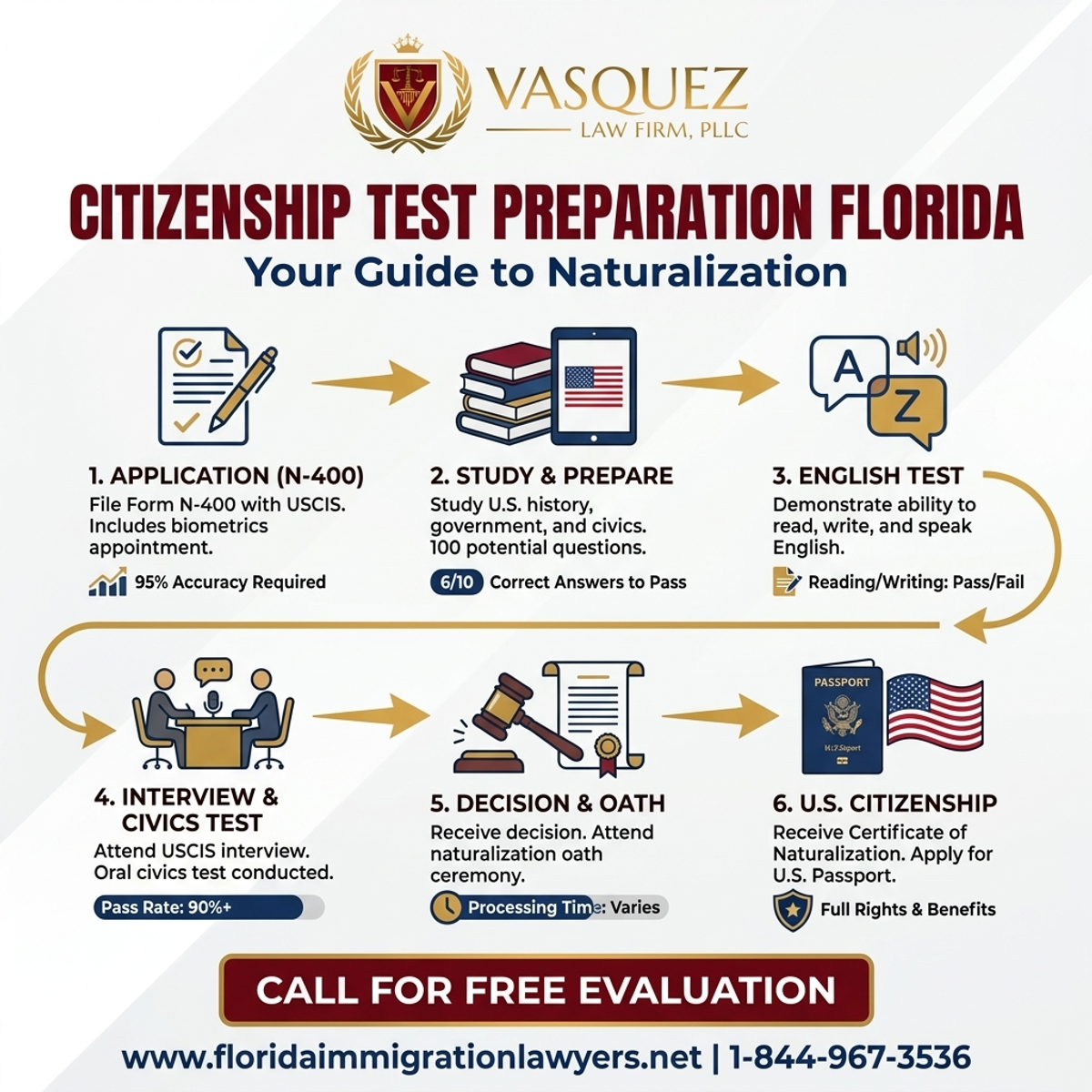
The civics test covers U.S. history, government, and geography. USCIS provides a list of 100 possible civics questions, and during the interview, the officer will ask you up to 10 questions from this list. To pass, you must answer at least six out of the ten questions correctly. This section is crucial for demonstrating your commitment to understanding the principles and values of the United States. Preparing for this test involves memorizing facts and understanding the underlying concepts of American democracy. In Florida, USCIS Field Offices in cities like Orlando, Tampa, and Miami conduct these interviews, and officers are trained to ensure a fair and consistent testing experience.
Step-by-Step Guide to Naturalization in Florida
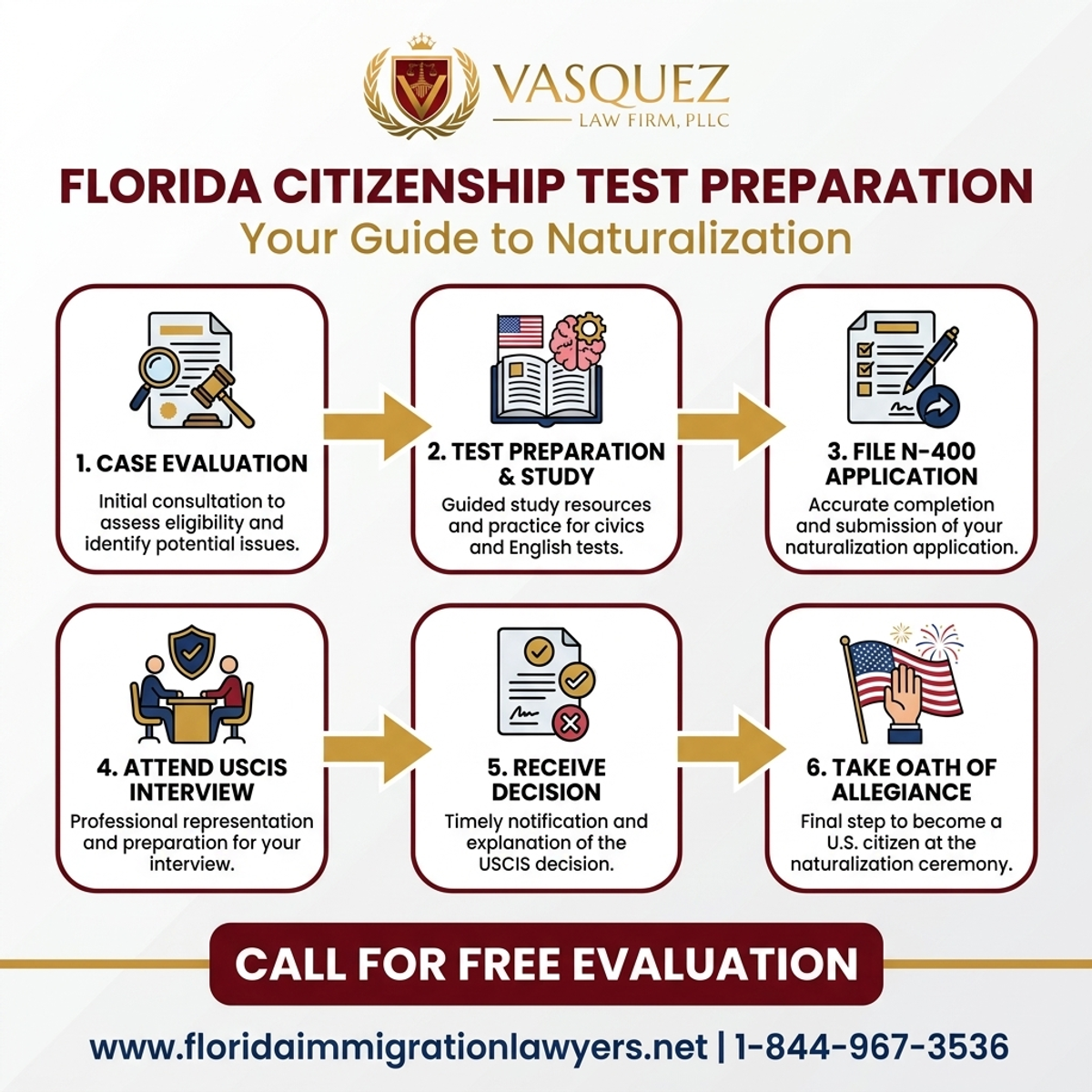
The journey to U.S. naturalization is a multi-step process that requires careful attention to detail and adherence to specific legal requirements. For individuals residing in Florida, including those in Gainesville and surrounding areas, understanding each stage is vital. From determining eligibility to taking the Oath of Allegiance, every step contributes to the successful acquisition of U.S. citizenship. Florida Immigration Lawyers can guide you through this complex process, ensuring all requirements are met.
- Determine Eligibility: Before applying, you must meet several criteria, typically including being at least 18 years old, a lawful permanent resident (Green Card holder) for at least five years (or three years if married to a U.S. citizen), demonstrating good moral character, and having continuous residence and physical presence in the U.S. You must also show an attachment to the principles of the U.S. Constitution and be willing to take the Oath of Allegiance.
- Prepare and File Form N-400: The Application for Naturalization, Form N-400, is the cornerstone of your application. This extensive form requires detailed personal information, residency history, marital history, employment history, and answers to questions about your good moral character. It is critical that this form is completed accurately and truthfully. Any discrepancies with previous immigration applications could lead to delays or denial.
- Attend Biometrics Appointment: After filing your N-400, USCIS will send you an appointment notice for biometrics collection. This involves fingerprinting, photographs, and a signature, used for background checks and to verify your identity. This appointment typically takes place at a local Application Support Center (ASC) in Florida, such as those near Gainesville.
- Complete the Naturalization Interview: This is a key stage where a USCIS officer will review your N-400 application, verify your eligibility, and administer the English and civics tests. During the interview, the officer will ask questions about your application, your background, and your commitment to the U.S. It's an opportunity to clarify any information and demonstrate your preparedness.
- Receive a Decision: Following the interview, the USCIS officer will issue a decision. This could be an approval, a denial, or a request for more evidence. If approved, you will typically receive an Oath of Allegiance ceremony notice.
- Take the Oath of Allegiance: The final step in becoming a U.S. citizen is attending the Oath of Allegiance ceremony. Here, you will pledge your loyalty to the United States, surrender your Green Card, and receive your Certificate of Naturalization. This ceremony may take place at a federal courthouse or a USCIS office in Florida, often a deeply meaningful experience for new citizens.
Essential Documents for Your Naturalization Application
A successful naturalization application hinges on providing a comprehensive and accurate set of supporting documents. Missing or incorrect documentation is a common reason for delays or even denials in the citizenship process. Gathering all necessary paperwork well in advance and organizing it meticulously can save you significant time and stress. Florida Immigration Lawyers emphasizes the importance of a thorough document checklist to avoid any potential pitfalls during your application.
- Form N-400, Application for Naturalization: The completed and signed application form is your primary document. Ensure all sections are filled out truthfully and accurately.
- Copy of Your Permanent Resident Card (Green Card): Provide copies of the front and back of your current Green Card. Do not send the original unless specifically requested.
- Two Passport-Style Photos: These must meet USCIS specifications, typically 2x2 inches, with a white to off-white background, taken within 30 days of filing.
- Proof of Identity: Copies of your state-issued driver's license or ID card, and any unexpired passports or travel documents.
- Proof of Marital Status (if applicable): If you are applying based on marriage to a U.S. citizen, include copies of your marriage certificate, your spouse's birth certificate or passport, and evidence of the bona fide nature of your marriage (e.g., joint bank accounts, property deeds, birth certificates of children).
- Court Records (if applicable): If you have ever been arrested, charged, or convicted of a crime, you must provide certified copies of all court dispositions, police reports, and sentencing records, even if the charges were dismissed or expunged. This is crucial for demonstrating good moral character.
- Tax Transcripts: Proof of consistent tax filings for the past five (or three) years, demonstrating compliance with tax laws.
- Proof of Selective Service Registration (for males 18-26): If you are a male who resided in the U.S. between the ages of 18 and 26, you must provide proof of Selective Service registration or an explanation for non-registration.
- Travel Records: Documentation of all trips outside the U.S. since becoming a permanent resident, including dates of departure and return. This helps verify continuous residence and physical presence.
- Child Support/Alimony Records (if applicable): If you have minor children from previous marriages, provide proof of compliance with child support or alimony obligations.
Step-by-Step Process — Citizenship Test Preparation Florida: Your Guide to Naturalization
Citizenship Test Preparation Strategies for Florida Residents
Successful preparation for the citizenship test is paramount to achieving naturalization. While the process can seem daunting, especially for individuals with limited English proficiency or those unfamiliar with U.S. civics, numerous resources and strategies can significantly boost your confidence and performance. Florida Immigration Lawyers encourages all applicants in Florida, including those in Gainesville, to adopt a structured and consistent study plan tailored to their individual needs.
The most crucial resource is the official USCIS website. It provides free study materials, including the 100 civics questions and answers, vocabulary lists for the English reading and writing tests, and flashcards. Regularly reviewing these materials is essential. Many online platforms also offer practice tests and interactive tools that simulate the actual exam experience. For the civics test, focus on understanding the concepts behind the answers, not just memorizing facts. Group study sessions with fellow applicants or community classes can also be incredibly beneficial for discussing complex topics and practicing your English speaking skills.
For the English portion, immerse yourself in the language as much as possible. Read English newspapers, watch English-language television programs, and listen to English radio. Practice speaking with native English speakers if possible. Many community colleges and adult education centers across Florida offer free or low-cost English as a Second Language (ESL) classes, which can be invaluable for improving your reading, writing, and speaking skills specifically for the naturalization interview. Practicing writing simple sentences and reading aloud from the USCIS vocabulary list will also strengthen your abilities. Consider seeking a tutor or joining a conversation group if available in your local Florida community.
Navigating the Naturalization Interview and Oath Ceremony
The naturalization interview is often the most anxiety-inducing part of the citizenship process, but with proper preparation, it can be a smooth and successful experience. This interview, conducted by a USCIS officer, serves multiple purposes: to verify the information on your N-400 application, assess your good moral character, and administer the English and civics tests. Knowing what to expect can significantly reduce stress and help you present yourself confidently. In Florida, these interviews take place at USCIS Field Offices, such as those in Orlando, Tampa, or Miami.
During the interview, the officer will begin by placing you under oath, requiring you to swear that your testimony will be truthful. They will then proceed to review your N-400 application question by question. It is critical to answer truthfully and consistently with the information you provided in your application. If any information has changed since you filed your N-400, you must inform the officer. This is also when the English and civics tests will be administered. Be polite, clear, and concise in your responses. Dress professionally, arrive on time, and bring all original documents that you submitted copies of, as well as any updated evidence.
Key Statistics — Citizenship Test Preparation Florida: Your Guide to Naturalization
If your interview is successful, you will typically receive a decision notice, often an approval, followed by an invitation to the Oath of Allegiance ceremony. This ceremony is the final, celebratory step in becoming a U.S. citizen. During the ceremony, you will take an oath pledging allegiance to the United States, renounce any prior allegiances, and receive your Certificate of Naturalization. This document is proof of your U.S. citizenship. Many ceremonies in Florida are held at federal courthouses or USCIS offices, and it is a truly memorable event for new citizens and their families. Remember to surrender your Green Card at this ceremony.
Timeline and Processing Expectations for Florida Naturalization
Understanding the typical timeline for the naturalization process can help manage expectations and reduce anxiety. While the exact duration can vary significantly based on individual circumstances, the volume of applications, and the specific USCIS Field Office handling your case in Florida, there are general phases to consider. USCIS processing times are dynamic and subject to change, so regularly checking official sources is recommended.
Generally, the naturalization process, from filing Form N-400 to taking the Oath of Allegiance, can take anywhere from 8 to 24 months, or even longer in some complex cases. After filing your N-400, you can expect to receive a receipt notice within a few weeks. The biometrics appointment typically follows within 3-5 months. The wait for the naturalization interview can vary widely, from 6 to 18 months after biometrics, depending on the workload of your local Florida USCIS Field Office, such as the one serving Gainesville. You can monitor your case status online through the USCIS website using your receipt number.
Factors that can influence your timeline include the accuracy and completeness of your application, any criminal history, extensive international travel, changes in marital status, or even simple administrative backlogs. Responding promptly to any Requests for Evidence (RFEs) from USCIS is crucial to avoid further delays. While some applicants may experience a faster process, it is always wise to prepare for potential delays and maintain patience. Florida Immigration Lawyers can help you understand current processing trends and advise on how to best prepare for a smooth journey, including addressing any potential issues that might prolong your case.
Cost Factors and Fee Breakdown for Naturalization
Pursuing U.S. naturalization involves various costs, and understanding these financial obligations upfront is an important part of your preparation. The primary cost is the USCIS filing fee for Form N-400, which covers the processing of your application and the biometrics services. While these fees are standardized across the country, it's important to note that they are subject to change by USCIS. You can always find the most current fee schedule on the official USCIS website.
Beyond the direct filing fee, other potential costs may arise. These can include fees for obtaining necessary supporting documents, such as birth certificates, marriage licenses, or court records, especially if they need to be translated into English and certified. If you require legal assistance, attorney fees will also be a factor. While hiring an attorney is not mandatory, the expertise and guidance provided by firms like Florida Immigration Lawyers can be invaluable, particularly for complex cases or if you wish to ensure your application is meticulously prepared and presented, saving you time and potential issues down the line.
It's also important to be aware of fee waiver options. USCIS offers fee waivers for certain applicants who demonstrate an inability to pay the filing fees. Eligibility for a fee waiver is based on specific income guidelines or receipt of means-tested benefits. If you believe you may qualify, you can submit Form I-912, Request for Fee Waiver, along with your N-400 application. Consulting with an immigration attorney can help you determine if you are eligible for a fee waiver and assist with the application process, ensuring you meet all the necessary criteria. This can significantly reduce the financial burden of naturalization for qualifying individuals.
Do not navigate this complex process alone. The journey to U.S. citizenship is significant, and professional guidance can be invaluable. Contact Florida Immigration Lawyers today to ensure your naturalization application is handled with the expertise and care it deserves. We are here to help you every step of the way.
Common Mistakes to Avoid During Citizenship Test Preparation
The path to U.S. citizenship is filled with specific requirements, and even minor errors can lead to significant delays or even denial of your naturalization application. Being aware of common pitfalls can help you avoid them, ensuring a smoother journey to becoming a U.S. citizen in Florida. Florida Immigration Lawyers frequently helps clients correct issues stemming from these mistakes.
- Failing to Study Adequately for the Civics Test: Many applicants underestimate the civics test, assuming basic knowledge is enough. Without dedicated study of the 100 questions, particularly those related to less common historical facts or governmental structures, passing can be challenging.
- Incomplete or Inaccurate N-400 Application: Providing partial or incorrect information on Form N-400, or omitting crucial details, can raise red flags with USCIS. This includes inconsistent information with prior immigration forms.
- Not Disclosing All Criminal History: Even minor arrests, charges, or convictions, regardless of age or outcome, must be disclosed. Failing to do so can be considered a misrepresentation and lead to a denial based on a lack of good moral character.
- Insufficient English Language Preparation: Some applicants neglect the English reading, writing, and speaking tests. While basic, these require practice, especially for understanding the officer's questions and writing simple sentences accurately.
- Long Absences from the U.S. Affecting Continuous Residence: Extended trips outside the U.S. can break your continuous residence requirement, making you ineligible for naturalization, even if you still meet the physical presence requirement.
- Failure to Register for Selective Service: Male applicants who lived in the U.S. between ages 18 and 26 must have registered for Selective Service. Failure to do so without a valid explanation can be a bar to naturalization.
- Not Updating USCIS with Address Changes: Moving without notifying USCIS using Form AR-11 can result in missed notices, interviews, or even denial if you cannot be reached for important appointments.
- Misunderstanding Good Moral Character Requirements: Certain actions, such as tax evasion, false claims to U.S. citizenship, or a pattern of minor offenses, can demonstrate a lack of good moral character, making an applicant ineligible for naturalization for a specified period.
- Assuming Automatic Eligibility: Eligibility for naturalization is complex. Applicants sometimes assume they qualify without thoroughly reviewing all criteria, leading to wasted time and fees on a premature application.
- Not Bringing All Required Documents to the Interview: Failing to bring original documents, updated evidence, or certified translations to your naturalization interview can cause delays or require rescheduling, prolonging the process.
When to Call a Lawyer for Your Naturalization Process
While many individuals successfully navigate the naturalization process independently, certain situations warrant the invaluable expertise of an experienced immigration attorney. The complexities of immigration law, coupled with the high stakes of a citizenship application, mean that professional legal guidance can be the difference between approval and denial. Florida Immigration Lawyers offers critical support for applicants across Florida, including those in Gainesville and surrounding communities.
You should strongly consider contacting an attorney if your case involves any complexities such as a criminal record, even if charges were dismissed or expunged. Any arrests, regardless of how minor, need careful legal review to determine their impact on your good moral character requirement. Similarly, if you have a history of extensive travel outside the U.S. that might challenge your continuous residence or physical presence, an attorney can help analyze your eligibility and prepare necessary explanations. Previous denials of immigration benefits, or inconsistencies in prior applications, also signal a need for legal counsel.
Furthermore, if you require accommodations for the English or civics tests due to a disability (Form N-648 Medical Certification), or if you are concerned about your ability to understand the interview questions or communicate effectively, an attorney can advocate for your needs and ensure your rights are protected. In light of recent legal rulings, such as those regarding immigration arrests at courthouses, having legal representation present at your USCIS interview provides an additional layer of security and ensures that all interactions are handled appropriately. An attorney can also help you prepare thoroughly for the interview, anticipate challenging questions, and provide peace of mind throughout the entire process. Don't leave your future to chance; consult with an expert.
About Florida Immigration Lawyers
Florida Immigration Lawyers is a leading law firm dedicated to providing exceptional legal services to immigrants across the Sunshine State. With a deep understanding of U.S. immigration law and a compassionate approach, we proudly serve clients in all cities and counties in Florida, including Gainesville, Orlando, Tampa, and Miami. Our mission is to help individuals and families achieve their immigration goals, from obtaining Green Cards to successfully navigating the naturalization process and becoming U.S. citizens.
Our experienced attorneys specialize in a wide range of immigration matters, including general immigration, citizenship applications, asylum cases, deportation defense, and family-based immigration. We are committed to offering personalized attention to each client, understanding that every case is unique and requires a tailored strategy. When you choose Florida Immigration Lawyers, you gain a dedicated advocate who will tirelessly work to protect your rights and guide you through every complex legal step.
We believe that everyone deserves access to quality legal representation. That's why we offer free consultations, are available 24/7, and are proud to provide bilingual services (Se Habla Español) to better serve our diverse community. Our commitment extends beyond legal advice; we aim to be a source of support and clarity during what can be an overwhelming time. Let our expertise be your advantage. Contact us today at 1-844-967-3536 or visit our website at floridaimmigrationlawyers.net to learn how we can assist you with your immigration needs.
Sources and References
- U.S. Citizenship and Immigration Services (USCIS)
- Executive Office for Immigration Review (EOIR)
- 8 U.S.C. Chapter 12 - Immigration and Nationality Act (INA)
- 8 U.S.C. § 1423 - English literacy and knowledge of U.S. history and government
- 8 CFR Part 312 - English Literacy and Knowledge of History and Government of the United States
- USCIS Policy Manual
Related services: dual citizenship guidance.
This article provides general legal information and is not intended as legal advice. Every case is unique, and outcomes depend on specific facts and circumstances. Contact an attorney for advice about your particular situation. Immigration laws are subject to change.
Your journey to U.S. citizenship is a significant investment in your future. Ensure it's handled correctly from the start. For a free, confidential consultation and expert legal guidance on your citizenship test preparation and naturalization application in Florida, call Florida Immigration Lawyers today at 1-844-967-3536. Se Habla Español - Estamos aqui para ayudarle.
Do Not Navigate This Process Alone
Our experienced immigration attorneys are ready to fight for you. Get a free, confidential consultation today.
Se Habla Español
Frequently Asked Questions
Florida Immigration Lawyers
Immigration Attorney | Founder, Vasquez Law Firm
U.S. Air Force veteran and immigration attorney with thousands of cases resolved. J.D., NCCU School of Law. AILA member. Admitted to the 4th, 5th, and 11th Circuit Courts.
Available 24/7 - Free Evaluations
Related Legal Services
Our Florida immigration attorneys can help you with free immigration consultation, experienced immigration attorneys and business immigration. Call today at 1-844-967-3536 for a free consultation.
Related Links
Related Topics
Free Legal Consultation
Discuss your case with our experienced attorneys. We're available 24/7.
Se Habla Español - Estamos aquí para ayudarle.
Related Articles
Immigration Lawyer Sarasota Bradenton Florida | VLF Florida
Discover how an immigration lawyer in Sarasota and Bradenton, Florida, can help you navigate complex immigration processes. Contact Florida Immigration Lawyers for expert guidance.
U Visa for Crime Victims: Florida Immigration Relief
Learn about U visas for crime victims in Florida and how they provide relief to those who assist law enforcement. Discover eligibility requirements, application steps, and the benefits of the U visa. Call Florida Immigration Lawyers for expert guidance.
Motion to Reopen Immigration Case in Florida | VLF Florida
Learn how to file a motion to reopen your immigration case in Florida. Discover eligibility, steps, and common mistakes. Call us for a free consultation.
Immigration Attorney in Gainesville: Your North Florida Guide
Finding an immigration attorney in Gainesville, North Florida, can be crucial for your immigration journey. Learn how experienced lawyers can guide you through complex processes and help you avoid common pitfalls. Call Florida Immigration Lawyers at 1-844-967-3536 for expert assistance.
