Immigration Bond Hearing Process in Florida 2026
Understanding immigration bond hearings in Florida is crucial for detained immigrants. This guide covers the process, documents needed, timeline, and costs associated with bond hearings. Discover how legal assistance can impact outcomes and learn common mistakes to avoid. Contact Florida Immigration Lawyers for expert guidance.
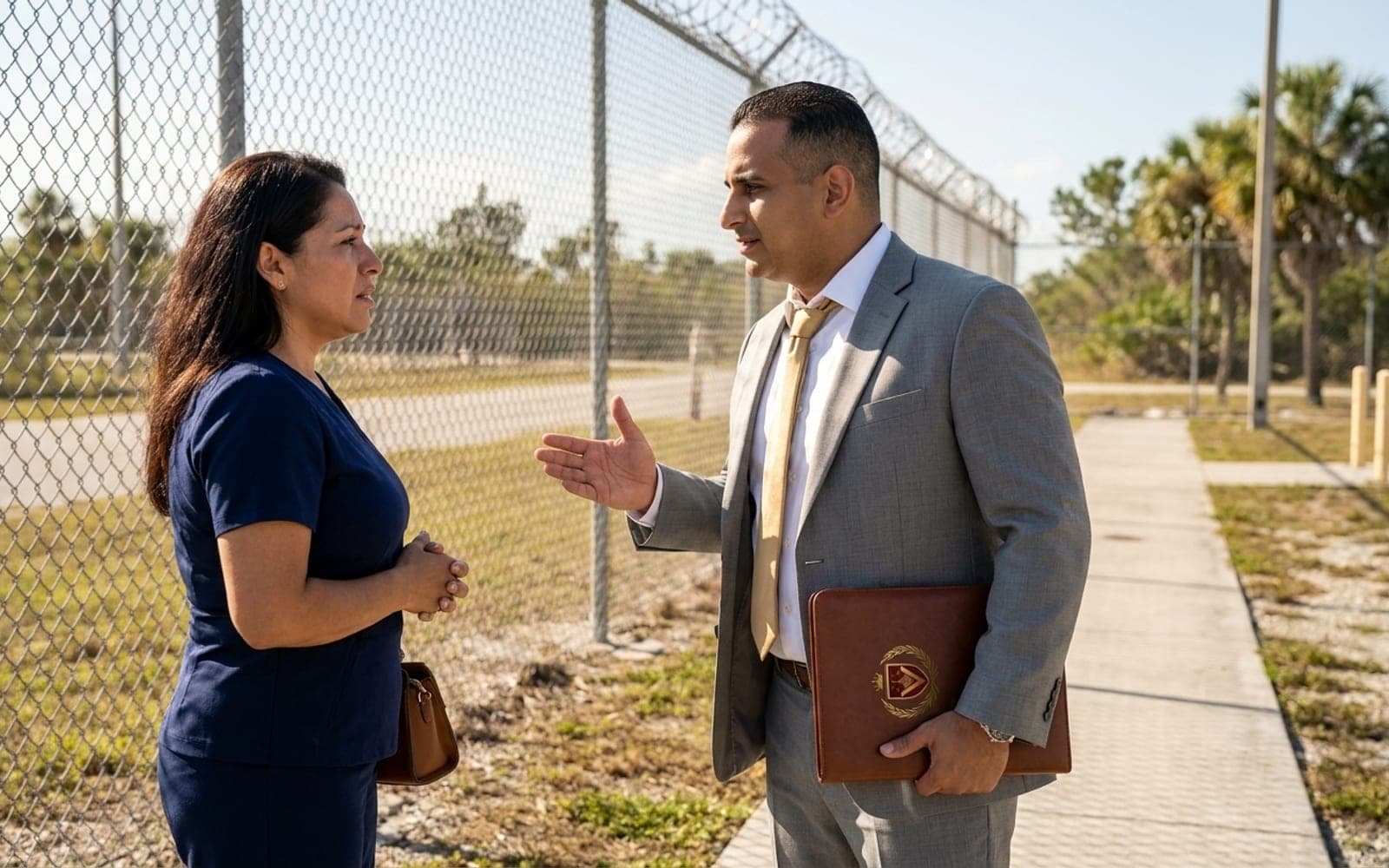
- ICE detains immigrants for various reasons.
- Bonds provide temporary freedom.
- Hearings assess flight risk and danger to the public.
- Legal representation can influence outcomes.
- In Florida, bond hearings occur at immigration courts.
Introduction
Facing an immigration bond hearing in Florida can be daunting. Detained by ICE, you or your loved one might feel overwhelmed about the process and the potential consequences. Understanding the bond hearing process is crucial for navigating this challenging time. This article provides a comprehensive overview of what to expect, the steps involved, and how legal assistance can make a significant difference in the outcome. Call Florida Immigration Lawyers at 1-844-YO-PELEO for a free case review to discuss your situation.
The journey through immigration detention and bond hearings is often filled with uncertainty and emotional distress, not just for the detained individual but also for their families. In Florida, where a significant immigrant population resides, these hearings are a lifeline for many seeking temporary release from ICE custody. Our goal is to demystify this complex legal process, offering clear, actionable information that empowers you to make informed decisions.
Navigating the intricacies of immigration law requires not only a deep understanding of federal regulations but also familiarity with local court procedures and judicial discretion. This guide will walk you through the essential elements, from the initial detention to the final bond decision, highlighting how expert legal representation from Florida Immigration Lawyers can be your strongest advocate in securing a favorable outcome.
What is an Immigration Bond Hearing?
An immigration bond hearing is a legal proceeding where a judge decides if a detained immigrant can be released on bond. As of 2026, these hearings are essential for those who are detained, as they determine the possibility of temporary release while awaiting court proceedings. The decision is based on risk factors like flight risk and public safety concerns.
During the hearing, the judge evaluates if the detainee poses a flight risk or threat to public safety. Legal representation can significantly affect the outcome, as attorneys present evidence and arguments to support bond eligibility. Bonds vary in amount, influenced by the detainee's circumstances and the judge's discretion.
It's important to understand that an immigration bond is not a penalty; rather, it's a financial guarantee that the detained individual will appear for all future immigration court hearings. The judge's primary objective is to balance the government's interest in ensuring court appearances and public safety against the individual's right to liberty. Factors such as the immigrant's ties to the community, employment history, family responsibilities, and any criminal record are meticulously reviewed during this process.
Not all detained immigrants are eligible for bond. Certain individuals, particularly those with serious criminal convictions or specific immigration violations, may face mandatory detention, meaning an immigration judge cannot set a bond. For those who are eligible, securing a bond can mean the difference between prolonged detention and the opportunity to prepare their case from outside of custody, surrounded by their loved ones. Florida Immigration Lawyers are adept at identifying eligibility and advocating forcefully on behalf of their clients.
How Does the Bond Hearing Process Work in Florida?
The bond hearing process begins after ICE detention. Detainees must request a bond hearing, either through their attorney or by directly filing a motion. The hearing is scheduled in immigration courts, such as those in Orlando or Miami.
- Request for Hearing: File a motion for a bond hearing through legal counsel.
- Scheduling: The court schedules the hearing, typically within a few weeks.
- Evidence Presentation: Present arguments and evidence supporting the detainee's release.
- Judge's Decision: The judge decides on bond eligibility and amount.
- Payment and Release: If granted, pay the bond for the detainee's release.
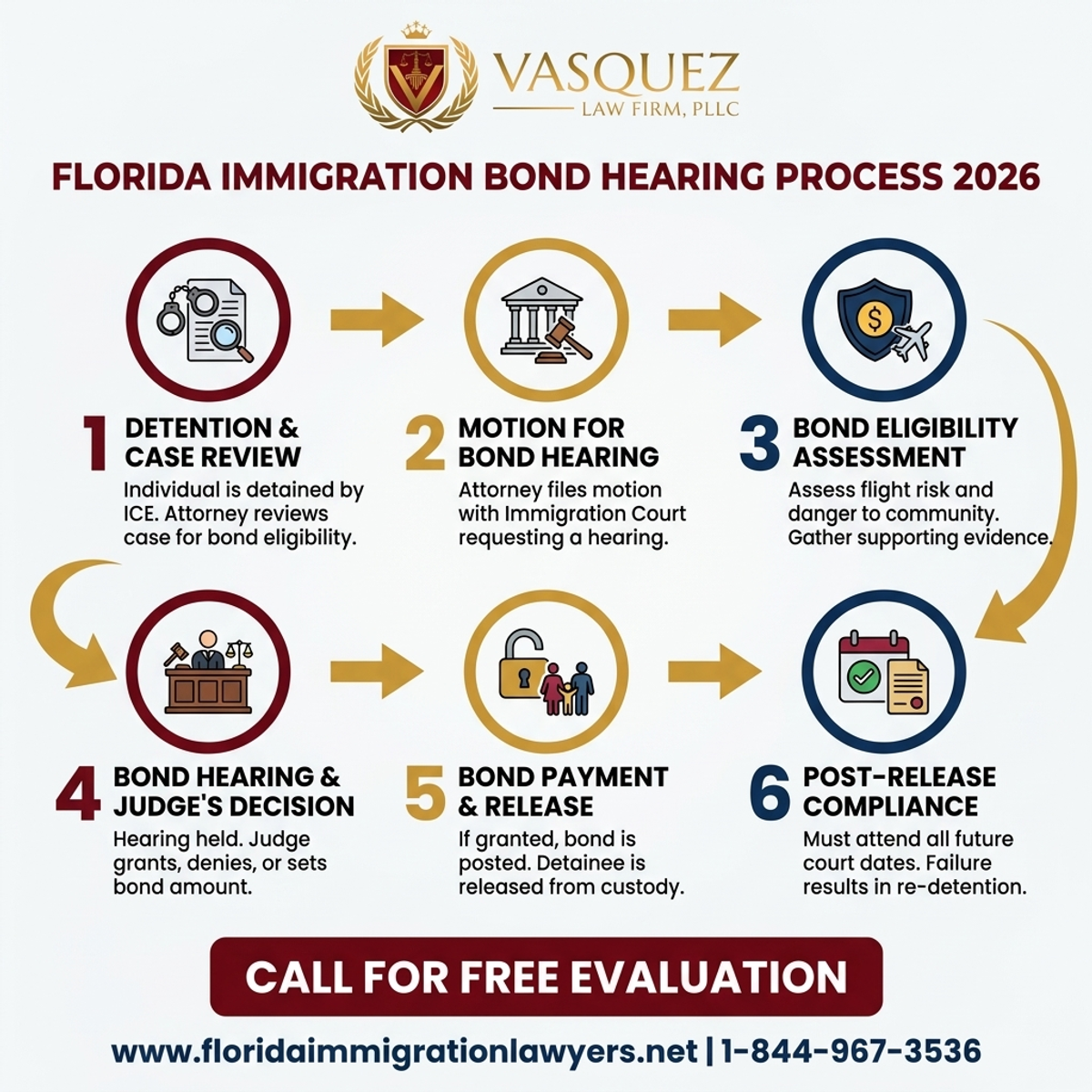
Step-by-Step Process — Immigration Bond Hearing Process in Florida 2026
Each step involves careful preparation, particularly in gathering evidence that supports the detainee's ties to the community and lack of flight risk.
To elaborate on the initial steps, the 'Request for Hearing' often involves filing a Form I-286, Notice of Custody Determination, or a direct motion to the Immigration Judge. This critical first step signals your intent to challenge ICE's detention decision and seek release. An experienced attorney from Florida Immigration Lawyers can ensure this motion is filed correctly and promptly, avoiding delays that could prolong detention.
During the 'Evidence Presentation' phase, your attorney will present a compelling case, often including testimony from family members, letters of support from employers or community leaders, and documentation proving deep roots in the United States. For instance, demonstrating consistent employment, property ownership, or significant family responsibilities can strongly counter arguments of flight risk. Our team at Florida Immigration Lawyers understands what evidence resonates most effectively with immigration judges.
Following the judge's decision, if a bond is granted, the 'Payment and Release' process begins. The bond can typically be paid at an ICE ERO field office or through an authorized bond agent. It's crucial to understand the payment methods and ensure funds are readily available to expedite release. Our firm guides families through this final logistical hurdle, ensuring a smooth transition from detention back into the community.
Documents Needed for a Bond Hearing
Proper documentation is crucial for a successful bond hearing. Key documents include:
- Identification (passport, ID card)
- Proof of address (utility bills, lease agreements)
- Evidence of community ties (employment records, family affidavits)
- Financial records (bank statements, pay stubs)
- Criminal history records (if applicable)
These documents help demonstrate the detainee's stability and community involvement, influencing the judge's decision.
Let's delve deeper into the importance of each document. Your identification, such as a valid passport or national ID card, verifies your identity and nationality, which is fundamental to any immigration proceeding. Proof of address, like recent utility bills, a lease agreement, or mortgage statements, establishes your residency and stability within the community, directly addressing concerns about flight risk.
Evidence of community ties is perhaps the most impactful category. This can include letters from U.S. citizen or legal permanent resident family members affirming their support and willingness to ensure your appearance at future hearings. Employment records, such as pay stubs, employment verification letters, or tax returns, demonstrate your economic stability and contribution to society. Participation in community organizations, religious institutions, or volunteer work can also highlight your integration into the local fabric. Florida Immigration Lawyers assist clients in compiling a robust portfolio of these documents.
Financial records, including bank statements, tax returns, and pay stubs, are not only crucial for demonstrating an ability to pay a potential bond but also for illustrating financial stability and a lack of reliance on public assistance. Lastly, if there is any criminal history, providing certified disposition documents is essential. This allows your attorney to explain the context of any past offenses and demonstrate rehabilitation, preventing the judge from making assumptions based solely on arrest records. Proactively addressing these records with the help of Florida Immigration Lawyers can significantly strengthen your case.
What to Expect: Bond Hearing Timeline and Outcomes
| Stage | Typical Timeframe | Notes |
|---|---|---|
| Request for Hearing | 1-2 weeks | Filed by attorney or detainee |
| Hearing Scheduling | 2-4 weeks | Depends on court availability |
| Hearing Date | 1 day | Judgment rendered |
| Bond Payment | Immediate to 1 week | Depends on payment method |
Understanding this timeline helps set realistic expectations during the bond hearing process.
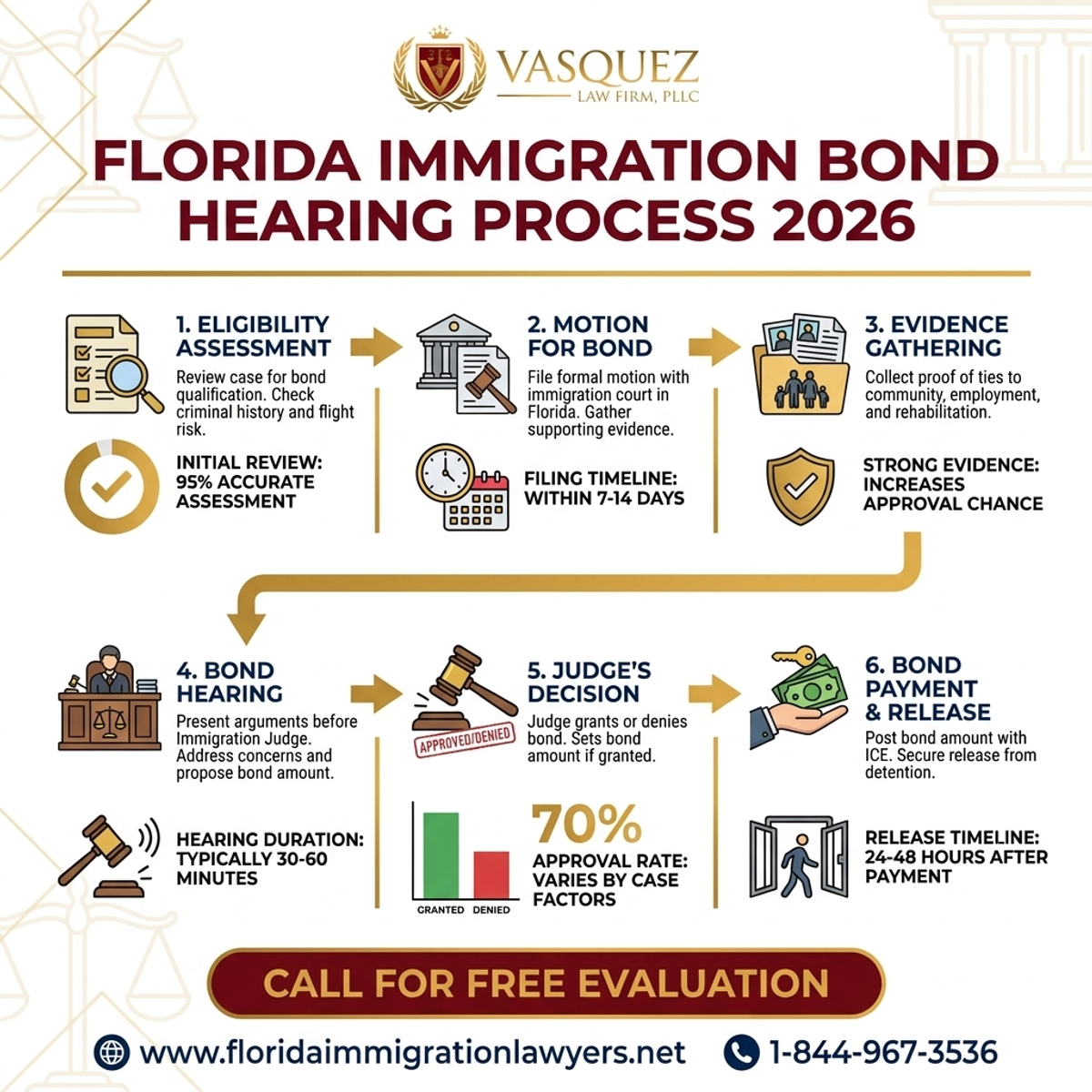
Key Statistics — Immigration Bond Hearing Process in Florida 2026
While the table provides a general timeline, it's important to recognize that actual durations can vary significantly based on factors like the specific immigration court's caseload, the complexity of the individual's case, and whether any unexpected issues arise. For instance, a court in a busy metropolitan area like Miami might have a longer backlog for scheduling hearings compared to a less congested jurisdiction. Your legal team at Florida Immigration Lawyers will keep you informed of any potential delays and adjust strategies accordingly.
The outcome of a bond hearing isn't always a simple 'yes' or 'no.' A judge might grant a bond but set the amount prohibitively high, effectively denying release. In such cases, your attorney can explore options for a bond redetermination or appeal the decision to the Board of Immigration Appeals (BIA). Conversely, if bond is granted, it may come with specific conditions, such as regular check-ins with ICE or a requirement to reside at a particular address. Understanding these nuances is crucial for managing expectations.
Once a bond is paid, the release process typically involves administrative steps at the detention facility. While the goal is immediate release, there can sometimes be delays due to paperwork processing. It's vital to have a clear understanding of the next steps, including reporting instructions and upcoming court dates, to ensure compliance with all immigration requirements. Florida Immigration Lawyers are committed to guiding you through every phase, from the hearing itself to the moment of release and beyond.
Cost Factors and Fee Breakdown for Immigration Bonds
Immigration bond costs depend on various factors, including the detainee's risk profile and financial situation. Here is a general breakdown:
| Item | Typical Fee | Notes |
|---|---|---|
| Bond Amount | Varies | Set by judge based on risk assessment |
| Legal Fees | Varies | Depends on attorney services |
| Payment Method | Varies | Cash, check, or money order |
Consulting with an immigration attorney can help estimate these costs based on individual circumstances.
Do not navigate this process alone. Contact Florida Immigration Lawyers today.
The bond amount itself is a significant cost factor, typically ranging from a minimum of $1,500 to $25,000 or even higher, depending on the judge's assessment of flight risk and danger. Factors that can influence a higher bond amount include prior immigration violations, a history of failing to appear in court, or any criminal record. Your attorney's role is to present a compelling case that justifies a lower bond, emphasizing your ties to the community and lack of risk.
In addition to the bond amount, legal fees for an immigration attorney are a crucial consideration. These fees cover the attorney's time, expertise, and resources dedicated to preparing your case, representing you in court, and navigating the complex legal system. Legal fees can vary based on the attorney's experience, the complexity of your case, and the services provided (e.g., flat fee for the bond hearing vs. ongoing representation for the underlying immigration case). Florida Immigration Lawyers pride themselves on transparent fee structures and will discuss all costs upfront during your free consultation.
For those unable to pay the full bond amount, immigration bond agencies offer an alternative. These agencies typically require a non-refundable premium (a percentage of the total bond, usually 10-15%) and collateral to secure the bond. While this can make bond more accessible, it's essential to understand the terms and conditions of such agreements. Our team can help you evaluate these options and understand the full financial implications, ensuring you make the best decision for your family's circumstances.
Common Mistakes to Avoid in Immigration Bond Hearings
- Failing to Request a Hearing: Not filing a motion results in prolonged detention. It's critical to act quickly, as every day in detention impacts an individual's well-being and ability to prepare their case.
- Inadequate Evidence: Lack of documentation weakens the case for bond. Ensure you provide comprehensive evidence of community ties, employment, and family support to demonstrate stability.
- Missed Deadlines: Missing filing or payment deadlines can delay release. Strict adherence to court schedules and payment windows is paramount to a swift resolution.
- Ignoring Legal Advice: Failing to consult an attorney can lead to unfavorable outcomes. Legal professionals understand the nuances of the law and can craft a strong defense.
- Providing False Information: Misrepresentation can result in bond denial. Always be truthful and transparent with your attorney and the court, as dishonesty can severely damage your credibility.
- Underestimating the Judge's Role: Not understanding the judge's discretion can lead to unrealistic expectations. Judges have broad authority, and a well-prepared case acknowledging this is vital.
- Overlooking Community Ties: Failing to prove community ties can result in higher bond amounts. Gather letters from employers, religious leaders, and family to show deep roots in Florida.
- Financial Unpreparedness: Inability to pay bond promptly can prolong detention. Have a plan for bond payment, whether through savings or a bond agency, to ensure quick release.
- Not Understanding Hearing Rights: Lack of awareness of rights can affect the hearing's outcome. An attorney will inform you of your rights and ensure they are protected throughout the process.
- Engaging Unqualified Help: Hiring non-licensed individuals for representation can harm the case. Always seek assistance from licensed and reputable immigration attorneys, like Florida Immigration Lawyers.
When to Call a Lawyer
Engaging an immigration lawyer is crucial when facing a bond hearing. Legal professionals provide guidance in navigating complex laws, preparing compelling cases, and representing clients in court. Contact an attorney if:
- You or a loved one are detained by ICE.
- You need assistance in preparing for a bond hearing.
- Understanding immigration laws is challenging.
- You require help gathering evidence and documentation.
Florida Immigration Lawyers offer experienced representation to ensure the best possible outcome.
The moment an individual is detained by ICE, the clock starts ticking, and immediate legal intervention becomes critical. An attorney can quickly assess the situation, determine bond eligibility, and initiate the necessary legal proceedings to seek release. Early engagement allows for thorough preparation, which is a cornerstone of a successful bond hearing.
Beyond the immediate bond hearing, an immigration lawyer can provide invaluable counsel on the broader immigration case. This includes advising on potential relief from removal, preparing for future court appearances, and explaining the long-term implications of the detention and bond process. For individuals with complex immigration histories, prior criminal convictions, or those seeking asylum, legal representation is not just beneficial but often indispensable. Florida Immigration Lawyers possess the expertise to handle even the most challenging cases, fighting tirelessly for your rights and freedom. Don't hesitate to call 1-844-YO-PELEO for immediate assistance.
About Florida Immigration Lawyers
Florida Immigration Lawyers is dedicated to serving immigrants across Florida. Our team offers comprehensive immigration services, including bond hearings, deportation defense, and family immigration. We are committed to providing compassionate, effective legal assistance. Explore our immigration practice areas or schedule a free consultation. Available 24/7, we are here to help you navigate your immigration journey. Call us at 1-844-YO-PELEO.
Our firm stands out due to our deep understanding of both federal immigration law and the specific challenges faced by immigrants in Florida. We believe in a client-centered approach, ensuring that each individual receives personalized attention and a strategy tailored to their unique circumstances. Our attorneys are not just legal advocates; they are compassionate allies who understand the emotional toll of immigration challenges and work diligently to alleviate stress for our clients and their families.
With years of experience successfully representing clients in bond hearings and other immigration matters across Florida's immigration courts, Florida Immigration Lawyers has built a reputation for excellence and unwavering dedication. We are proud to be a trusted resource for the immigrant community, providing clear communication, strategic guidance, and relentless advocacy to achieve the best possible outcomes. When your freedom and future are on the line, you need a legal partner you can trust—and we are here to be that partner.
Sources and References
- U.S. Citizenship and Immigration Services (USCIS)
- Executive Office for Immigration Review (EOIR)
- 8 U.S.C. Chapter 12 - Immigration and Nationality Act
Related services: asylum and refugee protection, immigration waivers, humanitarian protection programs, DACA renewal and applications.
This article provides general legal information and is not intended as legal advice. Every case is unique, and outcomes depend on specific facts and circumstances. Contact an attorney for advice about your particular situation.
Se Habla Espanol - Estamos aqui para ayudarle. Call Florida Immigration Lawyers at 1-844-YO-PELEO for a free consultation.
If you need legal assistance, learn more about deportation defense lawyers in Florida, or call us at 1-844-967-3536 for a free case review.
Do Not Navigate This Process Alone
Our experienced immigration attorneys are ready to fight for you. Get a free, confidential case review today.
Se Habla Español
Or leave your details and we’ll call you:
Free Evaluation in 24 Hours
Or talk to us right now

AI voice assistant — available 24/7
FreeFrequently Asked Questions

William J. Vásquez
Founding Attorney · Vasquez Law Firm
U.S. Air Force veteran and immigration attorney with years of hands-on U.S. immigration experience. J.D., NCCU School of Law. AILA member. Admitted to the 4th, 5th, and 11th Circuit Courts.
Available 24/7 - Free Evaluations
Reviewed for legal accuracy by William J. Vásquez
Licensed in North Carolina; U.S. immigration is federal practice.
Related Legal Services
Our Florida immigration attorneys can help you with experienced immigration attorneys, asylum protection and citizenship and naturalization. Call today at 1-844-YO-PELEO for a free case review.
Related Links
Related Topics
Free Legal Case Review
Discuss your case with our experienced attorneys. We're available 24/7.
Se Habla Español - Estamos aquí para ayudarle.
Related Articles
Certificate of Eligibility for Expungement in Florida 2026
For non-U.S. citizens in Florida, understanding how a state expungement impacts immigration status is critical. A certificate of eligibility for expungement in Florida allows a criminal record to be sealed or expunged under state law. However, federal immigration agencies often disregard such state-level relief, still considering the original criminal offense as a conviction for immigration purposes. This can have severe implications for visa applications, green card eligibility, naturalization, and even lead to deportation. This guide clarifies the Florida expungement process, its limited effect on federal immigration law, and key steps to protect your status in 2026. Learn about common mistakes, required documents, timelines, and when to seek expert legal counsel from Florida Immigration Lawyers to navigate these complex issues effectively.
Immigration Lawyer Orlando Free Consultation in Florida
For individuals and families in Orlando, Florida, navigating the complexities of U.S. immigration law requires expert guidance. An immigration lawyer in Orlando offers crucial support for everything from visa applications and green card processes to naturalization and deportation defense. This comprehensive guide details what a free consultation covers, providing a step-by-step overview of immigration pathways, essential document checklists, and expected timelines in 2026. We also highlight common mistakes to avoid, discuss the critical role of legal counsel in deportation and asylum cases, and explain why choosing a local Orlando immigration attorney is beneficial. Florida Immigration Lawyers is dedicated to serving the diverse community of Orlando with compassionate, effective legal solutions, ensuring you receive personalized advice and robust representation for a successful immigration journey.
Deportation Attorney: Protect Your Future in Orlando
If you are facing deportation in Orlando, understanding the process and having the right legal support is crucial. Learn about the role of a deportation attorney, how to prepare for immigration court, and common mistakes to avoid. Florida Immigration Lawyers offer expert guidance and free case reviews. Call 1-844-YO-PELEO today.
How to Apply for VAWA in Tampa: A Complete Guide
Discover how to apply for VAWA in Tampa with this comprehensive guide. Learn about eligibility, documentation, and the application process for a successful VAWA self-petition. Understand the importance of timely submissions, complete forms, and evidence gathering. Our Orlando-based law firm is ready to assist you every step of the way.