Understanding Immigration Court in Florida 2026
Navigating immigration court proceedings in Florida can be complex. Learn about the role of the EOIR, removal proceedings, and how to prepare. Reach out to Florida Immigration Lawyers for a free consultation and expert guidance.
- The EOIR manages immigration courts.
- Orlando has a significant immigration court presence.
- Immigration judges make crucial decisions affecting immigrants' futures.
Introduction
Facing immigration court proceedings can be daunting, especially in Florida where immigration policies are constantly evolving. Whether you're in Orlando or another part of the state, understanding these proceedings is crucial. This article delves into what you need to know about immigration courts, the role of the Executive Office for Immigration Review (EOIR), and the process of removal proceedings. If you're facing these challenges, call Florida Immigration Lawyers at 1-844-YO-PELEO for a free case review.
The complexities of immigration law, combined with the emotional stress of potentially facing removal from the U.S., make these proceedings incredibly challenging for individuals and families. Florida, with its diverse population and strategic location, sees a high volume of immigration cases, making it even more critical to be well-informed and prepared. Navigating this intricate legal landscape without expert guidance can lead to costly mistakes and unfavorable outcomes.
This guide aims to demystify the immigration court process in Florida, providing a clear overview of what to expect, the documents you'll need, and the typical timelines involved. We'll also highlight common pitfalls to avoid and emphasize the invaluable role of experienced legal counsel. Remember, your future and ability to remain in the United States could depend on how effectively you present your case, making professional legal assistance not just helpful, but often essential.
What is the Role of Immigration Court in Florida?
Immigration courts in Florida handle cases involving individuals who are not citizens and may face removal from the United States. These courts are part of the Department of Justice, specifically under the Executive Office for Immigration Review (EOIR). As of 2026, Florida hosts several immigration courts, including significant operations in Orlando.
These courts adjudicate a variety of immigration cases, mainly focusing on removal proceedings. An immigration judge determines whether an individual is removable from the U.S. and assesses eligibility for any relief from removal. The court's decisions can have long-lasting impacts on an immigrant's life, making it crucial to understand the proceedings.
Beyond removal proceedings, immigration courts also handle bond hearings, where an individual detained by immigration authorities can request release on bond, and asylum claims, where individuals seek protection from persecution in their home countries. The judge's role extends to evaluating evidence, listening to testimony, and applying complex immigration laws and regulations to each unique case. For example, a judge might decide if an individual qualifies for Cancellation of Removal, a form of relief allowing certain non-permanent residents to remain in the U.S. if they meet specific criteria.
The jurisdiction of these courts is federal, meaning their decisions are based on national immigration laws, though local court procedures and backlogs can vary. Florida's courts, particularly in bustling areas like Orlando and Miami, often face significant caseloads, which can affect processing times. This high volume underscores the importance of a meticulously prepared case and the strategic guidance that Florida Immigration Lawyers can provide to navigate these busy dockets effectively.
How Do Removal Proceedings Work in Florida?
Removal proceedings are initiated when an individual is suspected of violating immigration laws. The process begins with a Notice to Appear (NTA), which outlines the charges against the individual and the time and place of the court hearing.
The individual can contest the charges and present evidence in front of an immigration judge. The proceedings can be complex, often requiring multiple hearings. As of 2026, it's essential to stay informed about your legal rights and options during these proceedings.
Upon receiving an NTA, it's critical to understand the specific allegations against you, which could range from overstaying a visa to criminal convictions. For instance, an NTA might charge an individual with being removable for having entered the U.S. without inspection. Your ability to challenge these charges or seek relief depends heavily on a thorough understanding of the NTA's contents and the relevant immigration statutes. This is where the expertise of Florida Immigration Lawyers becomes invaluable, as they can help decipher the legal jargon and formulate a robust defense strategy.
The removal process involves several stages, from initial master calendar hearings to individual merits hearings. During these stages, you will have the opportunity to present your case, offer testimony, and submit supporting documents. A common scenario involves an individual seeking asylum, where they must demonstrate a well-founded fear of persecution. Without proper legal guidance, individuals often miss crucial deadlines or fail to present compelling evidence, leading to adverse outcomes. For a free case review and to understand your options, do not hesitate to call 1-844-YO-PELEO.
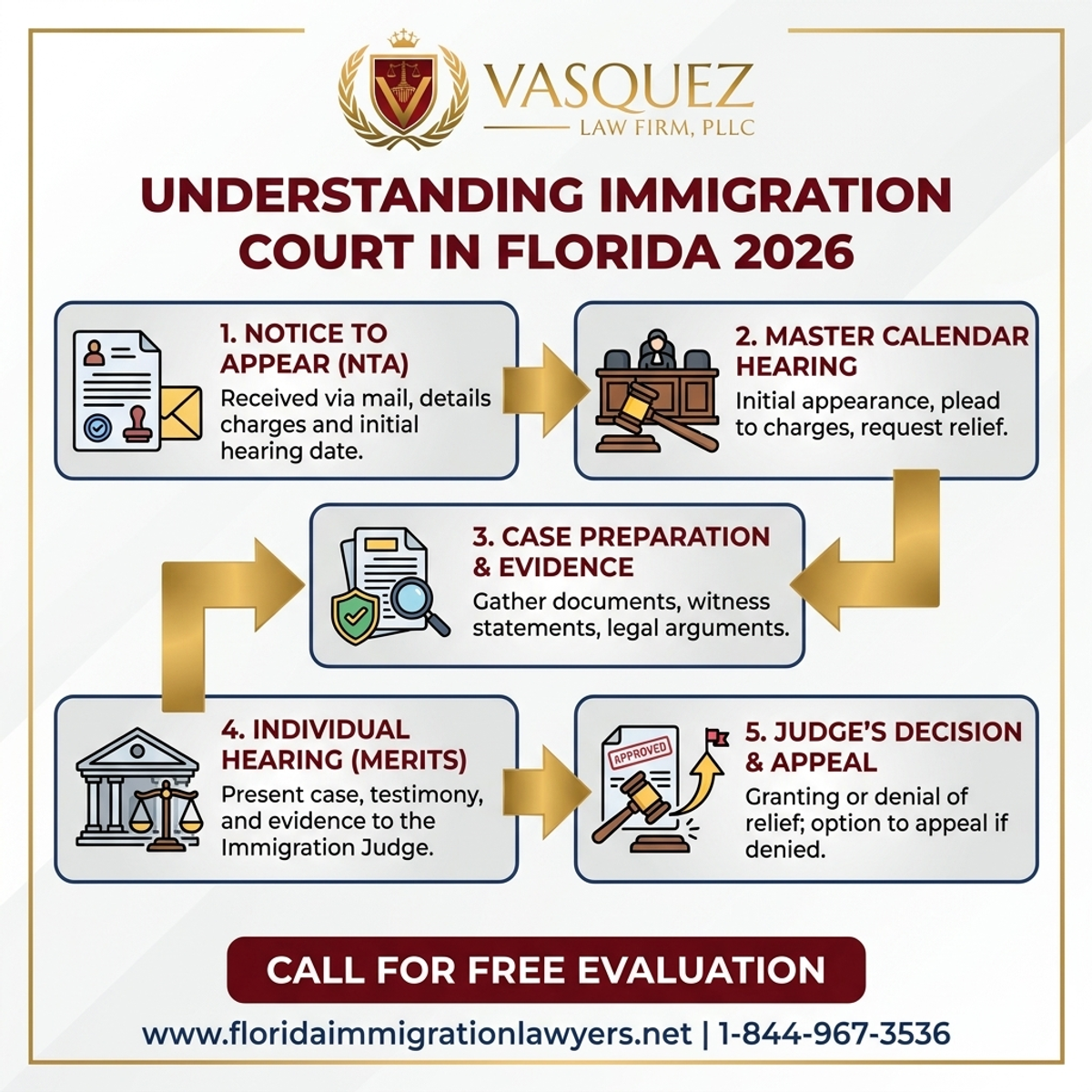
Step-by-Step Process — Understanding Immigration Court in Florida 2026
- Receive the NTA: This official document starts the process.
- Attend the Master Calendar Hearing: Initial hearing to discuss the case.
- Provide Evidence: Present documents and testimony.
- Individual Hearing: The judge makes a final decision.
What Documents Are Required for Immigration Court?
Documentation is critical in immigration court proceedings. Having the right documents can influence the outcome of your case. Required documents often include:
- Identity documents (passport, birth certificate): These are fundamental for establishing your identity, nationality, and sometimes, your eligibility for certain forms of relief. It's crucial to have original documents or certified copies, as photocopies may not be accepted without proper authentication. Ensure names and dates match across all submitted documents to avoid discrepancies.
- Proof of residency: Documents such as utility bills, lease agreements, property deeds, or affidavits from landlords can prove your continuous physical presence in the U.S., which is often a requirement for forms of relief like Cancellation of Removal. These records help establish the duration and nature of your stay in Florida.
- Legal documents (NTA, any prior court documents): The Notice to Appear (NTA) is the cornerstone of your case, detailing the charges against you. You should also gather any previous immigration applications, court orders, or correspondence from USCIS or the EOIR, as these provide a history of your immigration journey and legal interactions.
- Evidence supporting relief from removal: This category is broad and highly dependent on the specific relief you are seeking. It could include marriage certificates, birth certificates of U.S. citizen children, tax returns, medical records, police reports, psychological evaluations, and affidavits from family, friends, or community members. For asylum cases, this might involve country condition reports, news articles, or personal statements detailing persecution.
Ensure all documents are current and correctly formatted. This preparation is vital to effectively presenting your case. Organizing your documents meticulously, ideally with the help of Florida Immigration Lawyers, can significantly streamline the process and prevent delays. Incorrectly formatted or missing documents can lead to continuances or even case dismissal, highlighting the need for thoroughness.
Furthermore, all documents not in English must be accompanied by a certified English translation. This requirement is non-negotiable and failing to provide accurate translations can severely hinder your case. A qualified legal team like Florida Immigration Lawyers can assist in ensuring all documentation meets the court's stringent standards, from translation to proper submission, bolstering your chances for a favorable outcome.
What is the Timeline for Immigration Court Proceedings?
Timelines can vary significantly depending on the complexity of the case and the court's schedule. However, understanding the general timeline can help manage expectations.
| Stage | Typical Timeframe | Notes |
|---|---|---|
| Receive NTA | 2-4 weeks | Initial notification of proceedings. This document outlines the specific charges and the date/time of your first court appearance. It's crucial to review it immediately and seek legal counsel. |
| Master Calendar Hearing | 1-3 months | Initial court appearance. Here, you formally plead to the charges, designate the forms of relief you intend to seek (e.g., asylum, cancellation of removal), and the judge sets future hearing dates. |
| Individual Hearing | 6-12 months | Final decision phase. This is essentially a trial where you present all your evidence, provide testimony, and cross-examine government witnesses. The judge then makes a final ruling on your eligibility for relief or removal. |
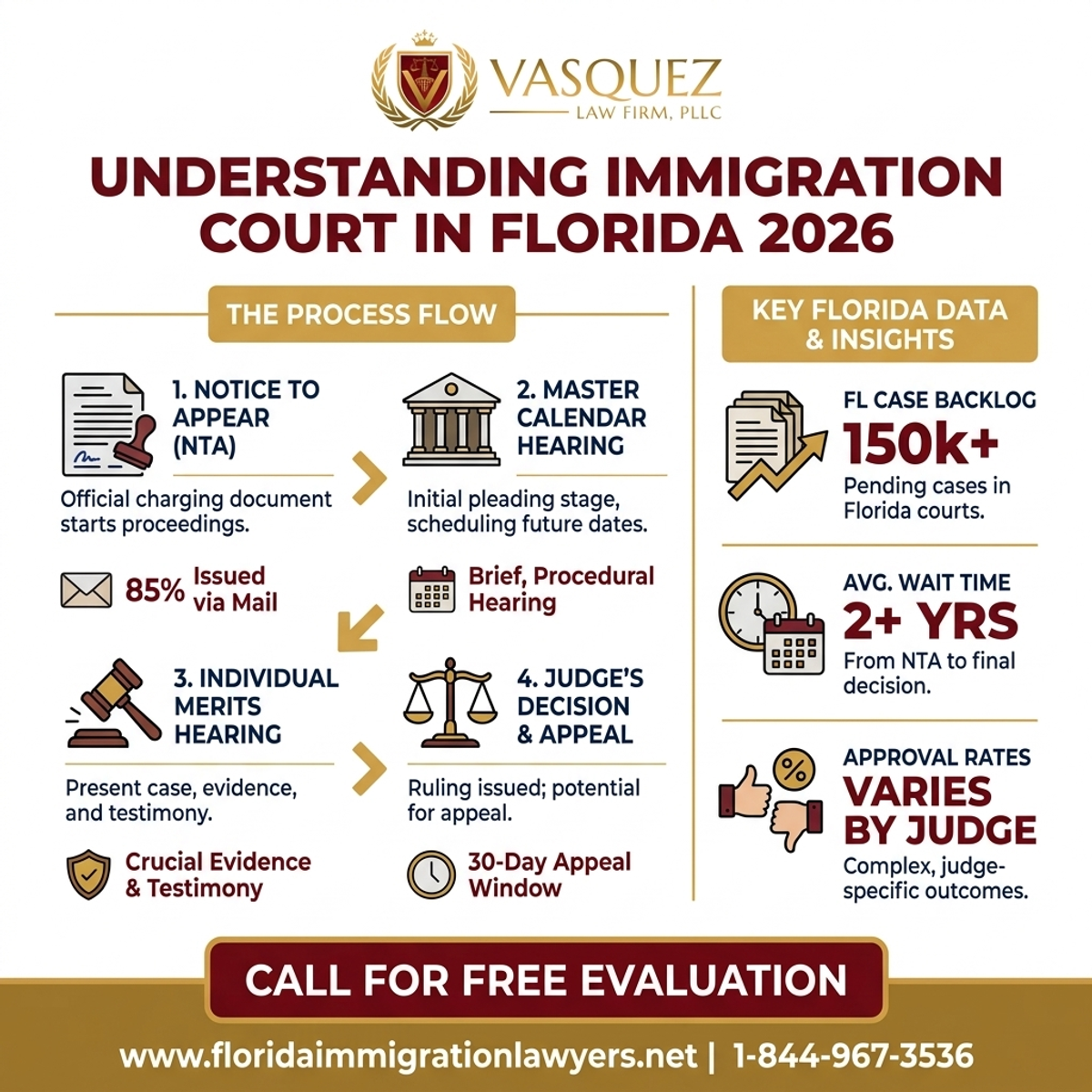
Key Statistics — Understanding Immigration Court in Florida 2026
As of 2026, cases may take longer due to court backlogs, so seeking legal assistance is advisable. The national average for case completion can stretch into several years, particularly for complex cases involving multiple forms of relief or appeals. For example, an asylum case might involve multiple continuances to gather country condition reports or expert testimony, extending the timeline significantly. This protracted process can be emotionally and financially draining, making consistent legal support from Florida Immigration Lawyers essential for maintaining momentum and meeting deadlines.
The court's docket and the judge's availability are major factors influencing the pace of your case. Some courts in Florida are significantly more backlogged than others. Furthermore, if you require additional time to gather evidence or find an expert witness, your attorney can request a continuance, which will also extend the overall timeline. While these delays can be frustrating, they often provide valuable time to strengthen your case, especially when working with a dedicated legal team at Florida Immigration Lawyers.
What Are the Costs Involved in Immigration Court Proceedings?
Costs associated with immigration court proceedings can vary. They often include legal fees, application fees, and other administrative costs.
| Item | Typical Fee | Notes |
|---|---|---|
| Attorney Fees | Varies | Depends on case complexity. Fees can be structured as hourly rates, flat fees for specific stages, or a comprehensive fee for the entire case. The complexity, required research, and number of hearings significantly impact the total cost. |
| Filing Fees | Varies | Subject to change by USCIS or EOIR. These are government fees for submitting applications for relief, such as asylum applications (though often no fee), adjustment of status, or waivers. Fee waivers may be available for individuals who demonstrate financial hardship. |
| Miscellaneous Costs | Varies | Includes translations, document procurement. This category covers expenses like certified translations of foreign documents, expert witness fees (e.g., psychologists for trauma assessments), travel expenses, and fees for obtaining vital records or police reports. |
It's crucial to plan for these expenses and consider them when navigating the immigration court process. While the costs can seem substantial, investing in experienced legal representation often saves money in the long run by preventing errors that could lead to removal and the associated costs of starting over or appealing. Florida Immigration Lawyers offer transparent fee structures and can discuss payment options during your free consultation at 1-844-YO-PELEO.
Understanding the full scope of potential costs upfront allows you to budget effectively and avoid surprises. For instance, while an asylum application itself might not have a filing fee, the cost of obtaining comprehensive country condition reports or expert psychological evaluations can add up. Your legal team should provide a clear breakdown of expected expenses, ensuring you are fully informed throughout the process.
Do not navigate this process alone. Contact Florida Immigration Lawyers today.
Common Mistakes to Avoid in Immigration Court
- Missing Hearings: Failing to appear can lead to a removal order in your absence, known as an in absentia order. This can have severe consequences, making it extremely difficult to reopen your case or seek future immigration benefits. Always confirm hearing dates and times.
- Inadequate Documentation: Not providing complete, accurate, and properly translated documents can weaken your case significantly. Missing evidence, like proof of continuous residency or a certified marriage certificate, can prevent you from qualifying for relief.
- Ignoring Legal Advice: Not heeding your lawyer's guidance can jeopardize your case. Your attorney has expertise in immigration law and court procedures; deviating from their strategy or failing to provide requested information can undermine your defense.
- Failure to Update Information: Always update the court with your current address and contact info. If the court cannot reach you, important notices or hearing changes might be missed, potentially leading to a removal order without your knowledge.
- Incorrect Application Forms: Ensure all forms are filled out correctly and completely to avoid delays or rejections. Even minor errors can cause significant setbacks, requiring resubmission and prolonging your case.
- Overlooking Deadlines: Missing filing deadlines for applications, appeals, or evidence submission can result in case dismissal or the loss of eligibility for certain forms of relief. Strict adherence to deadlines is paramount in immigration court.
- Not Preparing for Hearings: Lack of preparation can negatively impact your testimony and overall presentation. Practice your testimony, understand your documents, and be ready to answer questions clearly and truthfully.
When to Call a Lawyer
Engaging with an immigration lawyer is crucial when facing removal proceedings or other complex immigration issues. If you receive a Notice to Appear, have prior removal orders, or face criminal charges that may impact your immigration status, contact a lawyer immediately. Florida Immigration Lawyers are equipped to guide you through every step of the process, ensuring your rights are protected.
Beyond immediate threats like an NTA, you should also seek legal counsel if you are considering applying for asylum, adjusting your status, or need to understand the implications of a past immigration violation. For instance, if you have a complex family immigration petition or believe you might be eligible for a waiver of inadmissibility, an attorney can assess your eligibility and navigate the intricate application process. The nuances of immigration law are vast, and a misstep can have long-lasting consequences.
A lawyer from Florida Immigration Lawyers can provide invaluable assistance from the very beginning, from interpreting complex legal documents to representing you in court. They can identify potential avenues for relief, gather crucial evidence, prepare you for testimony, and appeal unfavorable decisions. Having a dedicated advocate by your side significantly increases your chances of a positive outcome. Don't wait until it's too late; proactive legal engagement is always the best approach. Call 1-844-YO-PELEO for a free consultation.
About Florida Immigration Lawyers
Florida Immigration Lawyers is a trusted firm dedicated to assisting clients with immigration matters across Florida. Our experienced attorneys specialize in removal defense, family immigration, and more. We are committed to providing personalized service to help you achieve the best possible outcome. Call us at 1-844-YO-PELEO or schedule a free consultation today. We offer services in both English and Spanish, ensuring clear communication and support throughout your case.
Our team understands the profound impact immigration decisions have on individuals and families. We approach each case with empathy, diligence, and a deep knowledge of current immigration laws and policies. From initial consultations to final court appearances, we stand by our clients, offering strategic advice and unwavering support. Our goal is not just to represent you, but to empower you with the knowledge and confidence to face your immigration challenges head-on.
Sources and References
- U.S. Citizenship and Immigration Services (USCIS)
- Executive Office for Immigration Review (EOIR)
- 8 U.S.C. Chapter 12 - Immigration and Nationality Act
- U.S. Department of State
Related services: asylum and refugee protection, immigration waivers, humanitarian protection programs, DACA renewal and applications.
This article provides general legal information and is not intended as legal advice. Every case is unique, and outcomes depend on specific facts and circumstances. Contact an attorney for advice about your particular situation.
Final CTA
Facing immigration court can be overwhelming. Call Florida Immigration Lawyers at 1-844-YO-PELEO for expert guidance. Se Habla Espanol - Estamos aqui para ayudarle.
If you need legal assistance, learn more about how our defense attorneys can help, or call us at 1-844-967-3536 for a free case review.
Do Not Navigate This Process Alone
Our experienced immigration attorneys are ready to fight for you. Get a free, confidential case review today.
Se Habla Español
Or leave your details and we’ll call you:
Free Evaluation in 24 Hours
Or talk to us right now

AI voice assistant — available 24/7
FreeFrequently Asked Questions

William J. Vásquez
Founding Attorney · Vasquez Law Firm
U.S. Air Force veteran and immigration attorney with years of hands-on U.S. immigration experience. J.D., NCCU School of Law. AILA member. Admitted to the 4th, 5th, and 11th Circuit Courts.
Available 24/7 - Free Evaluations
Reviewed for legal accuracy by William J. Vásquez
Licensed in North Carolina; U.S. immigration is federal practice.
Related Legal Services
Our Florida immigration attorneys can help you with free immigration consultation, business immigration and deportation defense. Call today at 1-844-YO-PELEO for a free case review.
Related Links
Related Topics
Free Legal Case Review
Discuss your case with our experienced attorneys. We're available 24/7.
Se Habla Español - Estamos aquí para ayudarle.
Related Articles
Certificate of Eligibility for Expungement in Florida 2026
For non-U.S. citizens in Florida, understanding how a state expungement impacts immigration status is critical. A certificate of eligibility for expungement in Florida allows a criminal record to be sealed or expunged under state law. However, federal immigration agencies often disregard such state-level relief, still considering the original criminal offense as a conviction for immigration purposes. This can have severe implications for visa applications, green card eligibility, naturalization, and even lead to deportation. This guide clarifies the Florida expungement process, its limited effect on federal immigration law, and key steps to protect your status in 2026. Learn about common mistakes, required documents, timelines, and when to seek expert legal counsel from Florida Immigration Lawyers to navigate these complex issues effectively.
Immigration Lawyer Orlando Free Consultation in Florida
For individuals and families in Orlando, Florida, navigating the complexities of U.S. immigration law requires expert guidance. An immigration lawyer in Orlando offers crucial support for everything from visa applications and green card processes to naturalization and deportation defense. This comprehensive guide details what a free consultation covers, providing a step-by-step overview of immigration pathways, essential document checklists, and expected timelines in 2026. We also highlight common mistakes to avoid, discuss the critical role of legal counsel in deportation and asylum cases, and explain why choosing a local Orlando immigration attorney is beneficial. Florida Immigration Lawyers is dedicated to serving the diverse community of Orlando with compassionate, effective legal solutions, ensuring you receive personalized advice and robust representation for a successful immigration journey.
Immigration Lawyer Services in Orlando, Florida 2026
Explore how immigration lawyers in Orlando, Florida can assist you with visa applications, deportation defense, and more. Learn about the immigration process and the importance of legal guidance.
Immigration Lawyer: Removal Defense in Florida
Facing removal proceedings in Florida? Learn how an immigration lawyer can assist you in navigating the complex legal process and defending your rights. Explore common defenses, timeline expectations, and the importance of professional representation. Contact Florida Immigration Lawyers for a free case review.