Skip to content
1-844-967-3536Available 24/7
Immigration17 min read

Immigration Appeal BIA Orlando: Steps and Tips

Learn how to navigate the immigration appeal process with the Board of Immigration Appeals in Orlando, Florida. Understand the steps, timelines, and costs involved. Contact Florida Immigration Lawyers for expert assistance.

William J. VásquezPublished on September 1, 2026
1 views
Immigration Appeal BIA Orlando: Steps and Tips — guide from immigration lawyer in Florida
An immigration appeal to the BIA in Florida is a formal request to review a decision made by an immigration judge. Key takeaways include:
  • Appeals must be filed within 30 days of the decision.
  • Detailed evidence is crucial for a successful appeal.
  • The BIA reviews cases based on legal errors or new evidence.
  • Consulting an immigration attorney is highly recommended.

Introduction

If you've received an unfavorable decision from an immigration judge in Orlando, you might be considering an appeal. The Board of Immigration Appeals (BIA) is the highest administrative body for interpreting and applying immigration laws. This article will guide you through the complexities of filing an immigration appeal with the BIA in Florida, including the steps involved, common mistakes, and when to seek professional help. Call Florida Immigration Lawyers at 1-844-967-3536 for a free case review.

An adverse ruling from an immigration judge can be a devastating blow, impacting your future and that of your family. However, it's crucial to understand that such a decision is not always the final word. The BIA offers a vital avenue for review, providing a chance to correct legal errors or present compelling new evidence that could alter the outcome of your case. This process, while challenging, can be a beacon of hope for many.

Navigating the intricate landscape of immigration law, especially when appealing to a body as authoritative as the BIA, demands precision and a deep understanding of legal precedents. From ensuring timely submission of documents to crafting persuasive legal arguments, every step is critical. This guide aims to demystify the process, empowering you with the knowledge needed to pursue a successful appeal in Florida. Remember, professional legal guidance from experienced attorneys, like those at Florida Immigration Lawyers, can make a significant difference in these high-stakes situations.

What is an Immigration Appeal to the BIA?

An immigration appeal to the Board of Immigration Appeals (BIA) in Orlando involves challenging a decision made by an immigration judge. The appeal must be based on legal errors or new evidence.

The BIA focuses on errors of law or fact made during the initial hearing. It's essential to file the appeal within 30 days of the immigration judge's decision. The BIA does not conduct new hearings but reviews the existing record and any new submissions.

As of 2026, there is a growing trend of appeals due to evolving immigration policies. Understanding the appeal process is crucial for anyone facing an adverse decision.

The BIA's primary role is to ensure uniformity in the application of immigration laws nationwide and to correct any legal or factual misinterpretations made by immigration judges. This means that if an immigration judge in Orlando made a mistake in applying a specific law, misinterpreted a legal precedent, or overlooked crucial facts presented in your case, the BIA has the authority to review and potentially overturn that decision. It's not an opportunity to simply re-argue your case from scratch, but rather to pinpoint specific errors that occurred during the initial proceedings.

The scope of BIA review is generally limited to the existing record of proceedings. This means the Board will examine the transcripts, evidence, and rulings from your original hearing. While new evidence can sometimes be submitted, it must meet strict criteria, typically demonstrating that it was not available or discoverable at the time of the original hearing. This distinction is vital, as simply presenting evidence you chose not to introduce initially will likely not be accepted. The BIA's decisions are binding on all Department of Homeland Security (DHS) officers and immigration judges unless modified or overturned by the Attorney General or a federal court.

Given the technical nature of BIA appeals, understanding the specific grounds for appeal is paramount. Common grounds include legal errors (e.g., misapplication of a statute, incorrect interpretation of a regulation), factual errors (e.g., the judge's findings of fact were not supported by substantial evidence), or procedural errors (e.g., denial of due process, improper exclusion of evidence). Identifying the precise error is where the expertise of an immigration attorney, such as those at Florida Immigration Lawyers, becomes invaluable. They can help articulate these complex legal arguments effectively.

How to File an Immigration Appeal: Step-by-Step Guide

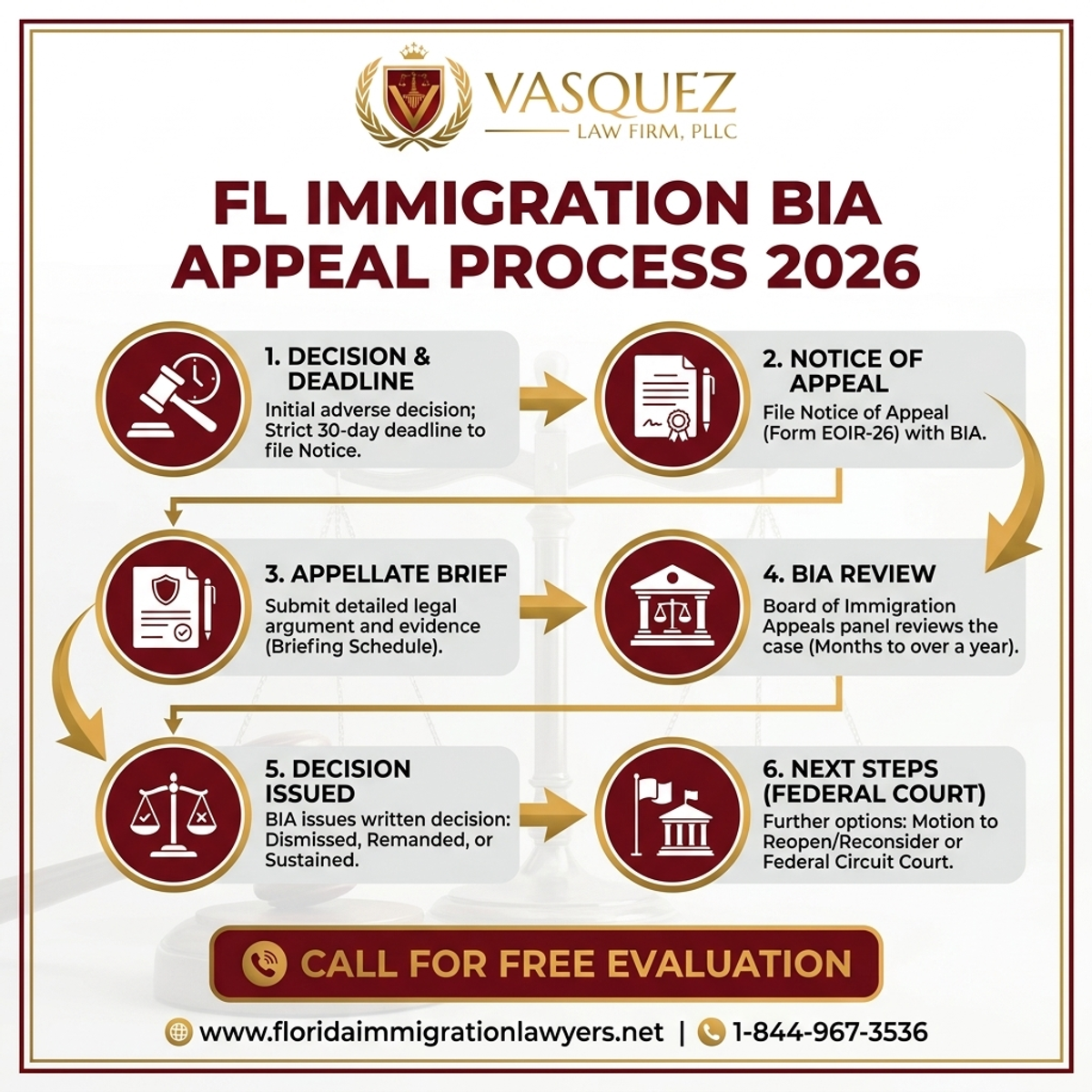
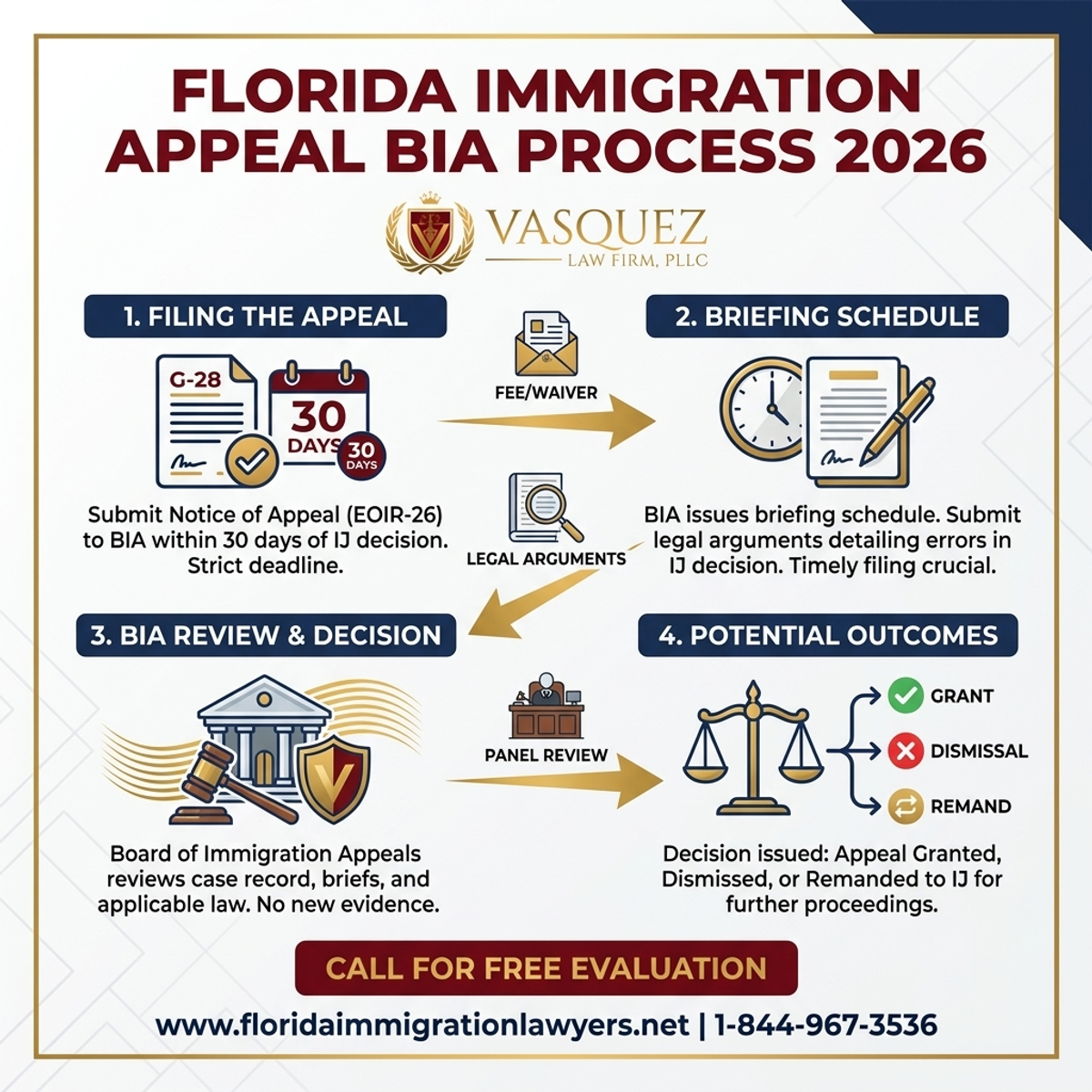
  1. Determine Eligibility: Confirm that your case is eligible for an appeal based on the judge's decision and grounds for appeal.
  2. File Notice of Appeal: Submit Form EOIR-26 to the BIA within 30 days of the decision.
  3. Prepare Briefs: Draft a legal brief outlining the errors in the original decision, supported by relevant laws and evidence.
  4. Submit Evidence: Include any new evidence that was not available during the initial hearing.
  5. Await Decision: The BIA will review your submission and issue a decision, which can take several months.

Filing an appeal is a complex process, often requiring the expertise of an immigration attorney to ensure all aspects are appropriately addressed.

1. Determine Eligibility: Before initiating an appeal, it's crucial to understand which types of decisions can be appealed to the BIA. Generally, final orders of removal, decisions on applications for relief (like asylum, cancellation of removal, or adjustment of status), and certain bond determinations are appealable. However, some decisions, such as those based on a stipulated removal order or certain waivers, may not be. An attorney can help you analyze the immigration judge's decision to identify specific legal or factual errors that form the basis of your appeal, ensuring your case has a legitimate chance of success.

2. File Notice of Appeal (Form EOIR-26): This is arguably the most critical step due to the strict 30-day deadline. The clock starts ticking from the date the immigration judge issues their oral decision or the date of the written decision. Missing this deadline, even by a single day, will almost certainly result in the dismissal of your appeal. Form EOIR-26 must be accurately completed, indicating the specific grounds for appeal and identifying the errors made by the immigration judge. It must be filed with the BIA directly, not with the immigration court, and a copy must be served on the opposing party (DHS).

3. Prepare Briefs: After filing the Notice of Appeal, the BIA will set a deadline, typically 45 days, for you or your attorney to submit a comprehensive legal brief. This brief is your primary opportunity to present your arguments to the BIA. It should meticulously detail the errors made by the immigration judge, citing specific legal statutes, regulations, and case precedents that support your position. A well-structured brief includes a table of contents, a statement of facts, a summary of arguments, detailed legal arguments, and a clear request for relief. Crafting a persuasive and legally sound brief requires significant research and writing skills, highlighting why legal representation from Florida Immigration Lawyers is so beneficial.

4. Submit Evidence: While the BIA primarily reviews the existing record, there are specific circumstances under which new evidence may be considered. This evidence must generally be material to your case and demonstrate that it was unavailable at the time of your initial hearing and could not have been discovered or presented despite diligent efforts. Examples might include newly available country conditions reports for an asylum case or a new medical diagnosis. Any new evidence must be properly submitted with an explanation of why it was not presented earlier, and its relevance to the errors being appealed.

5. Await Decision: Once all briefs and evidence are submitted, the BIA will review your case. This process can take several months, or even over a year, depending on the complexity of the issues and the BIA's caseload. The BIA can issue several types of decisions: it can affirm the immigration judge's decision, reverse it (granting your appeal), remand the case back to the immigration judge for further proceedings, or dismiss the appeal (often due to procedural errors or lack of merit). A successful appeal often results in a remand, giving you another chance to present your case before an immigration judge, guided by the BIA's instructions.

Step-by-Step Process for Immigration Appeal BIA Orlando: Steps and Tips

Step-by-Step Process — Immigration Appeal BIA Orlando: Steps and Tips

Document Checklist for Immigration Appeals

  • Form EOIR-26 (Notice of Appeal)
  • Copies of the original decision by the immigration judge
  • Legal brief with detailed arguments
  • New evidence (if applicable)
  • Filing fee or fee waiver request

Beyond these core documents, it is prudent to include a cover letter clearly outlining the contents of your submission. Ensure that all exhibits, especially new evidence, are properly tabbed, indexed, and accompanied by a brief explanation of their relevance and why they were not previously available. For instance, if you're submitting new medical records, include a sworn affidavit explaining why these records couldn't be obtained before the initial hearing.

Additionally, you should always retain proof of service for all documents filed with the BIA and served on the opposing counsel (DHS). This typically involves a certificate of service detailing what was sent, when, and to whom. This documentation is critical in case there's any dispute about whether a document was timely filed or received. Florida Immigration Lawyers can assist in preparing and organizing all necessary documents, ensuring accuracy and compliance with BIA regulations.

Other essential documents might include a copy of the hearing transcript from the immigration court, which is vital for accurately citing specific statements or rulings made by the judge. While the BIA will have access to the official record, having your own copy allows for precise referencing in your legal brief. If any documents are not in English, certified translations must be provided, along with the original document, adding another layer of complexity to the preparation process.

Timeline and Processing Expectations

StageTypical TimeframeNotes
Filing Notice of AppealWithin 30 daysStrict deadline
Brief Submission45 days from filingExtensions are rare
BIA Decision6-12 monthsVaries by case complexity

Timelines can vary significantly based on case complexity and the BIA's current caseload.

The 30-day window for filing the Notice of Appeal is non-negotiable. This period includes weekends and holidays, though if the 30th day falls on a weekend or federal holiday, the deadline is extended to the next business day. It's a common mistake to miscalculate this deadline, leading to automatic dismissal. Therefore, immediate action upon receiving an unfavorable decision is paramount.

While the standard brief submission period is 45 days, obtaining an extension is challenging and granted only under exceptional circumstances, such as severe illness or other unforeseen emergencies. The BIA generally expects attorneys to manage their caseloads efficiently. Therefore, planning ahead and beginning the brief preparation immediately after filing the Notice of Appeal is critical to avoid last-minute rushes and potential errors. This is where the proactive approach of Florida Immigration Lawyers can be a significant advantage, ensuring all deadlines are met without compromise.

The duration for a BIA decision can fluctuate widely. Factors influencing this include the volume of appeals currently before the BIA, the legal complexity of your specific case, whether new evidence requires additional review, and if the BIA needs to circulate the case among multiple board members. Some cases, especially those involving novel legal questions or significant policy implications, may take longer. Conversely, straightforward cases with clear legal errors might be resolved more quickly. Patience is often required, but your attorney can provide updates on your case's status.

Key Statistics and Data for Immigration Appeal BIA Orlando: Steps and Tips

Key Statistics — Immigration Appeal BIA Orlando: Steps and Tips

Cost Factors and Fee Breakdown

ItemTypical FeeNotes
Filing FeeVariesCheck current USCIS guidelines
Attorney FeesVariesDepends on case complexity
Document PreparationVariesMay include translation services

Costs can vary widely, and it's important to budget accordingly.

The BIA filing fee, while subject to change, is a mandatory component unless you qualify for a fee waiver. Eligibility for a fee waiver is typically based on your inability to pay, often requiring documentation of income below a certain poverty level or receipt of public benefits. It's crucial to submit a properly documented fee waiver request (Form EOIR-26A) along with your Notice of Appeal; otherwise, your appeal may be rejected. Always verify the most current fee schedule directly from the Executive Office for Immigration Review (EOIR) or consult with your attorney.

Attorney fees represent the most significant cost factor in an immigration appeal. These fees can range considerably based on the complexity of your case, the attorney's experience and reputation, and the amount of work involved in preparing the legal brief and managing the appeal process. Some attorneys may offer flat fees for BIA appeals, while others might charge hourly rates. While the cost can seem substantial, investing in experienced legal counsel often significantly increases the chances of a favorable outcome, potentially saving you from greater financial and personal hardship in the long run. Florida Immigration Lawyers offers transparent fee structures and can discuss payment options during your free consultation.

Beyond filing and attorney fees, other potential costs include obtaining certified copies of documents, professional translation services for foreign-language documents, and potentially expert witness fees if your case requires specialized testimony (though this is less common for BIA appeals which primarily review the existing record). Gathering all necessary documentation, including potentially ordering transcripts from previous hearings, can also incur minor administrative costs. It's wise to discuss all potential expenses with your attorney upfront to avoid any surprises.

Middle CTA

Do not navigate this process alone. Contact Florida Immigration Lawyers today.

Common Mistakes to Avoid

  1. Missing Deadlines: Failing to file within 30 days can result in dismissal.
  2. Insufficient Evidence: Not providing new or adequate evidence can weaken your case.
  3. Poorly Written Briefs: A lack of legal clarity can lead to rejection.
  4. Ignoring Legal Advice: Not consulting an attorney can lead to procedural errors.
  5. Incomplete Forms:0 Missing information can delay the process.
  6. Failing to Pay Fees: Not including the correct fee can halt your appeal.
  7. Overlooking Details: Minor errors in documentation can be costly.

Missing Deadlines: This is the most common and often fatal error. The 30-day deadline for filing Form EOIR-26 is strictly enforced. Even if your appeal has strong merits, a late filing will almost certainly lead to dismissal. For example, if an immigration judge issues a decision on October 1st, your Notice of Appeal must be filed by October 31st. Missing this by even one day can mean forfeiting your chance to appeal.

Insufficient Evidence: While the BIA primarily reviews the existing record, if you are relying on new evidence, it must be compelling, material, and demonstrably unavailable at the prior hearing. Simply re-submitting old evidence or presenting weak new evidence will not strengthen your case. Ensure any new submissions clearly meet the BIA's strict criteria for consideration.

Poorly Written Briefs: Your legal brief is your argument. It must be clear, concise, well-organized, and supported by specific legal citations and factual references from the record. A brief that is vague, rambling, or fails to identify specific legal or factual errors made by the immigration judge is unlikely to persuade the BIA. This is where the expertise of a seasoned immigration attorney from Florida Immigration Lawyers is invaluable, as they are skilled in crafting persuasive legal arguments.

Ignoring Legal Advice: Attempting to navigate the complexities of BIA appeals without legal counsel can lead to numerous procedural errors and missed opportunities. Immigration law is highly specialized and constantly evolving. An attorney provides strategic guidance, ensures compliance with all regulations, and can identify the strongest arguments for your case, significantly increasing your chances of success.

Incomplete Forms: Any missing information, incorrect dates, or unsigned sections on Form EOIR-26 or other associated documents can cause delays or even rejection of your appeal. The BIA has a high volume of cases, and any administrative error can lead to your case being returned or dismissed. Double-checking all forms for accuracy and completeness is a simple yet critical step.

Failing to Pay Fees: The BIA filing fee must be paid or a valid fee waiver request submitted concurrently with your Notice of Appeal. Failure to do so will result in the rejection of your appeal. Always confirm the current fee amount and ensure your payment method is correct, or that your fee waiver application is thoroughly documented and justified.

Overlooking Details: Small errors, such as incorrect case numbers, misspellings, or improper service of documents on the opposing party, can have significant negative consequences. The BIA process demands meticulous attention to detail. A minor oversight could lead to your appeal being dismissed on procedural grounds, regardless of the merits of your underlying case.

When to Call a Lawyer

Consider consulting an immigration attorney if you face complex legal issues, have a history of denied applications, or if the case involves sensitive matters like asylum or deportation. Legal representation can significantly affect the outcome of your appeal. Florida Immigration Lawyers offer expertise in navigating the BIA process and can provide personalized guidance.

The decision to appeal to the BIA is a serious one, and the stakes are often incredibly high, especially when your future in the U.S. is on the line. An immigration attorney brings not only a deep understanding of the law but also strategic insight into how the BIA typically rules on various issues. They can accurately identify appealable errors, differentiate between legal and factual mistakes, and determine the most effective legal theories to present. For instance, if your case involves a complex interplay of criminal history and immigration law, a lawyer's expertise is indispensable in navigating the nuances of such arguments.

Furthermore, an attorney can help manage the immense emotional burden that often accompanies an unfavorable immigration decision. They act as your advocate, handling all communications with the BIA and DHS, ensuring all deadlines are met, and meticulously preparing all necessary documentation. This allows you to focus on your personal life while knowing that your appeal is in capable hands. If you are in Florida and facing a deportation order, or if your application for a crucial immigration benefit has been denied, contacting Florida Immigration Lawyers at 1-844-967-3536 for a free case review is a proactive step towards protecting your rights and future.

Even if you believe your case is straightforward, the intricate procedural rules of the BIA, coupled with the ever-changing landscape of immigration policy, make professional legal guidance a wise investment. An attorney can anticipate potential challenges, provide realistic expectations, and, if necessary, prepare for further appeals to federal courts should the BIA's decision be unfavorable. Their experience in crafting compelling legal briefs and presenting arguments in a manner that resonates with the BIA's standards can be the difference between success and failure.

About Florida Immigration Lawyers

Florida Immigration Lawyers is a leading firm in Orlando, offering comprehensive services in immigration law. Our experienced attorneys are dedicated to helping clients navigate the complexities of immigration appeals and other related issues. Schedule a free consultation or explore our immigration practice areas. Available 24/7, we serve all of Florida with bilingual services. Call us at 1-844-967-3536.

With a deep commitment to justice and a client-first approach, Florida Immigration Lawyers understands the profound impact immigration decisions have on individuals and families. Our team brings extensive experience in various facets of immigration law, from family-based petitions and employment visas to complex deportation defense and asylum claims. We pride ourselves on providing compassionate yet aggressive representation, always striving for the best possible outcome for each client.

Our attorneys stay abreast of the latest developments in immigration law and policy, ensuring that our strategies are always current and effective. We believe in empowering our clients through clear communication, explaining every step of the appeal process in an understandable manner. Whether you are in Orlando or anywhere else in Florida, our bilingual staff is ready to assist you, offering accessible and expert legal support. Don't face your immigration challenges alone; let our dedicated team at Florida Immigration Lawyers guide you through.

Sources and References

Related services: deportation defense services, asylum and refugee protection, immigration waivers, humanitarian protection programs.

Final CTA

For expert guidance on your immigration appeal, contact Florida Immigration Lawyers at 1-844-967-3536 for a free consultation. Se Habla Espanol - Estamos aqui para ayudarle.

If you need legal assistance, learn more about immigration case consultation, or call us at 1-844-967-3536 for a free case review.

Do Not Navigate This Process Alone

Our experienced immigration attorneys are ready to fight for you. Get a free, confidential case review today.

Se Habla Español

Or leave your details and we’ll call you:

Free Evaluation in 24 Hours

Or talk to us right now

William J. Vásquez — immigration lawyer Florida fighting for clients statewide

AI voice assistant — available 24/7

Free

Frequently Asked Questions

If your BIA appeal is denied, it means the Board has upheld the immigration judge's original decision. Your options typically include filing a motion to reconsider with the BIA, filing a motion to reopen if new evidence becomes available, or appealing the BIA's decision to a federal Circuit Court of Appeals. Each option has strict deadlines and specific requirements, making legal counsel essential to determine the best path forward.
Yes, but under very strict conditions. New evidence can only be submitted if it is material to your case and was not available or discoverable at the time of your initial hearing despite diligent efforts. You must provide a clear explanation for why the evidence was not presented earlier. The BIA does not typically consider evidence that could have been presented to the immigration judge.
The processing time for a BIA appeal can vary significantly, usually ranging from 6 to 12 months, but sometimes longer. Factors influencing this timeline include the complexity of your case, the BIA's current caseload, and whether any novel legal issues are involved. Your attorney can help you monitor the status of your appeal and provide updates.
The chances of winning a BIA appeal depend heavily on the specific facts and legal merits of your case, the strength of the legal arguments, and the quality of the supporting documentation. While statistics vary, successful appeals often involve clear legal errors by the immigration judge or compelling new evidence. Consulting an experienced immigration attorney significantly improves your chances by ensuring a well-prepared and legally sound appeal.
Yes, a decision from the BIA can generally be appealed to the appropriate federal Circuit Court of Appeals. This is a judicial review process, not another administrative appeal, and focuses strictly on errors of law. The federal court appeal process is even more complex and requires specialized legal expertise. You should consult with Florida Immigration Lawyers immediately if you wish to pursue this option, as deadlines are very short.
No, the BIA typically does not conduct in-person hearings. Its review is primarily based on the written record of proceedings from the immigration court, along with the legal briefs and any properly submitted new evidence. Oral arguments are extremely rare and are only granted in exceptional cases at the BIA's discretion. Your attorney will represent your interests through written submissions.
William J. Vásquez

William J. Vásquez

Founding Attorney · Vasquez Law Firm

U.S. Air Force veteran and immigration attorney with years of hands-on U.S. immigration experience. J.D., NCCU School of Law. AILA member. Admitted to the 4th, 5th, and 11th Circuit Courts.

Available 24/7 - Free Evaluations

Reviewed for legal accuracy by William J. Vásquez

Licensed in North Carolina; U.S. immigration is federal practice.

Related Legal Services

Our Florida immigration attorneys can help you with immigration lawyer cost in Florida, experienced immigration attorneys and asylum protection. Call today at 1-844-967-3536 for a free case review.

Related Topics

#immigration#florida#immigration appeal#BIA#board of immigration appeals

Free Legal Case Review

Discuss your case with our experienced attorneys. We're available 24/7.

Se Habla Español - Estamos aquí para ayudarle.

Related Articles

Immigration

Immigration Lawyer Orlando Free Consultation in Florida

For individuals and families in Orlando, Florida, navigating the complexities of U.S. immigration law requires expert guidance. An immigration lawyer in Orlando offers crucial support for everything from visa applications and green card processes to naturalization and deportation defense. This comprehensive guide details what a free consultation covers, providing a step-by-step overview of immigration pathways, essential document checklists, and expected timelines in 2026. We also highlight common mistakes to avoid, discuss the critical role of legal counsel in deportation and asylum cases, and explain why choosing a local Orlando immigration attorney is beneficial. Florida Immigration Lawyers is dedicated to serving the diverse community of Orlando with compassionate, effective legal solutions, ensuring you receive personalized advice and robust representation for a successful immigration journey.

21 min read
Immigration

TN Visa for USMCA Professionals: Florida Guide 2026

For Canadian and Mexican professionals seeking temporary employment in Florida's thriving sectors, the TN visa offers a unique and efficient pathway. Established under NAFTA and continued by USMCA, this nonimmigrant visa allows qualified individuals to work in specific professional occupations in the U.S. This comprehensive guide details eligibility criteria, including nationality, a pre-arranged job offer, and necessary educational qualifications, as well as the application processes for both Canadian and Mexican citizens. It covers essential documentation, provides tables for typical processing times and costs in 2026, and offers crucial advice on maintaining and extending your TN status. Learn about common mistakes to avoid and understand when expert legal assistance from Florida Immigration Lawyers can be invaluable for navigating the complexities of U.S. immigration law. We serve all of Florida, offering free case reviews and dedicated support.

September 1, 202618 min read
Immigration

K-3 Visa Timeline in Florida: What to Expect in 2026

The K-3 visa offers a pathway for spouses of U.S. citizens to enter the United States while their immigrant visa petition is pending. This comprehensive guide, updated for 2026, details the K-3 visa timeline, eligibility requirements, and the step-by-step application process for Florida residents. We cover essential documentation, associated costs, and critical considerations for navigating the K-3 journey, including Florida-specific insights regarding USCIS field offices. Understanding the intricacies of Form I-129F, National Visa Center processing, consular interviews, and the subsequent Adjustment of Status is vital. Learn how to avoid common mistakes and when to seek professional legal assistance to ensure a smooth and successful outcome. Florida Immigration Lawyers provides expert guidance for families across the state.

August 31, 202620 min read