I-140 Premium Processing Time in Florida: What to Know
Explore the I-140 premium processing times in Florida for 2026. Learn how to navigate the application process, costs involved, and common mistakes to avoid. Florida Immigration Lawyers can guide you through these crucial steps.
For skilled professionals and workers in Florida, the journey to obtaining a green card often begins with the I-140 Immigrant Petition for Alien Worker. This crucial step, filed by an employer on behalf of an employee, sets the foundation for permanent residency. While the standard processing times can be lengthy and unpredictable, the option of premium processing offers a beacon of hope for those seeking a faster resolution. Understanding the nuances of I-140 premium processing, especially its specific implications for EB-2 and EB-3 applications in Florida, is essential for strategic planning.
Understanding the I-140 Immigrant Petition
The Form I-140 is a petition filed by a U.S. employer on behalf of a foreign worker to classify them as an immigrant. This classification is a prerequisite for the foreign worker to apply for lawful permanent resident status (a green card). The I-140 petition requires the employer to demonstrate several key points:
- Job Offer: A legitimate and permanent job offer for the foreign worker.
- Worker Qualifications: The foreign worker meets the minimum educational and experiential requirements for the offered position.
- Employer's Ability to Pay: The employer has the financial capacity to pay the offered wage.
- Labor Certification (PERM): For most EB-2 and EB-3 categories, the employer must first obtain a certified PERM Labor Certification from the Department of Labor, proving that there are no qualified U.S. workers available for the position.
The I-140 petition is the cornerstone of employment-based immigration. It categorizes the applicant into one of several preference categories, primarily EB-1, EB-2, or EB-3, each with its own eligibility criteria and processing queues. For instance, EB-1 is reserved for individuals with extraordinary ability, outstanding professors/researchers, and multinational executives/managers. EB-2 is for professionals holding advanced degrees or individuals with exceptional ability, while EB-3 covers skilled workers, professionals, and other workers. The specific category determines the applicant's priority date and, consequently, how long they might wait for a green card number to become available, as dictated by the monthly Visa Bulletin.
Demystifying Premium Processing for I-140
Premium processing is an expedited service offered by U.S. Citizenship and Immigration Services (USCIS) for certain petitions and applications, including the I-140. For an additional fee, USCIS guarantees a processing time of 15 calendar days for petitions filed with this service. This means that within 15 days of receiving the premium processing request, USCIS will issue an approval, a denial, a Request for Evidence (RFE), or a Notice of Intent to Deny (NOID).
To request premium processing, petitioners must file Form I-907, Request for Premium Processing Service, along with the required fee. It's important to note that the 15-day clock begins when USCIS properly receives the Form I-907 and the associated fee. If USCIS issues an RFE or NOID, a new 15-day period begins once USCIS receives the petitioner's response. This service is invaluable for employers and employees who require a swift decision due to various factors, such as expiring visas, critical project deadlines, or simply the desire for certainty and peace of mind.
While premium processing significantly speeds up the I-140 adjudication, it does not guarantee approval. It merely guarantees an expedited review. The petition must still meet all legal requirements for approval. Furthermore, premium processing is not always available for all I-140 categories or at all times. USCIS occasionally suspends premium processing for certain forms or categories to manage backlogs, so it's crucial to check the latest USCIS announcements before filing.
I-140 Premium Processing Times in Florida
When discussing I-140 premium processing times, it's important to clarify that USCIS processing centers handle petitions nationally, not on a state-by-state basis. Therefore, whether you're in Florida or California, the 15-calendar-day guarantee for premium-processed I-140 petitions remains consistent across all USCIS service centers that process these forms. The 'Florida' aspect primarily relates to the location of the employer and employee, and where they seek legal counsel.
The 15-day timeframe is a strict commitment from USCIS. If USCIS fails to process the petition within this period, it will refund the premium processing fee and continue to process the case with expedited service. However, such instances are rare. The primary factors that can influence the overall timeline, even with premium processing, include:
- Request for Evidence (RFE): If USCIS issues an RFE, the 15-day clock pauses. It only restarts once a complete response is received. The time taken to gather and submit evidence can significantly extend the overall process.
- Notice of Intent to Deny (NOID): Similar to an RFE, a NOID requires a response, and the time taken to prepare this response will add to the total duration.
- Initial Filing Accuracy: A meticulously prepared petition with all required documentation reduces the likelihood of an RFE, thus ensuring the 15-day processing is as straightforward as possible.
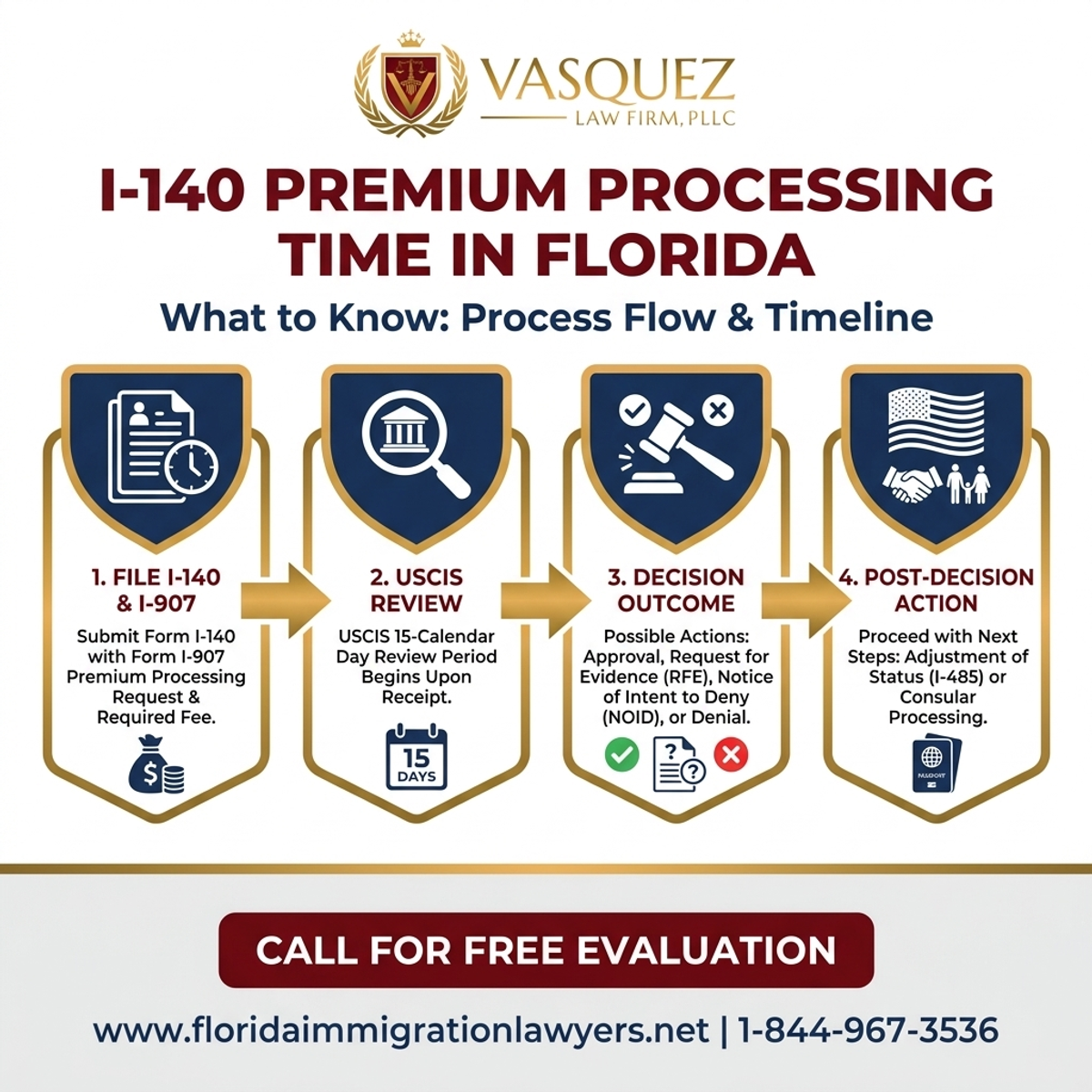
Step-by-Step Process — I-140 Premium Processing Time in Florida: What to Know
For Florida-based applicants, while the processing time itself isn't geographically specific, having local legal representation can be highly beneficial. An experienced immigration attorney in Florida can ensure the petition is robust, anticipate potential issues, and efficiently respond to any USCIS inquiries, thereby optimizing the premium processing experience.
Impact on EB-2 and EB-3 Applications
The I-140 petition is a critical step for both EB-2 (Professionals Holding Advanced Degrees or Persons of Exceptional Ability) and EB-3 (Skilled Workers, Professionals, and Other Workers) applicants. Premium processing directly impacts the I-140 stage, offering a significant advantage:
- Faster I-140 Approval: For both EB-2 and EB-3, premium processing ensures a quick decision on the I-140 petition. This means the employer and employee will know within 15 days if the petition is approved, denied, or if more information is needed.
- Earlier Priority Date Utilization: An approved I-140 is necessary before an applicant can file for Adjustment of Status (Form I-485) or proceed with consular processing abroad, provided their priority date is current according to the Visa Bulletin. A faster I-140 approval means that if a visa number is immediately available, the applicant can file their I-485 much sooner, potentially shaving months off the overall green card timeline.
- Planning and Certainty: For individuals in Florida on temporary visas (e.g., H-1B), a quick I-140 approval provides greater certainty for future planning, including visa extensions or changes in employment. It allows them to gauge their green card prospects more accurately and make informed decisions about their careers and lives in the U.S.
It is crucial to understand that premium processing only expedites the I-140 petition itself. It does not accelerate the availability of an immigrant visa number. Many EB-2 and EB-3 applicants, especially those from countries like India or China, face significant backlogs due to per-country limits on visa numbers. Even with a premium-processed I-140 approval, these applicants may still have to wait several years for their priority date to become current before they can file their I-485 or undergo consular processing. However, having the I-140 approved quickly ensures that they are ready to proceed the moment a visa number becomes available, eliminating potential delays at that critical juncture.
Benefits of Opting for Premium Processing
Choosing premium processing for your I-140 petition, despite the additional cost, offers several compelling benefits:
- Reduced Anxiety and Uncertainty: The waiting period for USCIS decisions can be a source of significant stress for both employers and employees. Premium processing provides a definitive timeline, alleviating much of this anxiety and allowing for better personal and professional planning. Knowing the outcome within 15 days, even if it's an RFE, empowers applicants to react swiftly.
- Faster Transition to Green Card Application: For individuals whose priority dates are current or are expected to become current soon, a quick I-140 approval allows for the prompt filing of Form I-485 (Application to Register Permanent Residence or Adjust Status). This can mean receiving work authorization (EAD) and travel permission (Advance Parole) much sooner, providing greater flexibility and stability.
- Strategic Planning for Employers: Employers benefit from knowing the status of their foreign workers' petitions quickly. This allows them to better plan staffing, project assignments, and long-term business strategies without the prolonged uncertainty of standard processing times. It also demonstrates a commitment to their employees, which can be a significant retention tool.
- Timely Response to Changing Circumstances: Life and career plans can change. A rapid I-140 decision provides the agility to respond to these changes. For instance, if an employee needs to travel internationally or if there are changes in their temporary visa status, a quick I-140 approval can be instrumental in navigating these transitions smoothly.
- Mitigation of Visa Expiry Risks: For some applicants, particularly those on H-1B visas nearing their maximum allowable stay, a timely I-140 approval can be crucial for eligibility to extend their H-1B beyond the six-year limit, under AC21 provisions.
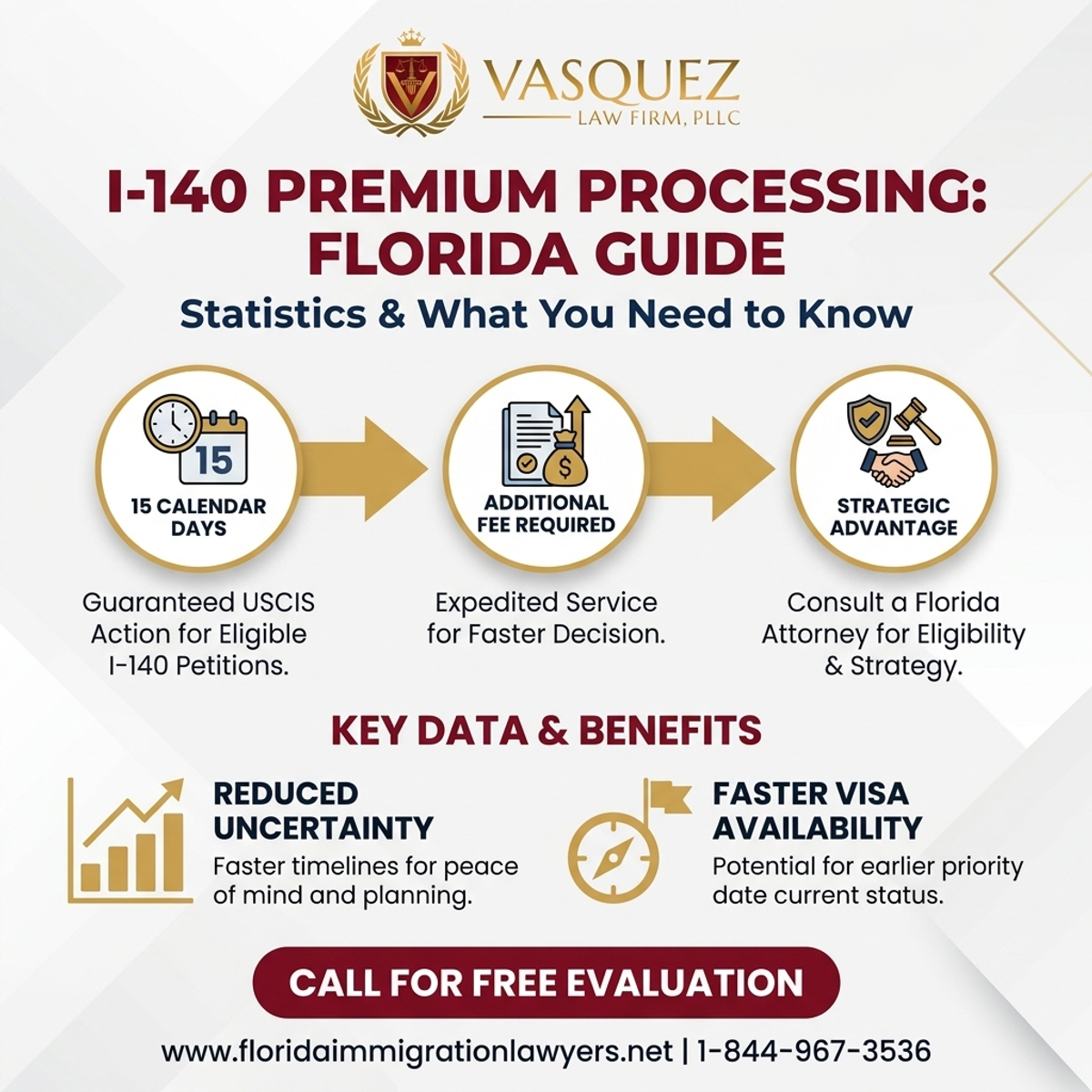
Key Statistics — I-140 Premium Processing Time in Florida: What to Know
Ultimately, the investment in premium processing is often justified by the invaluable peace of mind, strategic advantages, and operational efficiencies it provides to both the employer and the aspiring immigrant.
Potential Drawbacks and Considerations
While premium processing offers significant advantages, it's essential to consider its potential drawbacks and specific considerations before opting for this service:
- High Cost: The most immediate drawback is the substantial additional fee required for premium processing. This cost is above and beyond the standard I-140 filing fee and can be a significant financial burden for some employers or individuals.
- Increased Scrutiny and RFE Risk: While not universally true, some practitioners believe that the expedited review process might lead to increased scrutiny, potentially resulting in a higher likelihood of receiving a Request for Evidence (RFE). USCIS adjudicators have a limited time to review the petition, and if any aspect is unclear or incomplete, an RFE is a common outcome. Responding to an RFE can be time-consuming and requires additional legal work, potentially negating some of the time-saving benefits.
- Does Not Guarantee Approval: It's a common misconception that premium processing guarantees approval. It only guarantees an expedited review. If the petition is weak, incomplete, or does not meet eligibility criteria, it will still be denied, albeit quickly.
- No Impact on Visa Bulletin Backlogs: As previously mentioned, premium processing does not accelerate the availability of an immigrant visa number. For applicants from countries facing significant backlogs in the EB-2 or EB-3 categories, a quick I-140 approval will not shorten the waiting period for their priority date to become current. They will still need to wait for the Visa Bulletin to advance.
- Not Always Available: USCIS has the discretion to suspend premium processing for certain forms or categories, often due to high demand or operational backlogs. This means that the option may not always be available when you need it most, requiring flexibility in planning.
Weighing these factors against the benefits is crucial. For many, the certainty and speed outweigh the costs and potential for an RFE, especially when time-sensitive issues are involved. However, a thorough assessment of your specific situation and consultation with an experienced immigration attorney are always recommended.
The Indispensable Role of an Immigration Attorney in Your Green Card Journey
Navigating the complex landscape of U.S. immigration law, particularly for employment-based petitions like the I-140, is a daunting task. The seemingly straightforward process is riddled with intricate regulations, strict deadlines, and a high potential for missteps that can lead to significant delays or even denial. This is where the expertise of a seasoned immigration attorney becomes not just beneficial, but often indispensable.
An attorney specializing in immigration law offers comprehensive support from the initial consultation through to the final approval. Their role begins with a thorough assessment of your eligibility and the strength of your case, ensuring that you meet all the stringent requirements for your chosen EB category. They meticulously prepare the I-140 petition, gathering all necessary documentation, drafting compelling support letters, and cross-referencing every detail to minimize the risk of RFEs or denials. This proactive approach is particularly critical when opting for premium processing, where the expedited review means less room for error.
Should USCIS issue a Request for Evidence (RFE) or a Notice of Intent to Deny (NOID), an attorney is equipped to provide a robust and timely response. They understand the nuances of what USCIS is looking for and can articulate complex legal arguments and present additional evidence effectively, often turning a potentially negative outcome into an approval. Beyond the I-140, an attorney provides strategic guidance on the subsequent steps, such as filing for Adjustment of Status (I-485) or consular processing, and helps you understand the ever-changing Visa Bulletin.
Furthermore, an immigration attorney can offer invaluable advice on maintaining legal status throughout the often-lengthy green card process, addressing concerns related to travel, employment changes, and family matters. They can also assist with a broader range of immigration challenges, from general immigration matters to more complex issues like asylum claims or deportation defense, providing a holistic approach to your legal needs. Their deep understanding of the law and experience with USCIS procedures ensures that your journey towards permanent residency is as smooth and efficient as possible. Don't hesitate to contact our experienced team for personalized guidance.
Beyond I-140: What Happens Next?
An approved I-140 petition is a significant milestone, but it's not the end of the green card journey. The next crucial step depends on whether an immigrant visa number is immediately available to the applicant, as determined by the monthly Visa Bulletin issued by the U.S. Department of State. There are two primary paths forward:
- Adjustment of Status (AOS) – Form I-485: If the applicant is already in the U.S. in a lawful nonimmigrant status and their priority date is current, they can file Form I-485, Application to Register Permanent Residence or Adjust Status. This process allows them to obtain their green card without leaving the country. Concurrent filing of I-140 and I-485 is sometimes possible if the priority date is current at the time of filing. During the I-485 processing, applicants can also apply for an Employment Authorization Document (EAD) and Advance Parole (AP) for work and travel flexibility.
- Consular Processing: If the applicant is outside the U.S. or if their priority date is current but they prefer to process abroad, they will go through consular processing. This involves an interview at a U.S. embassy or consulate in their home country. Once approved, they will receive an immigrant visa stamp in their passport, allowing them to enter the U.S. as a lawful permanent resident.
The waiting time for a visa number to become current can vary significantly, from a few months to several years, depending on the applicant's country of origin and the specific EB category. It is essential to monitor the Visa Bulletin closely and consult with an immigration attorney to determine the optimal path and timing for the final stage of your green card application.
Common Challenges and How to Overcome Them
Even with careful planning and premium processing, the I-140 journey can present challenges. Being prepared for these can help mitigate delays and stress:
- Requests for Evidence (RFEs): RFEs are common and can significantly delay the process. They occur when USCIS requires more information or clarification on aspects of the petition. To overcome this, ensure your initial petition is robust and complete. If an RFE is issued, respond promptly and thoroughly with all requested documentation, ideally with the assistance of an experienced attorney who can interpret the RFE accurately and formulate a compelling response.
- Unforeseen Delays: While premium processing guarantees a 15-day review, external factors can still cause delays. These might include government shutdowns, changes in USCIS policy, or system outages. Staying informed through official USCIS channels and your legal counsel is key.
- Changes in Employment: If an employee's job duties, salary, or even the employer changes during the I-140 process, it can impact the petition. It's crucial to consult with an attorney immediately if any such changes occur, as they may necessitate amendments, new filings, or could even jeopardize the petition.
- Priority Date Retrogression: For many EB-2 and EB-3 applicants, especially from high-demand countries, the priority date can retrogress (move backward), meaning a longer wait for a visa number. While premium processing can't fix this, having an approved I-140 means you are ready to file for adjustment of status the moment your priority date becomes current.
- Employer Compliance Issues: Sometimes, issues arise with the employer's ability to pay the proffered wage or other compliance matters. Ensuring the employer is fully aware of and compliant with all immigration regulations from the outset is vital.
Proactive communication with your attorney, meticulous record-keeping, and a thorough understanding of each step are your best tools for overcoming these potential hurdles and ensuring a successful outcome for your I-140 petition.
Conclusion
For professionals and skilled workers in Florida, navigating the I-140 Immigrant Petition process, particularly with the added dimension of premium processing, is a critical step towards achieving permanent residency. While premium processing offers an expedited review for EB-2 and EB-3 applications, promising a decision within 15 calendar days, it's vital to understand its scope and limitations. It accelerates the I-140 adjudication but does not bypass the complexities of visa bulletin backlogs or the need for a meticulously prepared petition.
The decision to opt for premium processing should be made after carefully weighing its benefits – such as reduced uncertainty and faster progression to the next stage – against its costs and potential for increased scrutiny. Regardless of whether you choose premium processing, the journey through employment-based immigration demands precision, strategic planning, and a deep understanding of immigration law. Engaging with an experienced immigration attorney is highly recommended to ensure your petition is robust, to expertly navigate any challenges, and to guide you seamlessly through every step of your green card journey in Florida.
Sources and References
- U.S. Citizenship and Immigration Services (USCIS)
- Executive Office for Immigration Review (EOIR)
- U.S. Department of State
- Immigration and Nationality Act (INA), 8 U.S.C. Chapter 12
Do Not Navigate This Process Alone
Our experienced immigration attorneys are ready to fight for you. Get a free, confidential case review today.
Se Habla Español
Or leave your details and we’ll call you:
Free Evaluation in 24 Hours
Or talk to us right now

AI voice assistant — available 24/7
FreeFrequently Asked Questions

William J. Vásquez
Founding Attorney · Vasquez Law Firm
U.S. Air Force veteran and immigration attorney with years of hands-on U.S. immigration experience. J.D., NCCU School of Law. AILA member. Admitted to the 4th, 5th, and 11th Circuit Courts.
Available 24/7 - Free Evaluations
Reviewed for legal accuracy by William J. Vásquez
Licensed in North Carolina; U.S. immigration is federal practice.
Related Legal Services
Our Florida immigration attorneys can help you with experienced immigration attorneys, asylum protection and citizenship and naturalization. Call today at 1-844-YO-PELEO for a free case review.
Related Links
Related Topics
Free Legal Case Review
Discuss your case with our experienced attorneys. We're available 24/7.
Se Habla Español - Estamos aquí para ayudarle.
Related Articles
DUI Immigration Consequences in Florida 2026
A DUI conviction in Florida can have severe immigration consequences, potentially leading to inadmissibility, deportation, or denial of immigration benefits. For non-citizens, a DUI is not just a traffic offense but a serious criminal matter that federal immigration law scrutinizes closely. Factors like multiple offenses, injury, or property damage can escalate a simple DUI to a Crime Involving Moral Turpitude (CIMT) or even an aggravated felony, triggering mandatory detention and removal proceedings. Understanding the specific nature of your Florida conviction and its interpretation under the Immigration and Nationality Act (INA) is crucial. This article outlines how DUIs impact immigration status, the grounds for inadmissibility and deportation, a step-by-step guide to navigating the process, essential documentation, and expected timelines for 2026. We also highlight common mistakes to avoid and when to seek legal counsel from an experienced immigration attorney. Florida Immigration Lawyers offers comprehensive support for individuals facing these challenging situations, providing expert guidance through complex legal landscapes.
Dual Citizenship Lawyer in Florida: What You Need to Know
For Florida residents, the concept of dual citizenship, or holding two passports, offers a compelling blend of opportunities and challenges. While the U.S. generally permits dual nationality, the path to achieving this status requires a meticulous understanding of both U.S. immigration laws and the citizenship policies of your country of origin. This guide explores the definition of dual citizenship, the detailed step-by-step process for U.S. naturalization, and the significant benefits and potential pitfalls involved. We cover essential documentation, typical timelines, and cost considerations for 2026, providing crucial insights for anyone in Orlando, Miami, or across Florida considering this important legal step. Learn about common mistakes to avoid and understand when to seek professional legal counsel to navigate this complex process successfully. Florida Immigration Lawyers is here to provide expert, bilingual support for your dual citizenship journey.
Immigration Lawyer Orlando Free Consultation in Florida
For individuals and families in Orlando, Florida, navigating the complexities of U.S. immigration law requires expert guidance. An immigration lawyer in Orlando offers crucial support for everything from visa applications and green card processes to naturalization and deportation defense. This comprehensive guide details what a free consultation covers, providing a step-by-step overview of immigration pathways, essential document checklists, and expected timelines in 2026. We also highlight common mistakes to avoid, discuss the critical role of legal counsel in deportation and asylum cases, and explain why choosing a local Orlando immigration attorney is beneficial. Florida Immigration Lawyers is dedicated to serving the diverse community of Orlando with compassionate, effective legal solutions, ensuring you receive personalized advice and robust representation for a successful immigration journey.
EAD Advance Parole Combo Card in Florida: What You Need
An EAD advance parole combo card allows individuals with pending adjustment applications to both work and travel abroad without jeopardizing their green card application. Learn how to apply in Florida, what documents you need, and common mistakes to avoid.