H-1B Visa Fee Increase Florida 2026: What You Need to Know
For employers and skilled professionals in Florida, understanding the H-1B visa fee increase for 2026 is critical. While a past $100,000 fee proposal did not take effect, USCIS has implemented other significant fee adjustments, including a new Asylum Program Fee, impacting H-1B petitions. This guide from Florida Immigration Lawyers details these changes, outlines the application process, and highlights essential documents. Learn about processing timelines, cost factors, and common mistakes to avoid. We provide expert guidance for those in Kissimmee and across Florida navigating these complex immigration challenges. Contact us for a free consultation.

The H-1B visa program in Florida faces significant fee increases and policy shifts affecting employers and skilled foreign workers. While a past $100,000 fee proposal did not become law, USCIS has implemented other substantial adjustments, including a new Asylum Program Fee, impacting H-1B petitions for 2026. Careful planning and expert legal guidance are essential for successful applications in Kissimmee and throughout Florida.
- H-1B visa fees are rising for employers.
- The $100,000 fee was a proposal, not enacted.
- New fees, like the Asylum Program Fee, are applicable.
- Florida policies may influence H-1B employment.
- Legal counsel is crucial for complex changes.
Are you an employer in Kissimmee, Florida, looking to sponsor a skilled foreign worker, or a professional hoping to secure an H-1B visa to work in the Sunshine State? The landscape of H-1B visas is constantly evolving, and 2026 brings significant changes, particularly concerning fee increases and updated policies. Understanding these developments is crucial for a successful application.
This comprehensive guide from Florida Immigration Lawyers will walk you through the latest H-1B visa fee increase in Florida, explaining the new cost factors, the application process, and potential challenges. We understand the anxieties these changes can cause for both employers and prospective employees across Florida. Our goal is to provide clear, actionable information to help you navigate this complex terrain.
Preparing for an H-1B petition requires meticulous attention to detail and a deep understanding of immigration law. With rising fees and increased scrutiny, having an experienced legal team by your side is more important than ever. Call Florida Immigration Lawyers at 1-844-967-3536 for a free consultation today to discuss your specific H-1B visa needs and how these new fee structures might impact your plans.
Understanding the H-1B Visa and Recent Fee Changes in Florida for 2026
The H-1B visa program is a vital nonimmigrant visa category that allows U.S. employers to temporarily employ foreign workers in specialty occupations. These occupations generally require a bachelor's degree or higher in a specific field, as defined by the Immigration and Nationality Act (INA) at INA § 101(a)(15)(H)(i)(b) and 8 U.S.C. § 1101(a)(15)(H)(i)(b).
Each year, USCIS typically allocates 85,000 new H-1B visas, comprising a regular cap of 65,000 and an additional 20,000 for those with a U.S. master's degree or higher. Due to high demand, the H-1B program often operates through a lottery system, making the application process highly competitive, especially in states like Florida, which have a growing need for skilled labor.
The Evolving Landscape of H-1B Fees: Addressing the $100,000 Proposal
Many individuals and employers in Florida have heard discussions about a proposed $100,000 H-1B visa fee increase. It is important to clarify that while such a significant fee was indeed proposed in the past, it did not become law as a standard H-1B filing fee. Instead, USCIS has implemented a series of other substantial fee adjustments that will impact H-1B petitions for 2026.
These actual fee increases stem from a comprehensive USCIS fee rule, which became effective on April 1, 2024, and continues to influence costs into 2026. The rule introduced an inflationary adjustment to many forms and, critically, established a new Asylum Program Fee. This fee is designed to recover a portion of USCIS's asylum processing costs and applies to most employment-based petitions, including H-1B, as outlined in 8 CFR Part 106.
Florida's Unique Context and H-1B Considerations
Beyond federal fee changes, Florida has seen its own discussions and policy considerations regarding foreign workers, particularly within state institutions. There have been legislative proposals and executive orders, such as those discussed by Governor DeSantis, aiming to impact the recruitment and employment of H-1B visa holders at state universities and other public entities.
While federal law governs the H-1B visa itself, state-level actions can create additional layers of complexity for employers and employees in Florida. For instance, a temporary freeze on foreign hiring at state universities, though potentially limited in scope, could signal a broader climate affecting H-1B employment opportunities. Businesses in Kissimmee and other Florida cities must be aware of both federal and state-specific nuances.
Florida Immigration Lawyers stays abreast of these dynamic changes, providing our clients with the most current and relevant advice. We understand how these shifting regulations can affect your ability to secure or maintain an H-1B visa in Florida. Our firm is dedicated to helping you navigate every aspect of the H-1B visa fee increase Florida and its broader implications.
Navigating the H-1B Application Process: A Step-by-Step Guide for Florida Applicants
The H-1B visa application process is intricate, involving multiple stages and strict deadlines. For those in Kissimmee and across Florida, understanding each step is vital for a successful petition. Here is a detailed guide to the typical H-1B application journey:
-
Employer Sponsorship and Labor Condition Application (LCA): The process begins with a U.S. employer sponsoring the foreign worker. The employer must first file a Labor Condition Application (LCA), Form ETA Form 9035, with the U.S. Department of Labor (DOL). This application attests that the employer will pay the H-1B worker at least the prevailing wage or the actual wage, whichever is higher, and will provide working conditions that will not adversely affect other workers. The LCA process typically takes about 7 business days for certification.
-
H-1B Cap Registration and Lottery (If Applicable): For cap-subject H-1B petitions, employers must register electronically with USCIS during a specified registration period, usually in March. USCIS then conducts a lottery if the number of registrations exceeds the available visas. Only selected registrations can proceed to file a full H-1B petition. This is a critical stage for many aspiring H-1B holders.
-
Petition Filing with USCIS: If selected in the lottery or if the petition is cap-exempt (e.g., for certain non-profit organizations or universities), the employer files Form I-129, Petition for a Nonimmigrant Worker, with USCIS. This petition must include the certified LCA, all required supporting documentation, and the appropriate filing fees. This stage is where the H-1B visa fee increase Florida becomes directly relevant, as new fees apply.
-
USCIS Processing and Adjudication: USCIS reviews the submitted petition. During this phase, USCIS may issue a Request for Evidence (RFE) if they require additional documentation or clarification. Responding thoroughly and promptly to an RFE is crucial for the success of the petition. Once the review is complete, USCIS will issue an approval, denial, or Notice of Intent to Deny (NOID).
-
Visa Interview (for those outside the U.S.): If the beneficiary is outside the United States, they must attend a visa interview at a U.S. embassy or consulate in their home country. This involves completing the DS-160 Online Nonimmigrant Visa Application and gathering all necessary documents. The consular officer will determine eligibility for the H-1B visa stamp.
-
Entry to the U.S. or Change of Status: Upon approval, if the beneficiary is outside the U.S., they can enter with their H-1B visa stamp. If they are already in the U.S. on another nonimmigrant visa and USCIS approved a Change of Status, their status automatically changes to H-1B. They will receive an I-797 Approval Notice with a new I-94 record indicating H-1B status.
-
Maintaining H-1B Status and Compliance: Once H-1B status is granted, the beneficiary must maintain it by working only for the sponsoring employer in the approved specialty occupation and adhering to all immigration laws. Employers must also comply with all H-1B regulations, including wage requirements and notification procedures for material changes to employment. Any non-compliance can have severe consequences for both parties.
Essential Documents for Your H-1B Visa Application
A well-prepared H-1B petition relies heavily on a comprehensive set of documents. Both the employer and the beneficiary must provide specific evidence to support the application. Missing or incorrect documents can lead to delays or even denials, making attention to detail paramount, especially with the H-1B visa fee increase Florida adding to the stakes.
Employer-Specific Documentation:
- Certified Labor Condition Application (LCA) Form ETA 9035.
- Proof of employer's Federal Employer Identification Number (FEIN).
- Company financial statements, tax returns, and business licenses to demonstrate viability.
- Detailed job offer letter, including job title, duties, salary, and employment terms.
- Organizational charts and project descriptions to establish the specialty occupation.
- Evidence of the employer-employee relationship, especially for third-party placements.
- Copies of any previous H-1B petitions filed by the company.
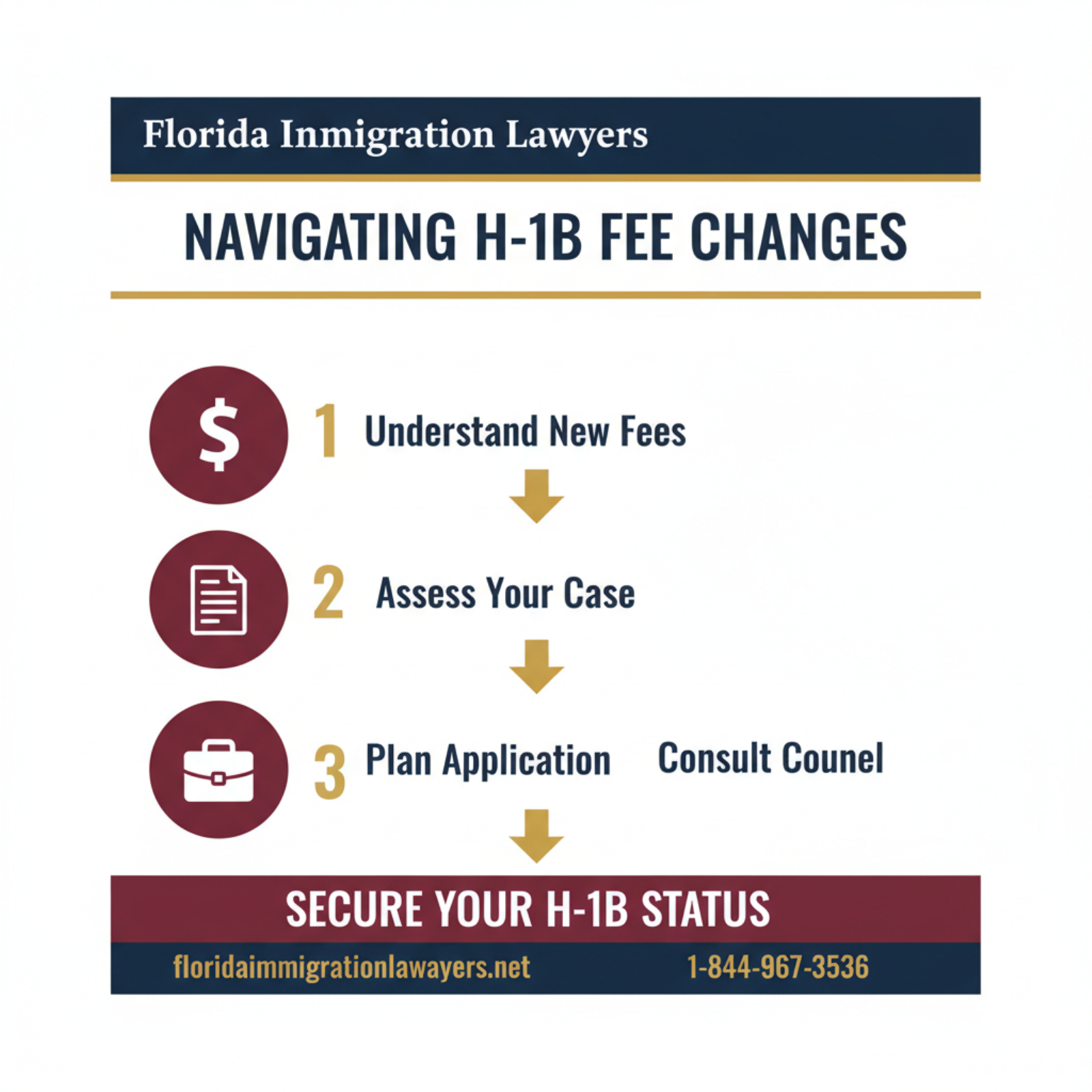
Beneficiary-Specific Documentation:
- Valid passport with at least six months validity beyond the intended period of stay.
- Copies of all academic degrees, diplomas, and official transcripts.
- Foreign degree evaluations (if applicable) to demonstrate U.S. equivalency.
- Detailed resume or curriculum vitae outlining education and work experience.
- Professional licenses or certifications required for the occupation in Florida.
- Evidence of previous nonimmigrant visas, I-94 records, and U.S. entry/exit stamps.
- Marriage certificate and birth certificates for any dependent family members (H-4 visas).
- Photographs meeting USCIS specifications.
H-1B Visa Processing Times and Expectations in Florida
Understanding the H-1B visa processing timeline is crucial for planning your career or staffing needs in Florida. Processing times can vary significantly based on several factors, including whether your petition is cap-subject or cap-exempt, the volume of applications, and the specific USCIS service center handling your case.
Key Stages and Timelines:
- LCA Processing: Typically 7 business days, but can be longer if DOL issues a deficiency.
- H-1B Cap Registration: Usually held in March for a few weeks. Results are typically announced by the end of March.
- Petition Filing (Cap-Subject): For selected registrations, petitions must be filed starting April 1 and within a specific window, usually 90 days.
- USCIS Regular Processing: Without premium processing, H-1B petitions can take anywhere from 6 to 12+ months. Processing times are updated regularly on the USCIS website for each service center (e.g., California, Vermont, Nebraska, Texas).
- Premium Processing: For an additional fee, employers can opt for premium processing, which guarantees USCIS action (approval, RFE, or denial) within 15 calendar days. This option is outlined in 8 CFR § 103.7(e). This can be a valuable tool for urgent cases, but it adds to the overall H-1B visa fee increase Florida.
- Consular Processing (Outside U.S.): After USCIS approval, visa interview wait times vary by embassy or consulate. You can check current wait times on the U.S. Department of State website.
For those living in or planning to move to Kissimmee, Florida, it's important to factor these timelines into your personal and professional planning. Delays are not uncommon, and unexpected RFEs can extend the process further. Consulting with Florida Immigration Lawyers can help you set realistic expectations and prepare for potential contingencies.
Do not navigate this process alone. Contact Florida Immigration Lawyers today.
Decoding the H-1B Visa Fee Increase in 2026: What to Expect
The H-1B visa fee increase Florida for 2026 represents a significant financial consideration for employers. It's crucial to understand the various components that make up the total cost and who is typically responsible for each. This section addresses common questions about the fees, including the often-discussed $100,000 figure.
How Much is the H-1B Visa Fee Going to Increase?
As mentioned, the highly publicized $100,000 fee was a proposal that did not become a standard, across-the-board H-1B filing fee. However, USCIS has implemented other substantial increases. The fee rule effective April 1, 2024, significantly adjusted the base filing fee for Form I-129, among other forms. Additionally, a new Asylum Program Fee has been introduced, impacting most employment-based petitions. While we cannot provide exact future amounts as fees are subject to change, these adjustments mean a notable increase in the overall cost of filing an H-1B petition compared to previous years. Employers in Florida should budget for higher expenses.
Who Pays the H-1B Visa Fees?
Generally, the employer is responsible for paying most of the H-1B visa fees. This includes the base filing fee, the ACWIA fee, and the Fraud Prevention and Detection Fee. USCIS regulations, specifically 8 CFR § 214.2(h)(10), prohibit employers from passing certain costs, like the ACWIA fee, onto the beneficiary. However, there are some exceptions:
- Premium Processing Fee: If the beneficiary specifically requests premium processing for their own personal benefit (e.g., to expedite travel plans), they may pay this fee. Otherwise, the employer typically pays it.
- Attorney Fees: While employers usually cover attorney fees for the petition, costs related to an H-4 dependent visa or personal legal advice may be paid by the beneficiary.
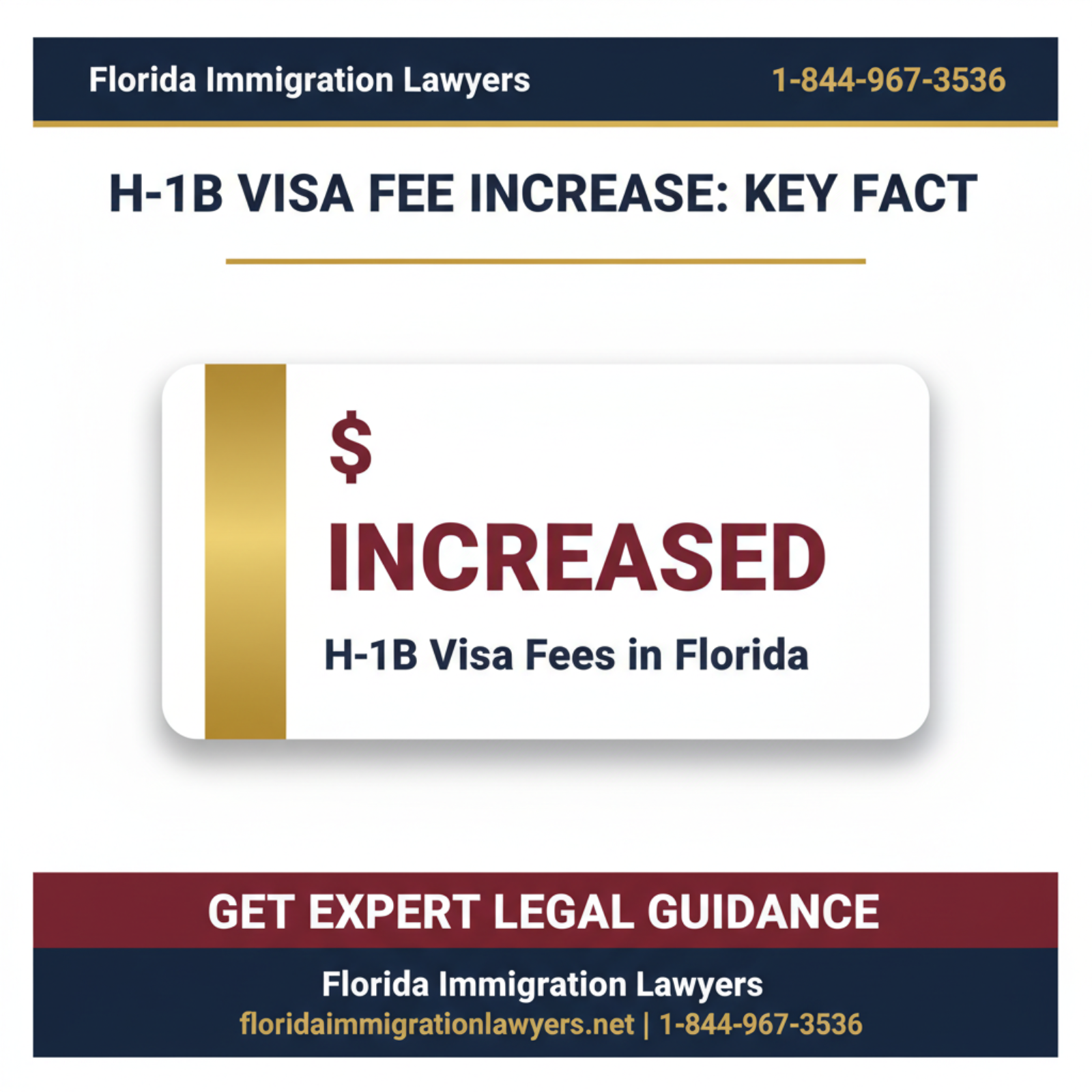
Breakdown of Key H-1B Fee Components (as projected for 2026):
- Base Filing Fee (Form I-129): This is the fundamental fee for the petition itself. It saw a significant increase with the new fee rule.
- ACWIA Fee (American Competitiveness and Workforce Improvement Act of 1998): This fee, mandated by Pub. L. 105-277 (8 U.S.C. § 1184(c)(9)), varies based on the employer's size (e.g., 25 or fewer full-time equivalent employees vs. 26 or more).
- Fraud Prevention and Detection Fee: Established by Pub. L. 108-447, this fee applies to initial H-1B petitions and petitions for H-1B workers changing employers.
- Public Law 114-113 Fee: An additional fee applies to employers with 50 or more employees, where 50% or more of their U.S. workforce are in H-1B or L-1 nonimmigrant status. This fee was established by Pub. L. 114-113.
- Asylum Program Fee: This is a new fee for most employment-based petitions, including H-1B, intended to help fund USCIS asylum operations, as specified in 8 CFR Part 106.
- Premium Processing Fee: An optional fee (8 CFR § 103.7(e)) to expedite processing to 15 calendar days. This fee also increased with the recent rule.
- Attorney Fees: Costs for legal representation, which vary based on the complexity of the case and the firm.
- Other Potential Costs: These can include degree evaluation fees, translation services, and travel expenses for consular interviews.
The H-1B visa fee increase Florida makes it more important than ever for employers to budget accurately and for beneficiaries to understand the financial landscape. Florida Immigration Lawyers can provide detailed guidance on current fee structures and help you prepare for these significant expenses.
Common Mistakes to Avoid in Your H-1B Visa Process
Navigating the H-1B visa process, especially with the H-1B visa fee increase Florida, can be daunting. Even minor errors can lead to significant delays, Requests for Evidence (RFEs), or even outright denials. Here are common mistakes to avoid:
-
Incorrect or Multiple Lottery Registrations: Submitting inaccurate information during the H-1B cap registration or having multiple registrations for the same beneficiary by related entities can lead to disqualification. USCIS has become very strict on this, and such errors can result in the rejection of all associated petitions. Additionally, the $100,000 fee proposal, if it were enacted, would apply to *new* petitions, not renewals, and this mistake can jeopardize even the opportunity to file a new petition.
-
Insufficient Evidence for Specialty Occupation: Failing to adequately prove that the position qualifies as a specialty occupation or that the beneficiary holds the required qualifications is a common pitfall. USCIS scrutinizes job duties and degree requirements closely. A vague job description or a general degree may lead to an RFE or denial.
-
LCA Violations or Inaccuracies: The Labor Condition Application (LCA) is foundational. Errors in prevailing wage determination, failure to post the LCA at the worksite, or misrepresenting job duties can result in DOL investigations and severe penalties for the employer. Ensure precise wage calculations and strict adherence to all LCA regulations.
-
Missing Critical Deadlines: The H-1B process is rife with strict deadlines, especially for cap-subject petitions. Missing the registration window, the filing deadline after lottery selection, or RFE response deadlines can lead to an automatic denial. Timeliness is paramount in immigration matters.
-
Failure to Respond Adequately to RFEs: Receiving a Request for Evidence (RFE) means USCIS needs more information. A common mistake is providing an incomplete or generic response. Every point raised in the RFE must be addressed with strong, specific evidence. A weak RFE response often leads to a denial.
-
Misunderstanding Fee Structures and Payment: With the H-1B visa fee increase Florida, correctly calculating and paying all fees is crucial. Submitting incorrect amounts or using an outdated fee schedule can cause the petition to be rejected. Also, misunderstanding who pays which fee (e.g., illegally requiring the beneficiary to pay employer-mandated fees) can lead to serious compliance issues. Current H-1B holders do not pay a $100,000 fee; this was a past proposal for new applications, and current renewals are subject to standard renewal fees.
-
Ignoring Florida-Specific Regulations or Political Climate: While H-1B is federal, state actions (like those concerning Florida universities) can create a challenging environment. Employers and workers in Kissimmee and other Florida locations should be aware of any state-level policies that might indirectly affect H-1B employment. Ignoring these can lead to unexpected complications.
-
Unauthorized Practice of Law: Relying on uncertified consultants or paralegals for legal advice or petition preparation is risky and illegal. Only licensed attorneys can provide legal counsel. Improper assistance can jeopardize your entire case and waste valuable time and money.
-
Travel Issues During Change of Status: If you are applying for an H-1B Change of Status while in the U.S., traveling outside the country before the approval can abandon your application. It is vital to consult with an attorney before making any international travel plans during a pending petition.
-
Not Disclosing Full Immigration History: Any past visa denials, overstays, or immigration violations, no matter how minor, must be fully disclosed. Hiding information can lead to accusations of misrepresentation, which carries severe long-term immigration consequences.
-
Poor Consular Interview Preparation: For those undergoing consular processing abroad, a lack of preparation for the visa interview can be detrimental. Inconsistent answers, nervousness, or missing documents can lead to delays or denials. Practice answering common questions and organize all required documents.
-
Assuming Automatic Approval: Even with a strong case and qualified candidate, H-1B approval is never guaranteed. USCIS maintains strict scrutiny, and unforeseen issues can arise. Maintaining realistic expectations and having a contingency plan is always wise.
When to Call a Florida Immigration Lawyer for Your H-1B Visa
The complexities of the H-1B visa, amplified by the H-1B visa fee increase Florida and evolving policies, make professional legal guidance invaluable. While some may attempt to navigate the process independently, certain situations strongly warrant the expertise of an experienced immigration attorney. Florida Immigration Lawyers is here to help.
Specific Scenarios Where Legal Help is Crucial:
- Complex Employment History or Qualifications: If the beneficiary's education or work experience doesn't directly align with the specialty occupation, or if there are gaps in employment, an attorney can help present a strong case.
- Employer Unfamiliarity: If your Florida-based employer has never sponsored an H-1B visa before, or if they are a small business, legal counsel can ensure they meet all regulatory requirements without error.
- Prior Denials or Immigration Issues: Any past immigration challenges, such as previous visa denials, overstays, or issues with other visa types, necessitate legal review to address potential red flags proactively.
- Receipt of an RFE or NOID: If USCIS issues a Request for Evidence (RFE) or a Notice of Intent to Deny (NOID), it's a critical moment. An attorney can formulate a comprehensive and persuasive response to overcome the stated concerns.
- Changes in Employment or Status: If an H-1B worker needs to change employers, move to a new location in Florida, or change their immigration status, these actions often require new petitions or amendments. An attorney ensures proper procedures are followed.
- Understanding Florida's Specific Regulatory Environment: With unique state-level discussions and policies in Florida, an attorney can help interpret how these might impact H-1B employment, especially for businesses in Kissimmee or state-affiliated institutions.
- Seeking Premium Processing Advice: Deciding whether premium processing is right for your case, and understanding its implications, is best done with legal advice.
At Florida Immigration Lawyers, we offer comprehensive H-1B visa services, including initial consultations, petition preparation and filing, RFE responses, and strategic advice. Our team understands the nuances of the H-1B visa fee increase Florida and is committed to protecting your interests. We serve clients throughout the state, including in Kissimmee, Orlando, Miami, and Tampa, providing localized expertise.
About Florida Immigration Lawyers
Florida Immigration Lawyers is a leading immigration law firm dedicated to serving individuals, families, and businesses across the entire state of Florida. With years of experience and a deep understanding of U.S. immigration law, our firm provides compassionate yet aggressive representation for a wide range of immigration matters.
We specialize in areas including H-1B visas, family-based immigration, business immigration, asylum claims, deportation defense, and naturalization. Our team is committed to delivering personalized legal strategies tailored to each client's unique circumstances, ensuring the highest level of service and care.
Why choose Florida Immigration Lawyers? We pride ourselves on our client-focused approach, transparent communication, and unwavering dedication to achieving the best possible outcomes. We understand the profound impact immigration decisions have on lives, and we strive to make the legal process as clear and stress-free as possible for our clients in Kissimmee and beyond.
We are available 24/7 to address your urgent immigration needs and offer free consultations to help you understand your options. Contact Florida Immigration Lawyers today at 1-844-967-3536 or visit our website at https://www.floridaimmigrationlawyers.net to learn how we can assist you with your immigration journey in Florida.
Sources and References
- U.S. Citizenship and Immigration Services (USCIS)
- U.S. Department of State (travel.state.gov)
- Executive Office for Immigration Review (EOIR)
- 8 U.S.C. Chapter 12 - Immigration and Nationality Act (INA)
- INA § 101(a)(15)(H)(i)(b) - Definition of Specialty Occupation
- 8 U.S.C. § 1101(a)(15)(H)(i)(b) - Admission of nonimmigrants
- 8 CFR Part 214 - Nonimmigrant classes
- 8 CFR Part 106 - Fee Schedule
- 8 CFR § 103.7(e) - Premium Processing Service
- 8 CFR § 214.2(h)(10) - H-1B Petition Requirements
- Public Law 105-277 - American Competitiveness and Workforce Improvement Act of 1998 (ACWIA)
- Public Law 108-447 - Consolidated Appropriations Act, 2005 (Fraud Prevention and Detection Fee)
- Public Law 114-113 - Consolidated Appropriations Act, 2016 (Additional H-1B/L-1 fee)
This article provides general legal information and is not intended as legal advice. Every case is unique, and outcomes depend on specific facts and circumstances. Contact an attorney for advice about your particular situation.
Don't let the complexities of the H-1B visa fee increase in Florida overwhelm you. Secure your future with experienced legal guidance. Our team at Florida Immigration Lawyers is ready to provide the support and expertise you need to navigate these changes successfully. We serve all of Florida, including Kissimmee, Orlando, and Miami, and are available to assist you.
Call Florida Immigration Lawyers today at 1-844-967-3536 for a free, confidential consultation. Se Habla Español - Estamos aquí para ayudarle.
Do Not Navigate This Process Alone
Our experienced immigration attorneys are ready to fight for you. Get a free, confidential consultation today.
Se Habla Español
Frequently Asked Questions
Florida Immigration Lawyers
Immigration Attorney | Founder, Vasquez Law Firm
U.S. Air Force veteran and immigration attorney with thousands of cases resolved. J.D., NCCU School of Law. AILA member. Admitted to the 4th, 5th, and 11th Circuit Courts.
Available 24/7 - Free Evaluations
Related Legal Services
Our Florida immigration attorneys can help you with free immigration consultation, experienced immigration attorneys and business immigration. Call today at 1-844-967-3536 for a free consultation.
Related Links
Related Topics
Free Legal Consultation
Discuss your case with our experienced attorneys. We're available 24/7.
Se Habla Español - Estamos aquí para ayudarle.
Related Articles
Stokes Interview: Navigating Marriage Fraud in Florida
A Stokes interview is a specialized, separate interview conducted by USCIS when there are suspicions of marriage fraud in a green card application. This rigorous process involves individual questioning of spouses, focusing on inconsistencies in their testimonies to determine the authenticity of their marital bond. For couples in Florida, navigating this high-stakes interview requires meticulous preparation, extensive documentation, and often the strategic guidance of an experienced immigration lawyer. Understanding the process, preparing for detailed questions, and presenting a strong case are crucial for overcoming marriage fraud allegations and securing your immigration future. Florida Immigration Lawyers stands ready to assist you.
Immigration Attorney Gainesville: North Florida Legal Help
For those in Gainesville, Alachua County, and throughout North Florida, navigating U.S. immigration law requires expert guidance. An experienced immigration attorney can simplify complex processes, from family-based petitions and employment visas to critical asylum claims and deportation defense. This comprehensive guide outlines the essential services provided by an immigration attorney, details necessary documentation, clarifies processing timelines, and discusses associated costs. We also highlight common mistakes to avoid and crucial scenarios where legal counsel is indispensable. Florida Immigration Lawyers serves all of Florida, including Gainesville and St. Petersburg, providing dedicated legal support to help you achieve your immigration goals. Contact us for a free consultation to discuss your specific needs.
Military Naturalization Expedited at Florida Bases
Explore expedited military naturalization processes for service members at Florida bases like MacDill. Learn about eligibility, steps, and common mistakes. Contact Florida Immigration Lawyers for a free consultation.
Protect Yourself from Immigration Scams in Florida
Learn how to protect against immigration scams in Florida, focusing on St. Petersburg. This guide covers identifying scams, verifying credentials, and getting legal help. Call Florida Immigration Lawyers at 1-844-967-3536 for assistance.