H-4 EAD Spouse Work Permit in Florida | VLF Florida
Explore the H-4 EAD spouse work permit process in Florida. Learn about eligibility, application steps, and common challenges. Contact Florida Immigration Lawyers for a free consultation.

H-4 EAD Spouse Work Permit in Florida: Your Path to Professional Independence
For many highly skilled professionals on H-1B visas in Florida, the prospect of their spouses being unable to work can be a significant challenge. The H-4 EAD (Employment Authorization Document) program offers a vital solution, empowering H-4 visa holders, primarily spouses of H-1B professionals, to secure employment authorization and contribute to the U.S. workforce. This authorization is not just a work permit; it represents financial independence, career continuity, and an enhanced quality of life for H-1B families across the Sunshine State.
Navigating the complexities of U.S. immigration law, especially concerning work permits like the H-4 EAD, requires a thorough understanding of eligibility criteria, application procedures, and potential challenges. This comprehensive guide will delve into every aspect of the H-4 EAD, providing clarity and actionable insights for H-1B spouses in Florida seeking to unlock their professional potential. Understanding these regulations is crucial for a smooth application process and for ensuring long-term stability for your family in the United States.
Understanding the H-4 EAD: What It Is and Who Benefits
The H-4 EAD is a specific type of work permit issued to certain H-4 visa holders. The H-4 visa itself is granted to the immediate family members (spouse and unmarried children under 21) of H-1B non-immigrant workers. While an H-4 visa traditionally allowed dependents to reside in the U.S., it did not automatically confer the right to work. This changed with a significant rule introduced by the Department of Homeland Security (DHS) in 2015, which extended eligibility for employment authorization to certain H-4 spouses.
This rule was a game-changer for countless families, addressing a long-standing issue where highly educated and skilled H-4 spouses were unable to pursue their careers, leading to professional stagnation and financial strain. The H-4 EAD allows these spouses to work for any employer in the U.S., start their own businesses, or even pursue self-employment, without the need for employer sponsorship, unlike the H-1B visa itself. This flexibility is a cornerstone of the program's success and its positive impact on the lives of H-1B families. It not only boosts household income but also allows spouses to maintain their professional skills and career trajectories, which is particularly beneficial for those who may eventually pursue their own green card or other long-term immigration paths. The program recognizes the global talent pool that H-1B visa holders bring to the U.S. and extends a similar opportunity for their spouses to contribute meaningfully to the economy and society.
Eligibility Requirements for H-4 EAD in Florida
Not all H-4 visa holders are eligible for an EAD. The eligibility criteria are specific and tied directly to the status of the primary H-1B visa holder. To qualify for an H-4 EAD, the H-4 spouse must meet one of the following conditions:
H-1B Spouse Has an Approved Form I-140
The primary H-1B visa holder must be the beneficiary of an approved Form I-140, Immigrant Petition for Alien Worker. The I-140 is a crucial step in the employment-based green card process, indicating that an employer has successfully petitioned USCIS on behalf of the H-1B worker for permanent residency. An approved I-140 signifies that the H-1B worker is on a clear path towards obtaining a green card, and their spouse's ability to work is seen as a supportive measure during this often lengthy process. This condition ensures that the H-4 EAD is primarily granted to spouses of H-1B workers who have demonstrated a long-term intent to remain in the U.S. through the green card process. The approval notice for Form I-140 is a mandatory document for the H-4 EAD application.
H-1B Spouse Has Been Granted H-1B Status Under AC21
Alternatively, the H-1B principal must have been granted H-1B status under sections 106(a) and (b) of the American Competitiveness in the Twenty-first Century Act of 2000 (AC21). AC21 allows H-1B workers to extend their H-1B status beyond the standard six-year limit if their green card application (specifically, an I-140 petition) has been pending for 365 days or more, or if an I-140 has been approved but they are awaiting visa availability due to per-country quotas. This provision allows H-1B workers to continue working in the U.S. while waiting for their green card to become available. If the H-1B spouse is in this situation, their H-4 spouse also becomes eligible for an EAD. This condition acknowledges the extended waiting periods many H-1B workers face and provides their spouses with the ability to work during these prolonged periods.
Maintaining Valid H-4 Status
In addition to the above, the H-4 applicant must maintain a valid H-4 non-immigrant status at the time of filing and throughout the adjudication process. This means their H-4 visa and period of authorized stay must be current. Any lapse in H-4 status could jeopardize the EAD application. It's vital to ensure all immigration documents are up-to-date and that extensions of status are filed timely.
The Application Process: A Step-by-Step Guide for H-4 EAD
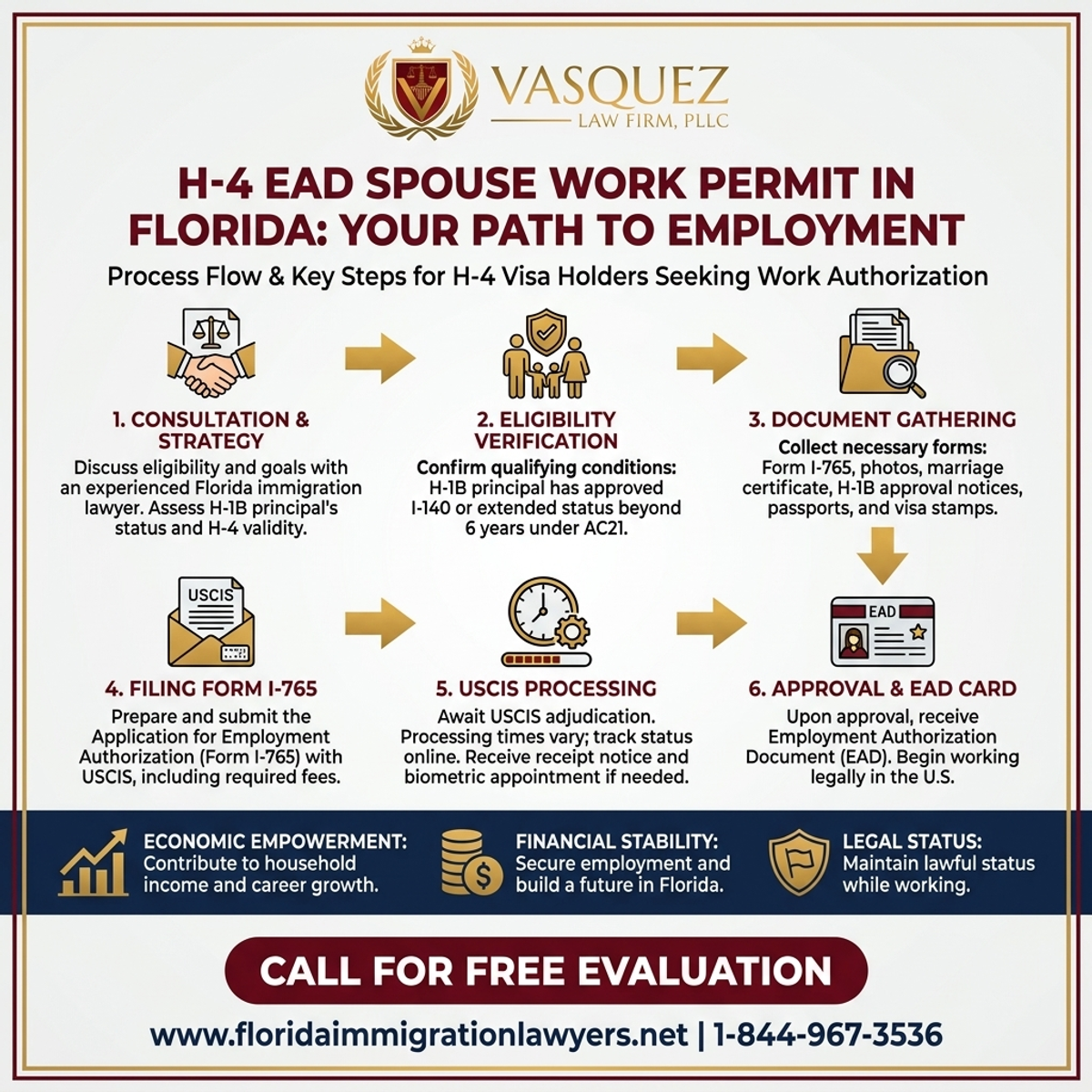
Applying for an H-4 EAD involves several critical steps, requiring meticulous attention to detail and accurate documentation. Here’s a breakdown of the process:
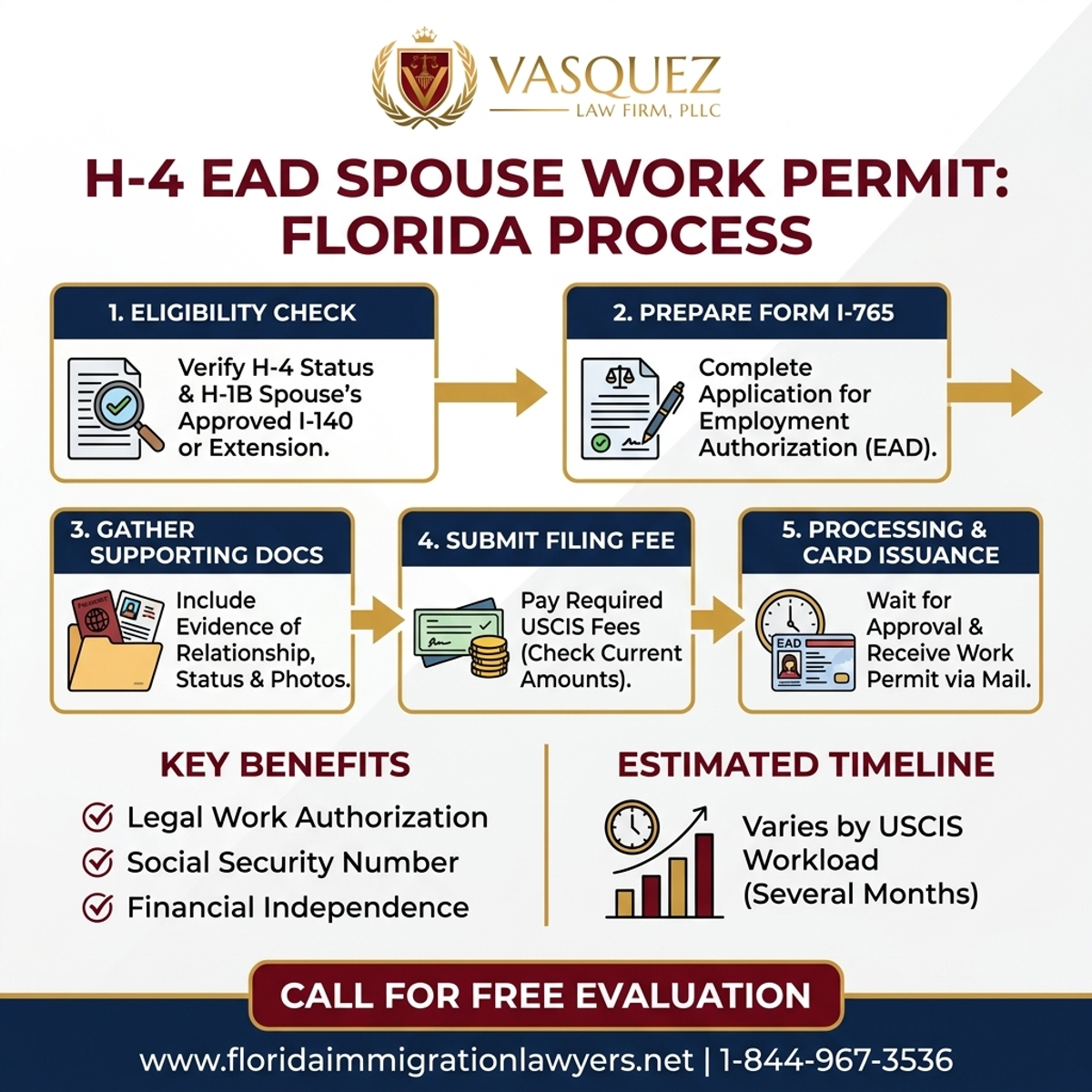
1. Complete Form I-765, Application for Employment Authorization
This is the primary form for applying for an EAD. It must be filled out completely and accurately. Pay close attention to all sections, especially those asking for your eligibility category (c)(26) for H-4 EAD applicants. Any errors or omissions can lead to delays or a Request for Evidence (RFE).
2. Gather Required Supporting Documents
A comprehensive set of documents is necessary to support your application. These typically include:
- Copy of your current H-4 Approval Notice (Form I-797): Proof of your valid H-4 status.
- Copy of your H-4 visa stamp and most recent I-94 record: Demonstrates legal entry and authorized stay.
- Copy of your marriage certificate: To prove your relationship to the H-1B principal.
- Copy of the H-1B principal's current H-1B Approval Notice (Form I-797): Proof of their valid H-1B status.
- Copy of the H-1B principal's approved Form I-140 (if applicable): If eligibility is based on an approved I-140.
- Evidence of H-1B status under AC21 (if applicable): Such as previous H-1B approval notices showing extensions beyond 6 years.
- Two passport-style photographs: Meeting USCIS specifications.
- Copy of a government-issued identification document: Such as a passport or driver's license.
- Previous EAD cards (if any): For renewals.
3. Prepare the Filing Fees
There is a non-refundable filing fee for Form I-765. The fee amount can change, so it's crucial to check the USCIS website for the most current fee schedule. Payment can typically be made by money order, personal check, cashier's check, or by credit card using Form G-1450, Authorization for Credit Card Transactions.
Step-by-Step Process — H-4 EAD Spouse Work Permit in Florida | VLF Florida
4. Mail Your Application Packet to USCIS
Once all forms are completed and documents gathered, assemble your application packet according to USCIS guidelines. The mailing address depends on your specific location and the form you are filing, so always refer to the 'Where to File' section on the USCIS website for Form I-765. It's advisable to send your application via certified mail with a return receipt to track delivery.
5. Biometrics Appointment (If Required)
After filing, you may receive an appointment notice for biometrics (fingerprints, photograph, and signature) at an Application Support Center (ASC). This step is crucial for identity verification and background checks. Attend this appointment promptly.
6. Await Decision and EAD Card
Processing times for H-4 EAD applications can vary significantly, ranging from a few months to over a year. You can track your case status online using the receipt number provided by USCIS. Once approved, your EAD card will be mailed to you, authorizing you to work in the U.S.
Benefits of the H-4 EAD
The H-4 EAD offers a multitude of benefits for H-1B families, significantly improving their lives in the U.S.:
- Work Authorization: The most direct benefit is the ability to legally work for any employer in the U.S., without the need for additional sponsorship. This opens up vast career opportunities.
- Career Continuity and Professional Growth: H-4 spouses, many of whom are highly educated and experienced professionals, can continue their careers, preventing gaps in their resumes and allowing for professional development.
- Financial Independence: The ability to earn an income provides financial stability and independence, contributing to the household income and improving the family's overall economic well-being.
- Entrepreneurial Opportunities: H-4 EAD holders can start their own businesses, fostering innovation and economic growth.
- Enhanced Quality of Life: Beyond financial aspects, having the ability to work can significantly boost morale, reduce feelings of isolation, and integrate H-4 spouses more fully into American society.
Challenges and Considerations for H-4 EAD Holders
While the H-4 EAD offers significant advantages, it's not without its complexities and potential challenges. Understanding these can help H-4 spouses and their families prepare and plan effectively.
Processing Delays and Backlogs
One of the most common frustrations for H-4 EAD applicants is the unpredictable and often lengthy processing times. USCIS processing centers can experience significant backlogs, leading to delays that can impact employment start dates, job offers, and even cause temporary gaps in employment authorization. These delays are particularly stressful for those awaiting renewals, as a lapse in EAD validity means a temporary cessation of work. Staying updated on USCIS processing times and filing renewal applications well in advance (typically 5-6 months before expiration) is crucial to mitigate these issues.
Dependence on the H-1B Spouse's Status
The H-4 EAD is directly tied to the H-1B principal's status. If the H-1B spouse's status changes (e.g., they lose their job, change to a different non-immigrant status that doesn't support an H-4, or their H-1B petition is revoked), the H-4 EAD holder's authorization to work may also be affected. This interdependence can create a sense of vulnerability and uncertainty, as the H-4 spouse's career is indirectly linked to the H-1B spouse's employment stability. Careful planning and communication within the family are essential to manage these risks.
Impact of H-1B Cap and Visa Bulletins
The H-1B cap and the per-country limits on green cards, as reflected in the Visa Bulletin, indirectly affect H-4 EAD holders. If the H-1B principal faces delays in their green card process due to visa backlogs, their H-4 spouse may need to renew their EAD multiple times over many years. Furthermore, any legislative changes or policy shifts affecting the H-1B program could have ripple effects on H-4 EAD eligibility and processing. Staying informed about broader immigration policy developments is important for H-1B families.
Key Statistics — H-4 EAD Spouse Work Permit in Florida | VLF Florida
Maintaining Continuous H-4 Status
For the H-4 EAD to remain valid, the H-4 spouse must continuously maintain their underlying H-4 non-immigrant status. This means ensuring timely filing of H-4 extensions of stay. If the H-4 status lapses, the EAD becomes invalid, even if its expiration date has not yet passed. This requires diligent tracking of expiration dates and proactive filing of extension applications, often concurrently with the H-1B principal's extension.
Potential Legislative and Policy Changes
The H-4 EAD program has faced scrutiny and attempts at revocation in the past. While it has remained resilient, the possibility of future legislative or administrative changes always exists. This uncertainty can be a source of anxiety for families relying on the H-4 EAD. Engaging with immigration advocacy groups and staying informed through reliable legal sources can help families prepare for potential shifts in policy.
Navigating the H-4 EAD with Expert Legal Guidance
Given the intricacies of immigration law and the specific requirements for the H-4 EAD, seeking professional legal assistance is highly recommended. An experienced immigration attorney can provide invaluable support throughout the process, minimizing errors and maximizing the chances of a successful outcome.
Why Professional Help is Crucial
Immigration laws are constantly evolving, and even minor mistakes in an application can lead to delays, Requests for Evidence (RFEs), or even denials. An attorney specializing in immigration law can ensure that all forms are accurately completed, all necessary supporting documents are included, and the application meets all USCIS requirements. They can also help interpret complex regulations and advise on the best course of action for your unique situation.
Common Scenarios Requiring Legal Advice
- Complex Eligibility Issues: If there are ambiguities regarding the H-1B principal's I-140 status or AC21 eligibility.
- RFEs: Responding effectively to an RFE requires a deep understanding of immigration law and careful preparation of additional evidence.
- Denials: If an H-4 EAD application is denied, an attorney can help analyze the reasons for denial and explore options for appeal or refiling.
- Concurrent Filings: When filing H-4 status extensions and EAD applications concurrently with the H-1B principal's petition.
- Changes in Circumstances: Advising on how changes in employment or marital status might impact H-4 EAD eligibility.
Our team of dedicated attorneys at VLF Florida possesses extensive experience in handling H-4 EAD applications and a wide range of immigration matters. We are committed to providing personalized and effective legal solutions to help you achieve your immigration goals.
Beyond H-4 EAD: Exploring Other Immigration Avenues in Florida
While the H-4 EAD is a critical step for many, it's often part of a larger immigration journey. Florida offers a diverse landscape for individuals and families seeking to establish long-term residency or explore other work-related immigration options. Understanding the broader scope of U.S. immigration law can help you plan for the future.
Pathways to Permanent Residency
Many H-1B and H-4 visa holders ultimately aim for permanent residency (a Green Card). This can be achieved through various employment-based categories (EB-1, EB-2, EB-3), which often require an employer sponsor, or through family-based petitions if you have qualifying relatives. Each pathway has its own set of complex requirements, processing times, and eligibility criteria. An attorney can help you determine the most suitable path and guide you through the intricate application process for a Green Card, which is a significant step towards long-term stability in the U.S.
Other Non-Immigrant Visas and Statuses
Beyond H-1B and H-4, there are numerous other non-immigrant visas designed for specific purposes, such as L-1 visas for intra-company transferees, O-1 visas for individuals with extraordinary ability, or F-1 visas for students. Understanding these options can be beneficial if your circumstances change or if you are exploring different career or educational paths. Each visa category has distinct benefits and limitations, and choosing the right one requires careful consideration of your qualifications and objectives.
Addressing Complex Immigration Challenges
Immigration law is vast and encompasses many areas beyond work permits and green cards. For individuals facing difficult situations, such as threats of deportation defense or seeking humanitarian relief, specialized legal assistance is paramount. Our firm also provides robust representation for those seeking asylum or facing removal proceedings, ensuring that every client receives comprehensive support regardless of their immigration challenge. The complexities of these cases demand an attorney with deep expertise and a compassionate approach.
Conclusion: Empowering H-1B Spouses in Florida
The H-4 EAD represents a pivotal opportunity for H-1B spouses in Florida, offering a pathway to professional independence and significant contributions to their families and the broader economy. While the process requires careful attention to detail and adherence to specific eligibility criteria, the benefits of securing employment authorization are profound, fostering career growth, financial stability, and a greater sense of belonging.
Navigating the nuances of H-4 EAD applications and broader immigration law can be challenging. By understanding the requirements, preparing thoroughly, and leveraging expert legal guidance, H-4 spouses can confidently pursue their professional aspirations in the United States. Don't let the complexities deter you from seizing this vital opportunity. For personalized advice and comprehensive support with your H-4 EAD application or any other immigration matter, we invite you to contact VLF Florida today for a free consultation. Our experienced team is here to guide you every step of the way.
Sources and References
- U.S. Citizenship and Immigration Services (USCIS)
- Executive Office for Immigration Review (EOIR)
- U.S. Department of State - Bureau of Consular Affairs
- Immigration and Nationality Act (INA), 8 U.S.C. Chapter 12
Do Not Navigate This Process Alone
Our experienced immigration attorneys are ready to fight for you. Get a free, confidential consultation today.
Se Habla Español
Frequently Asked Questions
Florida Immigration Lawyers
Immigration Attorney | Founder, Vasquez Law Firm
U.S. Air Force veteran and immigration attorney with thousands of cases resolved. J.D., NCCU School of Law. AILA member. Admitted to the 4th, 5th, and 11th Circuit Courts.
Available 24/7 - Free Evaluations
Related Legal Services
Our Florida immigration attorneys can help you with family immigration services, immigration practice areas and free immigration consultation. Call today at 1-844-967-3536 for a free consultation.
Related Links
Related Topics
Free Legal Consultation
Discuss your case with our experienced attorneys. We're available 24/7.
Se Habla Español - Estamos aquí para ayudarle.
Related Articles
Top Immigration Lawyer Miami Services | VLF Florida
Explore the comprehensive immigration services offered by Miami's top lawyers. From visas to deportation defense, ensure your journey is smooth with expert legal assistance. Contact us today for a free consultation.
Guide to Responding to an RFE in Florida | VLF Florida
Learn how to effectively respond to a Request for Evidence (RFE) from USCIS in Florida. This comprehensive guide covers the key steps, common mistakes, and when to seek legal help. Whether you're in Jacksonville or elsewhere in Florida, our advice can help you navigate this process confidently.
Immigration Lawyer Cost Florida 2026: Your Guide | VLF Florida
Understand immigration lawyer cost in Florida for 2026. Get a clear breakdown of attorney fees in Hollywood & statewide. Contact Florida Immigration Lawyers
RFE Response for Immigration in Florida | VLF Florida
Facing a Request for Evidence (RFE) in Florida can be overwhelming. Learn how to respond effectively with our step-by-step guide and avoid common pitfalls. Florida Immigration Lawyers are here to assist you with a free consultation at 1-844-967-3536.
