Guide to Responding to an RFE in Florida
Learn how to effectively respond to a Request for Evidence (RFE) from USCIS in Florida. This comprehensive guide covers the key steps, common mistakes, and when to seek legal help. Whether you're in Jacksonville or elsewhere in Florida, our advice can help you navigate this process confidently.
Guide to Responding to an RFE in Florida
Receiving a Request for Evidence (RFE) from U.S. Citizenship and Immigration Services (USCIS) can be a daunting experience. It means that USCIS requires more information or clarification regarding your immigration application before they can make a final decision. For individuals navigating the complex immigration landscape in Florida, understanding how to properly respond to an RFE is not just important—it's critical to the success of your case. A well-prepared and timely response can keep your application on track, while a poorly executed or late response could lead to delays, or even denial. This comprehensive guide will walk you through the process of understanding, preparing, and submitting a robust RFE response, ensuring you address all concerns raised by USCIS. For any immigration related queries, particularly concerning RFEs, seeking legal counsel is highly recommended.
Understanding the Request for Evidence (RFE): What You Need to Know
An RFE is essentially a letter from USCIS informing you that they need additional evidence or information to determine your eligibility for the immigration benefit you are seeking. This could be for a visa, green card, naturalization, or any other immigration petition. RFEs are not necessarily a sign that your application is in trouble; often, they are a standard part of the adjudication process, especially for complex cases or when initial submissions lack specific details. However, they should always be taken seriously, as your response directly impacts the outcome of your application.
Common Triggers for an RFE
USCIS issues RFEs for a multitude of reasons, but some are more common than others:
- Missing Documents: This is perhaps the most frequent reason. Applicants might forget to include a required form, a birth certificate, marriage license, financial statements, or other crucial supporting evidence.
- Inconsistent Information: Discrepancies between different forms or documents submitted, or information that contradicts previous statements made to USCIS, can trigger an RFE.
- Insufficient Evidence: While you may have submitted a document, USCIS might deem it insufficient to prove a particular claim. For example, if you're proving a bona fide marriage, they might ask for more joint financial documents, photos, or affidavits.
- Eligibility Concerns: USCIS might question whether you meet all the eligibility criteria for the benefit you are seeking. This could relate to income requirements, past immigration history, or other statutory requirements.
- Background Check Issues: Sometimes, issues arising from background checks, such as minor criminal history or previous immigration violations, may prompt an RFE for further explanation or documentation.
- Outdated Information: If a document has expired or the information has changed since the initial submission, USCIS will request updated evidence.
Understanding the specific reason behind your RFE is the first critical step in formulating an effective response. Each RFE is unique and tailored to your specific case, so a general approach will not suffice.
The Importance of a Timely and Thorough Response
Every RFE comes with a strict deadline, typically ranging from 30 to 87 days, though this can vary. It is paramount to respond within this timeframe. Missing the deadline almost invariably leads to the denial of your application, requiring you to start the entire process over and potentially losing filing fees. Furthermore, your response must be thorough. Simply submitting a few more documents without directly addressing each point raised by USCIS is a recipe for disaster. A comprehensive response not only provides the requested evidence but also clarifies any ambiguities and strengthens your overall case.
A Step-by-Step Guide to Crafting Your RFE Response in Florida
Responding to an RFE requires meticulous attention to detail and a strategic approach. Here’s how to navigate the process effectively:
Step 1: Analyze the RFE Carefully
Do not skim the RFE. Read it multiple times, highlighting every specific request and understanding the underlying legal basis for each. USCIS will often cite specific sections of immigration law or regulations that pertain to their request. If you don't understand a particular request or its legal implications, this is a clear sign that you may need professional assistance. Create a checklist of all requested items and evidence.
Step 2: Gather and Organize All Requested Evidence
Once you understand what USCIS needs, begin collecting the documents. This might involve obtaining new records, getting updated letters, or requesting affidavits from friends and family. Ensure all documents are legible and, if not in English, accompanied by certified translations. Organize your evidence logically, ideally in the same order as the requests in the RFE letter. For each piece of evidence, consider how it directly answers a specific point raised by USCIS. If the RFE asks for proof of a bona fide marriage, for instance, gather joint bank statements, utility bills, lease agreements, insurance policies, photos from different periods, and affidavits from people who know you as a couple.
Step 3: Prepare a Comprehensive Cover Letter
A well-drafted cover letter is crucial. It acts as a roadmap for the USCIS officer, guiding them through your response. The cover letter should:
- Clearly state your name, A-number (if applicable), and the receipt number of your application.
- Reference the specific RFE letter and its date.
- Address each point raised in the RFE, one by one, explaining how the enclosed evidence satisfies that request.
- List all enclosed documents in an organized manner.
- Provide a brief summary of how the additional evidence strengthens your overall case.
This letter demonstrates that you have thoroughly understood and addressed every concern, making the officer's job easier and increasing the likelihood of a favorable outcome.
Step 4: Assemble Your Response Package
Assemble your response package neatly. Place the cover letter on top, followed by the original RFE notice, and then all supporting documents organized as listed in your cover letter. Make a complete copy of the entire package for your records before mailing. Do not send original documents unless specifically requested, as they may not be returned. Instead, send clear photocopies.
Step 5: Submit Your Response Before the Deadline
Mail your RFE response well in advance of the deadline. Use a reliable mailing service that provides tracking and delivery confirmation, such as USPS Certified Mail with a return receipt, FedEx, or UPS. This provides proof that you submitted your response on time. Send the package to the address specified in the RFE letter, as this may differ from the initial filing address.
The Role of an Immigration Attorney in Responding to an RFE
While it is possible to respond to an RFE on your own, the complexities of immigration law and the potential consequences of an inadequate response often make professional legal assistance invaluable. An experienced immigration attorney, particularly one familiar with Florida's specific USCIS field offices and their nuances, can significantly enhance your chances of success. They bring a level of expertise and strategic insight that can be difficult for an individual to replicate.
Attorneys can help in several critical ways. First, they can accurately interpret the RFE. Sometimes, the language used by USCIS can be vague or highly technical, making it challenging for non-lawyers to fully grasp the underlying legal issues. An attorney can decipher these requests, identify the specific legal standards you need to meet, and advise on the most effective evidence to provide. For instance, an RFE might request "proof of continuous residence." While this sounds straightforward, an attorney understands the specific types of documents and the duration of evidence required to satisfy this legal standard, which might go beyond what an applicant initially considers.
Second, an attorney can assist in gathering and organizing compelling evidence. They know what types of documents USCIS typically looks for and can help you identify gaps in your current evidence. They can also help draft strong affidavits and letters of support, ensuring they contain the necessary legal language and factual details. If certain documents are difficult to obtain, an attorney can advise on alternative forms of evidence or strategies to overcome such challenges.
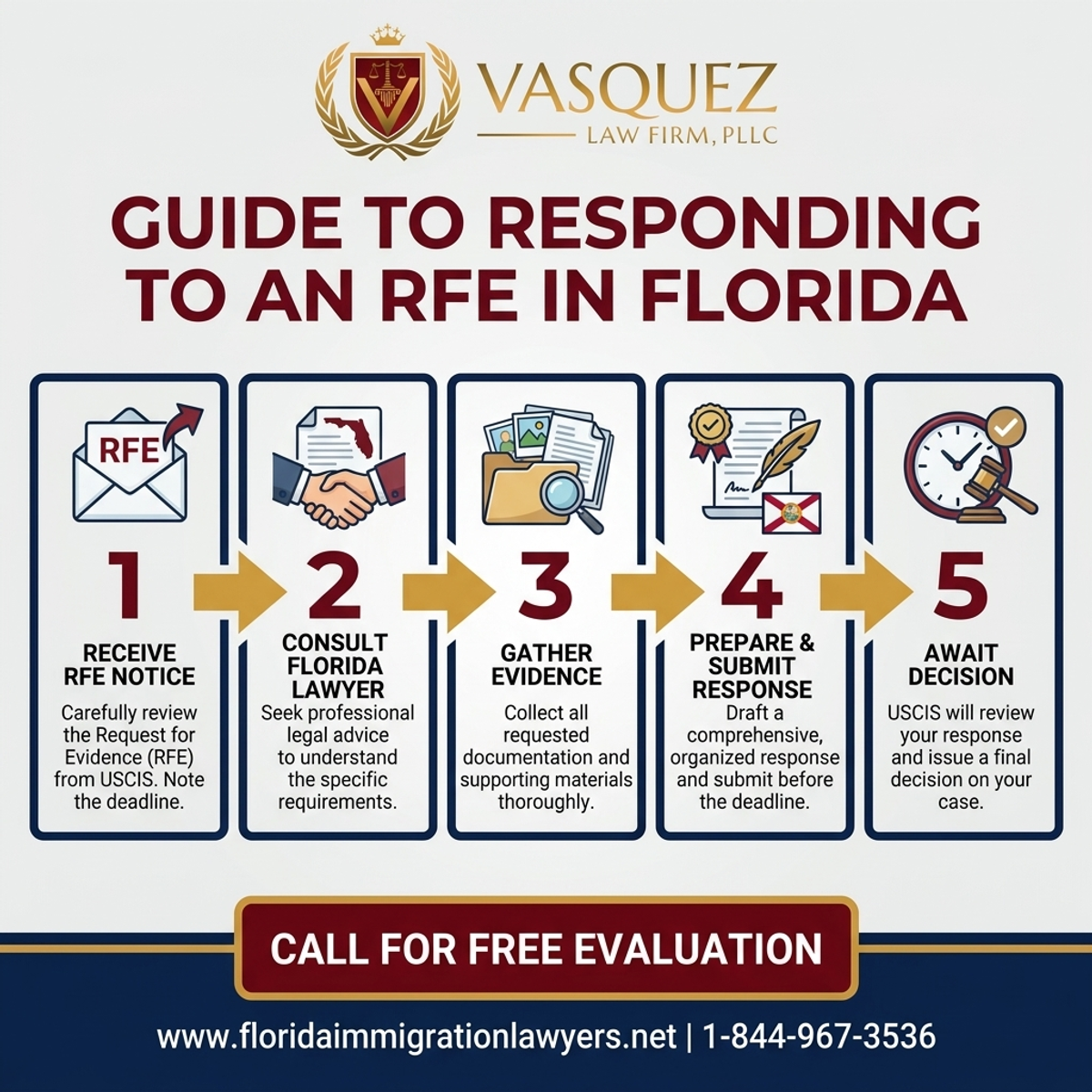
Step-by-Step Process — Guide to Responding to an RFE in Florida | VLF Florida
Third, legal counsel can prepare a persuasive cover letter and legal brief. This is where an attorney’s expertise truly shines. They can articulate legal arguments, cite relevant case law or regulations, and present your evidence in a way that directly addresses USCIS's concerns, making a strong case for your eligibility. This is particularly important for RFEs that delve into complex legal issues, such as those involving criminal history, previous visa overstays, or intricate family relationships. They can also anticipate potential follow-up questions or concerns from USCIS and proactively address them in the response.
Finally, an attorney ensures compliance with all procedural requirements. They verify that the response package is complete, correctly assembled, and submitted to the right address by the deadline. This reduces the risk of procedural errors that could lead to further delays or even denial. Engaging an attorney provides peace of mind, knowing that your case is being handled by a professional who understands the intricacies of immigration law and is dedicated to achieving a positive outcome. If you find yourself overwhelmed or unsure about any aspect of your RFE, do not hesitate to contact VLF Florida for a consultation.
What Happens After You Submit Your RFE Response?
Once USCIS receives your RFE response, they will typically send a receipt notice confirming its arrival. The processing of your application will then resume. The time it takes for USCIS to make a decision after receiving an RFE response can vary significantly depending on the service center, the type of application, and the complexity of your case. You can monitor the status of your case online using the receipt number provided.
Potential outcomes after an RFE response include:
- Approval: If USCIS is satisfied with the additional evidence, your application will likely be approved.
- Denial: If USCIS still finds the evidence insufficient or believes you do not meet the eligibility requirements, your application may be denied. A denial can have serious implications, but often there are avenues for appeal or reconsideration, or the possibility of refiling.
- Interview: In some cases, even after an RFE response, USCIS might schedule an interview to gather more information or clarify certain aspects of your application.
It's important to remain patient during this period and continue to monitor your case status. If there are significant delays or if you receive a denial, consulting with an immigration attorney again is advisable to explore your options.
Preventing Future RFEs: Best Practices for Immigration Applications
While RFEs are common, many can be avoided by taking proactive steps during your initial application submission. Adopting best practices can save you time, stress, and potential delays:
- Thoroughly Review Instructions: Always read the instructions for your specific form carefully and completely. USCIS instructions are detailed for a reason.
- Provide Comprehensive Initial Evidence: Do not just provide the minimum. If a document could help prove your case, include it, even if it's not explicitly listed as "required." Err on the side of providing too much relevant evidence rather than too little.
- Ensure Consistency: Double-check all information across all forms and supporting documents for consistency. Discrepancies, even minor ones, can raise red flags.
- Use Certified Translations: Any document not in English must be accompanied by a complete and certified English translation.
- Organize Your Application: Submit your initial application in a clear, organized manner with a cover letter and tabs for different sections of evidence. This makes it easier for the USCIS officer to review.
- Seek Legal Advice Early: If you have any doubts about your eligibility, the required documentation, or the application process, consult with an immigration lawyer before filing. Their expertise can help you prepare a robust initial application and identify potential issues that could lead to an RFE.
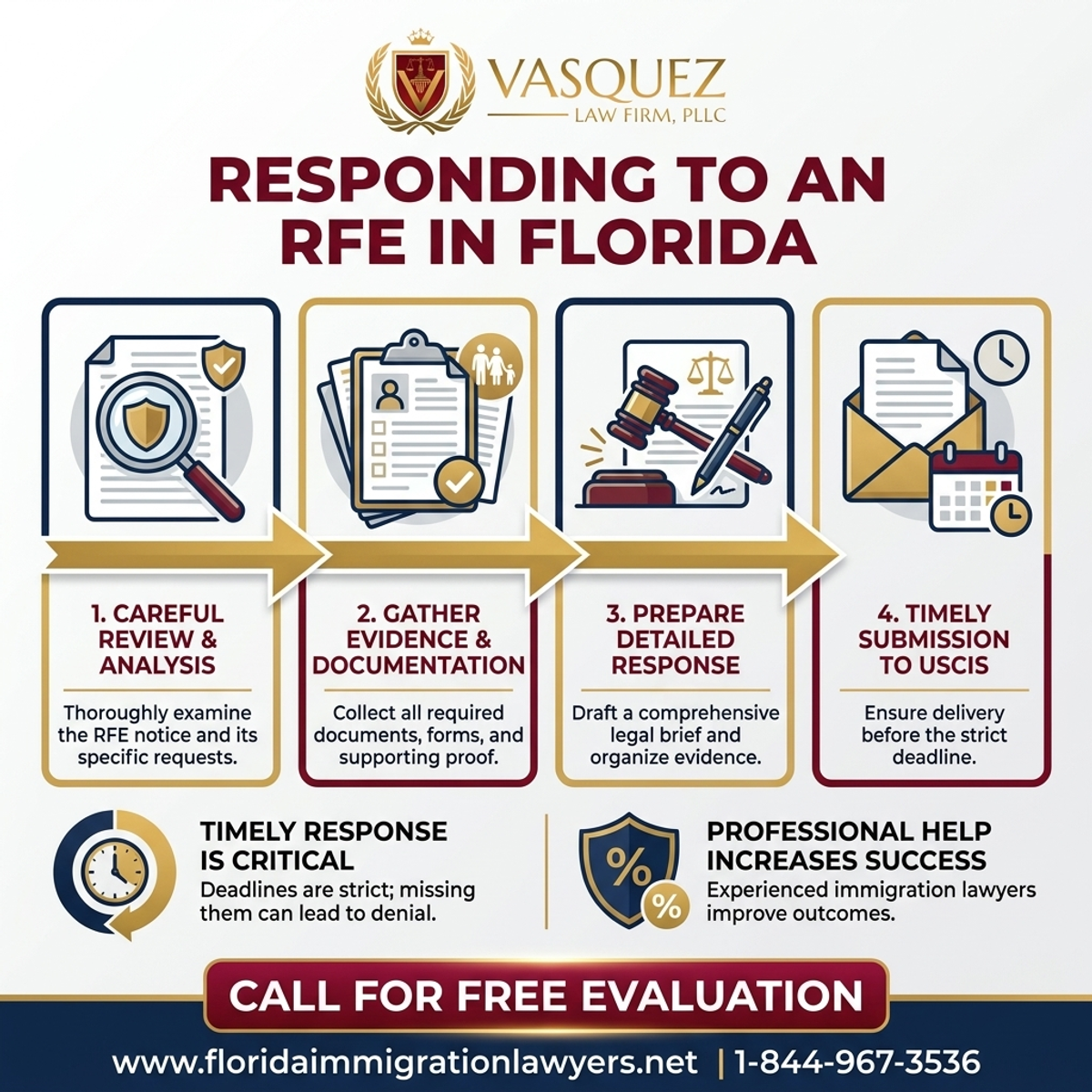
Key Statistics — Guide to Responding to an RFE in Florida | VLF Florida
Navigating Complex Immigration Situations Beyond RFEs
The RFE process is just one aspect of the broader and often intricate world of U.S. immigration law. Many individuals and families in Florida face challenges that extend beyond simply providing additional evidence for an application. Whether you are seeking protection, fighting to remain in the country, or navigating family-based petitions, understanding your rights and options is paramount. For those facing immediate threats or seeking refuge, understanding the pathways to asylum is crucial. Similarly, if you or a loved one are facing proceedings that could lead to removal from the U.S., legal counsel in deportation defense becomes absolutely essential. These areas of law are highly specialized and require a deep understanding of federal regulations, court procedures, and humanitarian considerations. Proactive engagement with legal professionals can make a significant difference in securing your future and protecting your rights in the United States.
Responding to an RFE is a critical juncture in your immigration journey. By approaching it with diligence, thoroughness, and, when necessary, professional legal guidance, you can significantly improve your chances of a positive outcome. Remember, an RFE is an opportunity to strengthen your case, not a sign of inevitable denial. Take the time to understand the request, gather all necessary evidence, and present a compelling response. For personalized assistance with your RFE or any other immigration matter in Florida, do not hesitate to reach out to VLF Florida for legal support.
Sources and References
- U.S. Citizenship and Immigration Services (USCIS)
- Executive Office for Immigration Review (EOIR)
- U.S. Department of State - Bureau of Consular Affairs
- Immigration and Nationality Act (INA), 8 U.S.C. Chapter 12
Do Not Navigate This Process Alone
Our experienced immigration attorneys are ready to fight for you. Get a free, confidential case review today.
Se Habla Español
Or leave your details and we’ll call you:
Free Evaluation in 24 Hours
Or talk to us right now

AI voice assistant — available 24/7
FreeFrequently Asked Questions

William J. Vásquez
Founding Attorney · Vasquez Law Firm
U.S. Air Force veteran and immigration attorney with years of hands-on U.S. immigration experience. J.D., NCCU School of Law. AILA member. Admitted to the 4th, 5th, and 11th Circuit Courts.
Available 24/7 - Free Evaluations
Reviewed for legal accuracy by William J. Vásquez
Licensed in North Carolina; U.S. immigration is federal practice.
Related Legal Services
Our Florida immigration attorneys can help you with deportation defense, family immigration services and immigration lawyer cost in Florida. Call today at 1-844-YO-PELEO for a free case review.
Related Links
Related Topics
Free Legal Case Review
Discuss your case with our experienced attorneys. We're available 24/7.
Se Habla Español - Estamos aquí para ayudarle.
Related Articles
Immigration Lawyer Orlando Free Consultation in Florida
For individuals and families in Orlando, Florida, navigating the complexities of U.S. immigration law requires expert guidance. An immigration lawyer in Orlando offers crucial support for everything from visa applications and green card processes to naturalization and deportation defense. This comprehensive guide details what a free consultation covers, providing a step-by-step overview of immigration pathways, essential document checklists, and expected timelines in 2026. We also highlight common mistakes to avoid, discuss the critical role of legal counsel in deportation and asylum cases, and explain why choosing a local Orlando immigration attorney is beneficial. Florida Immigration Lawyers is dedicated to serving the diverse community of Orlando with compassionate, effective legal solutions, ensuring you receive personalized advice and robust representation for a successful immigration journey.
EAD Advance Parole Combo Card in Florida 2026
For individuals with a pending Form I-485, Application to Register Permanent Residence or Adjust Status, the EAD Advance Parole Combo Card is an essential document. This single card combines the authorization to work legally in the U.S. (Employment Authorization Document - EAD) with permission to travel internationally and re-enter without abandoning your green card application (Advance Parole). This guide from Florida Immigration Lawyers provides a comprehensive overview for applicants in Florida in 2026, covering eligibility, the step-by-step application process, required documents, expected processing times, and associated costs. We also highlight common mistakes to avoid and when to seek legal counsel to ensure a smooth and successful immigration journey. Understanding this vital card is key to maintaining stability while awaiting your permanent residency approval.
How to Choose an Immigration Lawyer in Florida: Tips
Choosing the right immigration lawyer in Florida is essential for navigating complex immigration processes. Learn what to look for in a lawyer, how to verify their credentials, and the questions to ask during consultations. This guide will help you make an informed decision for your immigration needs.
Spanish Speaking Criminal Lawyer Near Me: Florida Waivers
Navigating the process of obtaining a criminal waiver in Florida is complex, especially for those with criminal convictions seeking immigration relief. This comprehensive guide explores the I-601 waiver process, common pitfalls, and when to seek legal help. Our expert team at Florida Immigration Lawyers is ready to assist you.