Navigating the H-2A Visa for Florida Agricultural Workers
Explore the H-2A visa process for agricultural workers in Florida, focusing on Gainesville. Learn about requirements, timelines, and common pitfalls. Contact Florida Immigration Lawyers for expert assistance.

Navigating the H-2A Visa for Florida Agricultural Workers
Florida's vibrant agricultural sector relies heavily on a dedicated workforce to cultivate and harvest its diverse range of crops, from citrus and tomatoes to strawberries and sugarcane. To meet the seasonal and temporary labor demands that cannot be filled by domestic workers, the H-2A temporary agricultural program serves as a critical pathway for foreign nationals to work legally in the Sunshine State. Understanding the intricacies of the H-2A visa is paramount for both agricultural employers seeking to maintain their operations and for workers aspiring to contribute to Florida's economy.
This comprehensive guide delves into the H-2A visa process, outlining eligibility requirements, application procedures, and the rights and protections afforded to workers. Whether you are an employer navigating the complex regulatory landscape or a prospective worker seeking opportunities, gaining a clear understanding of this program is the first step towards a successful and compliant experience. For personalized legal guidance on this or other immigration matters, we invite you to explore our immigration practice areas.
Understanding the H-2A Visa Program
The H-2A visa program is a nonimmigrant visa category established by the U.S. government to allow U.S. agricultural employers to bring foreign nationals to the United States to fill temporary agricultural jobs. These jobs must be seasonal or temporary in nature, meaning they are tied to a certain time of year by an event or pattern, such as a growing season, or for a limited period of time, usually not to exceed one year.
The primary purpose of the H-2A program is to provide a legal and regulated avenue for employers to address labor shortages in agriculture, ensuring that crops are planted, tended, and harvested efficiently. It also aims to protect the wages and working conditions of both U.S. and foreign workers by requiring employers to meet specific standards. The program is carefully regulated by the Department of Labor (DOL), U.S. Citizenship and Immigration Services (USCIS), and the Department of State (DOS) to prevent adverse effects on the employment of U.S. workers.
For agricultural businesses in Florida, where agriculture is a multi-billion dollar industry, the H-2A program is indispensable. It allows farms, nurseries, and other agricultural operations to plan their workforce needs with greater certainty, especially during peak seasons. For workers, it offers a lawful opportunity to earn competitive wages and gain valuable experience, often providing a vital source of income for their families back home. However, navigating the bureaucratic requirements and ensuring compliance can be challenging, underscoring the importance of expert legal assistance.
Eligibility Requirements for Employers and Workers
Both employers and prospective workers must meet specific criteria to participate in the H-2A program. Strict adherence to these requirements is crucial for a successful application.
Employer Requirements
To be eligible to petition for H-2A workers, an employer must demonstrate several key points:
- Temporary or Seasonal Need: The job must be for a temporary or seasonal agricultural service or labor. This typically means a job that is tied to a certain time of year by an event or pattern, such as a planting or harvesting season, and is expected to last no longer than one year.
- Labor Shortage: The employer must prove that there are not enough U.S. workers who are able, willing, qualified, and available to perform the temporary agricultural labor. This is typically done through a rigorous recruitment process.
- No Adverse Effect: The employment of H-2A workers must not adversely affect the wages and working conditions of similarly employed U.S. workers. Employers must offer H-2A workers at least the Adverse Effect Wage Rate (AEWR) for the specific state and occupation, or the prevailing wage, whichever is higher.
- Housing and Transportation: Employers must provide free housing to H-2A workers and to U.S. workers who are not reasonably able to return to their permanent residence at the end of the workday. They must also provide transportation to and from the worksite and, in some cases, reimbursement for transportation costs from the worker's home country to the place of employment.
- Workers' Compensation: Employers must provide workers' compensation insurance coverage for all H-2A workers.
Worker Requirements
For foreign nationals, the primary requirement for an H-2A visa is to have a job offer from a U.S. employer that has received a temporary labor certification from the Department of Labor. Additionally, workers must:
- Be a citizen of a country that is designated by the Department of Homeland Security as eligible to participate in the H-2A program. This list is updated annually.
- Intend to depart the U.S. upon the expiration of their authorized period of stay.
- Meet the qualifications for the specific agricultural job being offered.
- Not have violated the terms of previous U.S. visas.
The H-2A Application Process: A Step-by-Step Guide
The H-2A application process is multi-faceted, involving several government agencies. Employers typically initiate the process, which can take several months.
Initial Steps: ETA Form 9142A (Labor Certification)
The employer's journey begins with filing Form ETA-9142A, Application for Temporary Employment Certification, with the Department of Labor (DOL). This step is critical as it demonstrates the employer's temporary need for workers and their efforts to recruit U.S. workers. Key components of this stage include:
- Job Order Filing: The employer must submit a job order with the State Workforce Agency (SWA) in Florida, outlining the job duties, wages, and working conditions. This job order must be open for recruitment for a specified period to allow U.S. workers to apply.
- Recruitment Efforts: Employers must actively recruit U.S. workers through various channels, including advertising in newspapers and contacting former employees. They must document all recruitment efforts and explain why U.S. applicants were not hired.
- Prevailing Wage Determination: The DOL determines the Adverse Effect Wage Rate (AEWR) or prevailing wage that must be offered to H-2A workers.
- Temporary Labor Certification: If the DOL is satisfied that there is a legitimate temporary labor shortage and that the employer has met all recruitment and wage requirements, it will issue a Temporary Labor Certification.
USCIS Petition (Form I-129)
Once the Temporary Labor Certification is obtained, the employer then files Form I-129, Petition for a Nonimmigrant Worker, with U.S. Citizenship and Immigration Services (USCIS). This petition requests approval for the specific H-2A workers. The employer must include the certified ETA-9142A along with other supporting documentation, such as evidence of the employer's business operations and the workers' qualifications.
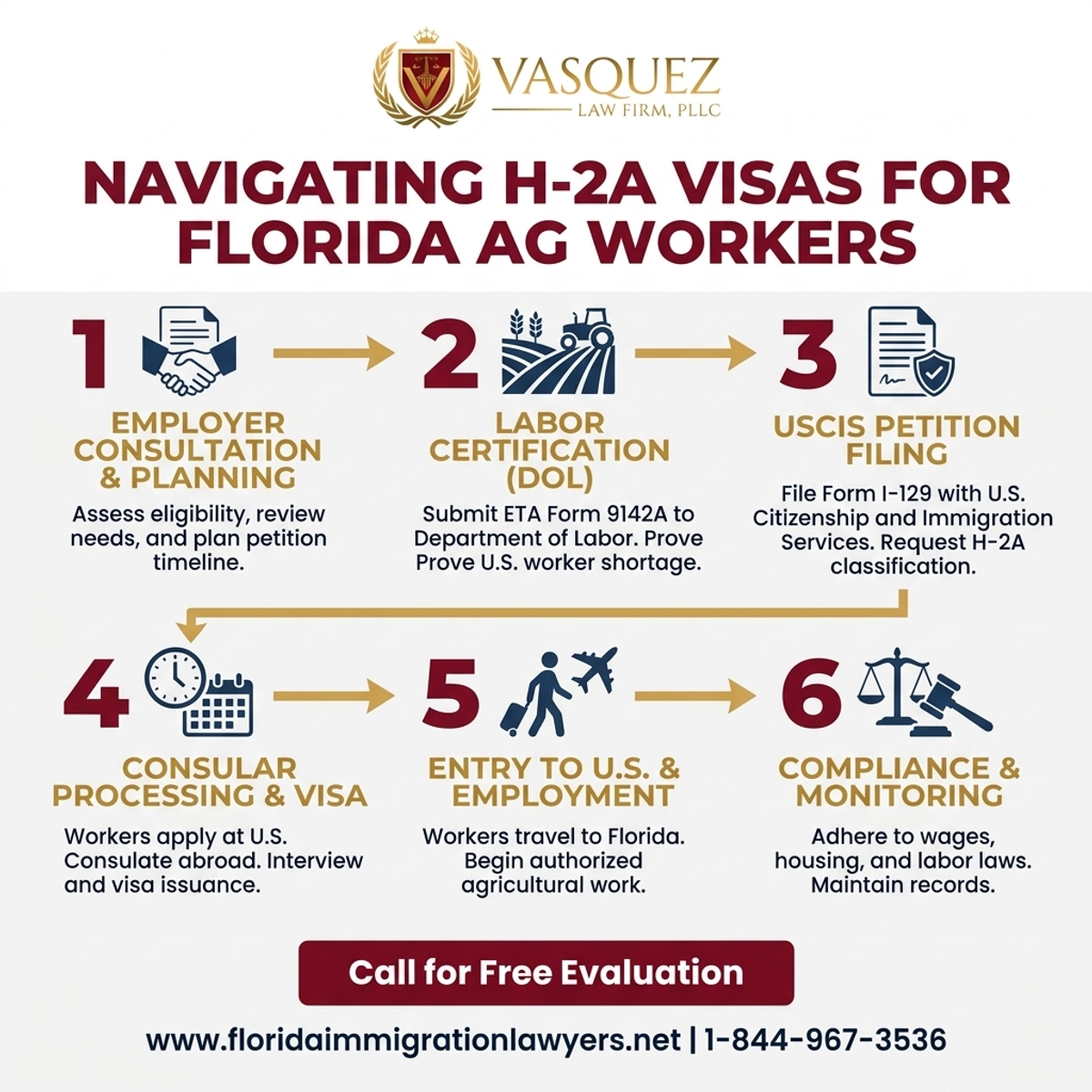
Step-by-Step Process — Navigating the H-2A Visa for Florida Agricultural Workers
Visa Interview and Issuance
Upon USCIS approval of the I-129 petition, prospective H-2A workers located outside the U.S. must apply for an H-2A visa at a U.S. embassy or consulate in their home country. This typically involves:
- Completing the online visa application (DS-160).
- Scheduling and attending a visa interview.
- Providing necessary documents, including a valid passport, the USCIS approval notice, and any other required forms.
If the visa is approved, the worker can then travel to the U.S. to begin their temporary agricultural employment in Florida.
Key Benefits and Protections for H-2A Workers
The H-2A program is designed not only to benefit employers but also to provide significant protections and benefits to the workers themselves. These safeguards are crucial for ensuring fair treatment and safe working conditions.
- Guaranteed Wages: H-2A workers are guaranteed to be paid at least the Adverse Effect Wage Rate (AEWR), the prevailing wage, or the federal/state minimum wage, whichever is highest. This ensures they receive fair compensation for their labor.
- Free Housing: Employers are required to provide free, safe, and sanitary housing to H-2A workers and to U.S. workers who are not reasonably able to return to their permanent residence at the end of the workday.
- Transportation: Employers must provide transportation from the housing to the worksite and back each day. They also typically cover or reimburse the cost of inbound and outbound transportation for workers traveling from their home country.
- Workers' Compensation: H-2A workers are covered by workers' compensation insurance, providing protection in case of work-related injuries or illnesses.
- Contractual Protections: The terms and conditions of employment, including wages, hours, and job duties, are clearly outlined in the job order and labor certification, providing a clear contract between the employer and the worker.
- Non-Discrimination: H-2A workers are protected by U.S. labor laws against discrimination based on race, color, national origin, religion, sex, age, disability, or retaliation for exercising their rights.
- Access to Legal Aid: Workers have the right to seek legal assistance if they believe their rights have been violated, without fear of retaliation.
These protections are vital for ensuring that H-2A workers are treated fairly and have recourse if problems arise. It's important for workers to understand their rights and for employers to strictly adhere to all program regulations.
Navigating Common Challenges and Legal Complexities
While the H-2A program offers significant benefits, both employers and workers can encounter various challenges and legal complexities. Understanding these potential pitfalls and knowing when to seek professional legal assistance is crucial for a smooth and successful experience.
For employers, common challenges can include:
- Meeting Recruitment Requirements: Demonstrating an inability to find sufficient U.S. workers can be arduous, requiring meticulous documentation of recruitment efforts and rejections.
- Compliance with Wage and Hour Laws: Calculating and paying the correct AEWR, overtime (if applicable), and ensuring accurate record-keeping can be complex, especially with changing regulations.
- Housing and Transportation Standards: Maintaining housing that meets federal and state safety and health standards, as well as providing reliable transportation, requires ongoing effort and investment.
- Unexpected Audits and Investigations: The DOL and other agencies regularly conduct audits and investigations to ensure compliance, and any discrepancies can lead to significant penalties, back wages, or even debarment from the program.
- Navigating Visa Denials or Delays: Unforeseen delays in processing or visa denials can disrupt planting or harvesting schedules, leading to substantial financial losses.
For workers, potential issues might include:
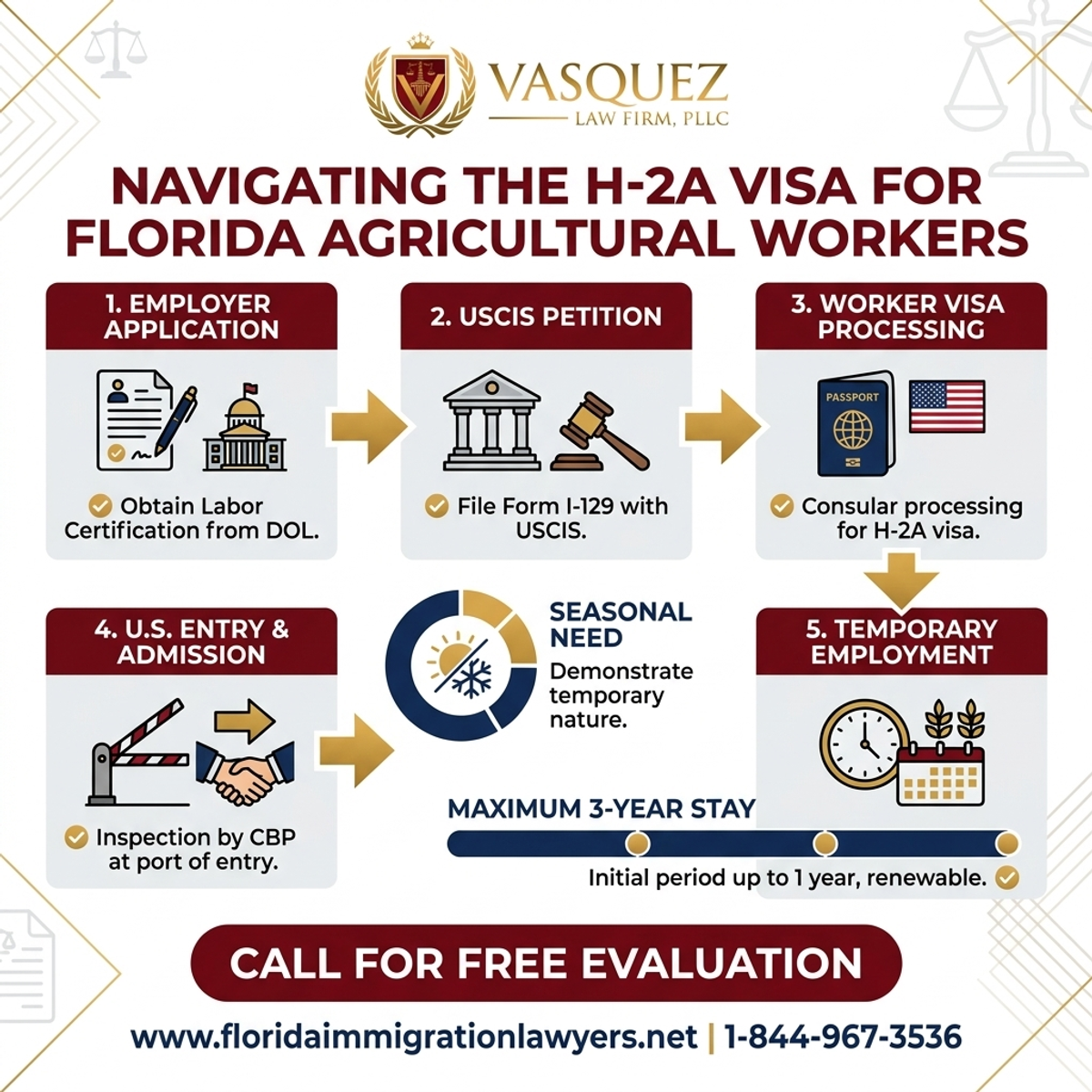
Key Statistics — Navigating the H-2A Visa for Florida Agricultural Workers
- Misunderstanding Contract Terms: Language barriers or lack of clear communication can lead to misunderstandings about job duties, wages, or living conditions.
- Exploitation or Abuse: While the program has protections, instances of wage theft, unsafe working conditions, or other forms of exploitation can unfortunately occur.
- Visa Overstays or Violations: Failing to depart the U.S. on time or violating visa terms can have severe consequences, including future inadmissibility.
- Complex Immigration Situations: Some workers may have pre-existing immigration issues or find themselves in situations that require more specialized legal advice beyond the scope of their H-2A visa. For those facing threats to their legal status, understanding options like asylum or needing robust deportation defense is critical.
Given these complexities, engaging with experienced legal counsel is not just advisable but often essential. An immigration attorney can help employers ensure full compliance, prepare robust petitions, and respond effectively to agency inquiries. For workers, an attorney can explain their rights, advocate on their behalf if issues arise, and help navigate any unforeseen legal challenges. Our team of dedicated attorneys is equipped to provide the guidance needed to successfully navigate these intricate legal landscapes, ensuring both compliance and protection.
The Role of Immigration Attorneys in the H-2A Process
The H-2A visa process is notoriously complex, with stringent requirements and multiple governmental agencies involved. For both employers and workers, the guidance of an experienced immigration attorney can be invaluable.
For Employers:
- Ensuring Compliance: Attorneys can help employers understand and comply with all DOL, USCIS, and DOS regulations, minimizing the risk of audits, penalties, or debarment.
- Application Preparation: They assist in preparing and filing all necessary forms, including the ETA-9142A and Form I-129, ensuring accuracy and completeness.
- Recruitment Guidance: Attorneys can advise on proper recruitment methods and documentation to demonstrate a legitimate labor shortage.
- Responding to RFEs: If USCIS issues a Request for Evidence (RFE), an attorney can help craft a comprehensive and timely response.
- Problem Resolution: In cases of visa delays, denials, or allegations of non-compliance, legal counsel can represent the employer and work towards a resolution.
For Workers:
- Understanding Rights: Attorneys can educate workers about their rights under the H-2A program, including wages, housing, and working conditions.
- Addressing Exploitation: If workers face issues like wage theft, unsafe conditions, or other forms of exploitation, an attorney can advocate on their behalf and help them seek justice.
- Visa Interview Preparation: They can help prepare workers for their visa interviews at U.S. consulates, ensuring they understand the process and can answer questions confidently.
- Post-Arrival Support: Attorneys can provide guidance on maintaining legal status in the U.S. and what to do if unforeseen circumstances arise.
Engaging an attorney from the outset can save significant time, stress, and potential legal issues down the line, ensuring that the H-2A program operates as intended for all parties involved.
Life as an H-2A Worker in Florida: Rights and Responsibilities
For many H-2A workers, coming to Florida represents a significant opportunity. While the focus is often on the application process, understanding life on the ground – including daily rights and responsibilities – is equally important for a positive experience.
Rights and Protections:
Beyond the fundamental protections mentioned earlier, H-2A workers in Florida are entitled to:
- Safe Working Environment: Employers must provide a workplace free from recognized hazards, adhering to OSHA standards for agricultural operations. This includes access to clean drinking water, shade, and sanitation facilities.
- Access to Medical Care: In case of illness or injury, workers should have access to necessary medical attention. Workers' compensation covers work-related injuries.
- Freedom of Association: Workers have the right to organize, join a union, or engage in concerted activities for their mutual aid or protection without fear of retaliation.
- No Passport Seizure: Employers are prohibited from confiscating a worker's passport or other personal documents.
- Freedom of Movement: Workers are not indentured servants; they have the right to leave the employer's premises during non-working hours and to associate with whomever they choose.
Worker Responsibilities:
H-2A workers also have responsibilities to ensure their successful participation in the program:
- Adhere to Visa Terms: Workers must strictly follow the terms of their H-2A visa, including working only for the petitioning employer and departing the U.S. by the visa's expiration date.
- Perform Job Duties: Workers are expected to perform the agricultural tasks as outlined in their job offer and contract.
- Follow Employer Rules: Adherence to reasonable employer rules, especially concerning safety and conduct, is expected.
- Report Issues Promptly: If problems arise with wages, housing, working conditions, or any other aspect of their employment, workers should report them to their employer, a trusted advocate, or legal counsel as soon as possible.
Fostering a clear understanding of both rights and responsibilities helps create a more harmonious and productive environment for everyone involved in Florida's agricultural industry.
Conclusion
The H-2A visa program is a vital mechanism for supporting Florida's agricultural industry and providing opportunities for temporary foreign workers. While the process is complex and demands meticulous attention to detail, understanding its requirements and protections is key to a successful outcome for both employers and employees.
Navigating the legal landscape of the H-2A visa, from initial labor certification to visa issuance and ongoing compliance, can be daunting. Engaging with experienced immigration counsel can provide the clarity and support needed to ensure all regulations are met, rights are protected, and the agricultural workforce continues to thrive in Florida. If you are an agricultural employer in Florida seeking to utilize the H-2A program, or a worker with questions about your rights and opportunities, do not hesitate to seek professional guidance.
For a free consultation and expert legal assistance, please contact us today at (844) 967-3536. Our team is ready to help you navigate the complexities of immigration law.
Frequently Asked Questions About H-2A Visas
1. What is the H-2A visa program?
The H-2A visa program allows U.S. agricultural employers to bring foreign nationals to the U.S. to fill temporary or seasonal agricultural jobs for which U.S. workers are unavailable.
2. Who is eligible for an H-2A visa?
Workers must have a job offer from a U.S. employer with a certified temporary labor certification, be from an eligible country, and intend to return home after their temporary stay.
3. How long can an H-2A visa holder stay in the U.S.?
H-2A visas are typically granted for up to one year, corresponding to the employer's temporary need. They can be extended for a total maximum stay of three years.
4. Are H-2A workers guaranteed housing?
Yes, employers are required to provide free, safe, and sanitary housing to H-2A workers and to U.S. workers who are not reasonably able to return home daily.
5. What wages are H-2A workers paid?
H-2A workers must be paid at least the Adverse Effect Wage Rate (AEWR) for their state and occupation, the prevailing wage, or the federal/state minimum wage, whichever is highest.
6. Can an H-2A worker change employers?
Generally, an H-2A visa is tied to the petitioning employer. Changing employers typically requires a new H-2A petition and approval, which can be a complex process.
7. What if an H-2A worker experiences exploitation or abuse?
H-2A workers have rights and protections under U.S. labor laws. They should report any exploitation, wage theft, or unsafe conditions to their employer, a trusted advocate, or an immigration attorney immediately.
8. Do H-2A workers have access to legal assistance?
Yes, H-2A workers have the right to seek legal assistance without fear of retaliation. Many non-profit organizations and private attorneys specialize in assisting H-2A workers with their rights and legal issues.
Sources and References
- U.S. Citizenship and Immigration Services (USCIS)
- Executive Office for Immigration Review (EOIR)
- U.S. Department of State - Bureau of Consular Affairs
- Immigration and Nationality Act (INA), 8 U.S.C. Chapter 12
Do Not Navigate This Process Alone
Our experienced immigration attorneys are ready to fight for you. Get a free, confidential consultation today.
Se Habla Español
Frequently Asked Questions
Florida Immigration Lawyers
Immigration Attorney | Founder, Vasquez Law Firm
U.S. Air Force veteran and immigration attorney with thousands of cases resolved. J.D., NCCU School of Law. AILA member. Admitted to the 4th, 5th, and 11th Circuit Courts.
Available 24/7 - Free Evaluations
Related Legal Services
Our Florida immigration attorneys can help you with deportation defense, citizenship and naturalization and family immigration services. Call today at 1-844-967-3536 for a free consultation.
Related Links
Related Topics
Free Legal Consultation
Discuss your case with our experienced attorneys. We're available 24/7.
Se Habla Español - Estamos aquí para ayudarle.
Related Articles
Immigration Lawyer Services in Miami, Florida | VLF Florida
Discover the comprehensive services offered by immigration lawyers in Miami, Florida. Learn how they can assist you with visas, green cards, and deportation defense. Contact Florida Immigration Lawyers at 1-844-967-3536 for expert guidance today.
Visa Bulletin 2026 Predictions for Florida | VLF Florida
Explore the 2026 visa bulletin predictions for Florida, focusing on priority dates and wait times in Orlando. Get expert insights and guidance to navigate your immigration journey effectively.
USCIS Field Office Florida Locations: Kissimmee Info
Discover how to navigate USCIS field offices in Florida, with a focus on the Kissimmee location. Learn about appointment scheduling, services offered, and common mistakes to avoid. Contact Florida Immigration Lawyers at 1-844-967-3536 for expert guidance today.
Conditional Green Card Removal in Florida | VLF Florida
Learn how to remove conditions from your green card in Florida, ensuring you maintain your residency without issues. Call us today for a free consultation!
