Visa Bulletin 2026 Predictions for Florida
Explore the 2026 visa bulletin predictions for Florida, focusing on priority dates and wait times in Orlando. Get insights and guidance to navigate your immigration journey effectively.
- Visa bulletin influences visa availability.
- Understanding priority dates is essential for timing.
- 2026 predictions can impact immigration planning.
Introduction
As we look ahead to 2026, understanding the visa bulletin and its impact on immigrants in Florida, particularly in Orlando, becomes increasingly important. This article delves into the potential changes and implications of the visa bulletin for 2026, helping you navigate priority dates and wait times effectively. For personalized advice, call Florida Immigration Lawyers at 1-844-YO-PELEO for a free consultation.
Florida, with its vibrant multicultural communities and significant immigrant population, is uniquely affected by shifts in immigration policy and visa availability. Whether you are seeking family reunification, employment-based opportunities, or humanitarian relief, the visa bulletin serves as your critical roadmap. Proactive planning and staying informed are paramount to a successful immigration journey in the Sunshine State. This comprehensive guide aims to equip you with the knowledge needed to anticipate potential changes and make informed decisions for your future in Florida.
Understanding the Visa Bulletin
The visa bulletin, published monthly by the U.S. Department of State, provides important information about the availability of immigrant visa numbers. It plays a critical role in determining the progression of your immigration case. For those residing in Florida, especially areas like Orlando, staying updated with the visa bulletin is crucial for understanding when you might be eligible to apply for permanent residency.
The bulletin outlines 'priority dates,' which are essentially your place in line for a visa. The closer your priority date is to the dates listed in the bulletin, the sooner you can apply for a visa. This is particularly significant in states with high immigration rates like Florida.
To truly grasp its implications, it's essential to differentiate between 'Final Action Dates' and 'Dates for Filing.' The Final Action Dates indicate when a visa can actually be issued, while the Dates for Filing often allow applicants to submit their adjustment of status applications earlier, even if a visa number isn't immediately available. Understanding which chart USCIS is accepting applications from each month is a critical first step.
Furthermore, the visa bulletin categorizes visas by preference category (e.g., F1, F2A, EB-1, EB-2) and country of chargeability. Some countries, particularly those with high demand like India, China, Mexico, and the Philippines, often face significant backlogs, meaning their priority dates advance much slower than others. This country-specific nuance is vital for immigrants in Florida, as the state hosts a diverse population from across the globe, each potentially facing unique wait times.
2026 Predictions: What to Expect
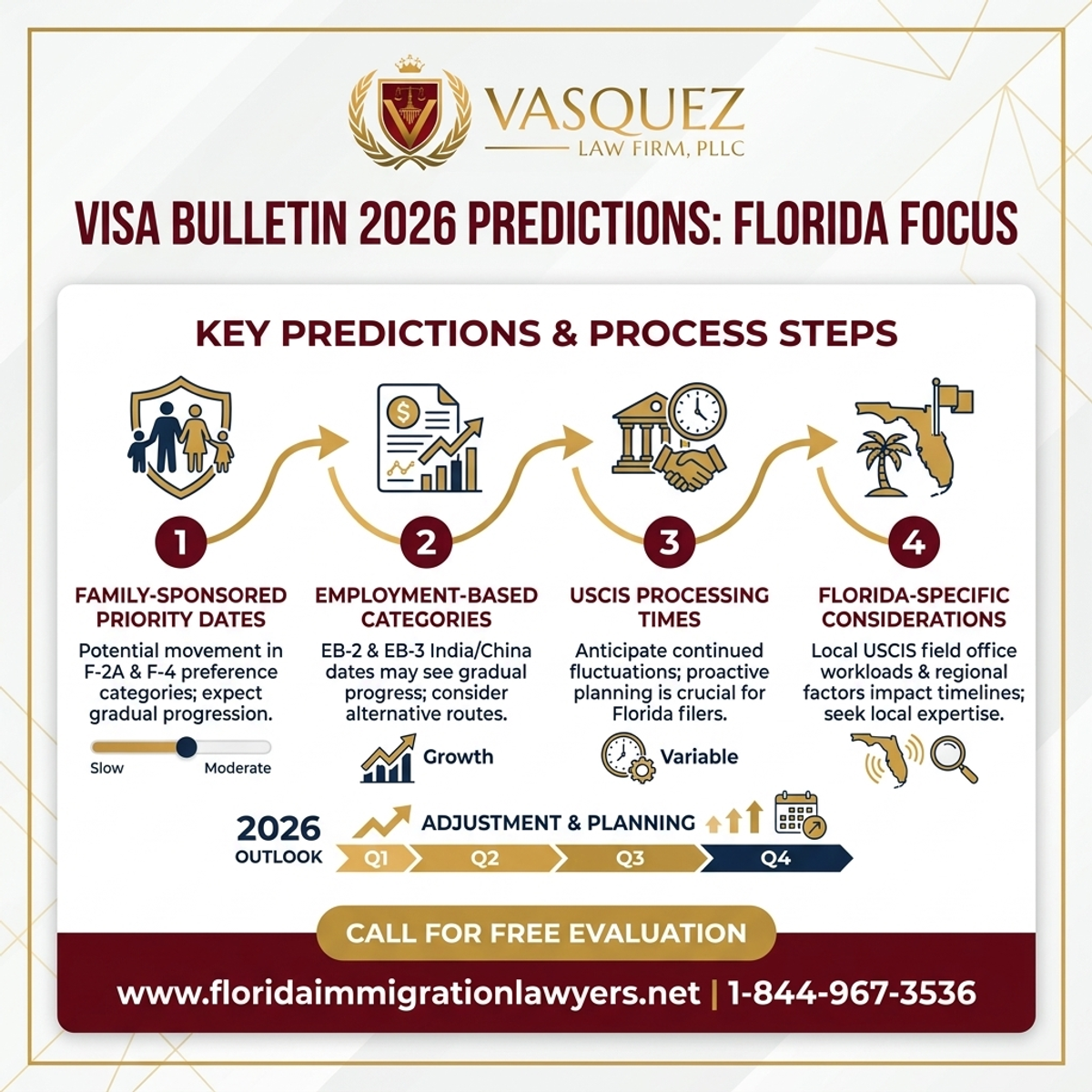
Predicting the visa bulletin involves analyzing historical data, current trends, and legislative changes. In 2026, we anticipate some shifts due to potential changes in immigration policies and global events. As of now, several categories might experience faster progression, particularly family-based visas. However, employment-based categories may see slower advancements, depending on economic needs and labor market demands in areas like Orlando.
Understanding these changes can help you strategize your immigration journey effectively. Monitoring developments through reliable sources like the State Department is advisable.
For 2026, a key factor will be the annual visa limits set by Congress and the carry-over of unused visa numbers from previous fiscal years. While family-based categories often see steady movement, employment-based categories are highly sensitive to economic shifts and legislative adjustments. For instance, if there's a push for certain skilled workers in sectors critical to Florida's economy, such as healthcare or technology, we might see some prioritization or faster movement in specific employment-based subcategories. Conversely, a slowdown in economic growth could lead to retrogression or stagnation.
Another significant influence could be any potential legislative reforms. While major overhauls are unpredictable, even minor adjustments to visa allocations or processing procedures could have a ripple effect on priority dates. For Floridians, particularly those in Orlando, which is a hub for tourism, hospitality, and growing tech industries, these shifts can directly impact their ability to secure permanent residency. Staying abreast of these macro-level changes, alongside consulting with knowledgeable professionals like Florida Immigration Lawyers, is crucial for proactive planning. We are here to help you decipher these complex predictions and tailor a strategy for your specific situation.
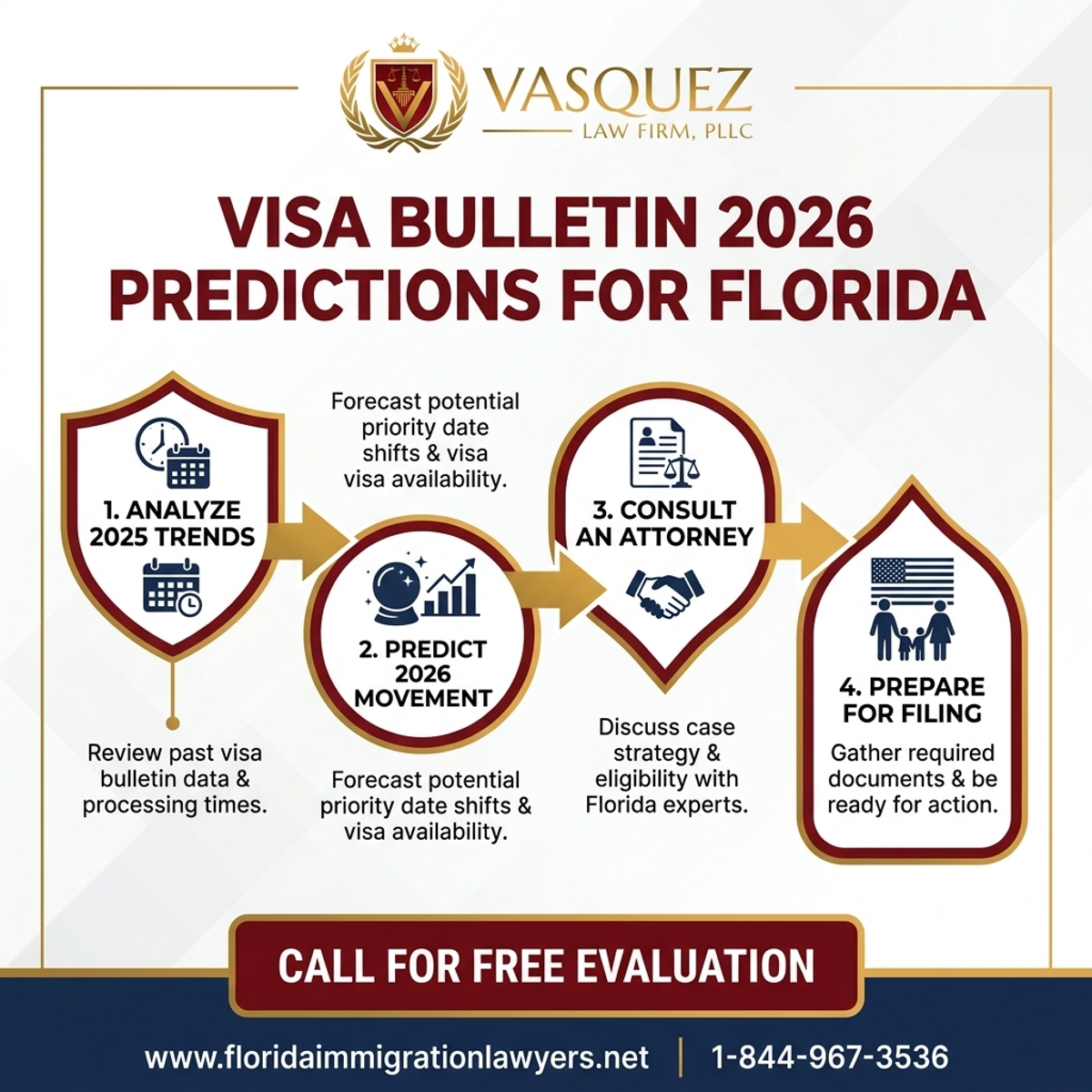
Step-by-Step Process — Visa Bulletin 2026 Predictions for Florida
Step-by-Step Guide: Navigating the Visa Bulletin
Navigating the complexities of the visa bulletin can feel daunting, but a systematic approach can simplify the process. Following these steps diligently will help you stay informed and prepared for the next phase of your immigration journey.
- Check the latest visa bulletin monthly on the USCIS website.
- Identify your category and locate your priority date.
- Compare your priority date to the 'final action dates' in the bulletin.
- If your date is current, prepare to file for adjustment of status or consular processing.
- Consult with a legal expert to ensure all documents and forms are accurately completed.
It's not enough to simply glance at the bulletin; a thorough review of both the 'Final Action Dates' and 'Dates for Filing' charts is essential, as USCIS often announces which chart should be used for adjustment of status applications. If your priority date is current or close to becoming current, this is the opportune moment to gather all necessary documentation and seek professional advice. Missing this window can lead to significant delays, underscoring the importance of vigilance and preparedness. Florida Immigration Lawyers can provide timely guidance to ensure you act swiftly and correctly.
Document Checklist for Visa Applications
A meticulously prepared application package is the cornerstone of a successful visa application. Any missing or incorrect document can lead to delays, Requests for Evidence (RFEs), or even denial. Use this checklist as a starting point, but always confirm specific requirements with your attorney.
- Form I-485 for adjustment of status
- Proof of current immigration status
- Birth certificate and any applicable translations
- Medical examination report
- Financial support documents
- Two passport-sized photos
Beyond this core list, be prepared for additional documents depending on your specific case. For instance, marriage certificates, divorce decrees, police clearance certificates from all countries resided in, and detailed employment letters may be required. Ensuring all foreign documents are accompanied by certified English translations is non-negotiable. A common pitfall is submitting documents that are expired or not properly certified. Working with Florida Immigration Lawyers ensures that your document packet is comprehensive, accurate, and meets all USCIS requirements, minimizing the risk of setbacks.
Key Statistics — Visa Bulletin 2026 Predictions for Florida
Timeline and Processing Expectations
The processing times can vary significantly based on your specific visa category and the demand for visas at the time. Typically, after your priority date becomes current, it may take several months to complete the process. However, factors such as additional documentation requests or interviews could extend this timeline.
In Florida, particularly Orlando, the local USCIS office's workload can impact timing, so staying informed and in contact with your attorney is crucial.
Understanding that these timelines are estimates is vital. For example, a family-based petition for a spouse of a U.S. citizen (IR1/CR1) might process relatively quickly once the priority date is current, often within 6-12 months for adjustment of status. However, a sibling petition (F4) could involve years of waiting even after the priority date becomes current, due to interview backlogs or administrative processing. External factors like government shutdowns or unforeseen global events can also significantly disrupt processing schedules.
To manage expectations and avoid unnecessary anxiety, consider these practical tips: maintain copies of all submitted documents, respond promptly and thoroughly to any Requests for Evidence (RFEs), and attend all scheduled appointments. Your attorney at Florida Immigration Lawyers will keep you updated on any changes in processing times specific to your case and help you prepare for each stage, including the often nerve-wracking interview process.
Cost Factors and Fee Breakdown
Applying for a visa involves several fees, including filing fees for forms like I-485 and associated biometric services. It's important to budget for these expenses and consider potential legal fees for professional assistance. While costs can vary, investing in legal guidance can prevent costly mistakes and delays.
Do not navigate this process alone. Contact Florida Immigration Lawyers today.
A detailed breakdown of costs typically includes the USCIS filing fee for the I-485 application (Adjustment of Status), which can be substantial, along with fees for biometric services (fingerprinting and background checks). Additionally, you will incur costs for the mandatory medical examination, which must be performed by a USCIS-approved civil surgeon. These medical exam fees vary by provider but are a non-negotiable part of the process.
Beyond government and medical fees, consider the value of legal representation. While it's an added expense, an experienced immigration attorney can save you significant time, stress, and potential financial loss from errors or delays. Florida Immigration Lawyers offer transparent fee structures and can discuss payment options during your free consultation, ensuring you understand all financial aspects upfront. This investment helps ensure your application is accurate, complete, and submitted correctly, maximizing your chances of a smooth process and avoiding the higher costs associated with rectifying mistakes or appealing denials.
Common Mistakes to Avoid
- Not checking the visa bulletin regularly, leading to missed opportunities.
- Misunderstanding the difference between 'filing dates' and 'final action dates.'
- Failing to submit complete applications, resulting in delays.
- Overlooking the importance of maintaining current immigration status.
- Ignoring the need for accurate translations of documents.
- Not consulting with an immigration attorney for complex cases.
- Submitting outdated forms or using incorrect filing fees.
- Assuming processing times are the same for all USCIS offices nationwide.
- Failing to respond promptly to USCIS requests for additional information.
- Underestimating the impact of policy changes on priority dates.
The immigration journey is fraught with potential pitfalls, and even minor errors can lead to significant delays or outright denials. Being aware of these common mistakes is the first step toward a successful application.
Each of these mistakes can have cascading effects. For instance, failing to maintain your legal status while waiting for a priority date to become current could render you ineligible for adjustment of status. Similarly, incorrect filing fees will cause your application to be rejected, wasting valuable time. To circumvent these issues, meticulous attention to detail and proactive engagement are crucial. When in doubt, always seek clarification. Florida Immigration Lawyers are adept at identifying and rectifying potential issues before they become major problems, providing peace of mind throughout your application process.
When to Call a Lawyer
Legal guidance is vital when your case involves complex family situations, criminal backgrounds, or urgent humanitarian needs. Additionally, if your priority date becomes current unexpectedly or if you face a denial, consulting a lawyer can be crucial. Florida Immigration Lawyers offer the experience needed to navigate these complex situations.
Beyond these critical scenarios, consider seeking legal counsel if you have ever been denied a visa or entry to the U.S., have a history of overstaying a previous visa, or if your case involves any element of inadmissibility. Even seemingly minor issues, such as a past traffic infraction, can have unforeseen immigration consequences. A lawyer can assess your unique circumstances, identify potential challenges, and develop a robust strategy to mitigate risks.
Furthermore, if you receive a Request for Evidence (RFE), a Notice of Intent to Deny (NOID), or if your interview experience was particularly challenging, these are strong indicators that professional legal intervention is necessary. An attorney can help you respond effectively to RFEs, challenge NOIDs, and prepare you thoroughly for interviews, ensuring your rights are protected and your case is presented in the strongest possible light. Don't hesitate to utilize the free consultation offered by Florida Immigration Lawyers at 1-844-YO-PELEO to evaluate your need for legal assistance.
About Florida Immigration Lawyers
Florida Immigration Lawyers is dedicated to helping clients throughout the state with all immigration matters. Our experienced attorneys provide personalized service, ensuring you navigate the complex immigration system efficiently. Call us at 1-844-YO-PELEO or visit our website for a free consultation. Available 24/7, we serve all of Florida.
Our firm prides itself on a client-centric approach, understanding that each immigration journey is unique and deeply personal. We offer comprehensive services ranging from family-based petitions and employment visas to citizenship applications and deportation defense. Our team stays abreast of the latest immigration laws and policy changes, providing you with up-to-date and accurate advice. We are committed to simplifying the process for you, offering clear communication and steadfast support every step of the way. From our offices, we extend our services across all Florida communities, ensuring that no matter where you are in the state, legal assistance is within reach.
Frequently Asked Questions About the Visa Bulletin in Florida
What does it mean if my priority date is 'current' in the visa bulletin?When your priority date is 'current,' it means that an immigrant visa number is immediately available for you. This is the green light to proceed with the next step in your immigration process, which is typically filing an Adjustment of Status application (Form I-485) if you are in the U.S., or moving forward with consular processing at a U.S. embassy or consulate abroad. It's crucial to act quickly once your date becomes current to avoid potential future backlogs or retrogression.How often should I check the visa bulletin, and where can I find it?You should check the visa bulletin monthly, typically around the second week of each month, as it is published by the U.S. Department of State. The most reliable sources are the official websites of the State Department and USCIS. Subscribing to email updates from these agencies or consulting with Florida Immigration Lawyers can also ensure you receive timely notifications and interpretations of the latest bulletin.What happens if my priority date retrogresses?Retrogression occurs when a priority date that was previously current or had advanced moves backward or becomes unavailable. This typically happens when the demand for visas in a particular category or country exceeds the available supply for that fiscal year. If your priority date retrogresses after you've filed your application, USCIS may hold your case until your date becomes current again. It's a frustrating but not uncommon part of the process, underscoring the importance of filing promptly when your date is current.Can policy changes impact my visa bulletin predictions for 2026?Absolutely. Policy changes, whether through new legislation, executive orders, or shifts in administrative priorities, can significantly impact visa availability and processing times. For instance, changes to annual visa caps, country-specific allocations, or even processing procedures at USCIS or consulates can cause priority dates to move faster or slower. Staying informed about the political landscape and consulting with experts like Florida Immigration Lawyers can help you anticipate and adapt to these potential shifts.Sources and References
- U.S. Citizenship and Immigration Services (USCIS)
- Executive Office for Immigration Review (EOIR)
- 8 U.S.C. Chapter 12 - Immigration and Nationality Act
- State Department Visa Bulletin
Related services: immigration practice areas, family immigration services, citizenship and naturalization, deportation defense.
This article provides general legal information and is not intended as legal advice. Every case is unique, and outcomes depend on specific facts and circumstances. Contact an attorney for advice about your particular situation.
Final Call to Action
For those navigating the visa bulletin in Florida, guidance is invaluable. Call Florida Immigration Lawyers at 1-844-YO-PELEO for a free consultation. Se Habla Espanol - Estamos aqui para ayudarle.
If you need legal assistance, learn more about our immigration legal services, or call us at 1-844-YO-PELEO for a free consultation.
Do Not Navigate This Process Alone
Our experienced immigration attorneys are ready to fight for you. Get a free, confidential case review today.
Se Habla Español
Or leave your details and we’ll call you:
Free Evaluation in 24 Hours
Or talk to us right now

AI voice assistant — available 24/7
FreeFrequently Asked Questions

William J. Vásquez
Founding Attorney · Vasquez Law Firm
U.S. Air Force veteran and immigration attorney with years of hands-on U.S. immigration experience. J.D., NCCU School of Law. AILA member. Admitted to the 4th, 5th, and 11th Circuit Courts.
Available 24/7 - Free Evaluations
Reviewed for legal accuracy by William J. Vásquez
Licensed in North Carolina; U.S. immigration is federal practice.
Related Legal Services
Our Florida immigration attorneys can help you with asylum protection, citizenship and naturalization and immigration practice areas. Call today at 1-844-YO-PELEO for a free case review.
Related Links
Related Topics
Free Legal Case Review
Discuss your case with our experienced attorneys. We're available 24/7.
Se Habla Español - Estamos aquí para ayudarle.
Related Articles
EAD Advance Parole Combo Card in Florida: What You Need
An EAD advance parole combo card allows individuals with pending adjustment applications to both work and travel abroad without jeopardizing their green card application. Learn how to apply in Florida, what documents you need, and common mistakes to avoid.
PERM Labor Certification in Florida: A 2026 Guide
Learn all about the PERM labor certification process in Florida, essential for employers sponsoring green card applicants. Understand the steps, document requirements, and common mistakes to avoid in this 2026 guide.
Dual Citizenship Lawyer in Florida: What You Need to Know
For Florida residents, the concept of dual citizenship, or holding two passports, offers a compelling blend of opportunities and challenges. While the U.S. generally permits dual nationality, the path to achieving this status requires a meticulous understanding of both U.S. immigration laws and the citizenship policies of your country of origin. This guide explores the definition of dual citizenship, the detailed step-by-step process for U.S. naturalization, and the significant benefits and potential pitfalls involved. We cover essential documentation, typical timelines, and cost considerations for 2026, providing crucial insights for anyone in Orlando, Miami, or across Florida considering this important legal step. Learn about common mistakes to avoid and understand when to seek professional legal counsel to navigate this complex process successfully. Florida Immigration Lawyers is here to provide expert, bilingual support for your dual citizenship journey.
Immigration Lawyer Orlando Free Consultation in Florida
For individuals and families in Orlando, Florida, navigating the complexities of U.S. immigration law requires expert guidance. An immigration lawyer in Orlando offers crucial support for everything from visa applications and green card processes to naturalization and deportation defense. This comprehensive guide details what a free consultation covers, providing a step-by-step overview of immigration pathways, essential document checklists, and expected timelines in 2026. We also highlight common mistakes to avoid, discuss the critical role of legal counsel in deportation and asylum cases, and explain why choosing a local Orlando immigration attorney is beneficial. Florida Immigration Lawyers is dedicated to serving the diverse community of Orlando with compassionate, effective legal solutions, ensuring you receive personalized advice and robust representation for a successful immigration journey.