Immigration Lawyer Orlando Free Consultation: 2026 Policy
As Florida anticipates significant immigration policy changes by 2026, understanding their potential impact is crucial for residents and businesses across the state, from Naples to Orlando. These reforms may include enhanced enforcement, adjustments to visa programs, and shifts in asylum processing. Navigating these new rules requires expert legal guidance to ensure compliance and protect your rights. Florida Immigration Lawyers offers free consultations to help you understand how these changes affect your specific case, whether you're applying for a visa, seeking adjustment of status, or facing a complex legal challenge. Our comprehensive guide covers anticipated timelines, document requirements, and common mistakes to avoid, emphasizing the importance of informed preparation. Don't let uncertainty jeopardize your future; learn how our experienced attorneys can advocate for you.

Navigating immigration law in 2026, especially with potential new policy changes in Florida, can be complex and daunting. If you are in Orlando or anywhere in Florida and require assistance, securing a free consultation with an experienced immigration lawyer is crucial. These consultations offer a vital opportunity to discuss your specific situation, understand how anticipated policy shifts may impact your case, and explore available legal pathways. An attorney can provide clarity on new rules, help you prepare for applications, and defend your rights against potential challenges like visa revocations or enforcement actions, ensuring you receive tailored advice.
- New immigration policies in Florida for 2026 may introduce stricter enforcement and updated visa regulations.
- A free consultation helps you understand personal impacts and explore legal strategies.
- Expert legal advice is essential for navigating complex changes and protecting your rights.
- Florida Immigration Lawyers offers free consultations to assess your unique immigration needs.
Are you feeling uncertain about your immigration status or future in Florida, especially with discussions around significant immigration policy changes 2026 Florida? The landscape of immigration law is constantly evolving, and the year 2026 is anticipated to bring new regulations and enforcement priorities that could impact individuals and families across the state, from Naples to Orlando. Understanding these potential shifts and how they might affect your personal circumstances is paramount. Whether you are seeking a new visa, adjusting your status, or facing a challenge, proactive legal guidance is invaluable.
Florida Immigration Lawyers understands the anxieties that come with legal uncertainties. We are dedicated to providing compassionate, informed legal support to the immigrant community throughout Florida. Our team stays abreast of all legislative developments and administrative actions to offer the most current advice. If you are looking for an immigration lawyer in Orlando for a free consultation to discuss how new immigration rules in Florida might affect you, do not hesitate to reach out. Call Florida Immigration Lawyers at 1-844-967-3536 for a free consultation today.
What Are the Key Immigration Policy Changes Expected in Florida by 2026?
As of 2026, Florida is bracing for a series of significant immigration policy shifts, primarily driven by federal legislative discussions and executive actions. These changes are expected to intensify enforcement efforts, potentially alter visa categories, and introduce new criteria for asylum and citizenship applications. The goal is often to streamline processes while simultaneously strengthening border security and internal enforcement, which can create both opportunities and challenges for immigrants residing in or seeking to move to Florida. Recent news suggests an expansion of visa revocation powers and increased scrutiny on naturalization, indicating a more rigorous environment.
These anticipated immigration policy changes 2026 Florida could affect a wide range of individuals, from those seeking family-based visas to skilled workers and international students. Understanding the specifics of these reforms is crucial for planning your immigration journey effectively. For instance, enhanced data sharing between federal agencies like USCIS and state law enforcement could mean greater coordination in identifying and addressing immigration violations. This comprehensive approach mandates that individuals are well-informed and prepared to adapt to the new legal framework.
Enhanced Enforcement and Border Security
One of the most prominent areas of anticipated change involves significantly enhanced enforcement measures. Federal proposals often include increased funding for border patrol, expansion of detention facilities, and a greater emphasis on deportations for certain offenses. For Florida, a state with extensive coastlines and a significant immigrant population, this could translate into more visible enforcement actions and stricter penalties for immigration violations. State laws may also align more closely with federal directives, creating a unified front on immigration control.
These enhanced measures are designed to deter unauthorized immigration and ensure compliance with existing laws. However, they also heighten the risk for individuals who may have minor infractions or are navigating complex legal statuses. Residents in areas like Naples and Orlando could experience increased scrutiny during routine interactions with law enforcement. Understanding your rights and responsibilities under these new enforcement regimes is critical to avoid adverse outcomes and ensure your continued legal standing in Florida.
Visa Program Adjustments and Revocation Powers
The year 2026 may also see substantial adjustments to various visa programs. This could include changes to eligibility requirements, application processes, and the duration of certain visas. Of particular concern are reports about the Executive Branch dramatically expanding visa revocation powers. This means that even after a visa has been issued, it could be subject to review and potential cancellation under new, broader criteria. Such changes introduce an element of unpredictability for visa holders and applicants alike.
For individuals in Florida relying on employment-based visas, student visas, or even some family-sponsored categories, these adjustments could necessitate re-evaluation of their immigration strategy. The potential for citizenship revocation, as reported by USA Today, also highlights a trend towards increased government authority over immigration statuses. It is essential to monitor these developments closely and consult with an immigration attorney to understand how these new powers might specifically impact your visa or path to naturalization.
Potential Shifts in Asylum and Refugee Processing
Asylum and refugee policies are another area ripe for change. Historically, these processes have been subject to political shifts, and 2026 may bring stricter eligibility criteria, expedited removal procedures, or modifications to the credible fear interview process. For individuals seeking protection in Florida, these changes could make it more challenging to obtain asylum or refugee status, increasing the burden of proof and the speed at which decisions are made.
These potential shifts underscore the importance of robust legal representation for asylum seekers. The complexities of international and domestic asylum law require expert navigation, especially when new rules are being implemented. Understanding the specific grounds for asylum under USCIS guidelines and being prepared for rigorous interviews will be more critical than ever. Legal advocacy can help ensure that claims are presented effectively and fairly, even in a more restrictive environment.
How Do New Immigration Rules in Florida Affect Residents and Businesses?
The anticipated new immigration rules in Florida for 2026 are expected to have a broad impact on both individual residents and the state's diverse business landscape. For residents, these changes could influence everything from family reunification processes to the ability to work and access certain public services. Businesses, particularly those in sectors heavily reliant on immigrant labor such as agriculture, hospitality, and construction, may face new compliance requirements, labor shortages, or adjustments to employment verification procedures. Adapting to these changes will be crucial for maintaining stability and growth across Florida.
These policy shifts could also lead to increased uncertainty for many families, especially those with mixed-status members. The heightened enforcement environment, coupled with potential changes in visa categories, requires a proactive approach to legal planning. Residents across Florida, including those in vibrant communities like Naples and Orlando, must stay informed about their rights and responsibilities. Businesses, on the other hand, need to understand new regulations to avoid penalties and ensure a stable workforce, making legal counsel an essential resource.
Impact on Family-Based Petitions
Family-based immigration, a cornerstone of U.S. immigration policy, may experience significant adjustments under the 2026 reforms. While the core principles of family reunification under the Immigration and Nationality Act (INA) are likely to remain, changes could manifest in longer processing times, increased scrutiny of relationships, or updated financial sponsorship requirements. For families in Florida, this could mean extended waiting periods for loved ones to join them, or a need to provide more extensive documentation to prove legitimate relationships and financial capability, as outlined in 8 U.S.C. § 1182.
It is vital for petitioners and beneficiaries to prepare for these potential changes by gathering comprehensive evidence and seeking legal advice early. Any new requirements could add layers of complexity to the already intricate process of filing Form I-130, Petition for Alien Relative. Understanding the implications for different family preference categories and preparing for potential interviews will be key to successfully navigating these processes. An experienced attorney can help ensure all new criteria are met, minimizing delays or denials.
Implications for Florida Businesses
Florida's economy relies heavily on immigrant labor, making businesses particularly vulnerable to new immigration rules in Florida. Employers may face stricter I-9 verification requirements, increased audits, and potential penalties for non-compliance. Changes to H-2A (agricultural) and H-2B (non-agricultural) visa programs, for instance, could impact the availability and cost of seasonal labor, affecting key industries in the state. Businesses in Naples, known for its tourism and agriculture, could feel these impacts acutely.
To mitigate risks, Florida businesses must prioritize compliance and stay informed about evolving employment immigration laws. This includes reviewing internal hiring practices, updating employee handbooks, and potentially seeking legal counsel to ensure adherence to all federal and state regulations. Proactive measures can help businesses avoid fines, maintain their workforce, and continue contributing to Florida's economic vitality, even amidst regulatory shifts.
Local Enforcement in Naples and Orlando
The impact of federal immigration policy often trickles down to local communities. In Florida, cities like Naples and Orlando, with their diverse populations, may see changes in how local law enforcement interacts with federal immigration agencies. While birthright citizenship has been upheld, state policies on immigration enforcement continue to evolve, as noted by the Conduit Street Blog. This could lead to a more integrated approach to immigration enforcement at the local level, potentially impacting daily life for undocumented individuals and even legal residents.
It is crucial for residents to understand their rights when interacting with law enforcement, especially in the context of immigration enforcement. Knowledge of constitutional protections and the ability to distinguish between local policing and federal immigration actions can be empowering. Consulting with an immigration attorney can provide clarity on these complex interactions, ensuring individuals are not unfairly targeted or detained based on their immigration status.
Navigating the Immigration Process Under 2026 Florida Reform: A Step-by-Step Guide
Successfully navigating the immigration process under the anticipated 2026 Florida immigration reform requires meticulous planning and a clear understanding of updated procedures. Whether you are applying for a visa, seeking adjustment of status, or responding to an enforcement action, each step must be executed with precision. This guide outlines a general framework for approaching immigration matters during this period of change, emphasizing the importance of legal counsel and thorough preparation. The complexity of new rules necessitates a structured approach to avoid common pitfalls and ensure compliance.
The process is often intricate, involving multiple forms, strict deadlines, and potential interviews. Any misstep can lead to significant delays or even denial of your application. Being informed about specific requirements, such as those detailed in 8 CFR Part 204 for petitions or 8 CFR Part 245 for adjustment of status, is critical. This step-by-step approach aims to empower you with the knowledge needed to confidently move forward with your immigration goals in Florida.
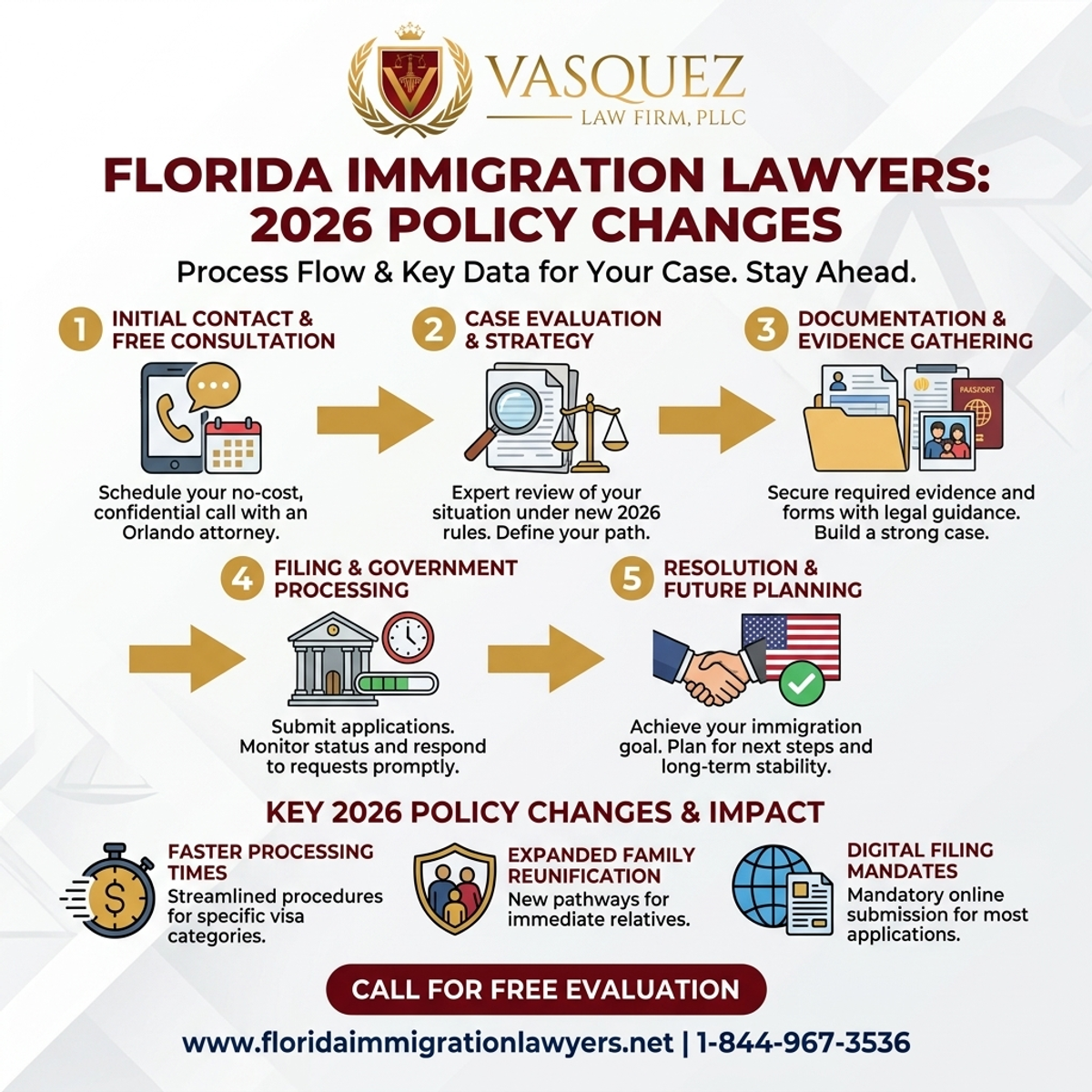
Step-by-Step Process — Immigration Lawyer Orlando Free Consultation: 2026 Policy Changes
- Assess Your Eligibility and Goals: Begin by clearly defining your immigration objective, whether it's obtaining a green card, a specific visa, or naturalization. Research the eligibility criteria for your desired pathway, considering any new rules or restrictions introduced by the 2026 reforms. An attorney can help you determine the most viable path forward based on your unique circumstances and the current legal landscape.
- Gather Comprehensive Documentation: Identify and collect all necessary documents, including personal identification, birth certificates, marriage certificates, financial records, educational transcripts, and any specific forms required by USCIS or the State Department. Due to enhanced scrutiny, ensure all documents are current, accurate, and properly translated if not in English.
- Complete and File Forms Accurately: Fill out all application forms with extreme care, ensuring every question is answered truthfully and completely. Double-check for errors or omissions, as these are common reasons for delays or rejections. Attach all required supporting documentation and pay the correct filing fees. Keep copies of everything submitted for your records.
- Attend Biometrics Appointment: If required, attend your biometrics appointment at a designated Application Support Center (ASC) in Florida, such as the one in Orlando or Miami. This involves fingerprinting, photographs, and a signature to conduct background checks. Ensure you bring the appointment notice and a valid photo ID.
- Prepare for Interviews: Many immigration processes, especially adjustment of status or naturalization, require an interview with a USCIS officer. Prepare thoroughly by reviewing your application, understanding the questions you may be asked, and practicing your responses. An attorney can help you prepare and, in many cases, attend the interview with you for support.
- Respond to Requests for Evidence (RFEs): USCIS may issue an RFE if they need more information or clarification. Respond promptly and comprehensively, providing all requested evidence within the specified timeframe. Failing to respond or submitting insufficient evidence can lead to denial.
- Monitor Case Status: Regularly check the status of your case online using the receipt number provided by USCIS. Be patient, as processing times can be lengthy, especially with new policies. Stay in communication with your attorney regarding any updates or concerns.
- Receive Decision and Plan Next Steps: Upon receiving a decision, whether approval or denial, understand its implications. If approved, follow any instructions for next steps, such as receiving a green card or attending a naturalization ceremony. If denied, discuss potential appeals or other legal remedies with your attorney.
What Documents Are Required for Immigration Filings in 2026?
As of 2026, the specific documents required for immigration filings in Florida will vary depending on the type of application, but a general set of foundational documents is almost universally needed. Due to the anticipated new immigration rules in Florida and increased scrutiny, applicants must be prepared to provide comprehensive and meticulously organized documentation. This includes proof of identity, civil documents, financial evidence, and any specific forms related to your petition. Incomplete or inaccurate submissions are among the most common reasons for delays or denials, making thorough preparation absolutely essential.
It is crucial to understand that even minor discrepancies can trigger Requests for Evidence (RFEs) or even lead to adverse decisions. Therefore, every document must be authentic, current, and, if not originally in English, accompanied by a certified translation. For residents in Naples, Orlando, and across Florida, having an organized checklist and legal guidance can significantly streamline this often-complex process. Always keep copies of all submitted documents for your records, as per USCIS best practices.
Essential Personal Documents
- Birth Certificate (original or certified copy)
- Passport (valid and expired, if applicable)
- National ID Card (if applicable)
- Marriage Certificate (if applicable)
- Divorce Decrees (if applicable)
- Police Clearances from all countries of residence since age 16
- Medical Examination Report (Form I-693)
- Passport-style photos (specific dimensions required by USCIS)
- Proof of U.S. Entry and Status (I-94 Arrival/Departure Record, visa stamps)
Financial and Sponsorship Evidence
- Affidavit of Support (Form I-864) from U.S. petitioner, if applicable
- Tax transcripts (most recent 3 years)
- Employment letters and pay stubs
- Bank statements and asset documentation
- Proof of income and financial stability
Legal and Background Checks
- Copies of all previously filed immigration petitions or applications
- Court disposition records for any arrests or convictions
- Military service records (if applicable)
- Proof of bona fide relationship (for family-based petitions, e.g., photos, joint accounts, shared bills)
- Educational degrees and transcripts (for employment-based visas)
What is the Typical Timeline for Immigration Cases with Florida Policy Changes in 2026?
As of 2026, the typical timeline for immigration cases in Florida continues to be highly variable, influenced by the specific type of petition, the USCIS field office or service center handling the case (e.g., Orlando, Miami), and the ongoing impact of immigration policy changes 2026 Florida. While USCIS aims for efficiency, new regulations, increased application volumes, or shifts in processing priorities can lead to significant delays. Applicants should prepare for a potentially lengthy process and monitor official USCIS processing times regularly. Patience and proactive follow-up are essential during this period of transition.
The table below provides general timeframes for common immigration stages. These are estimates and can fluctuate widely. It is important to note that these timelines do not account for potential Requests for Evidence (RFEs), interviews, or administrative processing delays which can extend the overall duration of a case significantly. For example, complex asylum cases or those involving criminal history may face much longer review periods. Legal counsel can provide more personalized expectations based on your specific circumstances.
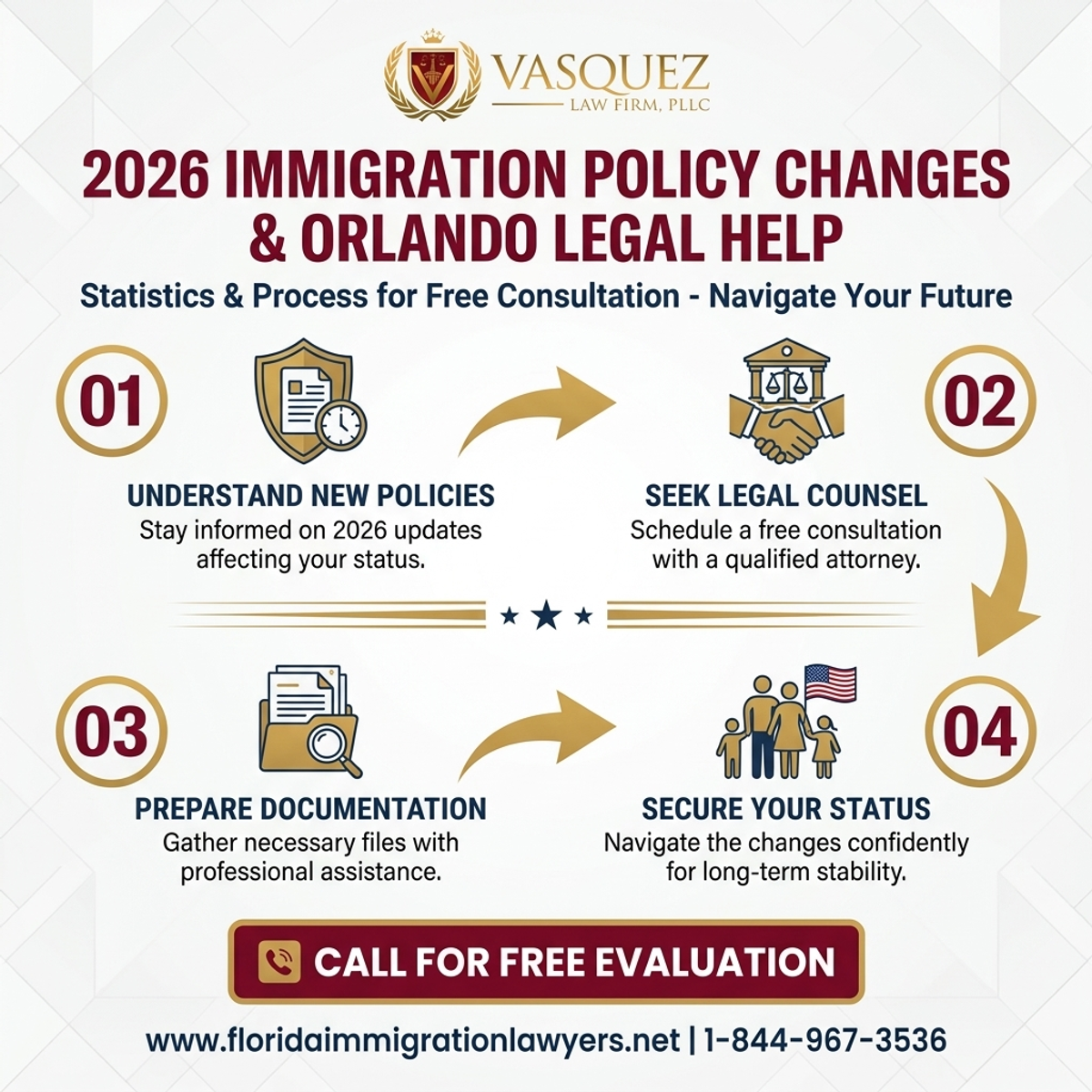
Key Statistics — Immigration Lawyer Orlando Free Consultation: 2026 Policy Changes
| Stage | Typical Timeframe (As of 2026) | Notes |
|---|---|---|
| Initial Petition Filing (e.g., I-130, I-140) | 6-24 months | Varies by petition type, service center workload, and preference category. |
| Biometrics Appointment | 3-8 weeks after filing | Scheduled at local Application Support Centers (ASCs). |
| Adjustment of Status (I-485) | 12-48+ months | Highly dependent on visa availability, field office, and case complexity. |
| Consular Processing (outside U.S.) | 6-24 months after NVC processing | Varies by embassy/consulate, security checks, and interview availability. |
| Work Authorization (EAD) | 5-12 months | Can be filed concurrently with I-485 or asylum applications. |
| Travel Document (Advance Parole) | 5-12 months | Filed with I-485, allows travel outside U.S. while adjustment is pending. |
| Naturalization (N-400) | 8-24 months | Requires 3-5 years of permanent residency; varies by field office. |
What Are the Costs Associated with Immigration Cases in Florida for 2026?
The costs associated with immigration cases in Florida for 2026 are multifaceted, encompassing government filing fees, attorney fees, and various ancillary expenses. While specific government fees can change, they generally represent a significant portion of the overall cost. These fees are set by agencies like USCIS and the Department of State and are non-refundable, regardless of the outcome of your application. The anticipated Florida immigration reform and new processing requirements may also introduce new fees or increase existing ones, making financial planning crucial for all applicants.
Beyond government fees, legal representation constitutes another primary expense. An experienced immigration lawyer provides invaluable guidance, ensuring proper documentation, timely submissions, and strategic advice, especially when navigating complex deportation defense or intricate visa petitions. Additional costs may include medical examination fees, translation services, document preparation, and travel expenses for interviews. Understanding this comprehensive cost structure is vital for anyone pursuing an immigration benefit in Florida.
| Item | Typical Fee (As of 2026 - Estimates) | Notes |
|---|---|---|
| USCIS Filing Fees (e.g., I-130, I-485, N-400) | $500 - $1,760+ per form | Fees vary significantly by form type and can increase; check USCIS fee schedule. |
| Biometrics Fee | $85 (often included in main filing fee) | Required for background checks and identification verification. |
| Immigrant Visa Application Fee (DS-260) | $325 | For consular processing through the National Visa Center. |
| Affidavit of Support Review Fee | $120 | For family-based petitions processed by NVC. |
| Medical Examination | $200 - $500 | Conducted by USCIS-approved civil surgeons; cost varies by provider. |
| Attorney Fees | Hourly or flat fee (Highly variable) | Depends on case complexity, attorney's experience, and services provided. |
| Translation Services | $20 - $50 per page | Required for any document not in English. |
| Document Preparation/Photocopies | Variable | Costs for obtaining certified copies, photos, etc. |
Do not navigate this process alone. The complexities of immigration policy changes 2026 Florida demand experienced legal guidance. Contact Florida Immigration Lawyers today at 1-844-967-3536 for a free consultation to protect your rights and future.
Common Mistakes to Avoid During Immigration Policy Changes in 2026
Navigating the complex waters of immigration law, especially amidst anticipated new immigration rules in Florida for 2026, can be fraught with potential pitfalls. Even minor errors can lead to significant delays, denials, or even more severe immigration consequences. Being aware of these common mistakes and taking proactive steps to avoid them is crucial for a successful outcome. An experienced immigration lawyer can help you sidestep these issues and ensure your application is as strong as possible.
- Failing to Understand New Policy Changes: Assuming old rules still apply can be detrimental. Policy shifts, such as expanded visa revocation powers or updated asylum criteria, require a thorough understanding of current regulations. Consequences: Delayed processing, requests for evidence, or outright denial due to non-compliance with new laws.
- Submitting Incomplete or Inaccurate Applications: This is one of the most frequent errors. Missing documents, incorrect information, or unanswered questions on forms can immediately trigger an RFE or rejection. Consequences: Significant delays, re-filing fees, and potentially a negative impact on future applications.
- Missing Deadlines: Immigration processes are time-sensitive. Failing to file forms, respond to RFEs, or attend appointments by the specified deadlines can lead to automatic denials or even the initiation of deportation proceedings. Consequences: Loss of eligibility, deportation, or lengthy appeals.
- Misrepresenting Facts or Providing False Information: Lying on immigration forms or during interviews is a severe offense. It can lead to findings of fraud or misrepresentation, making you permanently inadmissible to the U.S. Consequences: Permanent bar from the U.S., criminal charges, or immediate deportation.
- Traveling Internationally Without Advance Parole: If you have a pending adjustment of status application (Form I-485) and leave the U.S. without an approved Advance Parole document, your application may be considered abandoned. Consequences: Denial of I-485 and inability to re-enter the U.S.
- Not Disclosing All Criminal History: Even minor arrests or convictions, regardless of outcome, must be disclosed on immigration forms. Failure to do so can be considered misrepresentation. Consequences: Denial of benefits, inadmissibility, or deportation.
- Ignoring Communications from USCIS or EOIR: All notices, RFEs, or hearing notices from immigration agencies must be taken seriously and responded to promptly. Ignoring them can lead to adverse decisions in your absence. Consequences: Case abandonment, denial, or issuance of a removal order.
- Not Seeking Legal Counsel Early Enough: Many individuals wait until they face a crisis before contacting an attorney. Early legal intervention can prevent many common mistakes and provide a clearer path forward. Consequences: Increased complexity and cost, limited options, or missed opportunities for relief.
- Believing Misinformation from Unofficial Sources: Relying on rumors, social media, or non-attorney 'notarios' for legal advice can be dangerous. Immigration law is highly specific and requires professional expertise. Consequences: Incorrect filings, legal violations, financial loss, or irreparable damage to your immigration case.
When to Call an Immigration Lawyer in Orlando
Given the anticipated immigration policy changes 2026 Florida, knowing when to seek professional legal help is more critical than ever. While some immigration processes seem straightforward, the slightest misstep can have profound and lasting consequences. If you are in Orlando or anywhere in Florida and encounter any of the following scenarios, it is highly recommended to contact an experienced immigration lawyer promptly. Florida Immigration Lawyers are here to provide the guidance you need.
- Facing Deportation or Removal Proceedings: If you have received a Notice to Appear (NTA) in immigration court, immediate legal representation is essential. An attorney can build a defense, explore relief options, and protect your rights in court.
- Complex Case History: If you have previous denials, a criminal record, or any other complicating factors in your immigration history, a lawyer can assess your eligibility and strategize the best approach.
- Confusing Policy Changes: When new rules, like expanded visa revocation powers or citizenship scrutiny, are introduced, an attorney can explain their impact and help you adapt your application.
- Marriage-Based Green Card Applications: These often involve complex requirements for proving a bona fide marriage. A lawyer ensures all evidence is robust and properly presented.
- Employment-Based Visas: Navigating the intricate requirements for H-1B, L-1, or other employment visas, especially with new regulations, benefits greatly from legal expertise.
- Asylum or Refugee Claims: These cases are highly sensitive and require strong legal arguments and evidence. An attorney can prepare you for interviews and represent your interests.
- Difficulty Obtaining Documents: If you are struggling to acquire necessary civil or financial documents, an attorney can advise on alternative evidence or processes.
- Receiving a Request for Evidence (RFE) or Notice of Intent to Deny (NOID): These notices indicate an issue with your application that must be addressed professionally and comprehensively.
- Any Doubts or Concerns: If you are simply unsure about your eligibility, the best path forward, or how Florida immigration reform affects you, a consultation can provide clarity and peace of mind.
About Florida Immigration Lawyers
Florida Immigration Lawyers is a leading law firm dedicated to providing comprehensive and compassionate immigration legal services across the entire state of Florida. With a deep understanding of U.S. immigration law and its frequent changes, our experienced attorneys are committed to helping individuals, families, and businesses navigate the complexities of the immigration system. We proudly serve clients from all walks of life, offering personalized strategies and unwavering support through every stage of their immigration journey, from initial consultations in Orlando to court appearances in Miami.
Our firm specializes in a wide range of practice areas, including family immigration, business immigration, asylum, deportation defense, citizenship, and visa applications. We understand that each case is unique, and we approach every client with empathy, respect, and a commitment to achieving the best possible outcome. Available 24/7, we offer free consultations to assess your specific needs and provide clear, actionable advice. Choose Florida Immigration Lawyers for dedicated advocacy and expert legal representation. Call us at 1-844-967-3536 or visit floridaimmigrationlawyers.net.
Sources and References
- U.S. Citizenship and Immigration Services (USCIS)
- Executive Office for Immigration Review (EOIR)
- U.S. Department of State (Travel.State.Gov)
- Immigration and Nationality Act (INA) - 8 U.S.C. Chapter 12
- 8 U.S.C. § 1182 - Inadmissible aliens
- 8 U.S.C. § 1255 - Adjustment of status of nonimmigrant to that of person admitted for permanent residence
- 8 CFR Part 204 - Immigrant Petitions
- 8 CFR Part 245 - Adjustment of Status to that of Person Admitted for Permanent Residence
- USCIS Policy Manual
Related services: immigration practice areas, free immigration consultation.
This article provides general legal information and is not intended as legal advice. Every case is unique, and outcomes depend on specific facts and circumstances. Contact an attorney for advice about your particular situation.
If you are navigating the complexities of immigration policy changes 2026 Florida or simply need expert guidance on your immigration journey, Florida Immigration Lawyers is here to help. Our dedicated team is ready to provide you with a free, confidential consultation to discuss your options and protect your rights. Don't face the future alone. Call us today at 1-844-967-3536 to schedule your free consultation. Se Habla Espanol - Estamos aqui para ayudarle.
If you need legal assistance, learn more about speak with an immigration lawyer, or call us at 1-844-967-3536 for a free consultation.
Do Not Navigate This Process Alone
Our experienced immigration attorneys are ready to fight for you. Get a free, confidential consultation today.
Se Habla Español
Or leave your details and we’ll call you:
Free Evaluation in 24 Hours
Or talk to us right now
AI voice assistant — available 24/7
FreeFrequently Asked Questions

William J. Vásquez
Founding Attorney · Vasquez Law Firm
U.S. Air Force veteran and immigration attorney with years of hands-on U.S. immigration experience. J.D., NCCU School of Law. AILA member. Admitted to the 4th, 5th, and 11th Circuit Courts.
Available 24/7 - Free Evaluations
Reviewed for legal accuracy by William J. Vásquez
Licensed in North Carolina; U.S. immigration is federal practice.
Related Legal Services
Our Florida immigration attorneys can help you with asylum protection, deportation defense and citizenship and naturalization. Call today at 1-844-967-3536 for a free consultation.
Related Links
Related Topics
Free Legal Consultation
Discuss your case with our experienced attorneys. We're available 24/7.
Se Habla Español - Estamos aquí para ayudarle.
Related Articles
Military Naturalization Expedited in Florida Bases
Explore military naturalization options for families at Florida bases, including parole in place benefits in Miami. Learn how to expedite your application with expert guidance from Florida Immigration Lawyers.
Immigration Lawyer Orlando Free Consultation 2026
Discover how to find an immigration lawyer in Orlando offering a free consultation. Understand the services available and why choosing Florida Immigration Lawyers can make a difference in your case.
DUI Immigration Consequences in Florida: What to Know
A DUI conviction in Florida can have significant immigration consequences, including potential inadmissibility and deportation. Learn how to navigate these challenges and protect your rights with guidance from Florida Immigration Lawyers.
Immediate Relative Petition Tampa: What You Need to Know
Discover the process of filing an immediate relative petition in Tampa, Florida. Learn about eligibility, timelines, and common mistakes. Call Florida Immigration Lawyers for guidance.