DUI Immigration Consequences in Florida: What to Know
A DUI conviction in Florida can have significant immigration consequences, including potential inadmissibility and deportation. Learn how to navigate these challenges and protect your rights with guidance from Florida Immigration Lawyers.
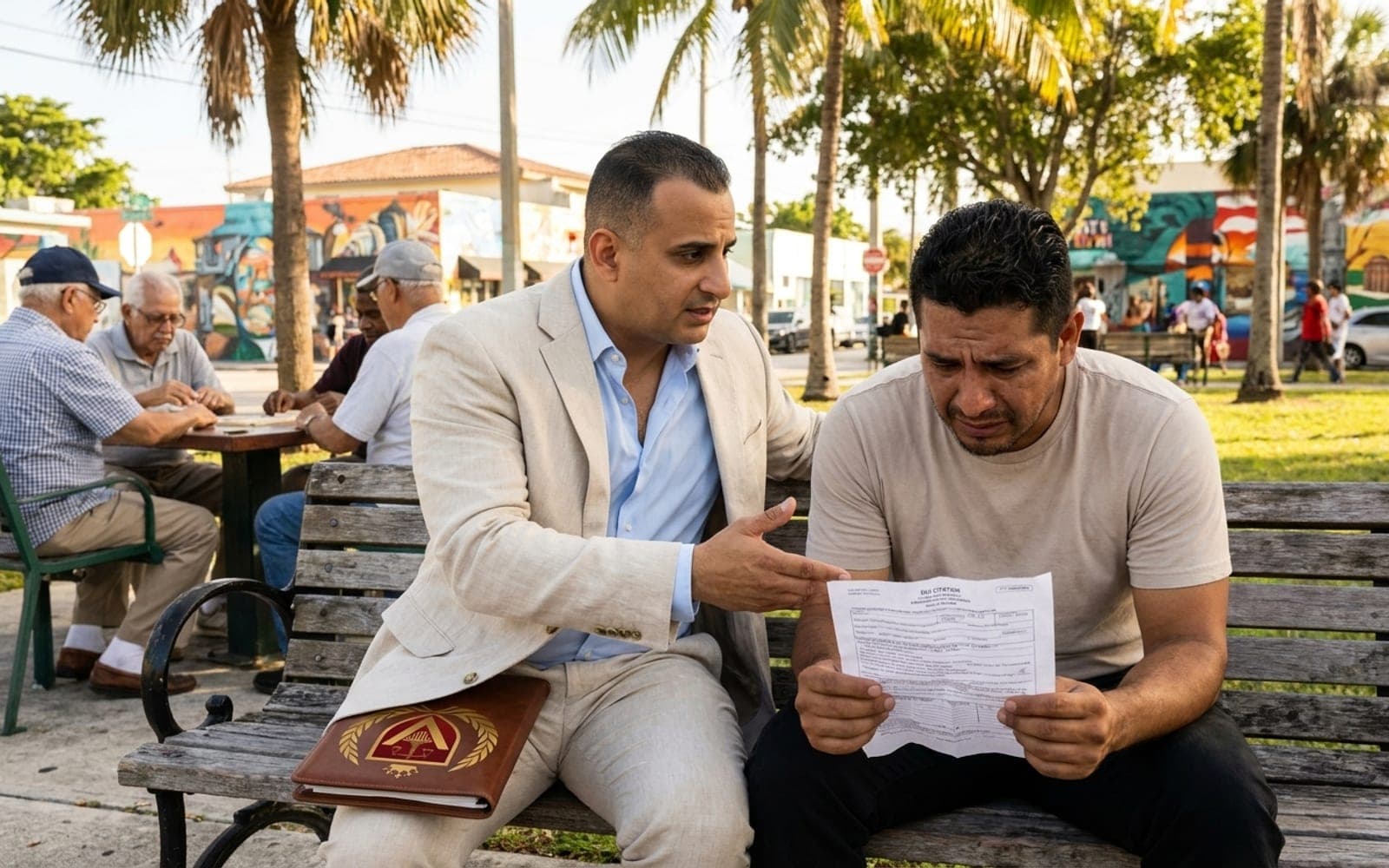
DUI Immigration Consequences in Florida: What Every Non-Citizen Needs to Know
A Driving Under the Influence (DUI) charge in Florida is a serious matter for anyone, but for non-citizens, the stakes are exponentially higher. Beyond the typical fines, jail time, and license suspension, a DUI conviction can trigger a cascade of severe immigration consequences, potentially leading to inadmissibility, deportation, or the denial of crucial immigration benefits. Understanding these risks and navigating the complex intersection of criminal and immigration law is paramount for protecting your future in the United States.
This comprehensive guide delves into the profound impact a DUI can have on your immigration status in Florida, exploring the specific legal ramifications, potential defenses, and the critical importance of seeking experienced legal counsel immediately. Whether you are a lawful permanent resident, a visa holder, an asylum seeker, or a DACA recipient, a DUI conviction can jeopardize your ability to live, work, and remain in the U.S. Don't let a single mistake derail your American dream without understanding your options.
Understanding DUI in Florida: More Than Just a Traffic Offense
In Florida, a person is guilty of DUI if they are driving or in actual physical control of a vehicle while under the influence of alcohol or drugs to the extent that their normal faculties are impaired, or with a blood alcohol content (BAC) of 0.08% or higher. Penalties for a first-time DUI conviction can include fines, probation, mandatory DUI school, vehicle impoundment, and up to six months in jail. Subsequent offenses carry progressively harsher penalties, including longer jail sentences, higher fines, and mandatory ignition interlock devices.
However, for non-citizens, the criminal penalties are often overshadowed by the potential immigration consequences. It’s crucial to understand that even a seemingly minor DUI offense can have devastating effects on your ability to obtain a visa, adjust status, renew a green card, or even face deportation. The U.S. immigration system views certain criminal offenses, including some DUI convictions, as grounds for removal or denial of benefits, regardless of how minor they might seem in the state criminal system.
The Dire Immigration Consequences of a DUI Conviction
The impact of a DUI on your immigration status can manifest in several critical ways, primarily through grounds of inadmissibility and deportability.
1. Grounds of Inadmissibility
Inadmissibility refers to circumstances under which an individual is barred from entering the U.S. or from adjusting their status to become a lawful permanent resident. A DUI conviction can render you inadmissible under several provisions:
- Crimes Involving Moral Turpitude (CIMT): While a simple, first-offense DUI without aggravating factors is generally not considered a CIMT, certain circumstances can elevate it. For instance, a DUI involving injury, reckless driving, or a pattern of alcohol-related offenses could be deemed a CIMT, especially if there's an element of intent or depraved indifference. A conviction for a CIMT can make you inadmissible and ineligible for many immigration benefits.
- Controlled Substance Violations: If your DUI involved drugs, particularly illegal drugs, you could be found inadmissible under drug-related grounds, which are often more severe than alcohol-related grounds.
- Multiple Criminal Convictions: Even if a single DUI isn't a CIMT, a pattern of two or more convictions for any crime (other than purely political offenses) for which the aggregate sentences to confinement were five years or more, could lead to inadmissibility.
- Health-Related Grounds: A history of DUIs, especially multiple offenses, could lead immigration authorities to determine that you have a physical or mental disorder with associated harmful behavior, or a history of such behavior that is likely to recur, making you inadmissible.
2. Grounds of Deportability
Deportability refers to circumstances under which a non-citizen, even a lawful permanent resident, can be removed from the U.S. A DUI conviction can lead to deportation under several provisions:
- Aggravated Felonies: This is perhaps the most severe consequence. While a simple DUI is not typically an aggravated felony, an enhanced DUI charge (e.g., DUI with serious bodily injury, felony DUI, or a third or subsequent DUI that is charged as a felony) can be classified as an aggravated felony under immigration law. An aggravated felony conviction almost always leads to mandatory detention and deportation, with very limited relief available.
- Crimes Involving Moral Turpitude (CIMT): As with inadmissibility, a CIMT conviction can make you deportable if committed within five years of admission and punishable by a sentence of one year or more, or if you have two or more CIMT convictions not arising out of a single scheme of misconduct.
- Controlled Substance Offenses: A DUI involving drugs can be a deportable offense, often without any time limitations or sentence requirements.
- Domestic Violence or Crimes of Violence: If the DUI involved an incident that could also be charged as domestic violence or a crime of violence, it could trigger deportation grounds.
3. Impact on Immigration Benefits and Processes
Beyond inadmissibility and deportability, a DUI can severely hinder your ability to obtain or maintain various immigration benefits:
- Visa Applications: A DUI on your record can lead to the denial of both immigrant and non-immigrant visa applications.
- Green Card Renewal/Adjustment of Status: Applications for green card renewal or adjustment of status can be denied.
- Naturalization: A DUI conviction can impact your ability to demonstrate 'Good Moral Character,' a prerequisite for U.S. citizenship. Even a single DUI can delay naturalization for several years, and multiple DUIs or DUIs with aggravating factors can lead to permanent denial.
- Asylum and DACA: For asylum seekers, a DUI conviction could be seen as a 'particularly serious crime,' potentially barring you from asylum. DACA recipients can lose their deferred action status and work authorization if convicted of certain offenses, including felonies or significant misdemeanors, which can encompass certain DUIs.
The Critical Distinction: Arrest vs. Conviction
It is vital to understand that an arrest for DUI, by itself, typically does not trigger immigration consequences. The severe ramifications generally arise from a conviction, which includes a plea of guilty or no contest, a finding of guilt by a judge or jury, or entry into a diversion program that requires an admission of guilt. This distinction highlights the importance of fighting the charges vigorously in criminal court, as preventing a conviction can often prevent immigration problems.
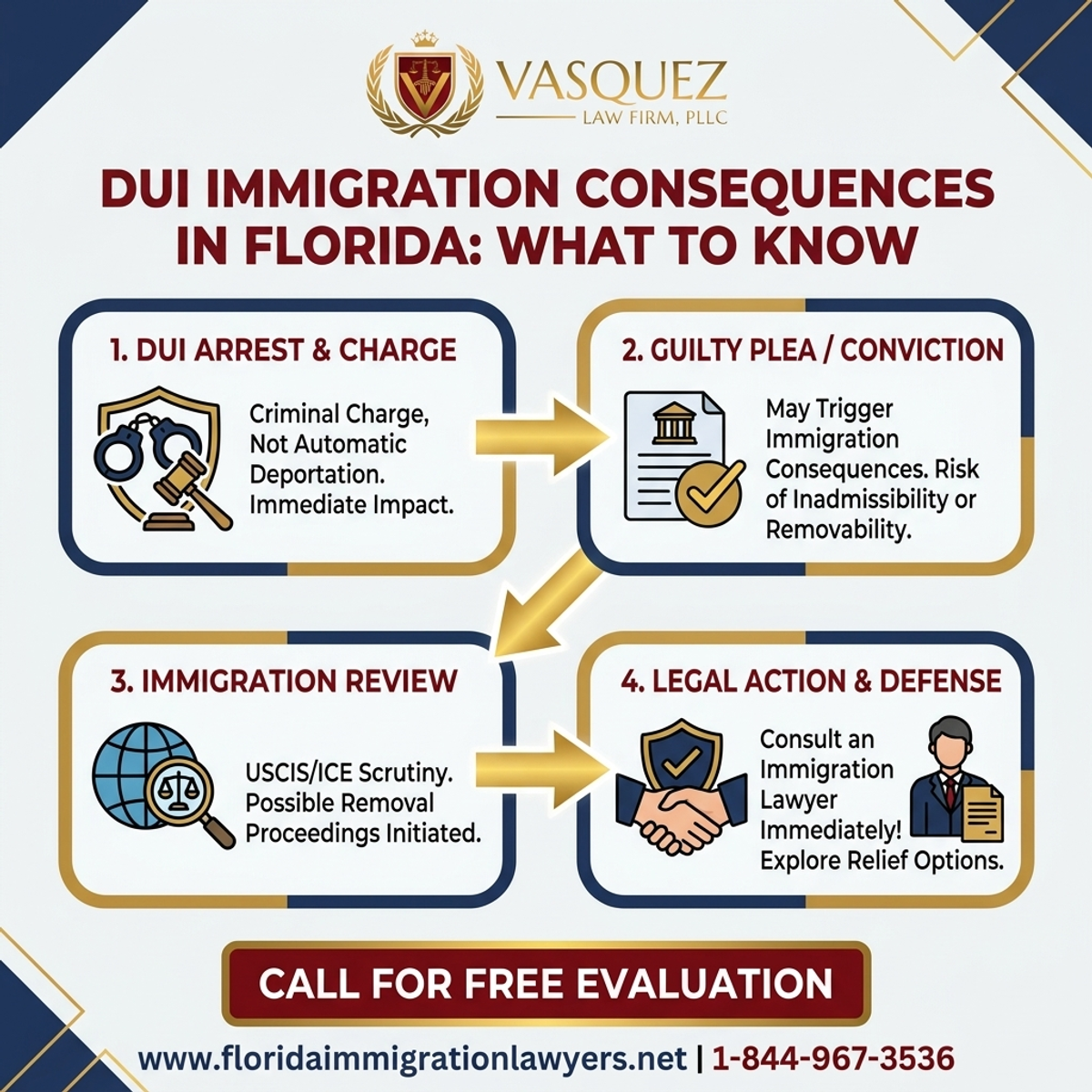
Step-by-Step Process — DUI Immigration Consequences in Florida: What to Know
Mitigating the Impact: Legal Strategies and Defenses
Successfully navigating a DUI charge as a non-citizen requires a dual-pronged legal strategy, addressing both the criminal and immigration aspects of your case.
Criminal Defense Strategies
An experienced criminal defense attorney can explore various strategies to mitigate or avoid a DUI conviction:
- Challenging the Stop: Was there reasonable suspicion for the traffic stop?
- Questioning Field Sobriety Tests (FSTs): Were the FSTs administered correctly? Are they reliable given the circumstances?
- Attacking Breathalyzer/Blood Test Results: Were the machines calibrated properly? Was the blood sample handled correctly? Were your rights to independent testing violated?
- Plea Bargains: In some cases, a plea bargain to a lesser charge (e.g., reckless driving) that does not carry immigration consequences might be possible. This is a delicate balance and must be negotiated with an immigration attorney's input.
- Diversion Programs: While some diversion programs require an admission of guilt that can count as a conviction for immigration purposes, others might be structured to avoid this, depending on the specific terms and state law. Careful analysis is required.
- Expungement or Sealing: While expunging or sealing a criminal record can be beneficial for employment or housing, it often does not eliminate the conviction for immigration purposes, as immigration law typically looks at the original finding of guilt.
Immigration Defense Strategies
If a conviction cannot be avoided, an immigration attorney can explore potential relief:
- Waivers of Inadmissibility/Deportability: Certain waivers may be available depending on the specific ground of inadmissibility or deportability, the nature of the crime, and the individual's family ties in the U.S. (e.g., I-601, I-212 waivers).
- Cancellation of Removal: For lawful permanent residents or certain non-permanent residents, cancellation of removal might be an option if they meet stringent eligibility requirements, including continuous physical presence, good moral character, and demonstrating exceptional and extremely unusual hardship to qualifying relatives.
- Post-Conviction Relief: In some rare cases, if a criminal conviction was obtained due to ineffective assistance of counsel or other constitutional violations, it might be possible to vacate the conviction, thereby eliminating its immigration consequences.
Navigating the Complexities: Why You Need Dual Legal Representation
The intricate overlap between criminal law and immigration law means that a DUI case for a non-citizen is rarely just a criminal matter. A decision made in criminal court, even a seemingly minor one like accepting a plea deal, can have irreversible and devastating consequences for your immigration status. This is why securing dual legal representation – a proficient criminal defense attorney and an experienced immigration attorney – is not just advisable, but often essential.
A criminal defense attorney will focus on the state charges, aiming to minimize penalties, reduce charges, or secure an acquittal. However, they may not be fully aware of how different plea options or sentencing structures will impact your immigration standing. This is where the immigration attorney becomes indispensable. Your immigration lawyer will analyze the specific charges, potential convictions, and sentencing outcomes through the lens of immigration law, advising on which criminal dispositions are 'immigration-safe' and which are not. They can work in tandem with your criminal defense lawyer, providing crucial insights to ensure that any criminal resolution does not inadvertently trigger grounds for inadmissibility or deportation. This collaborative approach ensures that your rights are protected on both fronts, maximizing your chances of a favorable outcome and safeguarding your future in the United States. Without this coordinated effort, you risk solving one problem only to create a much larger one. Our team of attorneys understands this critical need for integrated legal strategy.
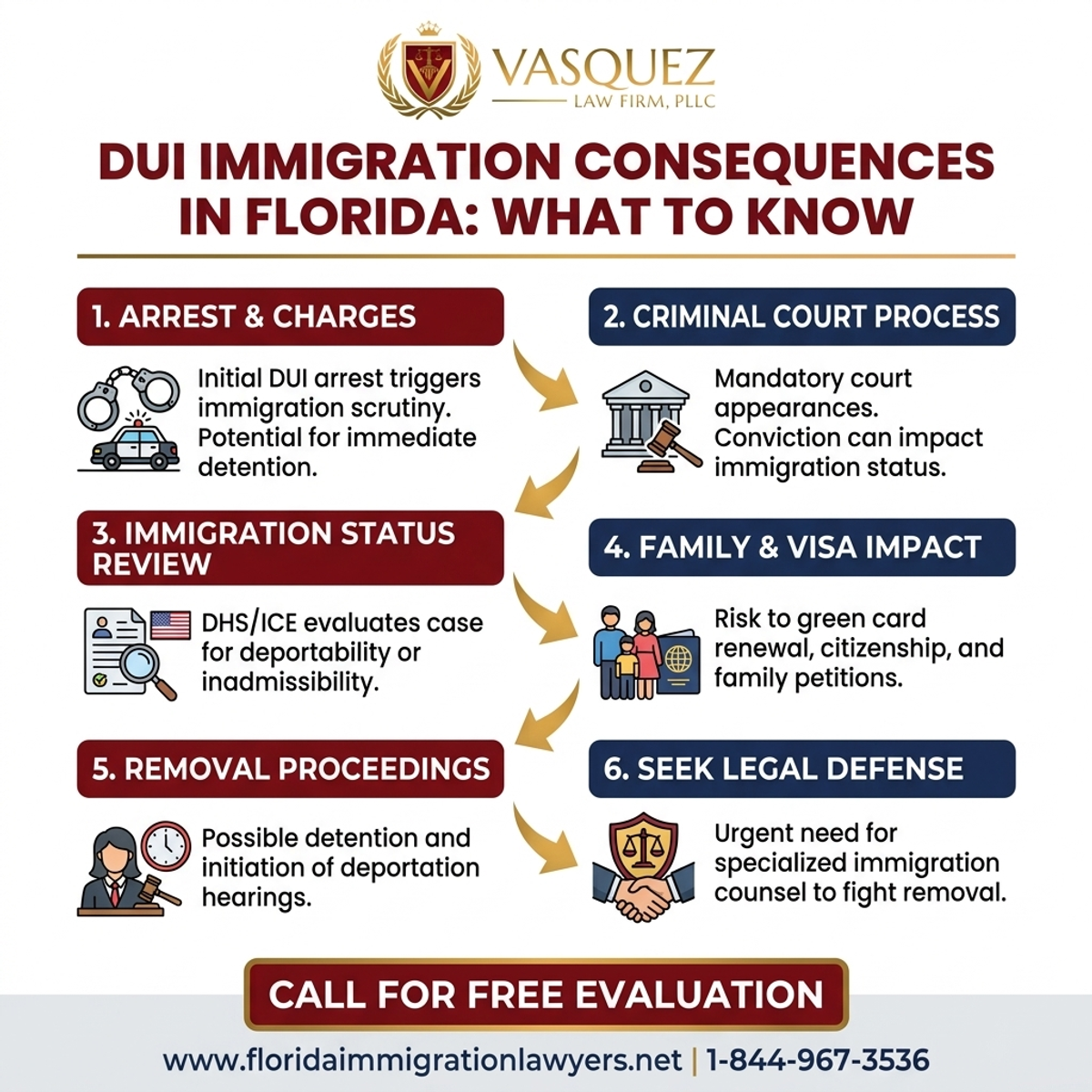
Key Statistics — DUI Immigration Consequences in Florida: What to Know
Specific Immigration Categories and DUI Impact
Lawful Permanent Residents (Green Card Holders)
Even green card holders are not immune. A DUI conviction, especially an aggravated felony or a CIMT, can lead to removal proceedings. While LPRs have more avenues for relief than other non-citizens, such as cancellation of removal, these are often difficult to obtain and require demonstrating significant ties to the U.S. and exceptional hardship. Your green card does not offer absolute protection against deportation.
Non-Immigrant Visa Holders (Students, Workers, Tourists)
For those on non-immigrant visas (F-1 student, H-1B worker, B-2 tourist, etc.), a DUI conviction can lead to visa revocation, denial of future visa applications, or denial of adjustment of status. If you are outside the U.S. and have a DUI conviction, you may be denied re-entry. If you are inside the U.S. and your visa is revoked, you could fall out of status and become subject to removal.
Asylum Seekers and Refugees
For individuals seeking asylum or those with refugee status, a DUI conviction can have particularly harsh consequences. A 'particularly serious crime' conviction can bar you from asylum or withholding of removal. Even a misdemeanor DUI could be considered by an immigration judge as a negative factor when assessing your eligibility for protection, potentially jeopardizing your entire case.
DACA Recipients
DACA (Deferred Action for Childhood Arrivals) recipients are especially vulnerable. A felony conviction, a 'significant misdemeanor,' or three or more other misdemeanors can terminate DACA status. While a single, simple DUI might not always be classified as a significant misdemeanor, an aggravated DUI or multiple DUIs almost certainly will. Losing DACA status means losing work authorization and protection from deportation.
The Path Forward: What to Do After a DUI Arrest
If you are a non-citizen and have been arrested for DUI in Florida, immediate action is crucial:
- Remain Silent: Exercise your right to remain silent and do not answer questions without an attorney present.
- Do Not Resist Arrest: Cooperate with law enforcement, but do not volunteer information.
- Contact Legal Counsel Immediately: Seek out both a criminal defense attorney and an immigration attorney who understand the complexities of DUI and immigration law. Time is of the essence in building a strong defense and exploring all available options.
- Understand Your Rights: Be aware of your rights regarding chemical tests. Refusal to submit to a breath, blood, or urine test in Florida carries administrative penalties, but the implications for your criminal and immigration case should be discussed with an attorney.
Protect Your Future: Seek Legal Guidance
The intersection of DUI and immigration law in Florida is a perilous landscape for non-citizens. A single misstep can have life-altering consequences, leading to the loss of your immigration status, family separation, and deportation. Do not face these challenges alone. Our dedicated team of attorneys focuses on navigating these complex legal waters, offering comprehensive guidance and aggressive representation in both criminal defense and immigration law.
If you or a loved one is a non-citizen facing DUI charges in Florida, the time to act is now. Contact us today for a confidential consultation to understand your rights, explore your options, and build a robust defense strategy to protect your future in the United States. Visit our contact page to schedule your consultation.
Sources and References
- U.S. Citizenship and Immigration Services (USCIS)
- Executive Office for Immigration Review (EOIR)
- U.S. Department of State - Bureau of Consular Affairs
- Immigration and Nationality Act (INA), 8 U.S.C. Chapter 12
Do Not Navigate This Process Alone
Our experienced immigration attorneys are ready to fight for you. Get a free, confidential case review today.
Se Habla Español
Or leave your details and we’ll call you:
Free Evaluation in 24 Hours
Or talk to us right now

AI voice assistant — available 24/7
FreeFrequently Asked Questions

William J. Vásquez
Founding Attorney · Vasquez Law Firm
U.S. Air Force veteran and immigration attorney with years of hands-on U.S. immigration experience. J.D., NCCU School of Law. AILA member. Admitted to the 4th, 5th, and 11th Circuit Courts.
Available 24/7 - Free Evaluations
Reviewed for legal accuracy by William J. Vásquez
Licensed in North Carolina; U.S. immigration is federal practice.
Related Legal Services
Our Florida immigration attorneys can help you with free immigration consultation, business immigration and deportation defense. Call today at 1-844-YO-PELEO for a free case review.
Related Links
Related Topics
Free Legal Case Review
Discuss your case with our experienced attorneys. We're available 24/7.
Se Habla Español - Estamos aquí para ayudarle.
Related Articles
EB-5 Investor Green Card in Florida: A 2026 Guide
Explore how to obtain an EB-5 investor green card in Florida. Learn about the investment requirements, processes, and benefits of participating in this program. Discover how Florida's economic landscape can be an ideal setting for your investment. Contact Florida Immigration Lawyers for a free case review.
Certificate of Eligibility for Expungement in Florida 2026
For non-U.S. citizens in Florida, understanding how a state expungement impacts immigration status is critical. A certificate of eligibility for expungement in Florida allows a criminal record to be sealed or expunged under state law. However, federal immigration agencies often disregard such state-level relief, still considering the original criminal offense as a conviction for immigration purposes. This can have severe implications for visa applications, green card eligibility, naturalization, and even lead to deportation. This guide clarifies the Florida expungement process, its limited effect on federal immigration law, and key steps to protect your status in 2026. Learn about common mistakes, required documents, timelines, and when to seek expert legal counsel from Florida Immigration Lawyers to navigate these complex issues effectively.
Immigration Lawyer Orlando Free Consultation in Florida
For individuals and families in Orlando, Florida, navigating the complexities of U.S. immigration law requires expert guidance. An immigration lawyer in Orlando offers crucial support for everything from visa applications and green card processes to naturalization and deportation defense. This comprehensive guide details what a free consultation covers, providing a step-by-step overview of immigration pathways, essential document checklists, and expected timelines in 2026. We also highlight common mistakes to avoid, discuss the critical role of legal counsel in deportation and asylum cases, and explain why choosing a local Orlando immigration attorney is beneficial. Florida Immigration Lawyers is dedicated to serving the diverse community of Orlando with compassionate, effective legal solutions, ensuring you receive personalized advice and robust representation for a successful immigration journey.
Immigration Lawyer in Central Florida 2026 Guide
Explore the importance of hiring an immigration lawyer in Central Florida. Learn about services, timelines, and tips to avoid common mistakes. Contact Florida Immigration Lawyers for expert advice.