H-1B Visa Fee Increase in 2026: What Florida Employers...
Florida businesses face new challenges with the H-1B visa fee increase in 2026. This comprehensive guide details the updated costs, the step-by-step application process, and essential documentation for employers and skilled professionals in Fort Lauderdale and across Florida. We clarify common misconceptions about H-1B fees, including past proposals, and outline crucial mistakes to avoid. Learn about processing timelines, premium processing options, and when to seek legal counsel for complex H-1B petitions. Florida Immigration Lawyers offers expert assistance to navigate these federal immigration policies. Contact us for a free consultation to ensure your H-1B petition is compliant and successful.

The H-1B visa program is crucial for Florida businesses seeking highly skilled foreign workers. In 2026, employers will face updated filing fees, impacting petition costs and processing. Understanding these changes, including potential exemptions and the application process, is vital for compliance and successful petitions. Consulting an experienced Florida immigration lawyer can help navigate these complexities effectively.
- New USCIS H-1B filing fees are in effect for 2026, impacting employer costs.
- The H-1B visa allows U.S. employers to temporarily employ foreign workers in specialty occupations.
- Careful preparation and understanding of the application process are essential for success.
- Legal guidance from a Florida immigration lawyer can simplify compliance and strategy.
Florida's economy thrives on innovation and a diverse workforce. Many businesses across the state, from tech startups in Miami to healthcare providers in Fort Lauderdale, rely on the H-1B visa program to attract top global talent. However, as of 2026, significant H-1B visa fee increases are impacting employers, making the process more complex and costly.
Are you a Florida employer or a skilled professional concerned about the rising H-1B visa fees? Understanding these changes is critical for strategic planning and successful petitioning. This comprehensive guide will walk you through the updated H-1B visa landscape, including new costs, the application process, and how to avoid common pitfalls. We are here to help you navigate these federal immigration policies.
Do not let fee increases deter your talent acquisition or career goals. Call Florida Immigration Lawyers at 1-844-967-3536 for a free consultation. Our experienced team is ready to provide the guidance you need.
Understanding the H-1B Visa Program and Recent Fee Changes
The H-1B visa is a nonimmigrant visa that allows U.S. employers to temporarily employ foreign workers in specialty occupations. These occupations generally require a bachelor's degree or higher in a specific specialty. Fields like IT, engineering, medicine, and education often utilize the H-1B program.
For businesses in Fort Lauderdale, Orlando, Tampa, and across Florida, the H-1B program is a lifeline for filling critical skills gaps. It enables companies to remain competitive by accessing a global pool of highly qualified professionals. The program is vital for growth and innovation within our state's key industries.
Eligibility Requirements for H-1B Status
To qualify for an H-1B visa, the position must meet the definition of a specialty occupation. This means it requires theoretical and practical application of a body of highly specialized knowledge. The minimum requirement is a bachelor's degree or its equivalent.
The foreign worker must hold the required bachelor's or higher degree, or its equivalent. Alternatively, they may possess a license in a specialty occupation field or have work experience equivalent to a bachelor's degree. These criteria ensure that only highly skilled individuals are granted H-1B status.
The Purpose of H-1B Visas and Fee Adjustments
The primary purpose of the H-1B visa is to address shortages in specific skilled professions within the U.S. workforce. It allows American businesses to thrive by bringing in expertise that may be scarce domestically. The program is capped annually, making competition for these visas very high.
USCIS regularly reviews its fee schedule to ensure it recovers the costs of processing immigration benefits. The H-1B visa fee increase for 2026 reflects these operational needs and inflation. It is a federal mandate designed to sustain the immigration system, as outlined in 8 U.S.C. § 1356(m).
It is important to note that while there was a proposed $100,000 H-1B fee discussed in previous administrations, this specific fee was a proposal that did not become law. The actual H-1B visa fee increase for 2026 involves adjustments to various filing components, not a single, exorbitant fee. Current H-1B holders are not required to pay this proposed $100,000 fee for their existing status or extensions; they are subject to standard renewal fees.
Navigating the H-1B Visa Application Process in 2026
The H-1B visa application process is multi-faceted and requires meticulous attention to detail. Employers must follow specific steps, starting well in advance of the annual H-1B cap season. Understanding each phase is crucial for a successful outcome, especially with the updated H-1B visa fees.
The annual H-1B cap lottery typically occurs in March for an October 1 start date. This timeline means employers in Florida need to begin preparations months beforehand. Missing deadlines or submitting incomplete information can lead to rejection and wasted resources.
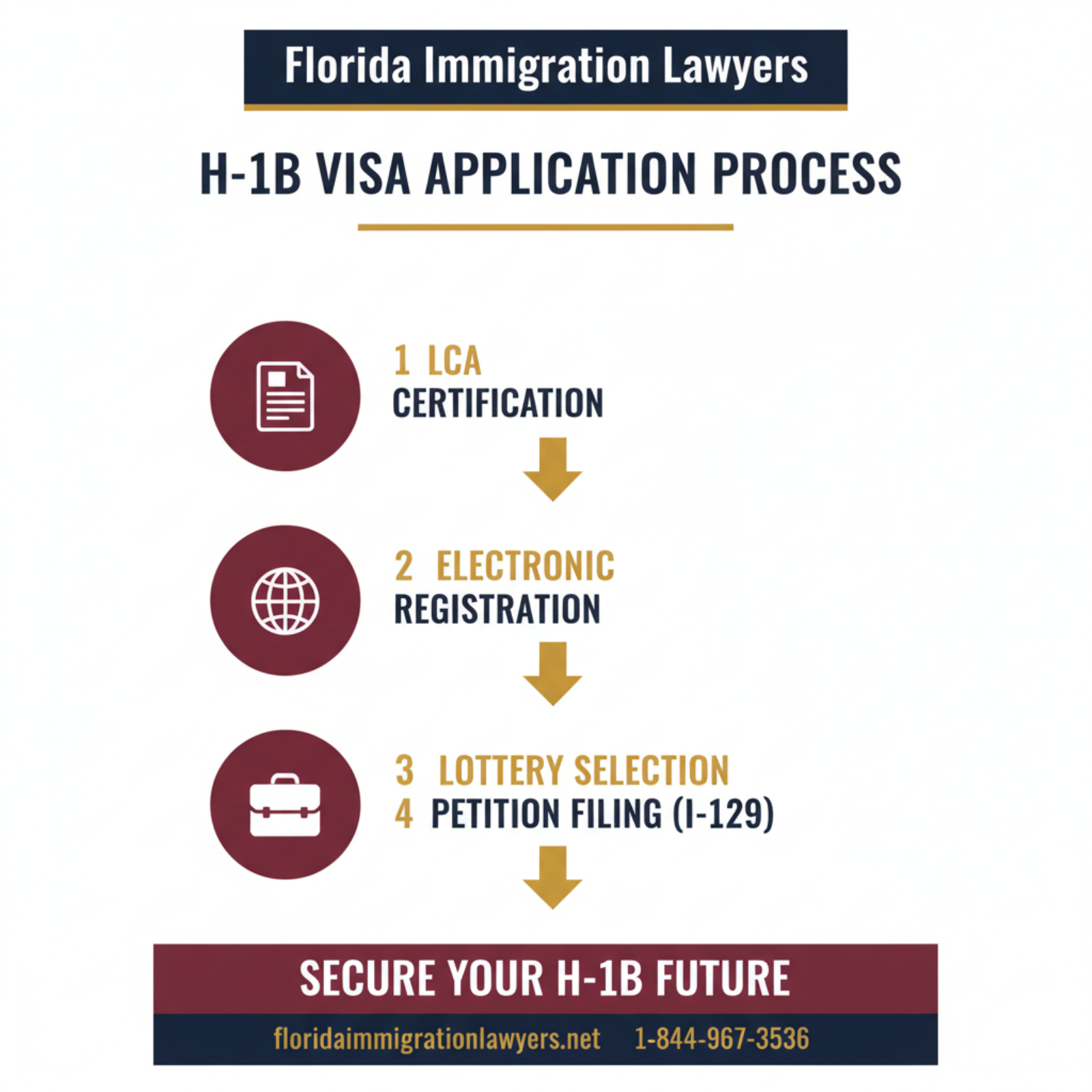
Initial Steps: LCA and Registration
- Labor Condition Application (LCA) Filing: The employer must first file a Form ETA-9035, Labor Condition Application, with the Department of Labor (DOL). This attests that the employer will pay the H-1B worker at least the prevailing wage or the actual wage paid to other employees with similar experience and qualifications, whichever is higher. The LCA also confirms that working conditions will not adversely affect other employees. This step is mandatory before filing the H-1B petition.
- H-1B Registration: For cap-subject H-1B petitions, employers must register electronically with USCIS during a designated registration period. This involves providing basic information about the employer and the prospective H-1B worker. A non-refundable H-1B registration fee is typically required at this stage. USCIS then conducts a lottery if more registrations are received than available visas.
- Notification of Selection: If your registration is selected in the lottery, USCIS will notify the employer. Only then can the employer proceed to file the full H-1B petition. This selection notice provides a specific filing window.
Filing the H-1B Petition (Form I-129)
- Petition Filing: Upon selection, the employer files Form I-129, Petition for a Nonimmigrant Worker, with USCIS. This petition includes extensive documentation about the employer, the job offer, and the foreign worker's qualifications. All applicable H-1B visa fees must be submitted at this stage.
- Request for Evidence (RFE) (If Applicable): USCIS may issue an RFE if they require additional information or documentation to make a decision. Responding thoroughly and promptly to an RFE is critical.
- Petition Approval: If USCIS approves the I-129 petition, the H-1B status is granted. For beneficiaries outside the U.S., they will proceed to consular processing at a U.S. embassy or consulate abroad. For those already in the U.S. on another nonimmigrant visa (like an F-1 student), their status may change to H-1B.
- Visa Interview (for those abroad): Beneficiaries abroad must attend a visa interview at a U.S. embassy or consulate in their home country. This is the final step before receiving the H-1B visa stamp in their passport.
Essential Document Checklist for H-1B Visa Petitions
A successful H-1B petition hinges on submitting a complete and accurate set of documents. Even with the H-1B visa fee increase, errors in documentation can lead to delays or denials. Employers and beneficiaries in Florida should prepare these items meticulously.
This checklist provides a general overview. Specific cases may require additional documentation. Always consult with an immigration attorney to ensure all necessary paperwork is included and properly organized.
- Certified Labor Condition Application (LCA) Form ETA-9035.
- Form I-129, Petition for a Nonimmigrant Worker, and all required supplements (e.g., H-1B Data Collection and Filing Fee Exemption Supplement).
- Company documents: Federal Employer Identification Number (EIN), business license, articles of incorporation, financial statements, and lease agreements.
- Detailed letter of support from the employer, explaining the job duties, the necessity of the position, and why the foreign worker is qualified.
- Beneficiary's educational documents: Diplomas, transcripts, degree evaluations (if earned outside the U.S.).
- Beneficiary's professional licenses, certifications, and resume/CV.
- Beneficiary's passport copy, birth certificate, and previous visa copies (if applicable).
- Evidence of beneficiary's current immigration status (e.g., I-94 record, I-20 for F-1 students, DS-2019 for J-1 exchange visitors).
- Photographs of the beneficiary (passport-style).
- Wage records, tax documents, and offer letters for the beneficiary and other employees in similar positions.
- Copies of any previous H-1B approvals or denials.
- Documentation of any special requirements for the occupation.
H-1B Visa Processing Timelines and Expectations for Florida Applicants
Understanding the H-1B visa processing timeline is crucial for both employers and prospective employees, especially with the increased demand and updated H-1B visa fees. The duration can vary significantly based on several factors, including the annual cap, USCIS workload, and whether premium processing is utilized.
For individuals and businesses in Florida, planning ahead is key. The H-1B cap-subject petitions typically have a specific annual cycle. USCIS processes these petitions through its service centers, primarily the California Service Center and the Vermont Service Center.
Standard Processing vs. Premium Processing
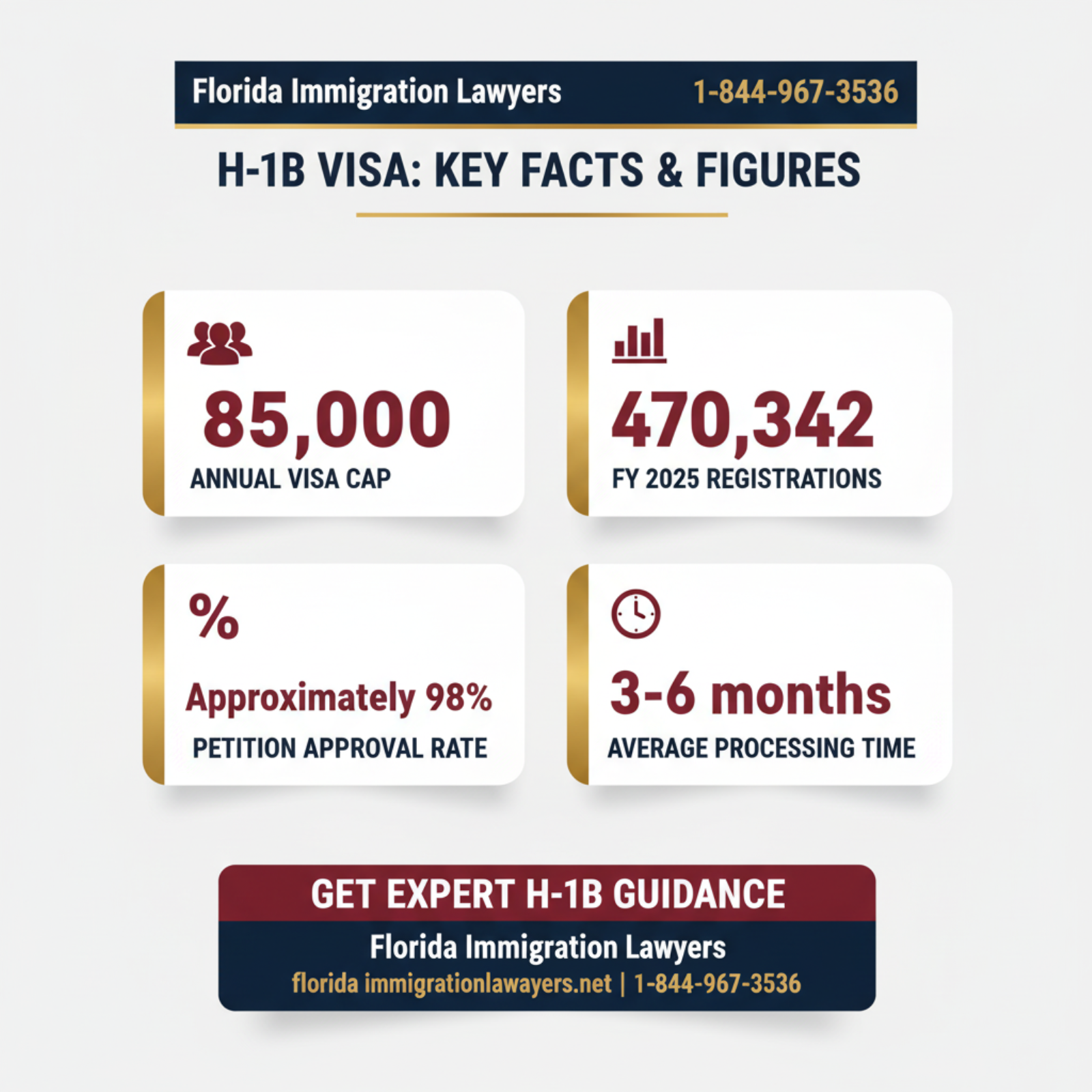
Standard H-1B processing can take several months, often ranging from 3 to 6 months or even longer. This timeline does not include the initial LCA certification or the H-1B lottery process. Employers must factor in these potential delays when considering start dates for new hires.
Premium processing is an optional service offered by USCIS for an additional fee. This service guarantees a decision on the H-1B petition within 15 calendar days. The H-1B visa fee increase for premium processing also took effect in 2026, reflecting the expedited service. This option is invaluable for employers needing a quicker resolution.
Factors Influencing H-1B Timelines
Several factors can influence the overall timeline. These include the volume of petitions USCIS receives, government holidays, and the issuance of Requests for Evidence (RFEs). A well-prepared petition with all required documents can help minimize delays.
For Florida-based applicants, the processing is handled centrally by USCIS service centers, not local field offices. However, local immigration attorneys can help ensure your application is perfectly prepared, reducing the likelihood of processing setbacks. Consular processing abroad also adds additional time for interview scheduling and visa issuance.
H-1B Visa Cost Factors: A Detailed Fee Breakdown
The H-1B visa fee increase for 2026 introduces several updated costs that employers must consider. These fees are federal mandates and are subject to change by USCIS. It is important to remember that these are government filing fees and do not include legal fees for attorney services.
Employers are generally responsible for most of the H-1B filing fees. However, specific agreements may exist where the beneficiary contributes to certain costs. Understanding each component of the H-1B visa cost to employer is crucial for budgeting and compliance.
USCIS Filing Fees for H-1B Petitions
- Base Filing Fee (Form I-129): This is the primary fee for filing the H-1B petition. It increased in 2026 to cover USCIS operational costs.
- American Competitiveness and Workforce Improvement Act (ACWIA) Fee: This fee, often referred to as the 'training fee,' supports U.S. worker training and education programs. The amount varies based on the size of the employer (e.g., 25 or fewer full-time equivalent employees vs. 26 or more).
- Fraud Prevention and Detection Fee: This fee is mandated by Congress to combat fraud in visa programs. It applies to initial H-1B petitions and petitions for a new employer.
- Public Law 114-113 Fee (for certain employers): This additional fee applies to employers who have 50 or more employees and more than 50 percent of their workforce are on H-1B or L-1 nonimmigrant status. This fee also saw an increase.
- H-1B Registration Fee: A non-refundable fee is required for each H-1B lottery registration submitted by an employer. This fee also increased with the 2026 adjustments.
Premium Processing Options and Legal Fees
As mentioned, premium processing is an optional service that expedites the USCIS decision-making process for an additional fee. This fee also increased in 2026. While significant, it can be a worthwhile investment for employers needing faster results for critical positions.
Beyond government fees, employers should also account for legal fees charged by immigration attorneys. These fees cover the expert preparation, filing, and representation throughout the H-1B petition process. While an added cost, legal representation can significantly increase the chances of a successful outcome and help navigate the complexities of the H1B visa fees 2026.
Do not navigate this complex process alone. The financial implications of the H-1B visa fee increase, combined with the intricate legal requirements, make expert guidance essential. Contact Florida Immigration Lawyers today to discuss your specific needs and ensure a smooth application process.
Common Mistakes to Avoid in H-1B Petitions
Navigating the H-1B visa process, especially with the 2026 fee increases, can be challenging. Many employers and applicants make common mistakes that can lead to delays, denials, or even legal complications. Avoiding these pitfalls is crucial for a successful H-1B petition.
- Failing to File a Certified LCA: Submitting Form I-129 without a certified Labor Condition Application (LCA) from the DOL will result in an immediate rejection. Ensure your LCA is approved before proceeding.
- Incorrect Prevailing Wage Determination: Employers must pay the H-1B worker at least the prevailing wage for the occupation in the specific geographic area. Incorrectly determining or paying below the prevailing wage can lead to DOL investigations and penalties.
- Missing H-1B Cap Registration Deadlines: For cap-subject petitions, failing to register during the designated USCIS registration period means you miss the opportunity for that fiscal year. Strict adherence to deadlines is non-negotiable.
- Incomplete or Inaccurate Documentation: USCIS requires extensive documentation. Missing a single required document or providing inconsistent information can trigger a Request for Evidence (RFE) or a denial. Double-check everything.
- Lack of Specialty Occupation Proof: The petition must clearly demonstrate that the job qualifies as a specialty occupation and that the beneficiary possesses the required qualifications. Vague job descriptions or insufficient educational proof can lead to denials.
- Not Addressing USCIS RFEs Properly: If you receive an RFE, it means USCIS needs more information. A weak or incomplete response will likely lead to a denial. Seek legal counsel to craft a robust response.
- Employer Compliance Issues: Failing to maintain public access files, not notifying USCIS of material changes (e.g., job location, duties), or violating wage requirements can result in severe penalties, including debarment from the H-1B program.
- Misunderstanding the $100k H-1B Fee: Confusion about the old proposed $100,000 H-1B fee (which did not pass) versus the actual 2026 fee increases can lead to miscalculations or unnecessary panic. Focus on the current, official USCIS fee schedule.
When to Call a Lawyer for Your H-1B Visa Petition
The H-1B visa process is intricate, and the recent H-1B visa fee increase adds another layer of complexity. While some employers attempt to navigate it independently, legal expertise can be invaluable. Knowing when to call a lawyer can save time, money, and prevent costly mistakes.
Florida Immigration Lawyers has extensive experience in H-1B petitions. We understand the nuances of federal immigration law and the specific challenges faced by businesses and professionals in Florida. Our team can provide tailored advice and representation.
Consider seeking legal assistance if:
- You are a first-time H-1B petitioner: The initial process, including LCA, registration, and I-129 filing, can be overwhelming without prior experience.
- Your case involves complex issues: This could include beneficiaries with unusual educational backgrounds, employers with prior immigration compliance issues, or jobs with ambiguous specialty occupation definitions.
- You receive a Request for Evidence (RFE): RFEs require a detailed and legally sound response. An attorney can help analyze the RFE and prepare a compelling submission.
- You need to understand the H1B visa cost to employer thoroughly: An attorney can provide a clear breakdown of all applicable fees and help with budgeting.
- You are concerned about the H1B $100k fee exemption or other specific exemptions: An attorney can clarify eligibility for various fee exemptions or waivers.
- You need to ensure compliance with all DOL and USCIS regulations: An immigration lawyer ensures all aspects of your petition meet federal standards, reducing the risk of audits or penalties.
- You are an F-1 student considering an H-1B change of status: An attorney can guide you through the transition from student visa to work visa, including OPT considerations and cap-gap extensions. Yes, you can get a Green Card with an H-1B visa, as it is a dual-intent visa. An attorney can help plan this transition.
Our team at Florida Immigration Lawyers serves clients across Florida, including Fort Lauderdale, Miami, Orlando, and Tampa. We are dedicated to providing personalized and effective legal solutions for all your H-1B needs.
About Florida Immigration Lawyers
Florida Immigration Lawyers is a leading immigration law firm dedicated to serving individuals and businesses throughout Florida. Our team of experienced attorneys provides comprehensive legal services across a wide range of immigration matters. We understand the complexities of U.S. immigration law and are committed to achieving the best possible outcomes for our clients.
Our firm specializes in various immigration practice areas, including general immigration, asylum, deportation defense, citizenship, family immigration, and business immigration. We pride ourselves on offering compassionate, client-focused representation, ensuring that you feel supported and informed every step of the way.
Why choose Florida Immigration Lawyers? We offer extensive experience, a deep understanding of federal immigration policies, and a commitment to transparent communication. Our attorneys are available 24/7 to address your urgent concerns, and we provide free consultations to help you understand your options without financial commitment. We serve clients in Fort Lauderdale, Miami, Orlando, Tampa, and all other Florida cities.
Do not face the challenges of immigration law alone. Let our dedicated team advocate for your rights and guide you through the process. Visit our attorneys page to learn more about our team, or contact us directly.
Sources and References
- U.S. Citizenship and Immigration Services (USCIS) - H-1B Specialty Occupations
- U.S. Department of Labor (DOL) - H-1B Program
- 8 U.S.C. Chapter 12 - Immigration and Nationality Act (INA)
- 8 U.S.C. § 1356(m) - Immigration Examination Fee Account
- 8 CFR Part 214 - Nonimmigrant Classes
- U.S. Department of State - H-1B Specialty Occupations
This article provides general legal information and is not intended as legal advice. Every case is unique, and outcomes depend on specific facts and circumstances. Contact an attorney for advice about your particular situation.
The updated H-1B visa fees for 2026 present new challenges and considerations for employers and foreign workers in Florida. Understanding these changes and preparing meticulously is paramount for success. Do not leave your H-1B petition to chance.
Contact Florida Immigration Lawyers today for a free consultation. Our experienced attorneys are here to provide expert guidance and support through every step of the H-1B process. Call us at 1-844-967-3536. Se Habla Español - Estamos aquí para ayudarle.
Do Not Navigate This Process Alone
Our experienced immigration attorneys are ready to fight for you. Get a free, confidential consultation today.
Se Habla Español
Frequently Asked Questions
Florida Immigration Lawyers
Immigration Attorney | Founder, Vasquez Law Firm
U.S. Air Force veteran and immigration attorney with thousands of cases resolved. J.D., NCCU School of Law. AILA member. Admitted to the 4th, 5th, and 11th Circuit Courts.
Available 24/7 - Free Evaluations
Related Legal Services
Our Florida immigration attorneys can help you with family immigration services, immigration practice areas and free immigration consultation. Call today at 1-844-967-3536 for a free consultation.
Related Links
Related Topics
Free Legal Consultation
Discuss your case with our experienced attorneys. We're available 24/7.
Se Habla Español - Estamos aquí para ayudarle.
Related Articles
Re-Entry Permit: Avoid Green Card Abandonment | VLF Florida
Learn how a re-entry permit can prevent green card abandonment for LPRs in Florida. Call us for a free consultation!
F-1 Visa Guide for Florida Universities | VLF Florida
Learn how to successfully apply for an F-1 student visa to attend universities in Florida. Discover essential steps, common pitfalls, and get expert advice tailored to Pembroke Pines and surrounding areas.
L-1 Visa Transfer: Florida Companies Guide | VLF Florida
Discover how the L-1 visa facilitates intracompany transfers to Florida companies. Our guide covers eligibility, process, and common pitfalls. Contact Florida Immigration Lawyers at 1-844-967-3536 for a free consultation and expert assistance.
Immigration Lawyer Cost in Florida 2026 | VLF Florida
Explore the cost of hiring an immigration lawyer in Florida in 2026. Learn about the factors influencing fees, common mistakes to avoid, and when to seek legal assistance. Contact Florida Immigration Lawyers for a free consultation.
