Green Card Holders Issued New Warning: Florida Process
Discover the latest updates for green card holders in Florida. Learn about new warnings affecting renewals, steps for filing Form I-90, and common pitfalls to avoid. Ensure a successful renewal by understanding the process and consulting experienced immigration attorneys.
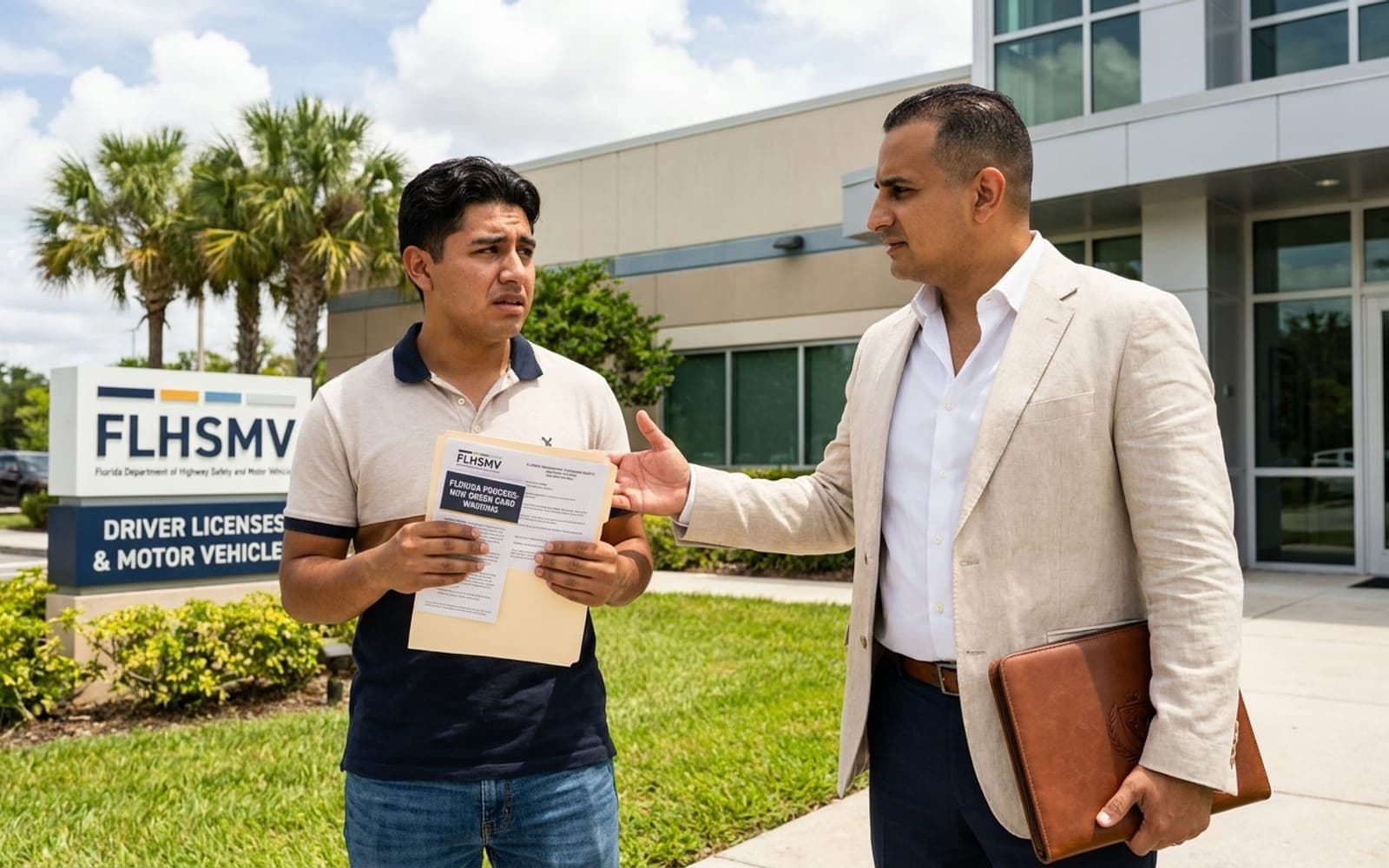
- File Form I-90 for renewal
- Be aware of new warnings and requirements
- Ensure all documents are complete and accurate
- Consult a lawyer if uncertain
Introduction
Green card holders in Florida may have recently heard about new warnings affecting their renewal process. These changes by the Department of Homeland Security (DHS) are crucial to understand, especially if you are planning to renew your green card soon. This article will guide you through the green card renewal process in Florida, focusing on the specifics of Orlando and surrounding areas. We'll cover eligibility, the steps involved, and common pitfalls to avoid. Call Florida Immigration Lawyers at 1-844-YO-PELEO for a free case review.
Maintaining your permanent resident status is not just a privilege; it's a responsibility that requires diligence and adherence to U.S. immigration laws. A green card, or Form I-551, is your proof of lawful permanent residency, granting you the right to live and work permanently in the United States. While most green cards are issued for a 10-year period, it's vital to remember that they do expire, and the renewal process is a mandatory step to ensure your continued legal status. Failing to renew your green card can lead to significant complications, including difficulties with employment, travel, and even potential deportation proceedings.
The landscape of immigration law is constantly evolving, with new policies and interpretations frequently introduced. For green card holders in Florida, staying informed about these updates is paramount. The recent warnings from the DHS underscore the need for a proactive approach to your renewal, particularly concerning areas like public benefits and maintaining a clean record. Understanding these nuances can be challenging, but with the right information and legal support, you can navigate the process smoothly and secure your future in the U.S. Florida Immigration Lawyers are here to provide that essential guidance, offering clarity and expert assistance every step of the way.
What Are the New Warnings for Green Card Holders?
As of 2026, green card holders must be aware of new requirements affecting the renewal process. The Department of Homeland Security has issued updates that may impact those using public benefits, potentially making it harder to renew their status.
These updates emphasize the importance of maintaining your status and complying with all immigration requirements. If you currently receive public benefits, consult with an immigration attorney to understand how these changes might affect your renewal.
The "public charge" rule is a long-standing principle in U.S. immigration law designed to identify individuals who may primarily depend on the government for subsistence. While the stricter 2019 "public charge" rule was rescinded in 2021, USCIS still considers certain factors when determining if an applicant is likely to become a public charge. These factors include age, health, family status, assets, resources, financial status, education, and skills. The warnings for 2026 likely refer to renewed scrutiny or specific interpretations of how these factors apply to green card renewals, especially for those who have accessed certain public benefits.
It's crucial to distinguish between public benefits that are generally considered in a public charge determination and those that are not. Benefits like Supplemental Security Income (SSI), Temporary Assistance for Needy Families (TANF), and certain state and local cash assistance for income maintenance are typically considered. However, non-cash benefits such as Medicaid (except for long-term institutional care), food stamps (SNAP), housing assistance, WIC, school lunch programs, and emergency medical treatment are generally not considered in public charge determinations. Understanding this distinction is vital for assessing your personal situation. If you have utilized any public benefits, it is highly recommended to seek guidance from an experienced immigration attorney at Florida Immigration Lawyers to evaluate your specific case and mitigate any potential risks during renewal.
The key takeaway from these warnings is the need for proactive review of your financial history and public benefit usage. Even if you believe your situation is straightforward, changes in policy interpretation or your personal circumstances could introduce complexities. For instance, a long absence from the U.S., minor criminal infractions, or even significant changes in employment status could raise questions during the renewal process. Consulting with a legal expert like those at Florida Immigration Lawyers can help you prepare a robust application, addressing any potential red flags before they become major obstacles. Don't wait until your green card is about to expire; understand the implications of these warnings now.
How to Renew Your Green Card in Florida in 2026?
To renew your green card in Florida, you need to file Form I-90 with the USCIS. This process involves several essential steps.
- Gather Required Documents: Ensure you have your expired or soon-to-expire green card, a government-issued ID, and any documents proving your current status.
- Complete Form I-90: Fill out the form accurately. Errors can delay processing.
- Pay the Filing Fee: Submit the appropriate fee as specified by the USCIS.
- Submit Your Application: Mail your completed form and documents to the USCIS lockbox specified for Florida residents.
- Attend Biometrics Appointment: You will receive a notice for biometrics. Attend this appointment as scheduled.
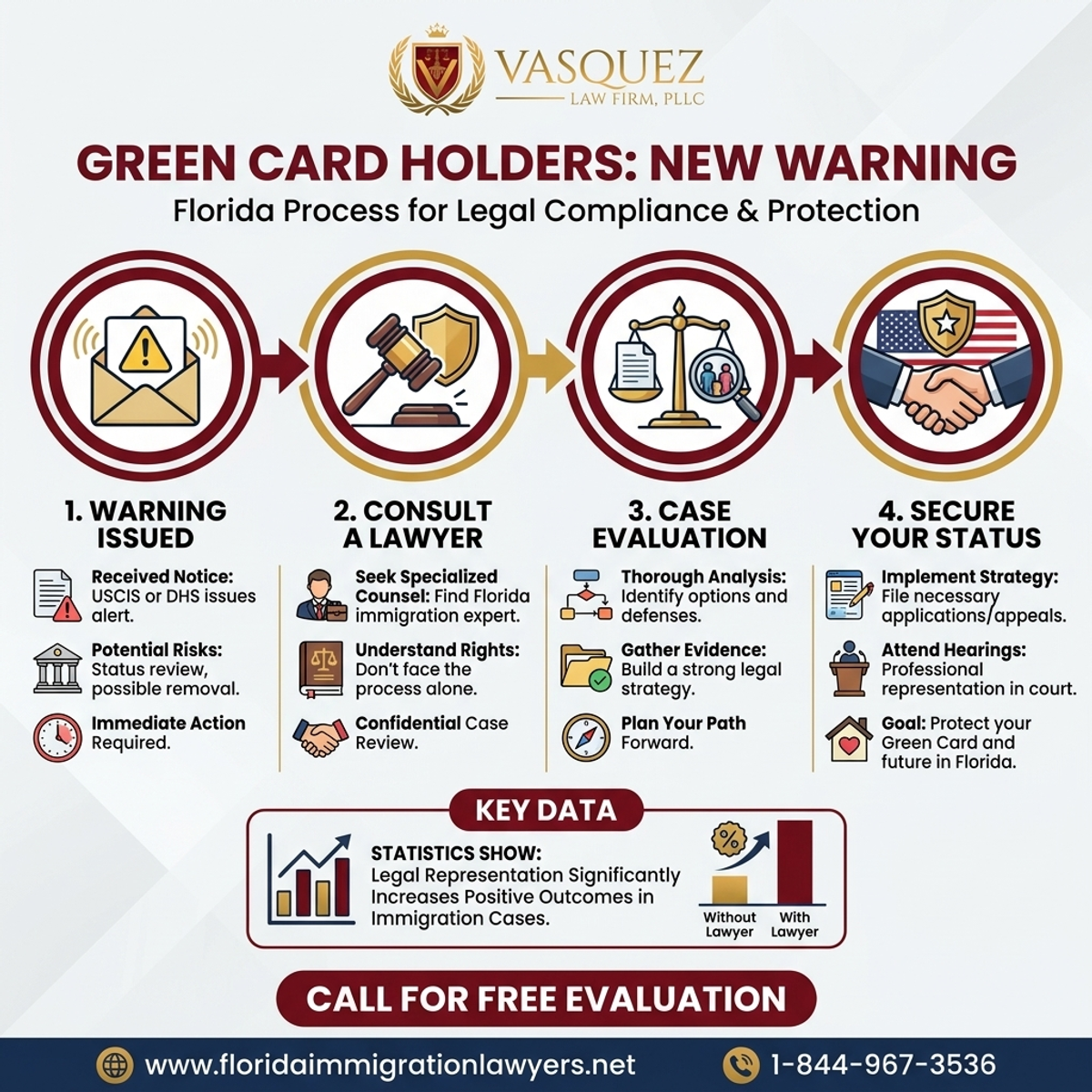
Step-by-Step Process — Green Card Holders Issued New Warning: Florida Process
Each of these steps is crucial to ensure a smooth renewal process.
Delving deeper into each step reveals the meticulous nature of immigration applications. When gathering required documents, don't just stop at your green card and ID. Consider including copies of your birth certificate, passport pages, and any previous immigration documents that establish your continuous residency and legal history in the U.S. If your name has changed since your last green card was issued, provide official documentation like a marriage certificate or court order. The more comprehensive your initial submission, the less likely USCIS will issue a Request for Evidence (RFE), which can significantly prolong processing times.
Completing Form I-90 accurately is perhaps the most critical part. Every question on the form serves a purpose, and even minor discrepancies or omissions can lead to delays or rejection. Read the instructions provided by USCIS thoroughly before you begin. If you're unsure about how to answer a specific question, it's always best to consult with an immigration attorney. Florida Immigration Lawyers are well-versed in these forms and can help ensure your application is flawless. Remember to keep a complete copy of your submitted application and all supporting documents for your records.
After submitting your application, you will receive a receipt notice (Form I-797C, Notice of Action) from USCIS, which temporarily extends the validity of your expiring green card. This notice, along with your expired green card, serves as proof of your continued lawful permanent resident status for employment, travel, and other purposes. However, it's crucial to keep this notice safe and carry it with your expired green card. The biometrics appointment, typically held at an Application Support Center (ASC) in Florida, is mandatory. During this appointment, your fingerprints, photograph, and signature will be collected. This data is used for background checks and to verify your identity. Missing this appointment without rescheduling can jeopardize your application, so mark your calendar and attend promptly. If you need to reschedule, contact USCIS immediately and consider seeking advice from Florida Immigration Lawyers on the proper procedure.
What Documents Are Needed for Green Card Renewal?
- Current green card
- Government-issued ID
- Proof of residency
- Marriage certificate (if applicable)
- Any legal name change documentation
Ensure all documents are current and correctly reflect your personal information.
Beyond the basic list, a robust green card renewal application often benefits from additional supporting documentation. For your current green card, ensure it's not severely damaged or tampered with. Your government-issued ID could be a driver's license or state ID, which helps confirm your identity and current address. Proof of residency is crucial for Florida residents; this can include utility bills, lease agreements, property deeds, or bank statements showing your Florida address over the past several years. These documents help establish your continuous ties to the U.S. and your intent to remain a permanent resident.
If you've experienced significant life changes since your last green card was issued, such as a marriage, divorce, or other legal name change, providing the official certificates or court orders is imperative. For example, a marriage certificate is needed to link your new name to your previous immigration records. Similarly, if you have any criminal history, even minor infractions, you must provide certified copies of court dispositions and police records. Failure to disclose such information can lead to severe consequences, including denial of your application and potential deportation. It's always best to be transparent and consult with Florida Immigration Lawyers if you have any concerns about your background.
Furthermore, while not always explicitly requested, it's wise to include documents that demonstrate your good moral character and integration into U.S. society. This could include tax returns, employment verification letters, letters from community organizations, or school transcripts if you're a student. These additional documents can strengthen your case, especially if there are any complexities or questions about your eligibility. Always submit copies of your documents, not originals, unless USCIS specifically requests them. Keep all original documents safe and readily accessible, along with a complete set of copies of everything you submit.
How Long Does Green Card Renewal Take in 2026?
The timeline for renewing a green card can vary, but here's a general overview:
| Stage | Typical Timeframe | Notes |
|---|---|---|
| Filing Form I-90 | 2-3 weeks | Includes initial processing |
| Biometrics Appointment | 4-6 weeks after filing | Appointment notice sent |
| USCIS Decision | 6-12 months | Final approval or request for more information |
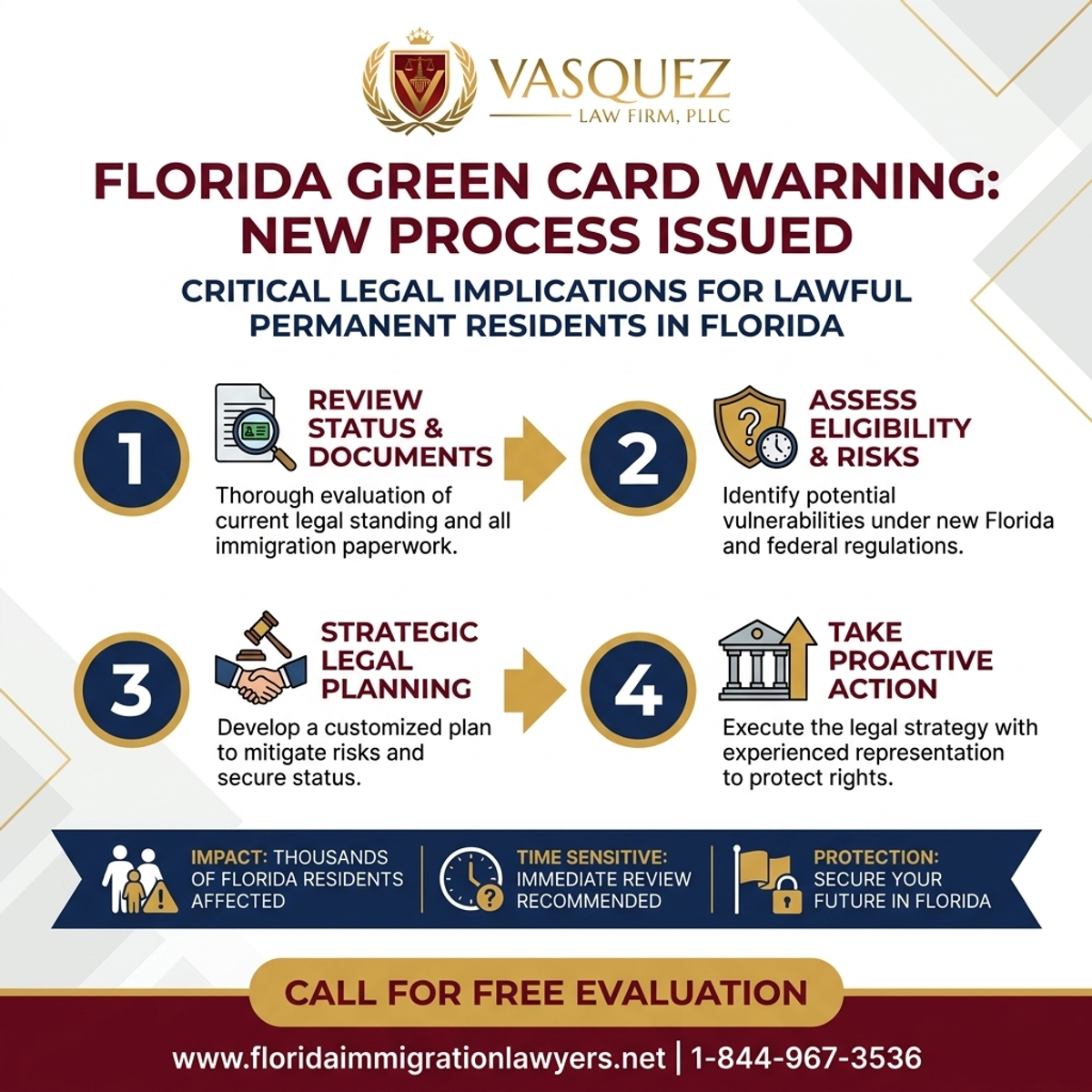
Key Statistics — Green Card Holders Issued New Warning: Florida Process
Processing times can fluctuate based on USCIS workload and application completeness.
It's important to understand that the "typical timeframe" is an average and individual cases can vary significantly. Factors influencing these variations include the specific USCIS service center handling your application, the volume of applications they are processing, and whether your application requires additional review or a Request for Evidence (RFE). For instance, if you have a complex immigration history or if there are discrepancies in your application, it could take longer than the estimated 12 months. USCIS provides an online tool to check current processing times for Form I-90, which can give you a more accurate estimate based on your specific service center.
While your application is pending, USCIS will typically issue a receipt notice (Form I-797C) that extends the validity of your expiring green card for a certain period, usually 24 months. This notice, when presented with your expired green card, serves as valid proof of your permanent resident status for employment, travel, and other purposes. However, it's crucial to keep this notice safe and carry it with your expired green card. If you plan to travel internationally, confirm with an immigration attorney or airline whether this combination of documents will be sufficient for re-entry, as airline policies can sometimes differ.
To minimize potential delays, it's highly advisable to submit a complete and accurate application from the outset. Double-check all forms and supporting documents. If you receive an RFE, respond promptly and thoroughly with all requested information. If your application seems to be taking an unusually long time beyond the published processing times, you can contact USCIS customer service
Sources and References
- U.S. Citizenship and Immigration Services (USCIS)
- Executive Office for Immigration Review (EOIR)
- U.S. Department of State
- Immigration and Nationality Act (INA), 8 U.S.C. Chapter 12
Do Not Navigate This Process Alone
Our experienced immigration attorneys are ready to fight for you. Get a free, confidential case review today.
Se Habla Español
Or leave your details and we’ll call you:
Free Evaluation in 24 Hours
Or talk to us right now

AI voice assistant — available 24/7
FreeFrequently Asked Questions

William J. Vásquez
Founding Attorney · Vasquez Law Firm
U.S. Air Force veteran and immigration attorney with years of hands-on U.S. immigration experience. J.D., NCCU School of Law. AILA member. Admitted to the 4th, 5th, and 11th Circuit Courts.
Available 24/7 - Free Evaluations
Reviewed for legal accuracy by William J. Vásquez
Licensed in North Carolina; U.S. immigration is federal practice.
Related Legal Services
Our Florida immigration attorneys can help you with immigration lawyer cost in Florida, experienced immigration attorneys and asylum protection. Call today at 1-844-YO-PELEO for a free case review.
Related Links
Related Topics
Free Legal Case Review
Discuss your case with our experienced attorneys. We're available 24/7.
Se Habla Español - Estamos aquí para ayudarle.
Related Articles
Immigration Lawyer Orlando Free Consultation in Florida
For individuals and families in Orlando, Florida, navigating the complexities of U.S. immigration law requires expert guidance. An immigration lawyer in Orlando offers crucial support for everything from visa applications and green card processes to naturalization and deportation defense. This comprehensive guide details what a free consultation covers, providing a step-by-step overview of immigration pathways, essential document checklists, and expected timelines in 2026. We also highlight common mistakes to avoid, discuss the critical role of legal counsel in deportation and asylum cases, and explain why choosing a local Orlando immigration attorney is beneficial. Florida Immigration Lawyers is dedicated to serving the diverse community of Orlando with compassionate, effective legal solutions, ensuring you receive personalized advice and robust representation for a successful immigration journey.
EAD Advance Parole Combo Card in Florida 2026
For individuals with a pending Form I-485, Application to Register Permanent Residence or Adjust Status, the EAD Advance Parole Combo Card is an essential document. This single card combines the authorization to work legally in the U.S. (Employment Authorization Document - EAD) with permission to travel internationally and re-enter without abandoning your green card application (Advance Parole). This guide from Florida Immigration Lawyers provides a comprehensive overview for applicants in Florida in 2026, covering eligibility, the step-by-step application process, required documents, expected processing times, and associated costs. We also highlight common mistakes to avoid and when to seek legal counsel to ensure a smooth and successful immigration journey. Understanding this vital card is key to maintaining stability while awaiting your permanent residency approval.
How to Choose an Immigration Lawyer in Florida: Tips
Choosing the right immigration lawyer in Florida is essential for navigating complex immigration processes. Learn what to look for in a lawyer, how to verify their credentials, and the questions to ask during consultations. This guide will help you make an informed decision for your immigration needs.
Spanish Speaking Criminal Lawyer Near Me: Florida Waivers
Navigating the process of obtaining a criminal waiver in Florida is complex, especially for those with criminal convictions seeking immigration relief. This comprehensive guide explores the I-601 waiver process, common pitfalls, and when to seek legal help. Our expert team at Florida Immigration Lawyers is ready to assist you.