Spanish Speaking Criminal Lawyer Near Me: Florida Waivers
Navigating the process of obtaining a criminal waiver in Florida is complex, especially for those with criminal convictions seeking immigration relief. This comprehensive guide explores the I-601 waiver process, common pitfalls, and when to seek legal help. Our expert team at Florida Immigration Lawyers is ready to assist you.
Finding a Spanish-speaking criminal lawyer near you in Florida can be crucial when dealing with immigration issues related to criminal convictions. A criminal waiver, such as the I-601, may be necessary for immigrants with certain criminal records to adjust their status. Key points include:
- The I-601 waiver is for certain inadmissibility grounds.
- Eligibility depends on the type of conviction and hardship caused to a U.S. relative.
- Timely legal assistance can enhance the chances of a successful outcome.
Introduction
Imagine you have a criminal conviction that complicates your immigration journey. Navigating the legal system can be daunting, especially when the stakes include your ability to remain in the U.S. This is where a Spanish-speaking criminal lawyer can be invaluable. This article explores criminal waivers in Florida, focusing on the I-601 waiver and its implications for immigrants with criminal records. We’ll guide you through the process, common mistakes, and when to seek legal help. Call Florida Immigration Lawyers at 1-844-YO-PELEO for a free case review.
For many immigrants in Florida, a past mistake or an unforeseen legal issue can suddenly jeopardize their future in the United States. Criminal convictions, even minor ones, can trigger grounds of inadmissibility, making it impossible to obtain a green card, adjust status, or re-enter the country after travel. The emotional and financial toll of such uncertainty can be overwhelming, not just for the individual but for their entire family.
Understanding the nuances of U.S. immigration law, particularly as it intersects with criminal law, requires specialized expertise. This complexity is compounded when language barriers exist, making a Spanish-speaking criminal lawyer an essential ally. They can bridge the communication gap, explain intricate legal concepts in your native language, and ensure your story is accurately and effectively presented to immigration authorities. Florida Immigration Lawyers are committed to providing this vital support, ensuring no one has to face these challenges alone.
What is an I-601 Waiver?
An I-601 waiver is a legal document that allows immigrants to overcome certain grounds of inadmissibility. As of 2026, this waiver is particularly relevant for those with criminal convictions seeking to adjust their status in the U.S.
To qualify for an I-601 waiver, the applicant must demonstrate that denying their admission would cause extreme hardship to a qualifying U.S. citizen or lawful permanent resident relative. The waiver covers various inadmissibility grounds, including health-related issues, criminal activity, and immigration violations.
Applicants must provide detailed evidence of the hardship their family would face. This often includes financial, medical, and emotional impacts. Each case is unique, and thorough documentation is critical to success.
Beyond criminal convictions, the I-601 waiver can address other significant barriers. These include certain health-related grounds (like communicable diseases or mental disorders with associated harmful behavior), misrepresentation or fraud in seeking immigration benefits, and prior immigration violations such as unlawful presence or previous deportations. The waiver acts as a lifeline, offering a path forward for individuals who would otherwise be barred from obtaining legal status.
The concept of "extreme hardship" is central to the I-601 waiver. It requires more than just the normal difficulties associated with relocation or separation. USCIS adjudicators evaluate the unique circumstances of each case, considering factors like the qualifying relative’s health, financial stability, educational opportunities, and emotional well-being. For instance, if a U.S. citizen child relies on the applicant for specialized medical care that is unavailable in the applicant’s home country, this could constitute extreme hardship. A skilled immigration attorney from Florida Immigration Lawyers can help you identify and articulate these critical factors.
It's important to note that the I-601 waiver is distinct from other waivers, such as the I-212 (for prior deportations) or the I-601A (provisional unlawful presence waiver). The I-601 is generally filed while the applicant is either in the U.S. or abroad, depending on their specific immigration process. Understanding which waiver applies to your situation is crucial, and a consultation with a knowledgeable lawyer is highly recommended to ensure you pursue the correct legal avenue.
How Do You Apply for an I-601 Waiver?
Applying for an I-601 waiver involves several crucial steps. Understanding these can help you prepare effectively.
- Identify Grounds for Inadmissibility: Clearly determine the specific grounds that apply to your case.
- Gather Supporting Documents: Collect evidence of hardship, including medical records, financial statements, and personal testimonies.
- Complete the Form: Fill out Form I-601 accurately. It's essential to ensure all information is complete and truthful.
- Submit the Application: Send your completed application to the appropriate USCIS office. In Florida, the Orlando USCIS office can be a point of contact.
- Await Decision: Processing times can vary. Typically, it takes several months, but the timeline can be longer depending on the case complexity and caseload of the USCIS.
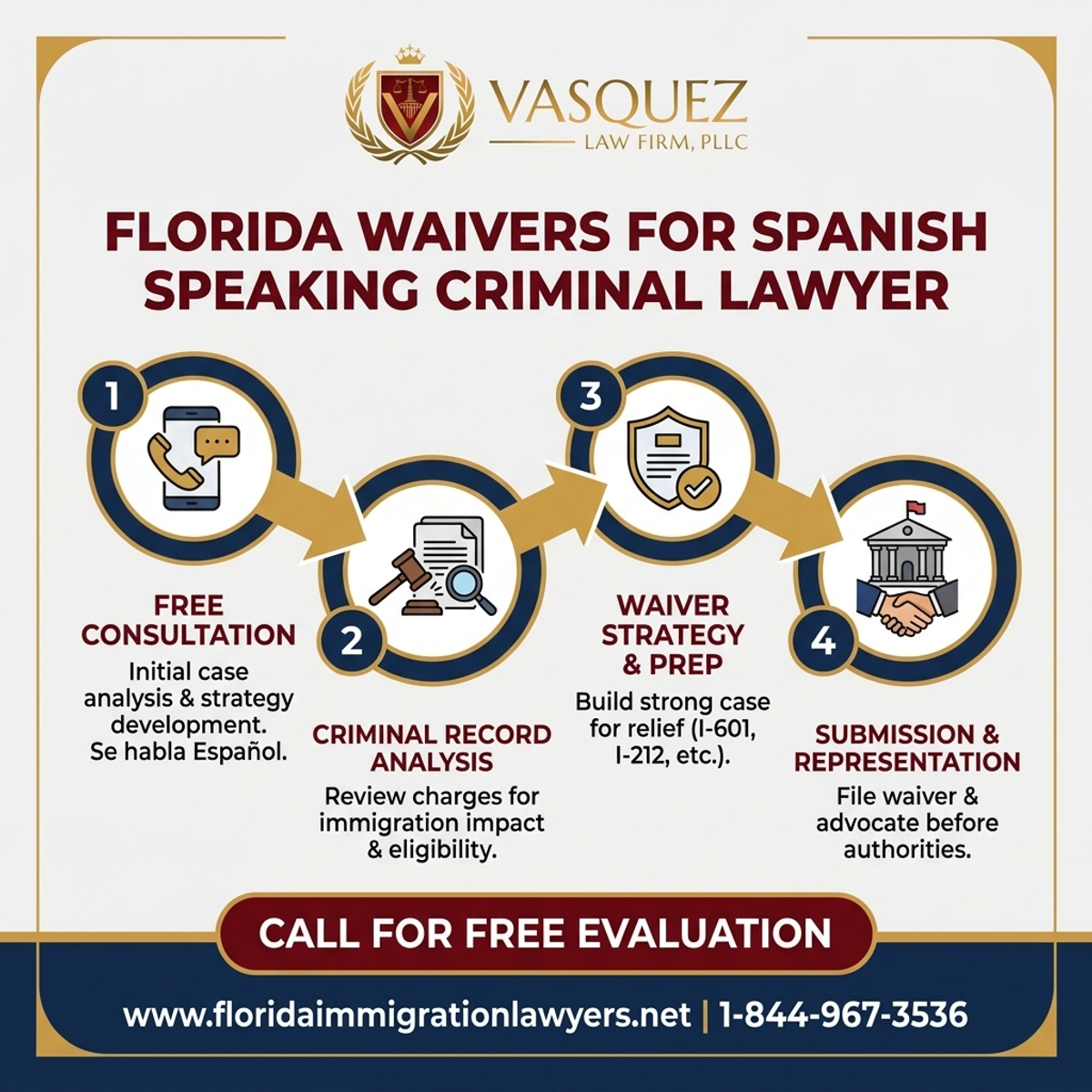
Step-by-Step Process — Spanish Speaking Criminal Lawyer Near Me: Florida Waivers
Throughout this process, it's advisable to consult with an immigration attorney to strengthen your application.
Each step in the I-601 application process demands meticulous attention to detail. For instance, when identifying grounds of inadmissibility, a lawyer can help you accurately interpret complex legal statutes and determine if your conviction or violation truly renders you inadmissible. This initial assessment is critical because filing for the wrong waiver or misidentifying the grounds can lead to immediate denial and wasted time and resources.
Gathering supporting documents is often the most labor-intensive part. Beyond the obvious, consider affidavits from friends, family, and community leaders who can attest to your good moral character and the profound impact your absence would have. Include letters from doctors, therapists, or financial advisors detailing the specific hardships. Florida Immigration Lawyers excel at helping clients compile a compelling evidentiary package, ensuring no stone is left unturned in demonstrating extreme hardship.
Finally, accurately completing Form I-601 and submitting it correctly are non-negotiable. Any errors or omissions can cause significant delays or even outright rejection. It is also crucial to pay the correct filing fee, which can change periodically. Working with an experienced legal team like Florida Immigration Lawyers ensures that your application is not only complete and accurate but also strategically presented to maximize your chances of approval. They handle the submission process, track your case, and communicate with USCIS on your behalf.
What Documents Are Required for an I-601 Waiver?
To apply for an I-601 waiver, you need to submit a comprehensive set of documents. These documents help establish the grounds for your waiver and support your claims of hardship.
- Completed Form I-601
- Proof of relationship to a qualifying relative
- Evidence of hardship (medical records, financial documents)
- Criminal records, if applicable
- Any other supporting documents that strengthen your case
Having a well-documented application can significantly impact the outcome of your waiver request.
Let's elaborate on the "evidence of hardship." This isn't just a single document but often a portfolio. For medical hardship, include diagnoses, treatment plans, prognoses, and letters from U.S. doctors confirming the unavailability or prohibitive cost of similar care in the home country. For financial hardship, provide tax returns, bank statements, mortgage documents, and proof of financial dependency. Psychological evaluations of the qualifying relative can also be powerful, detailing the emotional distress and mental health challenges anticipated by separation.
When it comes to criminal records, ensure you obtain certified court dispositions for every arrest and conviction, regardless of how minor or old they are. Police reports, sentencing documents, and proof of completion of probation or rehabilitation programs are also vital. Full disclosure is paramount; withholding information about a criminal history can lead to severe penalties, including a permanent bar from the U.S. Florida Immigration Lawyers can guide you on exactly which criminal documents are needed and how to obtain them.
Additionally, consider submitting character affidavits from employers, community leaders, and long-term residents who can attest to your positive contributions to society. Photos of your family, proof of property ownership, and children's school records can further illustrate your deep ties to the U.S. and the disruption a denial would cause. The more thoroughly you can paint a picture of your life and the hardship your qualifying relative would endure, the stronger your case will be.
How Long Does the I-601 Waiver Process Take?
The processing time for an I-601 waiver can vary widely. As of 2026, applicants often experience different timelines based on specific circumstances.
| Stage | Typical Timeframe | Notes |
|---|---|---|
| Initial Application Review | 3-6 months | Depends on USCIS workload |
| Request for Evidence (if issued) | 1-3 months | Additional documentation may be required |
| Final Decision | 6-12 months | Varies based on case complexity |
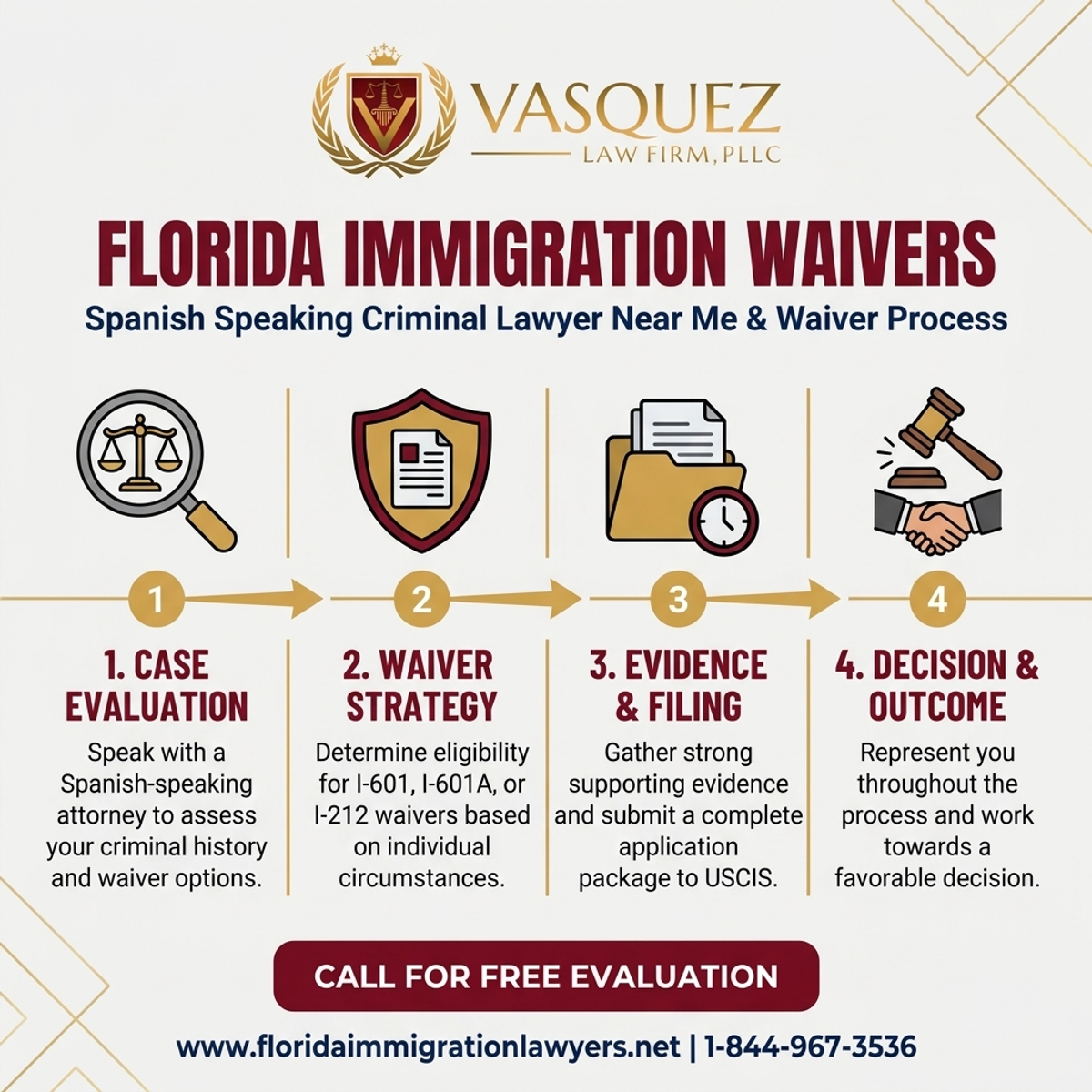
Key Statistics — Spanish Speaking Criminal Lawyer Near Me: Florida Waivers
Applicants are encouraged to submit thorough applications to avoid delays.
Several factors can influence the processing time for an I-601 waiver. These include the specific USCIS service center handling your case, the volume of applications they are currently processing, and the complexity of your individual circumstances. Cases involving multiple grounds of inadmissibility or extensive criminal histories may naturally take longer to adjudicate as they require more detailed review by immigration officers.
A common reason for delays is the issuance of a Request for Evidence (RFE). If USCIS determines that your initial submission lacks sufficient proof or clarity, they will send an RFE, asking for additional documents or explanations. Responding promptly and comprehensively to an RFE is crucial. Failure to do so, or submitting an inadequate response, can lead to further delays or even a denial. Florida Immigration Lawyers meticulously prepare applications to minimize the chances of an RFE and respond strategically if one is issued.
While the wait can be stressful, it's important to remain patient and avoid contacting USCIS excessively, as this can sometimes be counterproductive. You can track your case status online using the receipt number provided by USCIS. However, for detailed updates or to address specific concerns, your immigration attorney can often provide more nuanced insights and communicate with USCIS on your behalf, ensuring you are always informed about the progress of your I-601 waiver application.
Common Mistakes to Avoid
Navigating the I-601 waiver process is fraught with potential pitfalls that can jeopardize your application. Even minor errors can lead to significant delays, requests for additional evidence, or outright denial. Being aware of these common mistakes and actively working to avoid them is crucial for a successful outcome. This is where the expertise of a seasoned immigration lawyer becomes indispensable, helping you sidestep these traps and build a robust case.
- Incomplete Applications: Missing information or documents can lead to delays or denials.
- Insufficient Evidence of Hardship: Failing to demonstrate hardship can result in denial.
- Not Consulting an Attorney: Navigating immigration law without legal guidance can be risky.
- Failure to Respond to RFEs: Ignoring requests for additional evidence can harm your case.
- Ignoring Deadlines: Missing filing deadlines can result in application rejection.
- Lack of Documentation: Not providing enough supporting documents weakens your application.
- Submitting Incorrect Fees: Always check the current fee schedule on the USCIS website.
- Overlooking Criminal Records: Failing to disclose all criminal history can result in denial.
When to Call a Lawyer
Legal assistance is crucial when dealing with complex immigration issues. Consider contacting a lawyer if:
- You have a criminal conviction and need a waiver.
- You face deportation proceedings.
- Your case involves significant hardship.
- You need help gathering evidence and documentation.
Florida Immigration Lawyers offer comprehensive support for immigration cases, ensuring that you have expert guidance through each step.
Beyond the listed scenarios, there are many other instances where legal counsel is not just helpful but essential. If you have multiple grounds of inadmissibility, a history of prior immigration violations, or if your criminal record is particularly complex (e.g., involving crimes of moral turpitude or aggravated felonies), an attorney can assess the severity of your situation and advise on the best course of action. They can determine if an I-601 waiver is even the correct path or if other forms of relief are available.
Furthermore, if you are not fluent in English, the complexities of legal terminology and the extensive documentation required can be overwhelming. A Spanish-speaking criminal lawyer provides not only legal expertise but also cultural and linguistic understanding, ensuring that you fully comprehend every aspect of your case and can communicate effectively. This can significantly reduce stress and improve the accuracy of your application. Don't hesitate to reach out to Florida Immigration Lawyers at 1-844-YO-PELEO for a free case review.
About Florida Immigration Lawyers
Florida Immigration Lawyers is dedicated to assisting clients with their immigration needs. Our team specializes in a wide range of services, including family immigration, asylum, deportation defense, and more. Located in Orlando, we proudly serve all of Florida. Our bilingual team is available 24/7 to provide free case reviews. Call 1-844-YO-PELEO or schedule a free consultation today.
Our commitment extends beyond just legal representation; we strive to be a compassionate and understanding partner throughout your immigration journey. We understand the anxieties and hopes that accompany these processes, and our team is trained to provide not just legal advice but also empathetic support. Whether you're navigating complex family petitions, seeking protection through asylum, or fighting against deportation, our expertise is your advantage.
At Florida Immigration Lawyers, we pride ourselves on our deep understanding of both immigration and criminal law, a critical combination for cases involving I-601 waivers. Our lawyers stay abreast of the latest legal developments and USCIS policies to provide the most current and effective strategies. We offer personalized attention, crafting tailored legal solutions that address the unique circumstances of each client. Your future in the U.S. is our priority, and we are here to fight for it.
Frequently Asked Questions About I-601 Waivers
What is the primary purpose of an I-601 waiver?
The I-601 waiver allows individuals found inadmissible to the U.S. due to certain grounds, such as specific criminal convictions or immigration violations, to overcome these barriers. Its primary purpose is to enable eligible applicants to adjust their immigration status or be granted admission, provided they can demonstrate extreme hardship to a qualifying U.S. citizen or lawful permanent resident relative if they were denied. This waiver offers a crucial pathway for families to remain united.
Who is considered a 'qualifying relative' for an I-601 waiver?
For an I-601 waiver, a qualifying relative is typically a U.S. citizen or lawful permanent resident spouse, parent, or in some specific cases, a child. The extreme hardship must be proven to this qualifying relative, not just to the applicant. It's crucial to understand that hardship to the applicant alone is generally not sufficient, making the relationship to a qualifying U.S. relative central to the waiver's success. Consulting Florida Immigration Lawyers can clarify your eligibility.
What kind of evidence best demonstrates 'extreme hardship'?
Demonstrating 'extreme hardship' requires compelling and comprehensive evidence. This can include detailed medical records, psychological evaluations, proof of financial dependency, documentation of special needs for children, loss of employment opportunities, lack of access to medical care in the home country, and evidence of strong community ties in the U.S. A combination of these factors, supported by expert testimonies and affidavits, significantly strengthens your case and increases your chances of approval.
Can an I-601 waiver be denied, and what happens then?
Yes, an I-601 waiver can be denied if USCIS determines that the applicant has not met the burden of proof for extreme hardship or if the inadmissibility grounds are too severe. If denied, the applicant may have options depending on the specific circumstances,
Sources and References
- U.S. Citizenship and Immigration Services (USCIS)
- Executive Office for Immigration Review (EOIR)
- U.S. Department of State
- Immigration and Nationality Act (INA), 8 U.S.C. Chapter 12
Do Not Navigate This Process Alone
Our experienced immigration attorneys are ready to fight for you. Get a free, confidential case review today.
Se Habla Español
Or leave your details and we’ll call you:
Free Evaluation in 24 Hours
Or talk to us right now

AI voice assistant — available 24/7
FreeFrequently Asked Questions

William J. Vásquez
Founding Attorney · Vasquez Law Firm
U.S. Air Force veteran and immigration attorney with years of hands-on U.S. immigration experience. J.D., NCCU School of Law. AILA member. Admitted to the 4th, 5th, and 11th Circuit Courts.
Available 24/7 - Free Evaluations
Reviewed for legal accuracy by William J. Vásquez
Licensed in North Carolina; U.S. immigration is federal practice.
Related Legal Services
Our Florida immigration attorneys can help you with citizenship and naturalization, immigration practice areas and free immigration consultation. Call today at 1-844-YO-PELEO for a free case review.
Related Links
Related Topics
Free Legal Case Review
Discuss your case with our experienced attorneys. We're available 24/7.
Se Habla Español - Estamos aquí para ayudarle.
Related Articles
Immigration Lawyer Orlando Free Consultation in Florida
For individuals and families in Orlando, Florida, navigating the complexities of U.S. immigration law requires expert guidance. An immigration lawyer in Orlando offers crucial support for everything from visa applications and green card processes to naturalization and deportation defense. This comprehensive guide details what a free consultation covers, providing a step-by-step overview of immigration pathways, essential document checklists, and expected timelines in 2026. We also highlight common mistakes to avoid, discuss the critical role of legal counsel in deportation and asylum cases, and explain why choosing a local Orlando immigration attorney is beneficial. Florida Immigration Lawyers is dedicated to serving the diverse community of Orlando with compassionate, effective legal solutions, ensuring you receive personalized advice and robust representation for a successful immigration journey.
EAD Advance Parole Combo Card in Florida 2026
For individuals with a pending Form I-485, Application to Register Permanent Residence or Adjust Status, the EAD Advance Parole Combo Card is an essential document. This single card combines the authorization to work legally in the U.S. (Employment Authorization Document - EAD) with permission to travel internationally and re-enter without abandoning your green card application (Advance Parole). This guide from Florida Immigration Lawyers provides a comprehensive overview for applicants in Florida in 2026, covering eligibility, the step-by-step application process, required documents, expected processing times, and associated costs. We also highlight common mistakes to avoid and when to seek legal counsel to ensure a smooth and successful immigration journey. Understanding this vital card is key to maintaining stability while awaiting your permanent residency approval.
Immigration Bond Hearing in Florida: Your 2026 Guide
An immigration bond hearing in Florida is a pivotal moment for individuals detained by ICE, determining their eligibility for release while their immigration case proceeds. This comprehensive guide for 2026 breaks down the entire process, from understanding what a bond hearing entails to navigating the complex court system in Florida, including key factors immigration judges consider. We delve into the typical timelines and associated costs, providing detailed tables for clarity. Furthermore, the article highlights crucial rights during ICE detention and outlines common mistakes to avoid that could jeopardize a favorable outcome. For anyone facing detention or seeking to help a loved one, this resource offers essential information and emphasizes the indispensable role of experienced legal counsel. Florida Immigration Lawyers stands ready to assist with expert representation across Florida, offering free case reviews.
Immigration Court Proceedings in Florida: A 2026 Guide
Facing immigration court proceedings in Florida can be daunting. This guide covers everything from the role of immigration judges to the impact of recent policy changes. Whether you're facing removal proceedings or seeking to understand the EOIR's role, this article provides crucial insights.