Green Card Holder ICE Detention in Florida: Your Rights...
Discover your rights and defense options if you're a green card holder facing ICE detention in Florida. This comprehensive guide from Florida Immigration Lawyers explains why lawful permanent residents can be detained, the step-by-step detention and court process, and essential documents needed for your case. Learn about potential timelines, cost factors, and common mistakes to avoid during an ICE encounter. We address frequently asked questions, including how ICE can detain green card holders and the implications of a DUI conviction. With a focus on Florida-specific contexts like Fort Lauderdale, our expert team provides critical insights and emphasizes the importance of immediate legal counsel to protect your status and fight against deportation. Contact us for a free consultation today.

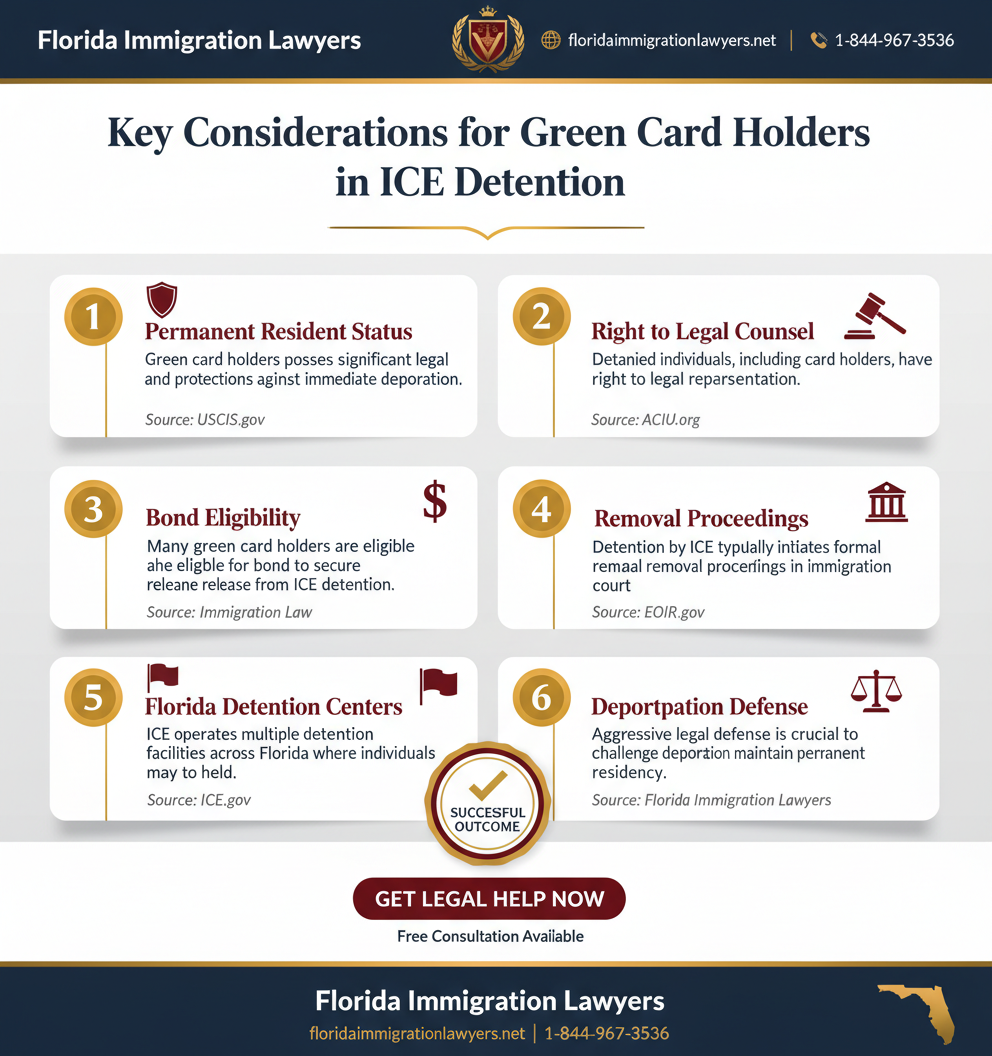
Green card holders, also known as lawful permanent residents, can face ICE detention and deportation in Florida under specific circumstances, primarily due to criminal convictions or certain immigration violations. Your rights during such encounters are crucial, and understanding the legal process is vital for an effective defense. Seeking immediate legal counsel from an experienced Florida immigration lawyer is your best course of action to protect your status.
- Lawful permanent residents are not immune to ICE detention.
- Criminal convictions and specific immigration violations are primary triggers.
- You have rights, including the right to remain silent and to an attorney.
- Detention often leads to deportation proceedings in immigration court.
- Immediate legal representation is critical for a strong defense in Florida.
- Understanding Green Card Holder ICE Detention in Florida
- The ICE Detention Process for Permanent Residents
- Essential Documents for Your ICE Detention Case
- Navigating Timelines and Processing Expectations in Florida
- Cost Factors and Legal Fees in Detention Cases
- Common Mistakes to Avoid During ICE Detention
- When to Call a Florida Immigration Lawyer
- Frequently Asked Questions About Green Card Holder ICE Detention
Imagine building a life in Florida, with your family, your job, and your community, all under the security of your green card. Then, suddenly, you find yourself facing an encounter with Immigration and Customs Enforcement (ICE) and the terrifying possibility of detention and deportation. This is a frightening reality for many lawful permanent residents. Your green card, while offering significant protections, does not grant absolute immunity from immigration enforcement actions. In Florida, understanding your rights and the potential risks is more important than ever.
This comprehensive guide from Florida Immigration Lawyers will walk you through the complexities of green card holder ICE detention, explaining why it happens, what to expect, and how to defend your future. Do not face this challenge alone. Call Florida Immigration Lawyers at 1-844-967-3536 for a free consultation. Our experienced team is ready to help you navigate these difficult waters.
Understanding Green Card Holder ICE Detention in Florida
Many green card holders, or lawful permanent residents, believe their status makes them immune to deportation. Unfortunately, this is not always true. While a green card grants significant rights, it does not provide absolute protection from removal proceedings and potential green card holder ICE detention.
Why Green Card Holders Face Detention
ICE can detain green card holders for specific reasons outlined in immigration law. The most common triggers involve criminal convictions and certain immigration violations. Crimes like aggravated felonies, crimes involving moral turpitude (CIMTs), and drug offenses can lead to detention and deportation, even if they occurred many years ago.
Legal provisions such as INA Section 237 (8 U.S.C. § 1227) outline the grounds for deportability for permanent residents. Additionally, INA Section 212 (8 U.S.C. § 1182) lists grounds of inadmissibility, which can also apply if you leave and try to re-enter the U.S. after committing certain offenses. Even seemingly minor offenses can trigger ICE action in Florida.
Mandatory vs. Discretionary Detention
Understanding the type of detention you face is crucial. Some green card holders are subject to mandatory detention, meaning ICE generally cannot release them on bond. This typically applies to individuals convicted of certain serious crimes, as specified in INA 236(c).
For others, detention may be discretionary, allowing an Immigration Judge to consider releasing them on bond. Factors like flight risk, danger to the community, and ties to the U.S. are assessed. Fort Lauderdale and surrounding Florida areas are home to ICE field offices and detention facilities, making local legal expertise vital.
The ICE Detention Process for Permanent Residents
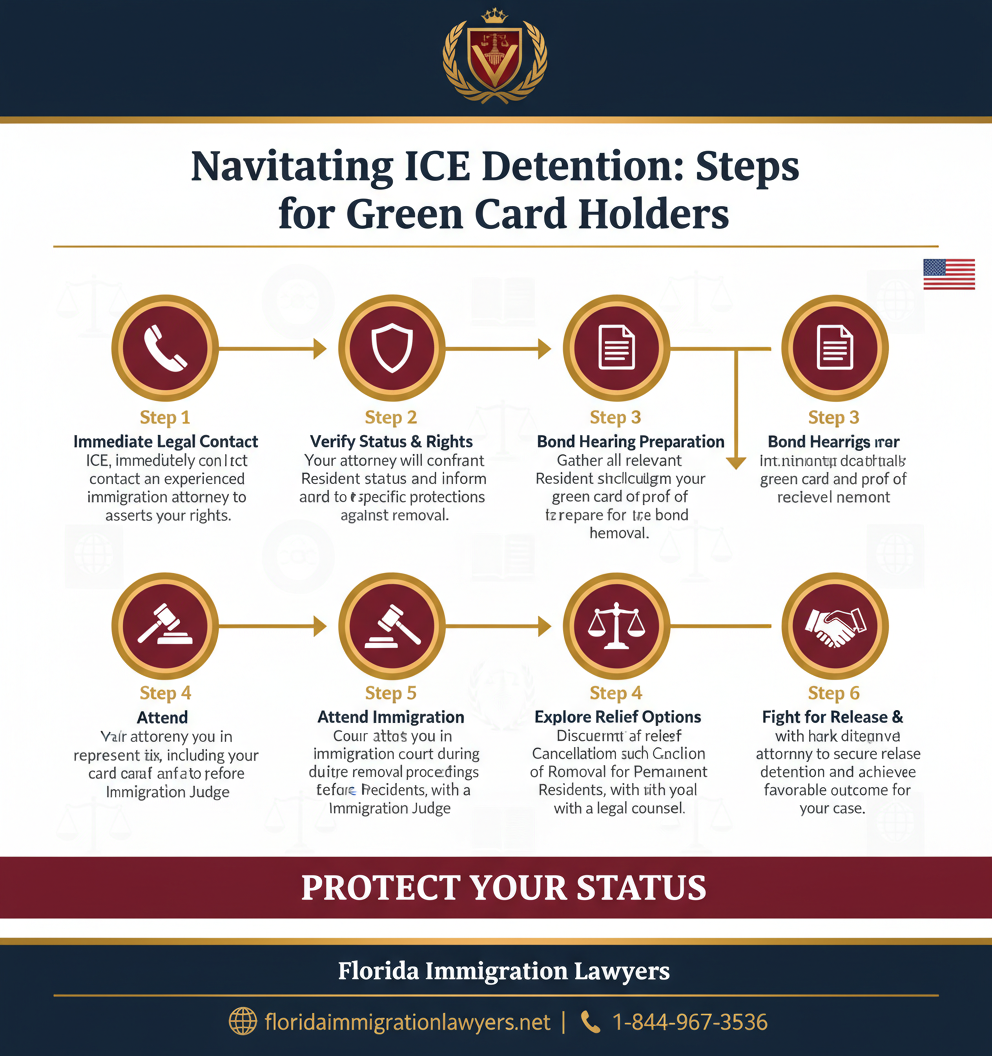
If you or a loved one are taken into green card holder ICE detention, understanding the process is critical. The journey through immigration detention and court can be complex and intimidating, especially without legal representation. Here is a general step-by-step guide:
- Arrest and Initial Custody: An ICE encounter can lead to arrest if agents believe you are deportable. You will then be transferred to an immigration detention facility, such as the Krome Service Processing Center or Glades County Detention Center in Florida.
- Notice to Appear (NTA): Shortly after detention, ICE will serve you with a Notice to Appear (Form I-862). This formal charging document initiates removal proceedings in immigration court. It outlines the specific reasons ICE believes you are deportable. Receiving an NTA means your case is now before an Immigration Judge.
- Bond Hearing: If you are not subject to mandatory detention, you may be eligible for a bond hearing. An Immigration Judge will assess if you should be released on bond while your case proceeds. The judge considers your ties to the community, criminal history, and flight risk. A skilled deportation defense lawyer can argue for a reasonable bond amount.
- Immigration Court Proceedings: Your case will proceed through a series of hearings before an Immigration Judge, typically at an Executive Office for Immigration Review (EOIR) court in Florida, such as those in Miami or Orlando. These proceedings involve presenting evidence, testimony, and legal arguments to defend against deportation. This is where your immigration attorney will build your defense.
- Appeals: If the Immigration Judge orders your removal, you generally have the right to appeal the decision to the Board of Immigration Appeals (BIA). In some cases, further appeals to federal circuit courts may be possible. This process can be lengthy and requires specialized legal knowledge.
Essential Documents for Your ICE Detention Case
Having the right documents readily available can significantly strengthen your defense against green card holder ICE detention and deportation. Preparing these in advance, or ensuring your family knows where to find them, is crucial. Your Florida immigration lawyer will guide you on specific needs.
- ✓ Your green card (Form I-551) and any prior immigration documents (visas, I-485 approval notices).
- ✓ Passport and birth certificate from your country of origin.
- ✓ Marriage certificate, birth certificates of U.S. citizen children, and other family relationship proofs.
- ✓ Proof of residence in Florida (e.g., utility bills, lease agreements, property deeds).
- ✓ Employment records, tax returns (Form 1040), and financial statements demonstrating your ties to the U.S.
- ✓ Criminal court documents, including dispositions, sentencing records, and police reports for any past arrests or convictions.
- ✓ Evidence of rehabilitation, community involvement, and good moral character (e.g., diplomas, volunteer certificates).
- ✓ Letters of support from family, friends, employers, or community leaders attesting to your character and contributions.
- ✓ Medical records, especially if you have serious health conditions requiring ongoing treatment.
Navigating Timelines and Processing Expectations in Florida
The duration of green card holder ICE detention and subsequent immigration court proceedings can vary significantly. There is no fixed timeline, and each case is unique. However, understanding general expectations can help you prepare.
Initial Detention and Bond Hearings
After an arrest, you might have an initial appearance before an Immigration Judge relatively quickly, often within a few days to a few weeks. This hearing may address bond eligibility. The speed depends on the court's docket and the detention facility's location. Florida's immigration courts in Miami and Orlando often experience heavy caseloads, which can affect scheduling.
Immigration Court Proceedings
The overall immigration court process can take months, or even years, to resolve. Your case will involve Master Calendar Hearings (preliminary appearances) and Individual Hearings (where evidence is presented). Factors influencing the timeline include the complexity of your case, the availability of court dates, and whether appeals are filed. While USCIS processing times are often cited, detention cases follow a distinct and often expedited track within the Executive Office for Immigration Review system.
Cost Factors and Legal Fees in Detention Cases
Facing green card holder ICE detention involves various potential costs. These can range from bond payments to legal fees, and understanding them helps in planning your defense. While we cannot provide specific fee amounts here, we can explain the factors involved.
Understanding Bond Amounts
If you are eligible for bond, an Immigration Judge or ICE will set a bond amount. These can range from a few thousand dollars to tens of thousands, paid to the Department of Homeland Security. The bond is a guarantee that you will appear for all future court hearings. Your attorney can argue for a lower bond amount based on your circumstances, potentially saving you significant funds.
Legal Representation Fees
Legal fees for detention and deportation defense cases vary widely. They depend on the complexity of your case, the attorney's experience, and the anticipated duration of the proceedings. Some firms offer fixed fees for certain stages, while others charge hourly rates. Investing in an experienced Florida immigration lawyer is an investment in protecting your green card status and your future in the U.S. Florida Immigration Lawyers is committed to transparent fee structures and will discuss all costs upfront during your free consultation.
Do not navigate this complex and frightening process alone. The stakes are incredibly high when your green card status is on the line. Contact Florida Immigration Lawyers today for expert legal guidance and robust defense strategies tailored to your unique situation. We are here to protect your rights and fight for your future in Florida.
Common Mistakes to Avoid During ICE Detention
When facing green card holder ICE detention, missteps can have severe and lasting consequences for your immigration status. Be aware of these common mistakes:
- Lying to ICE or Immigration Officials: Providing false information or misrepresenting facts can lead to charges of fraud, which can result in a permanent bar from the U.S. Always be truthful, but remember you are not obligated to volunteer information beyond identifying yourself.
- Signing Documents Without Understanding Them: Never sign any paper presented by ICE or immigration authorities without fully understanding its contents. This is especially true for documents like a "Voluntary Departure" form, which waives your right to a hearing and can lead to immediate deportation.
- Failing to Carry Your Green Card: As a lawful permanent resident, you are required by law (8 U.S.C. § 1304(e)) to carry proof of your immigration status (Form I-551) at all times. Failure to do so can lead to questioning and detention until your status is verified.
- Ignoring Minor Criminal Offenses: Even seemingly minor arrests or convictions, such as a DUI in Florida, can trigger ICE detention and deportation proceedings. Many state-level offenses can be classified as deportable crimes under federal immigration law.
- Not Informing Your Family of Your Whereabouts: If you are detained, your family needs to know your location. This allows them to begin the process of securing legal help and potentially paying bond, which is crucial for your timely release.
- Failing to Disclose Past Immigration Violations: Attempting to hide previous overstays, misrepresentations, or unlawful entries during an immigration interview or application can severely jeopardize your case. It often leads to charges of immigration fraud.
- Not Seeking Immediate Legal Counsel: The moments immediately following an ICE encounter or detention are critical. Delaying legal consultation can weaken your defense, limit your options for relief, and make your case significantly more challenging to win.
When to Call a Florida Immigration Lawyer
If you are a green card holder facing an ICE encounter, arrest, or detention in Florida, contacting an experienced immigration lawyer is not just recommended-it's essential. You should seek legal assistance immediately if you:
- Are approached by ICE agents or asked questions about your immigration status.
- Are arrested by ICE or other law enforcement, even for minor offenses in Florida.
- Are served with a Notice to Appear (NTA) in immigration court.
- Have a criminal record, even if it seems minor or happened years ago.
- Are unsure about your rights or the legal implications of a situation.
- Have family members who have been detained by ICE in Fort Lauderdale or anywhere in Florida.
Florida Immigration Lawyers specializes in deportation defense and protecting the rights of green card holders. We understand the nuances of immigration law and the local courts, offering a robust defense to help you fight for your right to remain in the U.S. Contact us for help.
Frequently Asked Questions About Green Card Holder ICE Detention
How can ICE detain green card holders?
ICE can detain green card holders primarily if they are deemed deportable under the Immigration and Nationality Act (INA). Common triggers include criminal convictions, especially aggravated felonies or crimes involving moral turpitude, and certain immigration violations like marriage fraud or misrepresentation during the application process. While a green card provides significant protection, it does not grant absolute immunity from removal proceedings, particularly when an individual has violated U.S. laws or immigration statutes. The decision to detain often depends on the severity of the offense and whether the individual is considered a flight risk or a danger to the community. An experienced Florida immigration lawyer can assess your specific situation and challenge the grounds for detention.
Can you be deported with a green card for a DUI?
Yes, a DUI (Driving Under the Influence) conviction in Florida can potentially lead to deportation for a green card holder, although it's not always automatic. A single DUI conviction typically isn't considered an aggravated felony on its own. However, if there are aggravating factors, such as injury to another person, multiple DUI convictions, or if it's combined with other criminal offenses, it could be classified as a crime involving moral turpitude or an aggravated felony. These classifications make a green card holder deportable. The specific facts of your DUI case, your immigration history, and the jurisdiction's interpretation of immigration law are all crucial. Consulting with a skilled Florida immigration lawyer is vital to understand the risks and explore potential defenses.
What is the new law for green card holders in 2026?
As of February 20, 2026, there isn't one singular "new law" that dramatically alters the landscape for all green card holders. Immigration law is constantly evolving through legislative changes, executive actions, and judicial interpretations. For example, recent years have seen shifts in enforcement priorities and policies regarding asylum seekers and border security, which can indirectly affect green card holders. It is crucial to remember that immigration laws are subject to frequent amendments and updates. For the most current and accurate information relevant to your situation, it is always recommended to consult with a qualified immigration attorney at Florida Immigration Lawyers, as they stay abreast of all legal developments and can provide advice specific to your case.
Do I have to show ICE my green card?
Yes, as a lawful permanent resident (green card holder), you are required by law (8 U.S.C. § 1304(e)) to carry proof of your registration, which is typically your Form I-551, the green card. If asked by an immigration officer, you must present it. Failing to do so can lead to questioning and potential detention until your identity and immigration status can be verified. However, you are not required to answer any other questions beyond identifying yourself and showing your green card. You have the right to remain silent about your citizenship, where you were born, or how you entered the U.S. It is always wise to assert your right to speak with an attorney before answering any substantive questions from ICE.
What are my rights if ICE detains me in Florida?
If ICE detains you in Florida, you have several important rights. You have the right to remain silent and refuse to answer questions about your immigration status, country of origin, or how you entered the U.S., beyond identifying yourself and showing your green card. You have the right to speak with an attorney, and ICE must provide you with a list of free legal services if you cannot afford one. You also have the right to a bond hearing if you are not subject to mandatory detention, and the right to present your case before an Immigration Judge. It is critical to exercise these rights immediately and not sign any documents without understanding them or consulting legal counsel. Florida Immigration Lawyers can help ensure your rights are protected.

Can ICE arrest people with green cards at their homes or workplaces in Florida?
Yes, ICE can and does arrest people with green cards at their homes, workplaces, and in public places in Florida if they have a warrant or probable cause to believe the individual is deportable. While a warrant from an immigration judge is preferred for home arrests, ICE may sometimes enter a home without one if they have consent or exigent circumstances. At work, ICE can conduct raids. It is important to remember that you have rights during an ICE encounter. If ICE agents come to your home, you are not required to open your door without a warrant signed by a judge. If they are at your workplace, you still have the right to remain silent and request an attorney. Knowing your rights is your first line of defense.
How long can a green card holder be held in ICE detention in Florida?
The length of time a green card holder can be held in ICE detention in Florida varies greatly depending on the specifics of their case. If you are eligible for bond, you might be released relatively quickly once bond is paid. However, if you are subject to mandatory detention, you could be held for the entire duration of your immigration court proceedings, which can sometimes span months or even years due to court backlogs and the appeals process. There are legal limits to how long ICE can hold someone post-final order of removal, but during the actual court proceedings, detention can be prolonged. An immigration attorney can work to expedite your case or argue for your release on bond.
What is an "aggravated felony" in immigration law for green card holders?
In immigration law, the term "aggravated felony" is much broader than in criminal law and encompasses a wide range of crimes, often including offenses that are not considered felonies under state law. These can include certain theft offenses, fraud, drug trafficking, murder, rape, sexual abuse of a minor, and even some DUIs with aggravating factors. A conviction for an aggravated felony makes a green card holder deportable and generally bars them from many forms of relief from removal, including asylum and cancellation of removal. This classification also typically triggers mandatory ICE detention. It is a critical category that demands immediate legal attention if you are charged with a crime that could be interpreted as an aggravated felony, as the consequences for your green card status are severe.
About Florida Immigration Lawyers
Florida Immigration Lawyers is a leading law firm dedicated to providing exceptional legal representation to immigrants across the entire state of Florida. Our team of highly skilled and compassionate attorneys understands the profound impact immigration challenges can have on individuals and families. We specialize in a wide range of immigration matters, including deportation defense, asylum, family-based immigration, business immigration, and naturalization.
Why Choose Us?
- Experience: Decades of combined experience successfully navigating complex U.S. immigration laws.
- Dedication: We fight tirelessly for our clients' rights and futures.
- Bilingual Services: Our team offers comprehensive support in both English and Spanish.
- Accessibility: Available 24/7 to address urgent needs, offering free, confidential consultations.
- Florida Focus: Deep understanding of Florida's immigration courts, USCIS offices, and local enforcement dynamics, serving communities from Fort Lauderdale to Miami, Orlando, Tampa, and beyond.
Do not face your immigration challenges alone. Trust Florida Immigration Lawyers to be your steadfast advocates. Call us today at 1-844-967-3536 or visit our website at https://www.floridaimmigrationlawyers.net to schedule your free consultation.
This article is for general informational purposes only and does not constitute legal advice. Immigration laws change frequently. For advice specific to your situation, please consult with a qualified immigration attorney.
Your green card status is too important to risk. If you or a loved one is facing green card holder ICE detention in Florida, immediate and expert legal intervention is crucial. Protect your rights, your family, and your future. Contact Florida Immigration Lawyers today at 1-844-967-3536 for a free, confidential consultation. Let our dedicated team provide the powerful legal defense you deserve.
Do Not Navigate This Process Alone
Our experienced immigration attorneys are ready to fight for you. Get a free, confidential consultation today.
Se Habla Español
Frequently Asked Questions
Florida Immigration Lawyers
Immigration Attorney | Founder, Vasquez Law Firm
U.S. Air Force veteran and immigration attorney with thousands of cases resolved. J.D., NCCU School of Law. AILA member. Admitted to the 4th, 5th, and 11th Circuit Courts.
Available 24/7 - Free Evaluations
Related Legal Services
Our Florida immigration attorneys can help you with deportation defense, citizenship and naturalization and family immigration services. Call today at 1-844-967-3536 for a free consultation.
Related Links
Related Topics
Free Legal Consultation
Discuss your case with our experienced attorneys. We're available 24/7.
Se Habla Español - Estamos aquí para ayudarle.
Related Articles
Stokes Interview: Navigating Marriage Fraud in Florida
A Stokes interview is a specialized, separate interview conducted by USCIS when there are suspicions of marriage fraud in a green card application. This rigorous process involves individual questioning of spouses, focusing on inconsistencies in their testimonies to determine the authenticity of their marital bond. For couples in Florida, navigating this high-stakes interview requires meticulous preparation, extensive documentation, and often the strategic guidance of an experienced immigration lawyer. Understanding the process, preparing for detailed questions, and presenting a strong case are crucial for overcoming marriage fraud allegations and securing your immigration future. Florida Immigration Lawyers stands ready to assist you.
Immigration Attorney Gainesville: North Florida Legal Help
For those in Gainesville, Alachua County, and throughout North Florida, navigating U.S. immigration law requires expert guidance. An experienced immigration attorney can simplify complex processes, from family-based petitions and employment visas to critical asylum claims and deportation defense. This comprehensive guide outlines the essential services provided by an immigration attorney, details necessary documentation, clarifies processing timelines, and discusses associated costs. We also highlight common mistakes to avoid and crucial scenarios where legal counsel is indispensable. Florida Immigration Lawyers serves all of Florida, including Gainesville and St. Petersburg, providing dedicated legal support to help you achieve your immigration goals. Contact us for a free consultation to discuss your specific needs.
Military Naturalization Expedited at Florida Bases
Explore expedited military naturalization processes for service members at Florida bases like MacDill. Learn about eligibility, steps, and common mistakes. Contact Florida Immigration Lawyers for a free consultation.
Protect Yourself from Immigration Scams in Florida
Learn how to protect against immigration scams in Florida, focusing on St. Petersburg. This guide covers identifying scams, verifying credentials, and getting legal help. Call Florida Immigration Lawyers at 1-844-967-3536 for assistance.
