Good Moral Character in Florida Naturalization
Understand the importance of good moral character in the naturalization process in Florida. Learn how criminal history and community involvement can affect your application. Call Florida Immigration Lawyers for expert guidance.

- Assessment over the last five years
- Impact of criminal history
- Importance of honesty on Form N-400
Introduction
Are you considering applying for naturalization in Florida? Understanding the good moral character requirement is essential for your success. This aspect of your application assesses various factors, including your criminal history and community involvement. As of 2026, these evaluations are more critical than ever. This article will guide you through everything you need to know about demonstrating good moral character in Florida. Call Florida Immigration Lawyers at 1-844-YO-PELEO for a free case review.
The concept of good moral character (GMC) is not merely a formality; it's a fundamental pillar of U.S. citizenship, reflecting the values and responsibilities expected of new citizens. USCIS officers conduct a comprehensive review, scrutinizing not just your past actions but also your present conduct and future intentions. Failing to meet this standard can lead to significant delays or even denial of your naturalization application, making thorough preparation absolutely vital.
Navigating the complexities of the GMC requirement can be challenging, especially with the evolving legal landscape and specific interpretations by USCIS. This guide aims to demystify the process, offering practical advice and insights into what immigration officials look for. With the right approach and, if needed, the expert assistance of Florida Immigration Lawyers, you can confidently present a strong case for your eligibility.
What is Good Moral Character for Naturalization?
Good moral character is a requirement for naturalization that assesses an applicant's behavior and ethical conduct. As of 2026, this evaluation covers the last five years before filing Form N-400.
Applicants must demonstrate honesty, financial responsibility, and a clean criminal record. USCIS evaluates criminal history, compliance with tax obligations, and other personal conduct. This assessment is crucial for determining eligibility for naturalization.
Beyond the five-year statutory period, USCIS has the discretion to look at an applicant's entire life history if there are concerns about their character. For instance, certain serious crimes, even if committed outside the five-year window, can permanently bar an applicant from demonstrating good moral character. This emphasizes the importance of a transparent and comprehensive disclosure of all relevant personal history.
Demonstrating good moral character involves more than just the absence of negative factors; it also includes the presence of positive attributes. This can include active participation in community service, consistent employment, support for dependents, and adherence to civic duties. These positive contributions can sometimes help mitigate minor issues, showcasing a commitment to becoming a productive member of society. Florida Immigration Lawyers can help you highlight these aspects effectively.
How Does Criminal History Affect Good Moral Character?
Criminal history can significantly impact your good moral character determination. Certain offenses may lead to denial of your naturalization application.
USCIS scrutinizes any criminal convictions, arrests, or charges. Crimes involving moral turpitude, aggravated felonies, or repeated offenses can result in a negative assessment. It's important to disclose all relevant information on your application.
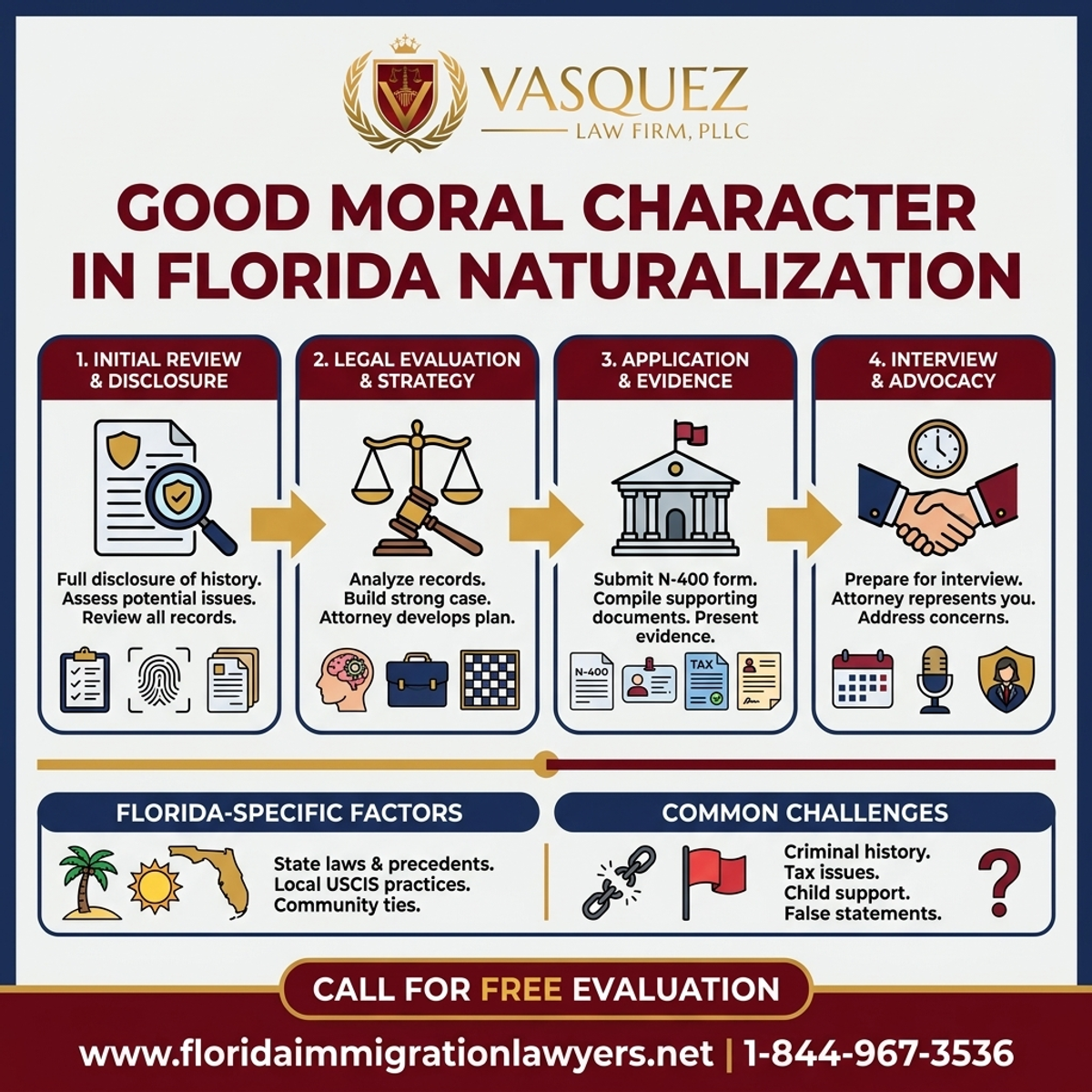
Step-by-Step Process — Good Moral Character in Florida Naturalization
Crimes involving moral turpitude (CIMT) are particularly problematic, often including offenses like theft, fraud, assault with intent to harm, or certain drug-related crimes. An aggravated felony, defined broadly by immigration law, can include crimes such as murder, rape, drug trafficking, or even certain theft offenses with a sentence of at least one year. Convictions for these types of offenses almost always lead to a finding of a lack of good moral character and can result in deportation proceedings.
Even arrests that did not lead to a conviction, or minor offenses, must be disclosed. While an arrest alone might not bar naturalization, failing to disclose it can be considered a lack of honesty, which itself is a basis for denial. USCIS will request certified court dispositions for all arrests and convictions, regardless of how old they are or how minor they seem. Consulting with Florida Immigration Lawyers is crucial if you have any criminal history, as they can assess the impact and help prepare necessary documentation.
Demonstrating rehabilitation can be a mitigating factor in some cases, especially for less severe offenses. This might involve completing parole or probation, participating in counseling, making restitution to victims, and demonstrating a consistent period of law-abiding behavior since the offense. While rehabilitation doesn't erase the criminal history, it can show USCIS a sincere change in character and a commitment to civic responsibility.
How to Demonstrate Good Moral Character on Form N-400?
To demonstrate good moral character on Form N-400, provide complete and honest answers. Include documentation of community service and character references.
Applicants should gather evidence of positive community contributions, such as volunteering or mentoring. Providing letters from reputable community members can support your case.
Honesty is paramount on Form N-400. Any misrepresentation, even if unintentional, can be perceived as a lack of good moral character and lead to denial. It's crucial to review every question carefully, ensuring that all information, especially regarding marital history, children, residences, and any interactions with law enforcement, is accurate and fully disclosed. When in doubt, it’s always best to consult with an attorney from Florida Immigration Lawyers to ensure proper disclosure.
Beyond personal conduct, financial responsibility plays a significant role. This includes consistently filing and paying taxes, adhering to child support obligations, and avoiding bankruptcy if possible. USCIS views financial stability and adherence to financial laws as key indicators of a responsible and law-abiding individual. Providing tax transcripts and proof of child support payments can strengthen your application.
Character references should come from individuals who have known you for a significant period and can attest to your good moral character, community involvement, and adherence to laws. These could be employers, religious leaders, community organizers, or long-term friends. The letters should be specific, detailing instances of your positive contributions and ethical behavior, rather than just generic statements. These personal testimonials can provide a human element to your application, showcasing your positive impact on those around you.
Document Checklist for Proving Good Moral Character
- Police clearance certificates
- Tax compliance documents
- Character reference letters
- Documentation of community involvement
- Proof of employment and financial responsibility
Gathering these documents comprehensively and accurately is a critical step in preparing your naturalization application. Each document serves to corroborate the information provided on your N-400 form and paint a clear picture of your good moral character. For instance, police clearance certificates from all places you've lived demonstrate your commitment to transparency regarding your criminal history, while tax documents confirm your financial responsibility as a resident.
Moreover, proof of employment and consistent financial responsibility, such as pay stubs, bank statements, and credit reports, can demonstrate your stability and contribution to the economy. Documentation of community involvement, like certificates of appreciation or letters from non-profit organizations, highlights your dedication to civic duties and integration into American society. A well-organized and complete document package significantly strengthens your case and can help avoid requests for evidence (RFEs) or delays in processing.
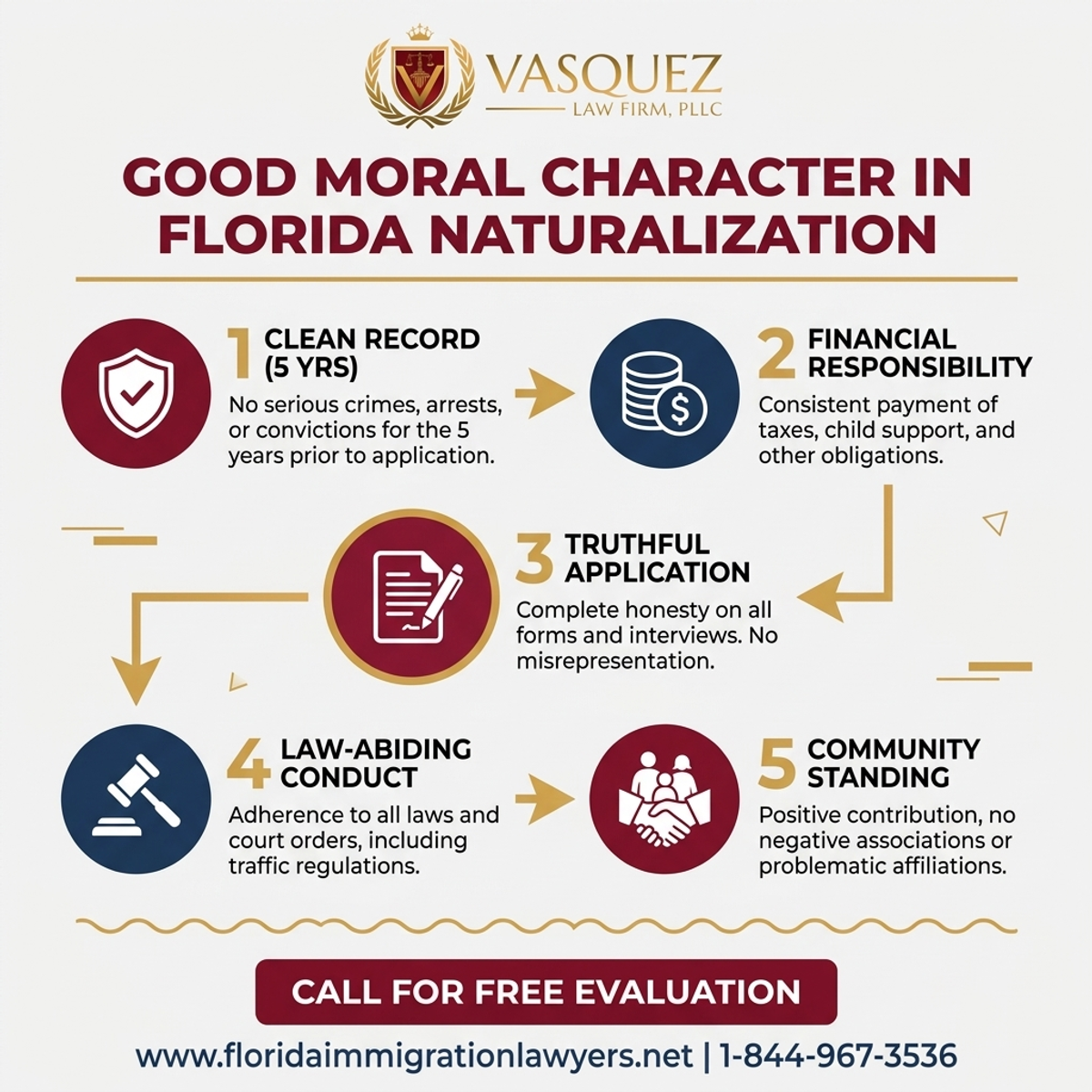
Key Statistics — Good Moral Character in Florida Naturalization
Timeline and Processing Expectations
| Stage | Typical Timeframe | Notes |
|---|---|---|
| N-400 Form Submission | 6-12 months | Varies by USCIS office |
| Biometrics Appointment | 2-4 weeks after submission | Fingerprinting required |
| Interview and Test | 4-6 months after biometrics | Includes English and civics tests |
| Oath Ceremony | 1-2 months after interview | Final step in naturalization |
Cost Factors and Fee Breakdown for Naturalization
| Item | Typical Fee | Notes |
|---|---|---|
| Form N-400 Filing Fee | Check USCIS for current fee | May change annually |
| Biometrics Fee | Included with filing fee | Fingerprinting service |
| Attorney Fees | Varies by case complexity | Consult with your attorney |
Do not navigate this process alone. Contact Florida Immigration Lawyers today.
Detailed Insights into Common Mistakes and How to Avoid Them
While the path to naturalization can seem straightforward, many applicants encounter pitfalls that can delay or even derail their journey. Understanding these common mistakes and proactively addressing them is key to a successful application. Florida Immigration Lawyers frequently assist clients in mitigating the impact of these issues.
Failing to Disclose Criminal History
One of the most critical errors is failing to disclose any criminal history, no matter how minor or old it may seem. USCIS has access to extensive databases and will likely uncover any undisclosed arrests or convictions. Intentional omission is considered a lack of good moral character and can lead to immediate denial, and potentially even charges of misrepresentation. Always provide certified court dispositions for every arrest, even if charges were dropped or you were acquitted. When in doubt, disclose everything and let your attorney from Florida Immigration Lawyers advise on its relevance.
Incorrect or Incomplete Information on Form N-400
Submitting an N-400 form with incorrect or incomplete information is another frequent cause of delays. This can range from simple typographical errors to forgetting to list all addresses or periods of travel. Each discrepancy can trigger a Request for Evidence (RFE) or a Notice of Intent to Deny (NOID), prolonging the process significantly. Double-check all dates, names, and addresses, and ensure every question is answered truthfully and thoroughly. Having an experienced attorney review your application before submission can catch these errors.
Ignoring Tax Obligations
Tax compliance is a direct reflection of financial responsibility and good moral character. Failing to file taxes, owing back taxes, or having tax liens can be a serious impediment to naturalization. USCIS will typically ask for tax transcripts for the last five years. If you have unresolved tax issues, it is imperative to address them before applying, ideally by setting up a payment plan with the IRS. Demonstrating a good faith effort to resolve tax debts is crucial.
Lack of Strong Character References and Community Involvement
While not strictly mandatory, strong character references and evidence of community involvement can significantly bolster your application, especially if there are minor blemishes in your record. Many applicants overlook the power of these positive contributions. Letters from employers, religious leaders, or community organizations that attest to your good character, volunteer work, or positive impact on others can provide a compelling narrative of your integration into American society. Don't miss the opportunity to showcase these aspects of your life.
Missing Biometrics Appointments or Deadlines
USCIS processes applications on a strict schedule, and missing appointments or deadlines can have severe consequences. A missed biometrics appointment, for example, can lead to the denial of your application without further notice. Similarly, failing to respond to RFEs or NOIDs by the specified deadline can result in rejection. Always keep your address updated with USCIS and check your mail regularly. If an unforeseen circumstance prevents you from attending an appointment, contact USCIS immediately and seek legal advice from Florida Immigration Lawyers.
When to Call a Lawyer
Consider consulting a lawyer if you have a criminal history, complicated financial matters, or if you have received a notice from USCIS. Florida Immigration Lawyers can provide guidance and representation for your case, ensuring that your application is thorough and accurate.
Specifically, if you have any arrests, convictions, or even just citations, regardless of the outcome or how long ago they occurred, legal counsel is indispensable. An attorney can analyze your record, determine if any waivers are available, and prepare you for the difficult questions you might face during your interview. Attempting to navigate complex legal issues without professional help can lead to unintended complications or denial.
Furthermore, if you've had previous immigration applications denied, have spent significant time outside the U.S., or have been involved in any legal proceedings (civil or criminal), the expertise of Florida Immigration Lawyers becomes invaluable. They can help you gather the necessary documentation, interpret complex immigration laws, and represent you throughout the entire naturalization process, significantly increasing your chances of success. Don't hesitate to call 1-844-YO-PELEO for a free case review.
About Florida Immigration Lawyers
Florida Immigration Lawyers is a dedicated law firm serving all of Florida, offering expert guidance for immigration matters. Our services include naturalization, deportation defense, and family immigration. With a focus on personalized service, we ensure your case is handled with the utmost care. Available 24/7, we offer free case reviews to help you understand your options. Phone: 1-844-YO-PELEO. Learn more about our immigration practice areas.
Sources and References
- U.S. Citizenship and Immigration Services (USCIS)
- Executive Office for Immigration Review (EOIR)
- 8 U.S.C. Chapter 12 - Immigration and Nationality Act
Related services: naturalization process, citizenship test preparation, dual citizenship guidance, family-based immigration.
This article provides general legal information and is not intended as legal advice. Every case is unique, and outcomes depend on specific facts and circumstances. Contact an attorney for advice about your particular situation.
For personalized guidance, call Florida Immigration Lawyers at 1-844-YO-PELEO for a consultation. Se Habla Espanol - Estamos aqui para ayudarle.
If you need legal assistance, learn more about Florida citizenship legal team, or call us at 1-844-967-3536 for a free case review.
Do Not Navigate This Process Alone
Our experienced immigration attorneys are ready to fight for you. Get a free, confidential case review today.
Se Habla Español
Or leave your details and we’ll call you:
Free Evaluation in 24 Hours
Or talk to us right now

AI voice assistant — available 24/7
FreeFrequently Asked Questions

William J. Vásquez
Founding Attorney · Vasquez Law Firm
U.S. Air Force veteran and immigration attorney with years of hands-on U.S. immigration experience. J.D., NCCU School of Law. AILA member. Admitted to the 4th, 5th, and 11th Circuit Courts.
Available 24/7 - Free Evaluations
Reviewed for legal accuracy by William J. Vásquez
Licensed in North Carolina; U.S. immigration is federal practice.
Related Legal Services
Our Florida immigration attorneys can help you with asylum protection, citizenship and naturalization and immigration practice areas. Call today at 1-844-YO-PELEO for a free case review.
Related Links
Related Topics
Free Legal Case Review
Discuss your case with our experienced attorneys. We're available 24/7.
Se Habla Español - Estamos aquí para ayudarle.
Related Articles
DUI Immigration Consequences in Florida 2026
A DUI conviction in Florida can have severe immigration consequences, potentially leading to inadmissibility, deportation, or denial of immigration benefits. For non-citizens, a DUI is not just a traffic offense but a serious criminal matter that federal immigration law scrutinizes closely. Factors like multiple offenses, injury, or property damage can escalate a simple DUI to a Crime Involving Moral Turpitude (CIMT) or even an aggravated felony, triggering mandatory detention and removal proceedings. Understanding the specific nature of your Florida conviction and its interpretation under the Immigration and Nationality Act (INA) is crucial. This article outlines how DUIs impact immigration status, the grounds for inadmissibility and deportation, a step-by-step guide to navigating the process, essential documentation, and expected timelines for 2026. We also highlight common mistakes to avoid and when to seek legal counsel from an experienced immigration attorney. Florida Immigration Lawyers offers comprehensive support for individuals facing these challenging situations, providing expert guidance through complex legal landscapes.
Immigration Lawyer Orlando Free Consultation in Florida
For individuals and families in Orlando, Florida, navigating the complexities of U.S. immigration law requires expert guidance. An immigration lawyer in Orlando offers crucial support for everything from visa applications and green card processes to naturalization and deportation defense. This comprehensive guide details what a free consultation covers, providing a step-by-step overview of immigration pathways, essential document checklists, and expected timelines in 2026. We also highlight common mistakes to avoid, discuss the critical role of legal counsel in deportation and asylum cases, and explain why choosing a local Orlando immigration attorney is beneficial. Florida Immigration Lawyers is dedicated to serving the diverse community of Orlando with compassionate, effective legal solutions, ensuring you receive personalized advice and robust representation for a successful immigration journey.
EAD Advance Parole Combo Card in Florida 2026
For individuals with a pending Form I-485, Application to Register Permanent Residence or Adjust Status, the EAD Advance Parole Combo Card is an essential document. This single card combines the authorization to work legally in the U.S. (Employment Authorization Document - EAD) with permission to travel internationally and re-enter without abandoning your green card application (Advance Parole). This guide from Florida Immigration Lawyers provides a comprehensive overview for applicants in Florida in 2026, covering eligibility, the step-by-step application process, required documents, expected processing times, and associated costs. We also highlight common mistakes to avoid and when to seek legal counsel to ensure a smooth and successful immigration journey. Understanding this vital card is key to maintaining stability while awaiting your permanent residency approval.
EAD Advance Parole Combo Card in Florida: What You Need
An EAD advance parole combo card allows individuals with pending adjustment applications to both work and travel abroad without jeopardizing their green card application. Learn how to apply in Florida, what documents you need, and common mistakes to avoid.