Fraud Prevention and Detection Fee in Florida
Understand the fraud prevention and detection fee in Florida, crucial for maintaining immigration integrity. Learn about the fee's purpose, who needs to pay it, and how to navigate the payment process effectively. Stay informed about the latest changes and avoid common mistakes by seeking legal advice.
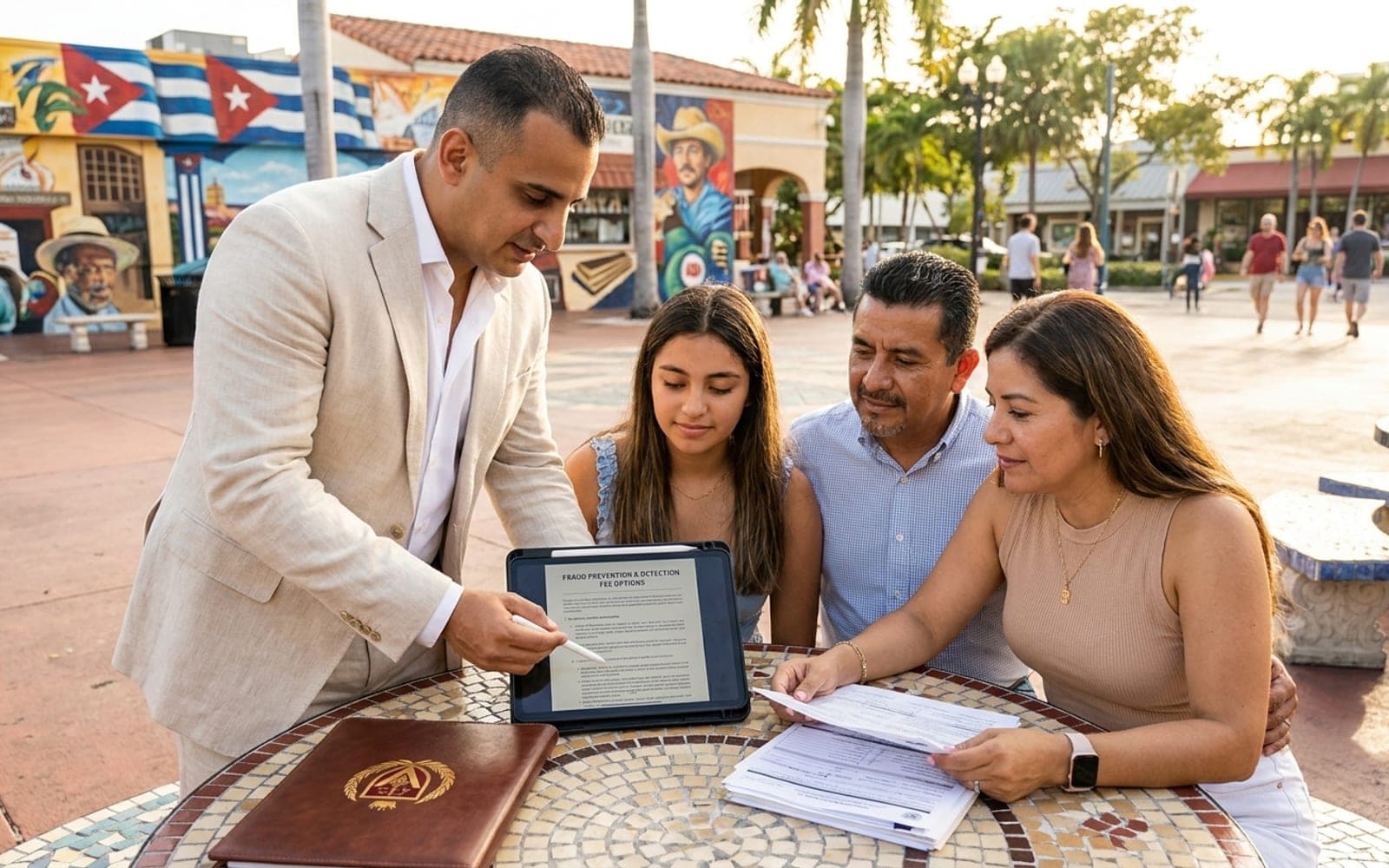
- Applies to specific visa categories
- Essential for fraud deterrence
- Impacts processing of immigration cases
- Part of broader immigration fee structure
Introduction
For many immigrants in Orlando, Florida, understanding the intricacies of immigration fees is crucial. One such fee, the fraud prevention and detection fee, is integral to certain visa applications. As federal policies evolve, especially with recent changes affecting older and disabled individuals' access to care, staying informed about these fees is vital. In this article, we will delve into the specifics of the fraud prevention and detection fee, its implications for immigrants in Florida, and how to navigate the process effectively. Call Florida Immigration Lawyers at 1-844-YO-PELEO for a free case review.
Florida, with its vibrant economy and diverse population, is a major hub for international talent. Businesses across the state rely on skilled foreign workers, making H-1B and L-1 visas particularly relevant. Therefore, understanding every component of the application process, including this specific fee, is not just a bureaucratic step but a strategic necessity for both employers and prospective employees.
Navigating the complex landscape of U.S. immigration law requires precision and up-to-date information. Errors in fee payments or understanding applicability can lead to significant delays, financial losses, and even potential denials. This article aims to demystify the fraud prevention and detection fee, providing clear guidance to help individuals and businesses in Florida ensure compliance and a smoother immigration journey. Florida Immigration Lawyers are here to provide assistance every step of the way.
What is the Fraud Prevention and Detection Fee?
The fraud prevention and detection fee is a charge imposed on certain visa categories to discourage fraudulent activities in the immigration process. As of 2026, this fee is typically required for H-1B and L-1 visa petitions. It is essential in maintaining the legitimacy of the immigration system and ensuring that applicants meet the necessary requirements. The fee is collected by the U.S. Citizenship and Immigration Services (USCIS) and is used to fund fraud detection initiatives.
The fee plays a crucial role in supporting the infrastructure needed to verify and process applications accurately. This ensures that genuine applicants are prioritized and that resources are allocated effectively. The fee's impact is particularly significant in Florida, where diverse immigrant communities are prevalent.
Specifically, the funds generated from this fee are channeled into various USCIS programs designed to identify, investigate, and deter immigration fraud. This includes conducting site visits to employers, analyzing petition data for patterns of abuse, and supporting specialized investigative units. The goal is to safeguard the integrity of the U.S. immigration system against schemes involving sham companies, misrepresentation of qualifications, or other deceptive practices that could undermine legitimate pathways for skilled workers.
Understanding this fee isn't just about paying a charge; it's about recognizing its role in upholding the fairness and security of the immigration system. For individuals and businesses in Florida, compliance helps ensure that the opportunities provided by these visa categories remain available and credible for those who genuinely qualify. Florida Immigration Lawyers emphasize the importance of understanding the purpose behind each fee to ensure full compliance and a strong application.
How Much is the Fraud Prevention and Detection Fee?
As of 2026, the fraud prevention and detection fee is set by the U.S. government and is subject to changes. Currently, the fee is $500 for each applicable petition. However, it is crucial to check the latest updates on the USCIS website or consult with a legal expert to ensure compliance with the most current regulations.
Being aware of this fee is essential for budgeting and planning your immigration process. Incorrect fee submissions can lead to delays or denials, emphasizing the need for accurate information.
It's important to note that immigration fees are not static. They can be adjusted by legislative action or regulatory changes, sometimes without extensive prior notice. Therefore, always verify the exact fee amount on the official USCIS website or with a trusted immigration attorney immediately before preparing your petition. A common mistake is relying on outdated information, which can cause significant setbacks.
For instance, submitting an underpayment will almost certainly lead to the rejection of your petition package, requiring you to resubmit and restart the processing clock. While overpayment might eventually be refunded, it can complicate the initial processing. Therefore, precision in calculating and submitting the correct fee, along with all other associated costs like the base filing fee, is paramount for a smooth application process. Florida Immigration Lawyers can help ensure all fees are correctly calculated and submitted.
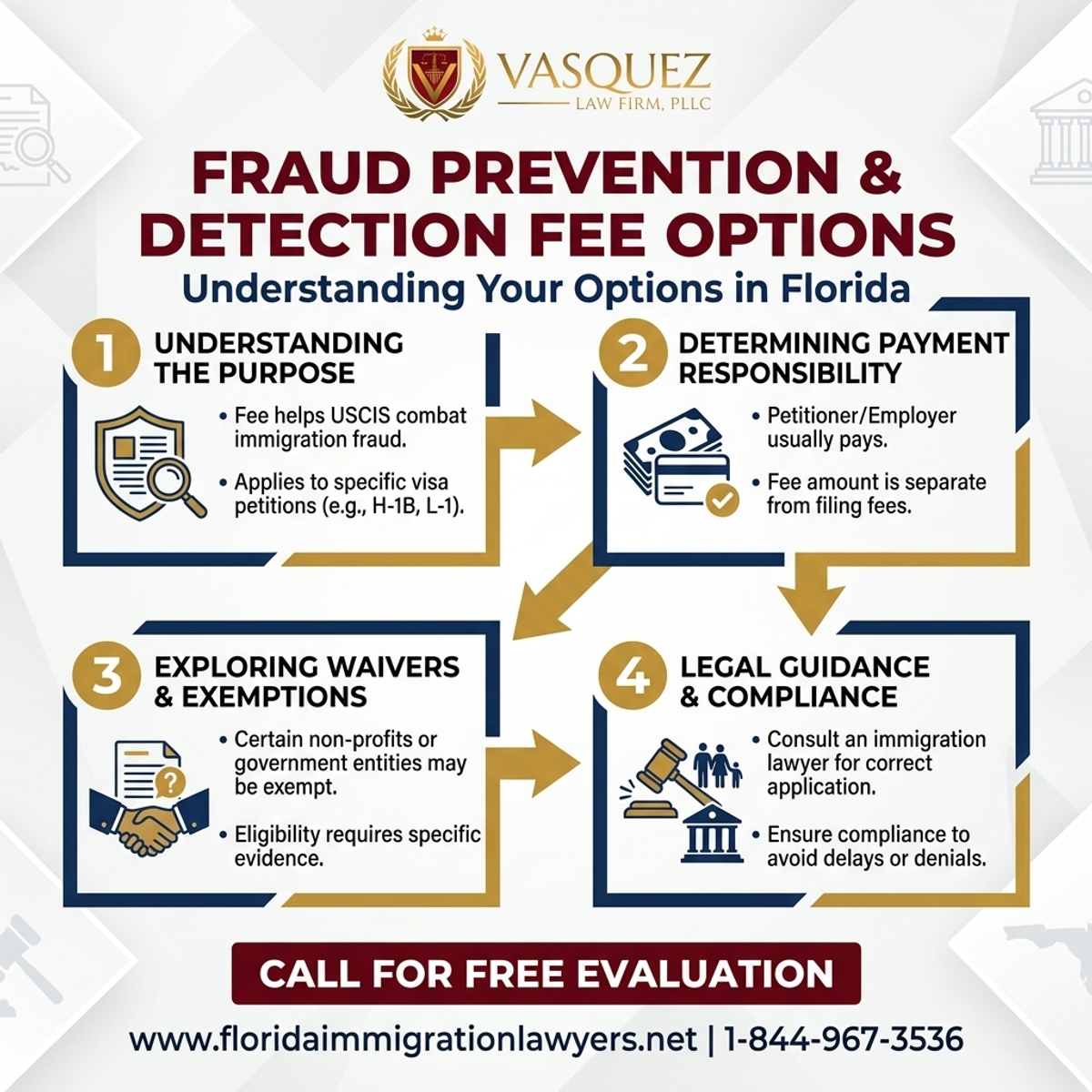
Step-by-Step Process — Fraud Prevention and Detection Fee in Florida: Understanding Your Options
Who is Required to Pay This Fee?
The fraud prevention and detection fee is mandatory for employers filing H-1B, L-1A, and L-1B petitions. This fee applies to new petitions and certain extension petitions. Employers in Florida sponsoring foreign nationals for work must be aware of this requirement to avoid processing delays.
Additionally, understanding which petitions are exempt from this fee can be beneficial. For example, employers filing petitions for E-1, E-2, or TN visas are not required to pay this fee. Ensuring you are filing under the correct category will help streamline your application process.
The H-1B visa is primarily for specialty occupations, often utilized by tech companies, healthcare providers, and educational institutions in Florida seeking highly skilled professionals. The L-1A and L-1B visas are for intracompany transferees, allowing multinational companies with offices in Florida to transfer executives, managers, or employees with specialized knowledge from their foreign branches to their U.S. operations. For these employers, the fraud prevention and detection fee is a standard part of the cost of doing business and attracting global talent.
It's crucial to clarify what constitutes "certain extension petitions." Generally, the fee is required for initial H-1B and L-1 petitions, and for extensions that involve a change of employer. However, extensions of stay with the same employer typically do not require this fee, unless specific circumstances trigger it, such as a significant change in employment terms or a new petition being filed instead of an extension. Always consult the latest USCIS guidelines or Florida Immigration Lawyers to confirm applicability for your specific scenario.
The exemption for E-1 (Treaty Traders), E-2 (Treaty Investors), and TN (NAFTA Professionals) visas is due to their distinct legislative frameworks and the fact that they often have their own mechanisms for preventing fraud or are tied to specific treaty obligations. Understanding these distinctions is vital for employers to avoid unnecessary payments or, conversely, to ensure all required fees are included. A thorough review of your petition type with an immigration attorney from Florida Immigration Lawyers can prevent costly mistakes.
Steps to Pay the Fraud Prevention and Detection Fee
- Determine Applicability: Verify if your petition type requires the fee. This involves carefully reviewing the specific visa category (H-1B, L-1A, L-1B) and the nature of the petition (initial, transfer, or certain extensions).
- Calculate Total Fees: Include the fraud fee with other necessary fees. Remember to add the base filing fee, and if applicable, the ACWIA fee, premium processing fee, and any other surcharges. Ensure the total sum is accurate to the dollar.
- Prepare Payment: Payment should be made by check or money order to the "U.S. Department of Homeland Security." Ensure the payment is accurately made to avoid rejections. Write the petition number (if available) and the employer's name on the memo line of the check or money order.
- Submit with Petition: Include the fee payment with your visa petition package. It is best practice to attach the payment securely to the front of the petition form, perhaps with a paperclip, and clearly label it in your cover letter.
- Retain Proof: Keep copies of the payment for your records. This includes a copy of the check or money order, the mailing receipt, and any confirmation notices from USCIS. This proof is invaluable in case of payment disputes or requests for evidence.
Consulting with an immigration attorney can provide further clarity on this process. For example, Florida Immigration Lawyers can assist in preparing a detailed cover letter that clearly outlines all enclosed documents and payments, minimizing the chance of USCIS overlooking critical components. Do not navigate this process alone. Contact Florida Immigration Lawyers today.
A practical tip for businesses is to maintain a spreadsheet tracking all immigration-related payments, including dates, amounts, and associated petition numbers. This systematic approach can save significant time and stress during audits or if USCIS queries a payment. Ensuring internal compliance procedures are robust will streamline future applications and reduce the risk of errors. Our team at Florida Immigration Lawyers can help establish best practices for your organization.
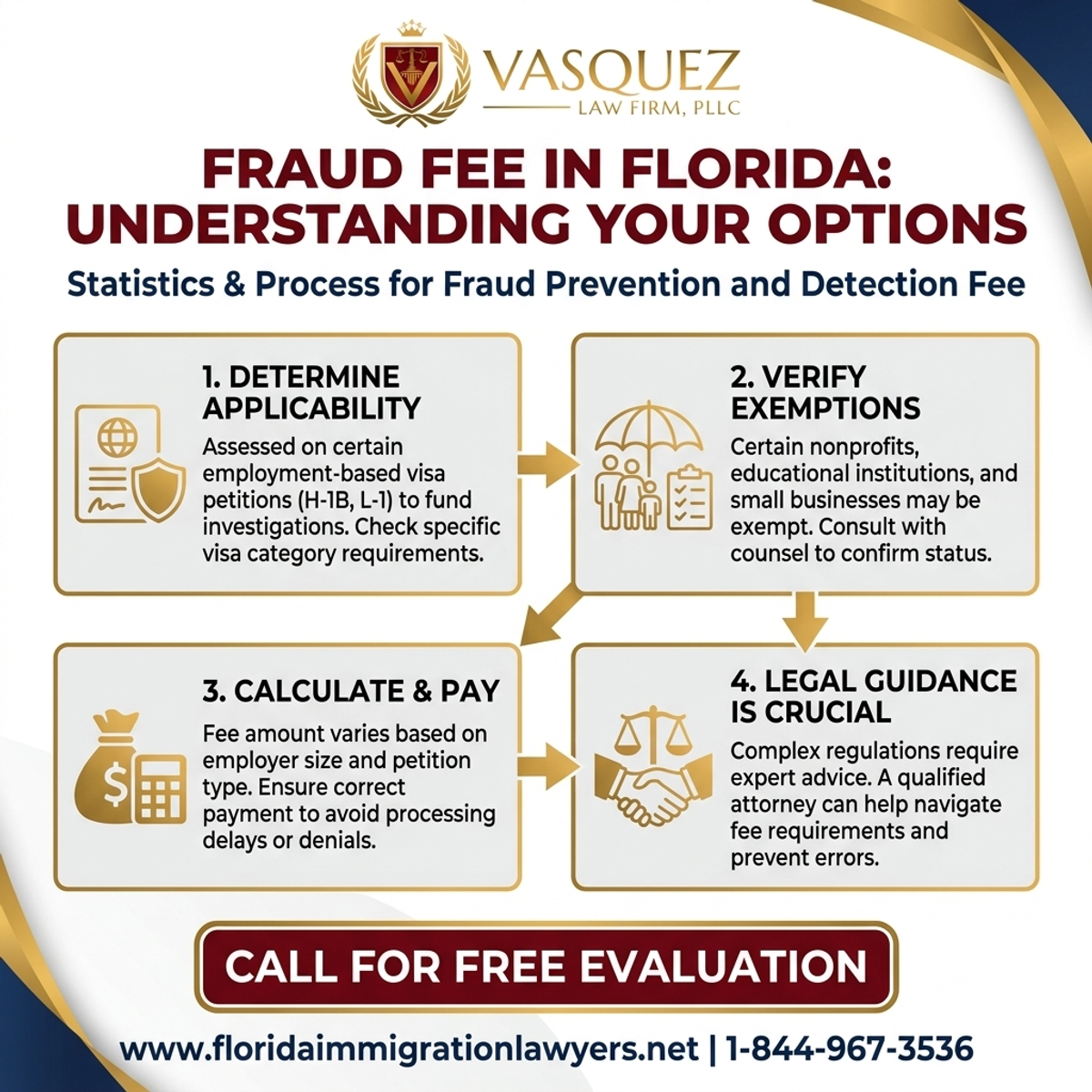
Key Statistics — Fraud Prevention and Detection Fee in Florida: Understanding Your Options
What Documents Are Needed for the Fraud Prevention and Detection Fee?
- Completed Petition Form: Ensure all sections are filled accurately. This means no blank fields unless they are truly not applicable, and all information provided is consistent with supporting documentation.
- Payment Form: Check or money order for the fee. This should be a separate payment instrument for the fraud fee, distinct from the base filing fee, unless USCIS instructions explicitly state otherwise.
- Supporting Documents: Employment offer letters, agreements, and prior immigration documentation. This includes detailed job descriptions, proof of beneficiary's qualifications (degrees, transcripts, licenses), employer's business registration, and any previous visa approvals.
- Employer Verification: Proof of business registration and good standing. This can include IRS Employer Identification Number (EIN) confirmation, state business licenses, tax returns, and articles of incorporation.
These documents are crucial for a successful submission. Missing or incorrect documentation can result in delays or rejections.
Beyond the listed items, USCIS expects a comprehensive package that paints a clear and consistent picture of the employer, the beneficiary, and the proposed employment. For example, the employment offer letter should detail the job title, duties, salary, and duration, aligning perfectly with the information on the petition form. Discrepancies, even minor ones, can trigger a Request for Evidence (RFE) and significantly prolong processing times.
A common pitfall is providing generic documents. For instance, an employer verification should ideally include specific evidence demonstrating the company's active operations and ability to pay the offered wage, especially for newer or smaller businesses. This might involve recent financial statements, client contracts, or a detailed business plan. Florida Immigration Lawyers are adept at identifying and preparing the precise documentation required to strengthen your petition and proactively address potential USCIS concerns.
Understanding the Timeline for Processing
| Stage | Typical Timeframe | Notes |
|---|---|---|
| Fee Submission | Immediate | Submit with petition package |
| Initial Review | 2-4 weeks | USCIS processes fee payment |
| Petition Processing | 3-6 months | Varies by case complexity |
| Final Decision | 6-9 months | Includes background checks |
Processing times can vary, especially with current backlogs in visa processing as reported in recent news. Staying informed and prepared helps manage expectations.
Several factors can influence the actual processing timeline beyond these typical estimates. These include the specific USCIS service center handling your petition, the volume of applications received, and whether your case is selected for an RFE or a site visit. An RFE, for example, can add several weeks or even months to the process, as USCIS will pause adjudication until the requested information is received and reviewed.
For employers and individuals who require a faster decision, USCIS offers a Premium Processing Service for certain petition types, including H-1B and L-1. For an additional fee, USCIS guarantees an adjudication within a specific timeframe (typically 15 calendar days). While this service expedites the decision, it does not guarantee approval and still requires the fraud prevention and detection fee to be paid. Discussing this option with Florida Immigration Lawyers can help determine if it's a viable strategy for your situation.
It is always advisable to monitor the USCIS website for the most current processing times, which are updated regularly by service center and form type. Planning your immigration strategy with these potential variations in mind, and working with experienced legal counsel, can significantly reduce anxiety and ensure you are prepared for any eventuality. Florida Immigration Lawyers are committed to keeping clients informed throughout the entire process.
Common Mistakes to Avoid
- Incorrect Payment Amount: Submitting the wrong fee can delay processing. Even a minor discrepancy can result in the entire petition being rejected, forcing you to resubmit and lose valuable time. Always double-check the current fee schedule on the USCIS website.
- Payment to Wrong Entity: Payments must be made to "U.S. Department of Homeland Security." Payments made to USCIS directly or other entities will be rejected, causing significant delays and requiring a complete resubmission.
- Incomplete Documentation: Missing documents can lead to petition rejection. Ensure every required form, letter, and piece of evidence is included, and that they are all consistent with each other.
- Ignoring Exemptions: Failing to recognize fee exemptions may result in unnecessary payments. Conversely, mistakenly believing your petition is exempt when it is not will lead to rejection.
- Delayed Submission: Late fee payments can impact petition timelines. All fees must be submitted concurrently with the petition package.
- Outdated Information: Always use current forms and guidelines. Immigration policies and forms are frequently updated; using an old version can lead to immediate rejection.
- Missing Employer Details: Incomplete employer information can cause delays. Provide comprehensive business details, including EIN, company structure, and operational proof, to avoid RFEs.
- Lack of Legal Consultation: Not consulting an attorney may lead to costly errors. An experienced immigration lawyer can identify potential issues proactively, ensuring compliance and a stronger petition.
- Misrepresentation: Providing false information can lead to severe penalties, including denial and deportation. Always be truthful and accurate in all submissions.
- Failure to Track Updates: Immigration policies change frequently; staying updated is crucial. Subscribe to USCIS alerts or regularly consult with your immigration attorney.
One of the most critical mistakes is underestimating the complexity of immigration law. For example, a seemingly minor error like an incorrect payment amount can set back a time-sensitive H-1B petition by months, potentially jeopardizing employment start dates. This is why meticulous attention to detail and adherence to the latest USCIS instructions are non-negotiable.
Consider a scenario where an employer in Miami files an H-1B petition but uses a check from an outdated fee schedule. USCIS rejects the entire package, and by the time the employer resubmits with the correct fee, the H-1B cap has been reached. This oversight could cost the company a valuable employee for an entire year. Such scenarios underscore the value of professional guidance from Florida Immigration Lawyers, who can help employers navigate these complexities and avoid such critical errors.
When to Call a Lawyer
Seeking legal assistance is advisable if you encounter complexities in your immigration process. Situations warranting legal help include:
- Receiving a Request for Evidence (RFE) from USCIS
- Uncertainty about fee requirements or exemptions
- Complex immigration histories or prior denials
- Need for expedited processing
Florida Immigration Lawyers offer experience in navigating these challenges, ensuring your petition is handled efficiently.
An RFE, for instance, is not merely a request for more information; it's a signal that USCIS has identified deficiencies or inconsistencies in your initial submission. Responding effectively requires a deep understanding of immigration law and the ability to present compelling evidence that directly addresses USCIS's concerns. Attempting to respond without legal expertise can inadvertently worsen your case or lead to a denial.
Furthermore, if you have a complicated immigration history, such as previous visa overstays, denials, or even minor legal issues, an attorney can help strategize the best approach to disclose this information and mitigate potential negative impacts. They can also advise on whether your case qualifies for expedited processing options like Premium Processing and guide you through that specific application. Don't hesitate to reach out to Florida Immigration Lawyers at 1-844-YO-PELEO for personalized advice.
Frequently Asked Questions About the Fraud Prevention and Detection Fee
Here are some common questions regarding the fraud prevention and detection fee that individuals and employers in Florida often ask:
About Florida Immigration Lawyers
At Florida Immigration Lawyers, we are dedicated to assisting immigrants throughout Florida. Our team provides comprehensive legal services, including immigration assistance, asylum applications, and deportation defense. With a deep understanding of Florida's diverse immigrant communities, we strive to deliver personalized support. Call us at 1-844-YO-PELEO for a free consultation. Schedule a free consultation today.
Sources and References
- U.S. Citizenship and Immigration Services (USCIS)
- Executive Office for Immigration Review (EOIR)
- 8 U.S.C. Chapter 12 - Immigration and Nationality Act
Related services: immigration practice areas, family immigration services, citizenship and naturalization, business immigration.
This article provides general legal information and is not intended as legal advice. Every case is unique, and outcomes depend on specific facts and circumstances. Contact an attorney for advice about your particular situation.
Final CTA
For guidance on handling the fraud prevention and detection fee, contact Florida Immigration Lawyers at 1-844-YO-PELEO. Se Habla Espanol - Estamos aqui para ayudarle.
Do Not Navigate This Process Alone
Our experienced immigration attorneys are ready to fight for you. Get a free, confidential case review today.
Se Habla Español
Or leave your details and we’ll call you:
Free Evaluation in 24 Hours
Or talk to us right now
AI voice assistant — available 24/7
FreeFrequently Asked Questions

William J. Vásquez
Founding Attorney · Vasquez Law Firm
U.S. Air Force veteran and immigration attorney with years of hands-on U.S. immigration experience. J.D., NCCU School of Law. AILA member. Admitted to the 4th, 5th, and 11th Circuit Courts.
Available 24/7 - Free Evaluations
Reviewed for legal accuracy by William J. Vásquez
Licensed in North Carolina; U.S. immigration is federal practice.
Related Legal Services
Our Florida immigration attorneys can help you with experienced immigration attorneys, asylum protection and citizenship and naturalization. Call today at 1-844-YO-PELEO for a free case review.
Related Links
Related Topics
Free Legal Case Review
Discuss your case with our experienced attorneys. We're available 24/7.
Se Habla Español - Estamos aquí para ayudarle.
Related Articles
EB-5 Investor Green Card in Florida: A 2026 Guide
Explore how to obtain an EB-5 investor green card in Florida. Learn about the investment requirements, processes, and benefits of participating in this program. Discover how Florida's economic landscape can be an ideal setting for your investment. Contact Florida Immigration Lawyers for a free case review.
Certificate of Eligibility for Expungement in Florida 2026
For non-U.S. citizens in Florida, understanding how a state expungement impacts immigration status is critical. A certificate of eligibility for expungement in Florida allows a criminal record to be sealed or expunged under state law. However, federal immigration agencies often disregard such state-level relief, still considering the original criminal offense as a conviction for immigration purposes. This can have severe implications for visa applications, green card eligibility, naturalization, and even lead to deportation. This guide clarifies the Florida expungement process, its limited effect on federal immigration law, and key steps to protect your status in 2026. Learn about common mistakes, required documents, timelines, and when to seek expert legal counsel from Florida Immigration Lawyers to navigate these complex issues effectively.
Immigration Lawyer Orlando Free Consultation in Florida
For individuals and families in Orlando, Florida, navigating the complexities of U.S. immigration law requires expert guidance. An immigration lawyer in Orlando offers crucial support for everything from visa applications and green card processes to naturalization and deportation defense. This comprehensive guide details what a free consultation covers, providing a step-by-step overview of immigration pathways, essential document checklists, and expected timelines in 2026. We also highlight common mistakes to avoid, discuss the critical role of legal counsel in deportation and asylum cases, and explain why choosing a local Orlando immigration attorney is beneficial. Florida Immigration Lawyers is dedicated to serving the diverse community of Orlando with compassionate, effective legal solutions, ensuring you receive personalized advice and robust representation for a successful immigration journey.
Consular Return After Visa Denial in Florida 2026
A 221(g) visa denial is a temporary refusal, not a final rejection, indicating that your application requires additional documents or administrative processing before a final decision. This often leads to a 'consular return' for further review by the U.S. Embassy or Consulate. Understanding the specific reasons for this refusal and how to respond accurately and promptly is vital for applicants in Florida. This comprehensive guide from Florida Immigration Lawyers explains the 221(g) process, outlines necessary documentation, details typical processing timelines, and highlights common mistakes to avoid. We also discuss when legal counsel is essential to navigate complex issues, address potential inadmissibility grounds, and ensure your response is complete and compelling. Our dedicated attorneys in Central Florida are ready to assist you in overcoming these challenges and advancing your immigration journey.