Florida Refugee Immigration Help: 2026 Resettlement Guide
Seeking refugee immigration help in Florida involves a detailed process, starting with overseas referral and culminating in resettlement and a path to permanent residency. This guide from Florida Immigration Lawyers provides crucial insights into eligibility, the application steps, required documentation, and expected timelines for 2026. We detail the support systems available from resettlement agencies in Florida and highlight the common challenges and opportunities refugees face. Understanding these aspects, from the initial USCIS interviews to applying for a Green Card under INA Section 209, is vital for a successful transition. We also cover potential costs, crucial mistakes to avoid, and when to seek expert legal counsel to protect your rights and ensure a smooth journey towards a new life in Florida.
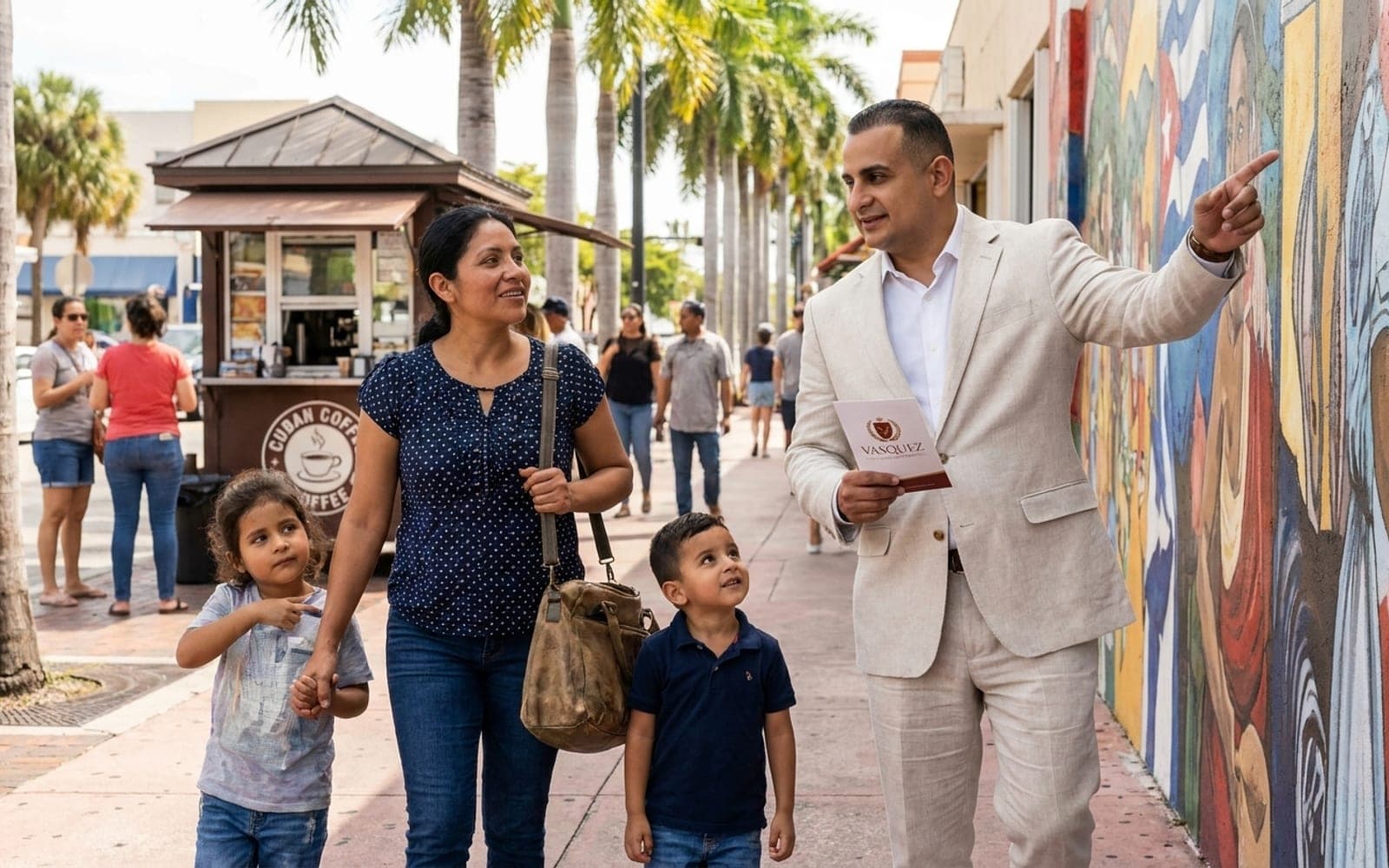
For those seeking Florida refugee immigration help, the process involves a complex series of steps managed by U.S. Citizenship and Immigration Services (USCIS) and resettlement agencies, often initiated overseas through the UNHCR. Eligibility hinges on a well-founded fear of persecution in your home country. As of 2026, individuals must typically be referred by the UNHCR or a U.S. Embassy and undergo extensive vetting before arriving in Florida. Once here, resettlement agencies provide crucial initial support, but legal guidance is essential to navigate the path to a Green Card and eventual citizenship.
- Refugee status is granted based on a well-founded fear of persecution due to race, religion, nationality, political opinion, or membership in a particular social group.
- Most refugees apply from outside the U.S., often with a referral from the UNHCR or a U.S. embassy.
- Upon arrival in Florida, resettlement agencies offer initial assistance with housing, food, and basic services.
- Refugees are eligible to apply for a Green Card (permanent residency) after one year of continuous presence in the U.S.
- Legal assistance from firms like Florida Immigration Lawyers is vital for understanding eligibility, navigating applications, and avoiding common pitfalls.
Finding a safe haven and a new beginning is a profound journey, especially when escaping persecution in your home country. If you are seeking Florida refugee immigration help, you are embarking on a path that, while challenging, offers the promise of safety and opportunity. Florida, with its diverse communities and established support networks, has become a new home for many refugees seeking to rebuild their lives.
This comprehensive guide from Florida Immigration Lawyers is designed to illuminate the refugee process, from understanding eligibility to navigating resettlement in the Sunshine State. We will cover the crucial steps, required documentation, timelines, and the vital support systems available. Our goal is to empower you with the knowledge needed to pursue a secure future for yourself and your family.
Do not face this complex legal journey alone. Call Florida Immigration Lawyers at 1-844-YO-PELEO for a free case review and let our experienced team provide the guidance you deserve.
What is Refugee Status and Who Qualifies in Florida?
Refugee status is a legal designation granted to individuals who have fled their home country due to a well-founded fear of persecution. In Florida, as in the rest of the United States, this status is determined by federal law, specifically the Immigration and Nationality Act (INA). Individuals qualify if they can demonstrate persecution or a well-founded fear of persecution based on their race, religion, nationality, membership in a particular social group, or political opinion. This status is generally sought from outside the U.S. and differs from asylum, which is sought by individuals already present in the U.S. or at a port of entry.
To be recognized as a refugee, you must meet the definition outlined in INA Section 101(a)(42) (8 U.S.C. § 1101(a)(42)). This means you cannot safely return to your home country. The U.S. government, often in collaboration with international bodies like the United Nations High Commissioner for Refugees (UNHCR), identifies and processes refugees for resettlement. Florida plays a significant role in this resettlement effort, welcoming individuals from various countries facing crises. Understanding these core definitions is the first step in seeking Florida refugee immigration help.
The U.S. Refugee Admissions Program (USRAP) is the mechanism through which refugees are processed. Most individuals are referred to the USRAP by the UNHCR, a U.S. embassy, or a non-governmental organization. It is a rigorous process involving multiple interviews, security checks, and medical examinations conducted by federal agencies like USCIS and the Department of Homeland Security. Florida's resettlement agencies then assist with the integration process upon arrival, providing vital resources and support to help new arrivals establish themselves in communities like Orlando, Miami, and Jacksonville.
How Do I Apply for Refugee Resettlement in Florida?
Applying for refugee resettlement in Florida typically begins outside the United States, often with a referral from the United Nations High Commissioner for Refugees (UNHCR) or a U.S. embassy. The process is centralized and managed by the U.S. Refugee Admissions Program (USRAP), which collaborates with various U.S. government agencies and international organizations. You cannot directly apply for refugee status from within Florida if you have not already been referred and processed overseas.
Here are the general steps involved in applying for refugee resettlement:
-
Referral to the USRAP: The vast majority of individuals considered for refugee status in the U.S. are referred by the UNHCR or a U.S. Embassy in their country of asylum. They identify individuals who meet the refugee definition and are in need of resettlement.
-
Resettlement Support Center (RSC) Processing: Once referred, your case is sent to one of several Resettlement Support Centers (RSCs) located around the world. RSCs collect biographical information, prepare cases for USCIS interviews, and conduct initial security checks. This stage can involve multiple interviews and document collection.
-
USCIS Interview: An officer from U.S. Citizenship and Immigration Services (USCIS) will conduct a thorough interview to determine if you meet the legal definition of a refugee. This interview is critical for establishing your credible fear of persecution. Although the interview takes place overseas, the decision directly impacts your eligibility for resettlement in the U.S. and potentially in Florida.
-
Extensive Security Clearances: After a positive USCIS interview, your case undergoes multiple layers of security checks by various U.S. federal law enforcement and intelligence agencies. These checks are comprehensive and can take a significant amount of time to complete.
-
Medical Examination: You will undergo a mandatory medical examination to ensure you do not have any inadmissible health conditions. This is a crucial step for public health and safety.
-
Cultural Orientation and Placement: If cleared, you will receive cultural orientation classes to prepare you for life in the United States. During this phase, a U.S. resettlement agency will work with the Department of State's Bureau of Population, Refugees, and Migration (PRM) to determine your initial resettlement location, which could be in Florida, based on factors like family ties or available community resources.
-
Travel to the U.S. and Initial Resettlement: Once all clearances are complete and a placement is secured, travel arrangements are made. Upon arrival in Florida, a local resettlement agency will meet you and provide initial support services, including housing, food, and assistance with basic needs. These agencies are crucial for providing Florida refugee immigration help during the initial transition period.
What Documents Are Needed for Refugee Status and Resettlement?
While the initial refugee application is often managed by the UNHCR and Resettlement Support Centers (RSCs) overseas, specific documentation is crucial throughout the process. Having these documents readily available and accurately translated can significantly streamline your case, even if you are not directly filling out forms. When seeking Florida refugee immigration help, understanding these requirements is paramount.
Here is a general checklist of documents and information typically required:
- Proof of Identity and Nationality: Original birth certificates, national identity cards, or any other government-issued identification from your home country. These documents establish who you are and your country of origin.
- Family Relationship Documents: Marriage certificates, birth certificates for children, and any other official documents proving your relationship to family members who are part of your application. This is vital for family reunification.
- Evidence of Persecution: Any documents, reports, photos, or testimonies that support your claim of a well-founded fear of persecution. This could include police reports, medical records of injuries, arrest warrants, news articles, or letters from human rights organizations.
- Previous Immigration Documents: If you have ever applied for a visa, asylum, or any other immigration benefit in any country, you should provide those records. Transparency is key in all immigration processes.
- Educational and Professional Records: While not directly tied to refugee eligibility, diplomas, school transcripts, and professional certifications can be helpful for eventual resettlement and employment in Florida.
- Travel Documents: Any passports or travel documents you possess, even if expired or seized by authorities, should be disclosed.
- Biographical Information: While not physical documents, accurate dates of birth, places of birth, addresses, and employment history for yourself and all family members included in the application are critical for background checks.
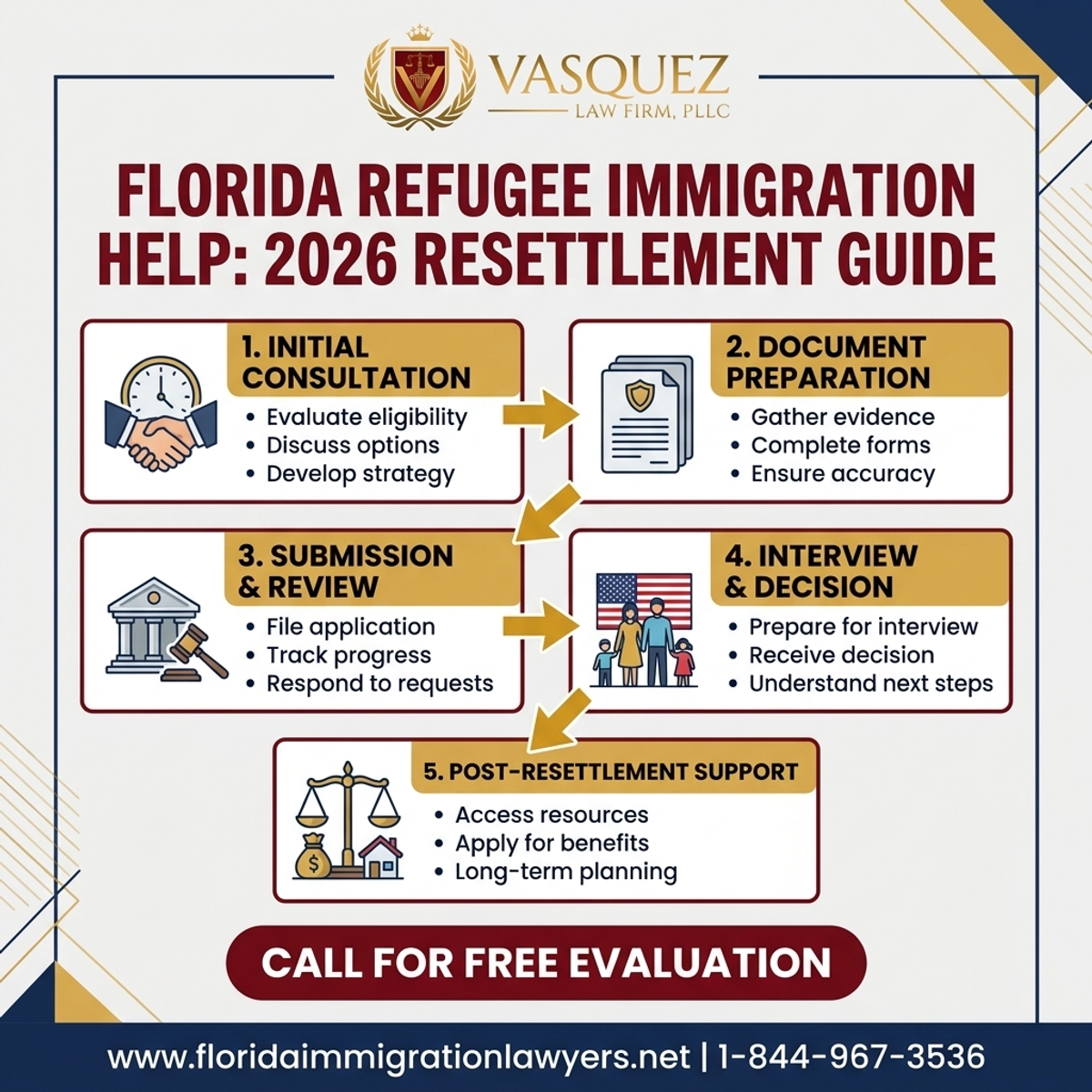
Step-by-Step Process — Florida Refugee Immigration Help: 2026 Resettlement Guide
It is important to note that all documents not in English must be accompanied by a certified English translation. Florida Immigration Lawyers can assist you in preparing and organizing these crucial documents, ensuring they meet the strict requirements of USCIS and the Department of State.
What is the Typical Timeline for Refugee Processing and Resettlement in 2026?
The timeline for refugee processing and resettlement can vary significantly, ranging from several months to many years, depending on various factors such as your country of origin, the complexity of your case, security checks, and the volume of applications. As of 2026, applicants seeking Florida refugee immigration help should prepare for a lengthy process, particularly for overseas processing.
Here is a general breakdown of the typical stages and expected timeframes:
| Stage | Typical Timeframe | Notes |
|---|---|---|
| UNHCR Registration & Referral | 6 months to 5+ years | Depends on country of asylum, caseload, and security situation. This is often the longest stage. |
| RSC Processing & Interview Prep | 3 months to 2 years | Collection of biographical data, initial interviews, case preparation for USCIS. |
| USCIS Interview & Decision | 1 to 6 months | Interview conducted by a USCIS officer. Decision may be immediate or take several weeks. |
| Security Clearances | 6 months to 3+ years | Extensive background checks by multiple U.S. agencies. This is often an unpredictable and lengthy stage. |
| Medical Examination | 1 to 3 months | Conducted by an authorized physician. Results typically valid for 6 months. |
| Cultural Orientation & Placement | 1 to 3 months | Preparation for life in the U.S. and assignment to a resettlement agency in a state like Florida. |
| Travel to the U.S. | 1 to 2 months | Arrangements made after all clearances are complete. |
| Initial Resettlement in Florida | First 3-6 months | Assistance with housing, food, medical care, employment services from local agencies. |
These timelines are estimates and can fluctuate. Factors like changes in U.S. immigration policy, global refugee crises, and administrative backlogs can all influence the processing speed. Patience and consistent follow-up, often through your legal representative, are crucial.
What are the Costs Associated with Refugee Immigration Help in Florida?
Understanding the financial aspects of seeking Florida refugee immigration help is crucial, though it's important to note that the U.S. government does not charge fees for the refugee application process itself. The U.S. Refugee Admissions Program (USRAP) is designed to assist individuals who have limited financial resources due to their circumstances. However, other costs can arise, particularly if you seek legal representation or need to cover certain expenses not covered by initial resettlement assistance.
Here is a breakdown of typical fee considerations:
| Item | Typical Fee | Notes |
|---|---|---|
| USCIS Refugee Application Fees | $0 | There are no government filing fees for refugee applications. This is a significant relief for applicants. |
| Legal Consultation Fees | Varies (Free initial consultation at Florida Immigration Lawyers) | While not mandatory, legal counsel is highly recommended for complex cases, appeals, or Green Card applications. Florida Immigration Lawyers offers free initial case reviews. |
| Travel Costs to U.S. | Initially covered by IOM/PRM (may be a loan) | Travel is typically facilitated and paid for by the International Organization for Migration (IOM) with funding from the Department of State. This is often provided as a loan that refugees are expected to repay over time. |
| Medical Examination Fees | Typically covered by USRAP | The cost of the required medical exam is generally covered by the USRAP before travel. |
| Document Translation Fees | Varies (if not provided by RSCs) | If you need personal documents translated and certified, there will be associated costs. Our firm can guide you on reliable translation services. |
| Green Card Application (Form I-485) | As of 2026, check USCIS website for current fees | After one year in the U.S., refugees apply for adjustment of status. This application typically has a filing fee, though fee waivers may be available for eligible individuals. |
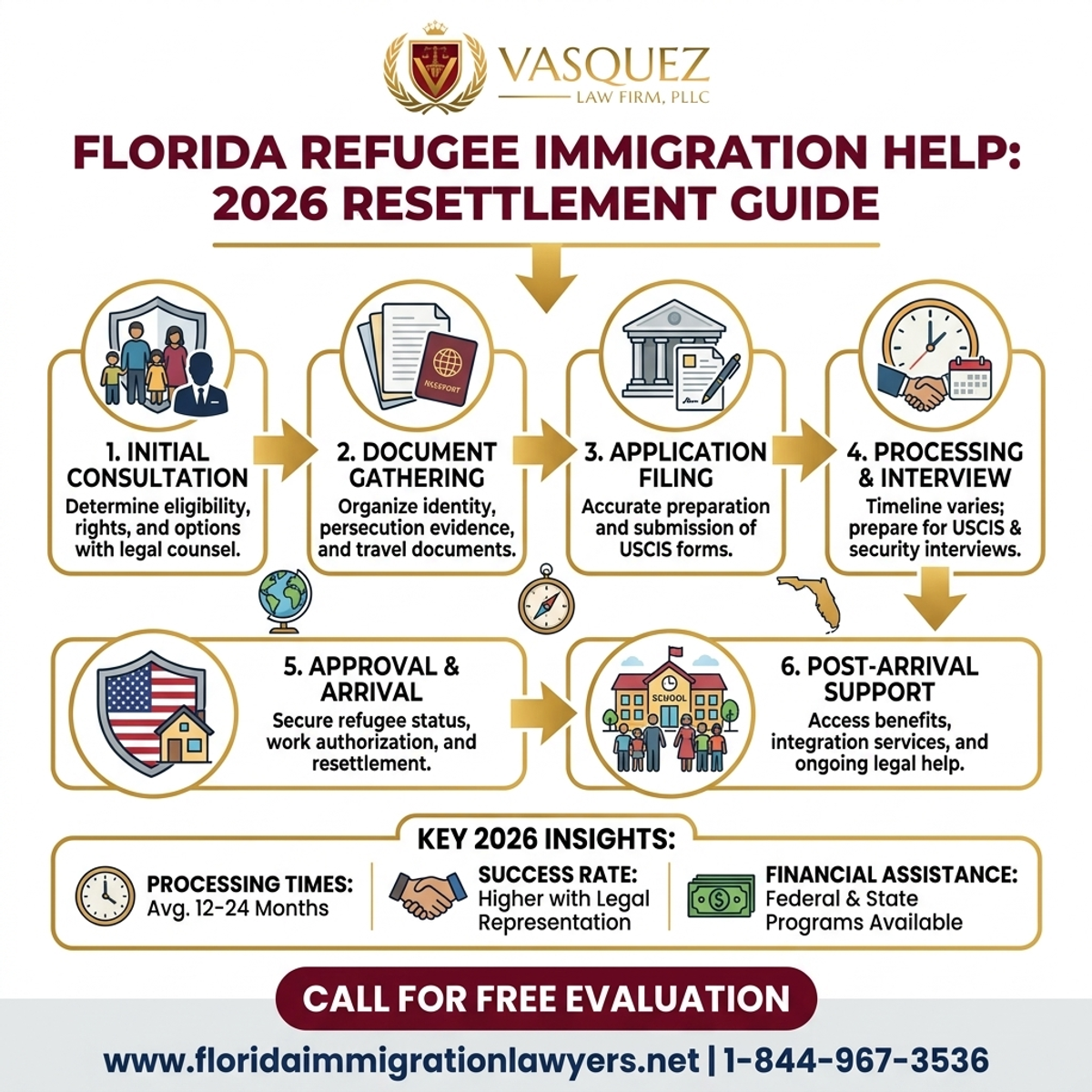
Key Statistics — Florida Refugee Immigration Help: 2026 Resettlement Guide
It is crucial to budget for living expenses once you arrive in Florida, even with initial assistance from resettlement agencies. These agencies provide temporary support, but refugees are expected to become self-sufficient within a few months. Legal fees for services beyond the initial refugee application, such as Green Card applications or family reunification petitions, should also be considered. Florida Immigration Lawyers is transparent about all potential costs and can discuss payment options during your consultation.
Understanding Resettlement Services and Support in Florida
Upon arrival in Florida, refugees are connected with local resettlement agencies that play a pivotal role in their initial integration. These agencies, often non-profit organizations working under cooperative agreements with the U.S. Department of State, provide critical support to help refugees become self-sufficient members of their new communities. For individuals seeking Florida refugee immigration help, these services are a lifeline during the challenging first few months.
Key services typically offered include:
- Housing Assistance: Agencies help secure safe, affordable housing, often providing initial rent and utility deposits. They also furnish homes with essential items.
- Cultural Orientation: Programs designed to familiarize refugees with American customs, laws, financial systems, and daily life in Florida.
- Food and Basic Needs: Assistance with accessing food, clothing, and other necessities, often through direct aid, food banks, and public benefit programs.
- Medical Assistance: Help scheduling initial medical screenings and connecting refugees with healthcare providers and health insurance options. Refugees are typically eligible for Medicaid upon arrival.
- Employment Support: Job readiness training, resume building, interview skills, and assistance in finding initial employment to achieve financial independence.
- English Language Training: Referrals to ESL classes to help refugees overcome language barriers, which are crucial for employment and social integration.
- School Enrollment: Assistance enrolling children in local public schools and helping parents understand the U.S. education system.
- Community Integration: Connecting refugees with local community groups, faith-based organizations, and other resources to foster a sense of belonging.
Florida has several key resettlement agencies, including local branches of Catholic Charities, World Relief, and the Hebrew Immigrant Aid Society (HIAS), with offices in cities such as Orlando, Jacksonville, and Miami. These organizations are instrumental in ensuring that refugees receive comprehensive support as they begin their new lives in Florida.
Navigating Challenges and Opportunities for Refugees in Florida
Resettlement in Florida presents both significant challenges and immense opportunities for refugees. While the initial support from resettlement agencies is invaluable, the path to full integration requires resilience and access to ongoing resources. Understanding these aspects is crucial for anyone receiving Florida refugee immigration help.
Common Challenges:
- Language Barriers: English proficiency is often a major hurdle, impacting employment, education, and daily interactions.
- Cultural Adjustment: Adapting to a new culture, social norms, and legal system can be disorienting and stressful.
- Employment: Finding stable, well-paying jobs that align with previous skills and experience can be difficult, often requiring re-credentialing or new training.
- Housing: Securing affordable and permanent housing in Florida's competitive real estate market remains a challenge for many.
- Mental Health: Many refugees have experienced trauma, and accessing appropriate mental health services is critical but often overlooked.
- Navigating Bureaucracy: Understanding and interacting with various government agencies, from DMV to social services, can be overwhelming.
Key Opportunities:
- Path to Permanent Residency: After one year of continuous presence in the U.S., refugees are eligible to apply for adjustment of status to become lawful permanent residents (Green Card holders) under INA Section 209 (8 U.S.C. § 1159). This is a critical step towards long-term stability and security.
- Citizenship: After five years as a lawful permanent resident, refugees may apply for U.S. citizenship, granting full rights and privileges.
- Education: Access to public education for children and opportunities for adult education, including ESL and vocational training, are widely available in Florida.
- Community Support: Florida's diverse communities often have robust networks of support groups, cultural organizations, and faith-based initiatives that welcome and assist refugees.
- Economic Integration: With perseverance, refugees can find meaningful employment and contribute to Florida's economy, achieving financial independence and a higher quality of life.
Florida Immigration Lawyers can provide essential legal guidance for refugees seeking to adjust their status to a Green Card, apply for family reunification, or navigate other complex immigration matters. We are dedicated to helping you maximize these opportunities and overcome challenges.
Do not navigate this process alone. Contact Florida Immigration Lawyers today. Our team is ready to provide the dedicated legal support you need.
Common Mistakes to Avoid When Seeking Refugee Immigration Help
The refugee immigration process is intricate, and even minor errors can lead to significant delays or denials. Being aware of these common pitfalls can save you time, stress, and potential heartbreak when seeking Florida refugee immigration help.
-
Providing Inconsistent or False Information: Any discrepancies or misrepresentations in your testimony or documentation can severely damage your credibility and lead to a denial. Always be truthful and consistent.
-
Missing Deadlines: The immigration process is strict about deadlines, especially for subsequent applications like adjustment of status to a Green Card. Failing to meet these can result in lost opportunities.
-
Failing to Disclose All Relevant Information: Omitting details, even if seemingly minor, can be considered misrepresentation. It's best to disclose all information, allowing your attorney to assess its relevance.
-
Not Seeking Legal Counsel: Attempting to navigate the complex legal framework of refugee law, Green Card applications, and family petitions without an experienced attorney significantly increases the risk of errors.
-
Poorly Translated Documents: Submitting documents that are not accurately or properly certified translated can lead to rejections or requests for evidence, causing delays.
-
Traveling Without Permission: Once you are granted refugee status, traveling outside the U.S. without proper documentation (like a Refugee Travel Document) can lead to issues upon re-entry or even loss of status.
-
Not Updating USCIS of Address Changes: You are legally required to inform USCIS of any change of address within 10 days. Failure to do so can result in missed notices and critical information.
-
Ignoring USCIS Requests for Evidence (RFE): If USCIS sends an RFE, it is crucial to respond completely and on time. Ignoring it will lead to a denial.
-
Failing to Understand the Difference Between Refugee and Asylum Status: While related, the application processes and eligibility criteria differ. Misunderstanding this can lead to applying for the wrong benefit.
-
Delaying Green Card Application: Refugees should apply for adjustment of status to a Green Card one year after their arrival. Delaying this can complicate future immigration benefits.
When to Call a Lawyer for Florida Refugee Immigration Help
While resettlement agencies provide invaluable support, their role is primarily social services, not legal representation. For the complex legal aspects of refugee immigration, especially when seeking Florida refugee immigration help, an experienced attorney is indispensable. You should consider contacting Florida Immigration Lawyers in several key scenarios to protect your rights and ensure a smooth process.
Call us if:
- You have questions about your eligibility or the application process: Before making any decisions, ensure you fully understand the legal requirements.
- Your application has been delayed or denied: An attorney can review the reasons for delay or denial and advise on potential appeals or remedies.
- You face a Request for Evidence (RFE) from USCIS: Responding to an RFE accurately and comprehensively is critical, and a lawyer can help gather the necessary documentation.
- You are preparing for a USCIS interview: Legal counsel can help you prepare your testimony and documents, ensuring you present your case effectively.
- You have a criminal history or other inadmissibility issues: These complexities require expert legal analysis to determine their impact on your case and explore any possible waivers.
- You are ready to apply for a Green Card: The adjustment of status process for refugees can be complex, and an attorney can help ensure your application is complete and timely.
- You wish to petition for family reunification: Bringing family members to the U.S. involves specific legal procedures that an immigration lawyer can expertly manage.
- You are concerned about deportation or removal proceedings: If you receive any notice from the Executive Office for Immigration Review (EOIR) or ICE, immediate legal intervention is necessary. Our firm specializes in deportation defense.
Florida Immigration Lawyers offers comprehensive services for refugees, including assistance with general immigration matters, asylum applications, adjustment of status, and citizenship. Our dedicated team understands the unique challenges faced by refugees and is committed to providing compassionate and effective legal representation.
About Florida Immigration Lawyers
Florida Immigration Lawyers is a leading law firm dedicated to providing comprehensive and compassionate immigration legal services throughout Florida. With a deep understanding of U.S. immigration law and its complexities, we proudly serve individuals and families seeking new beginnings in the United States. Our team of experienced attorneys is committed to offering personalized attention and strategic advocacy for every client.
We handle a wide range of immigration matters, including refugee and asylum cases, family-based petitions, employment-based visas, deportation defense, and naturalization. Our firm is known for its unwavering commitment to clients, offering clear communication, transparent processes, and vigorous representation. We understand that immigration journeys can be daunting, and we strive to be a steadfast partner every step of the way.
At Florida Immigration Lawyers, we offer 24/7 availability and free case reviews to ensure that everyone has access to initial legal guidance. Our offices, centrally located in Orlando, serve clients across all of Florida, from Gainesville to Miami. We are proud to offer bilingual services, with a team that is fluent in both English and Spanish, ensuring that language is never a barrier to receiving quality legal assistance. Choose Florida Immigration Lawyers for a dedicated advocate who will fight for your rights and your future. Schedule a free consultation today to discuss your immigration needs.
Sources and References
- U.S. Citizenship and Immigration Services (USCIS)
- U.S. Department of State - Bureau of Population, Refugees, and Migration (PRM)
- Executive Office for Immigration Review (EOIR)
- Immigration and Nationality Act (INA) Section 101(a)(42) - 8 U.S.C. § 1101(a)(42)
- Immigration and Nationality Act (INA) Section 209 - 8 U.S.C. § 1159
- 8 Code of Federal Regulations (CFR) Part 207 - Refugee Status
- United Nations High Commissioner for Refugees (UNHCR)
Related services: asylum application process, withholding of removal, humanitarian protection programs.
This article provides general legal information and is not intended as legal advice. Every case is unique, and outcomes depend on specific facts and circumstances. Contact an attorney for advice about your particular situation.
Embarking on a new life as a refugee in Florida is a journey filled with hope and challenges. Let Florida Immigration Lawyers be your trusted partner in navigating this path. Our compassionate and experienced team is ready to provide the dedicated legal support you need to achieve stability and security. Call us today for a free case review at 1-844-YO-PELEO. Se Habla Espanol - Estamos aqui para ayudarle.
Do Not Navigate This Process Alone
Our experienced immigration attorneys are ready to fight for you. Get a free, confidential case review today.
Se Habla Español
Or leave your details and we’ll call you:
Free Evaluation in 24 Hours
Or talk to us right now
AI voice assistant — available 24/7
FreeFrequently Asked Questions

William J. Vásquez
Founding Attorney · Vasquez Law Firm
U.S. Air Force veteran and immigration attorney with years of hands-on U.S. immigration experience. J.D., NCCU School of Law. AILA member. Admitted to the 4th, 5th, and 11th Circuit Courts.
Available 24/7 - Free Evaluations
Reviewed for legal accuracy by William J. Vásquez
Licensed in North Carolina; U.S. immigration is federal practice.
Related Legal Services
Our Florida immigration attorneys can help you with immigration lawyer cost in Florida, experienced immigration attorneys and asylum protection. Call today at 1-844-YO-PELEO for a free case review.
Related Links
Related Topics
Free Legal Case Review
Discuss your case with our experienced attorneys. We're available 24/7.
Se Habla Español - Estamos aquí para ayudarle.
Related Articles
EB-5 Investor Green Card in Florida: A 2026 Guide
Explore how to obtain an EB-5 investor green card in Florida. Learn about the investment requirements, processes, and benefits of participating in this program. Discover how Florida's economic landscape can be an ideal setting for your investment. Contact Florida Immigration Lawyers for a free case review.
Certificate of Eligibility for Expungement in Florida 2026
For non-U.S. citizens in Florida, understanding how a state expungement impacts immigration status is critical. A certificate of eligibility for expungement in Florida allows a criminal record to be sealed or expunged under state law. However, federal immigration agencies often disregard such state-level relief, still considering the original criminal offense as a conviction for immigration purposes. This can have severe implications for visa applications, green card eligibility, naturalization, and even lead to deportation. This guide clarifies the Florida expungement process, its limited effect on federal immigration law, and key steps to protect your status in 2026. Learn about common mistakes, required documents, timelines, and when to seek expert legal counsel from Florida Immigration Lawyers to navigate these complex issues effectively.
Immigration Lawyer Orlando Free Consultation in Florida
For individuals and families in Orlando, Florida, navigating the complexities of U.S. immigration law requires expert guidance. An immigration lawyer in Orlando offers crucial support for everything from visa applications and green card processes to naturalization and deportation defense. This comprehensive guide details what a free consultation covers, providing a step-by-step overview of immigration pathways, essential document checklists, and expected timelines in 2026. We also highlight common mistakes to avoid, discuss the critical role of legal counsel in deportation and asylum cases, and explain why choosing a local Orlando immigration attorney is beneficial. Florida Immigration Lawyers is dedicated to serving the diverse community of Orlando with compassionate, effective legal solutions, ensuring you receive personalized advice and robust representation for a successful immigration journey.
How to Choose an Immigration Lawyer in Florida: 2026 Guide
Choosing the right immigration lawyer in Florida is a critical decision that can profoundly impact your future. This guide provides essential tips on how to choose an immigration lawyer, focusing on specialization, experience, communication, and local knowledge. Learn the steps to take, what documents to prepare, and understand the typical timelines and costs involved. We also highlight common mistakes to avoid and specific scenarios where legal representation is indispensable. Florida Immigration Lawyers offers expert guidance and free case reviews to help you navigate the complexities of U.S. immigration law effectively.