Florida Refugee Immigration Help: Resettlement in 2026
Discover essential guidance on refugee resettlement in Florida, focusing on resources available in Orlando. Learn about the refugee status process, required documentation, and common mistakes to avoid. Call Florida Immigration Lawyers at 1-844-YO-PELEO for a free case review.
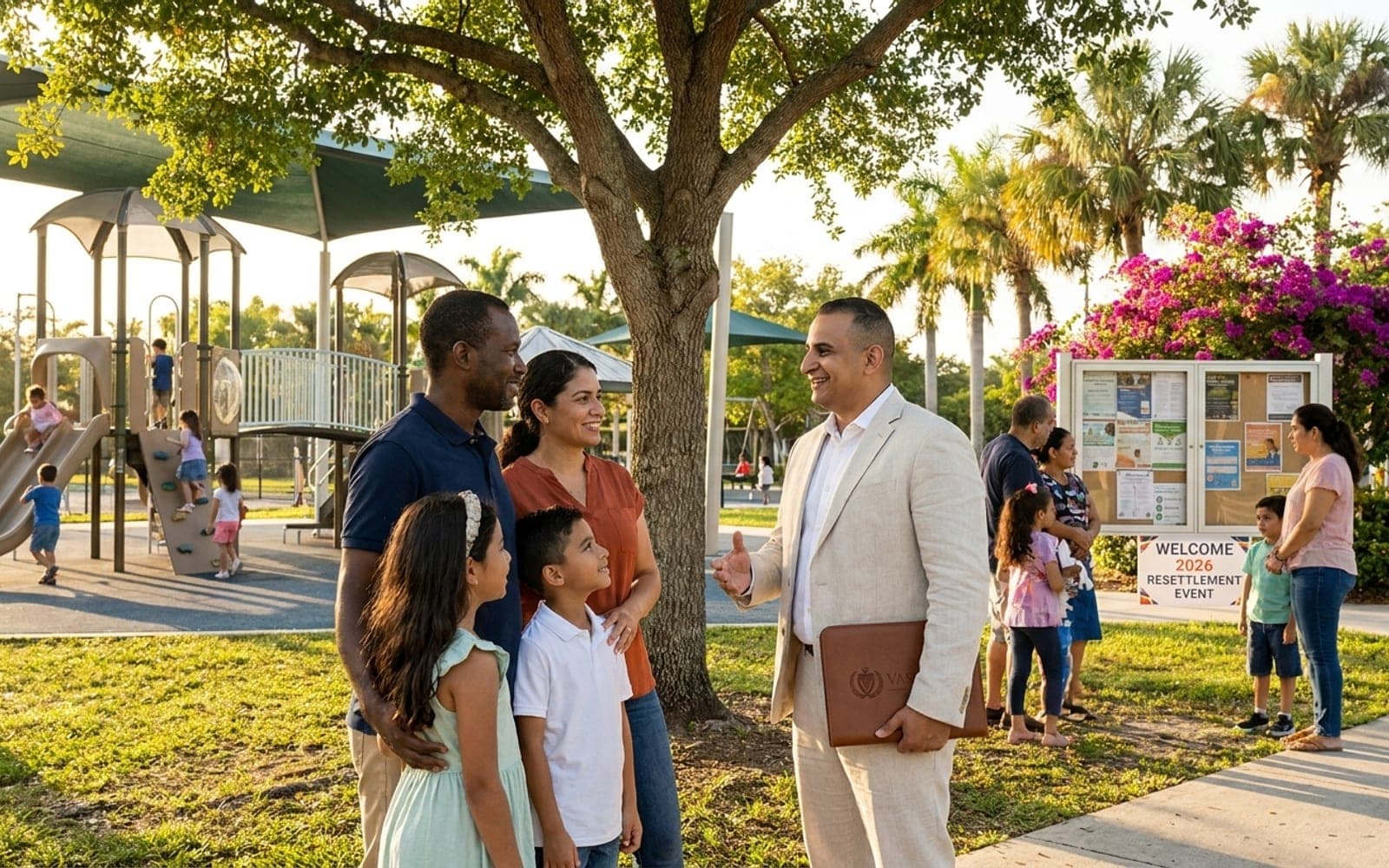
For those seeking refugee immigration help in Florida, understanding the resettlement process is crucial. Orlando provides unique opportunities and resources for refugees. Key aspects include:
- Eligibility for refugee status through the UNHCR
- Understanding the role of Florida's USCIS offices
- Steps involved in the resettlement process
- Common challenges and solutions for refugees
Introduction
Imagine arriving in Florida, seeking refuge from persecution, and navigating the complex immigration process. Refugees often face uncertainty, but understanding the resettlement process can offer hope. This article provides comprehensive guidance on refugee resettlement in Florida, focusing on Orlando. Whether you're seeking asylum or helping someone who is, we offer essential information and support. Call Florida Immigration Lawyers at 1-844-YO-PELEO for a free case review.
The journey of a refugee is fraught with challenges, from the initial flight from danger to the daunting task of building a new life in an unfamiliar land. Florida, with its diverse communities and established support networks, has become a new home for many. This guide aims to demystify the resettlement process, providing a clear roadmap for individuals and families embarking on this significant transition.
Orlando, in particular, stands out as a hub for refugee services, offering a blend of governmental support, non-profit assistance, and welcoming communities. By understanding the intricate steps involved, from initial eligibility to long-term integration, refugees can approach their new beginning with greater confidence. Our goal is to equip you with the knowledge needed to navigate this path successfully, emphasizing the critical role of informed decision-making and expert legal guidance.
What is Refugee Status and How Can You Obtain It?
Refugee status is granted to individuals who have fled their home country due to persecution based on race, religion, nationality, political opinion, or membership in a particular social group. As of 2026, the process begins with the United Nations High Commissioner for Refugees (UNHCR) assessing eligibility before referral to a host country.
Applicants must demonstrate a well-founded fear of persecution. The process includes interviews, background checks, and verification of personal information. Successful applicants are then considered for resettlement by the USCIS in the United States.
Understanding eligibility criteria and the role of the UNHCR is vital. Contacting an immigration attorney can aid in navigating this complex process.
A well-founded fear of persecution means that you must have a reasonable belief that you would be harmed if you returned to your home country. This fear must be based on one of the five protected grounds. For example, a journalist targeted for their political writings, a religious minority facing systemic discrimination, or an individual persecuted for their sexual orientation could all potentially meet this criterion. Gathering compelling evidence, such as news articles, police reports, or testimonies, is crucial to substantiate your claim.
The UNHCR's initial assessment is a rigorous process that involves multiple interviews, often over several months. During these interviews, you will be asked to recount your experiences in detail, providing a coherent and consistent narrative of the persecution you faced or fear. This stage is critical, as a positive determination by the UNHCR is typically the first step toward potential resettlement in a country like the United States. An experienced attorney from Florida Immigration Lawyers can help you prepare for these interviews, ensuring your story is presented clearly and effectively.
Once the UNHCR refers your case to the United States, the USCIS conducts its own thorough review. This includes additional interviews, security checks, and medical examinations. The process is designed to ensure that only eligible individuals who do not pose a security risk are granted refugee status. While lengthy, this multi-layered vetting is a standard part of the U.S. refugee admissions program, emphasizing the importance of patience and continuous legal support.
How Does the Refugee Resettlement Process Work in Florida?
In Florida, the resettlement process involves multiple stages coordinated by resettlement agencies and the USCIS. Once refugee status is granted, individuals are matched with agencies that assist with housing, employment, and education.
- Pre-arrival Stage: Refugees undergo medical examinations and orientation sessions.
- Arrival in Florida: Sponsored agencies meet refugees at the airport and provide initial housing.
- Integration Support: Agencies help with language training, finding employment, and enrolling children in school.
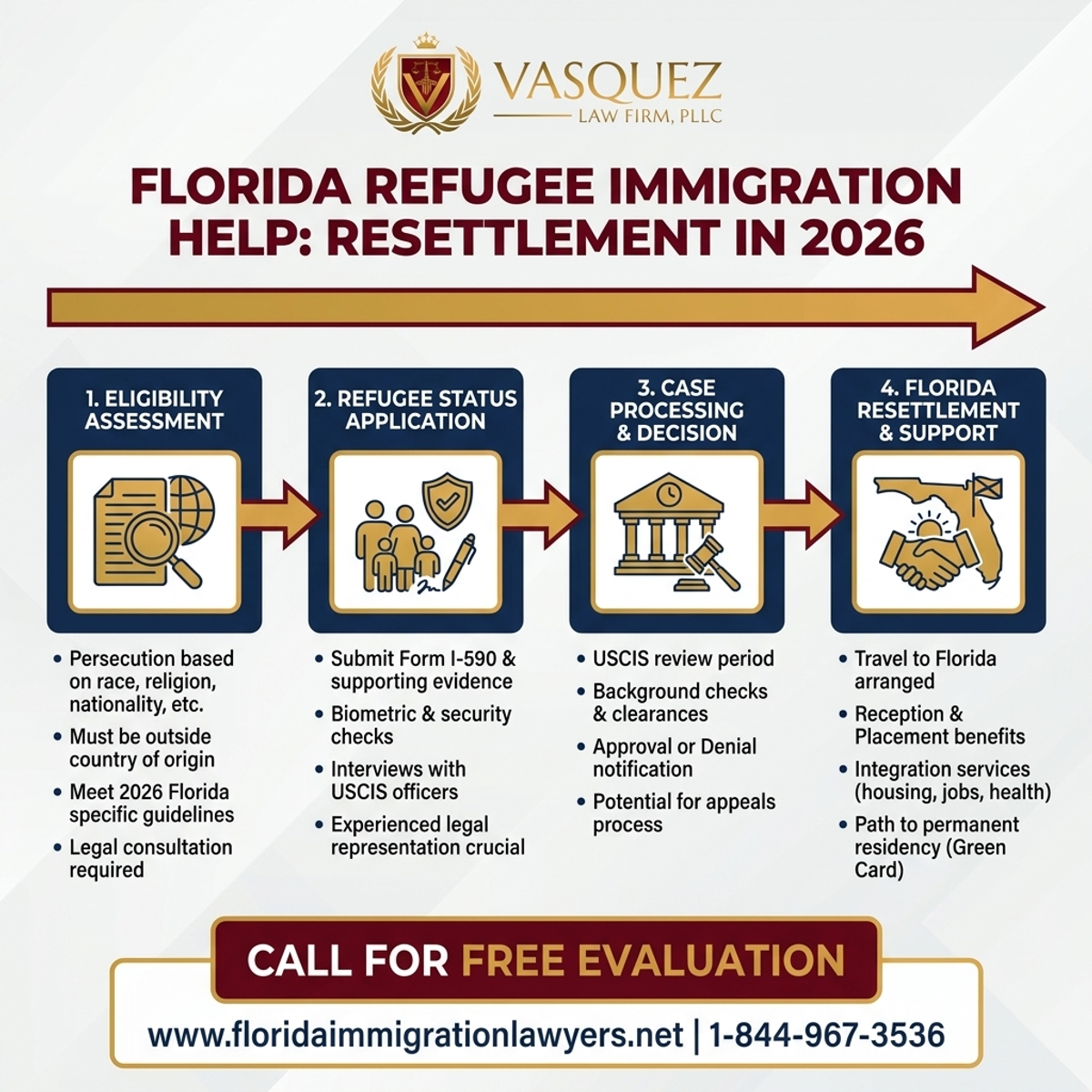
Step-by-Step Process — Florida Refugee Immigration Help: Resettlement in 2026
This process can take several months, with each stage requiring careful preparation and support.
The coordination between federal agencies, state programs, and local resettlement agencies like Catholic Charities, World Relief, or Lutheran Services Florida is vital. These agencies receive funding from the U.S. Department of State and are responsible for providing direct services to refugees upon arrival. They act as a crucial bridge, connecting newcomers with essential resources and helping them navigate the initial complexities of life in the United States. Understanding which agency will support you can help you prepare questions and expectations.
During the pre-arrival stage, orientation sessions cover critical information about American culture, laws, and daily life. Refugees learn about everything from public transportation to banking systems, and the importance of self-sufficiency. Medical examinations are mandatory to ensure public health and address any immediate health concerns upon arrival. For instance, tuberculosis screenings and vaccinations are common requirements. These preparations are designed to ease the transition and address potential challenges proactively.
Upon arrival in Florida, often at Orlando International Airport, a representative from your assigned resettlement agency will meet you. They will arrange for initial housing, which could be a temporary apartment, a shared living space, or even a host family. Within the first few weeks, the agency assists with Social Security applications, school enrollment for children, and initial health screenings. Integration support extends beyond basic needs, offering English as a Second Language (ESL) classes, job search assistance, and cultural orientation to help refugees become self-sufficient and contributing members of their new communities in Florida.
What Documents Are Required for Refugee Resettlement?
Refugees must present specific documents for successful resettlement. These include:
- Proof of refugee status from the UNHCR
- Valid identification documents
- Medical records
- Background check clearance
Having these documents prepared and organized can expedite the resettlement process.
The necessity of these documents cannot be overstated, as they serve multiple critical functions. Proof of refugee status from the UNHCR is your official recognition of protection, while valid identification documents are essential for establishing your identity in the U.S., opening bank accounts, and applying for jobs. Medical records ensure continuity of care and address any health concerns that might impact your ability to integrate. Background check clearance is a standard security measure for all individuals entering the U.S. under refugee status.
One common challenge refugees face is the loss or destruction of original documents due to conflict or rapid displacement. In such cases, resettlement agencies and legal counsel, such as Florida Immigration Lawyers, can help explore alternative forms of proof, like sworn affidavits from witnesses or other corroborating evidence. It’s crucial to communicate any difficulties you have in obtaining documents early in the process to avoid delays.
Practical advice for managing these documents includes keeping them in a secure, waterproof folder and making multiple copies, both physical and digital. Having a digital copy stored securely in the cloud can be a lifesaver if physical documents are misplaced. Always carry a copy of your most important identification documents with you, but keep originals in a safe place. Your legal team can guide you on which documents are most critical at each stage and how to best organize them for easy access and presentation.
Timeline and Processing Expectations for Refugee Resettlement
Understanding the timeline for refugee resettlement helps manage expectations. Here is a typical timeline:
| Stage | Typical Timeframe | Notes |
|---|---|---|
| UNHCR Assessment | 3-6 months | Initial eligibility determination |
| USCIS Processing | 6-12 months | Includes interviews and background checks |
| Travel Arrangements | 1-3 months | Coordination with resettlement agencies |
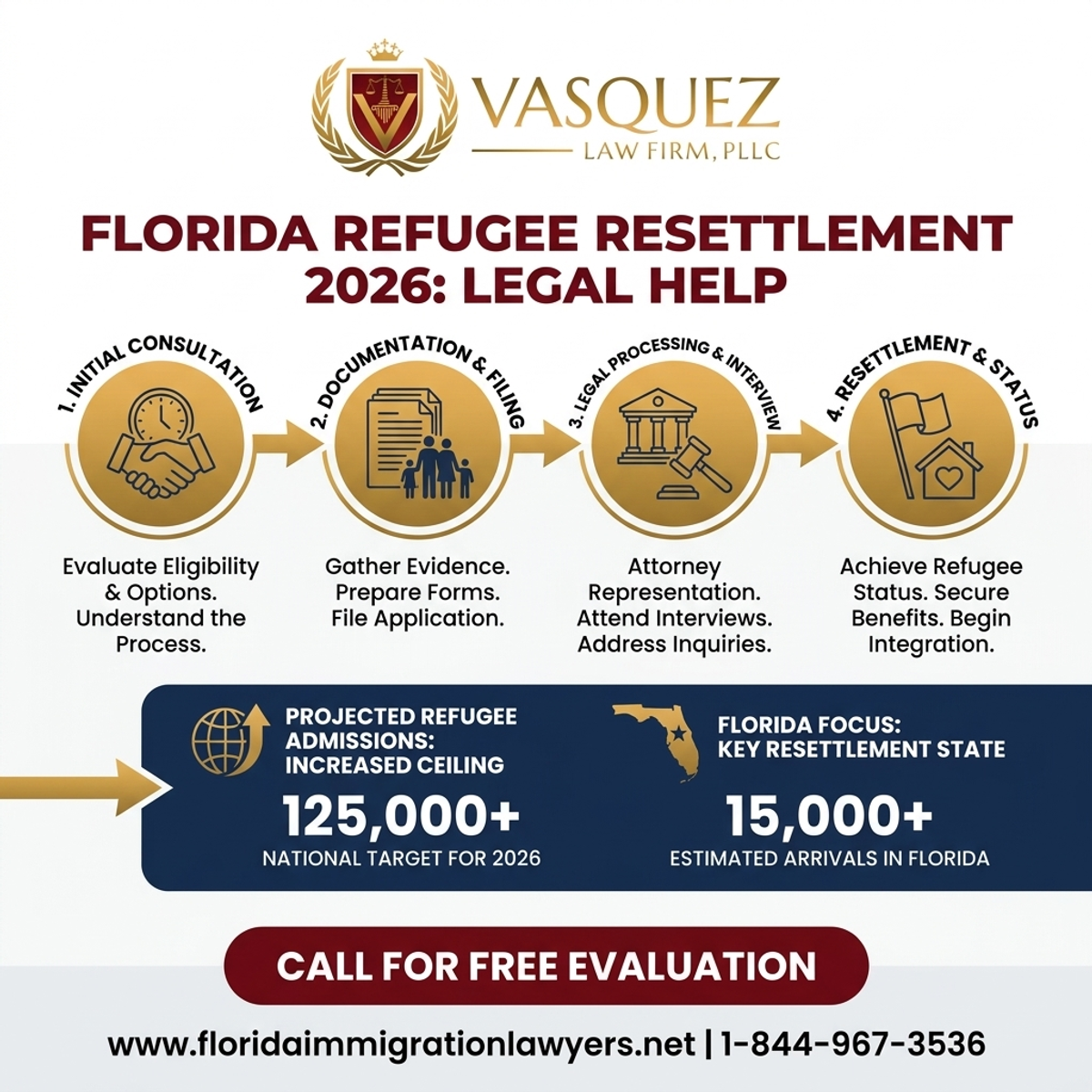
Key Statistics — Florida Refugee Immigration Help: Resettlement in 2026
Each case varies, and delays can occur due to unforeseen circumstances.
Several factors can significantly influence the overall timeline, including the applicant's country of origin, the complexity of their case, the volume of applications, and global political events. For example, during periods of increased geopolitical instability, processing times may lengthen due to heightened security screenings or changes in refugee quotas. It is crucial to remember that these timelines are estimates, and patience is a virtue throughout this often-protracted process.
The waiting period can be emotionally taxing, marked by uncertainty and anxiety. During this time, it's beneficial for applicants to engage with support networks, whether through community organizations, religious groups, or online forums for refugees. Staying informed about the general processing trends, without obsessing over daily updates, can help manage expectations. Preparing for life in Florida by learning English or researching job opportunities can also be a productive way to utilize this waiting period.
If your case experiences prolonged delays without clear explanation, or if you receive unexpected requests for additional information, consulting with Florida Immigration Lawyers can be invaluable. Our attorneys can inquire about your application status, identify potential bottlenecks, and advocate on your behalf to help keep your case moving forward. Proactive legal engagement can sometimes prevent minor issues from becoming major setbacks, ensuring your journey is as efficient as possible.
What Are the Costs Involved in Refugee Resettlement?
Refugee resettlement involves various costs, often covered by resettlement agencies and government programs.
| Item | Typical Fee | Notes |
|---|---|---|
| Medical Exams | Covered by agencies | Mandatory for all refugees |
| Travel Expenses | Government loans available | Need-based assistance |
| Housing and Integration | Varies | Dependent on individual needs |
While many costs are covered, additional personal expenses may arise.
The initial costs associated with medical examinations and travel are typically covered, either directly by resettlement agencies or through interest-free government loans. For example, travel expenses are often covered by a loan from the International Organization for Migration (IOM), which refugees are expected to repay over time, usually starting several months after arrival. Resettlement agencies provide guidance on repayment plans, which are designed to be manageable for new arrivals. Understanding these financial obligations from the outset is important for planning your new life.
Upon arrival, refugees receive initial financial assistance through programs like the Refugee Cash Assistance (RCA) or Temporary Assistance for Needy Families (TANF), along with food stamps (SNAP). These benefits are designed to provide a safety net during the first few months while refugees work towards self-sufficiency. Resettlement agencies also assist with securing initial housing, which might be partially subsidized or fully covered for a limited period, and provide basic household necessities.
Despite significant support, refugees should be prepared for some out-of-pocket expenses. These can include transportation costs, personal hygiene items, clothing beyond initial provisions, and unforeseen medical needs not fully covered by initial health insurance. Financial literacy training, often provided by resettlement agencies, is crucial for budgeting and understanding the U.S. financial system. Florida Immigration Lawyers can also provide general guidance on available financial resources and legal protections against predatory lending practices that sometimes target vulnerable populations.
Do not navigate this process alone. Contact Florida Immigration Lawyers today.
Common Mistakes to Avoid in Refugee Resettlement
- Incomplete Documentation: Missing documents can delay processing.
- Lack of Legal Guidance: Not consulting an attorney may lead to missed opportunities.
- Ignoring Cultural Differences: Misunderstandings can hinder integration.
- Unrealistic Expectations: Expecting immediate success can lead to disappointment.
- Financial Mismanagement: Failing to budget can result in financial strain.
- Not Utilizing Available Resources: Overlooking community support can slow progress.
- Failure to Follow Up: Not checking application status can cause unnecessary delays.
- Miscommunication with Agencies: Clear communication is crucial for successful resettlement.
When to Call a Lawyer for Refugee Resettlement
Legal support is essential in specific scenarios. If you face complex documentation, prolonged delays, or denial of refugee status, consulting an immigration lawyer can provide clarity and direction. Florida Immigration Lawyers offer expertise in navigating these challenges, ensuring your rights and options are protected.
You should consider contacting an immigration lawyer immediately if you encounter any significant hurdles during the resettlement process. This includes receiving a Notice of Intent to Deny your refugee status, facing an appeal process, or if there are changes in your personal circumstances that might impact your eligibility. A lawyer can also be crucial if you have family members who need to join you through family reunification programs, which often involve intricate legal requirements.
An experienced attorney serves as your advocate, interpreting complex immigration laws, preparing you for interviews, and representing your interests in interactions with USCIS and other agencies. For instance, if you are asked to provide further evidence or attend an additional interview, a lawyer can help you understand what is required and ensure you are adequately prepared. Having legal representation from Florida Immigration Lawyers provides peace of mind and significantly increases your chances of a successful outcome.
Don't wait until a problem escalates into a crisis. Proactive legal consultation can prevent many common pitfalls. Even if your case seems straightforward, an initial consultation can help you understand potential challenges and how to best prepare. Florida Immigration Lawyers are available to provide a free case review, offering an opportunity to assess your situation and provide expert advice on the best course of action for your refugee resettlement journey.
About Florida Immigration Lawyers
Florida Immigration Lawyers specialize in all aspects of immigration law, offering comprehensive support for refugees seeking resettlement in Orlando. Our experienced attorneys provide personalized guidance, ensuring your journey is as smooth as possible. We are available 24/7 for free case reviews. Call 1-844-YO-PELEO or schedule a free consultation today.
Our firm is deeply committed to assisting individuals and families as they navigate the complexities of U.S. immigration law. We understand the unique challenges faced by refugees, from language barriers to cultural adjustments, and provide empathetic, culturally sensitive legal support. Our team has a proven track record of helping refugees secure their status, reunite with family members, and access the resources they need to thrive in Florida.
When you contact Florida Immigration Lawyers for a free case review, you can expect a thorough evaluation of your situation. We will listen to your story, review any existing documentation, and provide an honest assessment of your options and the potential pathways available to you. This initial consultation is a critical step in building a strong legal strategy tailored to your specific needs, laying the groundwork for a successful resettlement.
We pride ourselves on being accessible and responsive to our clients. Our multilingual staff, including Spanish-speaking attorneys and paralegals, ensures that language is never a barrier to receiving quality legal assistance. Whether you are just beginning your refugee journey or facing unexpected challenges, Florida Immigration Lawyers are here to provide unwavering support and expert legal counsel every step of the way. Call 1-844-YO-PELEO today to start your path to a new beginning.
Sources and References
- U.S. Citizenship and Immigration Services (USCIS)
- Executive Office for Immigration Review (EOIR)
- 8 U.S.C. Chapter 12 - Immigration and Nationality Act
Related services: asylum application process, withholding of removal, humanitarian protection programs.
This article provides general legal information and is not intended as legal advice. Every case is unique, and outcomes depend on specific facts and circumstances. Contact an attorney for advice about your particular situation.
Final CTA
For comprehensive support in your refugee resettlement journey, contact Florida Immigration Lawyers at 1-844-YO-PELEO. Se Habla Español - Estamos aquí para ayudarle.
If you need legal assistance, learn more about speak with an asylum lawyer, or call us at 1-844-967-3536 for a free case review.
Do Not Navigate This Process Alone
Our experienced immigration attorneys are ready to fight for you. Get a free, confidential case review today.
Se Habla Español
Or leave your details and we’ll call you:
Free Evaluation in 24 Hours
Or talk to us right now

AI voice assistant — available 24/7
FreeFrequently Asked Questions

William J. Vásquez
Founding Attorney · Vasquez Law Firm
U.S. Air Force veteran and immigration attorney with years of hands-on U.S. immigration experience. J.D., NCCU School of Law. AILA member. Admitted to the 4th, 5th, and 11th Circuit Courts.
Available 24/7 - Free Evaluations
Reviewed for legal accuracy by William J. Vásquez
Licensed in North Carolina; U.S. immigration is federal practice.
Related Legal Services
Our Florida immigration attorneys can help you with asylum protection, citizenship and naturalization and immigration practice areas. Call today at 1-844-YO-PELEO for a free case review.
Related Links
Related Topics
Free Legal Case Review
Discuss your case with our experienced attorneys. We're available 24/7.
Se Habla Español - Estamos aquí para ayudarle.
Related Articles
Dual Citizenship Lawyer in Florida: What You Need to Know
For Florida residents, the concept of dual citizenship, or holding two passports, offers a compelling blend of opportunities and challenges. While the U.S. generally permits dual nationality, the path to achieving this status requires a meticulous understanding of both U.S. immigration laws and the citizenship policies of your country of origin. This guide explores the definition of dual citizenship, the detailed step-by-step process for U.S. naturalization, and the significant benefits and potential pitfalls involved. We cover essential documentation, typical timelines, and cost considerations for 2026, providing crucial insights for anyone in Orlando, Miami, or across Florida considering this important legal step. Learn about common mistakes to avoid and understand when to seek professional legal counsel to navigate this complex process successfully. Florida Immigration Lawyers is here to provide expert, bilingual support for your dual citizenship journey.
Immigration Lawyer Orlando Free Consultation in Florida
For individuals and families in Orlando, Florida, navigating the complexities of U.S. immigration law requires expert guidance. An immigration lawyer in Orlando offers crucial support for everything from visa applications and green card processes to naturalization and deportation defense. This comprehensive guide details what a free consultation covers, providing a step-by-step overview of immigration pathways, essential document checklists, and expected timelines in 2026. We also highlight common mistakes to avoid, discuss the critical role of legal counsel in deportation and asylum cases, and explain why choosing a local Orlando immigration attorney is beneficial. Florida Immigration Lawyers is dedicated to serving the diverse community of Orlando with compassionate, effective legal solutions, ensuring you receive personalized advice and robust representation for a successful immigration journey.
EAD Advance Parole Combo Card in Florida 2026
For individuals with a pending Form I-485, Application to Register Permanent Residence or Adjust Status, the EAD Advance Parole Combo Card is an essential document. This single card combines the authorization to work legally in the U.S. (Employment Authorization Document - EAD) with permission to travel internationally and re-enter without abandoning your green card application (Advance Parole). This guide from Florida Immigration Lawyers provides a comprehensive overview for applicants in Florida in 2026, covering eligibility, the step-by-step application process, required documents, expected processing times, and associated costs. We also highlight common mistakes to avoid and when to seek legal counsel to ensure a smooth and successful immigration journey. Understanding this vital card is key to maintaining stability while awaiting your permanent residency approval.
Immigration Lawyer Central Florida: 2026 Guide
Navigating immigration laws in Central Florida can be challenging. Learn about services offered by immigration lawyers, common mistakes to avoid, and when to seek legal help. Call Florida Immigration Lawyers at 1-844-YO-PELEO for a free case review.