Immigration Policy News Florida: Your 2026 Guide & Updates
Stay ahead of the curve with our comprehensive guide to immigration policy news in Florida for 2026. This article covers anticipated legislative changes, federal impacts, and local ordinances in Tallahassee that could affect your immigration journey. Learn about the step-by-step application process, essential documents, and critical processing timelines. We highlight common mistakes to avoid and explain when professional legal assistance from a Florida immigration lawyer is indispensable. Florida Immigration Lawyers is your trusted partner for navigating complex immigration laws, offering expert guidance and free consultations for residents across the state.

Staying informed about immigration policy news in Florida is crucial, especially with potential changes in 2026. New state and federal laws can significantly impact residents and applicants. These updates may affect visa processes, residency, and enforcement within Florida, including Tallahassee. Consulting an experienced immigration lawyer is vital to navigate these complexities effectively.
- Florida's immigration landscape is subject to federal and state legislative changes.
- New policies can alter application requirements, processing times, and eligibility criteria.
- Understanding local enforcement in areas like Tallahassee is increasingly important.
- Professional legal guidance is essential to adapt to evolving immigration policy news.
Are you concerned about the latest immigration policy news impacting Florida? The landscape of immigration law is constantly evolving, with federal and state legislative updates frequently introducing new challenges and opportunities for individuals and families across the Sunshine State. If you are living in Florida, especially in areas like Tallahassee, understanding these changes is paramount to protecting your future and achieving your immigration goals.
At Florida Immigration Lawyers, we understand the uncertainty that comes with shifting policies. Our team is dedicated to keeping you informed and providing expert legal guidance tailored to your specific situation. This comprehensive guide will break down the expected immigration policy news and updates for Florida in 2026, offering clarity and practical advice.
Do not navigate these complex waters alone. For a clear understanding of how new Florida immigration laws may affect you, Call Florida Immigration Lawyers at 1-844-967-3536 for a free consultation. We are here to help you every step of the way.
Understanding Recent Immigration Policy News in Florida for 2026
Florida, a state with a diverse population, is frequently at the forefront of discussions surrounding immigration. As we look towards 2026, both federal and state governments may introduce new measures that could reshape the lives of many. Keeping abreast of this immigration policy news is not just recommended, it is essential.
These policy shifts can range from changes in visa categories and eligibility requirements to alterations in enforcement priorities. For residents of Tallahassee and other Florida communities, these updates can have direct implications on their daily lives, employment, and family reunification efforts. Our firm closely monitors these developments to provide timely and accurate advice.
Key Legislative Changes Affecting Florida Residents
In 2026, Florida may see legislative proposals aimed at various aspects of immigration. These could include stricter enforcement at the state level, changes to employer verification requirements, or new programs designed to integrate or restrict immigrant communities. Such legislation often generates significant debate and can drastically alter the operational environment for immigrants.
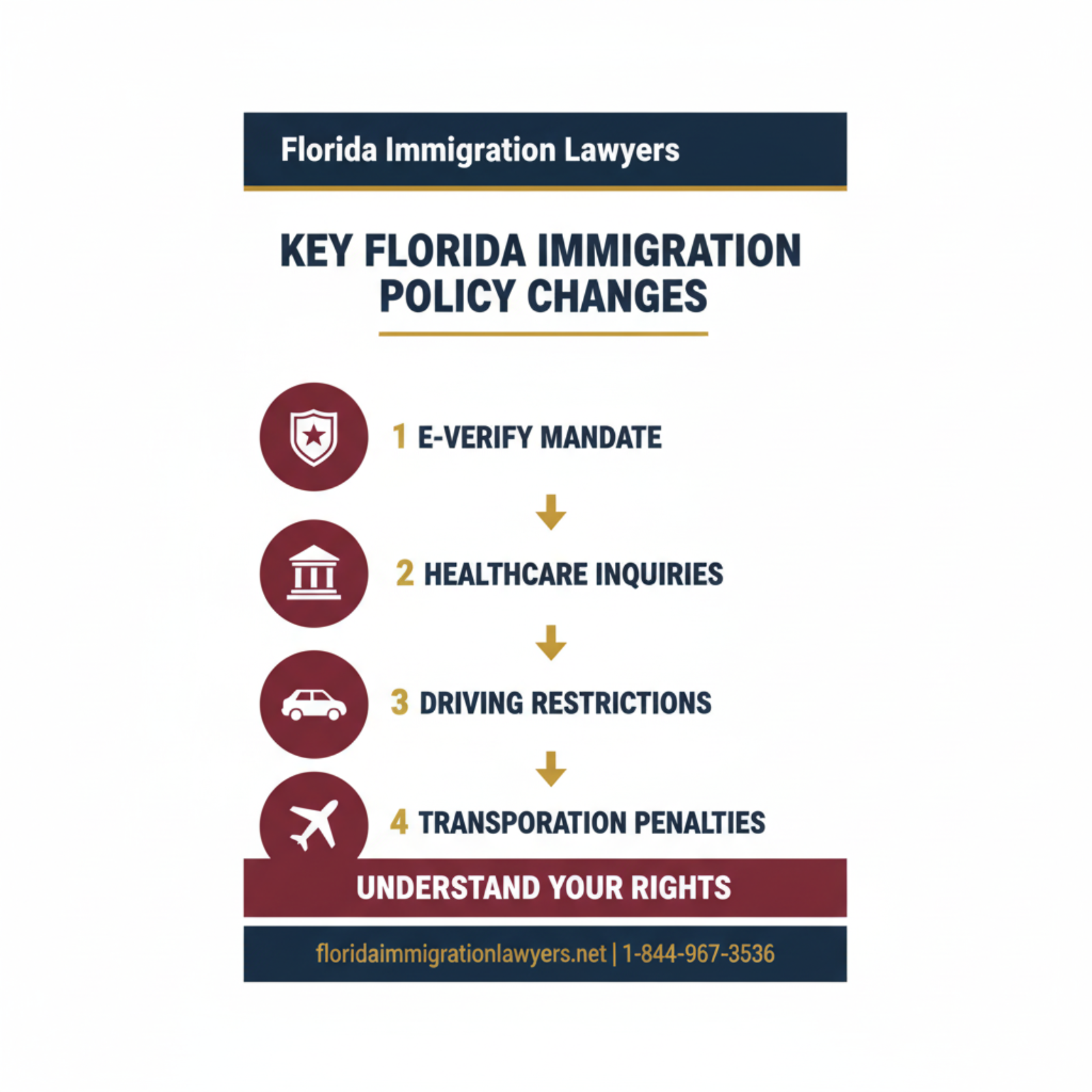
For instance, past Florida laws have focused on areas like E-Verify mandates or restrictions on certain types of identification. Understanding the specifics of any new bill, and its potential impact on your status, requires careful legal review. We help our clients dissect these complex legal texts.
Impact of Federal Policies on Florida's Immigration Landscape
Federal immigration policies always have a cascading effect on states like Florida. Executive orders, new regulations from agencies like USCIS, and congressional actions can override or complement state efforts. These federal changes might pertain to asylum claims, border security, or pathways to citizenship.
Any significant federal overhaul, such as comprehensive immigration reform or changes to DACA, would directly affect hundreds of thousands of individuals living in Florida. Our firm helps you understand how these broader national shifts translate into practical realities for you here in the state.
How Local Ordinances in Tallahassee May Adapt
While state and federal laws form the backbone of immigration policy, local governments, including those in Tallahassee, often implement ordinances that reflect or respond to these broader policies. These local rules can affect how law enforcement interacts with immigrant communities, access to local services, and even housing.
It is important to remember that local policies must operate within the framework of state and federal law. However, understanding the nuances of how Tallahassee immigration updates might materialize is crucial. Our firm provides insights into these localized impacts, ensuring you are prepared.
Navigating Florida Immigration Laws: A Step-by-Step Guide for Applicants
Applying for an immigration benefit in Florida, whether it is a visa, green card, or citizenship, involves a structured process. This guide provides a general overview, but remember that each case is unique and requires personalized attention, especially with new immigration policy news.
Our goal at Florida Immigration Lawyers is to simplify this journey for you. We provide clear, actionable steps and ensure that all requirements are met according to the latest USCIS Florida policies. This proactive approach minimizes delays and increases your chances of a successful outcome.
-
Determine Your Eligibility and Immigration Goal: The first step is to identify what immigration benefit you are seeking and if you meet the initial criteria. This might involve family-based immigration, employment-based visas, asylum, or naturalization. This initial assessment is critical for charting the correct path forward.
We can help you understand the various categories under the Immigration and Nationality Act (INA), specifically sections like INA § 201-204 for family-sponsored and employment-based immigrants (8 U.S.C. § 1151-1154).
-
Gather All Required Documentation: Once your path is clear, meticulously collect all necessary personal, financial, and supporting documents. This often includes birth certificates, marriage licenses, passports, financial records, and medical examinations. Accuracy and completeness are paramount to avoid delays.
Ensure all foreign-language documents are translated by a certified translator, accompanied by a translator's certification. Incomplete submissions are a common reason for Request for Evidence (RFE) or denial.
-
Complete and File Your Application Forms: Fill out the appropriate USCIS forms accurately and completely. These forms are complex and often require detailed personal history. Any errors or omissions can lead to significant setbacks. Filing fees must also be paid at this stage.
Electronic filing is available for many forms, but careful review by a skilled immigration lawyer is always advisable before submission. Refer to 8 CFR Part 103 for general requirements for filing applications and petitions.
-
Attend Biometrics Appointment (If Required): Many applications require applicants to attend a biometrics appointment at an Application Support Center (ASC). Here, fingerprints, photographs, and signatures are collected for background checks. This is a standard part of the security screening process.
You will receive an appointment notice with the date, time, and location. Missing this appointment without rescheduling can jeopardize your application.
-
Prepare for and Attend Your Interview: Depending on your application type, you may be required to attend an interview at a USCIS field office in Florida (e.g., Miami, Orlando, Tampa) or a U.S. embassy/consulate abroad. This interview is a crucial opportunity to discuss your application and provide additional information.
Thorough preparation with your immigration attorney can make a significant difference in the outcome. For example, naturalization interviews assess your knowledge of U.S. history and government, as per INA § 312 (8 U.S.C. § 1423).
-
Receive a Decision: After the interview, or once all necessary reviews are complete, USCIS will issue a decision on your application. This could be an approval, a request for more evidence, or a denial. An approval means you have successfully obtained your immigration benefit.
If your application is denied, it is critical to consult with an attorney immediately to explore options such as appeals or motions to reopen/reconsider, especially in cases of deportation defense.
Essential Documents for Florida Immigration Applications and Compliance
A critical component of any successful immigration application is the accurate and complete submission of required documents. The specific list will vary depending on your immigration category, but certain documents are universally important. Ensuring you have these prepared will streamline your process and help you comply with current Florida immigration laws.
We emphasize the importance of having original documents or certified copies, along with accurate translations where necessary. Missing or incorrect documentation is a leading cause of delays and denials, especially with evolving USCIS Florida policies.
- Proof of Identity and Nationality: Valid passport, birth certificate, national identity cards.
- Proof of Legal Status (if applicable): Current visa, I-94 arrival/departure record, previous USCIS notices.
- Financial Documentation: Bank statements, tax returns, employment letters, affidavits of support (Form I-864).
- Relationship Proof (for family-based petitions): Marriage certificates, birth certificates of children, divorce decrees, photos, joint bank accounts, lease agreements.
- Educational and Professional Credentials (for employment-based petitions): Diplomas, transcripts, professional licenses, work experience letters.
- Medical Examination Records: Form I-693, Report of Medical Examination and Vaccination Record, completed by a USCIS-approved civil surgeon.
- Police Clearances/Criminal Records: From all countries resided in, if applicable.
- Photographs: Passport-style photographs meeting USCIS specifications.
- Forms and Petitions: All relevant USCIS forms, completed and signed.
Processing Timelines and Expectations for USCIS Florida Policies in 2026
Understanding the typical processing times for immigration applications is key to managing expectations. While USCIS strives for efficiency, various factors can influence how long it takes for a decision to be made on your case. These factors include the type of application, the service center or field office handling your case, and current caseloads.
With potential shifts in immigration policy news for 2026, processing times could also be affected. It is always wise to anticipate potential delays and to regularly check the USCIS website for updated processing timeframes and policy alerts. Our firm helps clients monitor their cases closely.
Factors Influencing Processing Times
Several elements can impact how quickly your application is processed. The complexity of your case, the completeness of your submitted documentation, and any requests for additional evidence (RFEs) can all extend timelines. Furthermore, government shutdowns or staffing changes at USCIS service centers in Florida (e.g., the Orlando Field Office or Miami Field Office) can cause significant backlogs.
For example, USCIS Policy Manual provides guidance on various adjudicatory processes, but actual timelines can vary. We advise clients to be patient but also proactive in responding to any USCIS inquiries promptly.
Checking Your Case Status
USCIS offers online tools to check the status of your case. You can use your receipt number to track the progress of your application. While this tool provides updates, it does not always offer a detailed explanation of where your case stands in the queue.
For more nuanced understanding or if your case seems to be experiencing unusual delays, consulting with a family immigration lawyer or business immigration lawyer at our firm is beneficial. We can often make inquiries on your behalf or identify potential issues that require intervention.
Cost Factors and Fee Breakdown for Immigration Filings in Florida
The financial aspect of immigration applications is a significant consideration for many individuals and families in Florida. Costs generally include government filing fees, attorney fees, and other related expenses. It is important to budget for these costs to ensure a smooth application process, especially with any new immigration policy news that might introduce new fee structures.
USCIS fees are subject to change, and it is crucial to always verify the most current amounts directly on the USCIS website before filing. Our firm provides transparency regarding our legal fees, ensuring you understand all potential costs upfront.
USCIS Filing Fees
Each USCIS form has an associated filing fee. These fees are set by the government and are non-refundable, regardless of the outcome of your application. Some applicants may be eligible for fee waivers, particularly for certain humanitarian benefits like asylum applications or U-visas.
Always check the fee schedule on USCIS.gov, as these can be updated periodically. It is critical to submit the correct fee amount to avoid rejection of your application.
Attorney Fees
Hiring an experienced Florida immigration lawyer is an investment in the success and efficiency of your immigration journey. Attorney fees cover the legal expertise, preparation of documents, representation at interviews, and ongoing communication with USCIS. Our firm offers competitive and transparent fee structures, often on a flat-fee basis for predictability.
The value of having a knowledgeable advocate, especially when dealing with complex immigration policy news or potential challenges, cannot be overstated. We help you avoid costly mistakes and navigate intricate legal requirements effectively.
Other Potential Costs
Beyond filing and attorney fees, other expenses may arise. These can include costs for medical examinations, certified translations of foreign documents, travel expenses for interviews, and fees for obtaining police clearances or other vital records. Factoring these into your budget from the outset is a prudent approach.
We help our clients understand the full scope of potential expenses, ensuring there are no surprises throughout the process. Our goal is to make your immigration journey as clear and manageable as possible.
Do not navigate this process alone. Contact Florida Immigration Lawyers today. Our experienced team is ready to provide the guidance you need, especially with the latest immigration policy news affecting Florida.
Common Mistakes to Avoid in Florida Immigration Applications
Navigating immigration processes can be fraught with potential pitfalls. Even minor errors can lead to significant delays, requests for evidence, or even outright denial of your application. Being aware of these common mistakes, particularly in the context of ever-changing immigration policy news in Florida, can save you time, stress, and money.
-
Submitting Incomplete or Inaccurate Forms: Failing to fill out every section of a form, or providing incorrect information, is a primary cause of rejection. USCIS forms are complex and require meticulous attention to detail.
Consequence: Your application may be rejected, returned, or cause significant delays, requiring you to refile and potentially incur new fees.
-
Missing Deadlines: Immigration applications often have strict deadlines for submission of forms, responses to RFEs, or appeals. Missing these dates can be detrimental to your case.
Consequence: Your application may be deemed abandoned or denied, and you might lose eligibility for certain benefits.
-
Failing to Provide Sufficient Supporting Documentation: Not including all required evidence, such as birth certificates, marriage licenses, or financial records, can halt your application.
Consequence: USCIS will issue an RFE, significantly prolonging the processing time, or deny your application.
-
Misrepresenting Facts or Providing Fraudulent Information: Any attempt to deceive immigration authorities, whether intentionally or unintentionally, can have severe consequences.
Consequence: Permanent inadmissibility to the U.S., criminal charges, and immediate denial of all current and future immigration benefits.
-
Not Disclosing Criminal History: Even minor arrests or convictions, regardless of whether they led to charges or convictions, must be disclosed truthfully.
Consequence: Can lead to findings of inadmissibility, deportation proceedings, or denial of benefits based on moral character issues, as outlined in INA § 212(a)(2) (8 U.S.C. § 1182(a)(2)).
-
Ignoring New Immigration Policy News: Immigration laws and policies can change rapidly. Failing to stay updated can lead to filing under outdated rules or missing new opportunities.
Consequence: Your application may be rejected for non-compliance with current regulations, or you might miss a window for a more favorable pathway.
-
Improperly Translating Foreign Documents: All documents not in English must be accompanied by a certified English translation. An unofficial or incomplete translation can invalidate your submission.
Consequence: Your documents may not be accepted, leading to delays or rejection.
-
Attending Interviews Unprepared: Going into a USCIS interview without understanding the questions or being able to articulate your case effectively can be a major disadvantage.
Consequence: Your application may be questioned, lead to further scrutiny, or result in denial if you fail to prove eligibility.
-
Not Seeking Legal Counsel: Attempting to navigate complex immigration law without the guidance of an experienced immigration lawyer Florida can lead to errors that are difficult to rectify.
Consequence: Increased risk of denial, prolonged processing times, and potential for missing crucial legal arguments or opportunities.
-
Assuming Past Approvals Guarantee Future Success: Each application is judged on its own merits and under current law. A previous approval does not guarantee future success, especially with new Florida immigration laws.
Consequence: Overconfidence can lead to overlooking critical details or changes in eligibility criteria.
When to Call a Florida Immigration Lawyer
While some immigration processes may seem straightforward, the reality is that immigration law is incredibly complex and constantly changing. Knowing when to seek professional legal assistance is crucial for protecting your rights and ensuring the best possible outcome for your case. If you are dealing with any aspect of immigration policy news in Florida, our firm is here to help.
At Florida Immigration Lawyers, we specialize in providing comprehensive legal support for a wide range of immigration matters. We can offer invaluable assistance in scenarios where the stakes are high or the path is unclear.
- Complex Case Scenarios: If your case involves unique circumstances, such as a prior deportation order, criminal history, or previous immigration denials, a lawyer is essential. These complexities require expert legal strategy and understanding of various waivers.
- Deportation or Removal Proceedings: If you or a loved one are facing deportation defense, immediate legal intervention is critical. An attorney can represent you in immigration court (e.g., Miami Immigration Court or Orlando Immigration Court) and fight to protect your right to remain in the U.S.
- Asylum or Refugee Claims: Navigating the intricate process of asylum applications, especially with new immigration policy news, requires specialized knowledge. We help prepare strong cases and represent clients before USCIS or immigration judges.
- Family-Based Immigration Challenges: While seemingly simple, family petitions can encounter issues like insufficient proof of relationship, financial eligibility concerns, or consular processing delays. A family immigration lawyer can resolve these.
- Business or Employment Immigration: For employers and employees seeking work visas or green cards, the regulations are highly technical. A business immigration lawyer ensures compliance and efficient processing.
- Citizenship and Naturalization Issues: If you have questions about eligibility for citizenship, residency requirements, or potential bars to naturalization, an attorney can provide clear guidance.
- Responses to RFEs or NOIDs: If USCIS sends a Request for Evidence (RFE) or a Notice of Intent to Deny (NOID), it is a critical juncture. A lawyer can help you craft a thorough and persuasive response to prevent denial.
- When You Need to Understand New Policies: With frequent changes in Florida immigration laws and federal directives, a lawyer can explain how these updates specifically impact your case and future plans.
Do not wait until a problem arises. Proactive legal consultation with Florida Immigration Lawyers can prevent issues and ensure your immigration journey is as smooth as possible. We serve clients across all of Florida, including Tallahassee and surrounding areas.
About Florida Immigration Lawyers
Florida Immigration Lawyers is a leading immigration law firm dedicated to serving individuals, families, and businesses throughout the entire state of Florida. Our mission is to provide compassionate, effective, and results-oriented legal representation in all areas of immigration law. We understand the profound impact immigration matters have on our clients' lives, and we approach each case with the utmost care and professionalism.
Our team of experienced immigration attorneys is well-versed in the complexities of U.S. immigration law, including the latest federal and Florida immigration laws. We pride ourselves on staying current with all immigration policy news and changes, ensuring our clients receive the most accurate and up-to-date advice.
Why Choose Florida Immigration Lawyers?
- Expertise: Our lawyers possess deep knowledge and extensive experience in a wide array of immigration cases, from family petitions and employment visas to asylum and deportation defense.
- Client-Centered Approach: We prioritize your needs and goals, providing personalized attention and clear communication throughout your legal journey.
- Bilingual Services: We proudly offer services in both English and Spanish, ensuring effective communication and culturally sensitive representation for our diverse clientele.
- Statewide Reach: Whether you are in Tallahassee, Miami, Orlando, Tampa, or any other part of Florida, our firm is equipped to assist you.
- Accessibility: We are available 24/7 to address your urgent concerns and offer free, no-obligation consultations to discuss your case.
At Florida Immigration Lawyers, we are more than just legal representatives; we are your dedicated advocates. Let us put our expertise to work for you. Visit our website at https://www.floridaimmigrationlawyers.net or call us directly.
Sources and References
- U.S. Citizenship and Immigration Services (USCIS)
- Immigration and Nationality Act (INA)
- USCIS Policy Manual
- Executive Office for Immigration Review (EOIR)
- 8 U.S.C. Chapter 12 - Immigration and Nationality Act (e.g., 8 U.S.C. § 1151-1154, 8 U.S.C. § 1182, 8 U.S.C. § 1423)
- 8 CFR (Code of Federal Regulations) Part 103 (general filing requirements) and Part 204 (petitions)
- U.S. Department of State - Visa Law
This article provides general legal information and is not intended as legal advice. Every case is unique, and outcomes depend on specific facts and circumstances. Contact an attorney for advice about your particular situation.
For personalized guidance on immigration policy news in Florida, call Florida Immigration Lawyers at 1-844-967-3536 for a free consultation. Our dedicated team is ready to assist you in navigating the complexities of immigration law. Se Habla Español - Estamos aquí para ayudarle.
Do Not Navigate This Process Alone
Our experienced immigration attorneys are ready to fight for you. Get a free, confidential consultation today.
Se Habla Español
Or leave your details and we’ll call you:
Free Evaluation in 24 Hours
Or talk to us right now

AI voice assistant — available 24/7
FreeFrequently Asked Questions

William J. Vásquez
Founding Attorney · Vasquez Law Firm
U.S. Air Force veteran and immigration attorney with years of hands-on U.S. immigration experience. J.D., NCCU School of Law. AILA member. Admitted to the 4th, 5th, and 11th Circuit Courts.
Available 24/7 - Free Evaluations
Reviewed for legal accuracy by William J. Vásquez
Licensed in North Carolina; U.S. immigration is federal practice.
Related Legal Services
Our Florida immigration attorneys can help you with experienced immigration attorneys, business immigration and asylum protection. Call today at 1-844-967-3536 for a free consultation.
Related Links
Related Topics
Free Legal Consultation
Discuss your case with our experienced attorneys. We're available 24/7.
Se Habla Español - Estamos aquí para ayudarle.
Related Articles
Immigration Lawyer Orlando Free Consultation 2026
Discover how to find an immigration lawyer in Orlando offering a free consultation. Understand the services available and why choosing Florida Immigration Lawyers can make a difference in your case.
Military Naturalization Expedited in Florida Bases
Explore military naturalization options for families at Florida bases, including parole in place benefits in Miami. Learn how to expedite your application with expert guidance from Florida Immigration Lawyers.
Immediate Relative Petition Tampa: Your 2026 Florida Guide
Securing a green card for an immediate relative in Florida involves a detailed process, starting with Form I-130. This guide, updated for 2026, explains who qualifies as an immediate relative-spouses, unmarried children under 21, and parents of U.S. citizens-and outlines the step-by-step journey from petition filing to green card issuance. We cover essential documents, expected timelines, and associated costs, emphasizing the critical difference of no visa backlogs for this category. Learn how to navigate USCIS procedures, whether through adjustment of status in cities like Tampa and Hialeah or consular processing abroad. We also detail common mistakes to avoid and highlight scenarios where legal counsel from Florida Immigration Lawyers is indispensable to ensure a smooth and successful family reunification.
Immigration Lawyer Orlando Free Consultation in 2026
Discover how to find an immigration lawyer in Orlando offering a free consultation in 2026. This guide from Florida Immigration Lawyers covers essential services, the Green Card application process, typical timelines, and cost factors in Central Florida. Learn about critical documents, common mistakes to avoid, and when expert legal counsel is indispensable for your immigration case. We serve clients across Florida, including Lakeland, Polk County, and Coral Springs, providing compassionate and effective representation for family visas, deportation defense, and naturalization. Get started with a free consultation today.