Immigration Policy News Florida: What You Need to Know...
Stay informed on the latest immigration policy news Florida for 2026. This comprehensive guide covers recent laws, USCIS updates, and their impact on individuals and families across the state, with a focus on Naples. Learn about essential documents, processing timelines, and common mistakes to avoid. Florida Immigration Lawyers offers expert guidance and free consultations to help you navigate these complex changes confidently. Protect your rights and future by understanding the evolving legal landscape.

Navigating immigration policy news Florida in 2026 requires vigilance due to evolving laws and enforcement priorities. Recent changes can impact various immigration processes, from visa applications to deportation defense, particularly in regions like Naples. Staying informed about USCIS updates and state-level actions is crucial for immigrants and their families to understand eligibility and avoid pitfalls.
- Florida's immigration landscape is dynamic, with frequent policy adjustments.
- USCIS updates and state initiatives directly affect residents and applicants.
- Proactive legal consultation is essential to adapt to new requirements.
- Understanding your rights and obligations is paramount for a successful process.
- Local context, especially in Naples, can influence enforcement and resources.
The landscape of immigration law in Florida is constantly shifting, creating uncertainty and concern for many individuals and families. Are you wondering how the latest immigration policy news Florida might affect your status, your family, or your future? In 2026, staying informed is not just helpful-it's essential for navigating the complex legal terrain.
We understand the anxieties these changes can bring. This comprehensive guide from Florida Immigration Lawyers will break down the significant policy updates, USCIS announcements, and state-specific actions impacting immigrants across Florida, including our community in Naples. We will provide actionable insights and crucial information to help you understand your options. Do not face these challenges alone; call Florida Immigration Lawyers at 1-844-967-3536 for a free consultation and let our experienced team guide you. Contact us today to discuss your situation.
Understanding Recent Immigration Policy News Florida and Its Impact
Florida has long been at the forefront of immigration discussions, often implementing its own measures alongside federal policies. In 2026, the focus remains on enforcement, border security, and specific state-level initiatives that can significantly alter the daily lives of immigrants. Understanding these nuances is critical for anyone residing in or seeking to move to the Sunshine State.
Recent operations, such as "Operation Tidal Wave," highlight an intensified focus on immigration enforcement throughout Florida. These initiatives, often a collaboration between state and federal agencies, underscore the importance of understanding your rights and preparing for potential interactions with law enforcement. The legal framework governing these actions is complex, often referencing sections of the Immigration and Nationality Act (INA), such as INA § 212(a) regarding grounds of inadmissibility, which can be broadly applied.
State-Specific Laws and Their Ramifications
Beyond federal mandates, Florida has enacted specific legislation that impacts various aspects of immigrant life. These laws can range from employment verification requirements to transportation restrictions, creating a unique legal environment compared to other states. It is vital for residents of Naples and other Florida cities to be aware of these local policy shifts.
These state-level directives often intersect with federal statutes, creating layers of complexity. For instance, new immigration laws 2026 in Florida might introduce additional hurdles for individuals seeking to adjust their status or apply for specific benefits. Our firm closely monitors these developments to provide the most current and accurate advice. Learn more about our general immigration services.
Navigating USCIS Updates Florida: A Step-by-Step Guide
The U.S. Citizenship and Immigration Services (USCIS) is the primary federal agency responsible for administering immigration benefits. Any significant immigration policy news Florida often translates into new guidance, forms, or processing priorities from USCIS. Staying abreast of these USCIS updates Florida is essential for a smooth application process.
Key Steps to Follow During Policy Changes
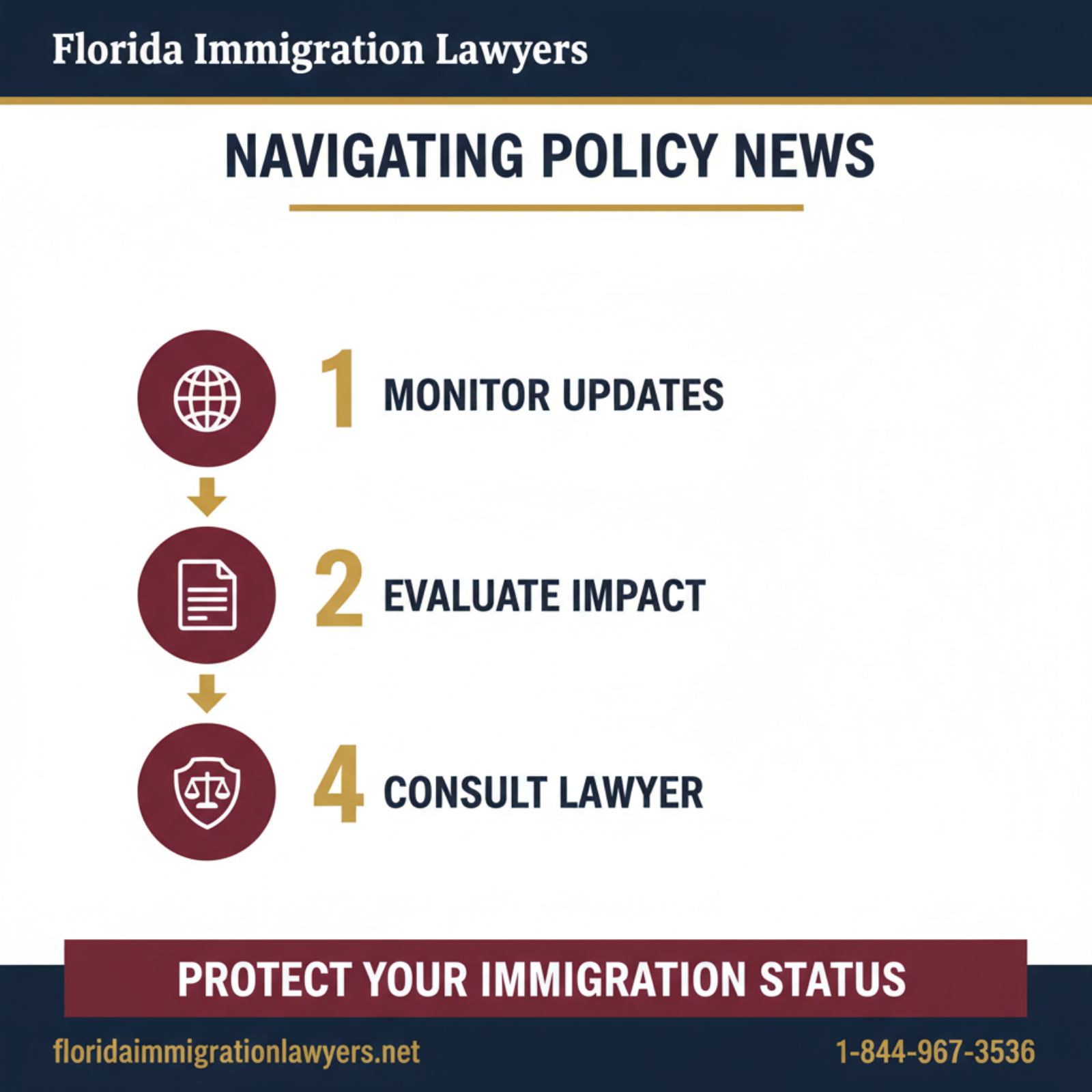
When new policies or updates are announced, it is natural to feel overwhelmed. However, a structured approach can help you navigate these changes effectively. Here is a step-by-step guide to help you respond to evolving immigration policies:
- Stay Informed and Verify Information: Regularly check official sources like uscis.gov and travel.state.gov for the latest announcements. Be wary of rumors or unofficial advice that could lead to serious errors.
- Assess Your Personal Situation: Understand how a new policy specifically applies to your current immigration status or application. What are the direct implications for your family, employment, or future plans?
- Gather Necessary Documentation: Policy changes often come with revised documentation requirements. Proactively collect all relevant personal, financial, and legal records to prevent delays.
- Seek Professional Legal Counsel: This is perhaps the most critical step. An experienced Florida immigration lawyer can interpret complex legal language, advise on eligibility, and help formulate a strategy tailored to your case.
- File Applications Accurately and Timely: Ensure all forms are completed precisely, all required evidence is included, and applications are submitted before any deadlines. Mistakes can lead to significant delays or denials.
- Prepare for Interviews and Follow-Ups: If an interview is required, prepare thoroughly with your attorney. Be ready to respond to Requests for Evidence (RFEs) or Notices of Intent to Deny (NOIDs) promptly.
Adhering to guidelines outlined in the USCIS Policy Manual and regulations such as 8 CFR Part 214 (for nonimmigrant visas) or 8 CFR Part 245 (for adjustment of status) is vital. A slight oversight can have lasting consequences. Explore our citizenship services for guidance on naturalization processes.
Essential Documents for Adapting to Green Card Policy Changes
Adapting to green card policy changes, a frequent topic in immigration policy news Florida, requires meticulous preparation of documentation. The specific documents you need will vary based on your application type (e.g., family-based, employment-based, asylum-based), but a core set of records is almost always required. Ensuring these are current and accurate can significantly streamline your process.
Comprehensive Document Checklist
Whether you are applying for a new green card, renewing one, or adjusting your status, careful document management is key. Here is a general checklist of documents you should prepare, especially when faced with evolving policies:
- Identification Documents: Valid passport, birth certificate, national identity card (if applicable), and any previous visas or I-94 arrival/departure records.
- Proof of Legal Status: Copies of current visas, work permits (EAD), previous green cards, or other immigration documents.
- Evidence of Residence in Florida: Utility bills, lease agreements, property deeds, or official correspondence showing your address in Naples or elsewhere in Florida.
- Financial Support Documentation: Affidavits of Support (Form I-864) from sponsors, employment letters, pay stubs, tax returns, and bank statements to demonstrate financial stability.
- Police Clearances and Criminal Records: Certificates of good conduct from all countries you have lived in, and any court records related to arrests or convictions.
- Civil Documents: Marriage certificates, divorce decrees, birth certificates for children, and adoption papers, if relevant to your application.
- Educational and Employment Records: Diplomas, transcripts, professional licenses, and letters from employers, particularly for employment-based green cards.
- Medical Examination Results: Completed Form I-693, Report of Medical Examination and Vaccination Record, from an authorized civil surgeon.
- Photographs: Recent passport-style photographs meeting USCIS specifications.
These documents form the backbone of any application. Any discrepancies or missing information can lead to significant delays or even denial, especially with intensified scrutiny under new immigration laws 2026.
Timeline and Processing Expectations Amidst Florida Immigration Policy Shifts
Understanding the timeline for immigration applications in Florida can be challenging, particularly when new immigration policy news Florida introduces processing shifts. While USCIS provides general processing times, these are estimates and can fluctuate significantly based on various factors. These include the specific type of application, the USCIS field office or service center handling your case, and the volume of applications.
Factors Influencing Processing Times
Several elements can impact how quickly your application is processed:
- Policy Changes and Resource Allocation: New policies may divert resources, leading to backlogs in certain areas while others are expedited.
- Caseload Volume: High volumes of applications, often after significant policy announcements, can extend wait times considerably.
- Completeness of Application: Incomplete applications or those requiring Requests for Evidence (RFEs) will inevitably take longer to process.
- Background Checks and Security Clearances: These are mandatory and can vary in duration, sometimes causing unforeseen delays.
- Interview Scheduling: The availability of interview slots at local USCIS field offices, such as the one serving the Naples area, can also affect your timeline.
It is advisable to check the official USCIS website for the most current processing times for your specific form and service center. For example, individuals seeking asylum may experience varying wait times based on court backlogs and policy priorities. Learn about our asylum application support.
Cost Factors and Fee Breakdown for Immigration Applications in 2026
The financial aspect of navigating immigration processes, especially under evolving immigration policy news Florida, is a significant consideration. There are several categories of costs involved, and it is crucial to budget for them appropriately. Florida immigration lawyer fees, government filing fees, and other associated expenses can add up.
Understanding the Various Costs
While specific amounts are subject to change and should always be verified on the official USCIS website, here's a general breakdown of potential costs:
- USCIS Filing Fees: These are fees charged by the government for processing various forms (e.g., I-130, I-485, I-765, N-400). These fees can be substantial and are non-refundable, regardless of the outcome of your application.
- Biometrics Fees: A separate fee is often required for fingerprinting and background checks.
- Medical Examination Fees: You must undergo a medical exam by a USCIS-approved civil surgeon. The cost of this exam varies by provider and is not set by USCIS.
- Attorney Fees: Legal representation from a qualified Florida immigration lawyer is an investment in your case's success. These fees cover professional advice, document preparation, representation, and advocacy.
- Translation and Document Procurement Fees: If documents are not in English, certified translations are required. You may also incur costs to obtain birth certificates, marriage licenses, or other records.
- Travel Expenses: Costs associated with traveling to interviews, appointments, or to gather documents.
Some applicants may be eligible for fee waivers based on income or receipt of public benefits. Discussing your financial situation with your attorney can help determine if you qualify for such waivers.
Do not navigate this process alone. The complexities of immigration policy news Florida and the ever-changing legal landscape demand expert guidance. Contact Florida Immigration Lawyers today for dedicated support and personalized strategies to protect your rights and achieve your immigration goals. Schedule your consultation now.
Common Mistakes to Avoid with New Immigration Laws 2026 in Florida
The dynamic nature of immigration policy news Florida means that mistakes can be costly. Even minor errors can lead to significant delays, denials, or even more severe immigration consequences. Being aware of common pitfalls can help you protect your case and ensure a smoother process.
- Ignoring Policy Updates: Failing to stay informed about new immigration laws 2026 in Florida can lead to submitting outdated forms or missing crucial deadlines. This oversight can result in rejection or a Notice of Intent to Deny (NOID).
- Filing Incomplete Applications: Submitting forms without all required evidence or with missing signatures is a frequent error. USCIS will typically issue a Request for Evidence (RFE) or reject the application, causing substantial delays.
- Misrepresenting Facts: Providing false information or omitting critical details, even unintentionally, can be considered fraud. This can lead to permanent bars to immigration benefits and even criminal charges.
- Missing Deadlines: Immigration processes are strict about deadlines. Missing a filing deadline for an appeal, RFE response, or application can result in automatic denial or loss of eligibility.
- Traveling Without Proper Authorization: Leaving the U.S. without advance parole while an adjustment of status application is pending can lead to abandonment of your application and potential inadmissibility upon return.
- Failing to Update Your Address with USCIS: If USCIS sends important notices to an old address, you might miss critical updates or interview appointments. This can lead to your case being denied or closed without your knowledge.
- Not Seeking Legal Advice: Attempting to navigate complex immigration laws without an experienced Florida immigration lawyer can result in errors that are difficult to correct later. Self-representation is risky for intricate cases.
- Overlooking Background Checks and Security Clearances: Issues with criminal records or security concerns, if not properly addressed, can lead to denials, especially under stricter vetting changes like those implied by USCIS updates Florida.
- Assuming Old Rules Apply: Immigration law is not static. Relying on information from years ago or from friends' experiences can be detrimental, as policies and interpretations frequently change.
- Not Preparing Adequately for Interviews: Going into an interview without reviewing your application or understanding potential questions can lead to inconsistencies or an inability to provide necessary clarifications, risking denial.
- Relying on Unofficial Sources: Getting advice from non-attorneys, "notarios," or unverified online forums can provide inaccurate or harmful information. Always consult official sources or legal professionals.
- Failing to Consider All Options: When facing adverse decisions or new enforcement actions, not exploring all available legal avenues, such as appeals or deportation defense, can lead to missed opportunities for relief.
When to Call a Florida Immigration Lawyer
Given the complexities of immigration policy news Florida, knowing when to seek legal counsel is paramount. While some straightforward applications might be manageable, many situations demand the expertise of a seasoned Florida immigration lawyer. Our team at Florida Immigration Lawyers is ready to assist you.
You should consider calling an attorney if:
- You are Facing Deportation or Removal Proceedings: This is a critical situation where immediate legal intervention is necessary to protect your rights and explore all possible defenses.
- Your Case is Complex: If you have a criminal record, previous immigration violations, or a complicated family situation, legal guidance is essential.
- You Received a Request for Evidence (RFE) or Notice of Intent to Deny (NOID): These notices indicate that USCIS has concerns about your application and requires a detailed, legally sound response.
- You Are Applying for Asylum or Refugee Status: These cases are highly sensitive and require strong legal arguments and extensive documentation.
- You Are Sponsoring a Family Member: Family immigration often involves intricate rules regarding eligibility, financial sponsorship, and proof of relationships.
- You Are Seeking a Business or Employment Visa: Business immigration involves specific requirements for employers and employees, often requiring detailed petitions and compliance.
- You Have Been Denied an Immigration Benefit: An attorney can review the denial, advise on appeal options, or help you reapply.
- You Are Unsure About the Impact of New Policies: When USCIS updates Florida or new state laws are enacted, an attorney can clarify how these changes affect your specific circumstances.
- You Have Questions About Your Eligibility: Before investing time and money, a lawyer can assess your eligibility for various benefits and advise on the best path forward.
Do not wait for a crisis to unfold. Proactive legal advice can often prevent problems before they arise. Our dedicated attorneys are here to provide the clarity and representation you need.
About Florida Immigration Lawyers
Florida Immigration Lawyers is a leading law firm dedicated to serving the diverse immigration needs of individuals and families across the entire state of Florida, including Naples and its surrounding communities. Our mission is to provide compassionate, effective, and results-driven legal representation in all areas of immigration law.
We understand that every immigration journey is unique and deeply personal. That's why we offer a wide range of services, from family-based petitions and employment visas to complex deportation defense and asylum claims. Our experienced team is committed to staying abreast of the latest immigration policy news Florida and federal changes, ensuring our clients receive the most current and strategic advice. We pride ourselves on our client-focused approach, clear communication, and unwavering advocacy. We are available 24/7 to address your concerns and offer free consultations to help you understand your options. Call us today at 1-844-967-3536 or visit our website at https://www.floridaimmigrationlawyers.net to learn how we can assist you.
Sources and References
- U.S. Citizenship and Immigration Services (USCIS)
- Executive Office for Immigration Review (EOIR)
- U.S. Department of State - Bureau of Consular Affairs
- 8 U.S.C. Chapter 12 - Immigration and Nationality Act (INA)
- 8 CFR Part 214 - Nonimmigrant Classes
- 8 CFR Part 245 - Adjustment of Status to that of Person Admitted for Permanent Residence
- USCIS Policy Manual - https://www.uscis.gov/policy-manual
- BIA Precedent Decisions (e.g., Matter of A-B-, 27 I&N Dec. 316 (A.G. 2018)) - general reference to demonstrate knowledge of legal precedent
This article provides general legal information and is not intended as legal advice. Every case is unique, and outcomes depend on specific facts and circumstances. Contact an attorney for advice about your particular situation.
Navigating the complexities of immigration policy news Florida requires expert legal guidance. Do not let uncertainty jeopardize your future. Call Florida Immigration Lawyers today at 1-844-967-3536 for a free, confidential consultation. Our dedicated team is here to provide the support and representation you deserve. Se Habla Español - Estamos aquí para ayudarle.
Do Not Navigate This Process Alone
Our experienced immigration attorneys are ready to fight for you. Get a free, confidential consultation today.
Se Habla Español
Frequently Asked Questions
Florida Immigration Lawyers
Immigration Attorney | Founder, Vasquez Law Firm
U.S. Air Force veteran and immigration attorney with thousands of cases resolved. J.D., NCCU School of Law. AILA member. Admitted to the 4th, 5th, and 11th Circuit Courts.
Available 24/7 - Free Evaluations
Related Legal Services
Our Florida immigration attorneys can help you with deportation defense, citizenship and naturalization and family immigration services. Call today at 1-844-967-3536 for a free consultation.
Related Links
Related Topics
Free Legal Consultation
Discuss your case with our experienced attorneys. We're available 24/7.
Se Habla Español - Estamos aquí para ayudarle.
Related Articles
Stokes Interview: Navigating Marriage Fraud in Florida
A Stokes interview is a specialized, separate interview conducted by USCIS when there are suspicions of marriage fraud in a green card application. This rigorous process involves individual questioning of spouses, focusing on inconsistencies in their testimonies to determine the authenticity of their marital bond. For couples in Florida, navigating this high-stakes interview requires meticulous preparation, extensive documentation, and often the strategic guidance of an experienced immigration lawyer. Understanding the process, preparing for detailed questions, and presenting a strong case are crucial for overcoming marriage fraud allegations and securing your immigration future. Florida Immigration Lawyers stands ready to assist you.
Immigration Attorney Gainesville: North Florida Legal Help
For those in Gainesville, Alachua County, and throughout North Florida, navigating U.S. immigration law requires expert guidance. An experienced immigration attorney can simplify complex processes, from family-based petitions and employment visas to critical asylum claims and deportation defense. This comprehensive guide outlines the essential services provided by an immigration attorney, details necessary documentation, clarifies processing timelines, and discusses associated costs. We also highlight common mistakes to avoid and crucial scenarios where legal counsel is indispensable. Florida Immigration Lawyers serves all of Florida, including Gainesville and St. Petersburg, providing dedicated legal support to help you achieve your immigration goals. Contact us for a free consultation to discuss your specific needs.
Military Naturalization Expedited at Florida Bases
Explore expedited military naturalization processes for service members at Florida bases like MacDill. Learn about eligibility, steps, and common mistakes. Contact Florida Immigration Lawyers for a free consultation.
Protect Yourself from Immigration Scams in Florida
Learn how to protect against immigration scams in Florida, focusing on St. Petersburg. This guide covers identifying scams, verifying credentials, and getting legal help. Call Florida Immigration Lawyers at 1-844-967-3536 for assistance.
