Florida Immigration Policy News 2026: What You Need to Know
Navigating the evolving landscape of immigration policy in Florida for 2026 can be daunting. This comprehensive guide provides crucial insights into the latest immigration policy news, state-specific updates, and federal changes that impact individuals and families across Florida, including Miami. We delve into key policy areas, processing expectations, and common pitfalls, offering a clear roadmap for immigrants. Discover how recent legislative actions and administrative shifts may affect your status and future in the Sunshine State. Florida Immigration Lawyers are here to help you understand your options and ensure your compliance with all regulations.

In 2026, Florida's immigration policy landscape continues to evolve, influenced by both state legislation and federal directives. Key updates often involve enforcement measures, changes to asylum procedures, and adjustments in visa processing. Understanding these shifts is crucial for immigrants and their families across Florida, including Miami, to protect their rights and navigate legal pathways effectively. Seeking timely legal counsel is essential to adapt to new requirements and avoid complications.
- Florida's policies are dynamic, requiring constant vigilance.
- Federal and state laws often intersect, creating complex scenarios.
- Enforcement priorities and visa processing times can change.
- Legal assistance is vital for navigating new requirements.
- Proactive planning helps protect your immigration status.
Are you an immigrant in Florida, or do you have family members navigating the complex U.S. immigration system? The ever-changing landscape of immigration policy can feel overwhelming. In 2026, staying informed about Florida immigration policy news is more critical than ever. Recent legislative actions and administrative shifts can profoundly impact your status, your family's future, and your ability to live and work in the Sunshine State.
This comprehensive guide from Florida Immigration Lawyers is designed to cut through the confusion. We will provide you with a clear understanding of the latest immigration policy news affecting Florida residents, including those in Miami and surrounding areas. Our goal is to equip you with the knowledge needed to navigate these changes confidently and protect your rights. We will cover key policy updates, essential processes, and potential challenges.
Do not face these complexities alone. If you have questions about how current immigration policy news affects your situation, or if you need assistance, call Florida Immigration Lawyers at 1-844-967-3536 for a free consultation today. Our experienced team is ready to provide the guidance you deserve.
Overview of Florida's Immigration Policy Landscape in 2026
Florida remains a pivotal state in the national immigration dialogue, with 2026 bringing continuous evolution. Our unique geography and diverse population mean both federal and state-level immigration policy news significantly impact residents. From Miami to agricultural regions, policies on border security, employment verification, and social services constantly change.
State legislative efforts often address perceived challenges of undocumented immigration, sometimes introducing measures diverging from federal approaches. These initiatives create a complex legal environment, making it hard for individuals to understand their rights. For instance, laws concerning transportation of undocumented individuals or stricter employment verification can have widespread implications for businesses and families across Florida.
Concurrently, federal immigration policy news shapes the broader framework. Decisions by USCIS, DHS, and DOJ directly affect visa processing, asylum claims, and deportation proceedings. The interplay between state and federal actions demands nuanced understanding, where expert legal guidance becomes invaluable. Florida Immigration Lawyers closely monitor these developments to keep clients informed.
Understanding the current climate is the first step toward effective navigation. We see ongoing discussions about legal status pathways, increased enforcement, and changes to the asylum system. These policies are not abstract; they have real-world consequences for communities across Florida.
Understanding Key Immigration Policy News and Updates Impacting Florida
As we move through 2026, several key areas of immigration policy news are particularly relevant for Florida residents. These updates can affect various aspects of an immigrant's life, from work eligibility to family unity. Keeping informed about these changes is essential for compliance and successful navigation.
One significant area involves employment immigration. Florida businesses, particularly in hospitality and agriculture, rely heavily on immigrant labor. Changes to visa programs like H-2A or H-2B, or stricter E-Verify mandates, can have ripple effects. Employers and employees must understand evolving requirements. For business immigration concerns, visit our Business Immigration page.
Another critical aspect is family immigration. Policies on visa bulletin updates, processing backlogs, and family relationship definitions are regularly reviewed. These federal changes, often announced by USCIS and DOS, directly impact families seeking to reunite in Florida. Understanding the latest family preference categories and priority dates is crucial. Learn more on our Family Immigration page.
Furthermore, asylum and refugee policies are frequently in the news, given Florida's proximity to international borders. Changes in credible fear interviews, expedited removal processes, or eligibility criteria can drastically alter an asylum seeker's journey. Individuals must seek legal counsel immediately if they fear persecution. Our Asylum practice area provides more information.
Finally, enforcement and deportation defense remain a constant concern. State laws increasing cooperation with federal agencies like ICE can lead to more detentions and removals. Understanding your rights during law enforcement encounters and seeking immediate legal representation is paramount. If facing deportation, visit our Deportation Defense page. The legal landscape of immigration policy news in Florida is dynamic, and our firm helps you understand its intricacies.
Navigating the Immigration Process in Florida: A Step-by-Step Guide
Successfully navigating the U.S. immigration process in Florida demands meticulous attention and understanding of legal requirements. While each case is unique, many pathways share common steps. This guide provides a general overview, but personalized legal advice from a qualified immigration lawyer is indispensable.
- Initial Consultation and Case Assessment: Begin with a comprehensive consultation with an immigration attorney. Your lawyer will assess eligibility, discuss the latest immigration policy news, and help determine the most suitable legal pathway. This step is crucial for strategic planning.
- Gathering Required Documentation: Meticulously collect all necessary supporting documents. This often includes identity proofs, birth certificates, financial records, and other evidence. Accuracy and completeness are vital to avoid delays.
- Form Preparation and Filing: Your attorney helps prepare and accurately complete complex USCIS forms. Precise completion is essential; incorrect filings cause delays or denials. Your attorney ensures correctness before submission.
- Biometrics Appointment: USCIS typically schedules a biometrics appointment for fingerprinting, photography, and signature collection for background checks. This is a standard part of most processes.
- Interviews (If Required): You may be scheduled for an interview with a USCIS officer, often at a local Florida field office (e.g., Miami). This verifies information and addresses application questions. Your attorney can prepare you and, in many cases, accompany you.
- Decision and Follow-Up: USCIS issues a decision after review or interview. If approved, you receive your immigration benefit. If there are Requests for Additional Evidence (RFEs) or a denial, your attorney helps understand next steps, including appeals or refiling.
Required Documentation for Florida Immigration Applications
Specific documents vary by immigration pathway. However, many applications generally require:
- Proof of identity (passport, national ID)
- Birth certificates for all applicants and beneficiaries
- Marriage certificates (if applicable)
- Divorce decrees or death certificates for previous spouses (if applicable)
- Financial documents (tax returns, employment letters, affidavits of support)
- Medical examination results (Form I-693)
- Police clearance certificates from all countries of residence
- Photographs meeting USCIS specifications
- Educational and employment history (for certain visa types)
- Any other evidence relevant to your specific eligibility criteria
Ensuring all required documents are present and, if necessary, translated into English, is paramount. Missing or incorrect documentation can significantly delay your case or lead to a Request for Evidence (RFE). Our firm helps compile a comprehensive list for your unique situation.
Expected Timelines and Processing for Florida-Based Cases
Immigration processing times in Florida vary significantly, influenced by application type, the USCIS field office or service center, and current caseloads. The latest immigration policy news can also impact processing speeds. USCIS provides online tools for estimated processing times, but these are not guarantees.
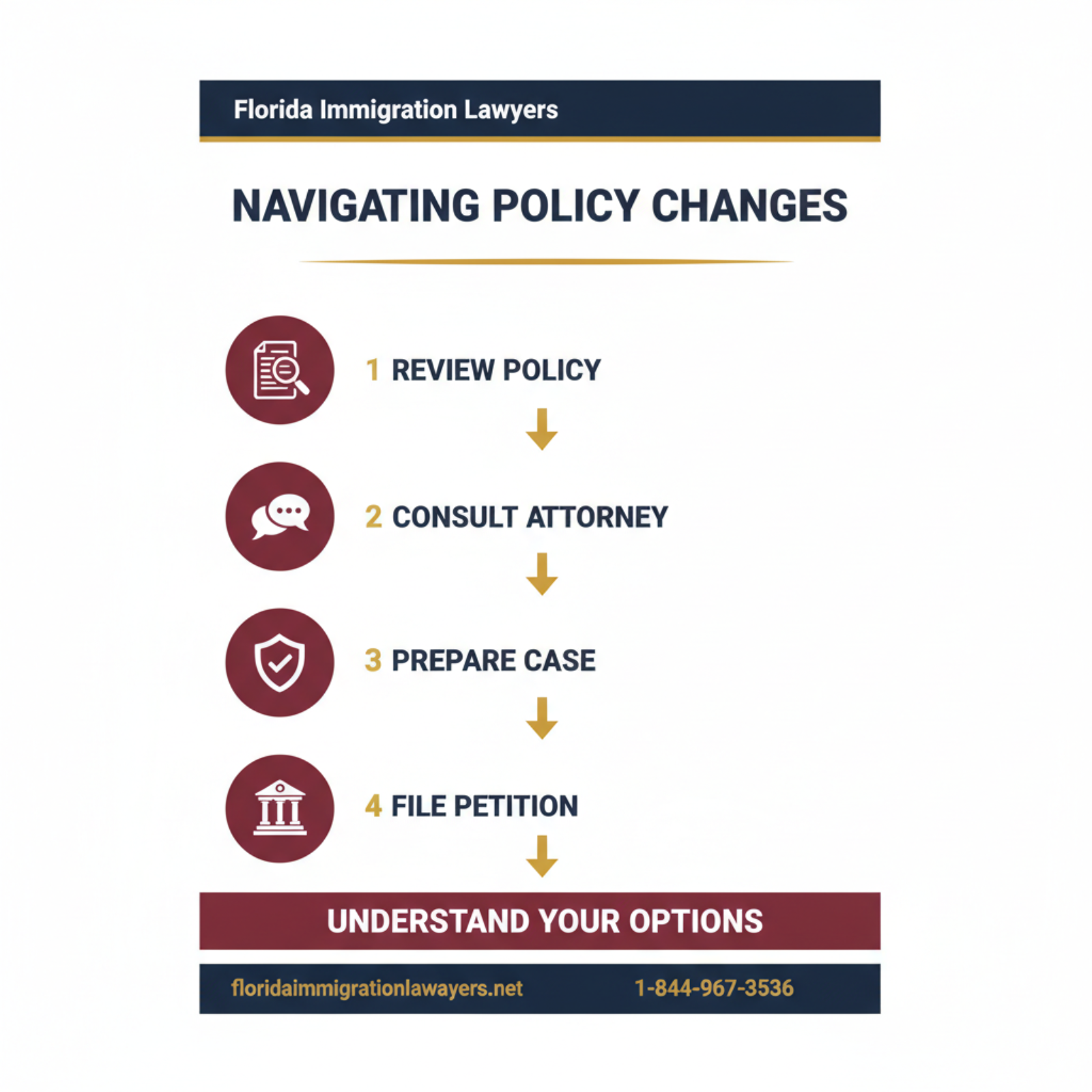
Factors like application completeness, responses to RFEs, and additional interviews affect individual timelines. For example, family-based petitions may take months to years. Naturalization applications, often handled by local field offices like Miami, have distinct timelines. Working with an attorney helps manage expectations and strategize for potential delays. We monitor your case and respond promptly to USCIS inquiries, aiming for efficient progress.
Cost Factors and Immigration Fee Breakdown
The financial aspect of immigration is a significant consideration. Several cost categories are typically associated with pursuing an immigration benefit:
- USCIS Filing Fees: These are fees charged by U.S. Citizenship and Immigration Services for processing application forms. Fees are subject to change and vary by application type (e.g., I-130, I-485, N-400). Always check the most current schedule on the USCIS website.
- Legal Fees: Hiring an experienced immigration lawyer, such as those at Florida Immigration Lawyers, involves fees for their services. These compensate for expertise, time, and effort in preparing your case, advising on immigration policy news, and navigating the legal system. Our firm offers competitive, transparent fee structures, often flat-fee.
- Ancillary Costs: Other expenses can include medical examinations, translation services, courier fees, police certificates, and travel for interviews. Budgeting for these is wise.
Investing in proper legal representation often saves money long-term by preventing costly mistakes or denials. We believe in transparency and discuss all potential costs during your free consultation.
Common Challenges and Opportunities for Immigrants in Florida
Florida presents a unique blend of challenges and opportunities for immigrants. Understanding both helps you prepare and leverage available resources. The state's diverse economy, cultural richness, and vibrant communities are attractive, but specific legal and social hurdles exist.
Challenges:
- Evolving State Laws: Florida's proactive immigration legislation can introduce complexities or restrictions, requiring careful interpretation and compliance.
- Enforcement Concerns: A significant federal immigration agency presence means enforcement actions are a constant worry. Knowing your rights and having immediate legal counsel is vital during law enforcement interactions.
- Access to Resources: Finding accurate information and culturally competent services can be challenging, especially in rural areas. Language barriers further complicate access.
- Economic Integration: Some immigrants face hurdles in credential recognition, securing stable employment, or starting businesses due to legal status or unfamiliarity with U.S. systems.
Opportunities:
- Diverse Economy: Florida's robust economy (tourism, healthcare, agriculture, tech) offers numerous employment opportunities for those with legal work authorization. Miami is a key international hub.
- Strong Community Support: Many non-profit organizations and community groups across Florida support immigrants with integration, language learning, and social services. These networks are invaluable.
- Pathways to Legal Status: Numerous federal pathways exist for eligible individuals, including family-based visas, employment visas, asylum, and special immigrant juvenile status. Staying informed about immigration policy news helps identify these.
- Legal Expertise: Florida has experienced immigration lawyers, like those at Florida Immigration Lawyers, dedicated to helping immigrants navigate the system, familiar with federal and state-specific nuances.
By understanding obstacles and avenues for support, immigrants in Florida can make informed decisions. We help you identify opportunities and mitigate challenges.
The complexities of immigration law, particularly with ongoing immigration policy news, demand professional guidance. Do not navigate this process alone. Contact Florida Immigration Lawyers today to discuss your specific situation and explore your best legal options. We are your trusted partners in Florida immigration.
Navigating the U.S. immigration system, especially amidst evolving immigration policy news, is fraught with potential missteps. Avoiding common mistakes can save you time, money, and prevent devastating consequences for your immigration status. Here are some critical errors to steer clear of:
- Filing Incorrect or Incomplete Applications: Errors or missing information lead to delays, Requests for Evidence (RFEs), or outright denials, prolonging your process.
- Missing Deadlines: Immigration processes have strict deadlines. Missing them can result in application denial or even initiation of removal proceedings.
- Providing False Information: Any misrepresentation on forms or during interviews can lead to severe penalties, including permanent bars from future benefits and criminal charges.
- Failing to Disclose Criminal History: Hiding a criminal record, even minor offenses, will likely be discovered, leading to accusations of fraud and complicating your case.
- Traveling Without Proper Authorization: Leaving the U.S. with a pending application can be problematic, potentially leading to denied re-entry or abandonment of your application.
- Overstaying Your Visa: Remaining in the U.S. beyond your authorized period triggers severe penalties, including re-entry bars, making future status adjustment difficult.
- Not Updating USCIS with Address Changes: You must inform USCIS of any address change within 10 days. Failure to do so can result in missed notices or even removal orders.
- Ignoring Requests for Evidence (RFEs) or Notices of Intent to Deny (NOIDs): These require prompt, thorough responses. Ignoring them will almost certainly lead to a denial.
- Attempting to Navigate the System Without Legal Counsel: Handling complex immigration matters without an experienced lawyer often leads to critical errors. An attorney understands the nuances of immigration policy news and law.
- Falling Victim to Notario Fraud: "Notarios" are not attorneys and can cause irreparable harm to your case. Always seek help from licensed attorneys.
By being aware of these common pitfalls and seeking professional legal assistance, you can significantly improve your chances of a successful outcome in your immigration journey in Florida.
When to Call a Lawyer
The complexities surrounding immigration policy news and its implementation in Florida mean knowing when to seek legal assistance is crucial. Even minor errors can have significant, long-lasting consequences. It is always advisable to consult with an experienced immigration lawyer, especially if you encounter any of the following scenarios:
- Complex Case Details: If your immigration history is complicated, involves previous denials, criminal records, or unlawful presence, a lawyer is essential.
- Facing Deportation or Removal Proceedings: This critical situation demands immediate legal representation. Our Deportation Defense attorneys will fight for your rights.
- Denied Applications: If your application has been denied, an attorney can review reasons and advise on appeal or refiling options.
- Unsure About Eligibility: Immigration law offers many pathways. A lawyer assesses your unique situation to determine the best course of action.
- Difficulty Understanding Forms or Requirements: USCIS forms are complex. An attorney ensures accurate completion and submission of all necessary documentation.
- Changes in Immigration Policy: With constant immigration policy news, an attorney stays updated on the latest laws and regulations for compliance.
- Marriage to a U.S. Citizen: These cases can be complex, especially with prior unlawful entry or status issues. Visit our Family Immigration page.
- Seeking Asylum or Refugee Status: These highly sensitive cases require expert legal guidance due to stringent legal standards and potential dangers.
Florida Immigration Lawyers serves clients across the entire state of Florida, including Miami, Orlando, Tampa, and Jacksonville. Our dedicated team provides compassionate, effective legal representation. Do not hesitate to protect your future. Visit our contact page or our attorneys page to learn more. For general immigration questions, start with our Immigration overview.
About Florida Immigration Lawyers
Florida Immigration Lawyers is a premier law firm dedicated to serving the diverse immigration needs of individuals, families, and businesses throughout Florida. With years of specialized experience, our attorneys are committed to providing exceptional legal representation and compassionate guidance through every step of the immigration process. We understand the profound impact immigration matters have on our clients' lives and strive to achieve the best possible outcomes.
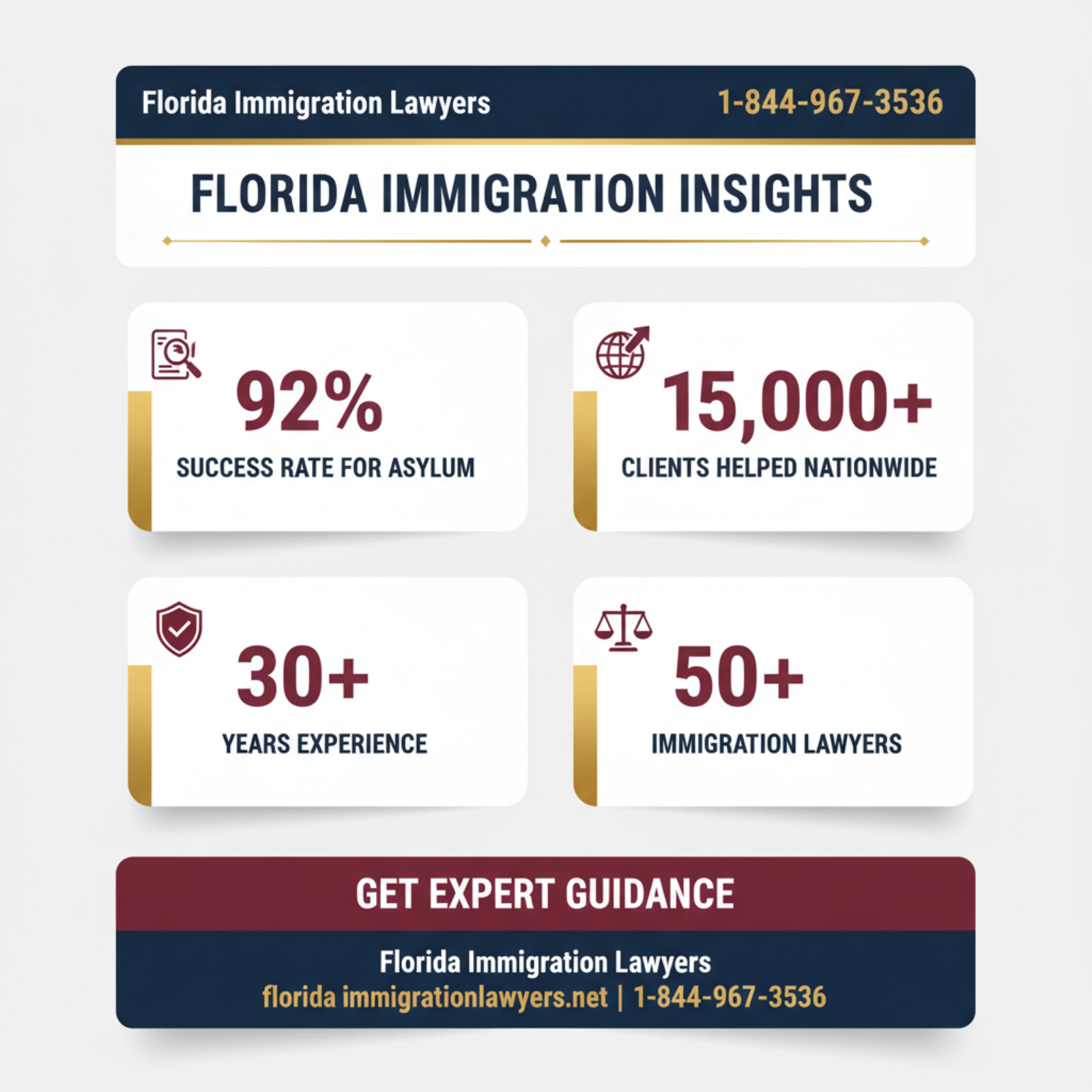
Our Services: We offer a comprehensive range of immigration services, including family-based petitions, employment visas, deportation defense, asylum claims, naturalization, and assistance with complex waivers. Our expertise covers both federal immigration law and its interaction with Florida-specific regulations, ensuring our clients receive well-rounded advice tailored to their unique circumstances.
Why Choose Us: Our firm stands out due to our unwavering commitment to client success, deep knowledge of immigration law, and empathetic approach. We pride ourselves on clear communication, strategic advocacy, and a personalized client experience. We are available 24/7 to address urgent concerns and offer free, confidential consultations to help you understand your options without financial pressure. Serving all of Florida, we are your dedicated advocates.
Contact Us:
- Phone: 1-844-967-3536
- Website: https://www.floridaimmigrationlawyers.net
- Availability: 24/7
- Consultations: Free Consultations Available
- Service Area: Serving all of Florida
Sources and References
- U.S. Citizenship and Immigration Services (USCIS)
- Executive Office for Immigration Review (EOIR)
- U.S. Department of State - Visa Law and Policy
- U.S. Immigration and Customs Enforcement (ICE)
- 8 U.S.C. Chapter 12 - Immigration and Nationality Act (INA)
- 8 CFR (Code of Federal Regulations, Title 8 - Aliens and Nationality)
- INA Section 212 (8 U.S.C. § 1182) - Inadmissible Aliens
- INA Section 240 (8 U.S.C. § 1229a) - Removal Proceedings
This article provides general legal information and is not intended as legal advice. Every case is unique, and outcomes depend on specific facts and circumstances. Contact an attorney for advice about your particular situation. Immigration laws are subject to frequent change.
Staying current with immigration policy news in Florida is vital, but navigating its complexities requires expert legal insight. Whether you are seeking a visa, fighting deportation, or pursuing citizenship, Florida Immigration Lawyers is here to advocate for you. Our dedicated team is ready to provide the professional and compassionate legal support you need.
Do not leave your immigration future to chance. Call Florida Immigration Lawyers today at 1-844-967-3536 for a free, confidential consultation.
Se Habla Español - Estamos aquí para ayudarle.
Do Not Navigate This Process Alone
Our experienced immigration attorneys are ready to fight for you. Get a free, confidential consultation today.
Se Habla Español
Frequently Asked Questions
Florida Immigration Lawyers
Immigration Attorney | Founder, Vasquez Law Firm
U.S. Air Force veteran and immigration attorney with thousands of cases resolved. J.D., NCCU School of Law. AILA member. Admitted to the 4th, 5th, and 11th Circuit Courts.
Available 24/7 - Free Evaluations
Related Legal Services
Our Florida immigration attorneys can help you with immigration practice areas, free immigration consultation and experienced immigration attorneys. Call today at 1-844-967-3536 for a free consultation.
Related Links
Related Topics
Free Legal Consultation
Discuss your case with our experienced attorneys. We're available 24/7.
Se Habla Español - Estamos aquí para ayudarle.
Related Articles
Stokes Interview: Navigating Marriage Fraud in Florida
A Stokes interview is a specialized, separate interview conducted by USCIS when there are suspicions of marriage fraud in a green card application. This rigorous process involves individual questioning of spouses, focusing on inconsistencies in their testimonies to determine the authenticity of their marital bond. For couples in Florida, navigating this high-stakes interview requires meticulous preparation, extensive documentation, and often the strategic guidance of an experienced immigration lawyer. Understanding the process, preparing for detailed questions, and presenting a strong case are crucial for overcoming marriage fraud allegations and securing your immigration future. Florida Immigration Lawyers stands ready to assist you.
Immigration Attorney Gainesville: North Florida Legal Help
For those in Gainesville, Alachua County, and throughout North Florida, navigating U.S. immigration law requires expert guidance. An experienced immigration attorney can simplify complex processes, from family-based petitions and employment visas to critical asylum claims and deportation defense. This comprehensive guide outlines the essential services provided by an immigration attorney, details necessary documentation, clarifies processing timelines, and discusses associated costs. We also highlight common mistakes to avoid and crucial scenarios where legal counsel is indispensable. Florida Immigration Lawyers serves all of Florida, including Gainesville and St. Petersburg, providing dedicated legal support to help you achieve your immigration goals. Contact us for a free consultation to discuss your specific needs.
Military Naturalization Expedited at Florida Bases
Explore expedited military naturalization processes for service members at Florida bases like MacDill. Learn about eligibility, steps, and common mistakes. Contact Florida Immigration Lawyers for a free consultation.
Protect Yourself from Immigration Scams in Florida
Learn how to protect against immigration scams in Florida, focusing on St. Petersburg. This guide covers identifying scams, verifying credentials, and getting legal help. Call Florida Immigration Lawyers at 1-844-967-3536 for assistance.
