Immigration Policy Changes 2026 in Florida: What to Know
Anticipated immigration policy changes for 2026 in Florida are set to reshape various aspects of immigration law, from visa processing to enforcement. These federal reforms could impact family-based petitions, employment visas, and asylum claims, requiring immigrants and businesses in Florida to stay informed. This comprehensive guide from Florida Immigration Lawyers provides crucial insights into expected updates from USCIS and EOIR, outlining potential shifts in eligibility, processing times, and associated costs. Learn how to navigate these new rules, avoid common mistakes, and understand when professional legal assistance is essential to protect your rights and secure your future in the U.S. We offer free case reviews and expert guidance across all of Florida.
Immigration policy changes for 2026 in Florida are anticipated to bring significant updates, particularly concerning border enforcement, visa processing, and eligibility for certain benefits. These reforms, driven by federal legislative efforts and evolving administrative priorities, could affect family-based petitions, employment visas, and asylum claims. Staying informed about new rules from agencies like USCIS and EOIR is crucial for all immigrants and their families in Florida. These changes often involve updated forms, increased fees, and modified processing times, requiring careful preparation.
- Anticipated changes in federal immigration laws and their impact on Florida.
- Potential shifts in visa categories, asylum procedures, and enforcement priorities.
- Importance of understanding new USCIS forms, fees, and processing times.
- The need for proactive legal guidance to navigate complex new regulations.
Navigating the complex landscape of U.S. immigration law can feel like a constant challenge, especially with frequent updates and policy shifts. For immigrants and their families living in Florida, understanding the anticipated immigration policy changes 2026 is not just important-it's essential for planning your future and protecting your legal status. The year 2026 is expected to bring significant reforms that could impact various aspects of immigration, from visa applications to enforcement actions.
At Florida Immigration Lawyers, we understand the anxieties and uncertainties these changes can create. Our mission is to provide clear, actionable information and robust legal representation to help you navigate these evolving regulations. This comprehensive guide will break down the expected policy changes, explain their potential effects on individuals and families in Florida, and offer practical steps you can take to prepare. Don't face these changes alone; understanding your options and obligations is the first step toward securing your future.
If you are concerned about how upcoming immigration policy changes might affect you or your loved ones, we are here to help. Call Florida Immigration Lawyers at 1-844-YO-PELEO for a free, confidential case review today. Our dedicated team is ready to provide the expert guidance you need.
What Are the Key Immigration Policy Changes Expected in Florida for 2026?
As of 2026, key immigration policy changes in Florida are largely driven by federal initiatives focusing on border security, economic immigration, and humanitarian relief. Anticipated reforms include stricter asylum eligibility requirements, increased scrutiny for certain visa categories, and potential adjustments to the legal pathways for undocumented immigrants. These changes aim to streamline some processes while tightening others, reflecting national priorities.
The federal government, through agencies like U.S. Citizenship and Immigration Services (USCIS) and the Executive Office for Immigration Review (EOIR), continuously reviews and updates its policies. For 2026, Florida expects to see a continued emphasis on policies affecting employment-based immigration, potentially introducing new criteria for H-1B visas and other skilled worker programs. Furthermore, there might be changes concerning family-sponsored visas, aiming to reduce backlogs or introduce new family unity programs. These shifts are often a response to economic conditions, labor market demands, and humanitarian concerns, influencing how immigrants apply for and obtain legal status.
Additionally, enforcement policies are always subject to change. Florida, with its diverse immigrant population and extensive coastline, often experiences the direct impact of federal border and interior enforcement shifts. This could mean increased resources for agencies like ICE or new directives for immigration courts, potentially affecting deportation defense strategies. Understanding these broader federal trends is crucial, as they directly translate into local implementation and impact residents across Central Florida and beyond.
How Will New Immigration Rules Impact Florida Residents and Businesses?
New immigration rules in 2026 are expected to significantly impact Florida residents and businesses by altering labor availability, increasing compliance burdens, and affecting community demographics. Stricter enforcement or changes in visa programs could lead to labor shortages in key sectors like agriculture, hospitality, and construction, while businesses may face more complex hiring processes to ensure legal compliance. Immigrant families might experience longer processing times or altered eligibility for benefits, creating uncertainty.
For individuals, these new rules could mean a longer and more challenging path to obtaining legal residency or citizenship. For instance, changes to family-based immigration might extend waiting periods for spouses and children, directly affecting family reunification efforts across Orlando and other Florida cities. Asylum seekers, who often arrive in Florida, may face higher evidentiary standards or expedited removal processes, making it more difficult to find safety and stability. The Supreme Court's decisions on bond hearings, as seen in recent news, could also reshape detention policies, impacting individuals awaiting court dates in facilities like the Krome Service Processing Center.
Florida businesses, particularly those reliant on immigrant labor, must prepare for potential disruptions. New policies could introduce additional compliance requirements for employers, including E-Verify mandates or increased penalties for non-compliance. This could necessitate new training for HR departments and a review of current hiring practices. Conversely, policies designed to attract highly skilled workers could benefit Florida's tech and medical sectors, creating new opportunities for business immigration. Keeping abreast of these evolving regulations is vital for both individuals and employers to mitigate risks and capitalize on any new avenues.
What is the Step-by-Step Process for Navigating New Immigration Policies in 2026?
Navigating new immigration policies in 2026 requires a structured approach. The general step-by-step process involves: (1) staying informed about specific policy updates from official sources like USCIS, (2) assessing how these changes apply to your unique situation, (3) gathering all necessary documentation according to new requirements, (4) consulting with an experienced immigration attorney, and (5) meticulously preparing and submitting your application or petition. This proactive strategy helps minimize errors and delays.
Step-by-Step Guide to Policy Navigation:
- Stay Informed Through Official Channels: Regularly check the official websites of USCIS, the Department of State, and the Department of Justice's Executive Office for Immigration Review. These are the primary sources for accurate and up-to-date information on policy changes, new forms, and revised fee schedules. Avoid relying solely on social media or unofficial news outlets.
- Evaluate Personal Impact: Once you identify a new policy, assess how it specifically affects your immigration status, pending applications, or future plans. For example, a change in visa availability dates might mean re-evaluating your priority date or exploring alternative visa categories.
- Gather and Organize Documents: New policies often come with updated documentation requirements. Create a comprehensive checklist of all required documents, ensuring they are current, accurate, and properly translated if necessary. This might include birth certificates, marriage licenses, financial records, and medical examinations.
- Consult with an Immigration Attorney: This is a critical step. An experienced immigration lawyer, like those at Florida Immigration Lawyers, can interpret complex new regulations, advise you on the best course of action, and identify potential challenges or opportunities specific to your case. They can also help you understand the nuances of policies affecting Florida residents.
- Prepare and Submit Applications Carefully: Complete all forms thoroughly and accurately, double-checking for any errors or omissions. Attach all required supporting documentation. Submitting an incomplete or incorrect application can lead to delays or outright denials, costing you valuable time and resources.
- Attend Biometrics and Interviews: Be prepared for any required biometrics appointments at an Application Support Center (ASC) in Florida (e.g., the Orlando ASC) and interviews at USCIS field offices. Ensure you understand the purpose of each appointment and bring all requested documents.
- Monitor Your Case Status: After submission, regularly check your case status online through the USCIS website. If you receive a Request for Evidence (RFE) or a Notice of Intent to Deny (NOID), respond promptly and comprehensively with legal assistance.
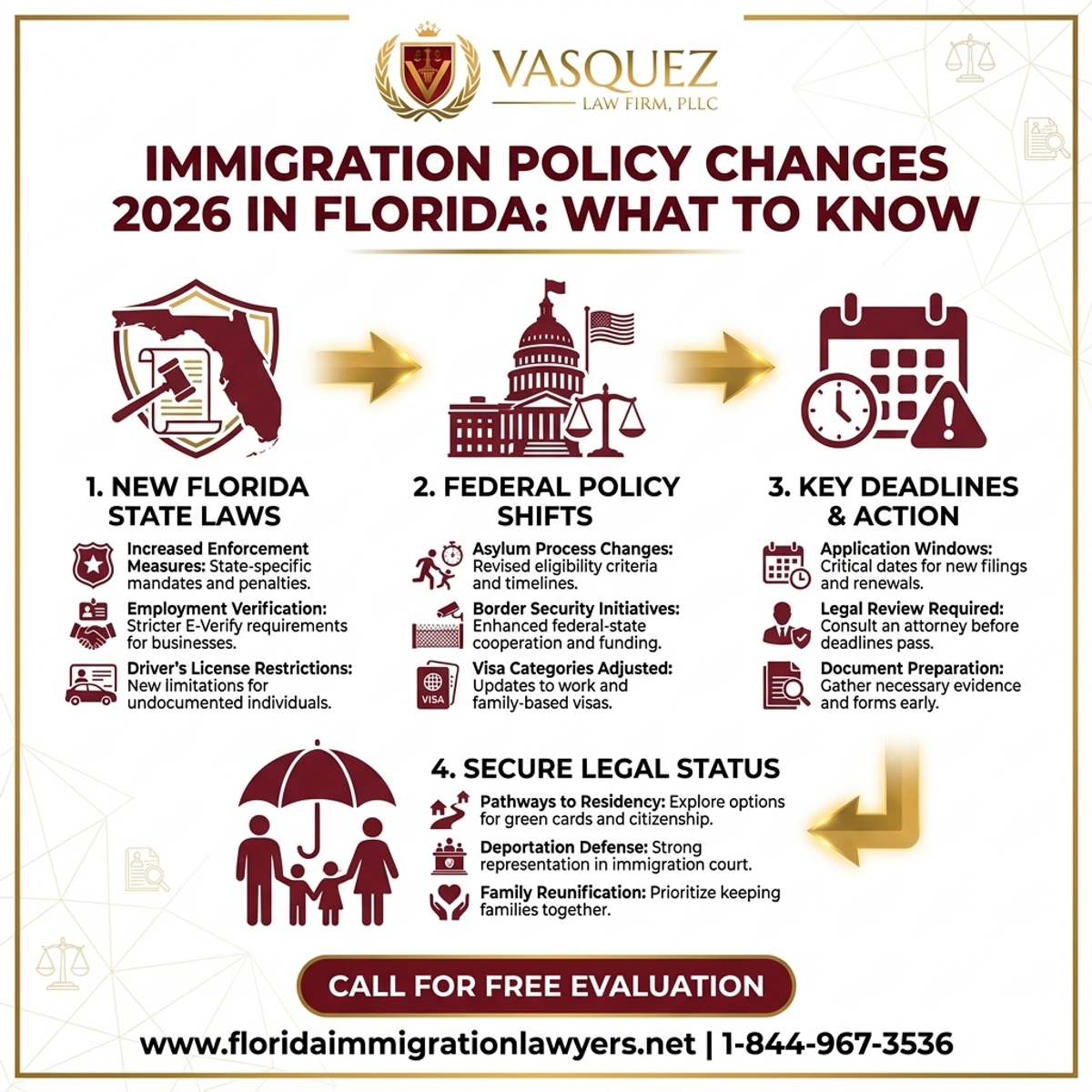
Step-by-Step Process — Immigration Policy Changes 2026 in Florida: What to Know
Do not navigate this process alone. The complexities of new immigration policies demand expert guidance to ensure your application is handled correctly. Contact Florida Immigration Lawyers today to schedule a free case review and let our experienced team assist you.
What Are the Expected Timelines and Processing Expectations for Immigration Cases in 2026?
Expected timelines and processing expectations for immigration cases in 2026 are likely to remain variable, influenced by the volume of applications, agency resources, and specific policy changes. While some processes might see improvements due to digitalization, others could face increased backlogs, especially for popular visa categories or complex asylum claims. Applicants in Florida should anticipate that processing times will be generally consistent with recent trends, with potential fluctuations based on policy implementation and judicial reviews, such as those related to bond hearings.
As of 2026, USCIS has continued efforts to reduce processing backlogs, but new policy directives can introduce unforeseen delays. For instance, enhanced vetting procedures or a surge in applications following a new program announcement could extend wait times. Family-based petitions, particularly for categories with annual numerical limits, may still involve multi-year waits. Employment-based petitions might see some prioritization, but overall processing hinges on the efficiency of the USCIS field offices and service centers. For those in removal proceedings, the Orlando Immigration Court and Miami Immigration Court continue to manage heavy dockets, and changes in prosecutorial discretion or judicial appointments (like the impact of judges such as Karen Nazaire on specific types of cases) could influence case adjudication speed.
Typical Immigration Processing Timelines (As of 2026):
| Stage | Typical Timeframe | Notes |
|---|---|---|
| Initial Petition (e.g., I-130, I-140) | 6-24 months | Varies significantly by petition type, preference category, and service center caseload. |
| Adjustment of Status (I-485) | 10-36 months | Includes biometrics, interview, and background checks. Can be longer if RFE is issued. |
| Consular Processing (NVC to Interview) | 6-18 months after petition approval | Dependent on National Visa Center (NVC) efficiency and embassy/consulate availability. |
| Naturalization (N-400) | 8-24 months | Includes application, biometrics, interview, and oath ceremony. Varies by field office (e.g., Orlando Field Office). |
| Asylum Application | 1-5+ years | Expedited for 'affirmative' filings; 'defensive' cases in court can take much longer due to backlogs. |
What Are the Cost Factors and Fee Breakdown for Immigration Applications in 2026?
Cost factors and fee breakdowns for immigration applications in 2026 are expected to reflect recent trends of increased USCIS filing fees and potential adjustments to other associated expenses. These costs typically include government filing fees, legal fees for attorney representation, and ancillary expenses such as medical examinations, document translation, and travel. Applicants should budget for these various components, as they collectively represent a significant investment in the immigration process. The specific fees can vary dramatically depending on the type of application and the complexity of the case.
As of 2026, USCIS has implemented new fee schedules for many forms, which are subject to periodic review and change. These fees are non-refundable and cover the administrative costs of processing applications. For example, a typical adjustment of status application (Form I-485) will include the filing fee for the I-485 itself, potentially an I-765 (Employment Authorization Document) fee, and an I-131 (Advance Parole) fee, along with biometrics fees. Beyond government charges, legal fees for an immigration attorney in Florida will vary based on the complexity of the case, the attorney's experience, and the scope of services provided. An attorney can help identify all applicable fees and ensure accurate payment, preventing costly rejections.
Typical Immigration Cost Factors (As of 2026):
| Item | Typical Fee | Notes |
|---|---|---|
| USCIS Filing Fees | Varies by form (e.g., I-130, I-485, N-400) | These are non-refundable and subject to change. Always check the latest USCIS fee schedule. |
| Biometrics Services Fee | Included in some filing fees, or separate | Required for identity verification and background checks. |
| Attorney Legal Fees | Varies widely ($2,000 - $15,000+) | Dependent on case complexity, attorney experience, and services rendered (e.g., consultation, full representation). |
| Medical Examination Fees | $200 - $500 | Required for adjustment of status; must be performed by a USCIS-approved civil surgeon. |
| Document Translation Costs | $20 - $100+ per document | Required for any foreign-language documents submitted to USCIS. Must be certified. |
| Travel Expenses | Variable | For attending interviews, biometrics appointments, or attorney meetings (e.g., at the Orlando USCIS Field Office). |
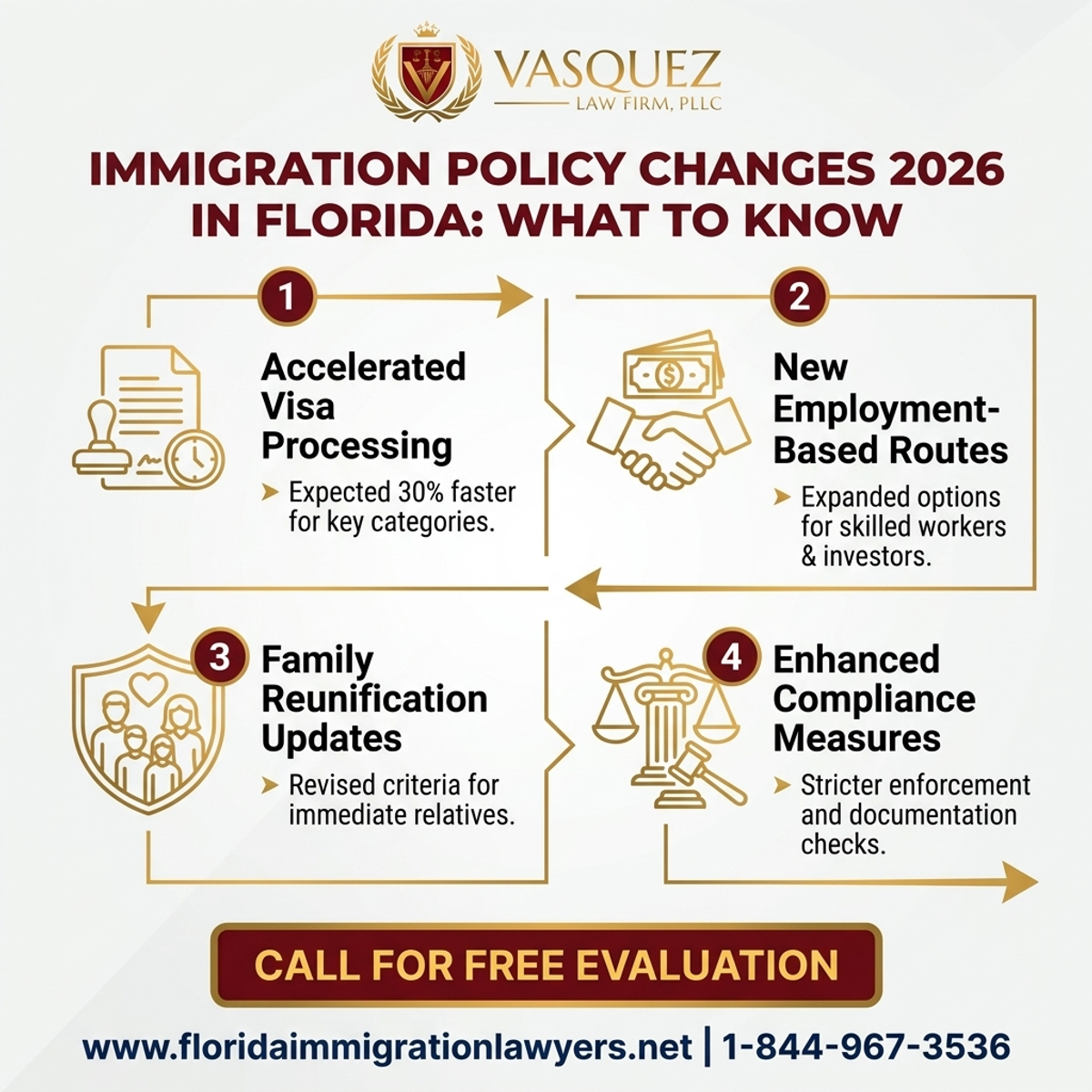
Key Statistics — Immigration Policy Changes 2026 in Florida: What to Know
Understanding Eligibility for Citizenship and Naturalization in 2026
Eligibility for citizenship and naturalization in 2026 continues to be governed by the Immigration and Nationality Act (INA), with specific requirements for lawful permanent residence, continuous physical presence, good moral character, and English language/civics knowledge. While the core criteria remain stable, potential policy changes could influence how these requirements are interpreted or processed. Applicants in Florida should focus on meeting the established legal standards, which are fundamental to the naturalization process.
To qualify for naturalization, most applicants must be at least 18 years old, be a lawful permanent resident (green card holder) for a minimum of five years (or three years if married to a U.S. citizen), and demonstrate continuous residence and physical presence in the U.S. They must also show good moral character, pass an English and civics test, and be willing to take an Oath of Allegiance to the U.S. As of 2026, USCIS has emphasized the importance of thorough background checks and adherence to all statutory requirements, as outlined in 8 U.S.C. § 1427. Any proposed policy changes might introduce new questions during the interview process or modify the civics test content, though significant overhauls are less common for these foundational requirements.
For individuals residing in Central Florida, preparing for the naturalization interview involves studying for the civics test and practicing English. USCIS provides study materials, and many community organizations offer free or low-cost classes. Consulting with an attorney can help ensure that all eligibility criteria are met, particularly if there are any complexities in your immigration history, such as minor criminal infractions or extended absences from the U.S. An attorney can also help prepare you for the interview and represent you if any issues arise, ensuring you are well-equipped to achieve U.S. citizenship.
Common Mistakes to Avoid with New Immigration Policies
Navigating new immigration policies can be fraught with potential pitfalls. Avoiding common mistakes is crucial for a successful outcome:
- Failing to Stay Informed: Relying on outdated information or rumors can lead to missed deadlines or incorrect filings. Always verify information with official government sources like USCIS or the Department of State.
- Submitting Incomplete Applications: Missing even a single required document or failing to answer all questions can result in a Request for Evidence (RFE) or outright denial, significantly delaying your case.
- Providing Inaccurate Information: Any false or misleading information on your application can have severe consequences, including allegations of fraud, denial of benefits, and even deportation.
- Missing Deadlines: Immigration processes are time-sensitive. Failing to submit applications, respond to RFEs, or attend appointments by their deadlines can lead to case closure or loss of eligibility.
- Not Disclosing Criminal History: Attempting to conceal past arrests or convictions, even minor ones, can be considered a misrepresentation of material fact and lead to severe penalties. Always consult an attorney about any criminal record.
- Ignoring Changes in Personal Circumstances: Life events like marriage, divorce, birth of a child, or a new job can impact your immigration case. Failing to update USCIS or your attorney about these changes can create issues.
- Traveling Internationally Without Advance Parole: If you have a pending adjustment of status application, leaving the U.S. without an approved Advance Parole document can be considered abandonment of your application.
- Not Seeking Legal Counsel: Attempting to navigate complex new policies or a challenging case without an experienced immigration attorney often leads to errors and unfavorable outcomes.
- Assuming Old Rules Still Apply: Policies can change rapidly. What was true last year may not be true in 2026. Always check for the latest regulations, especially concerning fees and eligibility.
- Improperly Translating Documents: All foreign-language documents must be accompanied by a certified English translation. An uncertified or poorly translated document can be rejected.
When to Call a Florida Immigration Lawyer
The complexities of immigration law, especially with anticipated policy changes in 2026, make legal counsel invaluable. You should call a Florida immigration lawyer if you are unsure how new policies affect your case, if your application has been denied, or if you receive a Request for Evidence (RFE). An attorney is also essential if you have a criminal record, have been placed in removal proceedings, or if you need assistance understanding your eligibility for a specific visa or benefit.
At Florida Immigration Lawyers, we specialize in helping individuals and families across the state navigate even the most challenging immigration scenarios. Our team can provide crucial guidance on deportation defense, asylum claims, family petitions, and naturalization applications. We stay current with all federal policy shifts and their local implications in Central Florida. Don't risk your future by attempting to interpret complex legal jargon or complete intricate forms on your own. Our experienced attorneys will ensure your case is handled accurately and efficiently, protecting your rights every step of the way.
About Florida Immigration Lawyers
Florida Immigration Lawyers is a leading law firm dedicated to providing comprehensive and compassionate immigration services throughout Florida. With a deep understanding of federal immigration laws and their specific impact on our diverse communities, we are committed to helping individuals, families, and businesses achieve their immigration goals. Our experienced attorneys offer expert guidance on a wide range of services, including family-based visas, employment immigration, asylum, deportation defense, and naturalization.
We pride ourselves on offering personalized attention, strategic legal advice, and tenacious representation. Located in Orlando, we serve clients across all of Florida, providing free case reviews and 24/7 availability to address your urgent concerns. Our team is fully bilingual, ensuring effective communication and culturally sensitive support. When you choose Florida Immigration Lawyers, you gain a dedicated advocate committed to protecting your rights and securing your future in the United States. Schedule a free consultation today and experience the difference our expertise can make.
Sources and References
- U.S. Citizenship and Immigration Services (USCIS)
- Executive Office for Immigration Review (EOIR)
- U.S. Department of State
- 8 U.S.C. Chapter 12 - Immigration and Nationality Act (INA)
- 8 CFR (Code of Federal Regulations)
- USCIS Policy Manual
Related services: immigration practice areas, experienced immigration attorneys, immigration lawyer cost in Florida.
This article provides general legal information and is not intended as legal advice. Every case is unique, and outcomes depend on specific facts and circumstances. Contact an attorney for advice about your particular situation.
The landscape of immigration law is constantly evolving, and the anticipated policy changes for 2026 in Florida underscore the importance of expert legal guidance. Do not let uncertainty jeopardize your future. Contact Florida Immigration Lawyers today for a free case review and let us help you navigate these complex changes with confidence. Call us at 1-844-YO-PELEO. Se Habla Español - Estamos aquí para ayudarle.
Do Not Navigate This Process Alone
Our experienced immigration attorneys are ready to fight for you. Get a free, confidential case review today.
Se Habla Español
Or leave your details and we’ll call you:
Free Evaluation in 24 Hours
Or talk to us right now

AI voice assistant — available 24/7
FreeFrequently Asked Questions

William J. Vásquez
Founding Attorney · Vasquez Law Firm
U.S. Air Force veteran and immigration attorney with years of hands-on U.S. immigration experience. J.D., NCCU School of Law. AILA member. Admitted to the 4th, 5th, and 11th Circuit Courts.
Available 24/7 - Free Evaluations
Reviewed for legal accuracy by William J. Vásquez
Licensed in North Carolina; U.S. immigration is federal practice.
Related Legal Services
Our Florida immigration attorneys can help you with free immigration consultation, business immigration and deportation defense. Call today at 1-844-YO-PELEO for a free case review.
Related Links
Related Topics
Free Legal Case Review
Discuss your case with our experienced attorneys. We're available 24/7.
Se Habla Español - Estamos aquí para ayudarle.
Related Articles
Immigration Lawyer Orlando Free Consultation in Florida
For individuals and families in Orlando, Florida, navigating the complexities of U.S. immigration law requires expert guidance. An immigration lawyer in Orlando offers crucial support for everything from visa applications and green card processes to naturalization and deportation defense. This comprehensive guide details what a free consultation covers, providing a step-by-step overview of immigration pathways, essential document checklists, and expected timelines in 2026. We also highlight common mistakes to avoid, discuss the critical role of legal counsel in deportation and asylum cases, and explain why choosing a local Orlando immigration attorney is beneficial. Florida Immigration Lawyers is dedicated to serving the diverse community of Orlando with compassionate, effective legal solutions, ensuring you receive personalized advice and robust representation for a successful immigration journey.
EAD Advance Parole Combo Card in Florida 2026
For individuals with a pending Form I-485, Application to Register Permanent Residence or Adjust Status, the EAD Advance Parole Combo Card is an essential document. This single card combines the authorization to work legally in the U.S. (Employment Authorization Document - EAD) with permission to travel internationally and re-enter without abandoning your green card application (Advance Parole). This guide from Florida Immigration Lawyers provides a comprehensive overview for applicants in Florida in 2026, covering eligibility, the step-by-step application process, required documents, expected processing times, and associated costs. We also highlight common mistakes to avoid and when to seek legal counsel to ensure a smooth and successful immigration journey. Understanding this vital card is key to maintaining stability while awaiting your permanent residency approval.
EAD Advance Parole Combo Card in Florida: What You Need
An EAD advance parole combo card allows individuals with pending adjustment applications to both work and travel abroad without jeopardizing their green card application. Learn how to apply in Florida, what documents you need, and common mistakes to avoid.
Dual Citizenship Lawyer in Florida: What You Need to Know
For Florida residents, the concept of dual citizenship, or holding two passports, offers a compelling blend of opportunities and challenges. While the U.S. generally permits dual nationality, the path to achieving this status requires a meticulous understanding of both U.S. immigration laws and the citizenship policies of your country of origin. This guide explores the definition of dual citizenship, the detailed step-by-step process for U.S. naturalization, and the significant benefits and potential pitfalls involved. We cover essential documentation, typical timelines, and cost considerations for 2026, providing crucial insights for anyone in Orlando, Miami, or across Florida considering this important legal step. Learn about common mistakes to avoid and understand when to seek professional legal counsel to navigate this complex process successfully. Florida Immigration Lawyers is here to provide expert, bilingual support for your dual citizenship journey.