Immigration for 2026 Winter Olympics Ice Hockey in Florida
The 2026 Winter Olympics Ice Hockey in Italy brings to light important U.S. immigration considerations for athletes, staff, and fans with ties to Florida. From understanding various visa categories like O-1 and P-1 for extraordinary abilities to navigating the complex application process, expert legal guidance is crucial. Florida Immigration Lawyers helps individuals address visa requirements, avoid common mistakes, and manage processing timelines for international events. Discover how to prepare your immigration journey and ensure compliance with U.S. laws, whether you're traveling for the Olympics or considering future stays in Florida. Our firm offers free consultations to discuss your specific needs.

The 2026 Winter Olympics Ice Hockey will be held in Italy, not Florida. However, this global event highlights critical immigration considerations for athletes, support staff, media, and even fans with connections to Florida or the U.S. Understanding visa requirements, application processes, and potential pitfalls is crucial for anyone involved. Florida's international hubs make it a key entry and departure point for global travelers.
- Event in Italy, but U.S. immigration impacts.
- Various visa types required for participants.
- Complex process needs careful planning.
- Florida Immigration Lawyers offer expert guidance.
- Early consultation is vital for success.
Table of Contents
- Navigating Immigration Challenges for International Sporting Events in Florida
- Applying for Event-Related Visas: A Step-by-Step Guide
- Essential Documents for Event-Related Visa Applications
- Visa Processing Timelines and Expectations for 2026 Winter Olympics Participants
- Understanding Visa Application Costs and Legal Fees
- Common Mistakes to Avoid in Your Immigration Journey
- When to Call a Florida Immigration Lawyer
- Frequently Asked Questions About Immigration and International Events
Immigration for 2026 Winter Olympics Ice Hockey in Florida
The spirit of the Olympic Games brings the world together, celebrating human achievement and international camaraderie. As the excitement builds for the 2026 Winter Olympics Ice Hockey events, many individuals, from athletes and coaches to media and support staff, may find themselves navigating complex immigration landscapes.
While the Milano Cortina 2026 Winter Olympics are set to take place in Italy, their global nature often has significant implications for those with ties to the United States, particularly Florida. Our state, known for its diverse population and international gateways like Orlando and Miami, serves as a crucial hub for global travelers.
Understanding U.S. immigration law is essential for anyone involved with international events, whether you are a foreign national planning to visit or reside in Florida, or a U.S. citizen participating abroad. This comprehensive guide will explore the immigration considerations related to major international events, using the context of the 2026 Winter Olympics Ice Hockey to highlight key aspects.
Do not navigate these complex waters alone. For personalized guidance and expert legal support, call Florida Immigration Lawyers at 1-844-967-3536 for a free consultation. Our team is ready to assist you.
Navigating Immigration Challenges for International Sporting Events in Florida
Florida stands as a vibrant crossroads for international travel and commerce. Major global events, even when not hosted directly in our state, create a ripple effect that impacts immigration to and from Florida. The 2026 Winter Olympics Ice Hockey is a prime example of an event that, while geographically distant, can still present unique immigration scenarios for individuals connected to Florida.
For athletes, coaches, trainers, and other essential personnel participating in such high-profile events, understanding the correct U.S. visa category is paramount. Choosing the wrong visa can lead to delays, denials, or even future bars from entering the United States. Many individuals might transit through Florida or engage in related training or promotional activities here.
Relevant Visa Categories for International Professionals
Several nonimmigrant visa categories may be relevant for individuals associated with international sporting events:
- B-1 Visas (Temporary Business Visitor): This visa is generally for short-term business activities, such as attending conferences, negotiating contracts, or participating in professional events where no U.S. salary is received. Athletes participating in amateur sporting events may qualify, but professional athletes usually require specific athletic visas.
- O-1 Visas (Individuals with Extraordinary Ability or Achievement): The O-1 visa is for individuals who possess extraordinary ability in the sciences, arts, education, business, or athletics, or who have a demonstrated record of extraordinary achievement in the motion picture or television industry. This is a common path for elite athletes and coaches.
- P-1 Visas (Individual or Team Athletes, or Members of an Entertainment Group): Specifically designed for athletes, the P-1 visa is for internationally recognized athletes who come to the U.S. to perform in a specific athletic competition. This category is highly relevant for professional ice hockey players and teams.
- P-2 Visas (Artists or Entertainers Under a Reciprocal Exchange Program): This visa is for artists or entertainers, individually or as part of a group, who will perform under a reciprocal exchange program between an organization in the U.S. and an organization in a foreign country.
- P-3 Visas (Culturally Unique Artists or Entertainers): For artists or entertainers, individually or as part of a group, coming to the U.S. to perform, teach, or coach in a program that is culturally unique.
- H-2B Visas (Temporary Non-Agricultural Workers): In some cases, support staff or other non-athlete personnel may qualify for an H-2B visa if their work is temporary and there are not enough U.S. workers available.
Each visa type has distinct requirements and application procedures. Incorrectly identifying the appropriate visa or failing to meet all criteria can significantly jeopardize an individual's ability to enter or remain in the U.S. This is especially true when dealing with the strict timelines associated with events like the 2026 Winter Olympics Ice Hockey.
For those considering future immigration to Florida or seeking to extend a temporary stay after an international event, the complexities multiply. Our state's USCIS field offices in Orlando and Miami process a high volume of applications, making thorough preparation critical.
Applying for Event-Related Visas: A Step-by-Step Guide
Securing the correct visa for participation or involvement with international events, such as those related to the 2026 Winter Olympics Ice Hockey, requires a structured approach. The process can be intricate, and even minor errors can lead to significant delays.
Understanding the Visa Application Process
Here is a general step-by-step guide for applying for event-related nonimmigrant visas:
- Determine the Appropriate Visa Category: Carefully assess which nonimmigrant visa best suits your purpose of travel and qualifications. An experienced Florida immigration lawyer can help you make this crucial determination. Referencing USCIS guidelines and INA Section 101(a)(15) is a good starting point.
- File the Required Petition (if applicable): For O, P, and H-2B visas, a U.S. employer or agent must file Form I-129, Petition for a Nonimmigrant Worker, with U.S. Citizenship and Immigration Services (USCIS). This petition must be approved before you can apply for the visa at a U.S. Embassy or Consulate.
- Complete the Online Visa Application (DS-160): All applicants for nonimmigrant visas must complete the DS-160, Online Nonimmigrant Visa Application. This form collects personal information, travel history, and details about your intended stay. Accuracy is vital.
- Pay the Application Fee: The non-refundable visa application fee must be paid. The exact amount varies by visa type and country. Ensure you keep your payment receipt.
- Schedule a Visa Interview: Once the DS-160 is submitted and the fee paid, you must schedule an interview at a U.S. Embassy or Consulate in your home country. Wait times can vary significantly, so plan ahead, especially for time-sensitive events like the 2026 Winter Olympics Ice Hockey.
- Gather Required Documents: Prepare all necessary supporting documents, including your passport, photographs, the DS-160 confirmation page, and any documents related to your petition approval or purpose of travel.
- Attend the Visa Interview: During the interview, a consular officer will review your application and documents, and ask questions about your travel plans and eligibility. Be honest and clear in your responses.
- Receive Your Visa: If your application is approved, your passport with the affixed visa will typically be mailed to you within a few business days or weeks.
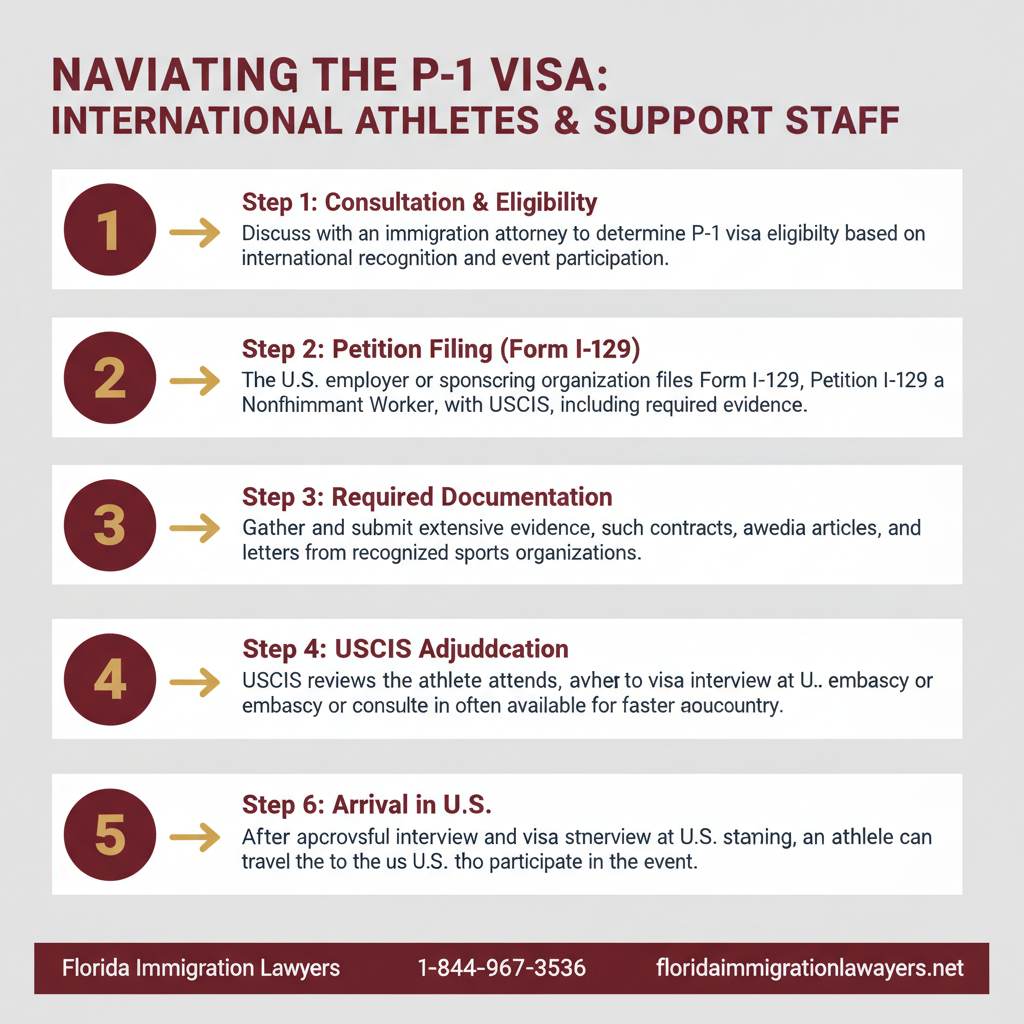
This process can be daunting, particularly for those unfamiliar with U.S. immigration law. A Florida immigration lawyer can provide invaluable assistance at each stage, ensuring compliance and maximizing your chances of success.
Essential Documents for Event-Related Visa Applications
A successful visa application hinges on meticulous preparation and submission of all required documentation. For those involved with events like the 2026 Winter Olympics Ice Hockey, missing even a single document can lead to significant delays or a denial.
Key Documents for Your Visa Application
Here is a general checklist of documents typically required for event-related nonimmigrant visas:
- ✓ Valid Passport: Your passport must be valid for at least six months beyond your intended period of stay in the United States.
- ✓ Nonimmigrant Visa Application, Form DS-160 Confirmation Page: Print this page after successfully submitting your online application.
- ✓ Visa Interview Appointment Confirmation Page: Proof of your scheduled interview.
- ✓ One (1) 2x2 Inch Photograph: Meeting specific U.S. visa photo requirements.
- ✓ Receipt for Visa Application Fee: Proof of payment for the non-refundable fee.
- ✓ Approved Petition (Form I-797, Notice of Action): If you are applying for an O, P, or H-2B visa, you must have the original or a copy of the I-797 approval notice.
- ✓ Detailed Itinerary: A clear outline of your activities, dates, and locations in the U.S., including any training in Florida or related travel for the 2026 Winter Olympics Ice Hockey.
- ✓ Letters of Invitation/Sponsorship: Official letters from event organizers, U.S. employers, or sponsoring organizations detailing your role, compensation (if any), and the duration of your stay.
- ✓ Evidence of Qualifications: For O and P visas, this includes extensive documentation proving your extraordinary ability or international recognition in your field (e.g., awards, press clippings, professional endorsements, contracts).
- ✓ Proof of Intent to Depart the U.S.: Documents demonstrating strong ties to your home country, such as property deeds, family commitments, employment contracts, or bank statements. This assures the consular officer you do not intend to overstay your visa.
- ✓ Previous U.S. Visas (if applicable): Any prior U.S. visas and evidence of compliance with previous visa terms.
Always check the specific requirements of the U.S. Embassy or Consulate where you will apply, as well as the U.S. Department of State website, for the most up-to-date information. An attorney at Florida Immigration Lawyers can help you compile a comprehensive and compelling application package.
Do not navigate this process alone. Contact Florida Immigration Lawyers today at 1-844-967-3536 for dedicated legal assistance.
Visa Processing Timelines and Expectations for 2026 Winter Olympics Participants
Planning for international travel, especially for a major event like the 2026 Winter Olympics Ice Hockey, requires a clear understanding of visa processing timelines. Immigration processes can be unpredictable, and delays are not uncommon. Early application is always the best strategy.
Factors Affecting Visa Processing
Several factors influence how long it takes to process a U.S. visa application:
- Visa Category: Some visas, like B-1/B-2, generally have shorter processing times compared to petition-based visas like O or P, which require USCIS approval first.
- USCIS Workload: The volume of applications at USCIS service centers can fluctuate. For example, the USCIS Orlando Field Office or Miami Field Office may experience varying processing times for different petition types.
- Embassy/Consulate Workload: Interview wait times at U.S. Embassies and Consulates abroad can vary significantly by location and season. Check the specific embassy's website for current estimates.
- Completeness of Application: Any missing documents or errors will lead to Requests for Evidence (RFEs) or administrative processing, extending the timeline considerably.
- Security Checks: Some applications require additional security clearances, which can be unpredictable in duration.
- Premium Processing: For certain petition-based visas (O, P), you may opt for premium processing by filing Form I-907. This expedites USCIS's review of the petition, typically to within 15 calendar days, for an additional fee. This does not, however, expedite the consular interview process.
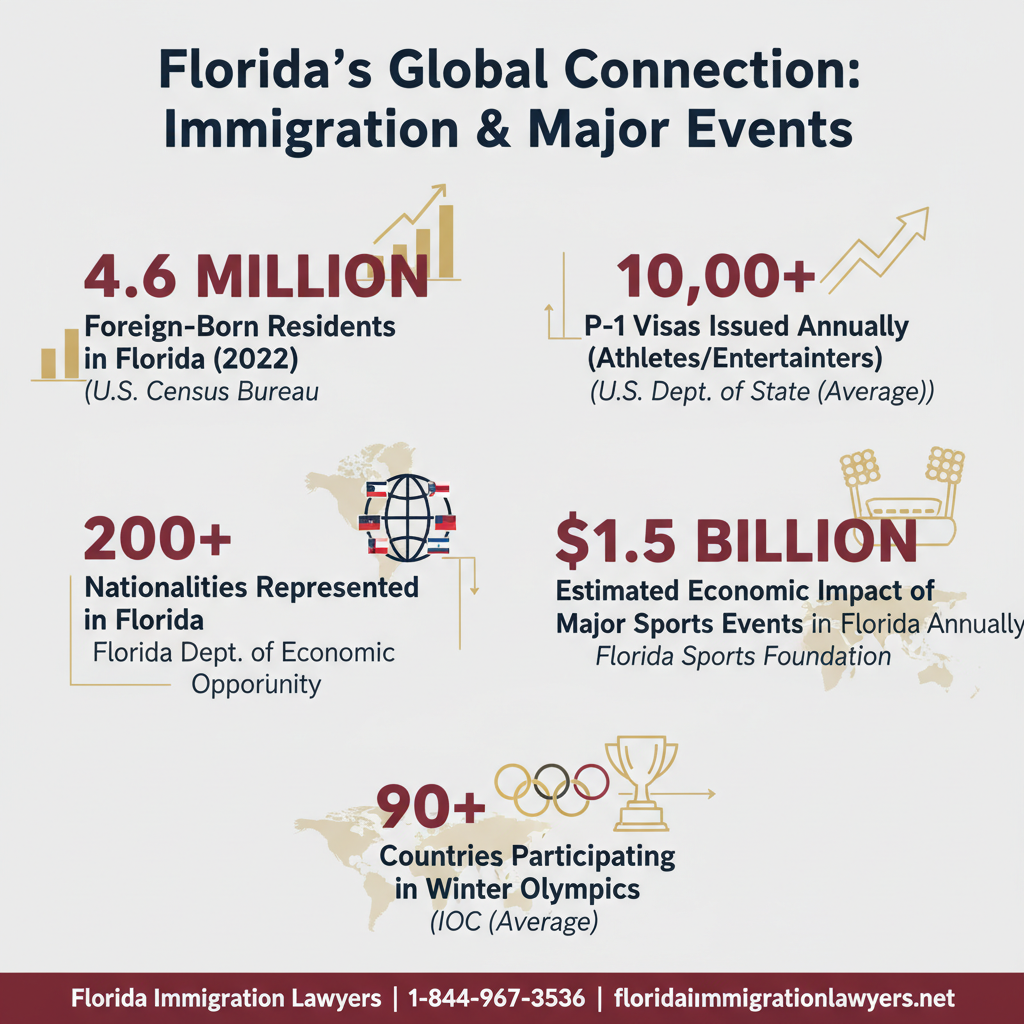
For individuals involved with the 2026 Winter Olympics Ice Hockey, it is advisable to begin the visa application process many months, if not a year, in advance. This foresight allows ample time to address any unforeseen challenges, gather additional documentation, or respond to RFEs without jeopardizing participation.
Consulting with a Florida immigration lawyer early in the process can help you set realistic expectations and plan your timeline effectively. They can monitor changes in processing times and advise on the most efficient path forward.
Understanding Visa Application Costs and Legal Fees
Embarking on an immigration journey, especially for an international event like the 2026 Winter Olympics Ice Hockey, involves various financial considerations. These costs can include government filing fees, biometric fees, and crucially, legal fees for professional assistance.
Breakdown of Potential Costs
While specific amounts are subject to change, here's a general overview of the types of costs you might encounter:
- Government Filing Fees: USCIS charges fees for filing petitions (e.g., Form I-129) and applications. The U.S. Department of State also charges a non-refundable fee for processing nonimmigrant visa applications (DS-160). These fees must be paid directly to the respective government agencies.
- Biometrics Fee: In some cases, applicants may be required to attend a biometrics appointment to provide fingerprints and photographs, incurring a separate fee.
- Premium Processing Fee: If you choose to expedite the processing of your petition (Form I-129), there is an additional premium processing fee. This can be a significant expense but may be necessary for time-sensitive situations.
- Medical Examination Fees: While less common for nonimmigrant visas, some categories or specific circumstances may require a medical examination by an authorized physician, which incurs its own costs.
- Translation and Document Preparation Fees: If any of your supporting documents are not in English, you will need certified translations, which come with a cost. Additionally, fees for obtaining official records or notarizing documents may apply.
- Travel Expenses: Costs associated with traveling to a U.S. Embassy or Consulate for an interview, or within Florida for appointments with a lawyer or USCIS, should also be factored in.
The Value of Legal Representation
Retaining an experienced Florida immigration lawyer, such as those at Florida Immigration Lawyers, represents an investment in the success and efficiency of your application. Our legal fees cover a range of services, including:
- Initial Consultation: A free consultation helps us understand your unique situation and advise on the best strategy.
- Case Assessment and Strategy Development: We analyze your eligibility for various visa categories, including those relevant to the 2026 Winter Olympics Ice Hockey, and develop a tailored approach.
- Document Preparation and Review: Our team assists in gathering, preparing, and meticulously reviewing all required forms and supporting evidence to ensure accuracy and completeness.
- Petition Filing and Communication with USCIS: We handle the filing of petitions (e.g., Form I-129) and communicate directly with USCIS on your behalf, responding to any Requests for Evidence.
- Consular Processing Guidance: We prepare you for your visa interview at the U.S. Embassy or Consulate, providing mock interviews and detailed instructions.
- Representation in Complex Cases: For applicants with previous denials, criminal history, or other complicating factors, our lawyers provide expert representation to navigate these challenges.
While legal fees are an additional cost, the peace of mind and increased likelihood of a successful outcome often outweigh the expense. Attempting to navigate the complex U.S. immigration system without professional guidance can lead to costly mistakes and delays.
Common Mistakes to Avoid in Your Immigration Journey
The U.S. immigration system is notoriously complex. Even a small oversight can lead to significant setbacks, especially when dealing with time-sensitive matters like participation in the 2026 Winter Olympics Ice Hockey or other international events. Avoiding these common mistakes can save you time, money, and stress.
- Choosing the Wrong Visa Category: Applying for a B-1 visitor visa when you require an O-1 or P-1 visa for professional athletic endeavors is a frequent error. This can result in denial and raise red flags for future applications. Understanding INA Section 212(a) grounds of inadmissibility is crucial.
- Incomplete or Inaccurate Documentation: Submitting an application with missing forms, outdated information, or incorrect details is a leading cause of RFEs and denials. Every piece of evidence must be precise and current.
- Misrepresenting Information: Providing false or misleading information on your application can lead to severe penalties, including a permanent bar from entering the United States. Honesty and transparency are paramount.
- Missing Deadlines: Immigration processes have strict deadlines for filing petitions, responding to RFEs, and attending interviews. Missing these can result in the termination of your application or deportation proceedings.
- Overstaying Your Visa: Remaining in the U.S. beyond your authorized period of stay, even by a single day, can lead to severe consequences, including visa cancellation and future bans on re-entry.
- Failing to Disclose Criminal History: Any past arrests or convictions, even minor ones, must be fully disclosed. Failure to do so can be considered misrepresentation and lead to denial under 8 USC 1182.
- Not Consulting an Immigration Lawyer: Attempting to navigate the intricate immigration system without professional legal advice significantly increases the risk of errors and complications. An attorney can identify potential issues and provide strategic solutions.
- Assuming Easy Re-entry to the U.S.: Even with a valid visa, re-entry is not guaranteed. Customs and Border Protection (CBP) officers have discretion at the port of entry. Ensure all your documents are in order and you can clearly articulate your purpose of visit.
When to Call a Florida Immigration Lawyer
While this article provides general information, U.S. immigration law is highly individualized. There are specific scenarios where the expertise of a qualified Florida immigration lawyer becomes not just helpful, but absolutely essential. Florida Immigration Lawyers are here to offer the guidance you need.
Scenarios Requiring Legal Intervention
- Complex Visa Categories: If you are applying for an O-1, P-1, or other specialized visa for the 2026 Winter Olympics Ice Hockey or similar events, the requirements are stringent. A lawyer can ensure your petition is robust and complete.
- Previous Visa Denials or Immigration Issues: If you have a history of visa denials, overstays, or any immigration violations, a lawyer can help you understand the reasons and build a stronger case for future applications.
- Criminal History or Prior Arrests: Even minor legal infractions can impact your immigration eligibility. A lawyer can assess the implications and advise on waivers or other legal remedies.
- Requests for Evidence (RFEs): If USCIS issues an RFE, it means they need more information. Responding effectively requires legal expertise to avoid further delays or denial.
- Deportation or Removal Proceedings: If you or a family member face deportation or removal proceedings, immediate legal representation is crucial to protect your rights and explore all available defenses.
- Seeking Permanent Residency After a Temporary Stay: If your involvement with international events leads you to consider long-term immigration to Florida, a lawyer can guide you through the transition from a nonimmigrant to immigrant visa.
- Navigating Changes in Immigration Law: Immigration laws and policies can change rapidly. An attorney stays abreast of the latest developments, ensuring your application complies with current regulations, as outlined in the Code of Federal Regulations (CFR), Title 8.
Do not wait until a problem arises. Proactive legal consultation with Florida Immigration Lawyers can prevent many common pitfalls. Our attorneys serve clients across Florida, including Orlando, Miami, and Tampa, providing diligent and compassionate representation for all your immigration needs, whether it's related to the 2026 Winter Olympics Ice Hockey or any other immigration matter.
Frequently Asked Questions About Immigration and International Events
Where are the 2026 Winter Olympics hockey events being held?
The 2026 Winter Olympics, including the ice hockey events, are scheduled to take place in Milano Cortina, Italy. While not in Florida, the global nature of such an event means many individuals with ties to Florida, such as U.S. citizens traveling to Italy or foreign nationals who might transit through Florida or have other U.S. immigration considerations, will be impacted. Our firm specializes in helping individuals navigate their immigration needs, regardless of where international events are hosted, especially for those who call Florida home or wish to do so.
How can I buy tickets for the 2026 Winter Olympics?
Information on purchasing tickets for the 2026 Winter Olympics in Milano Cortina, Italy, will typically be released by the official organizing committee and authorized ticket resellers closer to the event date. This process is handled by the event organizers, not by U.S. immigration authorities. However, if you are a foreign national planning to attend the Olympics and wish to visit or transit through Florida before or after, you will need to ensure you have the appropriate U.S. visa, such as a B-2 tourist visa. Our firm can assist with understanding visa requirements for such international travel plans.
Is the 'Miracle on Ice' a true story?
Yes, the 'Miracle on Ice' is a true and iconic story from the 1980 Winter Olympics, where the U.S. men's ice hockey team, comprised of amateur and collegiate players, defeated the heavily favored Soviet Union team. This historic event captured the hearts of many. While an inspiring sports story, it also underscores the journey of athletes who often cross borders to pursue their dreams. For modern athletes, whether amateur or professional, participating in international events often involves intricate U.S. immigration requirements, which is where Florida Immigration Lawyers provide essential legal support.
Will NHL players participate in the 2026 Winter Olympics?
As of current discussions, it is anticipated that NHL players will participate in the 2026 Winter Olympics. This is significant for the sport and for the players involved. For NHL players who are foreign nationals and reside in the U.S. (including Florida), or those coming from abroad, their participation involves specific immigration categories like the O-1 or P-1 visa. These visas recognize their extraordinary athletic ability and allow them to enter the U.S. for professional engagements. Our firm assists professional athletes and their teams with these specialized visa applications.
What kind of visa do athletes typically need for U.S. events?
Professional athletes generally require O-1 visas for individuals with extraordinary ability or P-1 visas for internationally recognized athletes to compete in the U.S. Amateur athletes might qualify for a B-1 business visitor visa under specific circumstances where they are not receiving a salary from a U.S. source. The correct visa choice depends heavily on the athlete's professional status, the nature of the event, and their compensation. Consulting with an immigration attorney is vital to determine the most appropriate visa category.
Can I extend my stay in Florida after an international event?
It may be possible to extend your nonimmigrant stay in Florida, but it depends on your current visa type and the reason for the extension. You must file Form I-539, Application to Extend/Change Nonimmigrant Status, with USCIS before your authorized stay expires. This process requires demonstrating a legitimate reason for the extension and proving you maintain nonimmigrant intent. Overstaying your visa, even for a short period, can have serious negative consequences for future immigration attempts. Seek legal advice from Florida Immigration Lawyers promptly.
What if my visa application is denied in Florida?
If your U.S. visa application is denied at a consulate abroad, the denial is usually final, though you may be able to reapply if the reasons for denial can be addressed. If a petition filed with USCIS in Florida is denied, you may have options such as filing a motion to reconsider or reopen, or appealing the decision to the Administrative Appeals Office (AAO). The specific course of action depends on the reasons for denial. Our attorneys specialize in analyzing denial notices and advising on the best path forward, whether it involves reapplying or appealing.
How do Florida's immigration courts handle complex cases?
Florida hosts several immigration courts, including those in Orlando and Miami, which handle a wide range of complex cases, from asylum claims to deportation defense. These courts operate under the Executive Office for Immigration Review (EOIR) within the Department of Justice. Cases involving individuals with criminal histories, national security concerns, or complex asylum claims require extensive legal knowledge. Our Florida Immigration Lawyers possess deep experience in representing clients in these courts, advocating fiercely for their rights and pursuing all available legal avenues.
About Florida Immigration Lawyers
Florida Immigration Lawyers is a leading immigration law firm dedicated to serving individuals, families, and businesses throughout the Sunshine State. With a deep understanding of both federal immigration law and the unique needs of Florida's diverse population, we provide comprehensive and compassionate legal services.
Our experienced attorneys are committed to guiding you through every step of your immigration journey, from visa applications and green cards to citizenship and deportation defense. We pride ourselves on offering personalized strategies and diligent representation, ensuring your case receives the attention it deserves.
Why Choose Florida Immigration Lawyers?
- Expertise: Our team possesses extensive knowledge of U.S. immigration laws and policies.
- Client-Centered Approach: We prioritize your needs, offering empathetic and accessible legal support.
- Proven Track Record: We strive for successful outcomes, leveraging our experience to navigate complex cases.
- Bilingual Services: We offer services in both English and Spanish to better serve our diverse clientele.
- Serving All of Florida: From Orlando and Miami to Tampa and Jacksonville, we are here for you.
We understand that immigration matters can be life-changing. That is why we are available 24/7 to answer your questions and offer support. Call us today at 1-844-967-3536 or visit our website at https://www.floridaimmigrationlawyers.net for a free consultation.
This article is for general informational purposes only and does not constitute legal advice. Immigration laws change frequently. For advice specific to your situation, please consult with a qualified immigration attorney.
Navigating the intricacies of U.S. immigration law, especially in the context of major international events like the 2026 Winter Olympics Ice Hockey, requires expert guidance. Do not leave your future to chance. Contact Florida Immigration Lawyers at 1-844-967-3536 today for a free, confidential consultation and let us help you achieve your immigration goals.
Do Not Navigate This Process Alone
Our experienced immigration attorneys are ready to fight for you. Get a free, confidential consultation today.
Se Habla Español
Frequently Asked Questions
Vasquez Law Firm
Immigration Attorney | Founder, Vasquez Law Firm
U.S. Air Force veteran and immigration attorney with thousands of cases resolved. J.D., NCCU School of Law. AILA member. Admitted to the 4th, 5th, and 11th Circuit Courts.
Available 24/7 - Free Evaluations
Related Legal Services
Our Florida immigration attorneys can help you with business immigration, asylum protection and deportation defense. Call today at 1-844-967-3536 for a free consultation.
Related Links
Related Topics
Free Legal Consultation
Discuss your case with our experienced attorneys. We're available 24/7.
Se Habla Español - Estamos aquí para ayudarle.
Related Articles
Stokes Interview: Navigating Marriage Fraud in Florida
A Stokes interview is a specialized, separate interview conducted by USCIS when there are suspicions of marriage fraud in a green card application. This rigorous process involves individual questioning of spouses, focusing on inconsistencies in their testimonies to determine the authenticity of their marital bond. For couples in Florida, navigating this high-stakes interview requires meticulous preparation, extensive documentation, and often the strategic guidance of an experienced immigration lawyer. Understanding the process, preparing for detailed questions, and presenting a strong case are crucial for overcoming marriage fraud allegations and securing your immigration future. Florida Immigration Lawyers stands ready to assist you.
Immigration Attorney Gainesville: North Florida Legal Help
For those in Gainesville, Alachua County, and throughout North Florida, navigating U.S. immigration law requires expert guidance. An experienced immigration attorney can simplify complex processes, from family-based petitions and employment visas to critical asylum claims and deportation defense. This comprehensive guide outlines the essential services provided by an immigration attorney, details necessary documentation, clarifies processing timelines, and discusses associated costs. We also highlight common mistakes to avoid and crucial scenarios where legal counsel is indispensable. Florida Immigration Lawyers serves all of Florida, including Gainesville and St. Petersburg, providing dedicated legal support to help you achieve your immigration goals. Contact us for a free consultation to discuss your specific needs.
Military Naturalization Expedited at Florida Bases
Explore expedited military naturalization processes for service members at Florida bases like MacDill. Learn about eligibility, steps, and common mistakes. Contact Florida Immigration Lawyers for a free consultation.
Protect Yourself from Immigration Scams in Florida
Learn how to protect against immigration scams in Florida, focusing on St. Petersburg. This guide covers identifying scams, verifying credentials, and getting legal help. Call Florida Immigration Lawyers at 1-844-967-3536 for assistance.