Florida Wrongful Death: Understanding Survivor Damages
Learn about the survivor damages available under Florida's wrongful death statutes §768.16 and §768.21, which provide compensation for families facing the loss of a loved one due to negligence. Contact Florida Immigration Lawyers for a free consultation to navigate this complex legal process.

Introduction
Dealing with the loss of a loved one is incredibly difficult, especially when their death is due to another's negligence. In Florida, the law provides a way for survivors to seek justice through wrongful death claims. This article explores the key aspects of Florida's wrongful death statutes, particularly focusing on survivor damages under §768.16 and §768.21. If you or someone you know is facing this situation, contact Florida Immigration Lawyers at 1-844-967-3536 for a free consultation.
Wrongful death claims serve a dual purpose: they aim to hold negligent parties accountable for their actions and to provide financial relief to the grieving families left behind. This relief can cover not only immediate financial burdens but also the long-term impact of losing a loved one's income, support, and companionship.
Navigating the legal complexities of a wrongful death claim can be overwhelming during such a sensitive time. Our goal is to demystify the process, offering clear insights into who can file a claim, what damages are recoverable, and the essential steps involved in seeking justice under Florida law.
Understanding Florida's Wrongful Death Act
Florida's Wrongful Death Act is designed to provide compensation to the survivors of the deceased. The statutes §768.16 through §768.21 outline the legal framework for these claims. The Act aims to shift the financial burden from the survivors to the wrongdoer by allowing for the recovery of damages.
The survivors eligible to file a wrongful death claim typically include the deceased's spouse, children, parents, and any blood relatives or adoptive siblings who were partly or wholly dependent on the deceased for support. These family members can recover various forms of damages, which are crucial for compensating the emotional and financial impact of their loss.
The Act applies when a person's death is caused by the wrongful act, negligence, default, or breach of contract or warranty of another individual or entity. This can encompass a wide range of scenarios, including fatal car accidents, medical malpractice, dangerous premises, product liability, or even intentional acts. The core principle is that the deceased would have had a personal injury claim if they had survived, and that right now transfers to their survivors.
It's important to understand that a wrongful death claim is distinct from a survival action. While a survival action seeks damages the deceased would have incurred between the time of injury and death (like medical expenses), a wrongful death claim focuses on the losses suffered by the survivors themselves. The personal representative of the deceased's estate plays a pivotal role, acting on behalf of all eligible survivors to consolidate and manage the claim.
Florida law meticulously defines the scope of recoverable damages, distinguishing between economic losses, such as lost wages and medical bills, and non-economic losses, which address the profound emotional and relational impact of the death. Understanding these distinctions is key to building a comprehensive claim, and Florida Immigration Lawyers can provide expert guidance.
Step-by-Step Guide to Filing a Wrongful Death Claim
- Consult a Lawyer: Begin by consulting with an experienced lawyer who can guide you through the process and help determine the validity of your claim. This initial consultation is crucial for assessing the merits of your case, understanding the legal landscape, and outlining a strategic approach. An attorney will investigate the circumstances of the death and identify all potentially liable parties.
- File the Claim: The personal representative of the deceased's estate must file the wrongful death lawsuit. This is typically appointed in the will or by the court. The personal representative acts as the legal voice for all eligible survivors, ensuring that the claim is properly initiated within the strict legal deadlines.
- Gather Evidence: Collect all necessary documents such as medical records, police reports, and eyewitness accounts to support your claim. Beyond these, gathering evidence may involve accident reconstruction reports, expert witness testimonies, photographs of the scene, and any communications related to the incident. Comprehensive evidence is vital for proving negligence and the extent of damages.
- Determine Damages: Work with your attorney to calculate the economic and non-economic damages you are entitled to under the law. This often involves consulting with financial experts to project lost future earnings and benefits, as well as documenting the emotional suffering and loss of companionship experienced by survivors.
- Go to Trial or Negotiate a Settlement: Many wrongful death claims are settled out of court, but be prepared to go to trial if necessary. Your attorney will engage in negotiations with the at-fault party's insurance companies or legal team, aiming for a fair settlement that adequately compensates all survivors. If a fair agreement cannot be reached, litigation proceeds to trial.
Each step in this process requires careful attention to detail and a deep understanding of Florida's legal system. Having a dedicated legal team like Florida Immigration Lawyers by your side ensures that no critical aspect is overlooked, maximizing your chances for a successful outcome.
Document Checklist for Wrongful Death Claims
- Death certificate
- Medical records and bills
- Funeral and burial expenses
- Proof of income and financial support
- Estate documents (e.g., will, trust)
These documents form the backbone of your wrongful death claim, providing concrete evidence of the death, the financial burdens incurred, and the economic contributions the deceased made to their family. Organizing and presenting these records clearly can significantly strengthen your case and streamline the legal process.
Beyond this list, other crucial documents might include employment records, tax returns, insurance policies, and any correspondence related to the incident that caused the death. Maintaining a detailed and organized file of all relevant paperwork will be invaluable as your claim progresses, helping your attorney build a compelling argument for compensation.
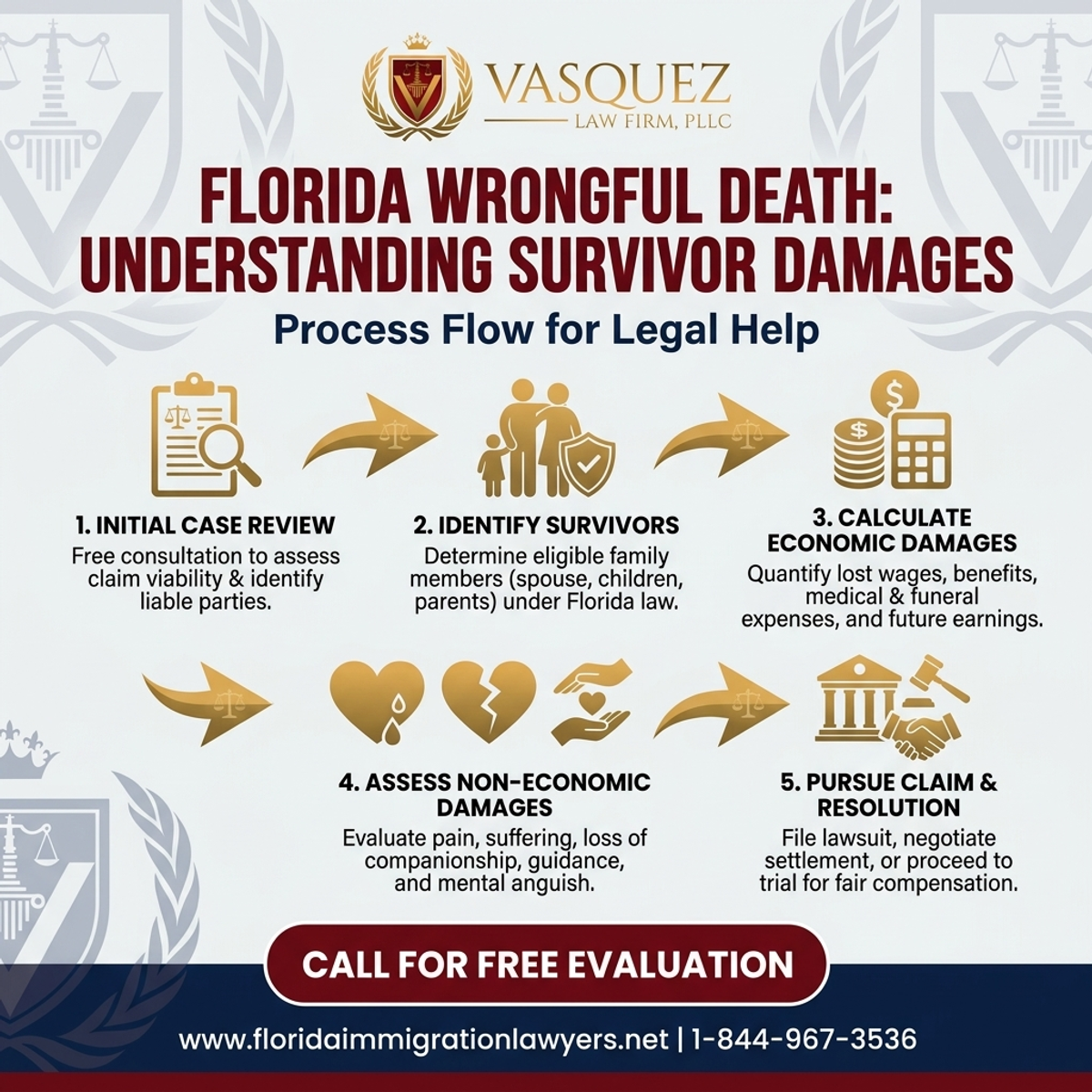
Step-by-Step Process — Florida Wrongful Death: Understanding Survivor Damages
Timeline and Processing Expectations
The timeline for resolving a wrongful death claim can vary significantly based on the complexity of the case. Typically, the process can take several months to several years. In Florida, the statute of limitations for wrongful death claims is two years from the date of death, as outlined in §95.11(4)(a). It's important to act promptly to ensure your claim is filed within this period.
Several factors influence the duration of a wrongful death claim. These include the complexity of proving liability, the number of parties involved, the extent of damages, and the willingness of all parties to negotiate a settlement. Cases involving extensive medical records, multiple expert witnesses, or disputes over comparative negligence can naturally take longer to resolve.
The discovery phase, where both sides exchange information and conduct depositions, can be particularly time-consuming. Court backlogs and scheduling conflicts can also add to the overall timeline. While many cases settle out of court, those that proceed to trial will inevitably have a longer processing period. Florida Immigration Lawyers strives to move cases forward efficiently while ensuring a thorough and robust pursuit of justice.
Given the strict two-year statute of limitations, it is paramount to initiate your claim as soon as possible. Delaying can jeopardize your ability to recover compensation, as critical evidence may be lost or witnesses' memories may fade. Contacting Florida Immigration Lawyers at 1-844-967-3536 immediately after a loved one's death allows for a timely investigation and proper filing of your claim.
Cost Factors and Fee Breakdown
Wrongful death claims often operate on a contingency fee basis, meaning you pay no fees unless your lawyer recovers compensation on your behalf. This arrangement allows families to pursue justice without the financial burden of upfront legal fees. Always discuss fee arrangements with your attorney to have a clear understanding of potential costs.
Under a contingency fee agreement, your attorney's payment is a percentage of the final settlement or court award. This percentage is typically agreed upon at the outset of the case and is only paid if your case is successful. This structure is particularly beneficial for grieving families who may already be facing significant financial strain due to the loss of a loved one's income and unexpected expenses.
It's important to distinguish between attorney's fees and litigation costs. While fees are the payment for legal services, costs cover expenses such as court filing fees, deposition costs, expert witness fees, and investigative expenses. These costs are usually advanced by your attorney and then reimbursed from the settlement or award. Florida Immigration Lawyers is transparent about all potential costs and fees, ensuring you have a complete understanding from day one.
Do not navigate this process alone. Contact Florida Immigration Lawyers today.
Common Mistakes to Avoid in Wrongful Death Claims
- Missing the Statute of Limitations: Ensure claims are filed within two years, or they may be dismissed. Failing to meet this strict deadline, as outlined in Florida Statute §95.11(4)(a), will almost certainly result in your case being permanently barred from court, regardless of its merits.
- Failing to Appoint a Personal Representative: The lawsuit must be filed by the estate's personal representative, not individual family members. Without a legally appointed personal representative, the court lacks the proper party to bring the action, leading to delays or dismissal.
- Overlooking Eligible Survivors: Make sure all eligible survivors are included to maximize potential compensation. Florida law specifies who can recover damages; excluding a rightful survivor can lead to an incomplete claim and undervaluation of the total loss.
- Ignoring Pre-Death Damages: Include medical and funeral expenses incurred prior to death. These immediate financial burdens are often significant and are recoverable as part of the overall claim, providing essential relief to the family.
- Underestimating Non-Economic Damages: Consider loss of companionship and emotional suffering. The emotional toll, including pain and suffering, loss of guidance, protection, and consortium, represents a substantial part of a wrongful death claim and should be rigorously pursued.
- Lack of Evidence: Gather comprehensive evidence to support the claim. A strong case relies on a wealth of evidence, from accident reports and medical records to witness statements and expert testimony, all of which prove negligence and the extent of damages.
- Accepting Low Settlements: Consult with a lawyer to evaluate settlement offers effectively. Insurance companies often offer low initial settlements; an experienced attorney can accurately assess the true value of your claim and negotiate for fair compensation.
- Not Understanding Comparative Negligence: Florida follows a comparative negligence rule which could reduce compensation. If the deceased was found to be partially at fault, the recoverable damages will be reduced proportionally, a factor your attorney will explain and manage.
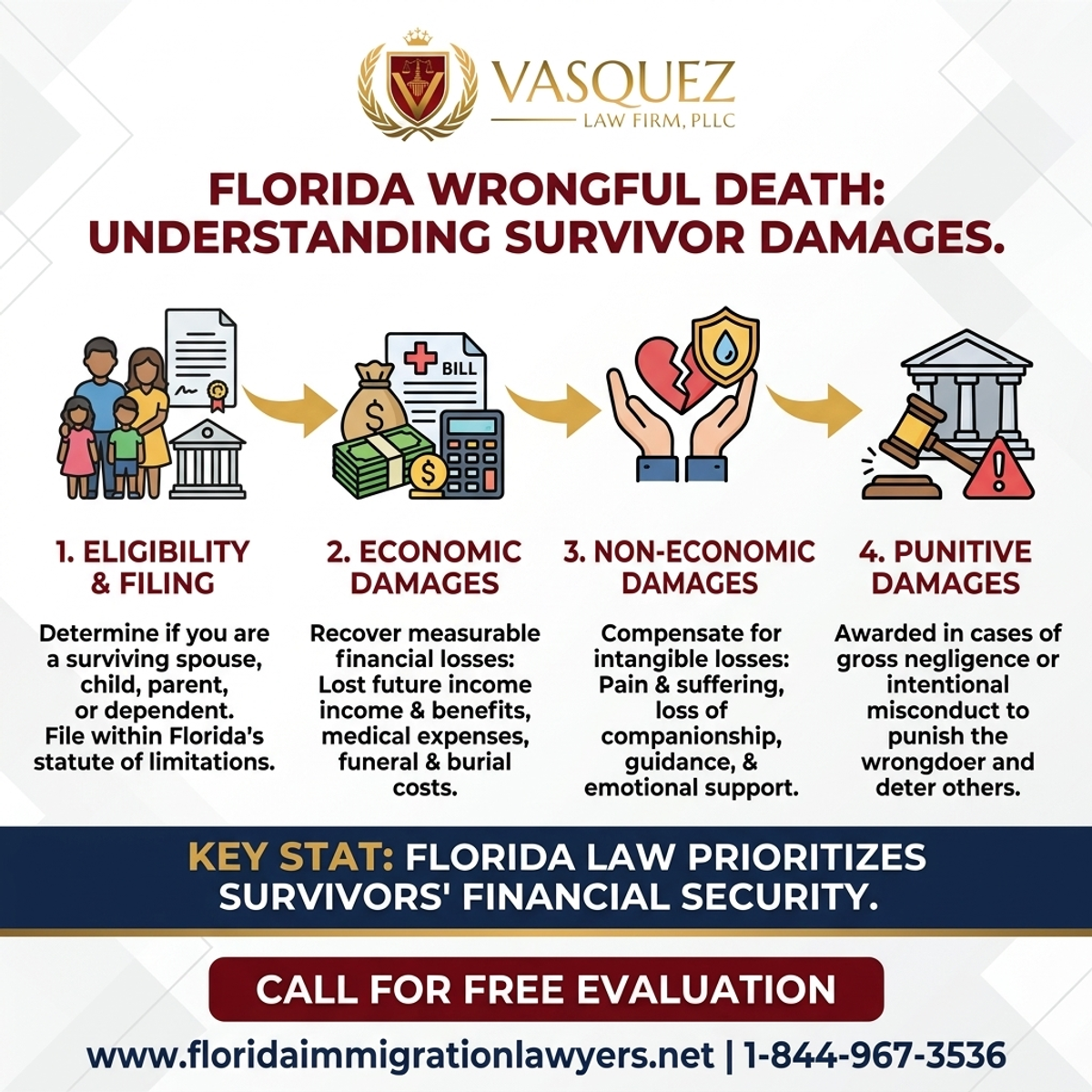
Key Statistics — Florida Wrongful Death: Understanding Survivor Damages
Frequently Asked Questions About Florida Wrongful Death Claims
Who is considered a "survivor" under Florida's Wrongful Death Act?
Florida Statute §768.21 defines eligible survivors. This typically includes the deceased's spouse, minor children, and parents. Other blood relatives or adoptive siblings who were partly or wholly dependent on the deceased for support may also qualify. A lawyer from Florida Immigration Lawyers can help identify all eligible parties to ensure maximum compensation is sought.
What types of damages can be recovered in a wrongful death claim?
Survivors can seek both economic and non-economic damages. Economic damages cover loss of support and services, medical and funeral expenses, and loss of prospective net accumulations of the estate. Non-economic damages include loss of companionship, protection, parental instruction, and mental pain and suffering. Your attorney will meticulously calculate these losses.
Is there a time limit to file a wrongful death claim in Florida?
Yes, Florida has a strict statute of limitations. Generally, a wrongful death lawsuit must be filed within two years from the date of the deceased's death, as per Florida Statute §95.11(4)(a). Missing this deadline can permanently bar your right to compensation, so it is crucial to contact Florida Immigration Lawyers at 1-844-967-3536 promptly.
Can undocumented immigrants file a wrongful death claim in Florida?
Yes, immigration status generally does not bar an individual from filing a wrongful death claim in Florida. The right to seek justice and compensation for the loss of a loved one due to negligence applies to all residents, regardless of their immigration status. Florida Immigration Lawyers specializes in assisting all families, ensuring their rights are protected throughout the legal process.
When to Call a Lawyer
Engaging a lawyer early in the process can significantly impact the outcome of a wrongful death claim. If you encounter legal complexities, disputes over fault, or difficulties in negotiating settlements, it is crucial to seek legal advice. Florida Immigration Lawyers offers experienced guidance to help you navigate these challenging situations.
You should consider contacting an attorney immediately if the death involved complex circumstances, such as multiple responsible parties, a commercial vehicle, or allegations of medical malpractice. Insurance companies may try to minimize payouts or deny claims, making skilled legal representation indispensable. An attorney can protect your rights, handle all communications, and ensure that all evidence is properly collected and preserved.
Early legal intervention also allows for a thorough investigation of the incident while evidence is fresh and witnesses are accessible. This proactive approach can be pivotal in establishing liability and building a strong case. Don't hesitate to reach out to Florida Immigration Lawyers for a free consultation at 1-844-967-3536 to discuss your options and secure the justice your family deserves.
About Florida Immigration Lawyers
Florida Immigration Lawyers is dedicated to providing compassionate and effective representation for wrongful death claims in Florida. We understand the emotional and financial challenges families face during these times. Our team is available 24/7 to offer free consultations and help you through every step of the legal process. Call us at 1-844-967-3536 or visit our website at floridaimmigrationlawyers.net.
Our commitment extends beyond legal representation; we aim to provide a supportive environment for our clients during their most difficult moments. With extensive experience in Florida's personal injury and wrongful death laws, our attorneys possess the expertise to handle even the most intricate cases, from fatal car accidents to complex premises liability claims.
We pride ourselves on our client-first approach, ensuring clear communication, diligent advocacy, and a relentless pursuit of the best possible outcome for your family. Trust Florida Immigration Lawyers to be your steadfast advocates, fighting for the compensation and justice you deserve.
Sources and References
- U.S. Citizenship and Immigration Services (USCIS)
- Executive Office for Immigration Review (EOIR)
- 8 U.S.C. Chapter 12 - Immigration and Nationality Act
- Florida Statutes §768.16-26 - Florida Wrongful Death Act
Related services: fatal car accident claims, fatal truck collisions.
This article provides general legal information and is not intended as legal advice. Every case is unique, and outcomes depend on specific facts and circumstances. Contact an attorney for advice about your particular situation.
Reviewed By
This article was reviewed for Florida legal accuracy by Harold Estrada-Rodriguez, Florida Bar No. 1041171, the attorney responsible for personal injury matters at Florida Immigration Lawyers. Personal injury representation in Florida only. No recovery, no fee.
Final CTA
If you are dealing with the wrongful death of a loved one, act now to protect your rights. Call Florida Immigration Lawyers at 1-844-967-3536 for a free consultation. Se Habla Español - Estamos aquí para ayudarle.
If you need legal assistance, learn more about Florida personal injury attorney services, or call us at 1-844-967-3536 for a free consultation.
Do Not Navigate This Process Alone
Our experienced immigration attorneys are ready to fight for you. Get a free, confidential consultation today.
Se Habla Español
Frequently Asked Questions
Florida Immigration Lawyers
Immigration Attorney | Founder, Vasquez Law Firm
U.S. Air Force veteran and immigration attorney with thousands of cases resolved. J.D., NCCU School of Law. AILA member. Admitted to the 4th, 5th, and 11th Circuit Courts.
Available 24/7 - Free Evaluations
Related Legal Services
Our Florida immigration attorneys can help you with slip-and-fall premises liability, Florida wrongful death claims and Florida personal injury attorney Harold Estrada-Rodriguez. Call today at 1-844-967-3536 for a free consultation.
Related Links
Related Topics
Free Legal Consultation
Discuss your case with our experienced attorneys. We're available 24/7.
Se Habla Español - Estamos aquí para ayudarle.
Related Articles
Florida Truck Underride Crash Fatal Injury Claim | VLF Florida
Truck underride accidents in Florida can be fatal. Learn about your legal rights and how to file a claim for compensation. Call 1-844-967-3536 for a free consultation.
Proving Publix Knew of Wet Floor Hazard in Florida
If you've experienced a slip and fall at Publix due to a wet floor, understanding how to prove store liability is crucial. Learn about Florida's premises liability law and the steps to take to strengthen your case. Call Florida Immigration Lawyers for a free consultation.
Florida Motorcycle Accident: Left Turn Rider Claims
Discover essential steps and common pitfalls when filing a claim for a motorcycle accident involving a left turn in Florida. Learn about legal rights, document checklists, and when to seek legal assistance from Florida Immigration Lawyers.
Immigration Backlog Solutions in Florida | VLF Florida
Facing an immigration backlog in Florida can be challenging. Discover solutions tailored for Coral Springs and beyond, and contact Florida Immigration Lawyers for expert assistance.
