Fiance Visa Lawyer in Florida 2026: Your K-1 Guide
For U.S. citizens in Florida, the K-1 fiance visa is the primary path to bring their foreign partners to the U.S. to marry. This comprehensive guide from Florida Immigration Lawyers details the intricate K-1 process, from initial petition to adjustment of status, for 2026. We cover eligibility, a step-by-step application guide, essential document checklists, typical timelines, and associated costs. Learn about common pitfalls to avoid and crucial scenarios when legal counsel is indispensable. Our firm specializes in family-based immigration, offering expert guidance to navigate USCIS and Department of State requirements. Ensure a smooth and successful journey to reunite with your loved one in Florida with the help of a dedicated immigration attorney.
A fiance visa lawyer in Florida assists U.S. citizens seeking to bring their foreign fiances to the U.S. on a K-1 nonimmigrant visa, followed by marriage and adjustment of status. This complex process involves filing Form I-129F with USCIS, navigating embassy interviews, and preparing for the adjustment of status. An experienced attorney helps ensure all eligibility criteria are met, proper documentation is submitted, and potential pitfalls are avoided, significantly increasing the likelihood of a successful outcome for couples across Florida.
- U.S. citizens can petition for their foreign fiances via the K-1 visa.
- The process involves USCIS, the National Visa Center, and U.S. Consulates abroad.
- Marriage in the U.S. within 90 days of entry is mandatory.
- Adjustment of status follows marriage to obtain a Green Card.
- Legal counsel is crucial for navigating complex requirements and avoiding delays.
Embarking on the journey to bring your beloved fiance to the United States is a testament to love and commitment. For many U.S. citizens residing in the Sunshine State, the K-1 fiance visa serves as the primary pathway to unite with their foreign national partners. However, this process is often intricate, laden with specific legal requirements, strict deadlines, and potential challenges that can feel overwhelming without proper guidance.
Understanding the K-1 visa process, especially its nuances for applicants in Florida, is essential for a smooth transition. From the initial petition to the final adjustment of status, each step demands meticulous attention to detail and a thorough understanding of U.S. immigration law. This comprehensive guide, crafted by Florida Immigration Lawyers, aims to demystify the K-1 fiance visa journey, providing you with critical information and expert insights.
We will explore the eligibility requirements, walk you through the application stages, highlight common mistakes, and explain how a dedicated fiance visa lawyer can be your strongest advocate. Our goal is to empower you with the knowledge needed to navigate this path successfully, ensuring you and your fiance can begin your life together in Florida. If you're ready to take the first step towards reuniting with your loved one, call Florida Immigration Lawyers at 1-844-YO-PELEO for a free case review today.
What is a K-1 Fiance Visa and Who is Eligible in Florida?
The K-1 Fiance Visa is a nonimmigrant visa that allows a foreign national fiance of a U.S. citizen to travel to the United States to marry their petitioner within 90 days of entry. This visa serves as a temporary gateway, with the ultimate goal of the foreign national adjusting their status to a lawful permanent resident (Green Card holder) after marriage. It is specifically designed for couples who intend to marry and establish their life together in the U.S. upon arrival of the foreign fiance.
As of 2026, eligibility for the K-1 fiance visa requires both the U.S. citizen petitioner and the foreign national beneficiary to meet specific criteria outlined by U.S. Citizenship and Immigration Services (USCIS) and the Department of State. The U.S. citizen must be a U.S. citizen, not a lawful permanent resident. Both individuals must be legally free to marry, meaning any previous marriages must have been legally terminated through divorce or death. Crucially, the couple must have met in person at least once within the two years immediately preceding the filing of the petition. Limited waivers for this in-person meeting requirement exist for religious or cultural reasons, or if meeting would cause extreme hardship to the U.S. citizen petitioner. Furthermore, both parties must have a genuine intent to marry within the 90-day period after the foreign fiance's entry into the U.S. If you or your fiance reside in Orlando or elsewhere in Central Florida, understanding these foundational requirements is your first step. A qualified family immigration attorney can help assess your unique situation and confirm eligibility.
How Do I Apply for a K-1 Fiance Visa: A Step-by-Step Guide for Florida Residents
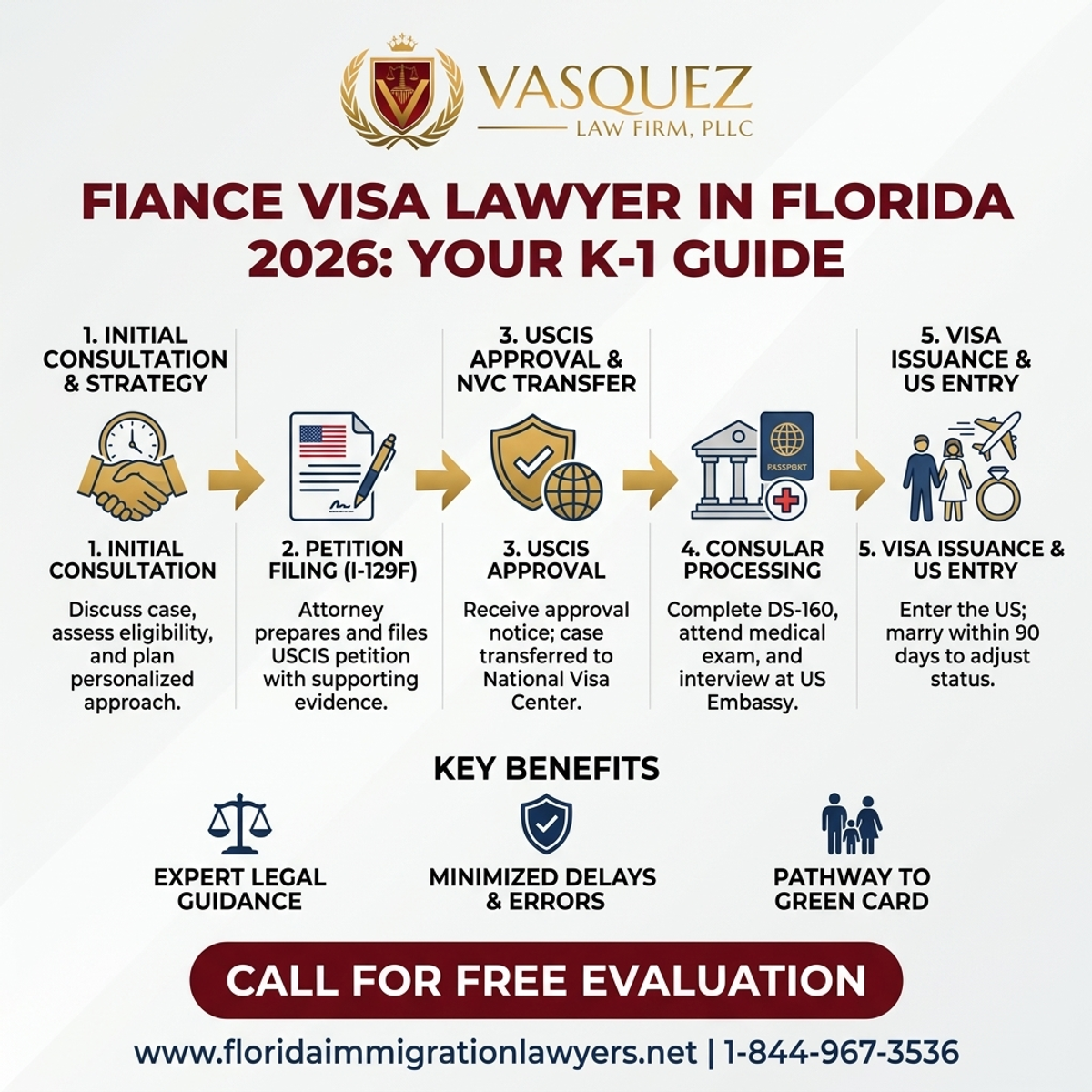
Applying for a K-1 fiance visa involves multiple stages across different government agencies. For U.S. citizens in Florida, understanding each step is vital to avoid delays and ensure a smooth process. This guide outlines the typical steps involved as of 2026:
- File Form I-129F, Petition for Alien Fiance(e), with USCIS: The U.S. citizen petitioner initiates the process by filing Form I-129F with USCIS. This petition establishes the bona fide relationship between the petitioner and beneficiary and confirms their intent to marry. You must include supporting documentation, such as proof of U.S. citizenship, evidence of a qualifying relationship, and proof of meeting in person. The USCIS Lockbox facility in Dallas, Texas, typically processes these petitions.
- USCIS Processing and Approval: After submission, USCIS reviews the I-129F petition. This stage involves background checks and verification of all submitted documents. If the petition is approved, USCIS sends an approval notice (Form I-797) to the petitioner and forwards the case to the National Visa Center (NVC).
- National Visa Center (NVC) Processing: The NVC assigns a case number and forwards the approved petition to the U.S. Embassy or Consulate in the foreign fiance's country of residence. While the NVC's role for K-1 visas is generally administrative, they ensure the case is properly transferred.
- Foreign Fiance's Visa Application (DS-160) and Interview: The foreign fiance then applies for the K-1 visa online using Form DS-160, the Online Nonimmigrant Visa Application. They will schedule and attend an interview at the U.S. Embassy or Consulate. During the interview, a consular officer will verify the relationship's authenticity, assess the foreign national's eligibility, and determine if they are admissible to the U.S.
- Medical Examination: Before the interview, the foreign fiance must undergo a medical examination by an authorized panel physician in their home country. This exam checks for certain communicable diseases, drug abuse, and specific physical or mental disorders that could make an applicant inadmissible.
- Visa Issuance and Entry to the U.S.: If the interview is successful and all requirements are met, the K-1 visa is issued. The foreign fiance has six months from the date of issuance to enter the United States. Upon entry, they must marry their U.S. citizen petitioner within 90 days.
- Adjustment of Status (Form I-485): After marriage, the foreign spouse can apply for Adjustment of Status to become a lawful permanent resident. This involves filing Form I-485, Application to Register Permanent Residence or Adjust Status, with USCIS. This step is critical for obtaining a Green Card and establishing permanent residency in Florida.
Each step requires careful preparation and adherence to specific guidelines. An experienced immigration attorney can provide invaluable assistance throughout this process, particularly for those navigating the system from Florida, ensuring all forms are correctly filed and all evidence is compelling.
What Documents Are Required for the K-1 Fiance Visa Process?
The K-1 fiance visa process is heavily dependent on comprehensive and accurate documentation. Providing all necessary paperwork correctly and promptly can significantly streamline your application and prevent delays. As of 2026, here is a general checklist of essential documents for both the U.S. citizen petitioner and the foreign national beneficiary:
- For the U.S. Citizen Petitioner:
- Proof of U.S. Citizenship (e.g., U.S. passport, birth certificate, naturalization certificate).
- Evidence of a bona fide relationship (e.g., photos together, correspondence, travel itineraries, joint bank accounts, affidavits from friends/family).
- Proof of having met in person within the last two years (e.g., flight tickets, hotel bookings, passport stamps).
- Certified copies of divorce decrees or death certificates for any previous marriages of both parties.
- Form I-129F, Petition for Alien Fiance(e), with all required supplements.
- Financial documentation (e.g., Form I-134, Affidavit of Support, tax returns, employment letters) to demonstrate the petitioner's ability to support the foreign fiance and prevent them from becoming a public charge.
- For the Foreign National Beneficiary:
- Valid passport, valid for at least six months beyond the intended period of stay.
- Birth certificate.
- Certified copies of divorce decrees or death certificates for any previous marriages.
- Police certificates from all countries where the beneficiary has lived for six months or more since age 16.
- Form DS-160 confirmation page.
- Medical examination results from an approved panel physician.
- Two passport-style photographs.
- Evidence of a bona fide relationship (matching that provided by the petitioner).
- Any other documents requested by the consular officer during the interview.
Step-by-Step Process — Fiance Visa Lawyer in Florida 2026: Your K-1 Guide
It is crucial to gather all original documents and provide certified translations for any documents not in English. Missing or incorrect documentation is a leading cause of delays or denials. Working with an immigration attorney in Orlando can help you meticulously prepare your document portfolio, ensuring compliance with all USCIS and Department of State requirements.
How Long Does the K-1 Fiance Visa Process Take in 2026?
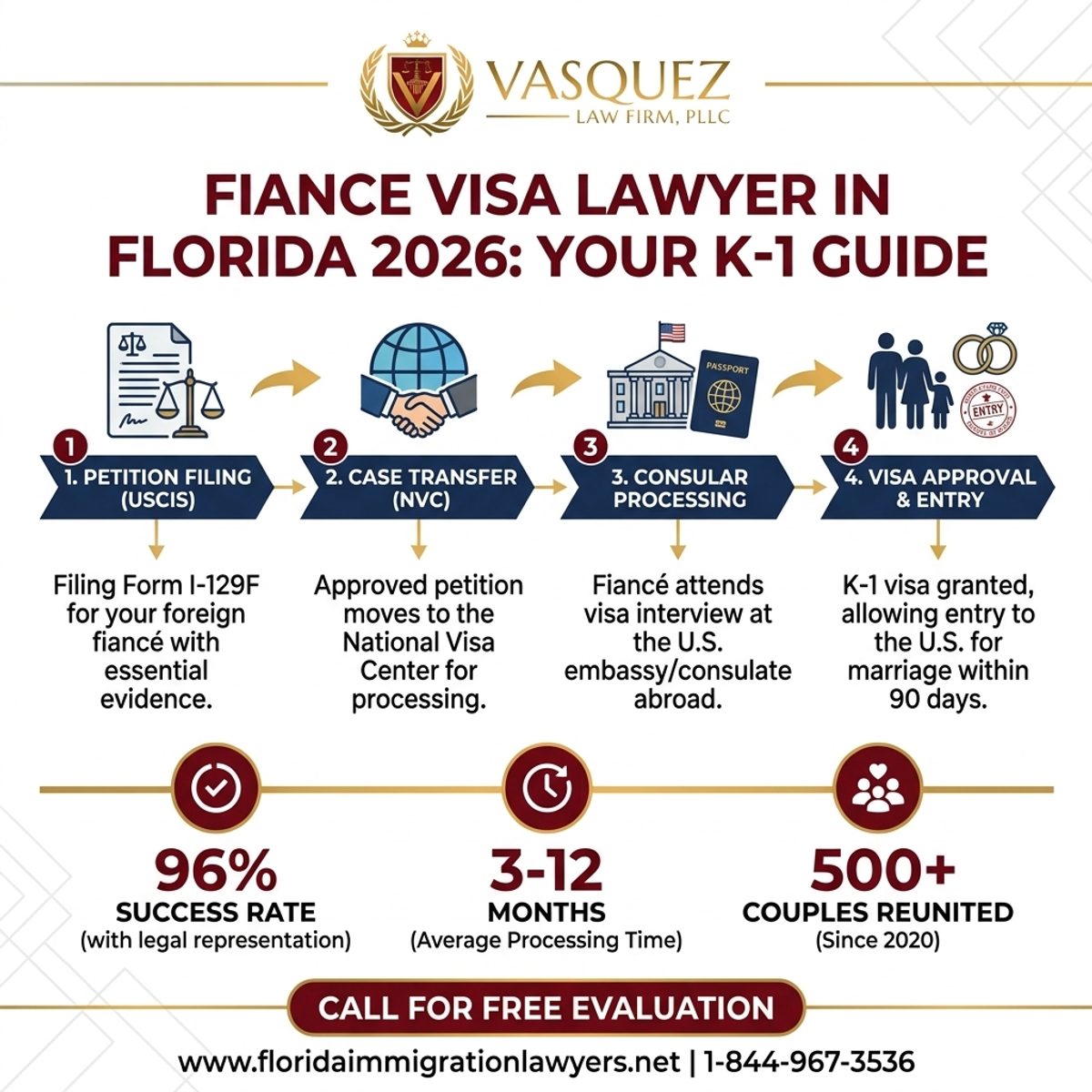
The K-1 fiance visa process involves several stages, each with its own processing times, which can fluctuate based on USCIS workload, the specific U.S. Embassy or Consulate, and the completeness of the application. As of 2026, the overall timeline can range from 9 to 18 months, or even longer in some complex cases. It's important to view these as estimates and prepare for potential variations.
Here is a typical breakdown of the K-1 visa timeline:
| Stage | Typical Timeframe | Notes |
|---|---|---|
| Form I-129F Processing (USCIS) | 7-10 months | Current USCIS processing times can vary significantly by service center. Check the USCIS website for the most up-to-date information. |
| National Visa Center (NVC) Processing | 1-2 months | Primarily administrative; involves forwarding the approved petition to the embassy/consulate. |
| U.S. Embassy/Consulate Processing & Interview Scheduling | 2-4 months | Depends on the specific embassy's workload and appointment availability. Some embassies have longer wait times. |
| Medical Examination & Visa Issuance | 1-2 weeks | Must be completed before the interview, results are usually valid for 6 months. |
| Entry to U.S. & Marriage | Within 90 days of entry | Foreign fiance must marry the U.S. citizen petitioner within this period. |
| Adjustment of Status (I-485) Filing | Immediately after marriage | Begin the Green Card application process. |
| Adjustment of Status (I-485) Processing | 10-18 months (or more) | Includes potential interview at a local USCIS office, such as the Orlando Field Office for Central Florida residents. |
These timelines are subject to change. Factors like responding to Requests for Evidence (RFEs), unforeseen administrative processing, or government shutdowns can extend the duration. Proactive preparation and legal assistance from a deportation defense lawyer who understands the entire immigration trajectory can help mitigate delays and keep your case on track, ensuring you and your fiance can plan your future together in Florida with greater certainty.
What are the Costs Associated with the K-1 Fiance Visa Process?
The K-1 fiance visa process involves various fees charged by different government agencies. These costs are subject to change and can accumulate, making financial planning an important aspect of your immigration journey. As of 2026, here's an overview of the typical fees you can expect:
| Item | Typical Fee | Notes |
|---|---|---|
| Form I-129F Filing Fee | Varies (e.g., $535) | Paid to USCIS by the U.S. citizen petitioner. Check the USCIS website for current fees. |
| DS-160 Visa Application Fee | Varies (e.g., $265) | Paid to the Department of State by the foreign national beneficiary. This fee is often paid locally at the embassy/consulate. |
| Medical Examination Fee | Varies (e.g., $200-$500+) | Paid directly to the panel physician. Costs differ by country and clinic. |
| Police Certificates & Document Translation | Varies | Costs depend on the number of documents and the country of origin. |
| Travel Expenses | Varies | Airfare, lodging, and other costs for the foreign fiance to travel to the U.S. and potentially for the U.S. citizen to meet abroad. |
| Attorney Fees | Varies | Legal fees for professional assistance range based on case complexity and services rendered. This is an investment in accuracy and efficiency. |
| After Marriage (Adjustment of Status): | ||
| Form I-485 Filing Fee | Varies (e.g., $1,225) | Includes biometric services fee. Paid to USCIS by the foreign spouse. |
| Form I-765 (Employment Authorization) | No separate fee with I-485 | Included if filed concurrently with I-485. |
| Form I-131 (Travel Document) | No separate fee with I-485 | Included if filed concurrently with I-485. |
It is important to budget for all these expenses, as they are non-refundable regardless of the outcome of your application. While some fees are fixed, others can vary significantly. Consulting with a citizenship and immigration lawyer can help you understand the full financial scope and ensure you're prepared for all required payments throughout your K-1 and adjustment of status journey in Florida.
Key Statistics — Fiance Visa Lawyer in Florida 2026: Your K-1 Guide
Do not navigate this process alone. Contact Florida Immigration Lawyers today to ensure your K-1 fiance visa application is handled with precision and care. We are here to guide you every step of the way.
Common Mistakes to Avoid in the Fiance Visa Process
The K-1 fiance visa process is unforgiving of errors, and even minor missteps can lead to significant delays, Requests for Evidence (RFEs), or even denial. Avoiding these common mistakes is paramount for a successful outcome:
- Incomplete or Inaccurate Forms: Failing to fill out forms completely or providing incorrect information is a frequent cause of delays. Double-check every field for accuracy and ensure all questions are answered.
- Insufficient Evidence of a Bona Fide Relationship: USCIS requires substantial proof that your relationship is genuine and not solely for immigration purposes. Lack of photos, communication records, or joint activities can raise red flags.
- Failing to Meet the In-Person Meeting Requirement: The law generally requires you to have met your fiance in person within two years before filing. Without a valid waiver, failing to prove this meeting will result in denial.
- Inadequate Financial Sponsorship: The U.S. citizen petitioner must demonstrate they can financially support their fiance, preventing them from becoming a public charge. Insufficient income or assets can lead to denial.
- Not Disclosing All Previous Marriages: Both parties must provide certified copies of divorce decrees or death certificates for all prior marriages. Omitting this information can be considered misrepresentation.
- Missing Deadlines: The K-1 visa has strict timelines, such as marrying within 90 days of entry. Missing these deadlines can jeopardize the foreign fiance's immigration status.
- Incorrectly Translating Documents: Any document not in English must be accompanied by a certified translation. Uncertified or inaccurate translations can cause delays.
- Lying or Misrepresenting Facts: Providing false information at any stage of the process can lead to severe penalties, including a permanent bar from the United States.
- Ignoring Past Immigration Violations: Any prior overstays, illegal entries, or criminal history for either party must be disclosed and properly addressed. These issues can complicate or bar eligibility.
- Failing to Update USCIS of Address Changes: If either the petitioner or beneficiary moves, USCIS must be notified promptly using Form AR-11. Failure to do so can result in missed notices and case abandonment.
- Attempting to Adjust Status Before Marriage: The K-1 visa is specifically for marriage within 90 days. An adjustment of status cannot be filed until after the marriage has legally occurred.
- Not Seeking Legal Counsel: Many couples underestimate the complexity of the K-1 process. Navigating it without an experienced asylum or family immigration attorney often leads to avoidable mistakes.
When to Call a Fiance Visa Lawyer in Florida
While the prospect of reuniting with your fiance is exciting, the K-1 visa journey is fraught with potential complications. Knowing when to seek professional legal assistance can make all the difference between a smooth approval and a prolonged, stressful ordeal. At Florida Immigration Lawyers, we recommend contacting a qualified fiance visa lawyer in Florida if you encounter any of the following scenarios:
- Complex Eligibility Issues: If either you or your fiance have previous immigration violations, criminal records, or a history of multiple marriages, an attorney can assess the impact on your eligibility and advise on potential waivers or solutions.
- Requests for Evidence (RFEs): Receiving an RFE from USCIS indicates that your initial petition lacked sufficient information or documentation. An attorney can help you understand the RFE and prepare a comprehensive, timely response.
- Previous Denials: If a prior K-1 or other visa application was denied, it's crucial to understand the reasons for denial and how to address them in a new application.
- Concerns About Financial Sponsorship: If the U.S. citizen petitioner has a low income or complex financial situation, an attorney can help strategize how to meet the Affidavit of Support requirements, potentially involving a joint sponsor.
- Unusual Relationship Circumstances: If you haven't met in person within two years and believe you qualify for a waiver, or if your relationship has unique aspects that might be difficult to prove, legal guidance is invaluable.
- Language Barriers: If the foreign fiance has difficulty understanding English or navigating complex legal documents, an attorney can ensure all communication and documentation are handled appropriately.
- Desire for Peace of Mind: Even in seemingly straightforward cases, the peace of mind that comes from knowing an expert is overseeing your application is invaluable. An attorney ensures accuracy, compliance, and timely submission, minimizing stress for couples in Florida.
Florida Immigration Lawyers offers comprehensive services for K-1 fiance visas and subsequent adjustment of status applications. We are well-versed in the specific requirements and processing nuances for individuals residing in Orlando and throughout Florida, including interactions with the USCIS Orlando Field Office. Let us help you confidently navigate this journey.
About Florida Immigration Lawyers
Florida Immigration Lawyers is a leading immigration law firm dedicated to serving individuals and families across the entire state of Florida. With a deep understanding of U.S. immigration law and a commitment to our clients, we provide compassionate, effective, and results-driven legal representation. Our experienced attorneys specialize in a wide range of immigration matters, including K-1 fiance visas, family-based petitions, adjustment of status, citizenship, and deportation defense. We pride ourselves on offering personalized attention, clear communication, and strategic advice tailored to each client's unique circumstances.
We understand the profound impact immigration issues have on individuals and their families. That's why we offer free case reviews and are available 24/7 to address your concerns. Our team is fully bilingual, ensuring that language is never a barrier to receiving top-tier legal assistance. Whether you are in Orlando, Miami, Tampa, or any other part of Florida, our firm is here to advocate for your rights and help you achieve your immigration goals. Contact us today at 1-844-YO-PELEO to schedule a free consultation and learn how we can assist you.
Sources and References
- U.S. Citizenship and Immigration Services (USCIS)
- U.S. Department of State
- Executive Office for Immigration Review (EOIR)
- Immigration and Nationality Act (INA) Section 214(d) - 8 U.S.C. § 1184(d)
- 8 U.S.C. Chapter 12 - Immigration and Nationality Act
- 8 Code of Federal Regulations (CFR) Part 214 - Nonimmigrant Classes
Related services: family petition process, family-based green cards, fiancé visa (K-1), marriage-based immigration.
This article provides general legal information and is not intended as legal advice. Every case is unique, and outcomes depend on specific facts and circumstances. Contact an attorney for advice about your particular situation.
Your journey to unite with your fiance in Florida is significant. Don't leave your future to chance. Contact Florida Immigration Lawyers today for a free, no-obligation case review. Call us at 1-844-YO-PELEO. Se Habla Espanol - Estamos aqui para ayudarle.
Do Not Navigate This Process Alone
Our experienced immigration attorneys are ready to fight for you. Get a free, confidential case review today.
Se Habla Español
Or leave your details and we’ll call you:
Free Evaluation in 24 Hours
Or talk to us right now
AI voice assistant — available 24/7
FreeFrequently Asked Questions

William J. Vásquez
Founding Attorney · Vasquez Law Firm
U.S. Air Force veteran and immigration attorney with years of hands-on U.S. immigration experience. J.D., NCCU School of Law. AILA member. Admitted to the 4th, 5th, and 11th Circuit Courts.
Available 24/7 - Free Evaluations
Reviewed for legal accuracy by William J. Vásquez
Licensed in North Carolina; U.S. immigration is federal practice.
Related Legal Services
Our Florida immigration attorneys can help you with immigration lawyer cost in Florida, experienced immigration attorneys and asylum protection. Call today at 1-844-YO-PELEO for a free case review.
Related Links
Related Topics
Free Legal Case Review
Discuss your case with our experienced attorneys. We're available 24/7.
Se Habla Español - Estamos aquí para ayudarle.
Related Articles
Immigration Lawyer Orlando Free Consultation in Florida
For individuals and families in Orlando, Florida, navigating the complexities of U.S. immigration law requires expert guidance. An immigration lawyer in Orlando offers crucial support for everything from visa applications and green card processes to naturalization and deportation defense. This comprehensive guide details what a free consultation covers, providing a step-by-step overview of immigration pathways, essential document checklists, and expected timelines in 2026. We also highlight common mistakes to avoid, discuss the critical role of legal counsel in deportation and asylum cases, and explain why choosing a local Orlando immigration attorney is beneficial. Florida Immigration Lawyers is dedicated to serving the diverse community of Orlando with compassionate, effective legal solutions, ensuring you receive personalized advice and robust representation for a successful immigration journey.
EAD Advance Parole Combo Card in Florida 2026
For individuals with a pending Form I-485, Application to Register Permanent Residence or Adjust Status, the EAD Advance Parole Combo Card is an essential document. This single card combines the authorization to work legally in the U.S. (Employment Authorization Document - EAD) with permission to travel internationally and re-enter without abandoning your green card application (Advance Parole). This guide from Florida Immigration Lawyers provides a comprehensive overview for applicants in Florida in 2026, covering eligibility, the step-by-step application process, required documents, expected processing times, and associated costs. We also highlight common mistakes to avoid and when to seek legal counsel to ensure a smooth and successful immigration journey. Understanding this vital card is key to maintaining stability while awaiting your permanent residency approval.
I-601 Waiver Lawyer Florida: Your Guide
Facing inadmissibility issues in Florida? Learn how an I-601 waiver can help you overcome these challenges with the guidance of an experienced lawyer. This guide provides a detailed overview of the process, eligibility requirements, and common pitfalls to avoid. Call Florida Immigration Lawyers at 1-844-YO-PELEO for expert assistance today.
O-1 Visa Extraordinary Ability in Florida: What You Need
Explore the O-1 visa for extraordinary ability in Florida. Learn about eligibility, application process, and common mistakes to avoid. Contact Florida Immigration Lawyers for expert assistance.