Employment Immigration Attorney Florida: Your 2026 Guide
For foreign nationals seeking to work in the U.S. or Florida businesses hiring international talent, navigating employment immigration can be complex. An employment immigration attorney in Florida provides essential guidance on various work visas like H-1B, L-1, E-2, and O-1, as well as employment-based green cards (EB-1 to EB-5). This comprehensive 2026 guide covers eligibility criteria, the multi-step application process, required documentation, and typical costs involved. It also highlights common mistakes to avoid, such as incomplete forms or missed deadlines, which can lead to significant delays or denials. Whether you're an employer in Central Florida or a skilled professional, understanding the nuances of immigration law is crucial. Florida Immigration Lawyers offers legal support, ensuring compliance with federal regulations and providing strategic advice for successful outcomes. We offer free case reviews and serve clients across all of Florida.
An employment immigration attorney in Florida assists foreign nationals and U.S. employers with obtaining various work visas, employment-based green cards, and navigating complex immigration regulations. They provide crucial guidance on eligibility, documentation, application processes, and represent clients before USCIS and other agencies. As of 2026, the landscape for employment immigration continues to evolve, making legal counsel essential for successful outcomes in Florida.
- Guidance on work visas (H-1B, L-1, E-2, O-1) and employment-based green cards.
- Assistance with all stages of the application process, from petitions to interviews.
- Ensures compliance with federal immigration laws and Florida-specific requirements.
- Helps overcome challenges like RFEs, denials, and complex eligibility issues.
- Provides strategic advice for both employers and foreign workers in Florida.
Navigating the intricacies of U.S. immigration law, especially when it comes to employment-based visas and green cards, can be a daunting process. For individuals seeking to work in the United States, or for businesses in Florida looking to hire foreign talent, understanding the specific requirements and procedures is paramount. The journey often involves meticulous documentation, strict deadlines, and a deep knowledge of federal regulations, all of which can be overwhelming without professional assistance.
This comprehensive guide, updated for 2026, aims to demystify the process of employment immigration in Florida. We will explore the various visa options available, outline the application steps, discuss typical costs, and highlight common pitfalls to avoid. Our goal is to equip you with the knowledge needed to make informed decisions about your employment immigration journey. Whether you're an employer in Orlando needing to fill a specialized role or a skilled professional aspiring to contribute to Florida's vibrant economy, securing the right legal support is your first and most critical step. For personalized advice and a clear path forward, do not hesitate to call Florida Immigration Lawyers at 1-844-YO-PELEO for a free case review today.
Understanding Employment Immigration in Florida
Florida's diverse economy, driven by tourism, agriculture, technology, and healthcare, consistently attracts skilled foreign workers and innovative businesses. This dynamic environment makes employment immigration a vital component of the state's growth. However, the process is governed by federal law, primarily the Immigration and Nationality Act (INA), which dictates who can work in the U.S. and under what conditions. An employment immigration attorney Florida based firm like ours understands both the federal framework and the unique needs of Florida's employers and workforce.
Employment immigration encompasses a broad range of visa categories, each with specific requirements for both the employer and the foreign national. These categories are generally divided into nonimmigrant visas (for temporary work) and immigrant visas (leading to permanent residency or a green card). The choice of visa depends on the nature of the job, the qualifications of the applicant, and the long-term goals. Navigating these options successfully requires not only legal expertise but also strategic planning to ensure compliance and efficiency. Our team at Florida Immigration Lawyers is dedicated to providing tailored solutions for your specific employment immigration needs, from initial consultation to final approval. We serve clients across the entire state of Florida, including those in Central Florida and beyond.
What are the common types of employment visas for Florida?
As of 2026, Florida offers various nonimmigrant (temporary) and immigrant (permanent) employment visa options designed to meet the diverse needs of its economy. Common nonimmigrant visas include the H-1B for specialty occupations, L-1 for intracompany transferees, E-2 for treaty investors, and O-1 for individuals with extraordinary ability. For permanent residency, employment-based green cards are categorized into five preferences (EB-1 to EB-5), each targeting specific skill sets and investment levels.
Let's delve deeper into some of the most frequently utilized employment visa categories:
- H-1B Visa (Specialty Occupations): This is perhaps the most well-known temporary work visa, designed for foreign nationals in specialty occupations that require a bachelor's degree or higher in a specific field. Common H-1B occupations in Florida include IT professionals, engineers, doctors, and researchers. The H-1B visa is subject to an annual cap, making the application process highly competitive, often requiring a lottery. Employers in Florida must file a Labor Condition Application (LCA) with the Department of Labor before petitioning USCIS.
- L-1 Visa (Intracompany Transferee): The L-1 visa allows U.S. employers to transfer certain employees from their foreign offices to their U.S. offices. It is available in two categories: L-1A for managers and executives, and L-1B for employees with specialized knowledge. This visa is particularly useful for multinational companies with operations in Florida, facilitating the movement of key personnel.
- E-2 Visa (Treaty Investors): For nationals of countries with which the U.S. maintains treaties of commerce and navigation, the E-2 visa allows individuals to enter the U.S. to develop and direct the operations of an enterprise in which they have invested a substantial amount of capital. Florida, with its strong international business ties, sees a significant number of E-2 visa holders, particularly in sectors like hospitality and real estate.
- O-1 Visa (Extraordinary Ability): The O-1 visa is for individuals who possess extraordinary ability in the sciences, arts, education, business, or athletics, or who have a demonstrated record of extraordinary achievement in the motion picture or television industry. This visa requires extensive documentation of achievements and recognition in their field. Florida's vibrant arts scene and growing tech industry attract many O-1 candidates.
- TN Visa (NAFTA Professionals): Canadian and Mexican citizens may be eligible for the TN nonimmigrant status to work in the U.S. in pre-arranged business activities for U.S. or foreign employers. This visa category applies to specific professions listed in the North American Free Trade Agreement (NAFTA), now replaced by the USMCA.
Understanding which visa category best suits your situation is crucial. An experienced employment immigration attorney Florida can assess your qualifications or your company's needs and recommend the most appropriate visa pathway, ensuring all requirements are met. For more detailed information on specific visa types and their requirements, you can visit the official U.S. Citizenship and Immigration Services (USCIS) website.
How do I apply for an employment-based green card in Florida?
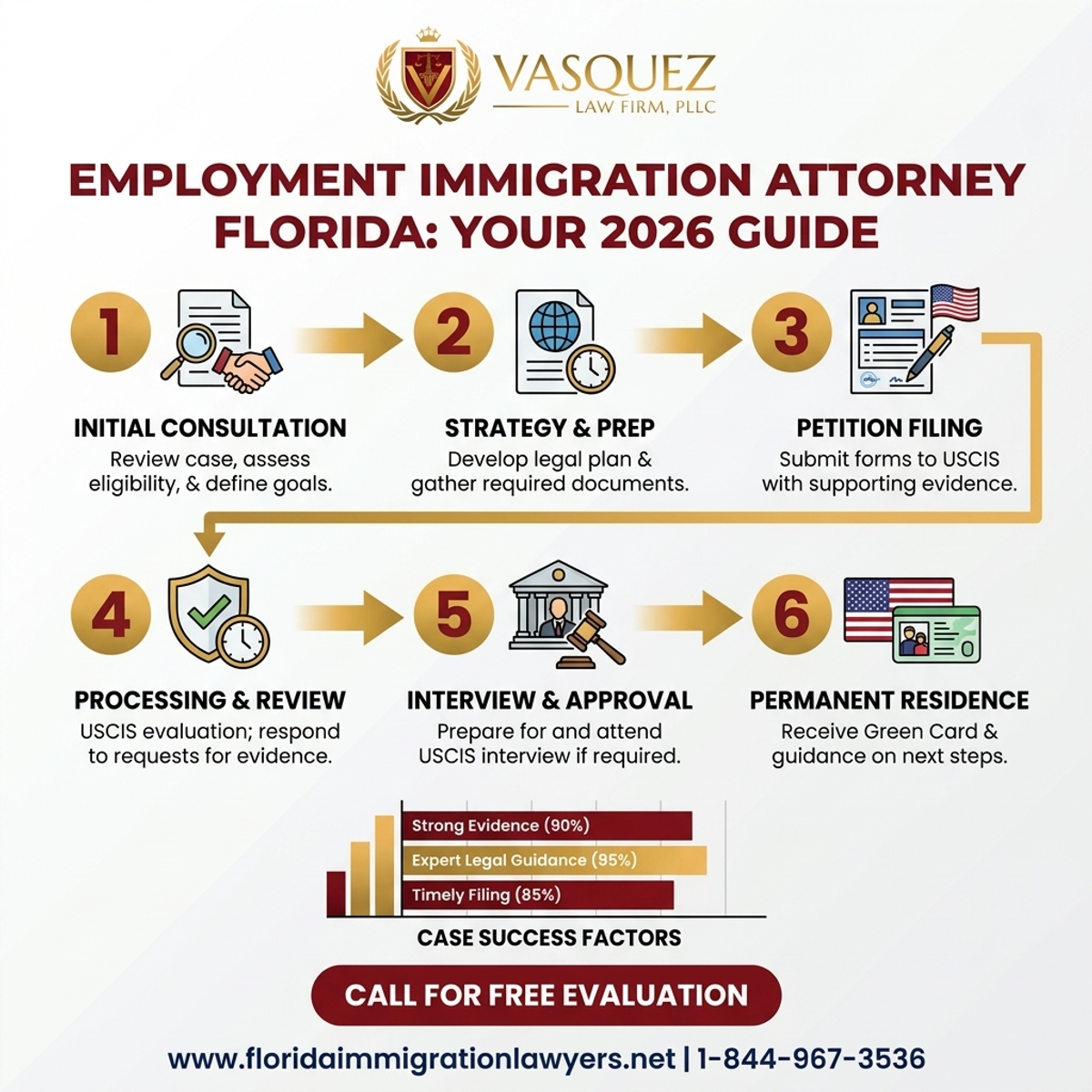
Applying for an employment-based green card in Florida typically involves a multi-step process: labor certification (PERM) if required, filing an Immigrant Petition for Alien Worker (Form I-140) by the employer, and then either Adjustment of Status (Form I-485) if in the U.S. or Consular Processing abroad. The specific steps and wait times depend on the preference category, country of origin, and visa availability as of 2026.
The journey to obtaining an employment-based green card, which grants permanent residency, is often more complex and lengthy than temporary work visas. It generally involves three primary stages, though the first stage (PERM labor certification) is not always required for all categories:
- PERM Labor Certification (ETA Form 9089): For most employment-based green card categories (EB-2 and EB-3), the employer must first obtain a labor certification from the U.S. Department of Labor (DOL). This process, known as Program Electronic Review Management (PERM), aims to protect U.S. workers by requiring the employer to demonstrate that there are no qualified, willing, and available U.S. workers for the position being offered to the foreign national. This involves a rigorous recruitment process, including advertisements and interviews.
- Immigrant Petition (Form I-140): Once the PERM labor certification is approved (if required), the employer files Form I-140, Immigrant Petition for Alien Worker, with USCIS. This petition establishes the foreign national's eligibility for a specific employment-based green card category (EB-1, EB-2, EB-3, EB-4, or EB-5). Supporting documentation, such as educational degrees, work experience letters, and company financial statements, must be submitted. Premium processing is available for some I-140 petitions, which can significantly expedite the USCIS review time.
- Adjustment of Status (Form I-485) or Consular Processing: The final step depends on whether the applicant is currently in the U.S. or abroad, and whether a visa number is immediately available.
- Adjustment of Status: If the foreign national is lawfully present in the U.S. and an immigrant visa number is available, they can file Form I-485, Application to Register Permanent Residence or Adjust Status, with USCIS. This often includes filing for employment authorization (EAD) and advance parole (travel document) concurrently. Applicants in Florida would typically attend an interview at a USCIS field office, such as the one in Orlando or Miami.
- Consular Processing: If the foreign national is outside the U.S. or chooses to complete the process abroad, they will undergo Consular Processing. After the I-140 is approved and a visa number is available, their case is sent to the National Visa Center (NVC), which then forwards it to the U.S. Embassy or Consulate in their home country for an interview.
Step-by-Step Process — Employment Immigration Attorney Florida: Your 2026 Guide
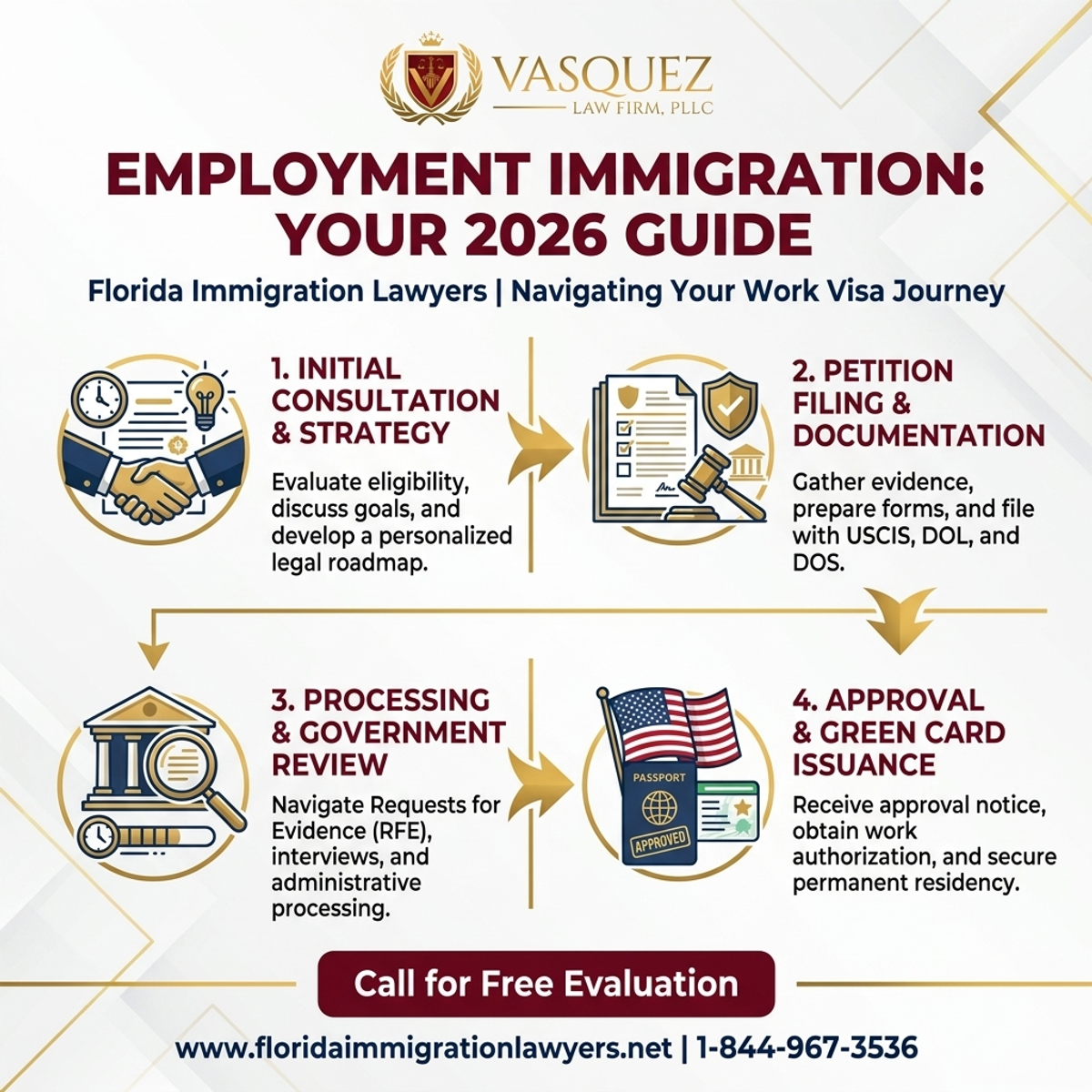
Throughout this complex process, an employment immigration attorney Florida can guide both the employer and the employee, ensuring all forms are correctly filed, deadlines are met, and potential issues are addressed proactively. The Executive Office for Immigration Review (EOIR) also plays a role in certain cases, particularly if there are issues of inadmissibility or deportation proceedings, which you can learn more about on the EOIR website.
What documents do I need for an employment visa application in 2026?
For an employment visa application in 2026, you will generally need a valid passport, birth certificate, marriage certificate (if applicable), educational degrees and transcripts, detailed work experience letters, and a valid job offer from a U.S. employer. Employers must provide business registration documents, financial statements, and proof of ability to pay the offered wage. Specific requirements vary by visa type.
Document Checklist for Employment-Based Petitions:
A meticulous approach to documentation is critical for any employment immigration application. Missing or incorrect documents can lead to delays, Requests for Evidence (RFEs), or even denials. Here is a general checklist, but remember that specific visa types and individual circumstances will dictate the exact documents required:
- Applicant's Personal Documents:
- Valid passport (with at least six months validity beyond the intended period of stay)
- Birth certificate
- Marriage certificate (if applicable)
- Copies of all previous U.S. visas and I-94 records
- Educational degrees, diplomas, and academic transcripts
- Professional licenses or certifications relevant to the occupation
- Detailed letters from previous employers verifying work experience and job duties
- Curriculum Vitae (CV) or resume
- Proof of extraordinary ability or achievement (for O-1 visas), such as awards, publications, media mentions
- Police clearance certificates from all countries lived in for more than six months since age 16 (for green card applicants)
- Employer's Documents:
- Articles of Incorporation or business registration documents
- Federal Employer Identification Number (FEIN)
- Financial statements, tax returns, and bank statements to demonstrate ability to pay the offered wage
- Detailed job description and requirements for the position
- Proof of recruitment efforts (for PERM Labor Certification)
- Organizational charts (for L-1 visas)
- Business plan (for E-2 visas)
- Copies of previous immigration petitions filed on behalf of other employees
Gathering these documents can be time-consuming, and an employment immigration attorney in Florida can assist in organizing and reviewing everything to ensure accuracy and completeness before submission. They can also help with obtaining foreign document translations and evaluations.
Timeline and Processing Expectations (as of 2026):
Processing times for employment immigration cases can vary significantly based on the visa type, the specific USCIS service center or embassy, and current caseloads. The table below provides general expectations, but these are subject to change. Always check the official USCIS processing times tool for the most current estimates.
| Stage | Typical Timeframe (2026) | Notes |
|---|---|---|
| PERM Labor Certification | 6-12 months (without audit) | Can be longer with DOL audits or prevailing wage determination delays. |
| Form I-140 Immigrant Petition | 3-12 months | Premium processing available for an additional fee, reducing time to 15 calendar days. |
| Visa Bulletin Wait Time (Priority Date) | Months to several years | Depends on green card category and country of chargeability, check monthly Visa Bulletin. |
| Form I-485 Adjustment of Status | 10-24 months | Includes biometrics, interview (if required), and background checks. Varies by USCIS field office (e.g., Orlando, Miami). |
| Consular Processing | 6-18 months (after NVC stage) | Depends on embassy/consulate caseload and interview availability. |
| H-1B Cap-Subject Petition | 6-9 months (after lottery selection) | Lottery registration in March, results in March/April, petition filing April-June. |
| L-1/E-2/O-1 Petitions | 2-8 months | Premium processing often available for L-1 and O-1. |
What are the typical costs for employment immigration in Florida?
The costs for employment immigration in Florida, as of 2026, typically include government filing fees, attorney fees, and miscellaneous expenses like translations or medical exams. Government fees alone can range from hundreds to several thousands of dollars, depending on the visa type and number of applicants. Attorney fees vary based on the complexity of the case and the firm's experience.
Understanding the financial commitment involved is a crucial part of planning for employment immigration. These costs can be broadly categorized into government filing fees, legal fees, and other associated expenses. It's important to note that government fees are set by USCIS and the Department of State and are subject to change. An experienced employment immigration attorney Florida will provide a clear breakdown of all expected costs.
Cost Factors and Fee Breakdown (as of 2026):
| Item | Typical Fee (USD, 2026) | Notes |
|---|---|---|
| Form I-129 (Nonimmigrant Worker Petition) | $460 - $510 | For H-1B, L-1, O-1 visas. Often paid by employer. |
| H-1B ACWIA Fee (Employer) | $750 (for small employers) / $1,500 (for large employers) | American Competitiveness and Workforce Improvement Act of 1998. |
| H-1B Fraud Prevention and Detection Fee (Employer) | $500 | Required for initial H-1B petitions and employer changes. |
| Public Law 114-113 Fee (Employer) | $4,000 (H-1B) / $4,500 (L-1) | For employers with 50+ employees, where 50% are H-1B/L-1. |
| Form I-140 (Immigrant Petition) | $700 - $715 | For employment-based green cards. Often paid by employer. |
| Form I-485 (Adjustment of Status) | $1,140 - $1,225 (adult) + biometrics fee | Includes EAD and Advance Parole. |
| Biometrics Services Fee | $85 | For I-485 applicants, some I-129 applicants. |
| Premium Processing (Form I-907) | $2,805 | Optional fee for expedited processing of certain petitions (e.g., I-129, I-140). |
| DS-260 (Immigrant Visa Application, Consular Processing) | $325 | Paid to Department of State. |
| Attorney Fees | Varies greatly ($3,000 - $15,000+) | Depends on complexity, firm's experience, and specific visa type. |
| Medical Examination (for I-485/Consular Processing) | $200 - $500 | Paid to civil surgeon. |
| Translations, Document Evaluations | Varies | As needed for foreign documents. |
Key Statistics — Employment Immigration Attorney Florida: Your 2026 Guide
These fees can add up quickly, and some are mandatory while others are optional. For example, the H-1B fees described above are largely mandated by sections of the Immigration and Nationality Act (INA), specifically INA 214(c), and are codified in regulations such as 8 CFR 214.2(h). It is important to budget carefully and consult with an attorney to get an accurate estimate for your specific case. An immigration lawyer Orlando free consultation could provide initial insights into these costs.
Do not navigate this complex process alone. Contact Florida Immigration Lawyers today to ensure your employment immigration application is handled with precision and care. We are here to provide the legal guidance you need.
Common Mistakes to Avoid in Employment Immigration
The employment immigration process is fraught with potential pitfalls that can lead to significant delays or even denial of your application. Avoiding these common mistakes is crucial for a successful outcome:
- Incomplete or Inaccurate Documentation: Failing to provide all required documents, or submitting forms with errors, is a primary cause of RFEs (Requests for Evidence) and delays. USCIS is highly strict about exact compliance.
- Missing Deadlines: Immigration processes are time-sensitive. Missing a deadline for a response to an RFE, filing an appeal, or submitting an application can result in the closure or denial of your case without further consideration.
- Misrepresenting Information: Any false statements or misrepresentations on immigration forms can lead to serious consequences, including a finding of inadmissibility, deportation, or a permanent bar from entering the U.S.
- Lack of Employer Compliance (for H-1B, PERM): Employers must adhere to strict wage and working condition requirements. Failing to meet prevailing wage obligations, maintaining public access files, or conducting proper recruitment for PERM can result in audits, penalties, and denial of petitions.
- Choosing the Wrong Visa Category: Applying for a visa that does not align with the applicant's qualifications or the job's requirements can lead to an outright denial and wasted time and money.
- Failure to Respond to RFEs Adequately: An RFE is an opportunity to provide missing information or clarify existing evidence. A weak or incomplete response will likely lead to a denial.
- Overlooking Visa Bulletin Implications: For employment-based green cards, not understanding how the Visa Bulletin and priority dates affect eligibility and wait times can lead to frustration and missed opportunities to file.
- Traveling Without Advance Parole: For adjustment of status applicants, traveling outside the U.S. without an approved advance parole document can be considered abandonment of their adjustment application.
- Ignoring Changes in Law or Policy: Immigration laws and policies are constantly evolving. Relying on outdated information can lead to errors. An attorney stays current with all changes.
When to Call an Employment Immigration Attorney in Florida
The complexities of U.S. immigration law, coupled with the high stakes involved in securing employment authorization, make legal representation not just beneficial, but often essential. You should call an employment immigration attorney Florida when:
- You are an Employer: Looking to hire foreign talent, especially for specialized roles, or facing an audit by the DOL or USCIS. An attorney ensures compliance and protects your business from potential penalties.
- You are a Foreign National: Seeking any type of work visa or an employment-based green card. An attorney can assess your eligibility, advise on the best path, and navigate the entire application process.
- You Receive a Request for Evidence (RFE): An RFE indicates that USCIS requires more information or clarification. A lawyer can help you craft a comprehensive and persuasive response.
- Your Petition or Application is Denied: If your case is denied, an attorney can help you understand the reasons for denial and explore options for appeal or refiling.
- You Have a Complex Case: This includes situations involving previous immigration violations, criminal history, or unique professional qualifications that don't fit standard categories.
- You Need to Expedite Processing: An attorney can advise if premium processing is available and appropriate for your petition, and help manage the faster timeline.
- You are Considering Changing Employers: Understanding the implications of changing employers on your existing visa or green card application is critical and requires legal advice.
Florida Immigration Lawyers has extensive experience in all facets of employment immigration. We understand the nuances of the law and are committed to providing strategic and effective representation for our clients across the state. Whether you're in Central Florida or elsewhere, our team is ready to assist you.
About Florida Immigration Lawyers
Florida Immigration Lawyers is an immigration law firm dedicated to serving individuals and businesses throughout Florida. With our office conveniently located in Orlando, we provide comprehensive legal services across all areas of immigration law, including family-based immigration, asylum, deportation defense, citizenship, and particularly, complex business and employment immigration matters. Our team of experienced attorneys is committed to offering personalized, compassionate, and effective legal representation.
We understand that every immigration journey is unique, and we pride ourselves on delivering tailored strategies designed to achieve the strongest possible outcomes for our clients. Our firm is available 24/7, offering free case reviews to help you understand your options without financial commitment. We are proud to offer bilingual services, ensuring that language is never a barrier to quality legal assistance. Choose Florida Immigration Lawyers for extensive experience and dedicated support in navigating the U.S. immigration system. Schedule a free consultation today, or call us directly at 1-844-YO-PELEO.
Sources and References
- U.S. Citizenship and Immigration Services (USCIS)
- Executive Office for Immigration Review (EOIR)
- U.S. Department of State
- 8 U.S.C. Chapter 12 - Immigration and Nationality Act (INA)
- 8 CFR Part 214 - Nonimmigrant Classes
- INA 203(b) - Preference Allocation for Employment-Based Immigrants
- INA 214(c) - Admission of Nonimmigrants
Related services: immigration practice areas, family immigration services, citizenship and naturalization.
This article provides general legal information and is not intended as legal advice. Every case is unique, and outcomes depend on specific facts and circumstances. Contact an attorney for advice about your particular situation.
Embarking on an employment immigration journey requires diligence, precision, and legal guidance. Do not leave your future to chance. Let Florida Immigration Lawyers be your trusted partner. Contact us today for a free case review and take the first step towards achieving your employment goals in Florida. Call 1-844-YO-PELEO. Se Habla Español - Estamos aquí para ayudarle.
If you need legal assistance, learn more about speak with a business immigration lawyer, or call us at 1-844-YO-PELEO for a free case review.
Do Not Navigate This Process Alone
Our experienced immigration attorneys are ready to fight for you. Get a free, confidential case review today.
Se Habla Español
Or leave your details and we’ll call you:
Free Evaluation in 24 Hours
Or talk to us right now

AI voice assistant — available 24/7
FreeFrequently Asked Questions

William J. Vásquez
Founding Attorney · Vasquez Law Firm
U.S. Air Force veteran and immigration attorney with years of hands-on U.S. immigration experience. J.D., NCCU School of Law. AILA member. Admitted to the 4th, 5th, and 11th Circuit Courts.
Available 24/7 - Free Evaluations
Reviewed for legal accuracy by William J. Vásquez
Licensed in North Carolina; U.S. immigration is federal practice.
Related Legal Services
Our Florida immigration attorneys can help you with family immigration services, immigration lawyer cost in Florida and experienced immigration attorneys. Call today at 1-844-YO-PELEO for a free case review.
Related Links
Related Topics
Free Legal Case Review
Discuss your case with our experienced attorneys. We're available 24/7.
Se Habla Español - Estamos aquí para ayudarle.
Related Articles
DUI Immigration Consequences in Florida 2026
A DUI conviction in Florida can have severe immigration consequences, potentially leading to inadmissibility, deportation, or denial of immigration benefits. For non-citizens, a DUI is not just a traffic offense but a serious criminal matter that federal immigration law scrutinizes closely. Factors like multiple offenses, injury, or property damage can escalate a simple DUI to a Crime Involving Moral Turpitude (CIMT) or even an aggravated felony, triggering mandatory detention and removal proceedings. Understanding the specific nature of your Florida conviction and its interpretation under the Immigration and Nationality Act (INA) is crucial. This article outlines how DUIs impact immigration status, the grounds for inadmissibility and deportation, a step-by-step guide to navigating the process, essential documentation, and expected timelines for 2026. We also highlight common mistakes to avoid and when to seek legal counsel from an experienced immigration attorney. Florida Immigration Lawyers offers comprehensive support for individuals facing these challenging situations, providing expert guidance through complex legal landscapes.
Immigration Lawyer Orlando Free Consultation in Florida
For individuals and families in Orlando, Florida, navigating the complexities of U.S. immigration law requires expert guidance. An immigration lawyer in Orlando offers crucial support for everything from visa applications and green card processes to naturalization and deportation defense. This comprehensive guide details what a free consultation covers, providing a step-by-step overview of immigration pathways, essential document checklists, and expected timelines in 2026. We also highlight common mistakes to avoid, discuss the critical role of legal counsel in deportation and asylum cases, and explain why choosing a local Orlando immigration attorney is beneficial. Florida Immigration Lawyers is dedicated to serving the diverse community of Orlando with compassionate, effective legal solutions, ensuring you receive personalized advice and robust representation for a successful immigration journey.
EAD Advance Parole Combo Card in Florida: What You Need
An EAD advance parole combo card allows individuals with pending adjustment applications to both work and travel abroad without jeopardizing their green card application. Learn how to apply in Florida, what documents you need, and common mistakes to avoid.
Dual Citizenship Lawyer in Florida: What You Need to Know
For Florida residents, the concept of dual citizenship, or holding two passports, offers a compelling blend of opportunities and challenges. While the U.S. generally permits dual nationality, the path to achieving this status requires a meticulous understanding of both U.S. immigration laws and the citizenship policies of your country of origin. This guide explores the definition of dual citizenship, the detailed step-by-step process for U.S. naturalization, and the significant benefits and potential pitfalls involved. We cover essential documentation, typical timelines, and cost considerations for 2026, providing crucial insights for anyone in Orlando, Miami, or across Florida considering this important legal step. Learn about common mistakes to avoid and understand when to seek professional legal counsel to navigate this complex process successfully. Florida Immigration Lawyers is here to provide expert, bilingual support for your dual citizenship journey.