employment-based immigration lawyer
Your priority date is set, your job offer is real, and USCIS still hasn't moved. If you're a Bay Area engineer counting down the days on an H-1B layoff clock, or an employer staring at a PERM audit letter from the Department of Labor, the uncertainty isn't abstract — it has a calendar attached to it. Every week without a clear strategy is a week closer to a deadline you can't get back.
An employment-based immigration lawyer helps foreign workers and U.S. employers secure green cards through PERM labor certification (EB-2/EB-3 under INA § 203(b)), EB-1A extraordinary-ability petitions, EB-1C multinational manager transfers, or National Interest Waivers, while handling RFE responses, PERM audits under 20 C.F.R. § 656.17, and mandamus actions for stalled I-140/I-485 cases.
The Hard Truth
Employment-based green cards are not won by paperwork volume — they're won by evidentiary strategy. EB-1A and National Interest Waiver petitions most often fail not because the candidate lacks accomplishments, but because the petition doesn't map those accomplishments onto the specific legal test USCIS applies under Kazarian v. USCIS, 596 F.3d 1115 (9th Cir. 2010). PERM audits triggered under 20 C.F.R. § 656.17 can add a year or more to an already multi-year process, and there is no way around the Department of Labor's recruitment and audit timeline. Anyone promising a guaranteed outcome or a fast-tracked approval is not being straight with you.
What Happens If You Wait
H-1B workers who are laid off get a 60-day grace period to file a new petition, change status, or find another sponsor before falling out of status, per 8 C.F.R. § 214.1(l)(2) — and that clock does not pause for a job search. Miss it, and years of accrued priority-date wait time can be lost along with lawful status. On the employer side, a PERM recruitment step filed incorrectly under 20 C.F.R. § 656.17 can force a full case refiling, pushing a foreign national's green card timeline back by another 12 to 18 months. Waiting until close to a deadline to respond to an RFE or DOL audit notice leaves no room to fix documentation gaps before they become denials.
Step-by-Step Process
1. File a prevailing wage determination with DOL's National Prevailing Wage Center before recruitment begins. 2. Conduct PERM recruitment under 20 C.F.R. § 656.17 (job order, print ads, internal posting), followed by a mandatory 30-day quiet period. 3. File Form ETA-9089; if selected for audit, the employer has 30 days to submit full recruitment documentation to DOL. 4. Upon PERM certification, file Form I-140 with USCIS's California Service Center (Laguna Niguel, CA) — or file I-140 directly, without PERM, for EB-1A, NIW, or EB-1C cases. 5. Once a visa number is available under the applicable INA § 203(b) preference category, file Form I-485 adjustment of status, with interviews often scheduled at the USCIS San Jose Field Office (1887 Monterey Road, San Jose, CA). 6. If I-140 or I-485 processing exceeds USCIS's published normal processing time with no case update, a mandamus action can be filed in the U.S. District Court for the Northern District of California, San Jose Division, under Local Rule 7-1.
A Real-World Example
Consider a composite scenario based on the type of case we regularly see in Santa Clara County: a machine-learning engineer at a mid-size Bay Area tech company is laid off with an approved I-140 under EB-2 but no I-485 filed yet. Because the I-140 had been approved for more than 180 days, the priority date is preserved under portability rules, but the engineer has no employer to transfer the H-1B to and 45 days left in the 60-day grace period under 8 C.F.R. § 214.1(l)(2). By documenting the engineer's publications and industry impact against the Matter of Dhanasar framework, a National Interest Waiver petition is prepared to remove the employer-sponsorship requirement, allowing self-petition while a new H-1B cap-subject employer is located. This is an illustrative composite, not a specific client result.
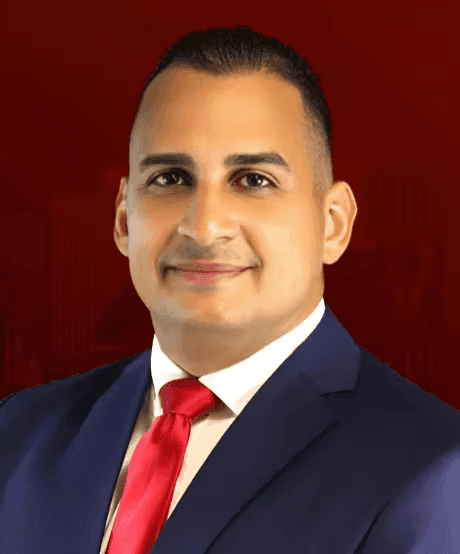
William J. Vasquez leads our employment-based immigration practice, working directly with Silicon Valley engineers, researchers, and the companies that sponsor them. He is a member of the American Immigration Lawyers Association Northern California Chapter and has appeared before the USCIS California Service Center and the U.S. District Court for the Northern District of California on stalled-case matters. Clients work directly with him on PERM audit responses and RFE strategy, not a rotating account-management team.
Key Terms Explained
PERM: the Department of Labor's labor certification process (Form ETA-9089) confirming no qualified U.S. worker is available for a sponsored role, governed by 20 C.F.R. § 656.17. RFE (Request for Evidence): a USCIS notice requesting additional documentation before deciding a petition. Form I-140: the immigrant petition establishing eligibility for an employment-based green card category. Form I-485: the adjustment of status application filed to obtain a green card once a visa number is available. National Interest Waiver (NIW): a waiver of the job-offer and labor-certification requirement for EB-2 petitioners whose work benefits the U.S. national interest. EB-1A: the extraordinary-ability green card category requiring no employer sponsorship. EB-1C: the multinational manager or executive category for intracompany transferees. Priority date: the date that determines a foreign national's place in the visa-number queue under INA § 203(b). Mandamus action: a lawsuit asking a federal court to compel a federal agency to act on an unreasonably delayed case.
Frequently Asked Questions
Can I switch employers while my PERM case is pending? Generally no — PERM certifications are tied to the sponsoring employer and the specific job offer described in the recruitment. Switching before I-140 approval typically requires starting over. What happens to my green card process if I'm laid off during the H-1B grace period? Your approved I-140 and priority date are generally preserved if the I-140 has been approved 180+ days, but you need a new sponsor, a change of status, or another visa category within the 60-day window under 8 C.F.R. § 214.1(l)(2). How long does an EB-1A petition take to process at the California Service Center? Timelines vary and are published by USCIS; premium processing (a separate USCIS fee) can shorten the I-140 decision window, but does not shorten PERM or visa-number wait times. Do I need a job offer to qualify for a National Interest Waiver? No — NIW petitioners self-petition without a labor certification or specific employer sponsor. What can I do if USCIS has held my I-140 or I-485 far beyond normal processing time? After exhausting USCIS inquiries, a mandamus action can be filed in the Northern District of California, San Jose Division, to compel a decision.
Clients describe our employment-based practice as direct, responsive, and unusually transparent about timelines that most firms leave vague — feedback we hear often from Bay Area engineers and HR teams navigating PERM audits and stalled cases. Case outcomes vary by individual facts and are never guaranteed.
If you're weighing whether to handle a PERM audit response internally, wait out a stalled I-140, or figure out your options before an H-1B grace period runs out, the right next move depends on details specific to your case and your priority date.
Schedule a consultation with our employment-based immigration practice to review your PERM, EB-1A, NIW, or EB-1C options, respond to an active RFE or DOL audit, or evaluate a mandamus action for a stalled I-140 or I-485 — before your deadline decides for you.
- PERM Labor Certification Representation
- EB-1A Extraordinary Ability Petitions
- National Interest Waiver (NIW) Petitions
- EB-1C Multinational Manager Petitions
- H-1B to Green Card Transition Counsel
- RFE and PERM Audit Response
- Mandamus Actions for Delayed USCIS Cases
- Schedule a Consultation
Do Not Navigate This Process Alone
Our experienced immigration attorneys are ready to fight for you. Get a free, confidential case review today.
Se Habla Español
Or leave your details and we’ll call you:
Free Evaluation in 24 Hours
Or talk to us right now
AI voice assistant — available 24/7
Free
William J. Vásquez
Founding Attorney · Vasquez Law Firm
U.S. Air Force veteran and immigration attorney with years of hands-on U.S. immigration experience. J.D., NCCU School of Law. AILA member. Admitted to the 4th, 5th, and 11th Circuit Courts.
Available 24/7 - Free Evaluations
Reviewed for legal accuracy by William J. Vásquez
Licensed in North Carolina; U.S. immigration is federal practice.
Related Legal Services
Our Florida immigration attorneys can help you with immigration practice areas, free immigration consultation and business immigration. Call today at 1-844-YO-PELEO for a free case review.
Related Links
Free Legal Case Review
Discuss your case with our experienced attorneys. We're available 24/7.
Se Habla Español - Estamos aquí para ayudarle.