DUI and Immigration Lawyer: Consequences in Florida 2026
A DUI conviction in Florida can dramatically jeopardize an immigrant's legal status, leading to severe consequences such as inadmissibility, deportation, or denial of green cards and citizenship. This article, from Florida Immigration Lawyers, provides a comprehensive overview of how DUI charges intersect with U.S. immigration law, outlining the specific impacts on various immigration statuses, the dual criminal and immigration processes involved, and the critical documents required. We explore potential waivers and relief options available, highlight common mistakes to avoid, and emphasize the urgent need for specialized legal counsel. For non-citizens in Florida, including those in Central Florida, understanding these complex legal implications and securing experienced representation is paramount to safeguarding their future in the U.S.
A DUI conviction in Florida can have profound and severe immigration consequences for non-citizens, potentially leading to visa denial, green card revocation, inadmissibility to the U.S., or even deportation. The specific impact depends on factors such as the severity of the DUI offense, whether it's classified as a Crime Involving Moral Turpitude (CIMT) or an aggravated felony, and the individual's current immigration status. Immediate legal counsel from an experienced DUI immigration lawyer is critical to navigate both the criminal proceedings and the complex immigration implications, aiming to mitigate potential adverse outcomes.
- DUI convictions can lead to inadmissibility or deportation from the U.S.
- Impacts vary based on immigration status (visa holder, LPR, naturalization applicant).
- Offenses classified as CIMTs or aggravated felonies carry severe risks.
- Timely consultation with a specialized immigration attorney is essential.
- Legal strategies may include waivers or other forms of relief.
Facing a DUI charge in Florida can be a frightening experience for anyone, but for immigrants, the stakes are significantly higher. What might seem like a routine traffic offense in criminal court can trigger a cascade of severe immigration consequences, threatening your ability to stay in the United States, your path to a green card, or even your existing legal status. The intersection of criminal and immigration law is notoriously complex, with a DUI conviction potentially leading to inadmissibility, deportation, or the denial of future immigration benefits.
Navigating this treacherous legal landscape requires specialized knowledge and strategic advocacy. Understanding how a DUI conviction can impact your immigration status is the first crucial step toward protecting your future. This comprehensive guide from Florida Immigration Lawyers will delve into the specific consequences of a DUI for immigrants in Florida, outline the processes involved, and provide actionable advice to safeguard your immigration journey.
Do not face these challenges alone. If you or a loved one are an immigrant in Florida dealing with a DUI charge, it is imperative to seek expert legal guidance immediately. Call Florida Immigration Lawyers at 1-844-YO-PELEO for a free, confidential case review today. Our dedicated team is ready to provide the robust defense you need.
What are the Immigration Consequences of a DUI in Florida?
DUI convictions in Florida can lead to severe immigration consequences, potentially affecting visa eligibility, green card applications, and even resulting in deportation, depending on the specifics of the offense and an individual's immigration status. Even a first-time DUI can have serious repercussions for non-citizens, as U.S. immigration law views criminal offenses with a strict lens.
The primary concern for immigrants facing DUI charges is whether the offense will be classified as a Crime Involving Moral Turpitude (CIMT) or an aggravated felony under immigration law. While a simple DUI, without aggravating factors, is generally not considered a CIMT, repeat offenses or DUIs involving injury, property damage, or child endangerment can be. A DUI conviction that includes elements of reckless endangerment or a felony charge (e.g., DUI with serious bodily injury) could be deemed a CIMT, rendering an individual inadmissible or deportable. Furthermore, certain aggravated DUI offenses may be classified as aggravated felonies, which carry immediate and severe deportation consequences, often without eligibility for relief. The Immigration and Nationality Act (INA) outlines grounds for inadmissibility in 8 U.S.C. § 1182 and deportability in 8 U.S.C. § 1227, both of which can be triggered by criminal convictions, including certain DUIs. It is crucial to understand that immigration law definitions of crimes often differ significantly from state criminal law definitions, leading to unexpected immigration penalties.
How Does a DUI Conviction Impact Different Immigration Statuses?
A DUI conviction can impact various immigration statuses differently, with non-immigrants facing visa revocations, green card holders risking deportation, and naturalization applicants potentially being denied for lack of good moral character. The severity and type of immigration consequence often depend on whether you are seeking to enter the U.S., maintain your current status, or adjust to a new one.
For non-immigrants, such as those on tourist, student, or work visas, a DUI conviction can lead to visa revocation, denial of entry at the border, or refusal of a new visa application. Even if the DUI does not immediately result in deportation, it can make re-entry into the U.S. extremely difficult. Visa holders in Orlando, for instance, might find their status jeopardized upon their next international travel. Lawful Permanent Residents (LPRs), or green card holders, face the risk of deportation proceedings. If a DUI is classified as a CIMT or an aggravated felony, an LPR can be placed in removal proceedings, potentially losing their green card and being removed from the country. This risk is particularly high for LPRs who have been convicted of an aggravated felony, as this often precludes eligibility for many forms of relief from removal, leading to deportation defense becoming a critical need. For those applying for naturalization and U.S. citizenship, a DUI conviction, especially recent ones or multiple offenses, can demonstrate a lack of Good Moral Character (GMC), a mandatory requirement for naturalization. USCIS reviews an applicant's entire criminal history, and even a single DUI can raise questions about GMC, leading to delays or denial of citizenship applications. Furthermore, individuals seeking asylum or other forms of humanitarian relief might find their claims complicated by a DUI, as it could be used to question their credibility or character. Even DACA recipients may face issues with renewal if they have certain DUI convictions.
What is the Process After a DUI Arrest for Immigrants in Florida?
After a DUI arrest in Florida, immigrants typically face both criminal court proceedings and potential immigration consequences, requiring immediate legal action to address both legal fronts, often involving coordination between criminal defense and immigration attorneys. This dual-track process can be overwhelming without expert guidance.
The process generally unfolds as follows, affecting individuals across Florida, including Central Florida:
- Arrest and Criminal Charges: Upon arrest for DUI, local law enforcement initiates criminal proceedings. You will be booked, and bail may be set. It is critical not to make any statements without legal counsel.
- Criminal Court Proceedings: This phase involves arraignment, pre-trial hearings, plea negotiations, and potentially a trial. A conviction, even through a plea deal, can trigger immigration consequences.
- Immigration Detainer (if applicable): If you are not a U.S. citizen, Immigration and Customs Enforcement (ICE) may issue an immigration detainer, requesting that local authorities hold you for transfer to immigration custody after your criminal case is resolved. This can lead to detention at facilities like the Krome Service Processing Center or Broward Transitional Center.
- Notice to Appear (NTA): If deemed deportable or inadmissible, you will receive a Notice to Appear (Form I-862), initiating removal proceedings before an Immigration Judge at an Executive Office for Immigration Review (EOIR) court, such as the one in Miami, Florida. More information on immigration court processes is available through the Executive Office for Immigration Review.
- Immigration Court Hearings: You will attend Master Calendar Hearings and potentially an Individual Hearing to present your case, argue against removal, or seek forms of relief.
- Appeals/Relief: If ordered removed, you may have options for appeal or to apply for waivers or other forms of relief from removal, such as cancellation of removal or adjustment of status, if eligible.
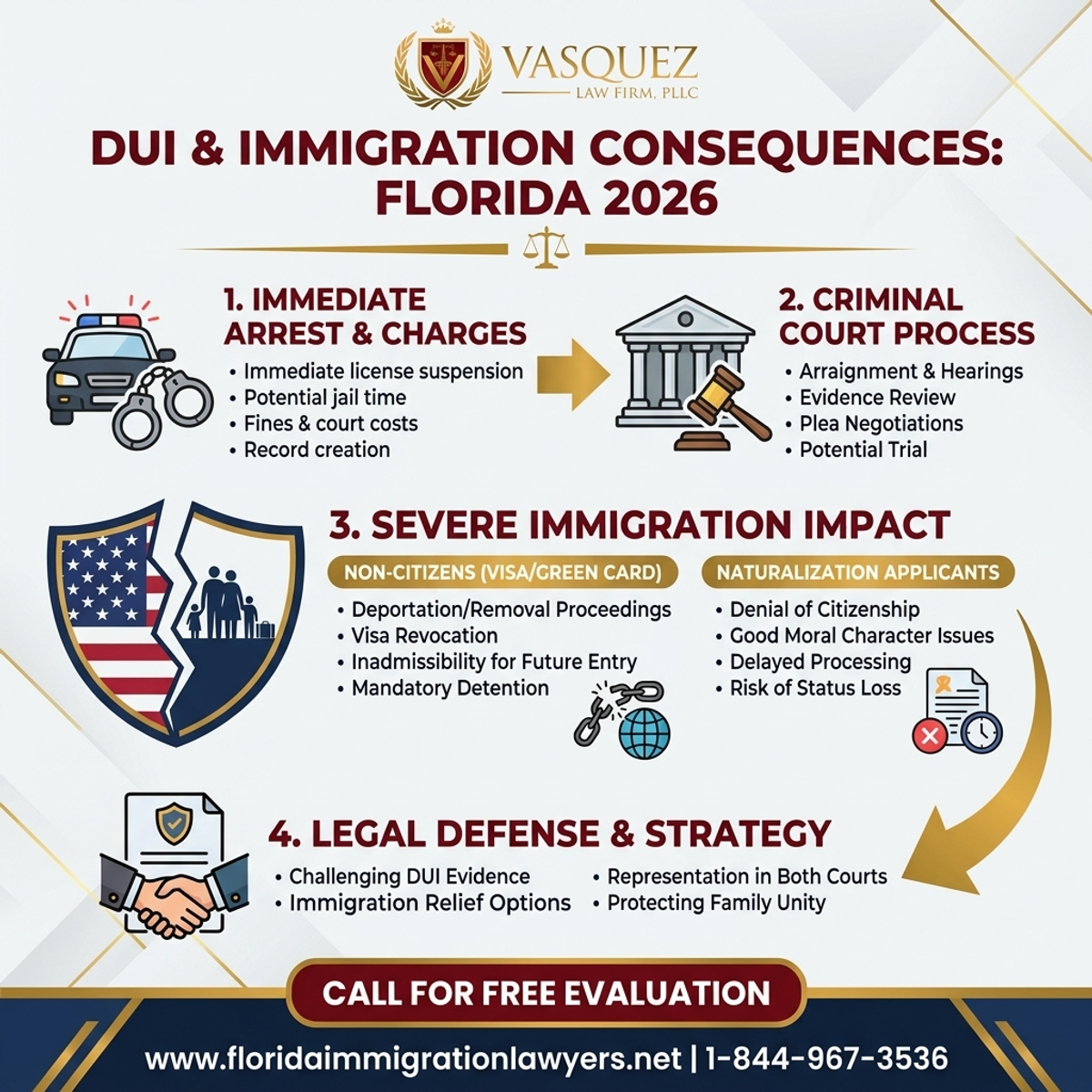
Step-by-Step Process — DUI and Immigration Lawyer: Consequences in Florida 2026
Timeline and Processing Expectations
As of 2026, the timelines for DUI-related immigration cases can be extensive due to court backlogs and the complexity of the law.
| Stage | Typical Timeframe | Notes |
|---|---|---|
| DUI Arrest to Criminal Conviction | Weeks to Months | Varies by jurisdiction and plea bargaining. |
| Immigration Detainer to NTA | Days to Weeks | If ICE is involved, can lead to immediate transfer. |
| Immigration Court Proceedings | Months to Several Years | Significant backlogs in EOIR courts. |
| Relief/Appeal Process | Years | Highly variable depending on the type of relief sought and appellate court load. |
Document Checklist for a DUI-Related Immigration Case
Preparing a thorough set of documents is paramount for any immigration case, especially when a DUI conviction is involved. A comprehensive document checklist helps your attorney build a strong defense and present your case effectively to USCIS or the immigration court.
Here is a list of essential documents you will typically need to gather:
- All Criminal Court Records: This includes the arrest report, charging documents, plea agreement, judgment of conviction, sentencing orders, and any probation records. These are critical for understanding the exact nature of your conviction.
- Police Reports and Affidavits: Detailed accounts from the arresting officers can provide crucial context.
- Proof of Rehabilitation: Certificates of completion for DUI school, substance abuse counseling, Alcoholics Anonymous (AA) meeting attendance, or participation in Mothers Against Drunk Driving (MADD) programs.
- Immigration Documents: Your passport, visa(s), I-94 arrival/departure record, green card (Form I-551), EAD card (Form I-766), and any previous immigration applications or petitions.
- Personal Identification: Birth certificates, marriage certificates, divorce decrees, and any other relevant identity documents for yourself and immediate family members.
- Financial Records: Tax returns, pay stubs, bank statements, and proof of employment to demonstrate financial stability and ties to the community.
- Letters of Support/Affidavits: Character references from employers, community leaders, family, and friends attesting to your good moral character and contributions.
- Medical Records: If the DUI involved any medical conditions or treatments that are relevant to your defense or a request for relief.
- Evidence of Hardship: Documents demonstrating the extreme hardship your removal would cause to qualifying U.S. citizen or LPR family members. This is often crucial for waiver applications under family immigration law.
- Any Correspondence with USCIS or EOIR: Keep all notices, decisions, and communications from immigration authorities.
Costs and Fees Associated with DUI Immigration Cases in 2026
As of 2026, the costs associated with a DUI immigration case in Florida can be substantial, encompassing criminal defense legal fees, immigration legal fees, court costs, and USCIS filing fees, which vary widely depending on case complexity and required relief. These costs can be a significant burden, but investing in experienced legal representation is crucial to protect your future.
Understanding the potential financial outlay can help you prepare:
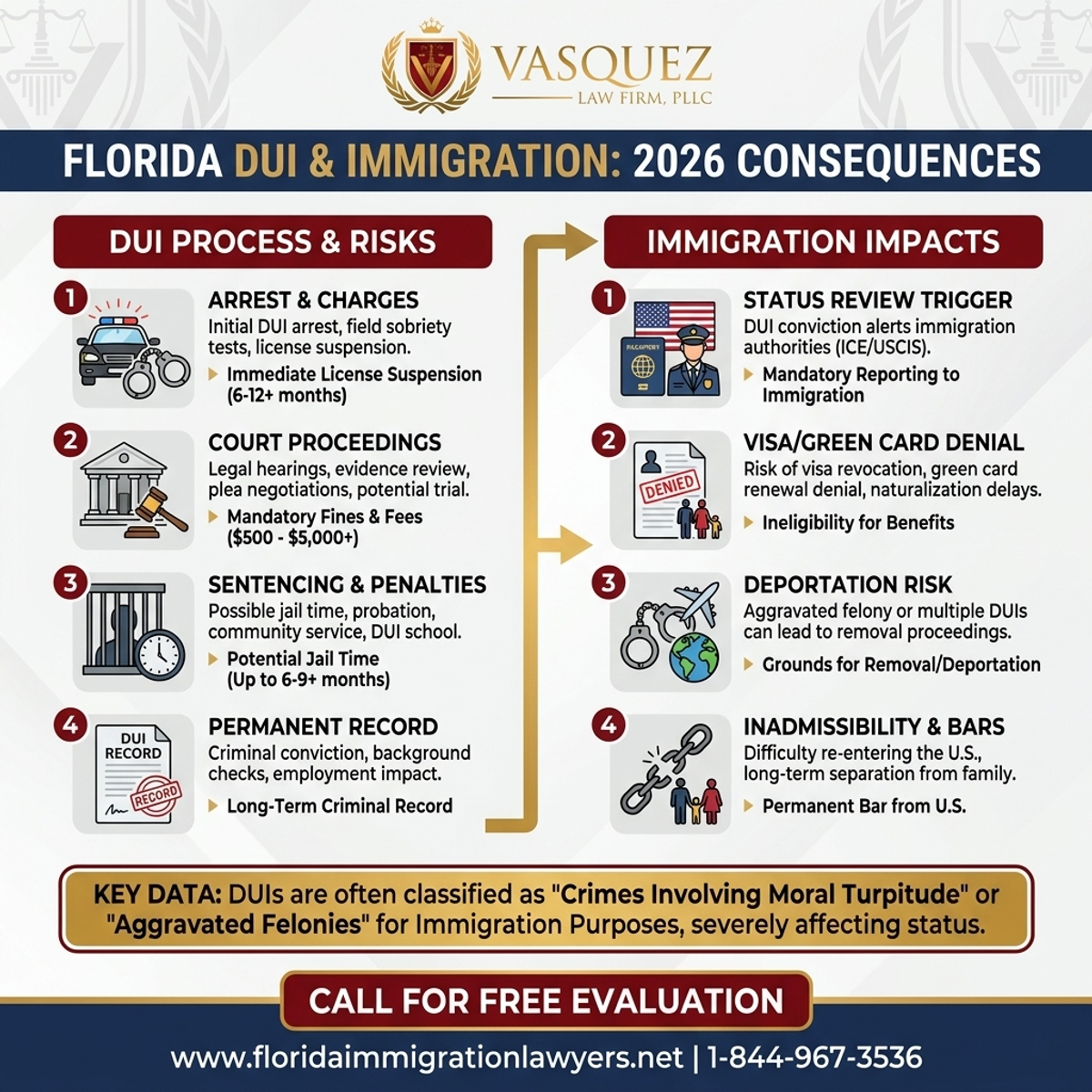
Key Statistics — DUI and Immigration Lawyer: Consequences in Florida 2026
| Item | Typical Fee | Notes |
|---|---|---|
| Criminal Defense Attorney Fees | $3,000 - $15,000+ | Varies significantly based on the severity of the DUI charge, whether it goes to trial, and the attorney's experience. |
| Immigration Attorney Fees | $5,000 - $20,000+ | Depends on the complexity of the immigration case, type of relief sought, and attorney's expertise. Flat fees or hourly rates are common. |
| USCIS Filing Fees | Varies by form | Fees for applications like waivers (e.g., Form I-601), adjustment of status, or other petitions. Check the official USCIS website for current fees. |
| Court Costs and Fines (Criminal) | $500 - $4,000+ | Mandated by Florida courts for DUI convictions, including court fees, victim compensation funds, and other penalties. |
| DUI School/Rehabilitation Programs | $500 - $2,000+ | Costs associated with mandatory DUI education and any recommended substance abuse treatment. |
| Document Translation and Expert Witness Fees | Varies | As needed for non-English documents or specialized testimony. |
What Waivers and Relief Options Are Available for DUI Convictions?
Even with a DUI conviction, there may be avenues for relief or waivers available, though these are highly complex and depend on specific circumstances. It is crucial to explore all potential options with an experienced immigration attorney.
One common form of relief is a Waiver of Inadmissibility. If a DUI conviction renders you inadmissible (e.g., as a CIMT), you might be eligible to apply for a waiver, such as Form I-601, Application for Waiver of Grounds of Inadmissibility. To qualify for most waivers, you typically need to demonstrate extreme hardship to a U.S. citizen or lawful permanent resident spouse, parent, or child. The U.S. Citizenship and Immigration Services (USCIS) Policy Manual provides detailed guidance on waiver eligibility and requirements. Another vital relief option is Cancellation of Removal. Lawful Permanent Residents (LPRs) may be eligible for Cancellation of Removal under INA Section 240A(a) if they meet specific criteria, including continuous physical presence in the U.S. for a certain period, having not been convicted of an aggravated felony, and demonstrating good moral character. Non-LPRs may also seek Cancellation of Removal under INA Section 240A(b) if they meet even stricter requirements, including exceptional and extremely unusual hardship to a qualifying relative. The availability of these waivers and forms of relief depends heavily on the specific nature of your DUI conviction, your immigration history, and your family ties in the U.S. An attorney can assess your eligibility and guide you through the intricate application process, which often involves presenting compelling evidence and arguments to an Immigration Judge.
Do not navigate this complex process alone. Contact Florida Immigration Lawyers today to discuss your case and explore your options for relief. Our experienced team is here to help.
Common Mistakes to Avoid in DUI Immigration Cases
Navigating a DUI charge as an immigrant is fraught with potential pitfalls. Avoiding these common mistakes can significantly improve your chances of a favorable outcome:
- Pleading Guilty Without Understanding Immigration Impact: Many immigrants accept a plea deal in criminal court without realizing the severe, often irreversible, immigration consequences. Always consult an immigration attorney before making any plea.
- Failing to Disclose DUI on Immigration Forms: Omitting a DUI conviction, even if expunged or sealed, on immigration applications (visa, green card, citizenship) can be considered misrepresentation or fraud, leading to denials and further penalties.
- Not Hiring an Immigration Attorney Immediately: Delaying legal counsel means losing valuable time to strategize and potentially mitigate both criminal and immigration outcomes. The sooner you act, the better.
- Leaving Florida Without Consulting Counsel: Traveling internationally after a DUI arrest or conviction, especially if you are a non-citizen, can lead to denial of re-entry or visa revocation at the border.
- Ignoring Immigration Detainers: If ICE places a detainer on you, it means they intend to take you into custody. Ignoring this can lead to prolonged detention and immediate removal proceedings.
- Not Completing DUI School or Probation Requirements: Failure to comply with criminal court orders can exacerbate your situation, reflecting negatively on your good moral character for immigration purposes.
- Assuming a "Minor" DUI Has No Immigration Effect: Even a first-time, seemingly minor DUI can have significant immigration consequences, especially if there are aggravating factors or if you are applying for benefits.
- Failing to Gather All Criminal and Immigration Documents: Incomplete documentation can delay your case, weaken your defense, and lead to adverse decisions. Organize everything diligently.
- Missing Court Dates (Criminal or Immigration): Failure to appear in either criminal or immigration court can result in warrants for your arrest, orders of removal in absentia, and severe negative impacts on your case.
- Relying on Advice from Non-Attorneys: Only licensed attorneys specializing in immigration and criminal law can provide accurate legal advice. Be wary of notarios or unqualified individuals.
When to Call a DUI Immigration Lawyer in Florida
The moment an immigrant is arrested or even questioned about a DUI, it is time to call a specialized DUI immigration lawyer. The intersection of criminal and immigration law is a minefield, and early intervention is key to protecting your rights and future.
You should contact Florida Immigration Lawyers immediately if:
- You have been arrested for a DUI in Florida, regardless of your immigration status.
- You have a past DUI conviction and are planning to apply for a visa, green card, or U.S. citizenship.
- You have received a Notice to Appear (NTA) in immigration court due to a DUI or other criminal offense.
- Your visa has been denied or revoked, or you have been denied entry to the U.S. because of a criminal record.
- You are a green card holder facing deportation proceedings related to a DUI.
- You are a DACA recipient with a DUI conviction and are concerned about your renewal.
- You need to understand your eligibility for waivers or other forms of relief after a DUI.
Our attorneys at Florida Immigration Lawyers possess the dual expertise required to handle both the criminal defense aspects of your DUI and its complex immigration implications. We serve clients across all of Florida, including Central Florida, providing comprehensive legal strategies designed to minimize adverse outcomes and safeguard your right to remain in the U.S.
About Florida Immigration Lawyers
Florida Immigration Lawyers is a leading law firm dedicated to providing comprehensive and compassionate immigration legal services to individuals and families throughout Florida. Our team of experienced attorneys understands the profound impact immigration issues have on our clients' lives and is committed to delivering personalized, results-driven representation. We specialize in a wide array of immigration matters, including family-based immigration, business immigration, deportation defense, asylum, and citizenship applications, with a particular focus on complex cases involving criminal convictions like DUIs.
We pride ourselves on our client-centered approach, offering strategic advice and vigorous advocacy at every stage of the legal process. Available 24/7, we provide free case reviews to help you understand your options and develop a tailored legal strategy. Whether you are in Orlando or elsewhere in Florida, our bilingual team is ready to assist you. Don't let a DUI conviction derail your immigration dreams. Schedule a free consultation with Florida Immigration Lawyers today.
Sources and References
- U.S. Citizenship and Immigration Services (USCIS)
- Executive Office for Immigration Review (EOIR)
- U.S. Department of State
- 8 U.S.C. Chapter 12 - Immigration and Nationality Act (INA) Sections 212(a)(2) (Inadmissibility Grounds) and 237(a)(2) (Deportability Grounds)
- INA Section 101(a)(43) - Definition of Aggravated Felony
- USCIS Policy Manual, Volume 8, Part F - Good Moral Character
- Code of Federal Regulations (CFR) 8 CFR § 212.7 - Waivers of Inadmissibility
Related services: immigration waivers, humanitarian protection programs, DACA renewal and applications, temporary protected status (TPS).
This article provides general legal information and is not intended as legal advice. Every case is unique, and outcomes depend on specific facts and circumstances. Contact an attorney for advice about your particular situation.
Your immigration future is too important to leave to chance. If you are an immigrant facing a DUI in Florida, take immediate action to protect your status. Contact Florida Immigration Lawyers today for a free, confidential case review. Call us at 1-844-YO-PELEO. Se Habla Espanol - Estamos aqui para ayudarle.
Do Not Navigate This Process Alone
Our experienced immigration attorneys are ready to fight for you. Get a free, confidential case review today.
Se Habla Español
Or leave your details and we’ll call you:
Free Evaluation in 24 Hours
Or talk to us right now

AI voice assistant — available 24/7
FreeFrequently Asked Questions

William J. Vásquez
Founding Attorney · Vasquez Law Firm
U.S. Air Force veteran and immigration attorney with years of hands-on U.S. immigration experience. J.D., NCCU School of Law. AILA member. Admitted to the 4th, 5th, and 11th Circuit Courts.
Available 24/7 - Free Evaluations
Reviewed for legal accuracy by William J. Vásquez
Licensed in North Carolina; U.S. immigration is federal practice.
Related Legal Services
Our Florida immigration attorneys can help you with deportation defense, family immigration services and immigration lawyer cost in Florida. Call today at 1-844-YO-PELEO for a free case review.
Related Links
Related Topics
Free Legal Case Review
Discuss your case with our experienced attorneys. We're available 24/7.
Se Habla Español - Estamos aquí para ayudarle.
Related Articles
DUI Immigration Consequences in Florida 2026
A DUI conviction in Florida can have severe immigration consequences, potentially leading to inadmissibility, deportation, or denial of immigration benefits. For non-citizens, a DUI is not just a traffic offense but a serious criminal matter that federal immigration law scrutinizes closely. Factors like multiple offenses, injury, or property damage can escalate a simple DUI to a Crime Involving Moral Turpitude (CIMT) or even an aggravated felony, triggering mandatory detention and removal proceedings. Understanding the specific nature of your Florida conviction and its interpretation under the Immigration and Nationality Act (INA) is crucial. This article outlines how DUIs impact immigration status, the grounds for inadmissibility and deportation, a step-by-step guide to navigating the process, essential documentation, and expected timelines for 2026. We also highlight common mistakes to avoid and when to seek legal counsel from an experienced immigration attorney. Florida Immigration Lawyers offers comprehensive support for individuals facing these challenging situations, providing expert guidance through complex legal landscapes.
Dual Citizenship Lawyer in Florida: What You Need to Know
For Florida residents, the concept of dual citizenship, or holding two passports, offers a compelling blend of opportunities and challenges. While the U.S. generally permits dual nationality, the path to achieving this status requires a meticulous understanding of both U.S. immigration laws and the citizenship policies of your country of origin. This guide explores the definition of dual citizenship, the detailed step-by-step process for U.S. naturalization, and the significant benefits and potential pitfalls involved. We cover essential documentation, typical timelines, and cost considerations for 2026, providing crucial insights for anyone in Orlando, Miami, or across Florida considering this important legal step. Learn about common mistakes to avoid and understand when to seek professional legal counsel to navigate this complex process successfully. Florida Immigration Lawyers is here to provide expert, bilingual support for your dual citizenship journey.
Immigration Lawyer Orlando Free Consultation in Florida
For individuals and families in Orlando, Florida, navigating the complexities of U.S. immigration law requires expert guidance. An immigration lawyer in Orlando offers crucial support for everything from visa applications and green card processes to naturalization and deportation defense. This comprehensive guide details what a free consultation covers, providing a step-by-step overview of immigration pathways, essential document checklists, and expected timelines in 2026. We also highlight common mistakes to avoid, discuss the critical role of legal counsel in deportation and asylum cases, and explain why choosing a local Orlando immigration attorney is beneficial. Florida Immigration Lawyers is dedicated to serving the diverse community of Orlando with compassionate, effective legal solutions, ensuring you receive personalized advice and robust representation for a successful immigration journey.
EAD Advance Parole Combo Card in Florida 2026
For individuals with a pending Form I-485, Application to Register Permanent Residence or Adjust Status, the EAD Advance Parole Combo Card is an essential document. This single card combines the authorization to work legally in the U.S. (Employment Authorization Document - EAD) with permission to travel internationally and re-enter without abandoning your green card application (Advance Parole). This guide from Florida Immigration Lawyers provides a comprehensive overview for applicants in Florida in 2026, covering eligibility, the step-by-step application process, required documents, expected processing times, and associated costs. We also highlight common mistakes to avoid and when to seek legal counsel to ensure a smooth and successful immigration journey. Understanding this vital card is key to maintaining stability while awaiting your permanent residency approval.