Dual Citizenship Lawyer in Florida: Navigating
Facing a citizenship application delay in Florida can be incredibly frustrating, but understanding the N-400 naturalization process and knowing how to respond is key. This guide from Florida Immigration Lawyers explores common reasons for USCIS backlogs and processing delays in 2026, offering practical steps to address them. Learn about the crucial role of a dual citizenship lawyer, what documents you need, and how to prepare for your interview. We cover everything from typical timelines for Florida field offices like Orlando and Miami to common mistakes that can prolong your wait. With Florida-specific insights and advice, we aim to equip you with the knowledge to navigate your path to U.S. citizenship effectively. Contact us for a free consultation to discuss your specific situation.
Quick Answer: Addressing Citizenship Application Delays in Florida
Navigating citizenship application delays in Florida, particularly for the N-400 naturalization process, often involves understanding USCIS backlogs, proper documentation, and potential legal intervention. As of 2026, processing times can vary significantly by field office, but proactive measures and legal guidance can help mitigate prolonged waits. A qualified immigration attorney can assist in identifying the cause of delays, submitting inquiries, and advocating on your behalf to USCIS.
- Common Causes: USCIS backlogs, RFE responses, security checks, interview rescheduling.
- Florida Focus: Processing times vary across Florida USCIS field offices (e.g., Orlando, Miami, Tampa).
- Legal Assistance: An attorney can expedite inquiries and address complex issues.
- Proactive Steps: Ensure all documentation is accurate and complete from the outset.
- Monitoring: Regularly check your case status online through the USCIS website.
The dream of becoming a U.S. citizen is a profound aspiration for many immigrants across Florida, offering stability, new opportunities, and a deeper connection to their adopted home. However, the path to naturalization, especially obtaining U.S. citizenship while retaining original citizenship, commonly referred to as dual citizenship, can be complex and fraught with potential challenges, including unexpected citizenship application delays. For residents in Tallahassee and throughout the Sunshine State, these delays can cause significant stress and uncertainty, impacting personal and professional plans.
Understanding the intricacies of the N-400 naturalization process and knowing how to effectively address a prolonged wait is crucial. This comprehensive guide, brought to you by Florida Immigration Lawyers, aims to demystify the naturalization journey, shed light on common causes of delays, and provide actionable steps for those facing a citizenship application delay in Florida. We will explore the role of a knowledgeable dual citizenship lawyer and offer insights into navigating the USCIS backlog as of 2026. Do not navigate this complex process alone. Call Florida Immigration Lawyers at 1-844-YO-PELEO for a free consultation and let us help you achieve your citizenship goals.
What is the role of a dual citizenship lawyer in Florida?
A dual citizenship lawyer in Florida plays a critical role in guiding individuals through the naturalization process, especially when considering the implications of retaining their original citizenship. This legal professional provides comprehensive advice on U.S. immigration law, specifically the requirements for naturalization under the U.S. Citizenship and Immigration Services (USCIS), and how these intersect with the laws of an applicant's home country regarding dual nationality. Their expertise extends beyond simply filing forms; they ensure that clients understand the legal nuances of maintaining two citizenships, which can vary widely depending on the countries involved.
For those in Florida, including Tallahassee, seeking to naturalize, a dual citizenship lawyer helps to meticulously prepare the N-400 application, gather all necessary supporting documentation, and prepare for the naturalization interview. When delays occur, which is a common concern with USCIS processing, an attorney can act as a diligent advocate. They can submit inquiries to USCIS, escalate cases when appropriate, and represent clients in complex situations, such as responding to Requests for Evidence (RFEs) or addressing issues that arise during background checks. Their goal is to streamline the process, minimize complications, and safeguard the applicant's interests throughout the journey to becoming a U.S. citizen while managing dual nationality considerations.
Why are there citizenship application delays in Florida?
Citizenship application delays in Florida are often a result of a combination of factors, primarily attributed to the significant USCIS backlog and the sheer volume of applications. As of 2026, USCIS field offices across Florida, including major hubs like Orlando, Miami, Tampa, and Jacksonville, continue to experience fluctuating processing times due to staffing levels, budget constraints, and evolving immigration policies. These operational challenges directly impact the N-400 processing timeline for residents, including those in Tallahassee and surrounding areas.
Beyond systemic issues, individual application complexities can also contribute to delays. This includes incomplete applications, missing documentation, or errors that trigger Requests for Evidence (RFEs), which require additional time for applicants to respond and for USCIS to review. Furthermore, enhanced security checks, necessary for national security, can significantly prolong processing, especially if an applicant has a complex travel history or a common name. Changes in administration priorities and the implementation of new procedures can also create bottlenecks. Understanding these underlying causes is the first step in effectively addressing a prolonged citizenship application delay, and a knowledgeable attorney can help pinpoint the specific reasons affecting your case in Florida.
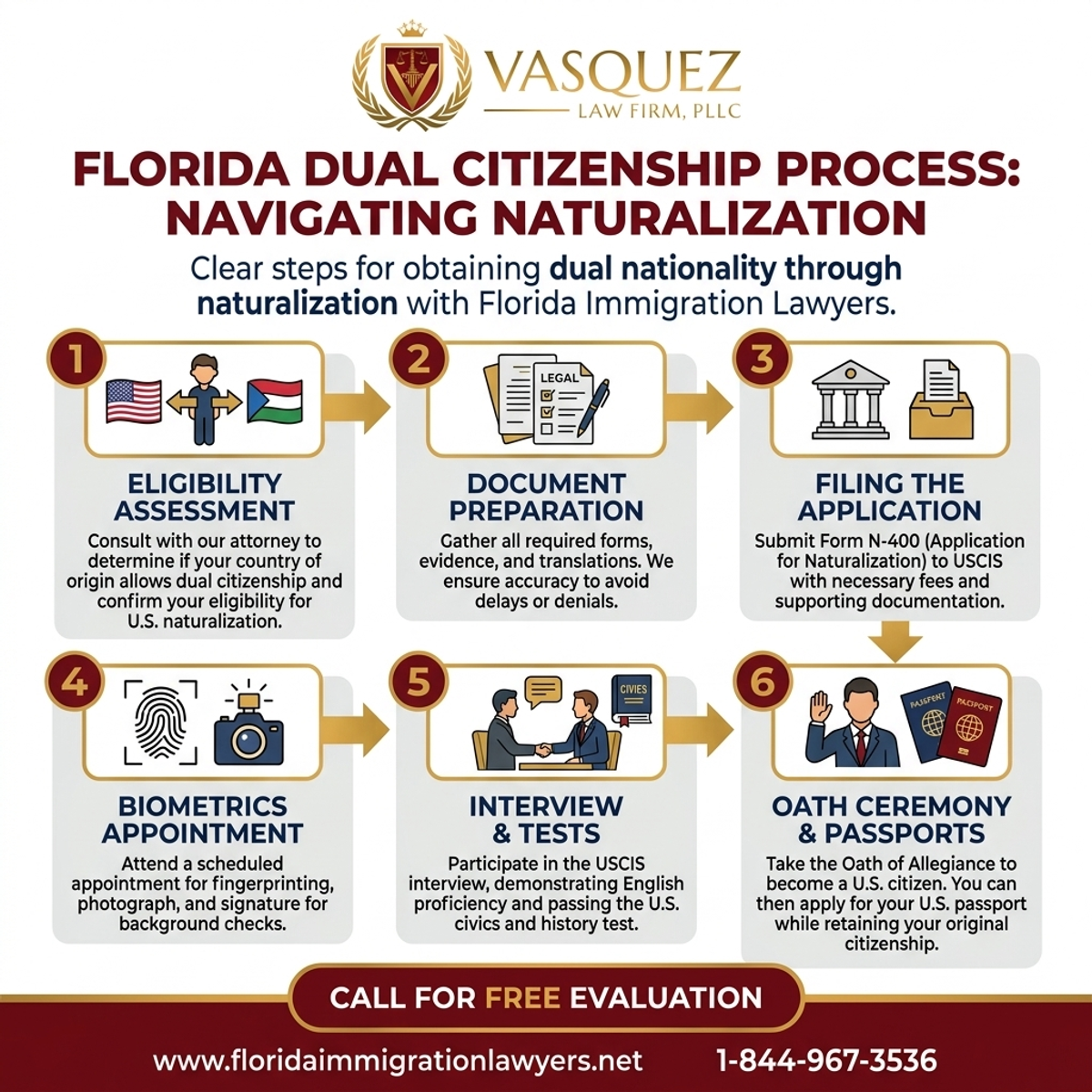
Step-by-Step Process — Dual Citizenship Lawyer in Florida: Navigating Naturalization
How long does N-400 naturalization processing take in 2026?
As of 2026, N-400 naturalization processing times in Florida typically range from 8 to 24 months, though some cases may take longer. These estimates can vary significantly based on the specific USCIS field office (e.g., Miami, Orlando, Tampa) and the complexity of the individual application.
The timeline for naturalization, from filing the N-400 application to taking the Oath of Allegiance, involves several distinct stages, each with its own processing expectations. While USCIS strives for efficiency, the reality of high application volumes and necessary security protocols can lead to variability. For applicants residing in Florida, including those in Tallahassee, it is important to regularly check the official USCIS website for the most current processing times specific to their local field office. These times are estimates and can change without prior notice. Factors such as the accuracy and completeness of your application, your interview performance, and the results of background checks will all influence your individual timeline. Preparing thoroughly and responding promptly to any USCIS requests can help keep your application on track.
Below is a typical timeline for the N-400 naturalization process:
| Stage | Typical Timeframe (as of 2026) | Notes |
|---|---|---|
| File Form N-400 | 0-1 month | Submission of application with all supporting documents and fees. |
| Receive Receipt Notice | 1-2 weeks after filing | Form I-797C, Notice of Action, confirming receipt of application. |
| Biometrics Appointment | 1-2 months after filing | Fingerprints, photo, and signature collection for background checks. |
| Interview Scheduling | 6-18 months after filing | Notice of interview appointment at a local USCIS field office (e.g., Orlando, Miami). |
| Naturalization Interview | 1-2 months after scheduling | Review of application, English and civics test administered. |
| Decision on N-400 | Immediate to 4 months after interview | Approval, denial, or request for more information (RFE). |
| Oath Ceremony Scheduling | 1-4 months after approval | Notice of Oath of Allegiance ceremony. |
| Oath Ceremony | 1-2 months after scheduling | Final step to become a U.S. citizen, receive Certificate of Naturalization. |
What documents are needed for a naturalization application?
A complete naturalization application requires a meticulous collection of personal and immigration-related documents. Submitting a comprehensive package from the outset is vital to avoid a citizenship application delay. Generally, applicants will need to provide their Form N-400, Application for Naturalization, along with several key supporting documents. These documents help USCIS verify your eligibility and ensure all legal requirements are met. It is crucial to provide certified copies where required and bring originals to your interview.
An incomplete submission is a primary cause of RFEs and subsequent processing delays. Therefore, carefully reviewing the USCIS instructions and preparing thoroughly is essential. For residents across Florida, including those in Tallahassee, compiling this checklist can feel overwhelming, but an experienced immigration attorney can guide you through each item, ensuring accuracy and completeness. This proactive approach significantly reduces the risk of unnecessary delays in your N-400 processing.
Here is a general checklist of documents typically required:
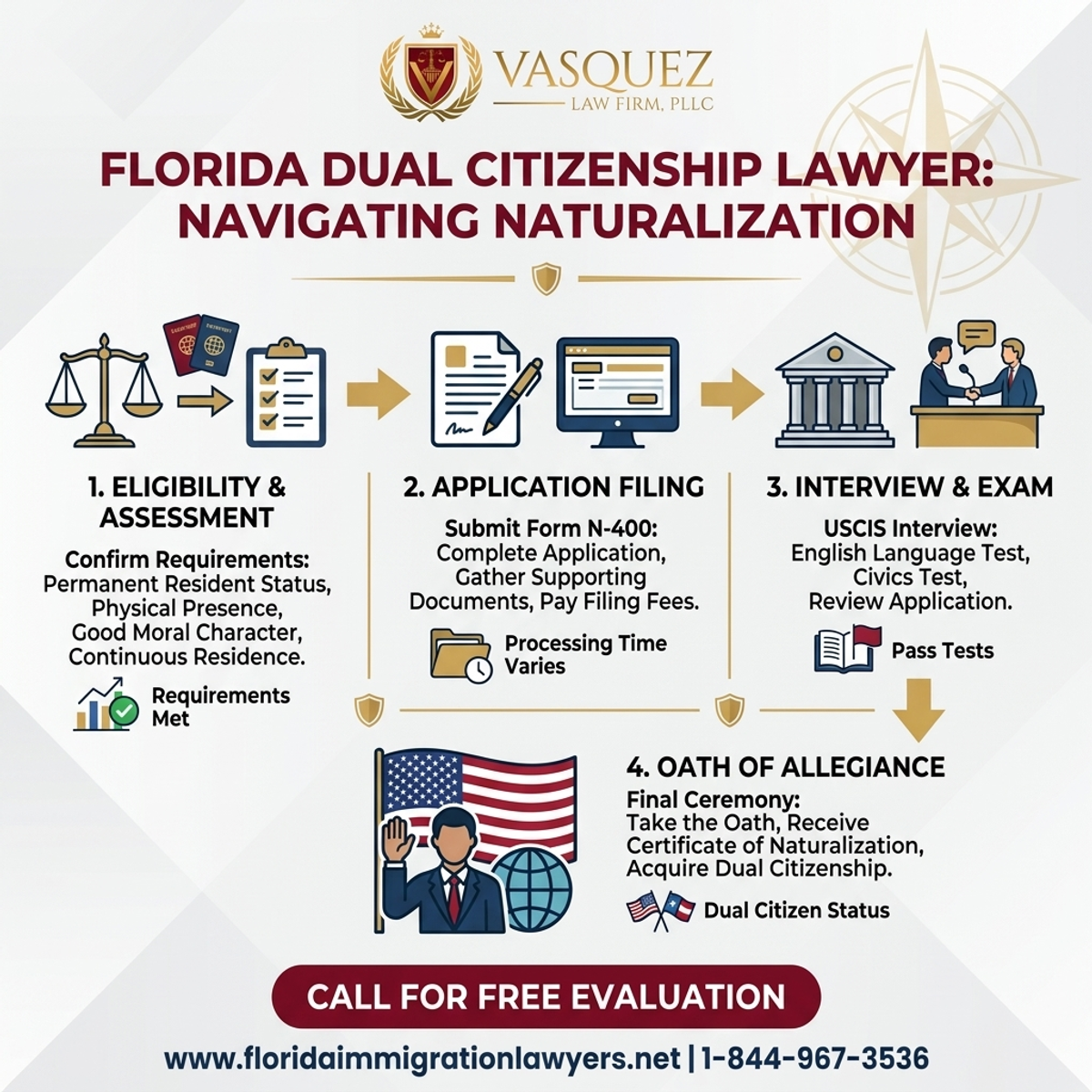
Key Statistics — Dual Citizenship Lawyer in Florida: Navigating Naturalization
- Form N-400, Application for Naturalization
- Photocopies of both sides of your Permanent Resident Card (Green Card)
- Photocopies of your current and expired passports
- Two passport-style photos
- Photocopies of your marriage certificate (if applicable)
- Photocopies of divorce decrees or death certificates for previous spouses (if applicable)
- Photocopies of birth certificates for your children (if applicable)
- Proof of selective service registration (for males 18-26 years old)
- Certified court dispositions for any arrests or convictions (even if expunged)
- Proof of payment of child support or alimony (if applicable)
- Tax returns for the past five years (or three years if married to a U.S. citizen)
- Proof of continuous residence in the U.S. (e.g., utility bills, leases, employment records)
- Travel records outside the U.S.
- Form I-94 arrival/departure records
- Any other documents requested by USCIS
What are the costs associated with a naturalization application?
The costs associated with a naturalization application primarily include the USCIS filing fee for Form N-400 and the biometrics fee. As of 2026, these fees are subject to change, and it is crucial to check the most current fee schedule on the USCIS website before submitting your application. While USCIS fees are standard across the U.S., additional costs can arise depending on individual circumstances, which can impact residents in Florida, including those in Tallahassee.
Beyond the mandatory government fees, applicants might incur expenses for obtaining necessary documents, such as certified copies of birth certificates, marriage licenses, or court records. Translation services for foreign-language documents can also add to the overall cost. Furthermore, many applicants choose to hire an immigration attorney to assist with their N-400 application, which involves legal fees. While an attorney's services represent an additional expense, their expertise can be invaluable in ensuring the application is correctly prepared, minimizing the risk of errors and potential citizenship application delays, and advocating on your behalf. This investment can often save time and prevent costly mistakes in the long run.
| Item | Typical Fee (as of 2026, subject to change) | Notes |
|---|---|---|
| Form N-400 Filing Fee | Check USCIS website | Mandatory fee for processing your naturalization application. |
| Biometrics Services Fee | Check USCIS website | Mandatory fee for fingerprinting and background checks. |
| Attorney Fees | Varies | Cost for legal assistance in preparing and filing the N-400, and addressing delays. |
| Document Procurement | Varies | Costs for obtaining birth certificates, marriage licenses, court records, etc. |
| Translation Services | Varies | If any supporting documents are not in English, certified translations are required. |
| Passport Photos | $15-$25 | Two identical passport-style photos are required. |
Steps to Address a Citizenship Application Delay
When faced with a citizenship application delay, it's essential to take proactive and informed steps to resolve the issue. Waiting indefinitely without action can prolong your naturalization journey. For individuals in Florida, including those using the Orlando or Miami USCIS field offices, understanding the available avenues for inquiry and escalation is crucial. These steps can help you gain clarity on your case status and potentially expedite the N-400 processing.
Before initiating any inquiries, ensure you have your USCIS receipt number readily available. This number is essential for tracking your case. Remember that legal counsel can significantly enhance your efforts in addressing delays. An experienced attorney from Florida Immigration Lawyers can interpret USCIS responses, prepare formal inquiries, and navigate complex administrative procedures on your behalf, especially for cases that have been pending for an unreasonable amount of time or those facing specific challenges like asylum-related complexities or deportation defense implications.
- Check USCIS Online Case Status: Your first step should always be to use the USCIS Case Status Online tool with your receipt number. This provides real-time updates on your application's progress.
- Review Processing Times: Compare your current waiting time against the published processing times for your specific USCIS field office (e.g., Tampa, Jacksonville) and form type (N-400) on the USCIS website.
- Submit an E-Request: If your case is outside normal processing times, you can submit an online inquiry (e-Request) to USCIS. This can prompt them to review your case.
- Call the USCIS Contact Center: For more complex issues or if you haven't received a satisfactory response from an e-Request, you can call the USCIS Contact Center. Be prepared with your case information and a clear explanation of your delay.
- Contact the USCIS Ombudsman: If you have exhausted other avenues and your case remains unduly delayed, you may contact the Office of the Citizenship and Immigration Services Ombudsman. This office assists individuals and employers in resolving problems with USCIS.
- Request a Congressional Inquiry: Your U.S. Representative or Senator can often assist constituents with immigration issues. They can submit an inquiry to USCIS on your behalf, which can sometimes lead to faster responses.
- File a Mandamus Action: In rare cases of extreme, unreasonable delay, and after exhausting all administrative remedies, a lawsuit known as a Writ of Mandamus can be filed in federal court. This legal action compels USCIS to make a decision on your application. This is a significant step and should only be pursued with experienced legal counsel.
Navigating the Naturalization Interview and Oath Ceremony
The naturalization interview is a pivotal stage in the N-400 processing, typically conducted at a USCIS field office in Florida, such as those in Orlando, Miami, or Tampa. During the interview, a USCIS officer will review your application, verify your eligibility, and test your knowledge of English and U.S. civics. It's an opportunity for you to demonstrate your commitment to U.S. values and legal requirements. Being well-prepared is essential to avoid potential complications or a citizenship application delay at this critical juncture.
Preparation should include reviewing your N-400 application thoroughly, studying for the English reading, writing, and speaking tests, and familiarizing yourself with the 100 civics questions. An immigration attorney can conduct mock interviews, helping you feel confident and ready. If your application is approved, the final step is the Oath of Allegiance ceremony. This solemn event formalizes your U.S. citizenship, where you pledge allegiance to the United States. Following the ceremony, you will receive your Certificate of Naturalization, marking the culmination of your journey. Even after approval, sometimes there can be delays in scheduling the oath ceremony. If such a delay occurs, contacting USCIS or consulting with your attorney is advisable.
Common Mistakes to Avoid in Your Naturalization Application
Avoiding common pitfalls in the naturalization process is paramount to preventing a citizenship application delay and ensuring a smooth journey to U.S. citizenship. Many applicants, including those in Florida, inadvertently make errors that can lead to RFEs, denials, or prolonged N-400 processing times. Being aware of these mistakes and taking proactive steps can save you significant time and stress.
- Incomplete or Inaccurate Application: Failing to fill out every section of Form N-400 completely and accurately is a frequent error. Even minor omissions can lead to delays or rejection. Ensure all questions are answered truthfully and thoroughly.
- Missing Supporting Documents: Not including all required supporting documents, or failing to provide certified translations for foreign-language documents, will inevitably cause a citizenship application delay. Always double-check the USCIS checklist.
- Failure to Update USCIS on Address Changes: If you move, you must notify USCIS within 10 days using Form AR-11. Missing important notices due to an outdated address can severely impact your case.
- Lack of Continuous Residence Proof: Not adequately documenting your continuous residence in the U.S. for the required period (typically 5 years or 3 years if married to a U.S. citizen) can raise red flags. Keep meticulous records of your physical presence.
- Not Disclosing Criminal History: Even minor arrests, citations, or expunged records must be disclosed. Failure to do so, or providing false information, can lead to a denial and even deportation proceedings. Honesty is critical.
- Poor English Proficiency or Civics Knowledge: Inadequate preparation for the English and civics tests during the interview can result in a failed interview and necessitate rescheduling, adding to your N-400 processing time.
- Travel Outside the U.S. for Extended Periods: Excessive travel abroad can break your continuous residence requirement, making you ineligible for naturalization or causing significant delays. Consult an attorney before long trips.
- Failure to Register for Selective Service: Male applicants between the ages of 18 and 26 who resided in the U.S. must register for Selective Service. Failure to do so can be a bar to naturalization.
- Not Paying Taxes or Filing Incorrectly: Demonstrating good moral character includes fulfilling tax obligations. Any issues with tax compliance can lead to questions or denial.
- Ignoring USCIS Notices: Failing to respond promptly to Requests for Evidence (RFEs) or interview notices can lead to your application being denied or closed. Always open and act on USCIS mail immediately.
When to Call a Lawyer for Your Citizenship Application in Florida
While some naturalization cases are straightforward, many involve complexities where the expertise of an immigration lawyer becomes invaluable, especially when facing a citizenship application delay. For residents throughout Florida, including those in Tallahassee, Jacksonville, or Miami, knowing when to seek legal counsel can significantly impact the success and timeline of their N-400 processing. An attorney from Florida Immigration Lawyers can provide personalized guidance and advocacy, helping you navigate the intricate requirements of citizenship.
You should consider calling an attorney if:
- Your application has been pending significantly longer than the published USCIS processing times for your field office.
- You have received a Request for Evidence (RFE) or a Notice of Intent to Deny (NOID).
- You have a criminal record, even if it's minor or expunged, as this can affect your good moral character requirement.
- You have complex travel history or extended stays outside the U.S.
- You have previously been denied naturalization or have had immigration issues.
- You are unsure about your eligibility for naturalization or have questions about dual citizenship implications.
- You have a medical condition that requires an exception to the English or civics test.
- You are concerned about your ability to pass the naturalization interview or understand legal questions.
- You are facing deportation proceedings or have any other current immigration court matters.
In these scenarios, the nuanced understanding of immigration law (e.g., INA Section 316, 8 U.S.C. § 1427) that an experienced lawyer possesses can be the difference between approval and denial, or between a swift process and a prolonged citizenship application delay. Do not hesitate to seek professional help.
About Florida Immigration Lawyers
Florida Immigration Lawyers is an immigration law firm dedicated to serving individuals and families across the entire state of Florida. With a deep understanding of U.S. immigration laws and a commitment to our clients, we provide comprehensive legal services for a wide range of immigration matters, including naturalization, family immigration, asylum, deportation defense, and business immigration. Our experienced attorneys are passionate about helping you achieve your American dream, offering personalized attention and strategic legal solutions.
We understand the challenges and anxieties that come with navigating the immigration system, especially when facing a citizenship application delay. Our firm is available 24/7 to provide support and guidance, ensuring you have access to legal advice when you need it most. We offer free consultations to discuss your case and outline the best path forward. Choose Florida Immigration Lawyers for compassionate, effective, and results-driven representation. Visit our website or call us at 1-844-YO-PELEO.
Sources and References
- U.S. Citizenship and Immigration Services (USCIS)
- USCIS Form N-400, Application for Naturalization
- Executive Office for Immigration Review (EOIR)
- 8 U.S.C. Chapter 12 - Immigration and Nationality Act (INA)
- 8 U.S.C. § 1427 - Requirements for naturalization
- 8 CFR Part 316 - General Requirements for Naturalization
Related services: citizenship test preparation, dual citizenship guidance, family-based immigration.
This article provides general legal information and is not intended as legal advice. Every case is unique, and outcomes depend on specific facts and circumstances. Contact an attorney for advice about your particular situation.
Don't let a citizenship application delay jeopardize your future. Take control of your naturalization journey with legal assistance. Contact Florida Immigration Lawyers today for a free consultation. Call us at 1-844-YO-PELEO. Se Habla Espanol - Estamos aqui para ayudarle.
Do Not Navigate This Process Alone
Our experienced immigration attorneys are ready to fight for you. Get a free, confidential case review today.
Se Habla Español
Or leave your details and we’ll call you:
Free Evaluation in 24 Hours
Or talk to us right now
AI voice assistant — available 24/7
FreeFrequently Asked Questions

William J. Vásquez
Founding Attorney · Vasquez Law Firm
U.S. Air Force veteran and immigration attorney with years of hands-on U.S. immigration experience. J.D., NCCU School of Law. AILA member. Admitted to the 4th, 5th, and 11th Circuit Courts.
Available 24/7 - Free Evaluations
Reviewed for legal accuracy by William J. Vásquez
Licensed in North Carolina; U.S. immigration is federal practice.
Related Legal Services
Our Florida immigration attorneys can help you with family immigration services, immigration lawyer cost in Florida and experienced immigration attorneys. Call today at 1-844-YO-PELEO for a free case review.
Related Links
Related Topics
Free Legal Case Review
Discuss your case with our experienced attorneys. We're available 24/7.
Se Habla Español - Estamos aquí para ayudarle.
Related Articles
EB-5 Investor Green Card in Florida: A 2026 Guide
Explore how to obtain an EB-5 investor green card in Florida. Learn about the investment requirements, processes, and benefits of participating in this program. Discover how Florida's economic landscape can be an ideal setting for your investment. Contact Florida Immigration Lawyers for a free case review.
Certificate of Eligibility for Expungement in Florida 2026
For non-U.S. citizens in Florida, understanding how a state expungement impacts immigration status is critical. A certificate of eligibility for expungement in Florida allows a criminal record to be sealed or expunged under state law. However, federal immigration agencies often disregard such state-level relief, still considering the original criminal offense as a conviction for immigration purposes. This can have severe implications for visa applications, green card eligibility, naturalization, and even lead to deportation. This guide clarifies the Florida expungement process, its limited effect on federal immigration law, and key steps to protect your status in 2026. Learn about common mistakes, required documents, timelines, and when to seek expert legal counsel from Florida Immigration Lawyers to navigate these complex issues effectively.
Immigration Lawyer Orlando Free Consultation in Florida
For individuals and families in Orlando, Florida, navigating the complexities of U.S. immigration law requires expert guidance. An immigration lawyer in Orlando offers crucial support for everything from visa applications and green card processes to naturalization and deportation defense. This comprehensive guide details what a free consultation covers, providing a step-by-step overview of immigration pathways, essential document checklists, and expected timelines in 2026. We also highlight common mistakes to avoid, discuss the critical role of legal counsel in deportation and asylum cases, and explain why choosing a local Orlando immigration attorney is beneficial. Florida Immigration Lawyers is dedicated to serving the diverse community of Orlando with compassionate, effective legal solutions, ensuring you receive personalized advice and robust representation for a successful immigration journey.
Fiance Visa in Miami: Your 2026 Florida K-1 Guide
For U.S. citizens in Florida, including Miami and Orlando, who wish to bring their foreign fiance(e) to the U.S. for marriage, the K-1 fiance visa is the primary immigration pathway. This comprehensive guide details the K-1 visa process for 2026, covering eligibility requirements for both the petitioner and beneficiary, the necessary documentation, expected timelines, and associated costs. We break down the stages from filing Form I-129F with USCIS to consular processing and the subsequent Adjustment of Status after marriage. Learn about common mistakes to avoid and understand when to seek professional legal assistance. Florida Immigration Lawyers offers expert guidance to help you navigate this complex journey, ensuring a smooth and successful application. Call us for a free case review.