Understanding Dual Citizenship in Florida: What You Need to
Discover the benefits and process of obtaining dual citizenship in Florida. Learn about naturalization, legal considerations, and common pitfalls to avoid. Call Florida Immigration Lawyers for expert guidance.

Dual citizenship allows individuals to hold citizenship in two countries simultaneously. This can provide benefits like travel flexibility and cultural connections. In Florida, many residents pursue dual citizenship through naturalization while maintaining ties to their home countries. Key considerations include understanding the legal implications, eligibility requirements, and potential tax obligations. Always consult with an immigration lawyer to navigate the complexities effectively.
- Dual citizenship involves holding passports from two countries.
- Naturalization is a common pathway to dual citizenship.
- Legal advice is crucial to understand implications.
- Florida offers unique opportunities for dual citizens.
Introduction
Imagine being able to seamlessly travel between two countries, embrace diverse cultures, and enjoy the benefits of citizenship in both places. This is the reality for those holding dual citizenship. In Miami, Florida, a vibrant hub of multiculturalism, many residents explore this opportunity to enhance their global presence. This article delves into the intricacies of dual citizenship, focusing on the pathways available in Florida, the legal considerations, and the practical steps involved.
Whether you're considering naturalization or already have ties to another country, understanding dual citizenship can open doors to new opportunities. Call Florida Immigration Lawyers at 1-844-967-3536 for a free consultation.
Dual citizenship is more than just holding two passports; it represents a profound connection to multiple nations, offering a unique blend of rights and responsibilities. For residents of Florida, a state renowned for its international population and strong economic ties to Latin America and beyond, the pursuit of dual nationality is a common and often beneficial endeavor. It allows individuals to maintain deep cultural roots while fully integrating into American society.
Navigating the complex legal frameworks of two countries requires careful planning and expert guidance. From understanding the specific eligibility criteria for naturalization in the U.S. to ensuring compliance with the laws of your country of origin, every step is crucial. This guide aims to demystify the process, providing a comprehensive overview for anyone in Florida considering or actively pursuing dual citizenship, highlighting the critical role of experienced legal counsel like Florida Immigration Lawyers.
Understanding Dual Citizenship
Dual citizenship, or dual nationality, means being a citizen of two countries at once. In the United States, this is possible under certain circumstances. Florida, with its diverse population and international ties, is a common place for dual citizens. The benefits include the right to work, live, and study in both countries, as well as the ability to carry two passports.
The path to dual citizenship often involves naturalization, a legal process where a non-citizen voluntarily becomes a U.S. citizen. This requires meeting specific eligibility criteria, such as residency requirements and demonstrating good moral character. However, not all countries permit dual citizenship, so it's crucial to check both U.S. and foreign laws.
The U.S. government generally permits dual nationality, meaning that becoming a U.S. citizen does not automatically require you to renounce your previous citizenship. This policy allows individuals to maintain their heritage and connections abroad while fully embracing their new status in the United States. Many individuals acquire dual citizenship through various avenues, including birth in a foreign country to U.S. citizen parents, marriage to a U.S. citizen, or through the naturalization process, which is the most common route for those residing in Florida.
Beyond the practical advantages of travel and residency, dual citizenship offers a broader scope of rights and protections. This can include the ability to own property in both nations without foreign ownership restrictions, participate in political processes, and access social services. For families, it ensures children can inherit citizenship from both parents, fostering a stronger sense of global identity. Understanding these multifaceted benefits is key to appreciating the value of pursuing dual nationality, and Florida Immigration Lawyers can help you explore how these advantages apply to your specific situation.
Steps to Achieve Dual Citizenship in Florida
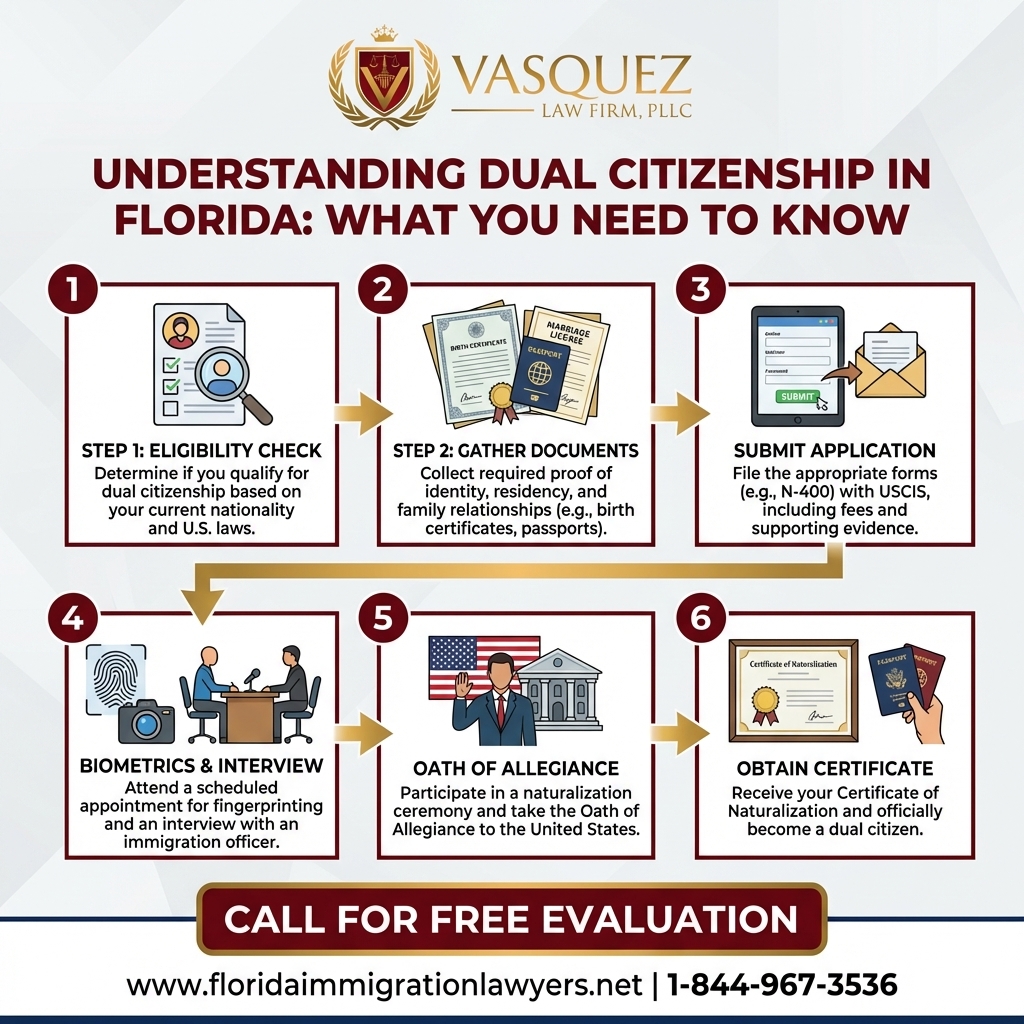
Achieving dual citizenship in Florida typically involves a structured process, primarily centered around U.S. naturalization. This journey requires meticulous attention to detail and adherence to specific legal requirements from both the United States and your country of origin. Successful navigation of these steps is crucial for a smooth transition to dual nationality.
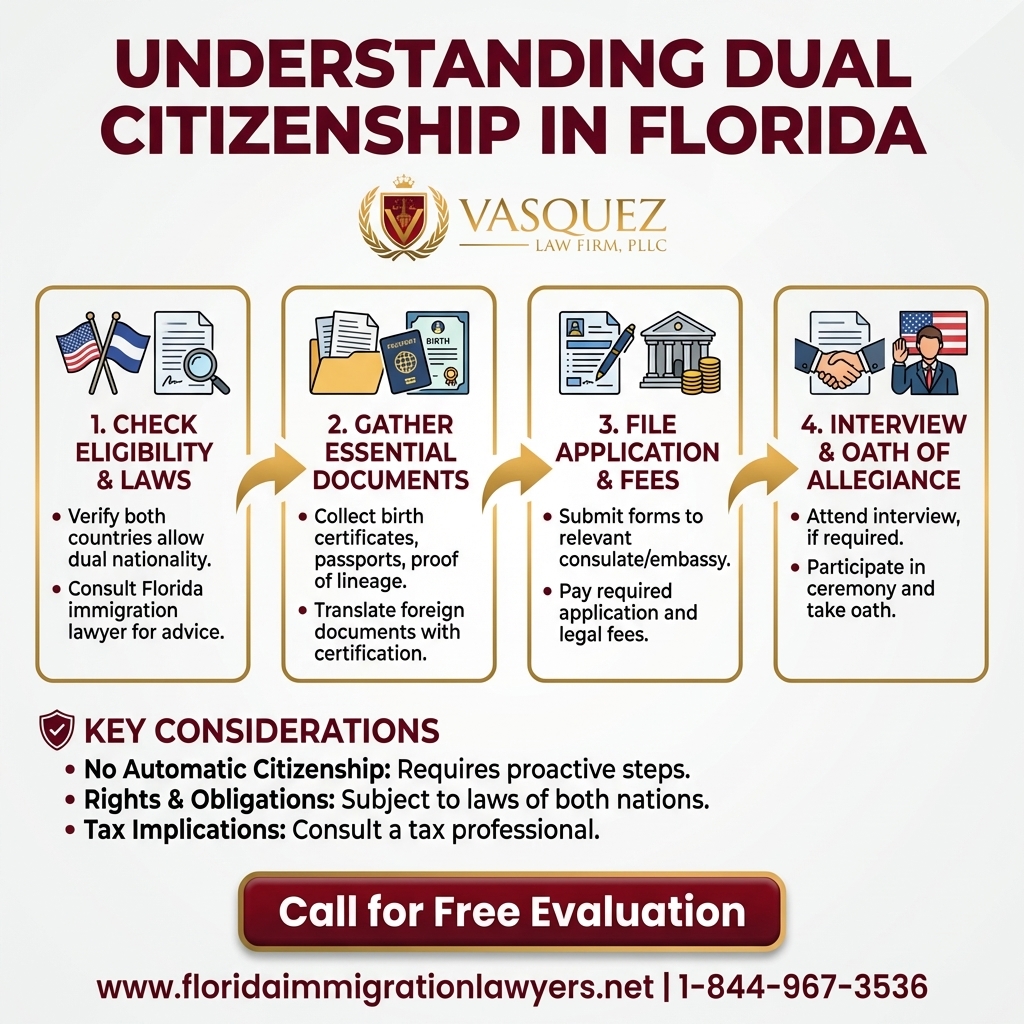
- Determine Eligibility: Research the requirements for dual citizenship in both the U.S. and your home country. Consult the USCIS for U.S. naturalization criteria. This initial step is paramount. You must meet the residency, physical presence, and good moral character requirements for U.S. naturalization. Simultaneously, verify if your home country's laws allow dual nationality, as some nations require renunciation of prior citizenship upon acquiring a new one.
- Apply for Naturalization: Complete Form N-400 and submit it with the necessary documents and fees. This form is a crucial step in the naturalization process. Ensure all sections are accurately filled out and supported by comprehensive documentation, including proof of residency, tax records, and personal identification. Incomplete or incorrect submissions can significantly delay your application.
- Prepare for the Interview: Once your application is processed, attend a biometrics appointment, followed by an interview where your knowledge of U.S. history and government will be tested. The interview is a critical stage where an USCIS officer will verify the information in your N-400 application, assess your English language proficiency, and test your understanding of U.S. civics. Thorough preparation is essential for success.
- Oath of Allegiance: If approved, you will attend a naturalization ceremony to take the Oath of Allegiance, finalizing your U.S. citizenship. This solemn ceremony formally inducts you as a U.S. citizen. Upon taking the oath, you will receive your Certificate of Naturalization, which serves as proof of your U.S. citizenship.
- Manage Dual Citizenship Obligations: Understand the tax and legal obligations of holding dual citizenship in both countries. This includes potential tax filing requirements in both nations and any military service obligations. Consulting with a tax specialist alongside your immigration lawyer is highly recommended to manage these complexities effectively and avoid future legal issues.
Throughout these steps, having the guidance of an experienced legal team like Florida Immigration Lawyers can make a significant difference. From initial eligibility assessment to preparing for your interview and understanding post-citizenship obligations, their expertise ensures that your application is robust and your rights are protected. Call 1-844-967-3536 for personalized assistance.
Document Checklist for Dual Citizenship
A comprehensive and accurate document submission is vital for a successful dual citizenship application, particularly during the U.S. naturalization phase. Meticulously gathering and organizing all required paperwork will prevent delays and demonstrate your eligibility to immigration authorities. This checklist outlines the primary documents needed, but always be prepared for additional requests based on your specific circumstances.
- Completed Form N-400
- Proof of residency in the U.S. (e.g., utility bills, leases, mortgage statements for the required period)
- Two passport-style photos
- Tax records for the past five years (or three years if married to a U.S. citizen)
- Marriage certificates or divorce decrees, if applicable
- Documents supporting your eligibility for citizenship in your home country (e.g., birth certificate, national ID, existing passport)
- Certified translations of any foreign documents
- Records of any arrests, citations, or convictions, even if expunged
- Proof of Selective Service registration, if applicable for males aged 18-26
Ensuring every document is accurate, up-to-date, and properly translated (if applicable) is a critical component of the application process. Any discrepancies or missing information can lead to requests for evidence (RFEs) or even denial. Florida Immigration Lawyers can assist you in compiling this extensive documentation, ensuring everything is in order before submission, significantly enhancing your application's strength and efficiency.
Timeline and Processing Expectations
The process of obtaining dual citizenship in Florida can vary depending on individual circumstances. Typically, the naturalization process takes 6 to 12 months. This includes time for application review, background checks, and the scheduling of interviews and ceremonies. It is important to be patient and prepared for potential delays.
Maintaining open communication with immigration officials and keeping track of your application status through the USCIS portal can help ensure a smoother process.
Several factors can influence the overall timeline, including the specific USCIS field office processing your application, the volume of applications they are handling, and the complexity of your individual case. For example, cases involving extensive travel history or minor criminal infractions may require additional scrutiny and therefore take longer. While the 6-12 month estimate is a general guideline, some cases can extend beyond this, making realistic expectations crucial.
To mitigate potential delays, it is paramount to submit a complete and error-free application from the outset. Responding promptly and thoroughly to any requests for additional evidence (RFEs) from USCIS can also help keep your application on track. Florida Immigration Lawyers are adept at helping clients manage these timelines, providing proactive communication and strategic advice to navigate potential bottlenecks and keep the process moving forward efficiently.
Cost Factors and Fee Breakdown
While the costs associated with dual citizenship can vary, applicants should budget for application fees, legal assistance, and potential travel expenses for interviews and ceremonies. The USCIS charges fees for processing Form N-400, and additional costs may arise for obtaining necessary documentation or translating foreign documents.
Engaging an immigration attorney can help navigate these costs effectively, ensuring that you are well-prepared for any financial obligations that arise during the process.
The primary direct cost is the USCIS filing fee for Form N-400, which covers the application processing and biometrics services. This fee is subject to change, so always check the latest amount on the USCIS website. Beyond this, applicants should anticipate expenses for obtaining certified copies of documents, professional translations of foreign-language records, and potentially travel costs for biometrics appointments, interviews, and the naturalization ceremony, especially if they reside far from a USCIS office.
Investing in professional legal assistance, such as that provided by Florida Immigration Lawyers, is a significant cost factor but often proves invaluable. An attorney's fees cover expert advice, thorough application review, document preparation, and representation, which can prevent costly mistakes, delays, or even denials that might necessitate re-filing or appeals. While there are upfront costs, the long-term benefits of ensuring a smooth and successful dual citizenship process often outweigh the initial investment, providing peace of mind and safeguarding your future.
Do not navigate this process alone. Contact Florida Immigration Lawyers today.
Frequently Asked Questions (FAQs)
What are the main benefits of dual citizenship?
Dual citizenship provides numerous advantages, including enhanced travel flexibility with two passports, the ability to live, work, and study in both countries, and stronger cultural ties. It can also offer economic benefits, such as property ownership rights and investment opportunities, along with political participation in both nations. This status often provides a sense of security and belonging, allowing individuals to fully embrace their diverse heritage without limitations.
Can I lose my U.S. citizenship if I become a citizen of another country?
No, generally not. The U.S. government does not prohibit dual nationality, and you typically won't lose your U.S. citizenship simply by becoming a citizen of another country. However, if you *intend* to relinquish your U.S. citizenship when acquiring foreign citizenship, then it could be lost. Such intent is rarely presumed, but it's crucial to understand the nuances. Consulting with Florida Immigration Lawyers can clarify specific situations.
Are there any disadvantages to dual citizenship?
While dual citizenship offers many benefits, potential disadvantages include increased tax obligations in both countries, especially for U.S. citizens who are taxed on worldwide income regardless of residency. There might also be military service obligations in your other country, or limitations on holding certain government positions. Navigating conflicting legal systems can be complex, making expert legal advice essential to understand and mitigate these challenges effectively.
Do I have to pay taxes in both countries?
U.S. citizens and green card holders are generally subject to U.S. income tax on their worldwide income, regardless of where they live. This means dual citizens often have tax obligations in both countries. However, tax treaties between the U.S. and many other nations, along with provisions like the Foreign Earned Income Exclusion, can help prevent double taxation. It's vital to consult a tax professional specializing in international taxation alongside your immigration lawyer.
What if my home country doesn't allow dual citizenship?
This is a critical consideration. If your home country does not permit dual citizenship, you might be required to renounce your original citizenship upon acquiring U.S. citizenship. Failing to understand your home country's laws could lead to unintended loss of citizenship there. It's imperative to thoroughly research the laws of both countries involved and seek guidance from Florida Immigration Lawyers to navigate these complex legal requirements properly.
How long does the entire dual citizenship process typically take?
The duration of the dual citizenship process largely depends on the naturalization timeline, which for U.S. citizenship typically ranges from 6 to 18 months, sometimes longer due to varying USCIS workloads and individual case complexities. This includes application processing, biometrics, interviews, and the oath ceremony. Factors like complete documentation and prompt responses to requests can expedite the process, but patience and professional guidance from Florida Immigration Lawyers are key.
Common Mistakes to Avoid
Embarking on the journey to dual citizenship is a significant undertaking, and avoiding common pitfalls can save you time, money, and considerable stress. Many applicants, even those with seemingly straightforward cases, can encounter setbacks due to oversight or misunderstanding. Being aware of these potential traps is the first step toward a successful application.
- Not Understanding Dual Citizenship Laws: Different countries have varying laws regarding dual citizenship. Failing to understand these can lead to loss of citizenship in one country. Always research the specific regulations of both the U.S. and your country of origin.
- Incomplete Application Forms: Inaccurate or incomplete forms can delay the process or result in denial. Double-check every field and ensure all required signatures are present.
- Missing Deadlines: Failing to meet deadlines for submitting documents or attending appointments can jeopardize your application. Keep a detailed calendar and respond promptly to all USCIS communications.
- Ignoring Tax Obligations: Dual citizens may have tax obligations in both countries. Not managing these can lead to legal issues. Consult with a tax professional specializing in international taxation.
- Overlooking Language Requirements: Failing to prepare for the language and civics test can result in application denial. Dedicate sufficient time to study U.S. history, government, and improve your English proficiency.
- Not Seeking Legal Advice: Navigating dual citizenship alone can be complex. Legal guidance is crucial. An experienced immigration lawyer can provide personalized advice and representation.
- Assuming Eligibility: Not everyone qualifies for dual citizenship. Verify eligibility before applying. Conduct a thorough self-assessment or consult with a lawyer to confirm your standing.
- Forgetting to Update Legal Documents: Once citizenship is granted, update all legal documents to reflect this change. This includes passports, driver's licenses, and other identification.
These mistakes, though seemingly minor, can have substantial consequences for your dual citizenship aspirations. Proactive preparation and, most importantly, seeking professional guidance from Florida Immigration Lawyers can help you sidestep these common errors and ensure a smoother, more efficient path to dual nationality.
When to Call a Lawyer
Consider calling a lawyer when facing complex situations such as legal issues in your home country, uncertainty about eligibility, or difficulties with application forms. An attorney can provide valuable guidance and representation, ensuring your rights and interests are protected throughout the process.
Florida Immigration Lawyers offer comprehensive services to assist with dual citizenship applications. Our experienced attorneys are available to address any concerns you may have.
Specific scenarios warranting legal intervention include having a criminal record, even a minor one, which can complicate naturalization. Previous immigration denials, a complex family history, or significant periods of absence from the U.S. can also raise red flags for USCIS. Furthermore, if you have concerns about the implications of dual citizenship on your existing foreign nationality or property abroad, an attorney can provide tailored advice.
The value of legal counsel extends beyond simply filling out forms; it encompasses strategic planning, preparing you for the interview, and representing your interests should any challenges arise. Florida Immigration Lawyers are equipped to handle the intricacies of your case, providing peace of mind and significantly increasing your chances of a successful outcome. Don't hesitate to call 1-844-967-3536 for a free consultation if you encounter any of these complex situations.
About Florida Immigration Lawyers
Florida Immigration Lawyers, available 24/7, provide expert legal services for individuals seeking dual citizenship and other immigration matters. Our attorneys are dedicated to offering personalized assistance and ensuring a smooth process for our clients. Contact us at 1-844-967-3536 or visit our website at floridaimmigrationlawyers.net for a free consultation. Serving all of Florida, we are here to assist with your immigration needs.
Our team understands that every immigration journey is unique, and we pride ourselves on delivering compassionate, client-focused representation. From family-based visas and employment immigration to deportation defense and citizenship test preparation, we cover a broad spectrum of immigration law. Our multilingual staff is ready to assist clients from diverse backgrounds, ensuring clear communication and understanding throughout your legal process.
Choosing Florida Immigration Lawyers means partnering with a firm committed to your success. We leverage our extensive knowledge of U.S. immigration laws and procedures to navigate the complexities on your behalf, striving for the best possible outcome for your case. Whether you are just beginning to explore dual citizenship or facing a challenging immigration issue, our dedicated legal professionals are here to provide the expert guidance and support you deserve. Contact us today at 1-844-967-3536 for a free consultation and take the first step towards achieving your immigration goals.
Sources and References
- U.S. Citizenship and Immigration Services (USCIS)
- Executive Office for Immigration Review (EOIR)
- U.S. Department of State
- 8 U.S.C. Chapter 12 - Immigration and Nationality Act
- Code of Federal Regulations (CFR)
Related services: citizenship test preparation, dual citizenship guidance, family-based immigration.
This article provides general legal information and is not intended as legal advice. Every case is unique, and outcomes depend on specific facts and circumstances. Contact an attorney for advice about your particular situation.
Call Florida Immigration Lawyers at 1-844-967-3536 for a free consultation. Se Habla Español - Estamos aquí para ayudarle.
If you need legal assistance, learn more about get citizenship help today, or call us at 1-844-967-3536 for a free consultation.
Do Not Navigate This Process Alone
Our experienced immigration attorneys are ready to fight for you. Get a free, confidential consultation today.
Se Habla Español
Frequently Asked Questions

William J. Vásquez
Founding Attorney · Vasquez Law Firm
U.S. Air Force veteran and immigration attorney with thousands of cases resolved. J.D., NCCU School of Law. AILA member. Admitted to the 4th, 5th, and 11th Circuit Courts.
Available 24/7 - Free Evaluations
Related Legal Services
Our Florida immigration attorneys can help you with asylum protection, deportation defense and citizenship and naturalization. Call today at 1-844-967-3536 for a free consultation.
Related Links
Related Topics
Free Legal Consultation
Discuss your case with our experienced attorneys. We're available 24/7.
Se Habla Español - Estamos aquí para ayudarle.
Related Articles
Refugee Status Florida Resettlement Guide 2026 | VLF Florida
Navigating refugee status and resettlement in Florida for 2026 demands a clear understanding of complex U.S. immigration laws and the support systems available. This comprehensive guide details the rigorous application process, from international referral to integration into communities like St. Petersburg. Learn about eligibility criteria, necessary documentation, typical timelines, and associated costs. We also highlight common pitfalls to avoid and crucial moments when legal counsel is indispensable. Florida Immigration Lawyers offers expert guidance for refugees and asylum seekers, ensuring a smoother transition to a new life in Florida. Contact us for a free consultation to protect your rights and secure your future.
Family Petition Immigration Lawyer in Miami | VLF Florida
Learn about family petition processes in Miami with expert legal guidance from Florida Immigration Lawyers. Discover how to navigate the complexities of immigration law to reunite with your loved ones. Contact us at 1-844-967-3536 for a free consultation today.
Florida Work Permit & EAD Application: Your 2026 Guide
For immigrants in Florida, obtaining an Employment Authorization Document (EAD), or work permit, is essential for lawful employment. This 2026 guide from Florida Immigration Lawyers details the Form I-765 application process, eligibility categories, required documents, and typical processing times. We cover critical aspects like fee structures, common mistakes to avoid, and when to seek legal counsel to navigate the complexities of federal immigration law. Whether you are in Miami, Orlando, or elsewhere in Florida, understanding these steps is vital to securing your right to work. Learn how our firm can provide expert assistance for your EAD application and ensure compliance with all USCIS requirements. We offer free consultations and are available 24/7.
I-360 Widow Self-Petition in Florida: Guide for 2026
For non-citizen spouses of deceased U.S. citizens in Florida, the I-360 widow self-petition offers a critical pathway to permanent residency. This detailed 2026 guide from Florida Immigration Lawyers explains eligibility, step-by-step filing, required documentation, typical processing timelines, and associated costs. We cover essential criteria such as the two-year filing deadline, the necessity of proving a good faith marriage, and the importance of not remarrying before petition approval. Additionally, we highlight common mistakes to avoid and specific scenarios where legal counsel is invaluable, particularly within Florida's unique demographic and legal environment. Our goal is to provide clear, actionable information to help surviving spouses navigate this complex process during a difficult time. Contact Florida Immigration Lawyers for a free consultation and personalized support.