DED for Venezuela and Haiti: Florida Eligibility Guide
Deferred Enforced Departure (DED) offers temporary protection for Venezuelan and Haitian nationals in Florida. Learn about eligibility, application steps, and common mistakes to avoid. Contact Florida Immigration Lawyers for expert guidance.

Understanding Deferred Enforced Departure (DED)
Deferred Enforced Departure (DED) is a discretionary immigration benefit granted by the President of the United States. It allows certain foreign nationals to remain in the U.S. for a specified period, protecting them from removal and often providing eligibility for employment authorization. Unlike Temporary Protected Status (TPS), which is designated by the Secretary of Homeland Security, DED is a direct directive from the President. While similar in effect, DED often has unique criteria and durations.
The primary purpose of DED is to provide a temporary haven for individuals whose home countries are experiencing severe political instability, armed conflict, natural disasters, or other extraordinary circumstances that make safe return impossible or dangerous. It’s a humanitarian measure designed to prevent the forced return of individuals to perilous situations. For those navigating the complexities of U.S. immigration law, understanding DED is a critical step. For more information on general immigration matters and how they might apply to your situation, please visit our Immigration Practice Areas page.
DED for Venezuelan Nationals
On January 20, 2021, President Biden issued a memorandum directing the Secretary of Homeland Security to defer the removal of certain Venezuelan nationals present in the United States. This DED designation for Venezuela was initially effective through July 20, 2022, and has since been extended. The most recent extension, announced in January 2024, provides DED for eligible Venezuelan nationals for an additional 18 months, through July 5, 2025.
To be eligible for DED for Venezuela, individuals generally must have been continuously present in the United States since a specified date (e.g., July 31, 2023, for the latest extension). Certain grounds of ineligibility apply, such as conviction of a felony or two or more misdemeanors, or engaging in persecution. DED provides protection from deportation and allows eligible individuals to apply for an Employment Authorization Document (EAD), enabling them to work legally in the U.S. It's crucial for Venezuelan nationals in Florida to stay informed about the specific dates and requirements for each extension period.
DED for Haitian Nationals
Similarly, President Biden extended DED for certain Haitian nationals in the United States. The initial DED designation for Haiti was announced in July 2021, effective through February 3, 2023. This designation was subsequently extended, with the latest extension providing DED for eligible Haitian nationals for an additional 18 months, through August 3, 2024.
Eligibility for DED for Haiti generally requires continuous presence in the United States since a specific date (e.g., July 29, 2021, for the initial designation, with updates for extensions). As with Venezuelan DED, individuals may be ineligible if they have been convicted of certain crimes or pose a threat to national security. DED for Haitians offers the same critical benefits: protection from removal and the ability to apply for work authorization. Given the ongoing challenges in Haiti, this protection remains vital for many families in Florida. Staying updated on the latest announcements from DHS is paramount for Haitian DED beneficiaries.
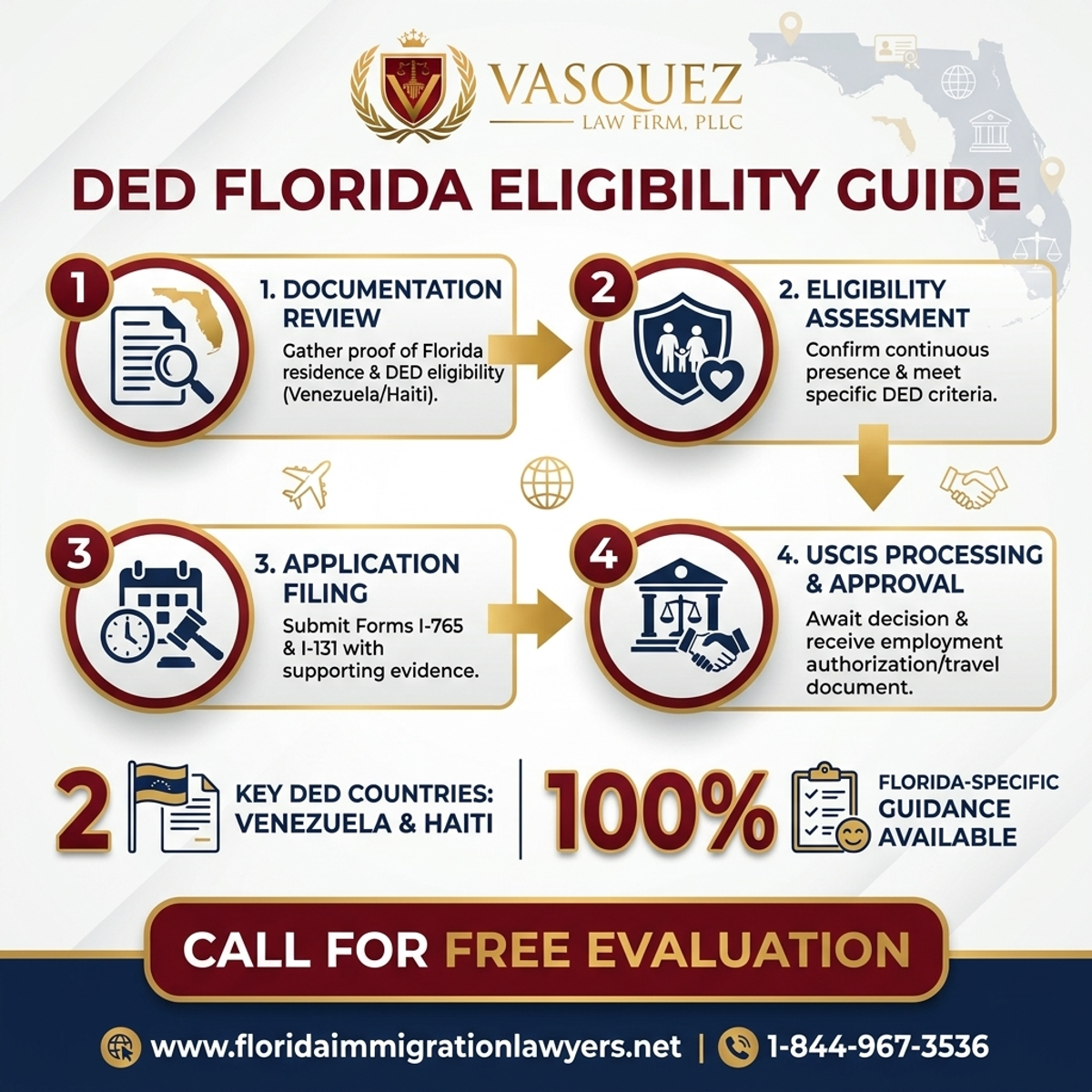
Step-by-Step Process — DED for Venezuela and Haiti: Florida Eligibility Guide
Florida-Specific Considerations for DED Applicants
While DED is a federal program, its impact is profoundly felt at the state level, particularly in Florida, which hosts a large Venezuelan and Haitian diaspora. For Florida residents, understanding the federal guidelines is only part of the equation. Practical considerations include access to legal aid, community support networks, and state-specific resources that can assist with the application process or provide guidance on living in the U.S. with DED status.
Florida's diverse communities offer various non-profit organizations and legal clinics that may provide assistance to DED applicants. However, navigating the legal complexities often requires specialized expertise. Ensuring you meet the continuous presence requirements and can gather all necessary documentation is crucial. Furthermore, understanding how DED status might interact with state-level services or benefits is important, though DED primarily grants federal protections.
The DED Application Process: A Step-by-Step Guide
Applying for DED status, or more accurately, applying for benefits associated with DED, involves specific forms and procedures. While DED itself is automatically granted to eligible individuals based on the presidential directive, you must apply for an Employment Authorization Document (EAD) to legally work and, in some cases, for travel authorization.
- Determine Eligibility: Confirm you meet the continuous presence requirements and are not subject to any statutory bars to relief.
- File Form I-765, Application for Employment Authorization: This is the primary form for obtaining your work permit. You will need to select the appropriate eligibility category (e.g., A-11 for DED).
- Gather Supporting Documentation: This includes proof of identity, nationality, and continuous presence in the U.S. (e.g., passports, birth certificates, utility bills, school records, employment records).
- Pay Filing Fees: There is a fee for Form I-765, though fee waivers may be available for eligible individuals.
- Attend Biometrics Appointment: After filing, USCIS will schedule an appointment for fingerprinting and photographs.
- Receive Decision: USCIS will process your application and mail you a decision. If approved, you will receive your EAD card.
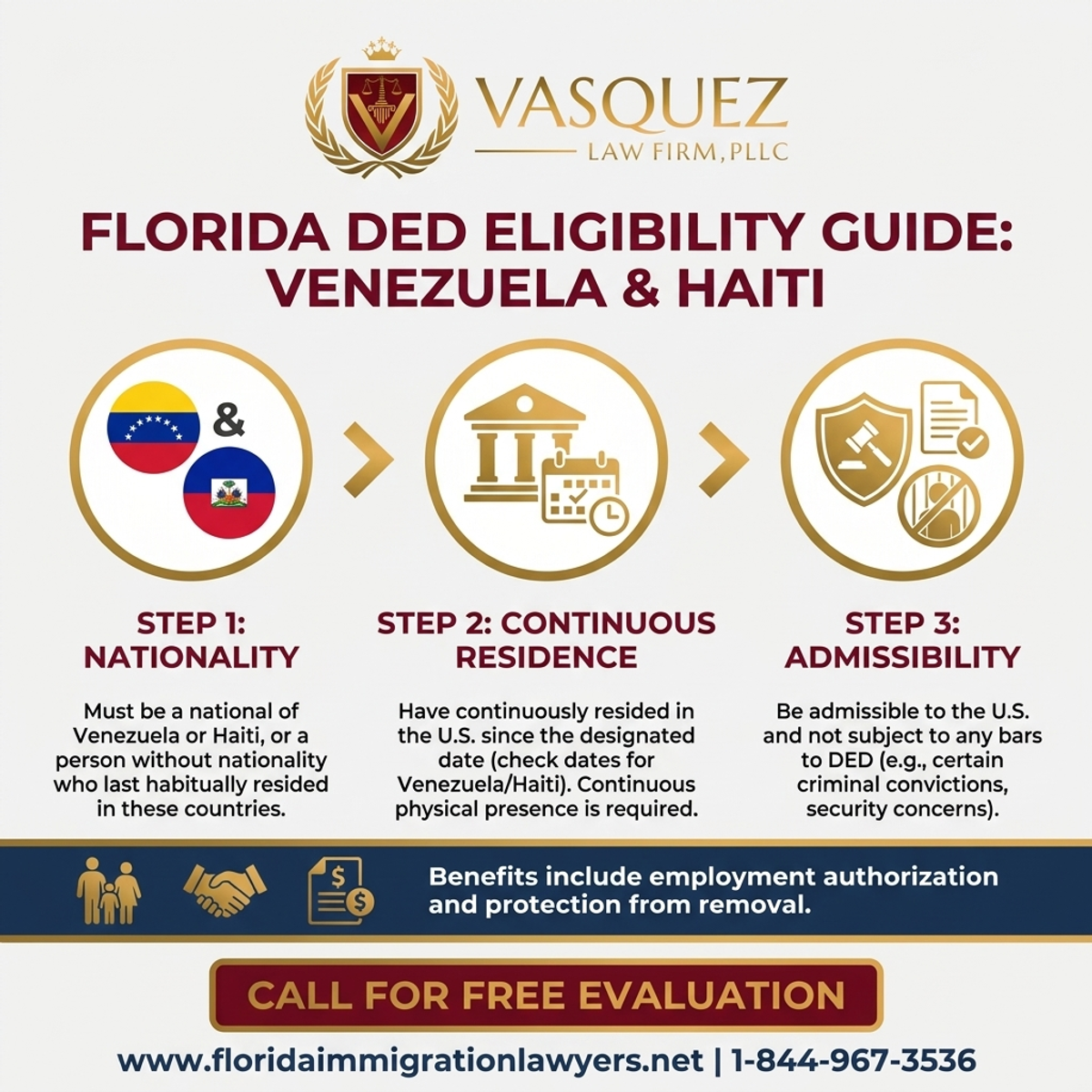
Key Statistics — DED for Venezuela and Haiti: Florida Eligibility Guide
It is critical to file your application within the designated registration period announced by USCIS for each DED designation or extension. Missing these deadlines can result in the loss of DED benefits.
Benefits of DED Status
The primary benefits of DED status are significant for individuals facing uncertainty about their future in the U.S.:
- Protection from Removal: DED status provides a temporary stay of deportation, meaning you cannot be removed from the United States during the DED period. This offers immense relief and stability. For those facing potential removal proceedings, DED can be a critical defense. Learn more about protecting yourself with Deportation Defense strategies.
- Employment Authorization: Eligible individuals can apply for an Employment Authorization Document (EAD), which allows them to work legally in the U.S. This is crucial for financial stability and self-sufficiency.
- Potential for Travel Authorization: In some cases, DED beneficiaries may apply for advance parole, which allows them to travel outside the U.S. and return without jeopardizing their DED status. This is not automatic and requires a separate application (Form I-131).
These benefits allow individuals to live and work without constant fear of being forced to return to dangerous conditions in their home countries, providing a foundation for rebuilding their lives in the U.S.
DED vs. TPS vs. Asylum: Understanding Your Options
While DED, Temporary Protected Status (TPS), and Asylum all offer humanitarian relief, they are distinct immigration categories with different eligibility criteria, application processes, and legal implications. Understanding these differences is crucial for determining the best path forward.
-
Deferred Enforced Departure (DED): As discussed, DED is a presidential directive offering temporary protection and work authorization to specific nationals due to extraordinary circumstances in their home country. It is typically country-specific and time-limited, though often extended.
-
Temporary Protected Status (TPS): Designated by the Secretary of Homeland Security, TPS is granted to nationals of certain countries experiencing armed conflict, environmental disaster, or other extraordinary and temporary conditions. Like DED, it offers protection from removal and work authorization. Many countries, including Venezuela and Haiti, have also been designated for TPS, sometimes concurrently with DED. The eligibility dates and conditions for TPS can differ from DED, so it's essential to check the specific requirements for each program.
-
Asylum: Asylum is a form of protection granted to individuals who are already in the United States and can demonstrate that they have suffered persecution or fear they will suffer persecution due to their race, religion, nationality, membership in a particular social group, or political opinion. Asylum is a path to permanent residency and ultimately citizenship, unlike DED or TPS, which are temporary. The application process is rigorous, often involving an interview with an asylum officer or proceedings in immigration court. For those who fear returning to their home country due to persecution, asylum may be a more permanent solution. You can find comprehensive information on this pathway on our Asylum page.
It is possible for an individual to be eligible for more than one of these protections simultaneously. Consulting with an immigration attorney can help you understand which option best suits your individual circumstances and long-term goals.
Beyond DED: Exploring Comprehensive Immigration Strategies and Legal Support
While Deferred Enforced Departure offers vital temporary relief, it is not a pathway to permanent residency or U.S. citizenship. For many DED beneficiaries, the goal extends beyond temporary protection to securing a more stable and permanent future in the United States. This often requires exploring additional immigration avenues and developing a comprehensive strategy tailored to individual circumstances. Understanding these broader options is crucial for long-term planning.
For individuals who qualify, pathways such as family-based petitions, employment-based visas, or even asylum (if they meet the stringent criteria for persecution) might offer routes to permanent status. Each of these categories involves complex eligibility requirements, extensive documentation, and often lengthy processing times. For instance, if you have a U.S. citizen or lawful permanent resident family member, they might be able to petition for you. Similarly, if you possess specialized skills or have a job offer from a U.S. employer, an employment-based visa could be an option. These pathways require careful planning and often significant legal expertise to navigate successfully.
The landscape of U.S. immigration law is constantly evolving and incredibly intricate. Attempting to navigate these processes without professional guidance can lead to costly errors, delays, or even denial of benefits. An experienced immigration attorney can assess your unique situation, identify all potential avenues for relief, and guide you through each step of the application process. They can help you gather the necessary evidence, prepare compelling arguments, and represent you before USCIS or in immigration court. Their expertise ensures that all deadlines are met, all forms are correctly filed, and your case is presented in the strongest possible light. Investing in legal counsel is an investment in your future and peace of mind. To learn more about how our dedicated legal team can assist you, please visit our Attorneys page or Contact Us directly to schedule a consultation.
Common Challenges and How to Avoid Them
Even with a clear understanding of the DED process, applicants can encounter challenges. Being aware of these common pitfalls can help you avoid them:
- Missing Deadlines: DED designations and extensions have strict registration periods. Failing to apply within these windows can result in loss of benefits.
- Incomplete Applications: Missing documents, incorrect information, or unanswered questions on forms can cause significant delays or lead to a denial.
- Criminal History: Certain criminal convictions can render an individual ineligible for DED. It's crucial to disclose any criminal history to your attorney.
- Issues with Continuous Presence: Proving continuous physical presence since the specified date can be challenging without proper documentation.
- Travel Restrictions: Leaving the U.S. without advance parole can terminate DED status, even if you are otherwise eligible.
Thorough preparation and, ideally, legal assistance can mitigate many of these risks.
Staying Informed: Updates and Extensions
DED designations are temporary and subject to extensions or terminations. It is imperative for beneficiaries to stay informed about the latest announcements from the Department of Homeland Security (DHS) and U.S. Citizenship and Immigration Services (USCIS). Official government websites are the most reliable sources for updates on eligibility dates, registration periods, and any changes to the program. Subscribing to USCIS email alerts or regularly checking their DED pages for Venezuela and Haiti is highly recommended.
Given the dynamic nature of immigration policy, the status of DED can change. Staying proactive in monitoring these changes ensures you can take timely action to maintain your status or explore alternative options if DED is not extended.
Conclusion
Deferred Enforced Departure provides a critical temporary haven for eligible Venezuelan and Haitian nationals in Florida, offering protection from deportation and the ability to work legally. While DED offers significant relief, understanding its specific requirements, the application process for associated benefits, and its temporary nature is essential. For many, DED is a stepping stone, and exploring long-term immigration strategies is a vital next step.
Navigating these complex immigration pathways can be daunting. Seeking guidance from an experienced immigration attorney can provide clarity, ensure compliance, and help you pursue the best possible outcome for your future in the United States. Don't hesitate to reach out for professional assistance. For personalized advice and support, please contact our firm today to schedule a consultation.
Sources and References
- U.S. Citizenship and Immigration Services (USCIS)
- Executive Office for Immigration Review (EOIR)
- U.S. Department of State
- Immigration and Nationality Act (INA), 8 U.S.C. Chapter 12
Do Not Navigate This Process Alone
Our experienced immigration attorneys are ready to fight for you. Get a free, confidential case review today.
Se Habla Español
Or leave your details and we’ll call you:
We will call you back within 24 hours
Free evaluation · Private and confidential · Se habla español
Helping Florida immigrant families since 2011
Or talk to us right now

AI voice assistant — available 24/7
FreeFrequently Asked Questions

William J. Vásquez
Founding Attorney · Vasquez Law Firm
U.S. Air Force veteran and immigration attorney with years of hands-on U.S. immigration experience. J.D., NCCU School of Law. AILA member. Admitted to the 4th, 5th, and 11th Circuit Courts.
Available 24/7 - Free Evaluations
Reviewed for legal accuracy by William J. Vásquez
Licensed in North Carolina; U.S. immigration is federal practice.
Related Legal Services
Our Florida immigration attorneys can help you with immigration practice areas, free immigration consultation and business immigration. Call today at 1-844-YO-PELEO for a free case review.
Related Links
Related Topics
Free Legal Case Review
Discuss your case with our experienced attorneys. We're available 24/7.
Se Habla Español - Estamos aquí para ayudarle.
Related Articles
EB-5 Investor Green Card in Florida: A 2026 Guide
Explore how to obtain an EB-5 investor green card in Florida. Learn about the investment requirements, processes, and benefits of participating in this program. Discover how Florida's economic landscape can be an ideal setting for your investment. Contact Florida Immigration Lawyers for a free case review.
Certificate of Eligibility for Expungement in Florida 2026
For non-U.S. citizens in Florida, understanding how a state expungement impacts immigration status is critical. A certificate of eligibility for expungement in Florida allows a criminal record to be sealed or expunged under state law. However, federal immigration agencies often disregard such state-level relief, still considering the original criminal offense as a conviction for immigration purposes. This can have severe implications for visa applications, green card eligibility, naturalization, and even lead to deportation. This guide clarifies the Florida expungement process, its limited effect on federal immigration law, and key steps to protect your status in 2026. Learn about common mistakes, required documents, timelines, and when to seek expert legal counsel from Florida Immigration Lawyers to navigate these complex issues effectively.
What to Expect at Your First Immigration Consultation in Orlando
What happens at a first immigration consultation in Orlando, which documents to bring, and how to prepare for questions about visas, green cards, citizenship and court cases.
Immigration Attorney Lakeland Polk County: Your Guide
For residents of Lakeland and Polk County, understanding your immigration options is crucial. This guide demystifies the process, highlighting how an experienced immigration attorney can be your most valuable ally. We cover services from family-based petitions, employment visas, and asylum claims to deportation defense and naturalization. Learn about typical timelines, costs, and common mistakes to avoid. Florida Immigration Lawyers offers dedicated legal representation throughout Central Florida, providing clear, compassionate, and effective assistance for your immigration journey. Contact us for a free case review and expert guidance.