DACA Renewal Florida 2026 Guide: Hialeah Dreamers
For Dreamers in Hialeah and across Florida, navigating DACA renewal for 2026 is critical for maintaining protection from deportation and work authorization. This comprehensive guide from Florida Immigration Lawyers details the eligibility, step-by-step process, essential documents, and cost factors involved. We also highlight common mistakes to avoid and when to seek legal counsel, especially given the program's ongoing legal complexities. Timely and accurate submission of forms I-821D, I-765, and the I-765 Worksheet, along with all supporting evidence, is paramount. Filing 120-150 days before expiration is key to preventing a lapse in status. Contact Florida Immigration Lawyers for expert assistance and a free consultation.

Renewing your Deferred Action for Childhood Arrivals (DACA) in Florida for 2026 involves submitting Form I-821D, Form I-765, and Form I-765 Worksheet to USCIS. This process is crucial for eligible individuals, often referred to as Dreamers, to maintain their protection from deportation and work authorization. It is vital to submit your DACA renewal application within 120 to 150 days before your current DACA expiration date to avoid a lapse in coverage. Staying informed about current policies and seeking legal guidance from experienced attorneys is highly recommended, especially given the program's ongoing legal challenges. Florida Immigration Lawyers can help Hialeah residents and others throughout the state with their DACA renewal.
- Submit Forms I-821D, I-765, and I-765 Worksheet.
- File 120-150 days before your DACA expires.
- Consult an attorney for personalized guidance.
- Ensure all documentation is accurate and complete.
- Understand the associated filing fees.
Are you a DACA recipient in Florida, perhaps in Hialeah or a surrounding community, looking ahead to your next renewal in 2026? The process of renewing your Deferred Action for Childhood Arrivals (DACA) status can feel daunting, especially with the program's complex legal history and evolving landscape. However, maintaining your DACA status is essential for your ability to live, work, and contribute to your community without fear of deportation. This comprehensive guide from Florida Immigration Lawyers is designed to provide clarity on the DACA renewal Florida 2026 process, helping you understand the requirements, timelines, and crucial steps involved.
For many Dreamers across Florida, DACA represents stability and opportunity. We understand the anxieties that come with approaching a renewal date. Our goal is to empower you with accurate information and guide you through each stage, ensuring your application is strong and complete. Do not navigate this critical process alone. Call Florida Immigration Lawyers at 1-844-967-3536 for a free consultation to discuss your specific DACA renewal needs and ensure you are prepared for 2026 and beyond.
Understanding DACA and Its Importance for Florida Dreamers
Deferred Action for Childhood Arrivals, or DACA, was established in 2012 to provide certain undocumented young people, often called Dreamers, with protection from deportation and eligibility for a work permit (Employment Authorization Document, EAD). This program has profoundly impacted thousands of lives across Florida, including vibrant communities like Hialeah, Miami, Orlando, and Tampa. DACA recipients are able to pursue higher education, build careers, and support their families, contributing significantly to Florida's economy and social fabric. The ability to legally work and reside in the U.S. transforms lives, offering a sense of security that was previously unavailable.
While DACA does not provide a pathway to permanent residency or citizenship, it offers a two-year period of deferred action, which is renewable. This temporary relief allows Dreamers to plan their futures, invest in their education, and pursue professional goals. Without DACA, many would face immediate challenges to their livelihoods and potential deportation. The program's importance is particularly pronounced in Florida, a state with a significant immigrant population, where DACA recipients are integral members of their communities. Understanding the nuances of DACA, including its legal standing and renewal requirements, is critical for maintaining these vital protections. Despite ongoing legal challenges, USCIS continues to accept and process DACA renewal applications, making it essential for eligible individuals to continue renewing their status.
The Evolving Legal Landscape of DACA
The DACA program has faced numerous legal battles since its inception. While court orders have allowed for the continued processing of renewal applications, new initial DACA applications are generally not being accepted. This complex legal environment underscores the importance of timely renewals for current DACA recipients. Decisions from federal courts can impact the program's future, making it imperative to stay informed and act proactively. For Floridians, especially those in Hialeah and surrounding areas, this means understanding that while the program's long-term future may be uncertain, the current ability to renew is a critical opportunity. An experienced immigration attorney can help you understand how these legal developments might affect your specific situation and guide you through the renewal process efficiently and effectively.
Eligibility Requirements for DACA Renewal in 2026
To be eligible for DACA renewal in 2026, you must meet specific criteria established by U.S. Citizenship and Immigration Services (USCIS). These requirements are generally consistent with the initial DACA criteria, with a focus on maintaining continuous eligibility. The primary condition is that you must have previously received DACA. This is not a program for first-time applicants as of the current legal rulings. You must also continue to meet the original DACA requirements, which include having been under the age of 31 as of June 15, 2012, having come to the United States before your 16th birthday, and having continuously resided in the U.S. since June 15, 2007. Any significant breaks in your residence could jeopardize your renewal.
Furthermore, you must not have been convicted of a felony, a significant misdemeanor, or three or more other misdemeanors. You must also not pose a threat to national security or public safety. USCIS carefully reviews each application to ensure these criteria are met. Maintaining a clean record is paramount for DACA renewal. For Dreamers living in Florida, especially in areas like Hialeah, it is crucial to understand that even minor legal issues can impact your eligibility. Consulting with an attorney is highly advisable if you have any arrests or convictions on your record, even if you believe they are minor. They can assess your situation and advise on the best course of action. The legal framework governing DACA is primarily found in the Immigration and Nationality Act (INA) and relevant sections of 8 U.S.C. and 8 CFR, which outline the discretionary nature of deferred action and eligibility parameters.
Maintaining Continuous Residence and Presence
One of the most critical aspects of DACA eligibility is maintaining continuous residence. This means you must not have departed the United States on or after August 15, 2012, without obtaining advance parole. If you left the U.S. without advance parole after this date, you generally become ineligible for DACA renewal. Any travel outside the U.S. after August 15, 2012, must have been authorized by USCIS through an advance parole document (Form I-131). Additionally, you must be physically present in the United States at the time you file your DACA renewal application. For DACA recipients in Florida, understanding these travel restrictions is vital to protect your status. Always seek legal advice before planning any international travel if you are a DACA recipient to ensure you do not inadvertently jeopardize your renewal eligibility.
Step-by-Step DACA Renewal Process in Florida for 2026
Navigating the DACA renewal process requires careful attention to detail and adherence to specific steps. This guide provides a clear outline for Dreamers in Florida, including those in Hialeah, preparing for their 2026 renewal. Following these steps meticulously will help ensure a smooth application process.
- Gather Necessary Documents: Begin by collecting all required documentation. This includes your previous DACA approval notices, current Employment Authorization Document (EAD), proof of continuous residence (utility bills, school records, employment records), and any documents related to arrests or convictions, even if dismissed. Ensure all documents are organized and easily accessible.
- Complete USCIS Forms: You will need to complete three forms: Form I-821D (Consideration for Deferred Action for Childhood Arrivals), Form I-765 (Application for Employment Authorization), and Form I-765 Worksheet. Fill out these forms accurately and completely. Do not leave any fields blank; if a question does not apply, write "N/A."
- Prepare Your Supporting Evidence: Attach copies of your birth certificate, passport (if available), any previous EAD cards, and I-797 approval notices for DACA. If you have had any encounters with law enforcement, even minor ones, include certified court dispositions. It is always better to over-document than under-document.
- Calculate and Prepare Fees: The DACA renewal process involves filing fees for Form I-765 and biometric services. While specific fee amounts are subject to change, typically, you will need to submit a money order or check made payable to "U.S. Department of Homeland Security." Do not send cash. Fee waivers are rarely granted for DACA renewals, but it's important to check the latest USCIS guidelines.
- Mail Your Application: Once all forms are completed, signed, and all supporting documents and fees are prepared, mail your application to the correct USCIS lockbox facility. The mailing address depends on your state of residence. For Florida residents, you will typically send it to a specific lockbox designated for DACA applications. Always double-check the USCIS website for the most current mailing addresses.
- Attend Biometrics Appointment: After USCIS receives your application, you will receive a receipt notice and, subsequently, an appointment notice for biometrics (fingerprints, photograph, and signature). It is mandatory to attend this appointment at the designated Application Support Center (ASC). Failure to attend may lead to denial.
- Monitor Your Application Status: You can track the status of your application online using the receipt number provided by USCIS. Be prepared for processing times that can vary. Keep all correspondence from USCIS in a safe place.
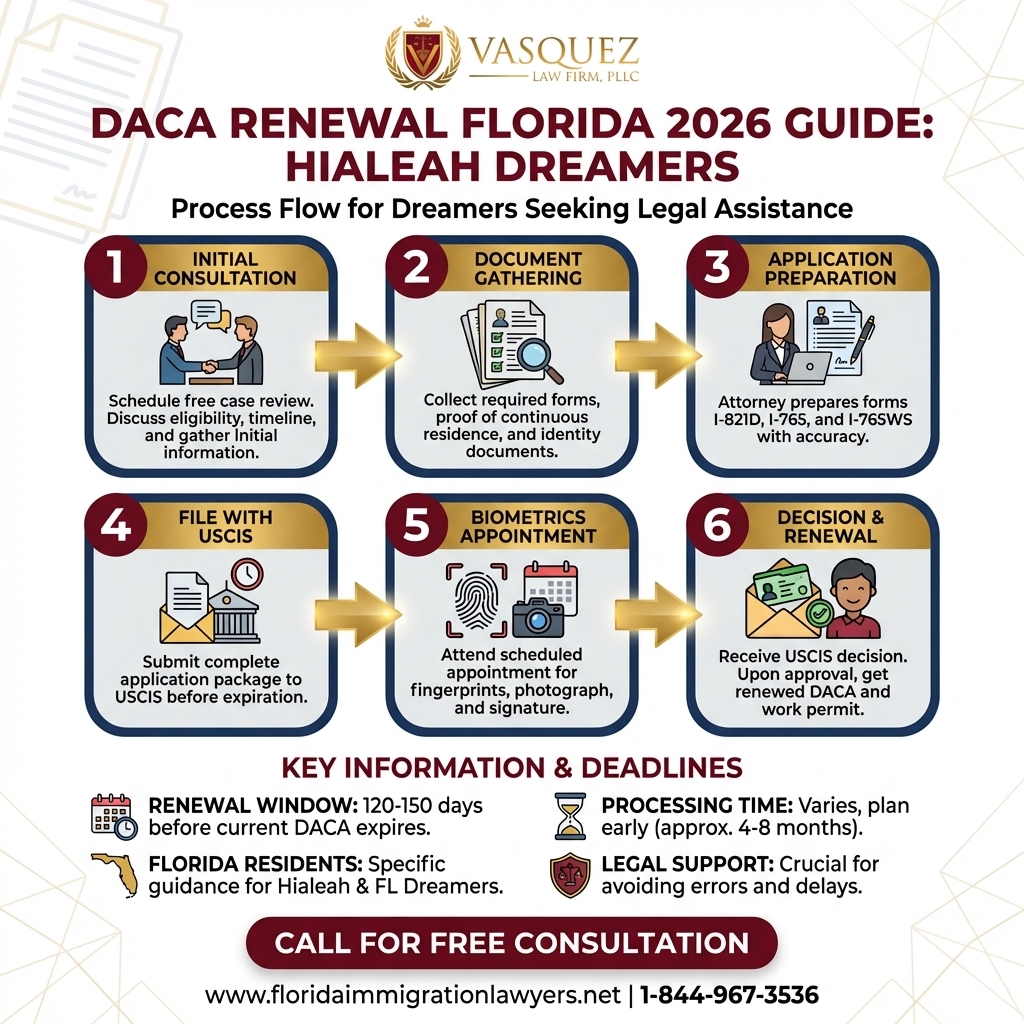
This detailed process ensures all aspects of your DACA renewal Florida 2026 are covered. Many DACA recipients in Florida, including those residing near the Miami USCIS Field Office, find it beneficial to consult with an immigration lawyer to ensure accuracy and completeness. An attorney can help prepare your forms, organize your evidence, and address any potential issues that may arise during the application process. This proactive approach can save you time and prevent costly mistakes.
Essential Documents Checklist for DACA Renewal
A well-organized set of documents is critical for a successful DACA renewal application. Missing or incorrect documentation can lead to delays or even denial. Use this checklist to ensure you have everything prepared for your DACA renewal Florida 2026 application, whether you are in Hialeah or elsewhere in the Sunshine State.
- Completed Form I-821D: Consideration for Deferred Action for Childhood Arrivals. Ensure all questions are answered truthfully and accurately.
- Completed Form I-765: Application for Employment Authorization. This form requests your EAD.
- Completed Form I-765 Worksheet: This provides additional information required for Form I-765.
- Two Passport-Style Photos: Recent, unmounted, color photographs taken within 30 days of filing. Write your name and A-Number lightly on the back.
- Copy of Your Last DACA Approval Notice (Form I-797): This proves you are a current DACA recipient.
- Copy of Your Current Employment Authorization Document (EAD): Both front and back.
- Proof of Continuous Residence: Provide evidence that you have continuously resided in the U.S. since June 15, 2007, and since your last DACA approval. Examples include:
- School transcripts or diplomas
- Employment records or pay stubs
- Bank statements
- Medical records
- Utility bills in your name
- Lease agreements or rent receipts
- Letters from churches or community organizations
- Certified Copies of Court Dispositions (if applicable): If you have ever been arrested or cited for any reason, even if the charges were dismissed or expunged, you must include certified court dispositions and police reports. Do not omit this information.
- Proof of Identity and Nationality: Copies of your birth certificate with translation, passport, or national identity document from your country of origin.
- Payment for Filing Fees: Check or money order payable to "U.S. Department of Homeland Security" for the I-765 application and biometric services.
Organizing these documents thoroughly before mailing your application is a critical step. For DACA recipients in Florida facing complex situations, such as a criminal record or issues with continuous residence, seeking legal counsel from Florida Immigration Lawyers is paramount. We can help you compile your documents and address any potential red flags, ensuring your application is as strong as possible.
DACA Renewal Timeline and Cost Factors for 2026
Understanding the typical timeline and associated costs for your DACA renewal Florida 2026 is essential for proper planning. While processing times can vary, being prepared for the financial and temporal aspects will help you navigate the process with greater confidence. USCIS processing times are subject to change based on caseload and policy shifts, so it's always wise to check their official website for the most current estimates.
Recommended Filing Window
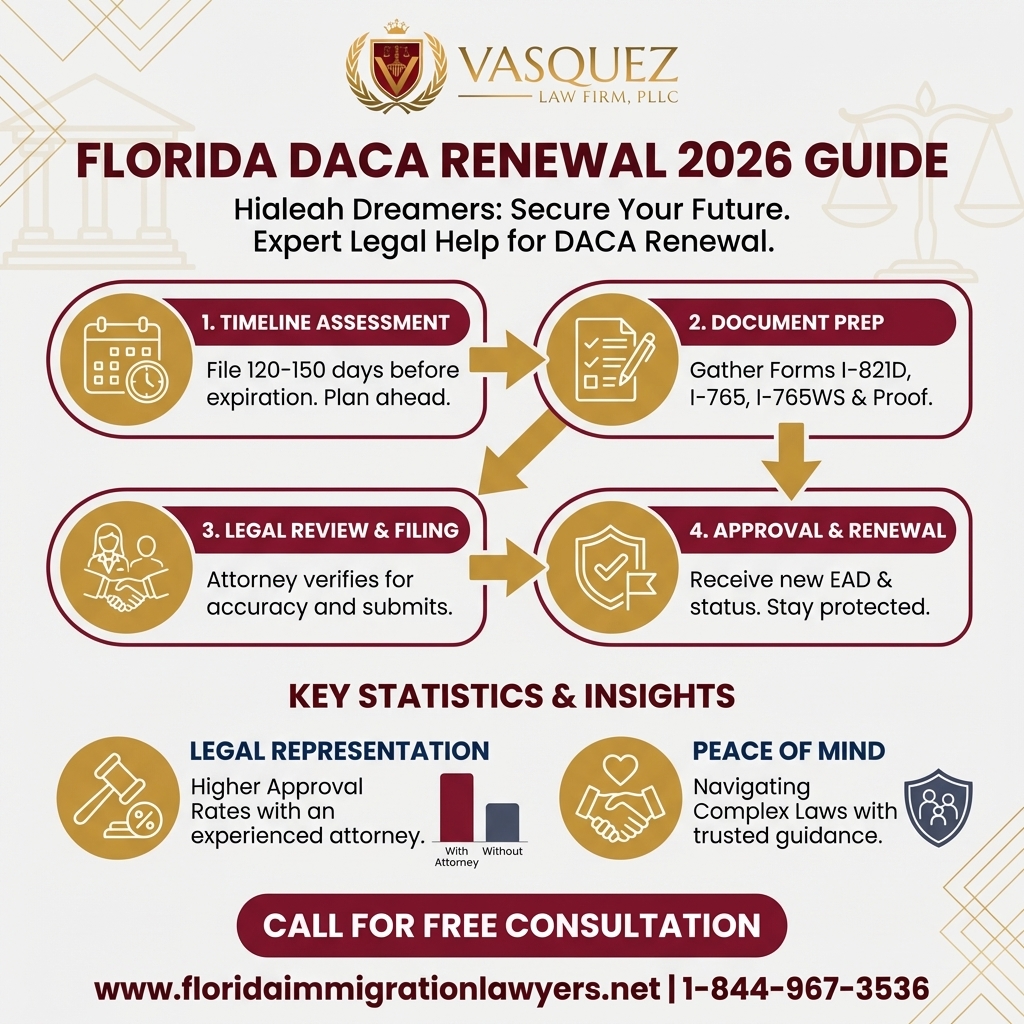
USCIS generally recommends filing your DACA renewal application between 120 and 150 days (approximately 4 to 5 months) before your current DACA and EAD expire. Filing within this window helps prevent a lapse in your work authorization and protection from deportation. For example, if your DACA expires in August 2026, you should aim to submit your renewal application between March and April 2026. Filing too early (more than 150 days out) may result in USCIS rejecting your application. Filing too late (less than 120 days or after expiration) significantly increases the risk of a lapse in your status, which can have serious consequences for employment and driving privileges in Florida.
Processing Times and Biometrics
After filing, you can expect to receive a receipt notice from USCIS within a few weeks. A biometrics appointment notice typically follows within 3-8 weeks. The actual processing of the DACA renewal application can take anywhere from 3 to 6 months, or sometimes longer, depending on the service center workload. It is important to attend your biometrics appointment promptly. Any delays in attending or rescheduling this appointment can prolong your overall processing time. While waiting, you can check your case status online using the receipt number provided. Florida Immigration Lawyers advises our clients to remain patient but vigilant during this period, ensuring all USCIS requests for additional information are addressed promptly. You can track average processing times on the official USCIS website.
Cost Factors and Fees
The DACA renewal process involves mandatory government filing fees. As of the time of writing, these fees typically include the Form I-765 (Application for Employment Authorization) fee and the biometrics services fee. It is crucial to check the most current fee schedule on the USCIS website (www.uscis.gov) before submitting your application, as these amounts are subject to change. Do not send cash; use a money order or personal check made payable to "U.S. Department of Homeland Security." Fee waivers are generally not available for DACA renewal applications. Beyond government fees, you may also incur costs for obtaining certified court documents, passport photos, and potentially legal fees if you choose to work with an attorney. Investing in legal counsel, however, can often prevent costly errors and ensure a smoother process, especially for complex cases in Florida.
Do not navigate this complex process alone. Contact Florida Immigration Lawyers today at 1-844-967-3536 for a free consultation. Our experienced team is ready to assist you with your DACA renewal Florida 2026 application and protect your future.
Common Mistakes to Avoid During DACA Renewal
Renewing your DACA status is a critical process, and even minor errors can lead to significant delays or a denial. Being aware of common pitfalls can help you avoid them, ensuring a smoother DACA renewal Florida 2026. Here are some mistakes to watch out for:
- Filing Too Early or Too Late: Submitting your application outside the recommended 120-150 day window before expiration can lead to rejection or a lapse in your status. Filing too early may result in a rejection, while filing too late risks an expired EAD and DACA status, impacting your employment and legal presence.
- Incomplete or Inaccurate Forms: Failing to answer all questions or providing incorrect information on Form I-821D, I-765, or the I-765 Worksheet is a common reason for Request for Evidence (RFE) or denial. Double-check every field for accuracy and completeness.
- Missing Required Documents: Forgetting to include copies of your previous DACA approval, current EAD, or essential proof of continuous residence can cause significant delays. Ensure your checklist is thoroughly followed.
- Incorrect Filing Fees: Submitting the wrong fee amount, an expired money order, or making it payable to the incorrect entity will result in your application being rejected. Always verify the current fees on the USCIS website.
- Failure to Disclose Criminal History: Omitting any arrests, citations, or convictions, no matter how minor or old, is a serious offense. This includes cases that were dismissed, expunged, or resulted in no charges. USCIS has access to your records, and failing to disclose can lead to a denial for misrepresentation.
- Not Attending Biometrics Appointment: Missing your scheduled biometrics appointment without proper rescheduling can lead to the denial of your application. Treat this appointment as mandatory.
- Incorrect Mailing Address: Sending your application to the wrong USCIS lockbox facility can cause significant delays and potential loss of documents. Always verify the correct mailing address for DACA renewals on the official USCIS website.
- Lack of Legal Counsel for Complex Cases: Attempting to renew DACA with a criminal record, significant travel history, or breaks in continuous residence without legal advice is a high-risk mistake. An attorney can help mitigate these issues.
- Not Keeping Copies of Your Application: Always make a complete copy of your entire application package, including forms, supporting documents, and proof of payment, before mailing it. This serves as your record.
- Ignoring USCIS Requests for Evidence (RFEs): If USCIS sends an RFE, failing to respond promptly and adequately with the requested information can lead to a denial. Understand the RFE and provide the necessary documentation.
When to Call a Florida Immigration Lawyer for DACA Renewal
While the DACA renewal process can seem straightforward for some, many situations warrant the expertise of an experienced immigration attorney. Florida Immigration Lawyers are dedicated to assisting Dreamers throughout the state, including those in Hialeah, Miami, and Orlando, ensuring their DACA renewal process is handled with precision and care. Knowing when to seek legal help can make a critical difference in the outcome of your application.
You should consider contacting an attorney if you have any criminal history, no matter how minor, including arrests, citations, or convictions, even if they were dismissed or expunged. These issues can significantly complicate your DACA renewal and may even lead to denial without proper legal guidance. Similarly, if you have traveled outside the United States without advance parole after August 15, 2012, or have had any breaks in your continuous residence, an attorney can assess your eligibility and advise on potential risks. Furthermore, if you have received a Request for Evidence (RFE) from USCIS or a Notice of Intent to Deny (NOID), immediate legal counsel is essential to formulate an appropriate and timely response.
Our team at Florida Immigration Lawyers specializes in complex immigration cases, including DACA renewals. We can help you gather and organize your documentation, accurately complete all required forms, and represent you in communication with USCIS. Our goal is to minimize stress and maximize your chances of a successful renewal, protecting your future in Florida. Do not hesitate to reach out if you have concerns about your eligibility, have a complicated background, or simply want the peace of mind that comes with professional legal assistance. We are here to help you navigate the intricate requirements of the INA and 8 CFR sections relevant to DACA.
About Florida Immigration Lawyers
Florida Immigration Lawyers is a leading law firm dedicated to providing comprehensive and compassionate immigration legal services across the entire state of Florida. From our roots in serving communities like Hialeah and Miami to assisting clients in Orlando, Tampa, and beyond, our mission is to empower individuals and families through the complex U.S. immigration system. We understand the profound impact immigration decisions have on your life and future.
Our team of experienced attorneys specializes in a wide range of immigration matters, including DACA renewals, deportation defense, asylum, citizenship applications, and various family-based immigration petitions. We pride ourselves on offering personalized attention, strategic legal advice, and unwavering advocacy for every client. With a deep understanding of federal immigration laws and their application in Florida, we are uniquely positioned to handle even the most challenging cases. We are available 24/7 for free consultations and are fluent in both English and Spanish, ensuring that language is never a barrier to accessing high-quality legal representation. Choose Florida Immigration Lawyers for dedicated support and proven results in your immigration journey. Visit our website at https://www.floridaimmigrationlawyers.net or contact us today.
Sources and References
- U.S. Citizenship and Immigration Services (USCIS)
- Executive Office for Immigration Review (EOIR)
- Immigration and Nationality Act (INA) - 8 U.S.C. Chapter 12
- 8 Code of Federal Regulations (CFR) Part 274a.12(c)(14) - Classes of aliens authorized to accept employment.
- 8 Code of Federal Regulations (CFR) Part 274a.13 - Application for employment authorization.
Related services: immigration practice areas, business immigration, experienced immigration attorneys.
This article provides general legal information and is not intended as legal advice. Every case is unique, and outcomes depend on specific facts and circumstances. Contact an attorney for advice about your particular situation. Immigration laws are subject to change, and it is crucial to consult with a qualified legal professional for the most current information and guidance.
Your DACA status is a lifeline, and its renewal is too important to leave to chance. As you prepare for your DACA renewal Florida 2026, remember that professional legal assistance can provide invaluable support and peace of mind. Let Florida Immigration Lawyers be your trusted partner in securing your future. Call us today at 1-844-967-3536 for a free consultation. Se Habla Español - Estamos aquí para ayudarle.
If you need legal assistance, learn more about get immigration legal help today, or call us at 1-844-967-3536 for a free consultation.
Do Not Navigate This Process Alone
Our experienced immigration attorneys are ready to fight for you. Get a free, confidential consultation today.
Se Habla Español
Frequently Asked Questions

William J. Vásquez
Founding Attorney · Vasquez Law Firm
U.S. Air Force veteran and immigration attorney with thousands of cases resolved. J.D., NCCU School of Law. AILA member. Admitted to the 4th, 5th, and 11th Circuit Courts.
Available 24/7 - Free Evaluations
Related Legal Services
Our Florida immigration attorneys can help you with citizenship and naturalization, family immigration services and immigration practice areas. Call today at 1-844-967-3536 for a free consultation.
Related Links
Related Topics
Free Legal Consultation
Discuss your case with our experienced attorneys. We're available 24/7.
Se Habla Español - Estamos aquí para ayudarle.
Related Articles
DED Venezuela Haiti Eligibility in Florida | VLF Florida
Deferred Enforced Departure (DED) offers temporary protection for Venezuelans and Haitians in Florida. Discover eligibility, application steps, and common pitfalls in our comprehensive guide. Contact Florida Immigration Lawyers at 1-844-967-3536 for assistance.
H-4 EAD Rules for Florida Spouses | FL Immigration Lawyers
Discover the rules for obtaining an H-4 EAD in Florida, allowing spouses of H-1B visa holders to work legally. Our detailed guide covers eligibility, timelines, costs, and common mistakes. Contact Florida Immigration Lawyers for assistance.
H-2A Visa for Agricultural Workers in Florida | VLF Florida
Discover how the H-2A visa helps Florida growers meet seasonal labor needs. Learn about the application process, common pitfalls, and how Florida Immigration Lawyers can assist you.
H-2A Visa Florida: Guide for Agricultural Growers 2026
Florida's agricultural sector relies heavily on a stable workforce, making the H-2A visa program a critical solution for growers facing labor shortages. This comprehensive guide for 2026 details the H-2A application process, document requirements, and expected timelines for Florida agricultural employers, including those in Hialeah. Learn about the multi-agency process involving the Department of Labor and USCIS, and understand your responsibilities regarding wages, housing, and transportation. We also highlight common mistakes to avoid and explain when legal counsel is essential to ensure compliance and a successful outcome. Florida Immigration Lawyers provides expert guidance to help you navigate these complexities and secure the temporary farm labor your operations need.