Can DACA Recipients Travel Within the U.S. 2026?
DACA recipients can travel within the U.S. in 2026, but international travel requires advance parole. Learn about the renewal process and common pitfalls for Dreamers in Florida. Call Florida Immigration Lawyers at 1-844-YO-PELEO for a free case review.
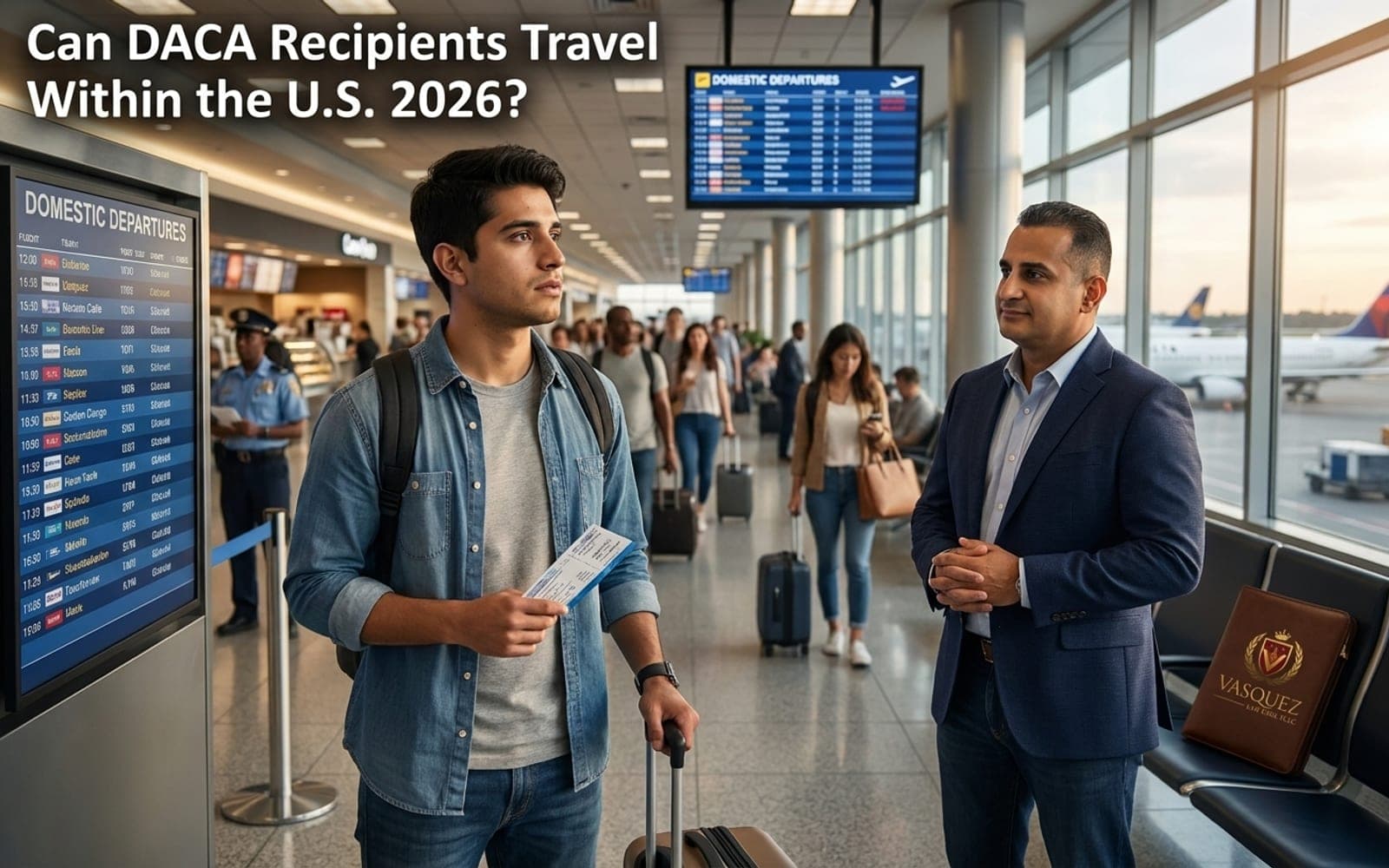
- DACA allows domestic travel.
- Advance parole is needed for international travel.
- Timely renewals ensure continuous protection.
- Consult a lawyer for complex cases.
Introduction
For Dreamers in Florida, navigating the complexities of DACA renewal can be daunting. Whether you're concerned about traveling within the U.S. or ensuring your status is maintained, understanding the latest guidelines is essential. This guide provides a comprehensive overview of DACA renewal in Florida for 2026, addressing travel concerns, renewal processes, and common pitfalls. Call Florida Immigration Lawyers at 1-844-YO-PELEO for a free case review.
The Deferred Action for Childhood Arrivals (DACA) program has been a lifeline for hundreds of thousands of young people across the United States, offering protection from deportation and the ability to work legally. In Florida, a state with a significant immigrant population, understanding the nuances of DACA, especially regarding renewal and travel, is paramount for recipients to plan their futures securely.
As we look towards 2026, the DACA landscape continues to evolve through legal challenges and policy discussions. Staying informed about the most current requirements and recommendations is not just a matter of compliance, but of safeguarding your deferred action status and the opportunities it provides. This expanded guide aims to equip you with the knowledge needed to confidently manage your DACA status.
Can DACA Recipients Travel Within the U.S. in 2026?
Yes, DACA recipients can travel within the U.S. in 2026. Domestic travel is permitted as long as you have valid identification and your DACA status is current. Be sure to carry your Employment Authorization Document (EAD) and a state-issued ID when flying or traveling between states.
When traveling domestically, it's crucial to understand that DACA status itself does not grant U.S. citizenship or permanent residency. Therefore, while you are permitted to travel freely within the 50 states and U.S. territories, you should always carry your valid EAD card and a government-issued photo ID, such as a driver's license or state ID. These documents serve as proof of your identity and your authorization to work and reside in the U.S. It's also advisable to keep copies of your DACA approval notices, though these are typically not requested during routine domestic travel checks.
While domestic travel is straightforward, DACA recipients should be aware that international travel is more restricted. To leave the U.S., you must apply for advance parole, which serves as permission to re-enter the country. Without it, you risk not being allowed back into the U.S. upon return. Advance parole is typically granted for humanitarian, educational, or employment purposes. For example, if a DACA recipient needs to visit a critically ill family member abroad (humanitarian), participate in an academic program (educational), or attend a work conference (employment), they would apply for advance parole using Form I-131, Application for Travel Document.
The process for obtaining advance parole can be complex and requires careful preparation. USCIS reviews each application on a case-by-case basis, and approval is not guaranteed. It is highly recommended to consult with an experienced immigration attorney, such as those at Florida Immigration Lawyers, before applying for advance parole. They can help assess your eligibility, prepare your application, and advise you on the potential risks and benefits of international travel, ensuring you understand all implications before departing the U.S. You can reach them at 1-844-YO-PELEO for personalized guidance.
How to Renew Your DACA in Florida?
As of 2026, the DACA renewal process involves several steps to ensure your status remains valid:
- Complete Form I-821D, Consideration of Deferred Action for Childhood Arrivals, and Form I-765, Application for Employment Authorization.
- Include a copy of your current Employment Authorization Document (EAD).
- Submit your application with the required fee to the appropriate USCIS filing location.
- Await confirmation and a receipt notice from USCIS confirming they have received your application.
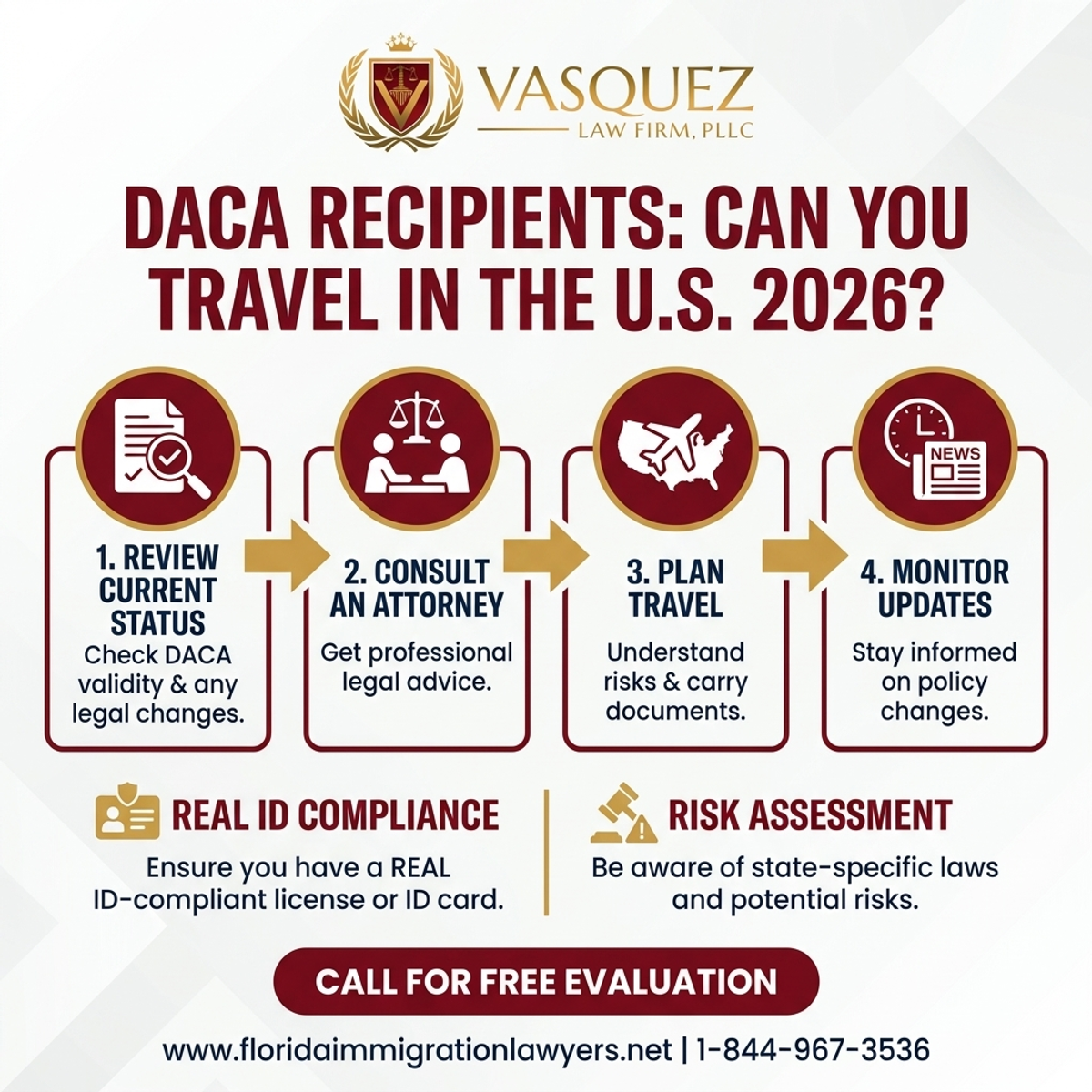
Step-by-Step Process — Can DACA Recipients Travel Within the U.S. 2026?
Renewals should be submitted at least 150 days before your current status expires to avoid any lapses in protection.
When preparing your DACA renewal application, accuracy and completeness are paramount. Both Form I-821D and Form I-765 require detailed personal information, a history of your residences, and a record of any encounters with law enforcement. Ensure all questions are answered truthfully and thoroughly. Any discrepancies or omissions could lead to delays or even a denial of your renewal. It's a good practice to review your previous DACA application to ensure consistency, unless there have been legitimate changes in your circumstances.
The recommendation to submit your renewal application 150 days before expiration is a critical piece of advice. USCIS processing times can vary significantly, and filing early provides a buffer against potential delays. If your DACA expires before your renewal is approved, you will temporarily lose your deferred action status and employment authorization, which can have serious consequences for your job, driver's license, and overall legal standing. To avoid this stressful situation, proactive planning is key.
Many DACA recipients in Florida choose to seek legal assistance from firms like Florida Immigration Lawyers to ensure their renewal applications are prepared correctly and submitted on time. An attorney can help you gather the necessary documentation, review your forms for accuracy, and address any potential issues that might arise, such as a prior criminal record or changes in your personal history. Their expertise can provide peace of mind and significantly increase the likelihood of a smooth renewal process. Contact Florida Immigration Lawyers at 1-844-YO-PELEO for dedicated support.
Document Checklist for DACA Renewal
A meticulous approach to gathering your documents is essential for a successful DACA renewal. Even a single missing item can cause significant delays or lead to a Request for Evidence (RFE) from USCIS, prolonging the entire process. Before you begin filling out forms, compile all necessary paperwork to ensure a smooth submission.
- Completed Form I-821D
- Completed Form I-765
- Copy of current EAD
- Payment for the application fee
- Proof of identity (passport, state ID)
- Two recent passport-sized photos
In addition to the core documents, it's always wise to keep copies of everything you submit for your own records. Consider organizing your documents in a binder or folder, clearly labeled, so you can easily reference them if USCIS has questions or if you need to apply for DACA again in the future. This habit of thorough record-keeping can prove invaluable.
DACA Renewal Timeline and Processing Expectations
Understanding the typical timeline for DACA renewal can help manage expectations and reduce anxiety, though it's important to remember that these are averages and actual processing times can vary based on USCIS workload and individual case complexities.
| Stage | Typical Timeframe | Notes |
|---|---|---|
| Application Submission | 1 week | Prepare documents early. |
| USCIS Receipt Notice | 2-3 weeks | Confirmation of application receipt. |
| Biometrics Appointment | 4-6 weeks | Attend at a local USCIS office. |
| Decision Notice | 6-12 weeks | Approval or request for more evidence. |
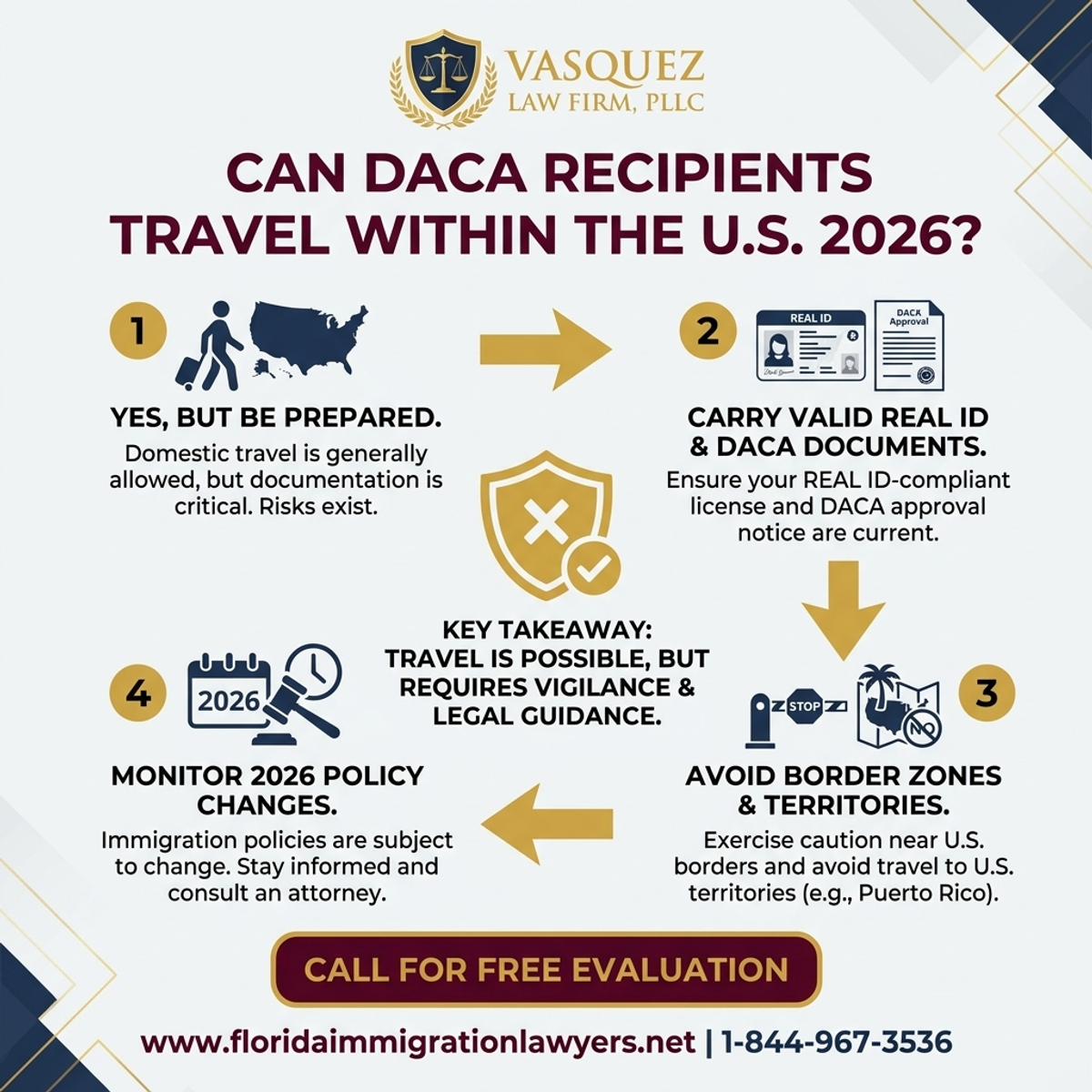
Key Statistics — Can DACA Recipients Travel Within the U.S. 2026?
While these timeframes provide a general guide, it's always best to check the official USCIS website for the most current processing times, as they are updated regularly. You can also track your case status online using the receipt number provided by USCIS. If your application appears to be outside of the normal processing times, or if you receive a Request for Evidence, it's a good idea to consult with an immigration attorney from Florida Immigration Lawyers to discuss potential next steps.
Cost Factors and Fee Breakdown for DACA Renewal
The cost associated with DACA renewal is a significant consideration for many applicants. It's crucial to understand the fee structure and ensure you submit the correct amount, as incorrect payments can lead to your application being rejected or delayed.
| Item | Typical Fee | Notes |
|---|---|---|
| Form I-821D | Variable | Check USCIS for current fees. |
| Form I-765 | Variable | Includes biometric fee. |
Do not navigate this process alone. Contact Florida Immigration Lawyers today.
As of the current guidelines, the total fee for DACA renewal typically combines the fee for Form I-765 (Application for Employment Authorization) and the biometrics services fee. USCIS generally does not offer fee waivers for DACA renewal applications, though it's always wise to check their official website for any updates or specific exceptions. Financial planning for these fees is an important part of the renewal process, and some non-profit organizations may offer assistance or loans to help cover the costs.
Common Mistakes to Avoid
Navigating the DACA renewal process can be complex, and even minor errors can lead to significant delays or denials. Being aware of common pitfalls can help you avoid them and ensure a smoother renewal.
- Missing deadlines: Late renewal applications can result in a loss of status.
- Incomplete forms: Ensure all sections are filled out correctly.
- Incorrect fees: Always verify current fees on the USCIS website.
- Missing documents: Double-check your checklist before submission.
- Overlooking advance parole: Required for international travel.
- Using outdated forms: Always use the latest version from USCIS.
- Not updating address: Inform USCIS of any changes to avoid missed communications.
- Ignoring biometrics appointment: Missing this could delay your renewal.
- Providing incorrect information: Could lead to denial or delays.
- Not consulting a lawyer for complex cases: Legal guidance can prevent errors.
Beyond these common mistakes, remember that consistency is key. Ensure that the information you provide on your renewal application matches previous submissions, unless there's a legitimate reason for a change that you can clearly explain. Always make copies of your entire application package before mailing it, and consider sending it via certified mail with a return receipt requested for proof of submission. These small steps can save you a lot of trouble down the line.
When to Call a Lawyer
Consider calling a lawyer if you face any complexities during the DACA renewal process. Legal assistance is crucial if you've had any criminal convictions, face removal proceedings, or need to travel internationally. Florida Immigration Lawyers can provide comprehensive guidance tailored to your situation.
Beyond these specific scenarios, seeking legal counsel is highly advisable if you have any doubts about your eligibility, if your DACA application was previously denied, or if you've had any interactions with immigration enforcement. Even seemingly minor issues can have significant implications for your DACA status. An experienced immigration attorney can review your case, identify potential challenges, and help you present the strongest possible application.
For instance, if you've had a minor traffic infraction, or if you've been a victim of a crime and wonder how it might impact your DACA, a lawyer from Florida Immigration Lawyers can offer clarity. They can help you understand how different legal situations might affect your renewal and guide you through the necessary steps to address them. Don't risk your DACA status by trying to navigate complex legal waters alone; the team at Florida Immigration Lawyers is ready to assist you. Call 1-844-YO-PELEO for a free consultation.
About Florida Immigration Lawyers
Florida Immigration Lawyers is dedicated to serving the immigrant community across Central Florida. We provide expert legal services in immigration, asylum, deportation defense, and more. Our team is committed to helping you navigate the complexities of immigration law. Call 1-844-YO-PELEO for a free consultation or visit our immigration practice areas.
Our firm understands the unique challenges faced by Dreamers and other immigrants in Florida. We pride ourselves on offering compassionate, culturally sensitive, and highly effective legal representation. From initial consultations to complex court proceedings, Florida Immigration Lawyers stands by your side, advocating for your rights and working tirelessly to achieve the best possible outcome for your case. We handle a broad spectrum of immigration matters, including family-based petitions, adjustment of status, naturalization, and humanitarian relief.
With offices strategically located to serve communities throughout Central Florida, we are accessible to a wide range of clients. Our attorneys stay updated on the latest changes in immigration law and policy, ensuring that our advice is always current and relevant. When your future and your legal status are at stake, trust the experienced professionals at Florida Immigration Lawyers to provide the expert guidance you need. Reach out today at 1-844-YO-PELEO to schedule your free case review and take the first step towards securing your immigration future.
Sources and References
- U.S. Citizenship and Immigration Services (USCIS)
- Executive Office for Immigration Review (EOIR)
- 8 U.S.C. Chapter 12 - Immigration and Nationality Act
Related services: family immigration services, citizenship and naturalization, asylum protection.
This article provides general legal information and is not intended as legal advice. Every case is unique, and outcomes depend on specific facts and circumstances. Contact an attorney for advice about your particular situation.
Final CTA
If you're navigating the complexities of DACA renewal, don't hesitate to seek help. Call Florida Immigration Lawyers at 1-844-YO-PELEO for a free consultation. Se Habla Español - Estamos aquí para ayudarle.
If you need legal assistance, learn more about immigration lawyers in Florida, or call us at 1-844-967-3536 for a free case review.
Do Not Navigate This Process Alone
Our experienced immigration attorneys are ready to fight for you. Get a free, confidential case review today.
Se Habla Español
Or leave your details and we’ll call you:
Free Evaluation in 24 Hours
Or talk to us right now

AI voice assistant — available 24/7
FreeFrequently Asked Questions

William J. Vásquez
Founding Attorney · Vasquez Law Firm
U.S. Air Force veteran and immigration attorney with years of hands-on U.S. immigration experience. J.D., NCCU School of Law. AILA member. Admitted to the 4th, 5th, and 11th Circuit Courts.
Available 24/7 - Free Evaluations
Reviewed for legal accuracy by William J. Vásquez
Licensed in North Carolina; U.S. immigration is federal practice.
Related Legal Services
Our Florida immigration attorneys can help you with family immigration services, immigration lawyer cost in Florida and experienced immigration attorneys. Call today at 1-844-YO-PELEO for a free case review.
Related Links
Related Topics
Free Legal Case Review
Discuss your case with our experienced attorneys. We're available 24/7.
Se Habla Español - Estamos aquí para ayudarle.
Related Articles
Immigration Lawyer Orlando Free Consultation in Florida
For individuals and families in Orlando, Florida, navigating the complexities of U.S. immigration law requires expert guidance. An immigration lawyer in Orlando offers crucial support for everything from visa applications and green card processes to naturalization and deportation defense. This comprehensive guide details what a free consultation covers, providing a step-by-step overview of immigration pathways, essential document checklists, and expected timelines in 2026. We also highlight common mistakes to avoid, discuss the critical role of legal counsel in deportation and asylum cases, and explain why choosing a local Orlando immigration attorney is beneficial. Florida Immigration Lawyers is dedicated to serving the diverse community of Orlando with compassionate, effective legal solutions, ensuring you receive personalized advice and robust representation for a successful immigration journey.
EAD Advance Parole Combo Card in Florida 2026
For individuals with a pending Form I-485, Application to Register Permanent Residence or Adjust Status, the EAD Advance Parole Combo Card is an essential document. This single card combines the authorization to work legally in the U.S. (Employment Authorization Document - EAD) with permission to travel internationally and re-enter without abandoning your green card application (Advance Parole). This guide from Florida Immigration Lawyers provides a comprehensive overview for applicants in Florida in 2026, covering eligibility, the step-by-step application process, required documents, expected processing times, and associated costs. We also highlight common mistakes to avoid and when to seek legal counsel to ensure a smooth and successful immigration journey. Understanding this vital card is key to maintaining stability while awaiting your permanent residency approval.
EAD Advance Parole Combo Card in Florida: What You Need
An EAD advance parole combo card allows individuals with pending adjustment applications to both work and travel abroad without jeopardizing their green card application. Learn how to apply in Florida, what documents you need, and common mistakes to avoid.
Dual Citizenship Lawyer in Florida: What You Need to Know
For Florida residents, the concept of dual citizenship, or holding two passports, offers a compelling blend of opportunities and challenges. While the U.S. generally permits dual nationality, the path to achieving this status requires a meticulous understanding of both U.S. immigration laws and the citizenship policies of your country of origin. This guide explores the definition of dual citizenship, the detailed step-by-step process for U.S. naturalization, and the significant benefits and potential pitfalls involved. We cover essential documentation, typical timelines, and cost considerations for 2026, providing crucial insights for anyone in Orlando, Miami, or across Florida considering this important legal step. Learn about common mistakes to avoid and understand when to seek professional legal counsel to navigate this complex process successfully. Florida Immigration Lawyers is here to provide expert, bilingual support for your dual citizenship journey.