Can DACA Recipients Travel Within the U.S. 2026 Guide
DACA recipients can travel within the U.S. in 2026, but it's important to understand the rules and requirements. This comprehensive guide covers DACA renewal, travel guidelines, and legal assistance available in Orlando, Florida.

- Travel within the U.S. is allowed but not internationally.
- Keep your DACA status current through timely renewal.
- Carry valid identification and work authorization at all times.
- Consider legal advice for specific travel plans.
Introduction
For many DACA recipients, travel within the United States is essential for work, education, and family reasons. As of 2026, understanding the rules surrounding DACA and travel is crucial. This guide will explore renewal processes, travel restrictions, and more, tailored for those in Orlando, Florida. Call Florida Immigration Lawyers at 1-844-967-3536 for a free case review.
The Deferred Action for Childhood Arrivals (DACA) program has provided a lifeline for hundreds of thousands of young people, allowing them to live, work, and study in the U.S. without constant fear of deportation. While DACA does not grant lawful status or a pathway to citizenship, it offers temporary protection and work authorization, which significantly impacts daily life, including the ability to travel domestically.
Navigating the complexities of immigration law, especially concerning DACA, can be daunting. The legal landscape surrounding DACA is subject to ongoing litigation and policy changes, making it imperative for recipients to stay informed and proactive. This guide aims to demystify domestic travel for DACA recipients in 2026, offering practical advice and emphasizing the importance of timely renewals and proper documentation. For personalized guidance, Florida Immigration Lawyers are here to help.
Can DACA Recipients Travel Within the U.S. in 2026?
Yes, DACA recipients can travel within the U.S. in 2026. However, it's important to note that while domestic travel is permitted, international travel requires special permission through Advance Parole, which is not currently available to DACA holders. Always carry your DACA documents and identification when traveling domestically.
The ability to travel can impact daily life significantly, whether for work, education, or personal reasons. For DACA recipients in Florida, especially around Orlando, understanding these travel guidelines is critical. Be aware that traveling can sometimes attract scrutiny, so always ensure your documentation is up to date.
When traveling domestically, DACA recipients are generally treated like any other individual presenting valid identification. This means you should carry your Employment Authorization Document (EAD) along with a government-issued photo ID, such as a state driver's license or ID card. These documents serve as proof of your identity and your authorization to be present and work in the United States. It's crucial that these documents are current and not expired.
While domestic travel is permitted, DACA recipients should exercise caution and be prepared for potential interactions with immigration officials, particularly at airports or near border patrol checkpoints, even if these are inland. A real-world example might be a DACA recipient flying from Orlando to New York for a family event. They would pass through TSA security like any other passenger, presenting their valid EAD card and Florida driver's license. As long as their documents are current and they are traveling within the continental U.S. or to U.S. territories like Puerto Rico or the U.S. Virgin Islands (which are considered domestic travel), they should not encounter issues. However, crossing into Mexico or Canada, even for a brief visit, would be considered international travel and is strictly prohibited without Advance Parole, which, as noted, is not currently available for DACA recipients.
How to Renew Your DACA in Florida
Renewing your DACA status in Florida involves several key steps to ensure continued protection under the Deferred Action for Childhood Arrivals policy. Here's a step-by-step guide:
- Gather Required Documents: Include your current work permit, identification, and any prior DACA applications.
- Complete Form I-821D: This is the primary form used for DACA renewal.
- Submit Form I-765: This is the application for a work permit renewal.
- Pay the Appropriate Fees: Check the latest fee requirements on the USCIS website.
- Mail Your Application: Send your completed application package to the designated USCIS lockbox.
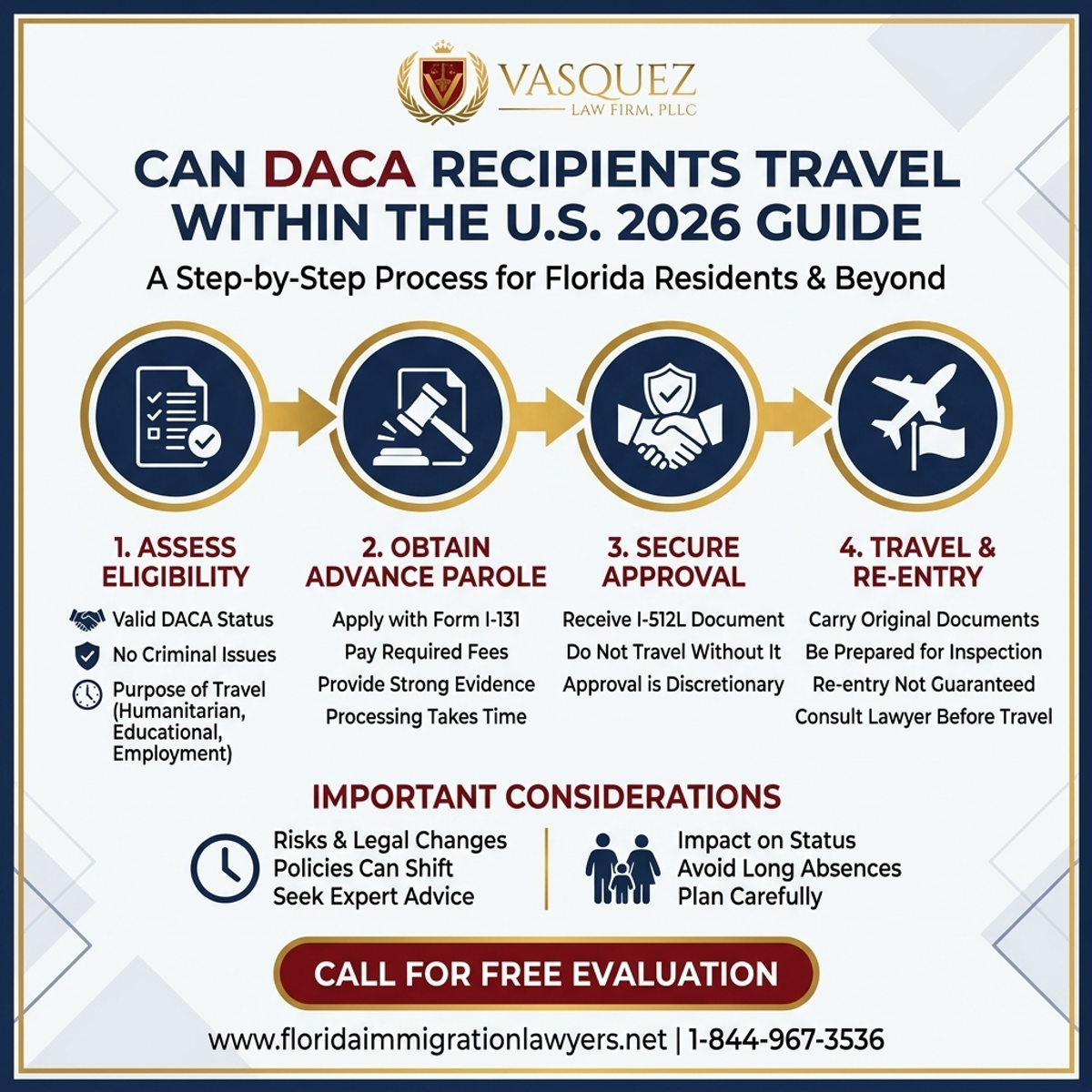
Step-by-Step Process — Can DACA Recipients Travel Within the U.S. 2026 Guide
Processing times can vary, so it's advisable to apply 120-150 days before your current DACA expires.
The renewal process is critical for maintaining your DACA status and the benefits it provides, such as work authorization and protection from deportation. Failing to renew on time can lead to a lapse in your DACA status, which could result in job loss, inability to travel, and increased risk of enforcement actions. For DACA recipients in Florida, staying vigilant about renewal deadlines is paramount.
When completing forms I-821D and I-765, accuracy is key. Any discrepancies or incomplete information can lead to delays or even rejection of your application. It's often beneficial to have an experienced immigration attorney review your application before submission. Florida Immigration Lawyers can provide comprehensive assistance, ensuring all forms are filled out correctly and all necessary documentation is included, giving you peace of mind throughout the renewal process. Call us at 1-844-967-3536 for expert help.
Document Checklist for DACA Renewal
Make sure to have the following documents ready when applying for DACA renewal:
- Current Employment Authorization Document (EAD)
- Copy of your previous DACA approval notice
- Completed and signed Forms I-821D and I-765
- Two passport-style photographs
- Proof of continuous residence in the U.S. since June 15, 2007
Having a well-organized set of documents is crucial for a smooth DACA renewal process. The EAD and previous DACA approval notice are vital for establishing your existing DACA status and streamlining the review by USCIS. Ensure your passport-style photographs meet USCIS specifications to avoid rejections.
The proof of continuous residence is particularly important. This can include a variety of documents such as school records, employment records, utility bills, bank statements, medical records, or tax returns for each year since June 15, 2007. USCIS needs to see a clear paper trail demonstrating your presence in the U.S. throughout this period. Gathering these documents meticulously will strengthen your application.
Before mailing your application, make sure to make copies of everything for your records. This includes all forms, supporting documents, and the check or money order for the fees. In the rare event that your application package is lost or USCIS requests additional information, having your own copies will be invaluable. If you have any doubts about what constitutes sufficient proof of continuous residence, consulting with Florida Immigration Lawyers can help you prepare a robust application.
DACA Renewal Timeline and Processing Expectations
| Stage | Typical Timeframe | Notes |
|---|---|---|
| Application Submission | 1-2 weeks | Prepare documents early |
| USCIS Receipt Notice | 2-3 weeks | Confirm receipt of application |
| Biometrics Appointment | 3-5 weeks | Attend scheduled appointment |
| Approval Decision | 4-6 months | Check USCIS status online |
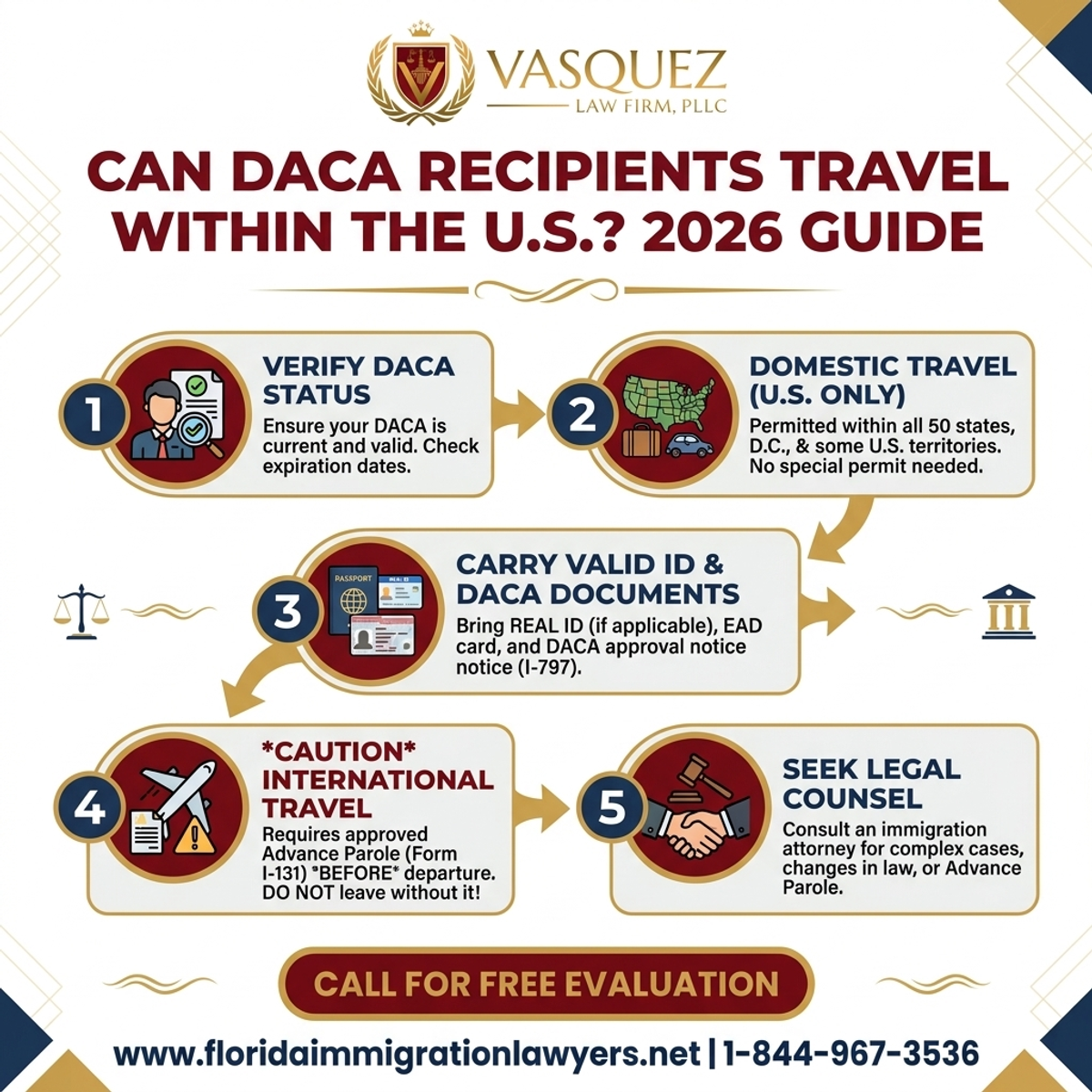
Key Statistics — Can DACA Recipients Travel Within the U.S. 2026 Guide
Processing times can vary, so it's advisable to apply 120-150 days before your current DACA expires.
Understanding the DACA renewal timeline is crucial for managing expectations and avoiding a lapse in your work authorization. After submitting your application, USCIS will send a receipt notice, typically within a few weeks. This notice is important as it contains your receipt number, which you can use to track your application status online via the USCIS website. Keep this number safe.
The biometrics appointment is a mandatory step where you'll have your fingerprints, photograph, and signature taken. This data is used for background checks. Missing this appointment without rescheduling can significantly delay your application. After biometrics, the waiting period for an approval decision can range from several weeks to several months. Factors like the volume of applications, specific USCIS service center workloads, and any requests for additional evidence (RFEs) can influence the overall processing time. It's always best to apply early to account for any potential delays.
Cost Factors and Fee Breakdown for DACA Renewal
| Item | Typical Fee | Notes |
|---|---|---|
| Form I-821D | Varies | Check current USCIS fees |
| Form I-765 | Varies | Includes biometrics fee |
| Biometrics | Varies | Part of Form I-765 fee |
Fees are subject to change, so always verify the latest amounts on USCIS.
The cost associated with DACA renewal is a significant consideration for many recipients. While the fee for Form I-821D (Consideration of Deferred Action for Childhood Arrivals) itself is often grouped with the Employment Authorization Document (EAD) application, it's essential to understand that the total fee covers both the DACA request and the work permit, including the biometrics services fee. These fees are non-refundable, even if your application is denied.
USCIS updates its fee schedule periodically, so checking the official website for the most current amounts before preparing your payment is critical. Incorrect payment amounts are a common reason for applications being rejected and returned, causing significant delays. Payments can typically be made by money order, personal check, cashier's check, or by credit card using Form G-1450, Authorization for Credit Card Transactions. Ensure your payment method is valid and the amount is exact.
Beyond the USCIS filing fees, DACA recipients might also incur costs for legal assistance. While not mandatory, hiring an immigration lawyer can be a wise investment, especially for those with complex cases, previous denials, or concerns about their eligibility. Florida Immigration Lawyers offer transparent fee structures and can help you navigate the entire renewal process, potentially saving you time and stress in the long run. Don't hesitate to call 1-844-967-3536 to discuss your options.
Common Mistakes to Avoid in DACA Renewal
- Missing Deadlines: Failing to renew on time can lead to a lapse in protection, making you vulnerable to deportation and losing your work authorization. Always mark your calendar and aim to apply 120-150 days before expiration.
- Incorrect Forms: Using outdated forms can delay processing or lead to rejection. Always download the latest versions directly from the USCIS website.
- Insufficient Documentation: Lack of proof of continuous residence may result in denial. Ensure you provide a comprehensive set of documents for each year since June 15, 2007.
- Not Checking Application Status: Always track your application's status online using the receipt number provided by USCIS. This allows you to identify and address any issues promptly.
- Unpaid Fees: Applications without the correct fee will be rejected. Double-check the current USCIS fee schedule and ensure your payment method is valid.
- Inaccurate Information: Errors in personal information can cause delays. Review all forms meticulously for typos or inconsistencies before submission.
- Ignoring Legal Changes: Stay informed about policy updates affecting DACA, as the legal landscape can shift rapidly. Subscribe to USCIS alerts or consult an attorney.
- Neglecting Legal Advice: Consulting an immigration lawyer can prevent errors and provide clarity on complex issues. Florida Immigration Lawyers offer expertise to ensure a smooth renewal.
When to Call a Lawyer
Consider contacting a lawyer if you face complex issues such as criminal history, difficulties proving continuous residence, or if you receive a Request for Evidence (RFE) from USCIS. Florida Immigration Lawyers can assist with these challenges and provide personalized guidance.
Engaging an immigration attorney is not just for when things go wrong; it's a proactive step that can prevent potential problems. For instance, if you have any arrests or citations, even minor ones, it's crucial to consult with a lawyer before renewing DACA. Certain offenses, even if expunged or dismissed, could impact your eligibility. A lawyer can assess your record and advise on the best course of action, ensuring full disclosure without jeopardizing your application.
Another scenario where legal counsel is invaluable is if you receive an RFE or a Notice of Intent to Deny (NOID) from USCIS. These notices indicate that USCIS needs more information or intends to deny your application based on current evidence. Responding correctly and comprehensively to an RFE or NOID within the given timeframe is critical, and an experienced attorney can help you gather the necessary evidence and craft a compelling response. Don't hesitate to reach out to Florida Immigration Lawyers at 1-844-967-3536 for expert assistance with these and other complex DACA-related matters.
About Florida Immigration Lawyers
Florida Immigration Lawyers is dedicated to assisting clients with a range of immigration issues, including DACA renewals. Our experienced team offers personalized service and comprehensive legal support. We are located in Central Florida and serve clients across the state. Call us at 1-844-967-3536 for a free consultation or visit our immigration practice areas for more information.
Our firm understands the unique challenges and anxieties faced by DACA recipients and their families in Florida. We pride ourselves on providing compassionate, client-focused representation, ensuring that you feel supported and informed at every stage of your immigration journey. From the initial consultation to the final decision, our goal is to achieve the best possible outcome for your case.
Beyond DACA renewals, Florida Immigration Lawyers offers expertise in a wide array of immigration services, including family-based petitions, naturalization and citizenship applications, deportation defense, and asylum claims. Our deep understanding of U.S. immigration law, coupled with our commitment to our clients, makes us a trusted resource for the diverse immigrant communities throughout Florida. Contact us today to learn how we can help you achieve your immigration goals.
Sources and References
- U.S. Citizenship and Immigration Services (USCIS)
- Executive Office for Immigration Review (EOIR)
- 8 U.S.C. Chapter 12 - Immigration and Nationality Act
Related services: family immigration services, citizenship and naturalization, deportation defense, asylum protection.
This article provides general legal information and is not intended as legal advice. Every case is unique, and outcomes depend on specific facts and circumstances. Contact an attorney for advice about your particular situation.
For expert legal assistance with your DACA renewal, call Florida Immigration Lawyers at 1-844-967-3536. Se Habla Espanol - Estamos aqui para ayudarle.
If you need legal assistance, learn more about immigration lawyers in Florida, or call us at 1-844-967-3536 for a free case review.
Do Not Navigate This Process Alone
Our experienced immigration attorneys are ready to fight for you. Get a free, confidential case review today.
Se Habla Español
Or leave your details and we’ll call you:
Free Evaluation in 24 Hours
Or talk to us right now
AI voice assistant — available 24/7
FreeFrequently Asked Questions

William J. Vásquez
Founding Attorney · Vasquez Law Firm
U.S. Air Force veteran and immigration attorney with years of hands-on U.S. immigration experience. J.D., NCCU School of Law. AILA member. Admitted to the 4th, 5th, and 11th Circuit Courts.
Available 24/7 - Free Evaluations
Reviewed for legal accuracy by William J. Vásquez
Licensed in North Carolina; U.S. immigration is federal practice.
Related Legal Services
Our Florida immigration attorneys can help you with free immigration consultation, business immigration and deportation defense. Call today at 1-844-967-3536 for a free case review.
Related Links
Related Topics
Free Legal Case Review
Discuss your case with our experienced attorneys. We're available 24/7.
Se Habla Español - Estamos aquí para ayudarle.
Related Articles
Immigration Lawyer Orlando Free Consultation in Florida
For individuals and families in Orlando, Florida, navigating the complexities of U.S. immigration law requires expert guidance. An immigration lawyer in Orlando offers crucial support for everything from visa applications and green card processes to naturalization and deportation defense. This comprehensive guide details what a free consultation covers, providing a step-by-step overview of immigration pathways, essential document checklists, and expected timelines in 2026. We also highlight common mistakes to avoid, discuss the critical role of legal counsel in deportation and asylum cases, and explain why choosing a local Orlando immigration attorney is beneficial. Florida Immigration Lawyers is dedicated to serving the diverse community of Orlando with compassionate, effective legal solutions, ensuring you receive personalized advice and robust representation for a successful immigration journey.
Adjustment of Status Venice Florida: 2026 Green Card Guide
For individuals in Venice, Florida, seeking to establish permanent residency without leaving the U.S., Adjustment of Status (Form I-485) is a vital pathway. This comprehensive guide from Florida Immigration Lawyers details the intricate process, covering eligibility requirements, a step-by-step application guide, and a critical document checklist. We delve into the typical timelines for I-485 applications in Florida as of 2026, including expected processing times for biometrics, EAD/AP, and interviews at local USCIS field offices like Orlando. Furthermore, we outline the associated costs, from USCIS filing fees to medical examinations and attorney fees, emphasizing the importance of budgeting accurately. We also highlight common mistakes that applicants often make, such as incomplete forms or traveling without advance parole, and explain why legal counsel is indispensable for complex cases or in response to RFEs. Trust Florida Immigration Lawyers to guide you through this journey.
Removal Conditional Green Card: What to Expect in Florida
For individuals holding a marriage-based conditional green card in Florida, the process of removing those conditions is a crucial step toward permanent residency. This guide details filing Form I-751, Petition to Remove Conditions on Residence, with USCIS. We cover eligibility, required documentation, typical processing times in 2026, and associated costs. Learn about essential evidence for a bona fide marriage, how to navigate the 90-day filing window, and what waiver options are available if your marriage ends. Avoid common mistakes that can lead to delays or denial, and understand when seeking legal assistance from Florida Immigration Lawyers is vital to secure your future in the U.S.
Application for Re-Entry Permit in Florida: A Guide
Learn how to apply for a re-entry permit in Florida to prevent green card abandonment. Understand the process, costs, and common mistakes. Contact Florida Immigration Lawyers for a free consultation today.