Application for Re-Entry Permit in Florida: A Guide
Learn how to apply for a re-entry permit in Florida to prevent green card abandonment. Understand the process, costs, and common mistakes. Contact Florida Immigration Lawyers for a free consultation today.
- File Form I-131
- Submit biometrics
- Understand travel impact
- Florida-specific guidance
Introduction
Traveling overseas as a lawful permanent resident (LPR) from Orlando, Florida, requires careful planning. The risk of green card abandonment is real if you plan to be outside the U.S. for an extended period. This comprehensive guide covers everything you need to know about applying for a re-entry permit, ensuring your travels do not jeopardize your immigration status. Call Florida Immigration Lawyers at 1-844-YO-PELEO for a free case review.
For LPRs, especially those residing in a vibrant international hub like Orlando, Florida, understanding the nuances of maintaining your status while traveling is paramount. Many LPRs have family abroad, international business obligations, or simply wish to embark on extended vacations. Without proper documentation like a re-entry permit, these legitimate reasons for travel can inadvertently lead to severe immigration consequences, including the presumption of abandoning your green card.
This guide aims to demystify the re-entry permit application process, offering practical advice and highlighting specific considerations for Florida residents. Whether you're planning a six-month sabbatical or a two-year assignment overseas, securing a re-entry permit is your best defense against potential issues at the U.S. port of entry. It's not just a formality; it's a critical safeguard for your future in the United States. Don't leave your LPR status to chance; ensure you are fully prepared.
What is a Re-Entry Permit?
A re-entry permit acts as a travel document for LPRs who plan significant time abroad. It helps prevent green card abandonment by proving your intent to maintain U.S. residency.
As of 2026, applying for a re-entry permit requires filing Form I-131. This document allows you to return to the U.S. without risking your LPR status. Typically valid for two years, it's crucial for those with extended travel plans.
The concept of "green card abandonment" often causes significant anxiety. U.S. immigration law presumes that an LPR who remains outside the U.S. for more than one year has abandoned their residency. Even trips shorter than one year can raise questions from Customs and Border Protection (CBP) officers if they suspect you've made your home elsewhere. A re-entry permit serves as official evidence to CBP that you intend to return and maintain your permanent residence in the U.S., effectively rebutting this presumption.
Consider the case of Maria, an LPR from Miami who needed to care for an ailing parent in her home country for 18 months. Without a re-entry permit, her return to the U.S. would have been fraught with risk, potentially leading to questioning, secondary inspection, or even initiation of removal proceedings. With a valid re-entry permit, she could travel with confidence, knowing her LPR status was protected. This document is essentially your proactive defense against the challenges of re-entering the U.S. after an extended absence.
Benefits of a Re-Entry Permit
Holding a re-entry permit provides peace of mind during long trips. It demonstrates your commitment to maintaining U.S. residency, which is vital for those with business or personal commitments abroad.
Orlando and Florida-Specific Considerations
In Florida, proximity to various consulates can aid in the application process. The Orlando USCIS office is a key resource for local LPRs.
For Florida residents, the strategic location of USCIS offices and international airports simplifies aspects of the application. The Orlando USCIS Field Office, for instance, serves as a crucial hub for submitting applications and attending biometrics appointments. Moreover, Florida's diverse population means many LPRs have strong ties to their home countries, making extended international travel a common necessity. Understanding these local resources and how they integrate into the federal immigration process is a significant advantage. If you have any doubts about your specific travel plans or how they might impact your LPR status, don't hesitate to reach out to Florida Immigration Lawyers at 1-844-YO-PELEO for advice.
How to Apply for a Re-Entry Permit?
To apply for a re-entry permit, follow these steps:
- Complete Form I-131, Application for Travel Document.
- Provide necessary documents, including a copy of your green card.
- Pay the required fee as per the USCIS guidelines.
- Submit biometrics at a local Application Support Center (ASC).
- Await processing, which typically takes several months.
The accuracy and completeness of your Form I-131 are paramount. Any errors or omissions can lead to delays, requests for additional evidence, or even denial. It's crucial to provide detailed reasons for your extended stay abroad, demonstrating that your absence is temporary and you fully intend to return to your U.S. residence. Supporting documentation, beyond the basic checklist, can strengthen your case. This might include proof of U.S. property ownership, bank accounts, tax returns, family ties in the U.S., or employment in the U.S. that will resume upon your return. The more evidence you can provide to show your enduring ties to the U.S., the better.
A critical step in the application process is attending your biometrics appointment at an Application Support Center (ASC). USCIS will mail you an appointment notice after your application is filed. You must attend this appointment to have your fingerprints, photograph, and signature taken. Missing this appointment without proper rescheduling can lead to significant delays or even denial of your application. It's advisable to file your I-131 application while you are still physically present in the U.S., as you generally must be in the U.S. to attend the biometrics appointment.
Once your application is submitted and biometrics are completed, the waiting period begins. While waiting, it's generally recommended not to travel internationally until you receive your re-entry permit, especially if your travel plans are for an extended duration. However, if urgent travel is necessary, consulting with an immigration attorney is highly recommended to understand the risks and potential strategies. Florida Immigration Lawyers can help you navigate these complexities, ensuring your application is robust and advising on best practices for your specific travel timeline.
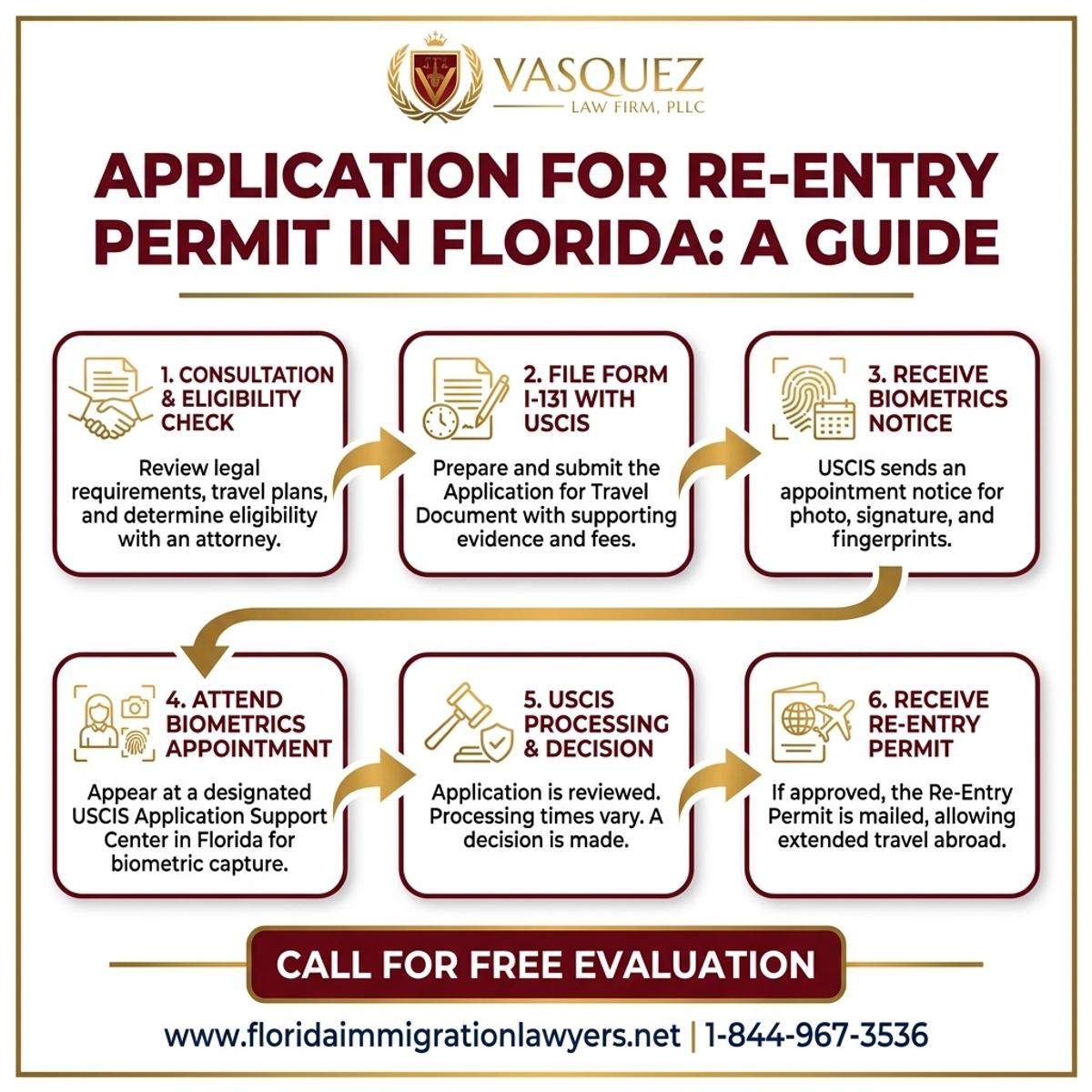
Step-by-Step Process — Application for Re-Entry Permit in Florida: A Guide
Document Checklist
- Form I-131
- Copy of green card
- Passport-style photos
- Fee payment receipt
How Long Does It Take to Process a Re-Entry Permit?
As of 2026, processing times for re-entry permits can vary based on USCIS workload. Generally, expect a timeline of 3-6 months.
| Stage | Typical Timeframe | Notes |
|---|---|---|
| Form I-131 Filing | 1-2 weeks | Initial application processing |
| Biometrics Appointment | 2-4 weeks | Notification and scheduling |
| Final Processing | 3-5 months | After biometrics |
It's important to understand that the stated processing times are estimates and can fluctuate significantly due to various factors, including the volume of applications USCIS receives, staffing levels, and policy changes. For instance, global events or legislative shifts can impact processing speeds. Therefore, it's always prudent to check the official USCIS website for the most current processing times specific to your service center before making any irreversible travel plans. Planning well in advance of your intended departure date is a critical piece of practical advice.
To mitigate potential delays, ensure your application is meticulously prepared. Incomplete forms, missing documents, or unclear explanations for your travel can trigger Requests for Evidence (RFEs), which will inevitably extend your processing time. A common scenario involves LPRs who file too close to their departure date, only to find themselves in a predicament where they must either delay their travel or risk leaving the U.S. without the permit. This is where the expertise of an immigration attorney becomes invaluable; they can help ensure your application is complete and accurate from the outset, minimizing the chances of setbacks.
While waiting for your re-entry permit, you can track your case status online using the receipt number provided by USCIS. If your processing time significantly exceeds the published estimates, or if you encounter any unexpected issues, consider reaching out to Florida Immigration Lawyers. We can assist in inquiring about your case status and, if necessary, help escalate your application under specific circumstances. Proactive management of your application is key to a smooth process and successful outcome.
Costs Involved in Obtaining a Re-Entry Permit
| Item | Typical Fee | Notes |
|---|---|---|
| Filing Fee | Variable | Check USCIS for updates |
| Biometrics Fee | Variable | May apply to some applicants |
Sources and References
- U.S. Citizenship and Immigration Services (USCIS)
- Executive Office for Immigration Review (EOIR)
- U.S. Department of State
- Immigration and Nationality Act (INA), 8 U.S.C. Chapter 12
Do Not Navigate This Process Alone
Our experienced immigration attorneys are ready to fight for you. Get a free, confidential case review today.
Se Habla Español
Or leave your details and we’ll call you:
Free Evaluation in 24 Hours
Or talk to us right now

AI voice assistant — available 24/7
FreeFrequently Asked Questions

William J. Vásquez
Founding Attorney · Vasquez Law Firm
U.S. Air Force veteran and immigration attorney with years of hands-on U.S. immigration experience. J.D., NCCU School of Law. AILA member. Admitted to the 4th, 5th, and 11th Circuit Courts.
Available 24/7 - Free Evaluations
Reviewed for legal accuracy by William J. Vásquez
Licensed in North Carolina; U.S. immigration is federal practice.
Related Legal Services
Our Florida immigration attorneys can help you with immigration lawyer cost in Florida, experienced immigration attorneys and asylum protection. Call today at 1-844-YO-PELEO for a free case review.
Related Links
Related Topics
Free Legal Case Review
Discuss your case with our experienced attorneys. We're available 24/7.
Se Habla Español - Estamos aquí para ayudarle.
Related Articles
EB-5 Investor Green Card in Florida: A 2026 Guide
Explore how to obtain an EB-5 investor green card in Florida. Learn about the investment requirements, processes, and benefits of participating in this program. Discover how Florida's economic landscape can be an ideal setting for your investment. Contact Florida Immigration Lawyers for a free case review.
Certificate of Eligibility for Expungement in Florida 2026
For non-U.S. citizens in Florida, understanding how a state expungement impacts immigration status is critical. A certificate of eligibility for expungement in Florida allows a criminal record to be sealed or expunged under state law. However, federal immigration agencies often disregard such state-level relief, still considering the original criminal offense as a conviction for immigration purposes. This can have severe implications for visa applications, green card eligibility, naturalization, and even lead to deportation. This guide clarifies the Florida expungement process, its limited effect on federal immigration law, and key steps to protect your status in 2026. Learn about common mistakes, required documents, timelines, and when to seek expert legal counsel from Florida Immigration Lawyers to navigate these complex issues effectively.
Immigration Lawyer Orlando Free Consultation in Florida
For individuals and families in Orlando, Florida, navigating the complexities of U.S. immigration law requires expert guidance. An immigration lawyer in Orlando offers crucial support for everything from visa applications and green card processes to naturalization and deportation defense. This comprehensive guide details what a free consultation covers, providing a step-by-step overview of immigration pathways, essential document checklists, and expected timelines in 2026. We also highlight common mistakes to avoid, discuss the critical role of legal counsel in deportation and asylum cases, and explain why choosing a local Orlando immigration attorney is beneficial. Florida Immigration Lawyers is dedicated to serving the diverse community of Orlando with compassionate, effective legal solutions, ensuring you receive personalized advice and robust representation for a successful immigration journey.
Immigration Interview Preparation Florida 2026 Guide
Facing an immigration interview in Florida? This comprehensive guide offers essential 2026 USCIS interview tips for green card and naturalization applicants. Learn how to meticulously prepare your documents, understand the typical timelines, and avoid common mistakes that could jeopardize your case. We cover what to expect at the Orlando USCIS Field Office, provide a detailed document checklist, and explain the various costs involved in the process. With insights into naturalization specifics and when to seek legal counsel, Florida Immigration Lawyers helps you approach your interview with confidence. Our firm is dedicated to empowering immigrants across Florida with the knowledge and support needed for a successful outcome. Get a free case review today.