Citizenship Test Preparation in Florida: A Guide for 2026
Applying for U.S. citizenship through your father's family? This guide covers the essential steps for preparing for the citizenship test in Florida, from understanding the civics test to navigating the N-400 application process. Discover Orlando-specific resources and common pitfalls to avoid. Call Florida Immigration Lawyers for a free case review.
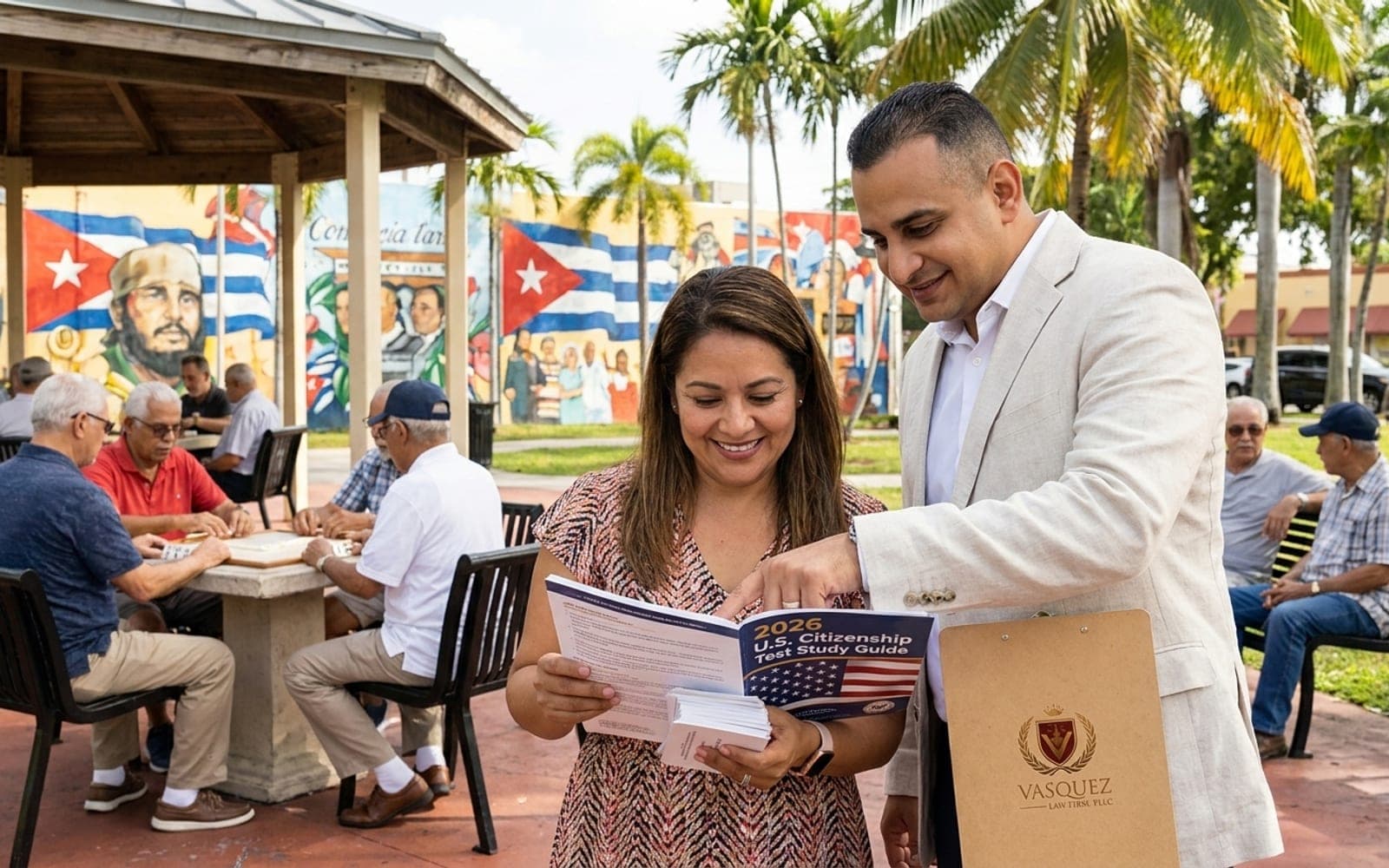
- Understand the components of the civics test.
- Familiarize yourself with the N-400 application process.
- Utilize local resources in Orlando for study support.
Introduction
Applying for U.S. citizenship is a significant milestone, especially if you're going through the process due to your father's family background. It represents not just a change in legal status, but a deep commitment to a new home and a future built on American values. In Florida, many immigrants, particularly in Orlando, take the step toward naturalization each year, seeking the stability and opportunities that citizenship offers.
This article provides a comprehensive guide to preparing for the citizenship test, understanding the naturalization process, and utilizing resources available in Florida. From mastering the civics questions to navigating the N-400 application, we'll cover essential steps to ensure a smooth journey. Remember, while the path to citizenship is rewarding, it can also be complex. Call Florida Immigration Lawyers at 1-844-YO-PELEO for a free case review to guide you through this important journey and ensure every detail is handled with expert care.
What is the Citizenship Test and Why is it Important?
The citizenship test is a critical component of the naturalization process in the United States. As of 2026, it includes an English language assessment and a civics test covering U.S. history and government. Passing this test demonstrates your commitment to becoming a U.S. citizen and your understanding of the country's values and principles.
The test is designed to ensure applicants have sufficient knowledge of the English language and understand the fundamental aspects of U.S. government and history. Successfully passing the test is mandatory for all applicants unless exempted due to age or disability. It's not merely a formality; it's a demonstration of your readiness to participate fully in American society, from voting to understanding your rights and responsibilities.
The English language assessment evaluates your ability to read, write, and speak basic English. During your naturalization interview, the USCIS officer will assess your speaking ability as you answer questions about your N-400 application. You'll also be asked to read and write simple sentences in English. This ensures you can communicate effectively in daily life and understand the civic discourse of the nation.
The civics test, on the other hand, delves into U.S. history, government, and geography. It's designed to confirm that you comprehend the foundational principles of American democracy, such as the Constitution, the Bill of Rights, and the structure of the federal government. This knowledge is crucial for informed civic participation, helping you understand how laws are made, who your representatives are, and your role in the democratic process.
Failing any portion of the test can lead to delays in your naturalization process, as you will typically be given a second opportunity to retake the failed part. Therefore, thorough preparation is not just recommended, but essential to avoid setbacks and ensure a timely path to becoming a U.S. citizen.
How to Prepare for the Citizenship Test in Florida?
Preparing for the citizenship test involves several steps to ensure you're ready for the interview and exam. Here's a step-by-step guide:
- Study the Civics Questions: The USCIS provides a list of 100 civics questions. Familiarize yourself with these questions, as you'll be asked 10 during the test, and you must answer six correctly. To truly master them, don't just memorize answers; understand the concepts. Use flashcards, mobile apps, and online quizzes. Focus on key historical events like the American Revolution and the Civil War, and understand the roles of the three branches of government. For example, knowing the purpose of the Constitution and the Bill of Rights is more important than just recalling their dates.
- Practice English Language Skills: Focus on reading, writing, and speaking English. The test includes these components to assess your language proficiency. Immerse yourself in English by reading local newspapers, watching English news channels, and listening to English radio. Practice speaking by having conversations with native English speakers or joining English discussion groups. During the interview, clarity and confidence in your spoken English will be key.
- Attend Citizenship Classes: Many community organizations in Orlando offer classes to help applicants prepare for the test. These classes cover both English and civics. These structured environments often provide mock interviews, practice tests, and a curriculum designed to cover all necessary material. Look for programs at local libraries, adult education centers, or non-profits like Catholic Charities, which often provide free or low-cost options and invaluable peer support.
- Use USCIS Resources: Utilize official materials provided by the USCIS, including study guides and practice tests. The USCIS website offers a wealth of free resources, such as the "Civics Practice Test," audio files of the civics questions, and flashcards. These materials are directly from the source and are the most reliable for your preparation, ensuring you are studying the correct information.
- Stay Informed About Test Changes: The test format can change, so stay updated with the latest information from the USCIS website. For instance, there was a revised civics test introduced in late 2020 which was later reverted. Always check the official USCIS website for any announcements regarding changes to the test content or procedures to ensure your preparation is aligned with current requirements.
Creating a consistent study schedule is crucial for success. Break down the 100 civics questions into manageable weekly goals and dedicate specific times each day to English practice. Even 30 minutes of focused study daily can significantly improve your retention and confidence. Consider forming a study group with other applicants in Florida; teaching others can solidify your own understanding and provide mutual encouragement.
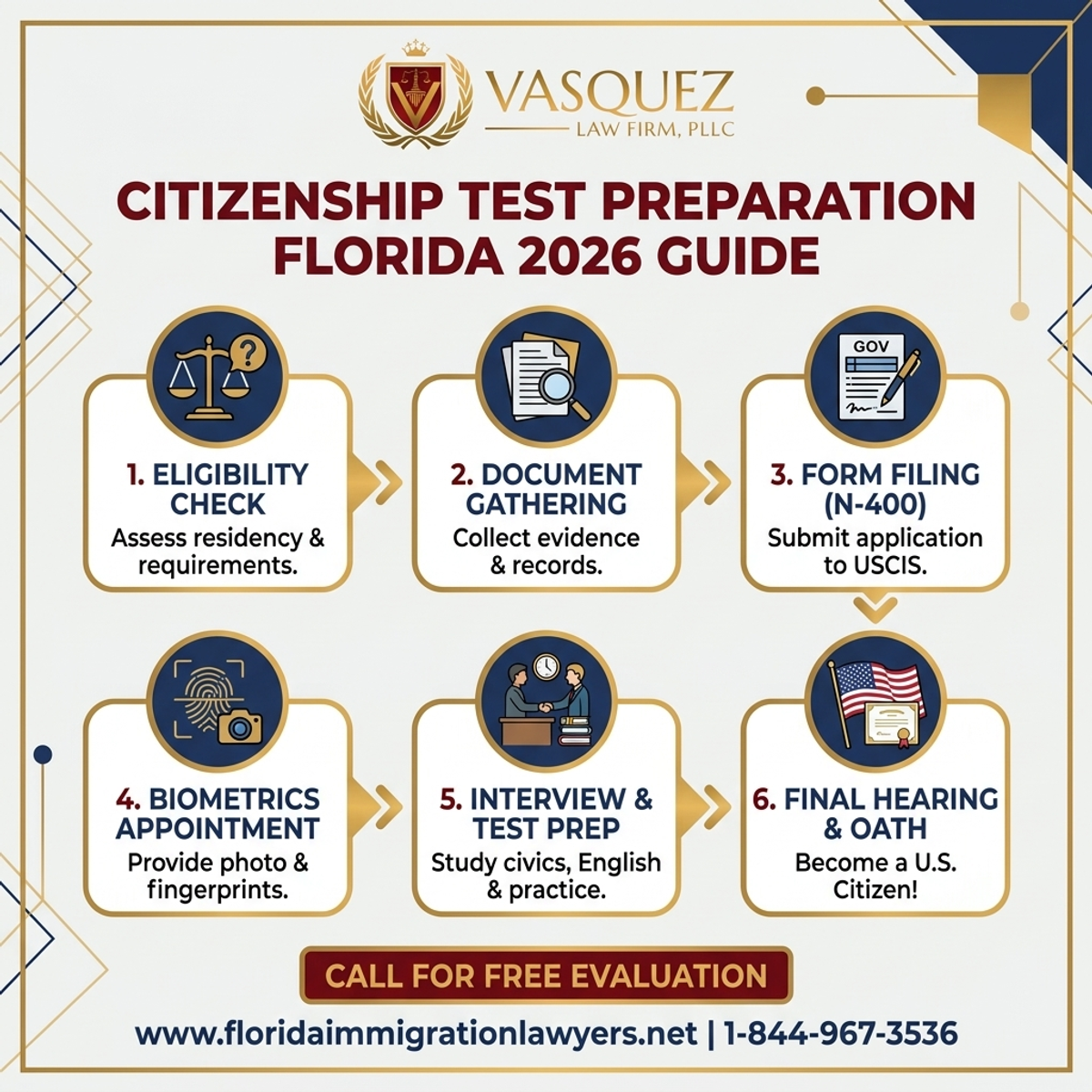
Step-by-Step Process — Citizenship Test Preparation in Florida: A Guide for 2026
What Documents Are Needed for the Naturalization Application?
When applying for naturalization, you'll need to submit several documents along with your N-400 form. Here's a checklist:
- Completed Form N-400: This is the primary application form. Ensure all sections are filled out accurately and completely. Any omissions or errors can lead to delays or even denial.
- Proof of Permanent Residency (Green Card): You will need to provide a copy of both sides of your Permanent Resident Card (Form I-551). Bring the original with you to your interview.
- Two passport-sized photos: These photos must meet specific USCIS requirements, including a white background and no glasses. Ensure they are recent and professionally taken.
- Marriage certificate (if applicable): If you are applying based on three years of permanent residency as the spouse of a U.S. citizen, you'll need your marriage certificate. You may also need divorce decrees from any previous marriages for both you and your spouse.
- Proof of parental citizenship (if applicable): While the N-400 is for naturalization, if your eligibility for naturalization is linked to your father's prior naturalization (e.g., you were a minor at the time), you might need his naturalization certificate. For most N-400 applicants, this category might include birth certificates of your children if they are U.S. citizens, or documents demonstrating your lawful status since birth.
- Any court documents related to criminal convictions: Full disclosure of any arrests, citations, or convictions, even if expunged, is crucial. Provide certified copies of all court dispositions and police reports. Failure to disclose can be considered misrepresentation and lead to severe consequences.
Beyond this core list, additional documents may be required depending on your specific circumstances. These could include tax returns for the past five years (or three years if married to a U.S. citizen), proof of selective service registration for males aged 18-26, and a detailed travel history if you have spent significant time outside the U.S. since becoming a permanent resident. Organizing all your documents meticulously, making copies for your records, and bringing originals to your interview will streamline the process.
Timeline and Processing Expectations for Naturalization
The naturalization process includes several stages, each with its own timeline. Here's what you can expect:
| Stage | Typical Timeframe | Notes |
|---|---|---|
| Application Submission | 1-2 months | Includes processing and biometrics appointment |
| Interview Scheduling | 3-5 months | Interview notice after biometrics |
| Citizenship Test | 1 day | Conducted during the interview |
| Oath Ceremony | 1-2 months after interview | Final step in becoming a citizen |
Processing times may vary based on the USCIS office location. Orlando residents typically use the Jacksonville or Miami offices, which can influence wait times. After submitting your N-400, you will receive a receipt notice, followed by an appointment notice for biometrics (fingerprints and photos). This usually occurs within a few weeks to a couple of months.
Once your biometrics are processed, your application will be reviewed, and you will receive an interview notice. The interview is a critical step where a USCIS officer will verify the information on your N-400, assess your English language skills, and administer the civics test. Be prepared to answer questions about your application truthfully and thoroughly.
If you pass the interview and test, and meet all other eligibility requirements, you will typically receive a notice for your Oath of Allegiance ceremony. This is the final and most celebratory step, where you formally become a U.S. citizen and receive your Certificate of Naturalization. The entire process can take anywhere from 8 to 18 months, sometimes longer, depending on the volume of applications and the complexity of your case. You can monitor your case status online through the USCIS website.
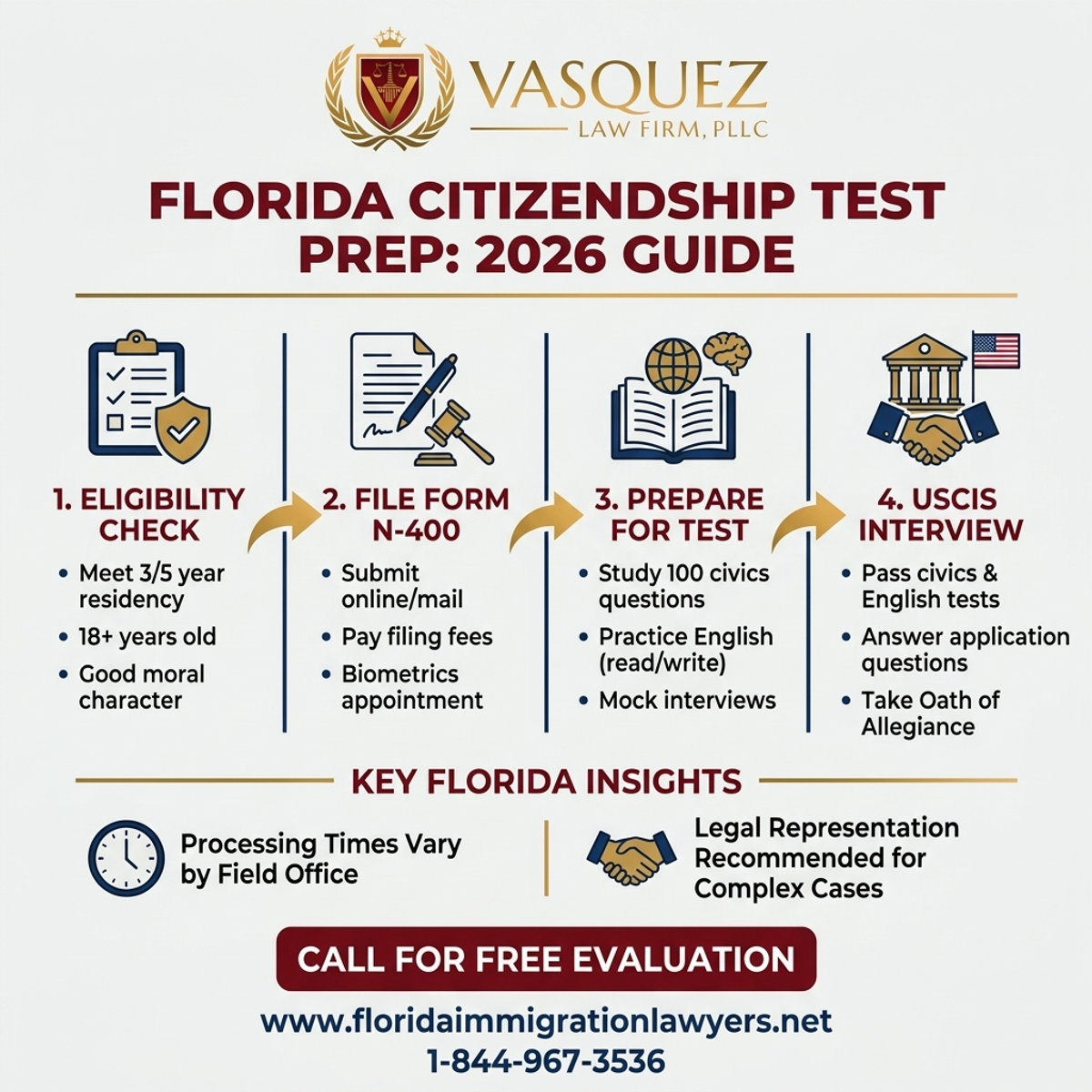
Key Statistics — Citizenship Test Preparation in Florida: A Guide for 2026
Understanding Naturalization Costs and Fees
Applying for naturalization incurs several fees. Here's a breakdown:
| Item | Typical Fee | Notes |
|---|---|---|
| N-400 Application Fee | Check current rates | Includes biometrics fee |
| Citizenship Class Fees | Varies | Offered by community organizations |
| Travel Expenses | Varies | For attending interviews and tests |
While fees can change, staying informed through the USCIS website ensures you have the latest information. The N-400 application fee covers the processing of your application and the biometrics appointment. It's important to check the USCIS website for the most current fee schedule, as these rates are subject to change without prior notice.
For those facing financial hardship, USCIS offers fee waivers (Form I-912) for eligible applicants. You may qualify if you are receiving a means-tested benefit, your household income is at or below 150% of the federal poverty guidelines, or you are experiencing financial hardship that prevents you from paying the fee. Carefully review the eligibility criteria on the USCIS website or consult Florida Immigration Lawyers for assistance.
Beyond the official fees, consider other potential costs such as citizenship class fees (though many community organizations offer free or low-cost options), travel expenses for interviews and biometrics appointments, parking fees, and potentially legal fees if you choose to hire an attorney. Budgeting for these expenses in advance can help alleviate financial stress during the naturalization process.
Common Mistakes to Avoid
The naturalization process, while straightforward for many, is fraught with potential pitfalls. Avoiding common mistakes can significantly smooth your journey to U.S. citizenship and prevent unnecessary delays or even denial of your application. Diligence and attention to detail are paramount from the outset.
- Not studying the civics questions thoroughly, which can lead to failing the test.
- Ignoring English language preparation, causing misunderstandings during the interview.
- Submitting incomplete N-400 applications, resulting in processing delays.
- Missing biometrics appointments, leading to rescheduling and further delays.
- Forgetting to update USCIS with address changes, causing missed correspondence.
- Not bringing all required documents to the interview, potentially causing rescheduling.
- Underestimating processing times, which can lead to expired travel documents.
- Failing to understand the naturalization oath, which can impact the final step.
- Assuming exemptions from the test without confirming eligibility with USCIS.
- Not seeking legal advice when complications arise, risking application denial.
By being proactive and meticulously preparing for each stage of the naturalization process, you can minimize the risk of these common errors. If you're ever unsure about a requirement or face an unexpected challenge, remember that expert legal guidance is readily available.
When to Call a Lawyer
Navigating the naturalization process can be complex. While many applicants successfully complete the process on their own, certain circumstances warrant the expertise of an immigration attorney. Call a lawyer if you encounter issues such as a criminal history, complicated family circumstances, or previous immigration violations. Even minor offenses or arrests that occurred years ago must be disclosed and can impact your eligibility for good moral character.
Complicated family situations, such as multiple marriages, divorces, or child support obligations, can also raise questions that are best addressed by an attorney. Similarly, any past immigration issues, including overstays, previous deportations, or misrepresentations on prior applications, require careful legal review. Long periods of absence from the U.S. that might affect your continuous residency requirement are another common reason to seek legal counsel.
Florida Immigration Lawyers can provide guidance and representation to ensure your application is handled properly, assessing potential risks and helping you gather the necessary documentation and explanations. Don't hesitate to seek assistance to avoid costly mistakes or to address any doubts about your eligibility. A free case review with Florida Immigration Lawyers at 1-844-YO-PELEO can provide clarity and peace of mind.
Frequently Asked Questions About Naturalization
Sources and References
- U.S. Citizenship and Immigration Services (USCIS)
- Executive Office for Immigration Review (EOIR)
- 8 U.S.C. Chapter 12 - Immigration and Nationality Act
Related services: citizenship test preparation, dual citizenship guidance, family-based immigration.
This article provides general legal information and is not intended as legal advice. Every case is unique, and outcomes depend on specific facts and circumstances. Contact an attorney for advice about your particular situation.
Final CTA
Ready to take the next step toward U.S. citizenship? Contact Florida Immigration Lawyers at 1-844-YO-PELEO for expert guidance and a free consultation. Se Habla Español - Estamos aquí para ayudarle.
Do Not Navigate This Process Alone
Our experienced immigration attorneys are ready to fight for you. Get a free, confidential case review today.
Se Habla Español
Or leave your details and we’ll call you:
Free Evaluation in 24 Hours
Or talk to us right now
AI voice assistant — available 24/7
FreeFrequently Asked Questions

William J. Vásquez
Founding Attorney · Vasquez Law Firm
U.S. Air Force veteran and immigration attorney with years of hands-on U.S. immigration experience. J.D., NCCU School of Law. AILA member. Admitted to the 4th, 5th, and 11th Circuit Courts.
Available 24/7 - Free Evaluations
Reviewed for legal accuracy by William J. Vásquez
Licensed in North Carolina; U.S. immigration is federal practice.
Related Legal Services
Our Florida immigration attorneys can help you with citizenship and naturalization, immigration practice areas and free immigration consultation. Call today at 1-844-YO-PELEO for a free case review.
Related Links
Related Topics
Free Legal Case Review
Discuss your case with our experienced attorneys. We're available 24/7.
Se Habla Español - Estamos aquí para ayudarle.
Related Articles
Immigration Lawyer Orlando Free Consultation in Florida
For individuals and families in Orlando, Florida, navigating the complexities of U.S. immigration law requires expert guidance. An immigration lawyer in Orlando offers crucial support for everything from visa applications and green card processes to naturalization and deportation defense. This comprehensive guide details what a free consultation covers, providing a step-by-step overview of immigration pathways, essential document checklists, and expected timelines in 2026. We also highlight common mistakes to avoid, discuss the critical role of legal counsel in deportation and asylum cases, and explain why choosing a local Orlando immigration attorney is beneficial. Florida Immigration Lawyers is dedicated to serving the diverse community of Orlando with compassionate, effective legal solutions, ensuring you receive personalized advice and robust representation for a successful immigration journey.
EAD Advance Parole Combo Card in Florida 2026
For individuals with a pending Form I-485, Application to Register Permanent Residence or Adjust Status, the EAD Advance Parole Combo Card is an essential document. This single card combines the authorization to work legally in the U.S. (Employment Authorization Document - EAD) with permission to travel internationally and re-enter without abandoning your green card application (Advance Parole). This guide from Florida Immigration Lawyers provides a comprehensive overview for applicants in Florida in 2026, covering eligibility, the step-by-step application process, required documents, expected processing times, and associated costs. We also highlight common mistakes to avoid and when to seek legal counsel to ensure a smooth and successful immigration journey. Understanding this vital card is key to maintaining stability while awaiting your permanent residency approval.
EAD Advance Parole Combo Card in Florida: What You Need
An EAD advance parole combo card allows individuals with pending adjustment applications to both work and travel abroad without jeopardizing their green card application. Learn how to apply in Florida, what documents you need, and common mistakes to avoid.
Dual Citizenship Lawyer in Florida: What You Need to Know
For Florida residents, the concept of dual citizenship, or holding two passports, offers a compelling blend of opportunities and challenges. While the U.S. generally permits dual nationality, the path to achieving this status requires a meticulous understanding of both U.S. immigration laws and the citizenship policies of your country of origin. This guide explores the definition of dual citizenship, the detailed step-by-step process for U.S. naturalization, and the significant benefits and potential pitfalls involved. We cover essential documentation, typical timelines, and cost considerations for 2026, providing crucial insights for anyone in Orlando, Miami, or across Florida considering this important legal step. Learn about common mistakes to avoid and understand when to seek professional legal counsel to navigate this complex process successfully. Florida Immigration Lawyers is here to provide expert, bilingual support for your dual citizenship journey.