Citizenship Test Preparation in Florida: Key Steps
Applying for U.S. citizenship in Florida? Discover essential steps for preparing for the citizenship test, including what documents you'll need, typical timelines, and common mistakes to avoid. Whether you're in Orlando or other parts of the state, understanding this process can ease your path to becoming a naturalized citizen. Contact Florida Immigration Lawyers for personalized assistance.
- Understand the naturalization process
- Prepare for the civics test
- Gather necessary documents
- Stay informed about current laws
- Consult with an immigration lawyer if in doubt
Introduction
Applying for U.S. citizenship is a significant step for many immigrants in Florida, especially those in Orlando and surrounding areas. If you're worried about how your father's family might impact your application, you're not alone. This guide will help you navigate the preparation for the citizenship test, including the civics test, and ensure you understand the naturalization process. For personalized assistance, call Florida Immigration Lawyers at 1-844-YO-PELEO for a free case review.
The journey to becoming a U.S. citizen is a profound personal achievement, symbolizing dedication to a new homeland and unlocking a host of rights and responsibilities. In Florida, a state celebrated for its vibrant diversity and large immigrant communities, the pursuit of citizenship is a common aspiration. Our firm, Florida Immigration Lawyers, understands the unique challenges and questions that arise during this process, particularly when personal family histories come into play.
Many applicants express concerns about how past family events or the immigration history of a parent, such as your father, could potentially influence their own naturalization eligibility. While your application is primarily assessed on your individual qualifications, understanding the full scope of your family's background and being prepared to provide complete and accurate information is crucial. Transparency and meticulous documentation are your strongest allies in navigating any such complexities.
This comprehensive guide aims to demystify the naturalization process, offering practical advice on preparing for the citizenship test, compiling essential documents, and understanding the timeline involved. We'll also highlight common pitfalls to avoid and emphasize when professional legal counsel from Florida Immigration Lawyers can make all the difference, ensuring your path to U.S. citizenship is as smooth as possible.
What is the Citizenship Test and Why is it Important?
The citizenship test, also known as the naturalization test, is a critical component of the U.S. citizenship application process. As of 2026, it includes an English language test and a civics test covering U.S. history and government.
The citizenship test assesses your ability to read, write, and speak English, as well as your knowledge of U.S. history and government. Passing this test is necessary to become a naturalized citizen.
Preparation is essential, especially for those in Florida where specific regional knowledge might be beneficial. The test ensures you’re ready to take on the responsibilities of citizenship, such as voting and participating in civic life.
Beyond being a mere formality, the citizenship test serves as a fundamental rite of passage, signifying an applicant's commitment to understanding and upholding the principles upon which the United States was founded. It fosters a shared civic identity among new citizens, ensuring they possess the basic knowledge required to engage meaningfully in American democracy. Successfully passing this test demonstrates not only your linguistic proficiency but also your dedication to integrating into American society.
The English portion evaluates your conversational abilities, your capacity to read and understand simple sentences, and your skill in writing a basic sentence in English. The civics portion covers 100 questions on U.S. government, history, and integrated civics, from the foundational documents like the Constitution to key historical events and figures. This comprehensive assessment ensures that new citizens are well-equipped for their new role.
For residents of Florida, excelling on this test opens doors to numerous benefits, including the right to vote, increased travel freedom, the ability to sponsor close family members for immigration, and greater protection from deportation. It's a significant investment in your future and the future of your family, providing stability and expanded opportunities within the United States.
How to Prepare for the Citizenship Test in Florida?
Preparing for the citizenship test involves several steps, and starting early is advisable. Here’s a general guide:
- Study the 100 civics questions provided by USCIS.
- Take English classes if needed to improve language skills.
- Use online resources and practice tests.
- Attend citizenship preparation classes offered in Florida.
- Schedule regular study sessions and practice speaking English.
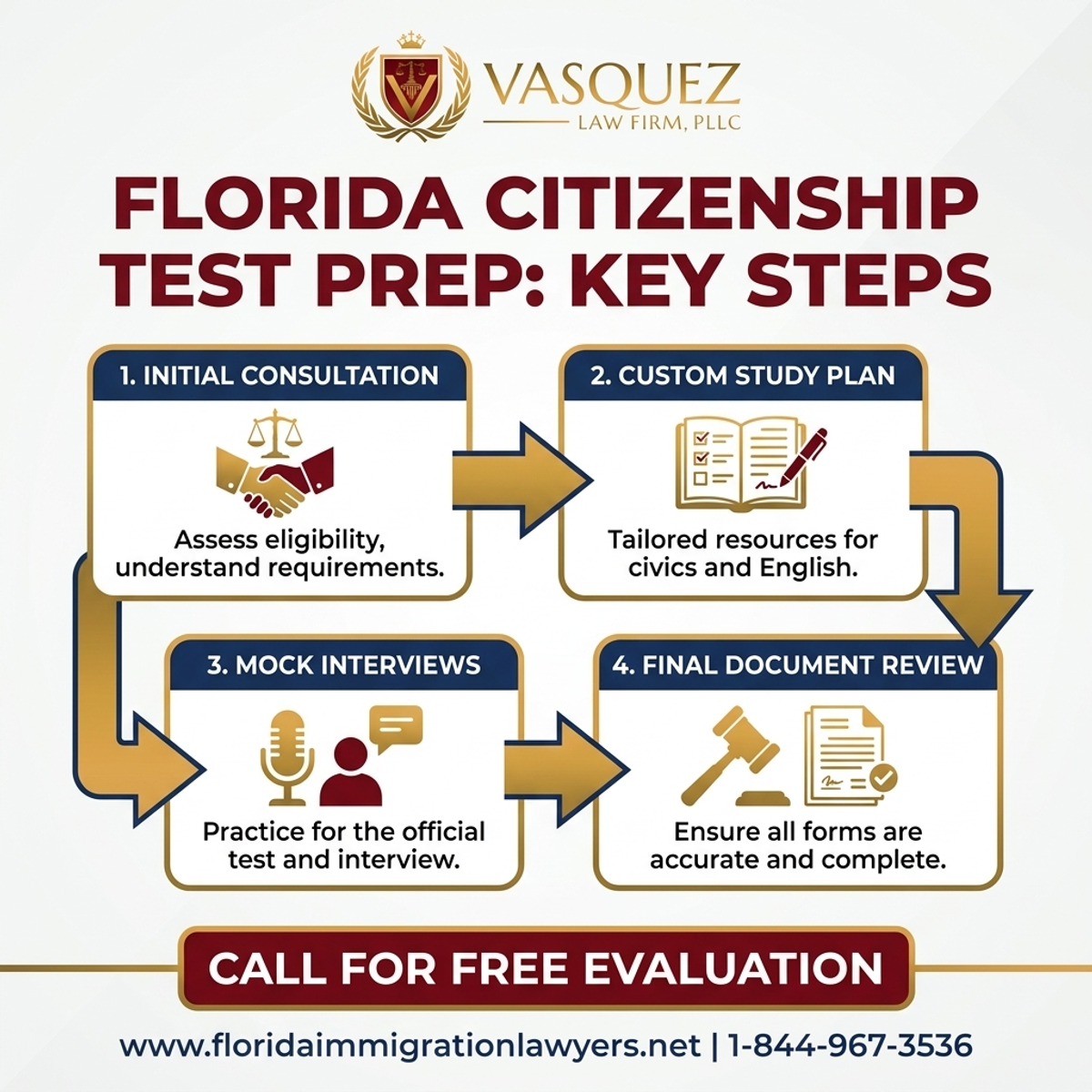
Step-by-Step Process — Citizenship Test Preparation in Florida: Key Steps
These steps will help you gain confidence and improve your chances of passing the test. Remember, resources such as the USCIS Citizenship Resource Center are invaluable.
A structured study plan is paramount. Begin by familiarizing yourself with the official 100 civics questions and answers provided by USCIS. Break them down into smaller, manageable sections, perhaps focusing on a few questions each day. Utilize flashcards, mnemonic devices, or study groups to enhance retention. Regularly reviewing the material will solidify your knowledge and build confidence for the actual test.
For the English language component, immerse yourself as much as possible. Beyond formal classes, consider watching U.S. news, listening to English-language podcasts, and reading local newspapers in Florida. Practice speaking English daily with friends, family, or in community settings. The more you use the language, the more comfortable and fluent you will become, which is vital for the interview portion of the test.
Many community centers, public libraries, and adult education programs across Florida offer free or low-cost citizenship preparation classes. These classes often provide structured lessons, practice tests, and mock interviews that can simulate the actual experience. Participating in these programs, or even scheduling a mock interview with a trusted advisor from Florida Immigration Lawyers, can significantly boost your readiness and alleviate test-day anxiety.
What Documents are Needed for the N-400 Application?
When applying for citizenship, the N-400 form is essential. Here is a checklist of documents you will need:
- Permanent Resident Card (Green Card)
- Two passport-style photos
- Tax returns for the past five years
- Marriage certificates, if applicable
- Proof of residence
- Any court documents related to legal issues
Ensuring all documents are current and correctly submitted can prevent delays in processing your application.
Each document on the N-400 checklist serves a specific purpose in demonstrating your eligibility for naturalization. For instance, your Permanent Resident Card proves your lawful status, while tax returns are crucial for establishing good moral character and financial responsibility over the required period. Marriage certificates, if applicable, confirm your marital status and can be relevant for reduced residency requirements.
Organizing these documents meticulously before submission is a critical step. Create a comprehensive checklist, make clear copies of everything, and keep your original documents safe. It's also wise to prepare a cover letter listing all submitted documents. Depending on your specific circumstances, you might need additional items such as Selective Service registration proof, child support orders, or documents related to any name changes.
Failing to provide all necessary documents or submitting incomplete/incorrect information can lead to significant delays, including Requests for Evidence (RFEs) from USCIS or even denial of your application. If you have complex family circumstances, such as information related to your father's past immigration, or any legal issues, gathering all relevant supporting documentation is paramount. Consulting with Florida Immigration Lawyers can help you ensure your application is robust and complete.
Timeline for the Citizenship Process
| Stage | Typical Timeframe | Notes |
|---|---|---|
| Submit N-400 | 2-3 months | Receive receipt notice |
| Biometrics Appointment | 1-2 months | Fingerprinting and photograph |
| Interview and Test | 6-12 months | Includes English and civics tests |
| Oath Ceremony | 1-2 months | Final step to citizenship |
Understanding this timeline helps set realistic expectations for your naturalization journey.
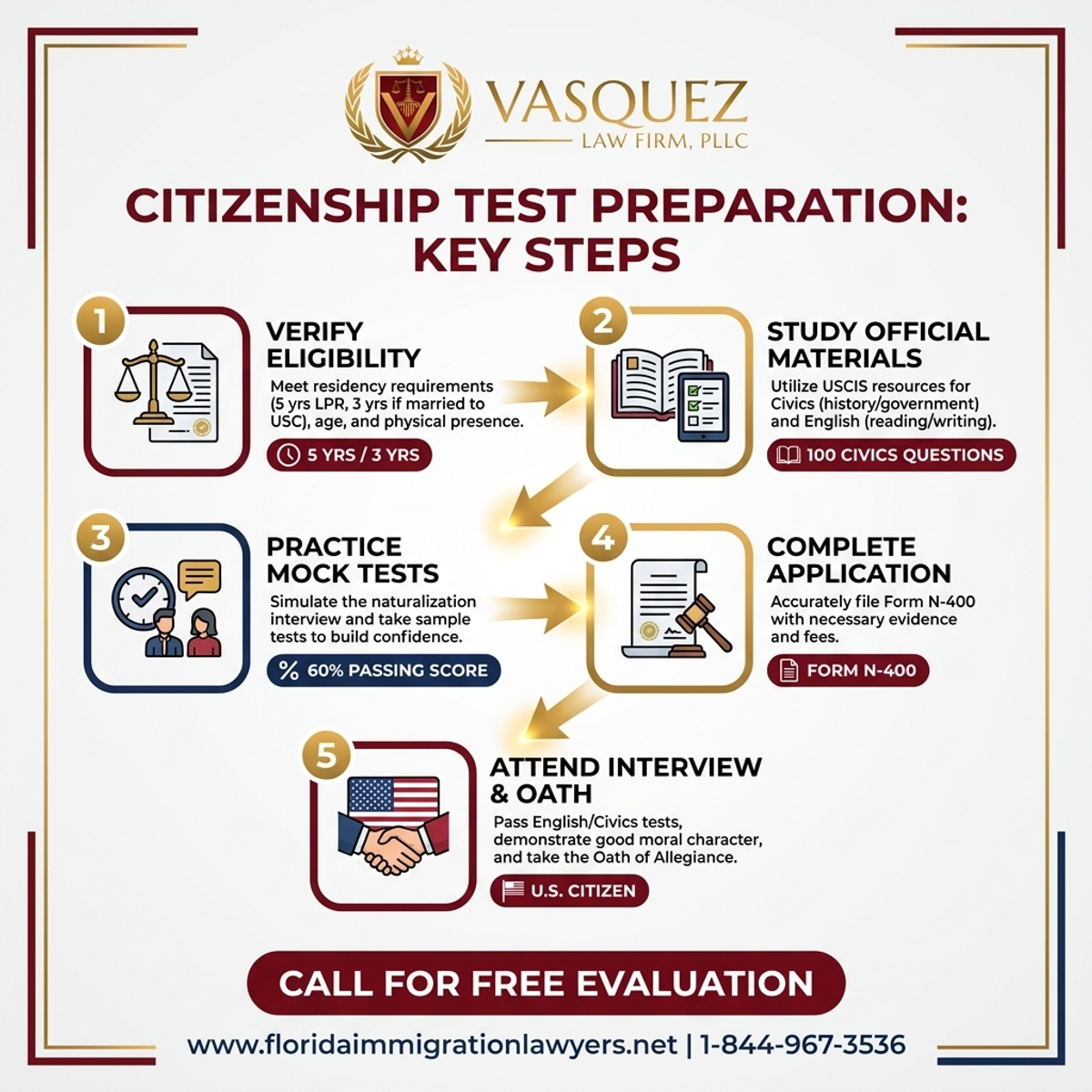
Key Statistics — Citizenship Test Preparation in Florida: Key Steps
The submission of Form N-400, Application for Naturalization, marks the official start of your citizenship journey. After filing, USCIS will send you a receipt notice, typically within a few weeks. It's crucial to keep this notice safe as it contains your case number, which you'll use to track the status of your application online. The initial processing time can vary based on the service center handling your case.
Following the receipt notice, you will receive an appointment notice for biometrics. This appointment involves fingerprinting, photographing, and a signature, which are used for background checks and identity verification. Attending this appointment is mandatory, and failure to do so can lead to delays or even denial. Be sure to bring the appointment notice and a valid photo ID.
The interview and test stage is arguably the most significant. During your interview, a USCIS officer will review your N-400 application, ask questions about your eligibility, and administer the English and civics tests. Thorough preparation, including mock interviews, can significantly reduce anxiety. If successful, you will then be scheduled for the Oath of Allegiance Ceremony, the final and most celebratory step in becoming a U.S. citizen.
Cost Factors and Fee Breakdown
| Item | Typical Fee | Notes |
|---|---|---|
| N-400 Filing Fee | Varies | Check current USCIS rates |
| Biometrics Fee | Varies | Usually required |
| Preparation Classes | Varies | Optional but recommended |
Fees are subject to change, so it's important to verify the current rates at the USCIS website.
The N-400 filing fee and biometrics fee are the primary government-mandated costs for naturalization. It's important to note that these fees are non-refundable, regardless of the outcome of your application. USCIS regularly updates its fee schedule, so always confirm the most current rates directly on their official website before submitting your application to avoid any processing delays due to incorrect payment.
For applicants facing financial hardship, USCIS offers fee waivers for the N-400 application. Eligibility for a fee waiver is typically based on your household income being at or below 150% of the Federal Poverty Guidelines, or if you are receiving certain public benefits. This option can significantly reduce the financial burden of applying for citizenship, making the process more accessible to a wider range of eligible individuals.
Beyond the official government fees, other potential costs might include legal fees if you choose to hire an immigration lawyer, translation services for any non-English documents, or travel expenses for appointments. While optional, investing in preparation classes or legal guidance from Florida Immigration Lawyers can be invaluable, helping you navigate complexities and significantly increase your chances of a successful outcome, making it a worthwhile investment in your future.
Common Mistakes to Avoid
- Not studying enough for the civics test, leading to failure.
- Submitting incomplete or incorrect forms.
- Missing biometrics appointments.
- Failing to update USCIS with change of address.
- Ignoring legal advice and trying to navigate the process alone.
- Not preparing for the English test.
- Forgetting to bring necessary documents to the interview.
- Not checking for the latest updates on immigration laws.
- Assuming all fees are the same; always check current rates.
- Relying solely on online resources without professional guidance.
Avoiding common pitfalls is just as crucial as thorough preparation in your journey to U.S. citizenship. Even minor errors can lead to significant delays, requests for additional evidence, or even the denial of your application, prolonging an already lengthy process and causing unnecessary stress.
Forgetting to update your address with USCIS, for example, can result in missed appointment notices or important correspondence, potentially leading to your case being closed without your knowledge. Similarly, not bringing all required documents to your interview can necessitate rescheduling, adding weeks or months to your timeline. Diligence and attention to detail at every step are paramount.
This is where the expertise of Florida Immigration Lawyers becomes invaluable. Our team can help you meticulously review your application, ensure all documents are in order, and prepare you for every stage of the process, including the interview. By proactively addressing potential issues and providing comprehensive guidance, we help you sidestep these common mistakes and streamline your path to naturalization.
When to Call a Lawyer
If you're facing complex issues such as past criminal charges, previous immigration violations, or if your case involves unique family circumstances, consulting with an immigration lawyer is crucial. Florida Immigration Lawyers can provide the guidance you need. We help with complex cases and ensure you're fully prepared for each step of the naturalization process.
Complexities in a naturalization application can arise from various factors beyond simple administrative errors. These might include multiple arrests (even if charges were dismissed or expunged), significant periods of unemployment, extensive travel outside the U.S., or any previous interactions with immigration enforcement. Each of these situations requires a nuanced understanding of immigration law to present your case effectively to USCIS.
Regarding unique family circumstances, particularly if they involve your father's family history, a lawyer's insight is indispensable. For instance, if there were any questions surrounding the legality of your parent's entry or status, or if you have derivative citizenship claims through a parent that might be questioned, these are areas where an attorney can clarify your position and help gather necessary evidence. Transparency and proper disclosure are key, and a lawyer can guide you on how best to present this information.
Early consultation with Florida Immigration Lawyers can prevent small issues from escalating into major obstacles. Our team excels at identifying potential red flags in your application, strategizing solutions, and representing your best interests throughout the process. Don't risk a denial due to an oversight or misunderstanding of complex legal requirements; call us at 1-844-YO-PELEO for expert assistance.
About Florida Immigration Lawyers
Florida Immigration Lawyers is dedicated to providing comprehensive immigration services across the state. Whether you need help with citizenship, asylum, or deportation defense, we are here to assist. Our team is experienced in handling complex cases and is available 24/7. Call us at 1-844-YO-PELEO for a free case review. Visit our immigration practice areas to learn more.
Our commitment extends beyond just legal representation; we are deeply invested in the success and well-being of Florida's diverse immigrant communities. We understand that each case is unique and often comes with significant personal stakes. This understanding drives our personalized approach, ensuring that every client receives the attention, respect, and strategic counsel they deserve, regardless of the complexity of their situation.
With a profound understanding of both federal immigration laws and the specific nuances impacting Florida residents, our attorneys are uniquely positioned to guide you through the naturalization process. From preparing for the civics test to gathering intricate family documentation, we provide end-to-end support. Our goal is to demystify the legal landscape and empower you with the knowledge and confidence needed to achieve your immigration goals.
At Florida Immigration Lawyers, we pride ourselves on our accessibility and unwavering dedication. Our team is always ready to answer your questions, address your concerns, and advocate vigorously on your behalf. We offer services in multiple languages, including Spanish, ensuring effective communication and culturally sensitive support. Reach out today for a free case review and let us partner with you on your path to U.S. citizenship.
Frequently Asked Questions About U.S. Citizenship
Sources and References
- U.S. Citizenship and Immigration Services (USCIS)
- Executive Office for Immigration Review (EOIR)
- 8 U.S.C. Chapter 12 - Immigration and Nationality Act
Related services: citizenship test preparation, dual citizenship guidance, family-based immigration.
This article provides general legal information and is not intended as legal advice. Every case is unique, and outcomes depend on specific facts and circumstances. Contact an attorney for advice about your particular situation.
For those navigating the citizenship process, having expert legal support can make a significant difference. Contact Florida Immigration Lawyers today for a free case review. Se Habla Espanol - Estamos aqui para ayudarle.
If you need legal assistance, learn more about citizenship lawyers in Florida, or call us at 1-844-967-3536 for a free case review.
Do Not Navigate This Process Alone
Our experienced immigration attorneys are ready to fight for you. Get a free, confidential case review today.
Se Habla Español
Or leave your details and we’ll call you:
Free Evaluation in 24 Hours
Or talk to us right now
AI voice assistant — available 24/7
FreeFrequently Asked Questions

William J. Vásquez
Founding Attorney · Vasquez Law Firm
U.S. Air Force veteran and immigration attorney with years of hands-on U.S. immigration experience. J.D., NCCU School of Law. AILA member. Admitted to the 4th, 5th, and 11th Circuit Courts.
Available 24/7 - Free Evaluations
Reviewed for legal accuracy by William J. Vásquez
Licensed in North Carolina; U.S. immigration is federal practice.
Related Legal Services
Our Florida immigration attorneys can help you with immigration practice areas, free immigration consultation and business immigration. Call today at 1-844-YO-PELEO for a free case review.
Related Links
Related Topics
Free Legal Case Review
Discuss your case with our experienced attorneys. We're available 24/7.
Se Habla Español - Estamos aquí para ayudarle.
Related Articles
Certificate of Eligibility for Expungement in Florida 2026
For non-U.S. citizens in Florida, understanding how a state expungement impacts immigration status is critical. A certificate of eligibility for expungement in Florida allows a criminal record to be sealed or expunged under state law. However, federal immigration agencies often disregard such state-level relief, still considering the original criminal offense as a conviction for immigration purposes. This can have severe implications for visa applications, green card eligibility, naturalization, and even lead to deportation. This guide clarifies the Florida expungement process, its limited effect on federal immigration law, and key steps to protect your status in 2026. Learn about common mistakes, required documents, timelines, and when to seek expert legal counsel from Florida Immigration Lawyers to navigate these complex issues effectively.
Immigration Lawyer Orlando Free Consultation in Florida
For individuals and families in Orlando, Florida, navigating the complexities of U.S. immigration law requires expert guidance. An immigration lawyer in Orlando offers crucial support for everything from visa applications and green card processes to naturalization and deportation defense. This comprehensive guide details what a free consultation covers, providing a step-by-step overview of immigration pathways, essential document checklists, and expected timelines in 2026. We also highlight common mistakes to avoid, discuss the critical role of legal counsel in deportation and asylum cases, and explain why choosing a local Orlando immigration attorney is beneficial. Florida Immigration Lawyers is dedicated to serving the diverse community of Orlando with compassionate, effective legal solutions, ensuring you receive personalized advice and robust representation for a successful immigration journey.
Immigration Lawyer in Southwest Florida: 2026 Guide
Navigating immigration law in Southwest Florida, including Fort Myers and Lee County, requires expert legal guidance. This guide from Florida Immigration Lawyers details the services an immigration lawyer provides, from visa applications and green cards to naturalization and deportation defense. Learn how to choose the right attorney, understand the steps for family-based immigration, and get insights into processing times and costs in 2026. We also cover common mistakes to avoid and crucial moments to seek legal help. Our firm, though based in Orlando, proudly serves all of Florida, offering comprehensive support and free case reviews 24/7. Understand your options and secure your future with trusted legal expertise.
Work Permit EAD Application Process in Florida 2026
Applying for a work permit, or Employment Authorization Document (EAD), in Florida is a crucial step for many non-citizens seeking to work legally in the U.S. This comprehensive guide from Florida Immigration Lawyers details the 2026 application process, including eligibility criteria, necessary documentation for Form I-765, typical processing times, and associated costs. We highlight the importance of accurate submission and offer insights into common pitfalls to avoid. Our firm, based in Orlando, Florida, provides expert legal assistance for asylum seekers, adjustment of status applicants, and other eligible individuals. Learn how to prepare for your EAD application and understand when professional legal counsel can make a significant difference in achieving a successful outcome. Secure your right to work with knowledgeable support.