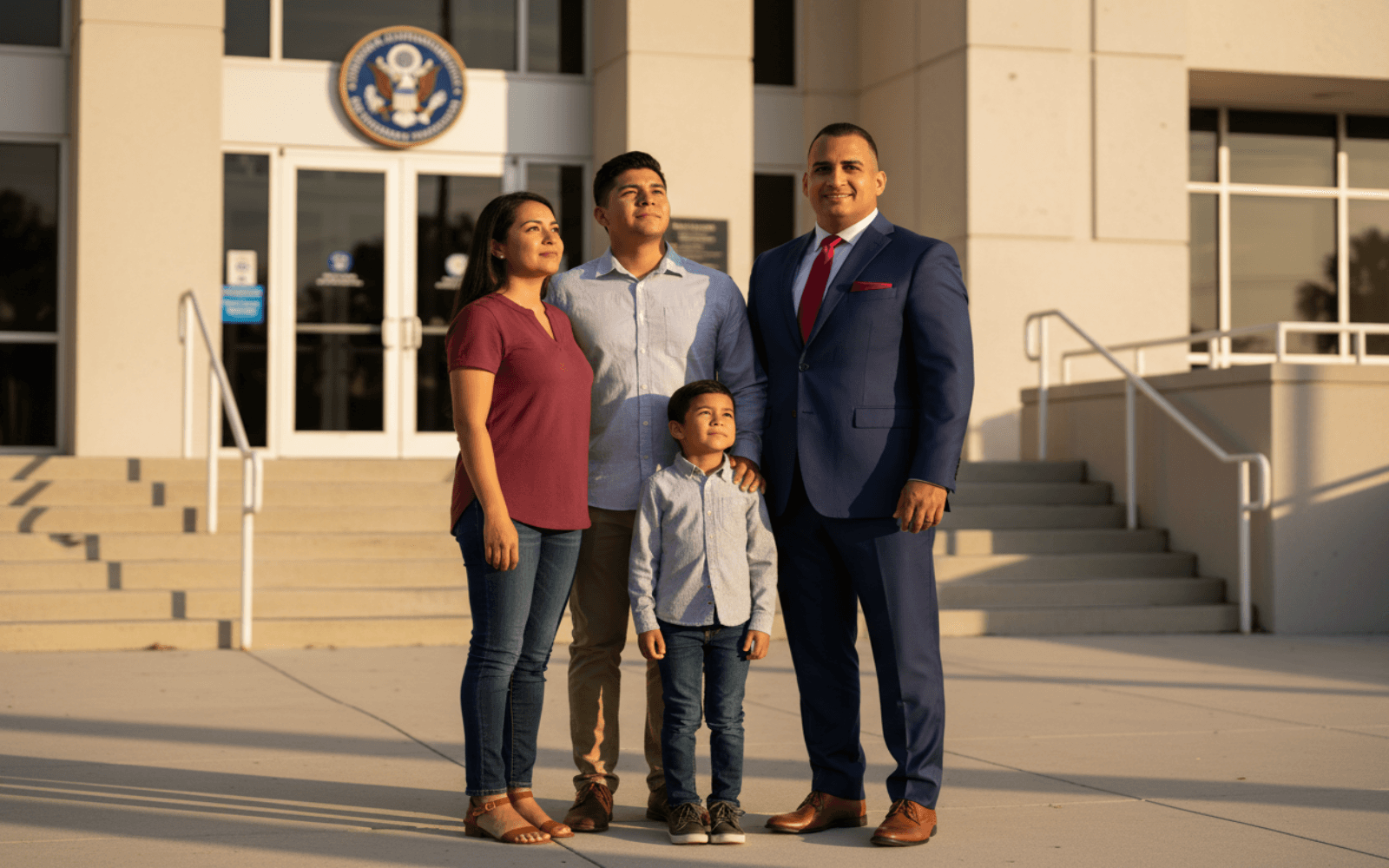
Citizenship by Investment News Florida: Your 2026 Guide
For investors eyeing the U.S., particularly Florida, understanding the EB-5 Immigrant Investor Program is key to achieving permanent residency and eventual citizenship. While the U.S. doesn't offer direct 'citizenship by investment,' the EB-5 program provides a robust pathway to a green card through significant capital investment and job creation. Stay informed about the latest <strong>citizenship by investment news Florida</strong> for 2026, including updated investment thresholds and processing expectations. This comprehensive guide details the step-by-step process, essential documentation, and common pitfalls to avoid. Florida's thriving economy and quality of life make it an attractive destination for EB-5 investors. For personalized guidance, contact Florida Immigration Lawyers for a free consultation.
William J. VásquezPublished on March 1, 2026
90 views
The U.S. does not offer direct citizenship by investment. Instead, the EB-5 Immigrant Investor Program allows foreign nationals to obtain a green card through investment in a U.S. commercial enterprise, leading to potential U.S. citizenship. In 2026, this path remains a key option for investors in Florida seeking permanent residency, offering a route to contribute to local economies and build a future.
U.S. offers green card through investment, not direct citizenship.
The EB-5 program is the primary pathway for investors.
Requires significant capital investment in U.S. businesses.
Can lead to U.S. citizenship after meeting residency requirements.
Florida is a prime location for qualifying EB-5 investments.
Are you an investor looking to secure your future and establish a permanent home in the United States? The prospect of gaining residency through investment, often discussed as "citizenship by investment," is a compelling pathway for many global citizens. While the U.S. does not offer direct citizenship for an investment, it provides a robust program known as the EB-5 Immigrant Investor Program, which leads to a green card and ultimately, U.S. citizenship.
For those interested in citizenship by investment news Florida for 2026, understanding the EB-5 landscape is crucial. Florida, with its dynamic economy, growing job market, and strategic location, presents an attractive destination for EB-5 investments. This comprehensive guide from Florida Immigration Lawyers will demystify the process, highlight recent updates, and provide essential insights for investors considering this path in the Sunshine State. Call Florida Immigration Lawyers at 1-844-YO-PELEO for a free consultation to discuss your options.
Understanding Investment-Based Green Cards in Florida: The EB-5 Pathway in 2026
When people refer to "citizenship by investment," they are often thinking about programs in other countries that offer a direct passport in exchange for a financial contribution. The United States operates differently. Our system focuses on providing a green card through investment, which grants permanent residency and serves as a direct pathway to U.S. citizenship after a period of lawful permanent residence.
The EB-5 Immigrant Investor Program is the primary avenue for foreign investors seeking permanent residency in the U.S. It was established by Congress in 1990 to stimulate the U.S. economy through job creation and capital investment by foreign investors. The program requires a substantial investment in a new commercial enterprise that creates or preserves at least 10 full-time jobs for qualifying U.S. workers. This program is codified under Section 203(b)(5) of the Immigration and Nationality Act (INA), found at 8 U.S.C. 1153(b)(5).
Differentiating "Citizenship by Investment" and the U.S. EB-5 Program
It is vital to distinguish between direct "citizenship by investment" offered by some nations and the U.S. EB-5 program. Countries like certain Caribbean nations or European states may offer immediate citizenship. The U.S. EB-5 program, however, leads to a conditional green card, followed by a permanent green card, and then eligibility for naturalization (U.S. citizenship). This multi-stage process ensures that the investment and job creation requirements are fully met before permanent residency is granted.
Our firm, Florida Immigration Lawyers, regularly tracks citizenship by investment news Florida to keep our clients informed about any changes or updates impacting the EB-5 program. The program has seen various reforms, most notably the EB-5 Reform and Integrity Act of 2022, which brought significant changes to investment amounts and regional center oversight. These updates are crucial for any investor planning their immigration strategy for 2026.
Featured: Citizenship by Investment News Florida: Your 2026 Guide
Why Florida Attracts Investment Immigrants
Florida is an exceptionally attractive state for investors. Its robust economy, favorable tax environment (no state income tax), diverse industries, and strong tourism sector make it a prime location for new commercial enterprises. Cities like Orlando, Miami, Tampa, and Jacksonville offer diverse investment opportunities, from hospitality and real estate to technology and healthcare.
The state's strategic position, with major international airports and seaports, facilitates global trade and business expansion. Furthermore, Florida boasts a high quality of life, excellent educational institutions, and a multicultural population, making it an ideal place for families to relocate. Our business immigration attorneys at Florida Immigration Lawyers understand the unique advantages Florida offers to investors.
Navigating the EB-5 Visa Process: A Step-by-Step Guide for Florida Investors
The EB-5 visa process can seem daunting due to its multiple stages and detailed requirements. However, with legal guidance, you can navigate each step effectively. Here is a simplified guide to the EB-5 process for investors in Florida:
Step 1: File Form I-526E, Immigrant Petition by Regional Center Investor (or I-526, Immigrant Petition by Standalone Investor)
This is the initial petition filed with U.S. Citizenship and Immigration Services (USCIS). You must demonstrate that you have invested, or are actively in the process of investing, the required capital in a qualifying U.S. commercial enterprise. You must also prove that the capital was lawfully obtained and that your investment will create or preserve at least 10 full-time jobs for qualifying U.S. workers. The current minimum investment amount is typically $1,050,000, or $800,000 if investing in a Targeted Employment Area (TEA) or infrastructure project, as defined by 8 CFR 204.6.
Once your I-526E petition is approved, you will apply for conditional permanent residence. If you are already in the U.S. on a valid non-immigrant visa, you may be eligible to file Form I-485, Application to Register Permanent Residence or Adjust Status, with USCIS. This adjustment of status process is often handled through local USCIS field offices, such as the ones serving Orlando, Miami, or Hialeah. If you are outside the U.S., you will go through consular processing at a U.S. embassy or consulate in your home country by filing Form DS-260, Immigrant Visa Application.
Step 3: File Form I-829, Petition by Investor to Remove Conditions
Your initial green card will be conditional, valid for two years. Before this two-year period expires, you must file Form I-829 to remove the conditions on your permanent residency. This petition must demonstrate that you have sustained your investment throughout the conditional period and that the required jobs were created or are expected to be created within a reasonable time. This is a critical step, as failure to prove compliance can result in the termination of your residency.
Step 4: Apply for U.S. Citizenship (Naturalization)
After holding your permanent green card for five years (including the two years of conditional residency), you may become eligible to apply for U.S. citizenship through naturalization. This involves meeting continuous residency and physical presence requirements, demonstrating good moral character, and passing an English and civics test. This is the final step in achieving your goal of U.S. citizenship after your initial green card through investment.
Essential Documents for Your EB-5 Investment Application
A successful EB-5 application hinges on meticulous documentation. USCIS requires comprehensive evidence to verify your investment, the lawful source of your funds, and the job creation aspects of your enterprise. Preparing these documents accurately is paramount for investors in Florida.
Proof of Investment Capital: Bank statements, brokerage statements, property deeds, business valuation reports, and other financial records demonstrating the availability of the required investment funds.
Lawful Source of Funds Documentation: Tax returns (personal and business), payroll records, business sale agreements, loan agreements, gift deeds, inheritance records, and any other documents that clearly trace the legal origin of your investment capital.
Business Plan: A comprehensive business plan for the new commercial enterprise, detailing its structure, market analysis, financial projections, and, crucially, how it will create at least 10 full-time jobs.
Job Creation Evidence: Detailed economic analysis, personnel records, and other documentation proving the creation or preservation of 10 full-time jobs for qualifying U.S. workers.
Regional Center Documentation (if applicable): If investing through a regional center, documents related to the regional center's designation, project approvals, and offering memoranda.
Personal Identification Documents: Passport copies, birth certificates, marriage certificates, and other civil documents for yourself and any accompanying family members.
Visa and Immigration History: Records of any previous U.S. visa applications or immigration petitions.
EB-5 Visa Processing Times and Expectations for 2026 in Florida
One of the most common questions for investors concerns the timeline for the EB-5 process. Processing times can vary significantly based on several factors, including the volume of applications, USCIS workload, and the specific country of origin of the applicant. The citizenship by investment news Florida in 2026 often highlights these processing challenges.
Historically, EB-5 processing times have been lengthy, but USCIS has made efforts to streamline the process, especially for petitions filed through regional centers. In 2026, investors should generally anticipate that I-526E petition processing could take anywhere from 12 to 24 months or more. Following I-526E approval, the adjustment of status (I-485) or consular processing (DS-260) phase can add another several months to a year, depending on the applicant's location and visa availability per the Visa Bulletin.
The final step, the I-829 petition to remove conditions, also has its own processing timeline, which can range from 24 to 48 months. It is important to remember that these are general estimates, and individual cases may differ. Consulting with an experienced Florida immigration lawyer is essential to get the most up-to-date information and to prepare for potential delays.
Cost Factors and Fee Breakdown for the EB-5 Program
The financial commitment for the EB-5 program extends beyond the principal investment. Investors must account for various fees and associated costs. Understanding these expenses is crucial for effective financial planning when pursuing a green card through investment in Florida.
Capital Investment: The primary cost is the investment itself. As of 2026, this is typically $1,050,000 for standard investments or $800,000 for investments in Targeted Employment Areas (TEAs) or infrastructure projects. This capital must be at risk and held in the new commercial enterprise.
USCIS Filing Fees:
Form I-526E/I-526: The filing fee for the immigrant petition.
Form I-485 (Adjustment of Status): The filing fee for adjusting status if you are in the U.S.
Form DS-260 (Immigrant Visa Application): The processing fee for consular processing if you are outside the U.S.
Form I-829: The filing fee for the petition to remove conditions.
Biometrics Fee: A separate fee for fingerprinting and background checks.
Attorney Fees: Legal fees for an experienced immigration attorney are a significant cost but represent an invaluable investment. Attorneys assist with petition preparation, source of funds documentation, responding to RFEs, and overall strategic guidance.
Administrative Fees (Regional Centers): If investing through a regional center, there is usually an administrative fee charged by the regional center for their services, which can range from tens of thousands of dollars.
Economic Analysis/Business Plan Fees: Engaging economists or business plan writers to ensure compliance with job creation requirements can incur additional costs.
Due Diligence Fees: For regional center projects, investors often pay fees for independent due diligence reports on the project.
Do not navigate this complex process alone. The financial and legal intricacies of the EB-5 program demand professional expertise. Contact Florida Immigration Lawyers today for guidance tailored to your investment immigration goals. We are here to help you understand all aspects of citizenship by investment news Florida and build a strong application. Schedule your free consultation now.
Common Mistakes to Avoid in Your EB-5 Journey
The EB-5 process is complex, and even minor errors can lead to significant delays or denials. Being aware of common pitfalls can help you avoid them. Here are key mistakes investors often make:
Insufficient Source of Funds Documentation: Failing to provide a clear, verifiable, and lawful audit trail for all invested capital. USCIS scrutinizes the source of funds rigorously, and any gaps or inconsistencies can lead to RFEs or denials.
Not Meeting Job Creation Requirements: Underestimating the strict criteria for creating or preserving 10 full-time jobs. The business plan must clearly outline how these jobs will be created and maintained for U.S. workers.
Investing in Non-Qualifying Enterprises: Choosing a business that does not meet the EB-5 program's definition of a "new commercial enterprise" or investing in a project that fails to conform to the program's rules.
Incorrectly Identifying a Targeted Employment Area (TEA): Misrepresenting or failing to properly document that an investment is located within a TEA, which qualifies for the lower investment threshold. This requires precise geographical and economic data.
Ignoring Legal and Financial Due Diligence: Not thoroughly vetting the investment project or regional center before committing funds. A lack of due diligence can expose investors to fraudulent schemes or poorly managed projects.
Filing Incomplete or Inaccurate Applications: Submitting petitions with missing documents, incorrect information, or clerical errors. Such applications are often rejected or significantly delayed.
Missing Deadlines: Failing to file petitions, especially the I-829 to remove conditions, within the specified timeframe. Missing the I-829 deadline can result in the termination of conditional permanent residency.
Misunderstanding the "At Risk" Requirement: Not ensuring that the investment capital is truly "at risk" in the commercial enterprise, meaning there is no guarantee of return or redemption, as per USCIS regulations.
Failing to Maintain Continuous Residency: Not adhering to the continuous residency requirements for green card holders, which can impact eligibility for naturalization.
Choosing an Unvetted Regional Center: Partnering with a regional center that has a poor track record, lacks transparency, or faces regulatory issues. Due diligence on the regional center itself is as important as on the project.
When to Consult a Florida Immigration Lawyer for EB-5
The complexities of the EB-5 program make legal representation not just beneficial, but often essential for success. While this article provides general information on citizenship by investment news Florida, your specific situation requires personalized legal advice. Florida Immigration Lawyers are here to guide you through every stage.
You should consider calling an experienced immigration attorney, especially if you encounter any of the following scenarios:
You have a complex source of funds, involving multiple transactions, international transfers, or gifts.
You are considering investing in a new commercial enterprise that is not affiliated with a regional center, requiring a standalone I-526 petition.
You receive a Request for Evidence (RFE) or Notice of Intent to Deny (NOID) from USCIS.
You experience significant delays in your application processing and need assistance with case inquiries.
You need help accurately identifying and documenting a Targeted Employment Area (TEA) for the lower investment amount.
You require assistance with comprehensive business plan development or economic impact analyses.
You are transitioning from a conditional green card to a permanent one and need to file Form I-829.
You are ready to pursue U.S. citizenship through naturalization after receiving your permanent green card.
You have any questions about the latest citizenship by investment news Florida or how current immigration policies may affect your EB-5 application.
Our team at Florida Immigration Lawyers provides dedicated and knowledgeable assistance to investors throughout Florida, including Orlando. We are committed to helping you achieve your investment immigration goals.
About Florida Immigration Lawyers: Citizenship by Investment News Florida
Florida Immigration Lawyers is an immigration law firm dedicated to serving individuals and businesses across the entire state of Florida. Our team of experienced attorneys provides comprehensive legal services for a wide range of immigration matters, including family-based visas, business immigration, deportation defense, and naturalization.
We understand that navigating U.S. immigration law can be challenging and emotionally taxing. That is why we are committed to offering compassionate, client-focused representation, ensuring that you receive the highest quality legal support. Our firm prides itself on staying abreast of the latest immigration policies and procedures, including all pertinent citizenship by investment news Florida, to provide up-to-date and effective strategies for our clients.
Why choose Florida Immigration Lawyers? We offer free consultations to assess your case, are available 24/7 to address your urgent needs, and provide bilingual services (English and Spanish) to ensure clear communication. Our commitment is to your success and peace of mind. Visit our attorneys page to learn more about our dedicated team.
This article provides general legal information and is not intended as legal advice. Every case is unique, and outcomes depend on specific facts and circumstances. Contact an attorney for advice about your particular situation. Immigration laws are subject to change.
If you are considering the EB-5 program or have questions about citizenship by investment news Florida, reach out to Florida Immigration Lawyers. Our dedicated team is ready to provide the legal support you need to navigate this important journey. Call us at 1-844-YO-PELEO for a confidential, free consultation today. Se Habla Español - Estamos aquí para ayudarle.
Do Not Navigate This Process Alone
Our experienced immigration attorneys are ready to fight for you. Get a free, confidential case review today.
The EB-5 Immigrant Investor Program is a U.S. visa category created by Congress in 1990 to stimulate the U.S. economy through job creation and capital investment by foreign investors. It provides a pathway for eligible immigrant investors to obtain a green card, and eventually U.S. citizenship, by investing in a U.S. commercial enterprise and creating or preserving at least 10 full-time jobs for qualifying U.S. workers. The program has specific investment thresholds and requirements, making it a popular option for those seeking permanent residency through investment.
The EB-5 program initially grants a conditional green card (valid for two years) to the investor and their qualifying family members. After two years, if the investment and job creation requirements have been met, the investor can apply to remove the conditions on their green card, leading to permanent resident status. Once an investor has held a permanent green card for five years (including the two years of conditional residency), they typically become eligible to apply for U.S. citizenship through naturalization, provided they meet all other naturalization requirements such as physical presence and good moral character.
As of the most recent regulations, the standard minimum investment amount for the EB-5 visa program is $1,050,000. However, if the investment is made in a Targeted Employment Area (TEA), which includes rural areas or areas with high unemployment, the minimum investment amount is reduced to $800,000. These amounts are subject to change by USCIS and Congress, so it's crucial to consult with an experienced immigration attorney to confirm the latest requirements before making any investment decisions.
Florida is a highly attractive state for EB-5 investments due to its robust economy, diverse industries, and strong population growth. Investment opportunities in Florida can range from real estate development projects, hospitality, tourism, and infrastructure to manufacturing and technology sectors. Many USCIS-approved Regional Centers operate within Florida, offering pre-vetted projects that meet EB-5 requirements, often located in Targeted Employment Areas (TEAs) to qualify for the lower investment threshold. Direct investment opportunities are also available, though they require more hands-on management from the investor.
To be eligible for the EB-5 visa, an investor must meet several key requirements. Primarily, they must invest the requisite capital amount ($800,000 in a TEA or $1,050,000 otherwise) in a new commercial enterprise. This enterprise must create or preserve at least 10 full-time jobs for qualifying U.S. workers within two years of the investor's admission to the U.S. as a conditional permanent resident. The investor must also demonstrate that the invested capital was obtained through lawful means and provide a comprehensive source of funds documentation.
The EB-5 process involves several stages, and the total timeline can vary significantly. Initially, filing the I-526E petition (for Regional Center investments) or I-526 petition (for direct investments) can take anywhere from 12 to 60+ months for USCIS processing, depending on current backlogs and the investor's country of origin. After I-526E/I-526 approval, investors either apply for adjustment of status if already in the U.S. or go through consular processing abroad, which adds more time. Finally, the I-829 petition to remove conditions is filed after two years of conditional residency, with processing times also varying. Overall, the entire journey from initial investment to permanent green card can span several years.
Yes, the EB-5 program allows the principal investor to include their immediate family members in the visa application. This typically includes the investor's spouse and any unmarried children under the age of 21 at the time of filing the I-526E/I-526 petition. If approved, these family members will also receive conditional green cards and subsequently permanent green cards, following the same timeline and requirements as the principal investor. This makes the EB-5 program an attractive option for families seeking to relocate to the U.S. together.
A direct EB-5 investment involves the investor directly establishing and managing a new commercial enterprise that meets all EB-5 requirements, including the creation of 10 direct full-time jobs. In contrast, a Regional Center investment involves investing in a commercial enterprise affiliated with a USCIS-approved Regional Center. Regional Centers manage projects designed to meet EB-5 criteria, and they allow for the counting of both direct and indirect/induced jobs towards the 10-job requirement, often simplifying the job creation aspect for the investor. Regional Center projects are generally more passive for the investor, making them a popular choice.
The EB-5 program mandates that the investor's capital must create or preserve at least 10 full-time jobs for qualifying U.S. workers within two years of the investor obtaining conditional permanent resident status. For direct investments, these must be direct jobs, meaning actual identifiable employees of the new commercial enterprise. For Regional Center investments, the 10-job requirement can be met through direct, indirect, or induced jobs, which are calculated using reasonable economic methodologies. This flexibility in job counting is a significant advantage of investing through a Regional Center.
Florida offers numerous compelling reasons for EB-5 investors. Its robust and diversified economy, encompassing tourism, aerospace, agriculture, technology, and international trade, provides a wide array of viable investment opportunities. The state's favorable business climate, lack of state income tax, and strategic location as a gateway to Latin America and the Caribbean are significant advantages. Furthermore, Florida's growing population, excellent quality of life, and world-class educational institutions make it an attractive destination for investors and their families seeking to establish a new life in the United States.
William J. Vásquez
Founding Attorney · Vasquez Law Firm
U.S. Air Force veteran and immigration attorney with years of hands-on U.S. immigration experience. J.D., NCCU School of Law. AILA member. Admitted to the 4th, 5th, and 11th Circuit Courts.
Available 24/7 - Free Evaluations
Reviewed for legal accuracy by William J. Vásquez
Licensed in North Carolina; U.S. immigration is federal practice.