Citizenship Interview Tips Florida: Your Naturalization
Navigating the U.S. citizenship interview in Florida requires thorough preparation, from reviewing your N-400 application to mastering the English and civics tests. This guide offers essential tips for applicants across Miami, Orlando, and Tampa, covering document checklists, processing timelines, and common mistakes to avoid. Understanding the interview's structure, gathering all necessary original documents, and practicing your English and civics knowledge are crucial for success. Florida Immigration Lawyers provides guidance for your naturalization journey, helping you confidently approach your interview and achieve your dream of becoming a U.S. citizen. Learn how our dedicated team can support you every step of the way.
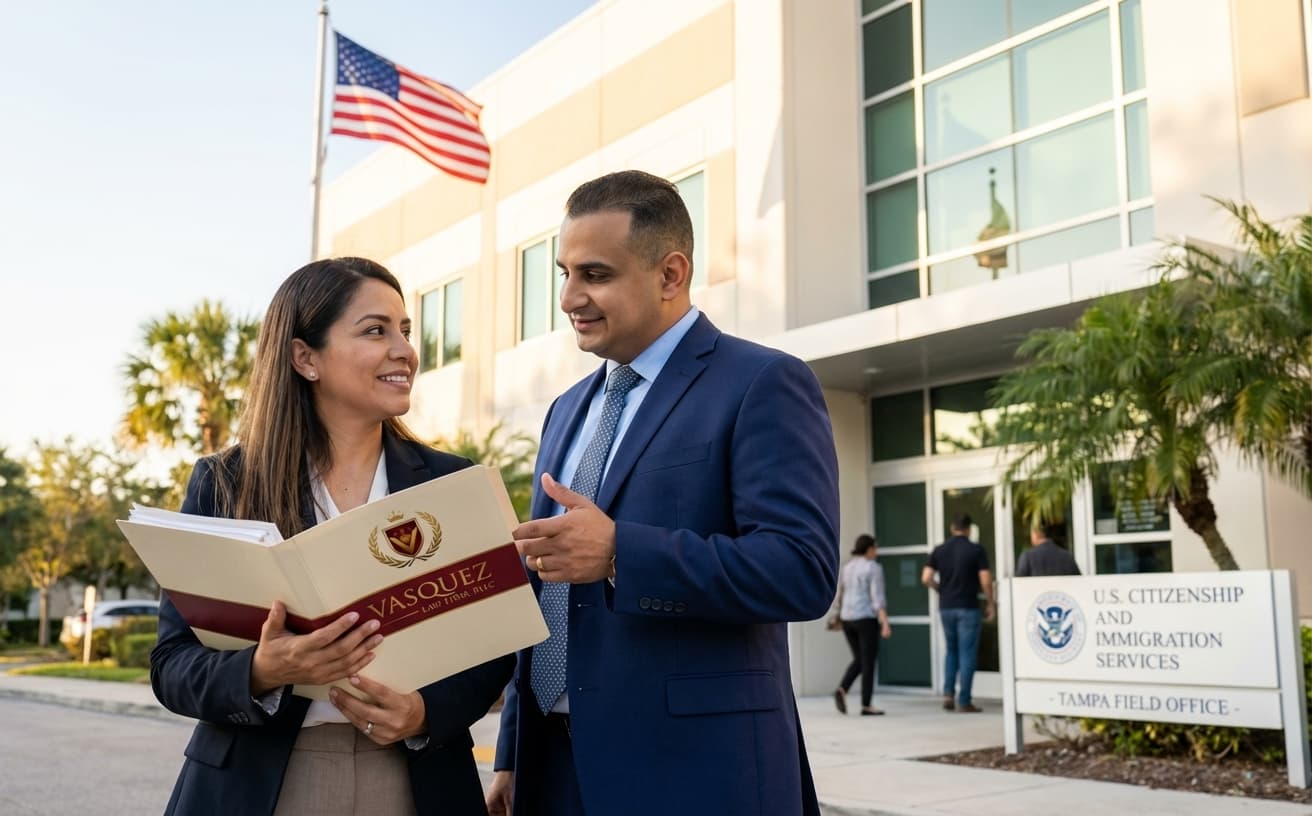
Preparing for your citizenship interview in Florida is a crucial step towards becoming a U.S. citizen. This interview evaluates your English proficiency, knowledge of U.S. history and government (civics), and your commitment to the country's principles. Understanding the process, preparing thoroughly, and seeking legal guidance can significantly improve your chances of success. Many applicants in Florida benefit from reviewing their N-400 application, practicing civics questions, and familiarizing themselves with the interview format at local USCIS offices like Miami or Orlando.
- Review your N-400 application thoroughly before the interview.
- Practice the 100 civics questions and English reading/writing tests.
- Gather all necessary original documents and copies.
- Be honest and accurate in all your responses.
- Consider consulting a Florida immigration lawyer for personalized preparation.
Embarking on the journey to U.S. citizenship is a momentous occasion, representing years of dedication and aspiration for many immigrants across Florida. The final hurdle, the citizenship interview, can feel daunting, but with the right preparation, it becomes a manageable step towards achieving your American dream. Whether you reside in Miami, Orlando, Tampa, or any other vibrant community in the Sunshine State, understanding what to expect and how to prepare is key to a successful naturalization process.
This comprehensive guide from Florida Immigration Lawyers is designed to equip you with essential tips, insights, and strategies for your naturalization interview. We will walk you through every aspect, from document preparation to understanding the civics and English tests, ensuring you feel confident and ready. Navigating immigration law can be complex, but you do not have to do it alone. For personalized assistance and to ensure every detail is covered, call Florida Immigration Lawyers at 1-844-YO-PELEO for a free consultation.
Understanding the Naturalization Interview Process in Florida
The naturalization interview is a pivotal part of becoming a U.S. citizen. Conducted by a USCIS officer, its primary purpose is to verify the information on your Form N-400, Application for Naturalization, and to assess your eligibility. This includes evaluating your English language abilities (speaking, reading, and writing) and your knowledge of U.S. history and government (civics). For applicants in Florida, interviews typically take place at one of the state's USCIS Field Offices, such as the Miami Field Office, Orlando Field Office, or Tampa Field Office, depending on your residence.
During the interview, the officer will review your application, ask questions about your background, confirm your good moral character, and administer the English and civics tests. It is a formal yet conversational process designed to ensure you meet all statutory requirements for naturalization under the Immigration and Nationality Act (INA). The interview is your opportunity to demonstrate your commitment to the United States and your understanding of its principles. Being well-prepared for your citizenship interview is paramount to a favorable outcome, especially given the diverse legal and cultural landscape of Florida.
Understanding the structure of the interview helps alleviate anxiety. The officer will typically begin by placing you under oath, asking you to swear or affirm that your testimony will be truthful. They will then proceed with questions about your N-400 application, followed by the English and civics tests. The entire process usually lasts between 20 to 45 minutes, though it can vary. Knowing this flow allows you to mentally prepare for each segment, ensuring you present yourself confidently and accurately. Remember, the officer is looking for honesty and a genuine desire to become a contributing member of American society.
Step-by-Step Guide to Preparing for Your Citizenship Interview
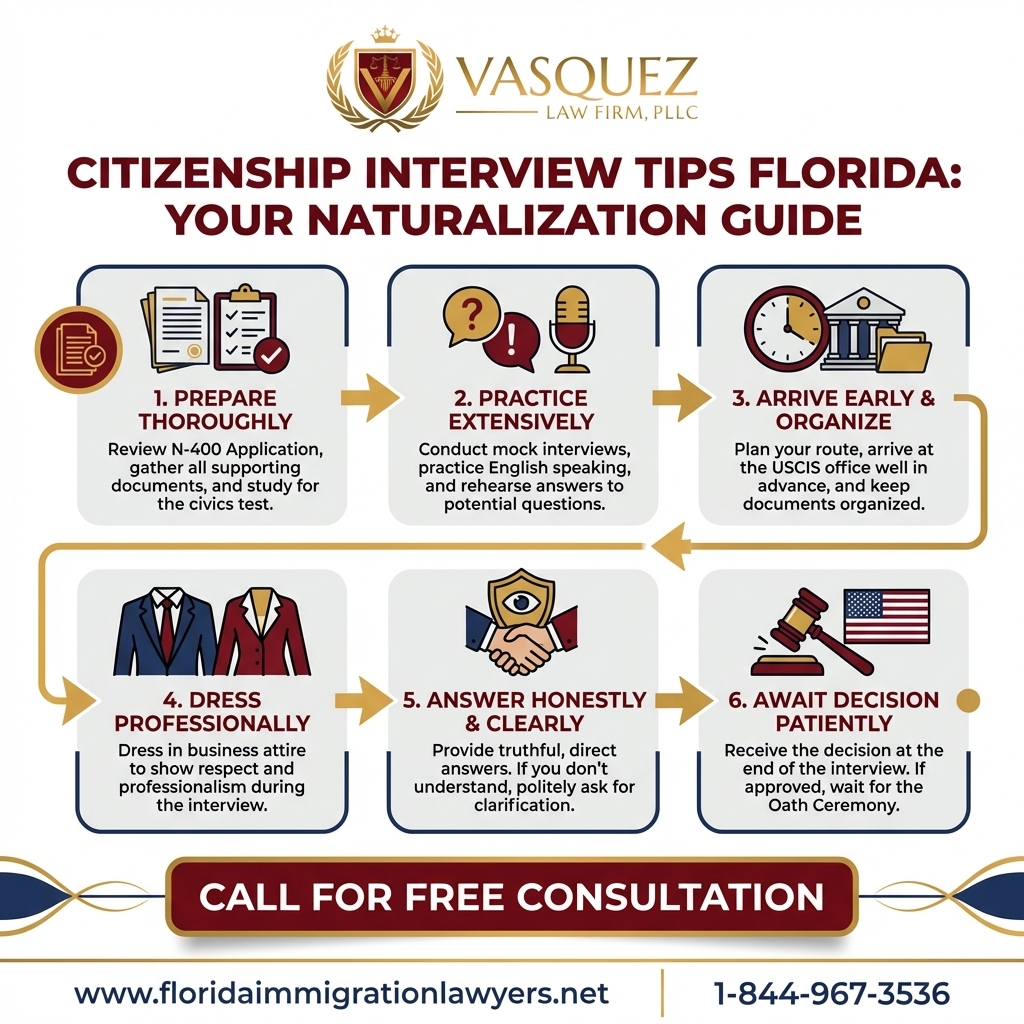
Thorough preparation is the cornerstone of a successful naturalization interview. Following a structured approach can help you cover all bases and boost your confidence. Here is a step-by-step guide tailored for Florida residents:
-
Review Your N-400 Application: Before anything else, carefully read through your entire Form N-400, Application for Naturalization. Ensure you remember all the answers you provided, as the USCIS officer will refer to this document. Any discrepancies between your interview answers and the application could raise concerns. If there have been any changes to your life circumstances since filing (e.g., new address, travel, marriage, arrest), make a note of them and be ready to explain them truthfully during the interview. Bring documentation for any updates.
-
Gather All Original Documents: Create a comprehensive checklist of all original documents requested in your interview notice, plus any documents you submitted with your N-400. This includes your Permanent Resident Card (Green Card), passports, state identification, marriage certificates, divorce decrees, birth certificates, tax returns, and any evidence related to arrests or citations, even if dismissed. Having these organized and readily accessible will demonstrate your preparedness and expedite the process. USCIS officers in Florida are accustomed to seeing a wide range of documentation, so be thorough.
-
Practice English Language Skills: The English test has three components: speaking, reading, and writing. Practice speaking English regularly, especially by answering questions about your N-400. For reading, practice reading sentences from the USCIS vocabulary list. For writing, practice writing sentences dictated by a friend or family member, using words from the same list. Many community centers and libraries in Florida offer free English classes that can be invaluable resources.
-
Master the Civics Test: Study the 100 civics questions and answers provided by USCIS. You will be asked up to 10 questions, and you must answer 6 correctly to pass. Focus on understanding the concepts, not just memorizing answers. There are many online resources, flashcards, and study guides available. Florida-specific civics questions are not part of the federal test, but understanding the U.S. system of government is crucial.
-
Understand Good Moral Character: USCIS officers will assess your good moral character during the interview. This involves asking questions about your criminal history, tax compliance, and adherence to U.S. laws. Be honest and transparent about any past issues, providing all relevant documentation. Certain offenses can impact your eligibility for naturalization, as outlined in INA § 316 and 8 U.S.C. § 1427.
-
Dress Professionally and Arrive Early: Presenting yourself well shows respect for the process. Dress in business casual attire. Plan to arrive at the USCIS Field Office at least 30 minutes before your scheduled appointment to allow for parking, security checks, and finding your way. Being punctual demonstrates your seriousness and avoids unnecessary stress.
Essential Document Checklist for Your Naturalization Interview
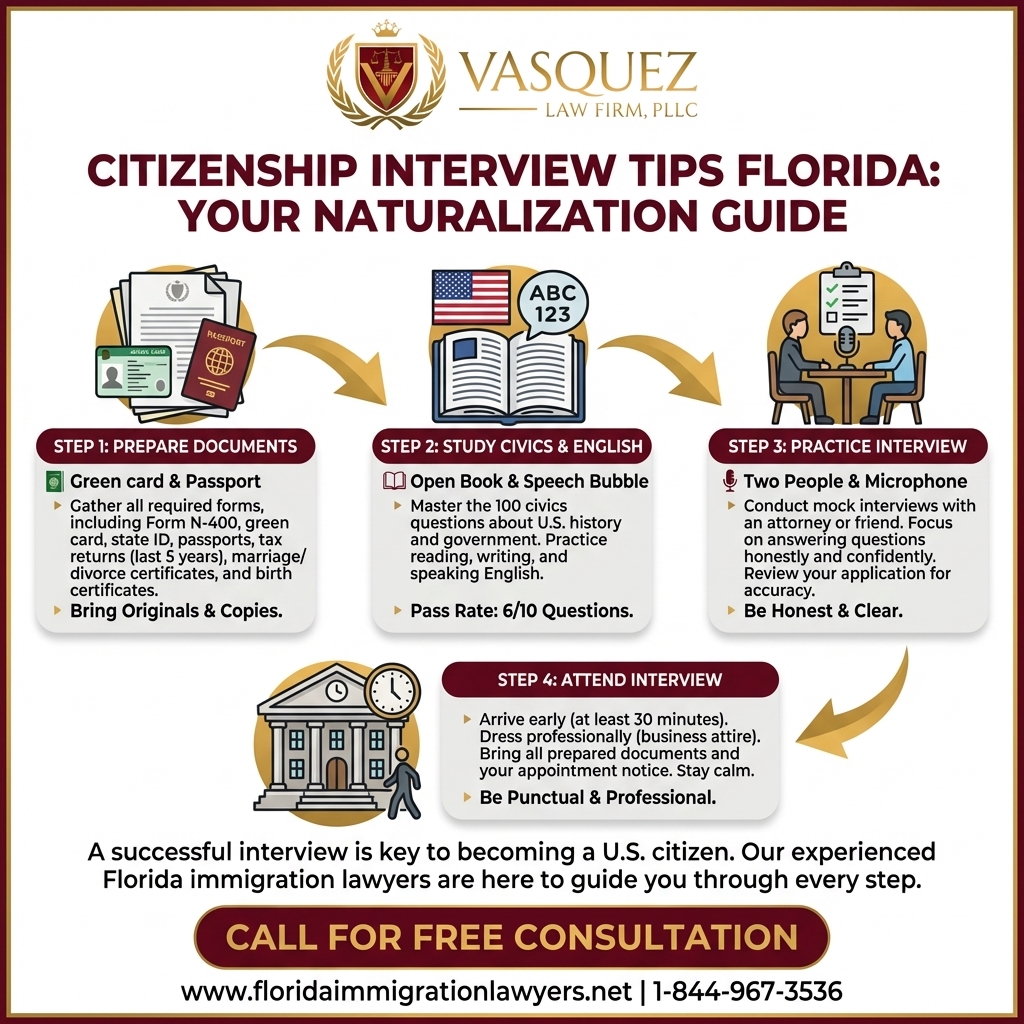
Having all your documents organized and ready is critical for a smooth citizenship interview. Missing documents can lead to delays or even a denial. Use this comprehensive checklist to ensure you have everything you need when you visit the USCIS office in Florida:
- Your interview appointment notice.
- Your Permanent Resident Card (Green Card).
- Your state-issued identification (e.g., Florida Driver's License or State ID).
- All current and expired passports, including foreign passports.
- All travel documents, such as advance paroles or re-entry permits.
- Original or certified copies of your marriage certificate(s), if applicable.
- Original or certified copies of divorce decrees, annulment decrees, or death certificates for any prior marriages of yourself or your spouse, if applicable.
- Birth certificates for all your children, whether they live with you or not.
- Evidence of your spouse's U.S. citizenship (e.g., birth certificate, naturalization certificate), if applicable.
- Proof of selective service registration, if you are a male applicant between 18 and 26.
- Certified court dispositions for any arrests, citations, or detentions, even if charges were dismissed, expunged, or occurred outside the U.S.
- Proof of payment for any child support or alimony obligations.
- Tax returns or IRS tax transcripts for the past five years (or three years if applying based on marriage to a U.S. citizen).
- Proof of continuous residence, such as utility bills, bank statements, or leases.
- Any documents you submitted with your N-400 application that you want the officer to review again.
It is always advisable to bring both original documents and clear photocopies. The USCIS officer may keep the copies but will return your originals. Being over-prepared is always better than being under-prepared.
Decoding the Citizenship Interview: English and Civics Tests
The English and Civics tests are integral components of the naturalization interview, designed to assess your integration into American society and your understanding of its foundational principles. Successfully navigating these tests is a mandatory requirement for most applicants, as stipulated by INA § 312 and 8 U.S.C. § 1423. Exemptions exist for certain age and residency combinations, or for those with specific medical disabilities, so consult with an attorney if you believe you qualify for an exemption.
The English Language Test
The English test evaluates your ability to understand, speak, read, and write basic English. The speaking portion is assessed throughout the entire interview, as the officer will converse with you in English. Your ability to understand and respond to questions about your N-400 application will demonstrate your conversational English. For reading, you will be asked to read one out of three sentences correctly. These sentences typically come from the official USCIS vocabulary list and relate to civics or common phrases. For writing, you will be asked to write one out of three sentences dictated by the officer, again using words from the official vocabulary list. Practice these skills diligently, perhaps by joining an English language class at a community college or public library in Florida.
The Civics Test
The civics test assesses your knowledge of U.S. history, government, and geography. USCIS provides 100 civics questions and their official answers. During your interview, the officer will ask you up to 10 questions from this list, and you must answer at least 6 correctly to pass. The questions cover topics such as the Constitution, branches of government, important historical events, and U.S. symbols. While the specific questions vary, understanding the underlying concepts is more important than rote memorization. Many online resources, mobile apps, and study guides are available to help you prepare. Focus your study on the official USCIS materials to ensure accuracy. Being familiar with the structure of the U.S. government, as outlined in the Constitution, will greatly assist your preparation.
Timeline and Processing Expectations for Naturalization in Florida
The naturalization process, including the scheduling of your citizenship interview, involves several stages and can vary in duration. Understanding these timelines can help manage expectations for applicants across Florida. After you submit your Form N-400, USCIS will send you a receipt notice, followed by an appointment for biometrics (fingerprints, photos, and signature). This typically occurs a few weeks after filing. The biometrics appointment is crucial for background checks and security clearances.
Following biometrics, your application enters a queue for interview scheduling. The wait time for an interview can fluctuate significantly based on the specific USCIS Field Office where your application is processed (e.g., Miami, Orlando, or Tampa) and the current caseload. Historically, processing times in Florida have ranged from several months to over a year. You can check current processing times on the official USCIS website by selecting your form type (N-400) and your local field office. These times are estimates and subject to change, but they provide a general idea of what to expect.
Once your interview is scheduled, you will receive an interview notice by mail, typically a few weeks before the actual date. After a successful interview, the officer may approve your application on the spot, or they may issue a Request for Evidence (RFE) or a decision by mail. If approved, you will then be scheduled for an Oath of Allegiance ceremony, which is the final step to becoming a U.S. citizen. Oath ceremonies in Florida are often held at federal courthouses or designated USCIS facilities and can occur a few weeks to a few months after your interview. The entire process, from filing N-400 to taking the Oath, generally takes between 8 to 24 months, but highly complex cases may take longer. Staying informed and prepared at each stage is vital.
Cost Factors and Fee Breakdown for Naturalization
Pursuing U.S. citizenship through naturalization involves various costs that applicants should be aware of. While the dream of becoming a citizen is invaluable, understanding the financial aspects is a practical necessity. The primary cost associated with naturalization is the USCIS filing fee for Form N-400, Application for Naturalization. This fee covers the processing of your application and often includes the biometrics services fee. It is important to note that USCIS fees are subject to change, so always check the most current fee schedule on the official USCIS website before filing. Fee waivers or reduced fees may be available for eligible applicants who meet specific income guidelines.
Beyond the government filing fees, other potential costs can arise. These might include fees for obtaining necessary supporting documents, such as certified copies of birth certificates, marriage certificates, or court dispositions. If you need to translate foreign documents into English, professional translation services will incur additional costs. These translations must be certified, meaning the translator attests that the translation is complete and accurate, and that they are competent to translate from the foreign language to English. Florida Immigration Lawyers can advise on reputable translation services if needed.
Many applicants also choose to retain legal counsel, which involves attorney fees. While not mandatory, hiring an experienced immigration lawyer, especially for the citizenship interview, can be a valuable investment. An attorney can help you prepare your N-400, review all supporting documents, identify potential issues, prepare you for the interview, and even attend the interview with you. For individuals in Florida facing complex situations, past criminal history, or language barriers, legal representation can be crucial. Florida Immigration Lawyers offers transparent fee structures and free initial consultations to discuss your case and provide an estimate of legal costs. Investing in legal expertise can save time, reduce stress, and prevent costly mistakes in the long run.
Common Mistakes to Avoid During Your Naturalization Process
The path to naturalization can be complex, and even minor errors can lead to significant delays or even denial. Being aware of common pitfalls can help Florida residents navigate their citizenship interview and overall application process more smoothly. Avoid these mistakes:
-
Providing Inconsistent Information: Discrepancies between your N-400 application and your interview answers, or between your application and other immigration records, can raise red flags. Always review your N-400 thoroughly and be prepared to explain any changes or inconsistencies truthfully. Consequences: Interview delays, Request for Evidence (RFE), or denial.
-
Failing to Disclose All Criminal History: Even minor arrests, citations, or dismissed charges must be disclosed. USCIS has access to your full criminal record. Withholding information, even if you believe it is irrelevant, can be considered misrepresentation. Consequences: Denial, and potential findings of lack of good moral character.
-
Inadequate English Language Preparation: Underestimating the English test components (speaking, reading, writing) can lead to failure. Many applicants focus only on civics. Consequences: Interview failure, requiring retesting or denial.
-
Insufficient Civics Test Study: Not studying the 100 civics questions adequately means you might not answer 6 out of 10 questions correctly. Consequences: Interview failure, requiring retesting or denial.
-
Missing or Incomplete Documents: Arriving at your interview without all required original documents and copies can cause delays. The officer may issue an RFE, prolonging your process. Consequences: Delays, RFE, or potential denial if documents are not submitted in time.
-
Lack of Good Moral Character Evidence: Failure to maintain good moral character (e.g., tax evasion, failure to pay child support, certain criminal convictions) is a direct bar to naturalization. Consequences: Denial, and potential removal proceedings.
-
Failing to Update USCIS on Changes: Not informing USCIS of changes to your address, marital status, employment, or travel history since filing your N-400. Consequences: Application delays, misrepresentation issues, or even denial.
-
Not Understanding the Oath of Allegiance: While typically administered after the interview, you should understand what the Oath entails. It signifies your allegiance to the U.S. and renunciation of foreign allegiances. Consequences: Inability to proceed to naturalization.
-
Arriving Late or Missing the Interview: Punctuality is crucial. Missing your scheduled appointment without proper notification and rescheduling can lead to your application being denied. Consequences: Application denial, requiring refiling and new fees.
-
Incorrectly Calculating Continuous Residence or Physical Presence: Naturalization requires specific periods of continuous residence and physical presence in the U.S. (e.g., 5 years generally, 3 years for spouses of U.S. citizens). Miscalculating these can lead to an ineligible application. Consequences: Application denial.
When to Call a Florida Immigration Lawyer for Your Citizenship Interview
While many applicants successfully navigate the naturalization process independently, certain situations warrant the invaluable expertise of a Florida immigration lawyer. An attorney from Florida Immigration Lawyers can provide comprehensive support, ensuring your journey to citizenship is as smooth as possible. You should strongly consider contacting us if you encounter any of the following scenarios:
- You have a criminal record, even if charges were dismissed, expunged, or occurred many years ago. Certain offenses can impact your good moral character.
- You have had multiple or prolonged trips outside the U.S. that might affect your continuous residence or physical presence requirements.
- You have previously been denied naturalization or had an immigration application denied.
- You have received a Request for Evidence (RFE) or Notice of Intent to Deny (NOID) from USCIS.
- You have a complex marital history, including multiple marriages or divorces.
- You have concerns about your ability to pass the English or civics tests, or you qualify for an exemption.
- You have changed your name, address, or other significant life circumstances since filing your N-400.
- You are unsure about any questions on the N-400 form or during the citizenship interview.
- You feel overwhelmed by the process or simply want the peace of mind that comes with professional legal representation.
Florida Immigration Lawyers has extensive experience assisting individuals across Miami, Orlando, Tampa, and throughout Florida with their naturalization applications and interviews. We can review your case, identify potential challenges, help you gather and organize documents, prepare you thoroughly for the interview, and even accompany you to the interview to provide support and address any legal issues that may arise. Our goal is to protect your rights and help you achieve your dream of U.S. citizenship.
About Florida Immigration Lawyers
Florida Immigration Lawyers is an immigration law firm dedicated to serving individuals and families across the entire state of Florida. From our Orlando office, serving clients across Florida, we are committed to providing compassionate, effective, and results-driven legal representation. Our team of experienced attorneys focuses on a wide range of immigration matters, including naturalization, family immigration, business immigration, asylum, and deportation defense. We understand the unique challenges and opportunities that immigrants face in Florida's diverse communities.
Our firm prides itself on its client-centered approach, ensuring that every individual receives personalized attention and strategic advice tailored to their specific circumstances. We leverage our deep knowledge of U.S. immigration law and our commitment to justice to advocate tirelessly for our clients. Choosing Florida Immigration Lawyers means partnering with a team that genuinely cares about your future and is dedicated to helping you achieve your immigration goals. We offer free consultations to discuss your case and are available 24/7 to answer your questions. Contact us today at 1-844-YO-PELEO or visit our website at Vasquez Law Firm to learn how we can assist you. Se Habla Espanol - Estamos aqui para ayudarle.
Sources and References
- U.S. Citizenship and Immigration Services (USCIS)
- Executive Office for Immigration Review (EOIR)
- U.S. Department of State
- 8 U.S.C. Chapter 12 - Immigration and Nationality Act (INA)
- INA § 312 - English and Civics Requirements
- INA § 316 - General Requirements for Naturalization
- 8 CFR Part 312 - Educational Requirements for Naturalization
- USCIS Policy Manual, Volume 12, Part E - English and Civics Testing
Related services: citizenship test preparation, dual citizenship guidance, family-based immigration.
This article provides general legal information and is not intended as legal advice. Every case is unique, and outcomes depend on specific facts and circumstances. Contact an attorney for advice about your particular situation. Immigration laws are subject to change.
Your journey to U.S. citizenship is a significant milestone, and being fully prepared for your citizenship interview is a critical step. Do not leave your future to chance. Let the experienced team at Florida Immigration Lawyers guide you through every stage, providing the experience and support you need. For a free consultation and dedicated legal assistance, call us today at 1-844-YO-PELEO. Se Habla Espanol - Estamos aqui para ayudarle.
If you need legal assistance, learn more about citizenship lawyers in Florida, or call us at 1-844-YO-PELEO for a free consultation.
Do Not Navigate This Process Alone
Our experienced immigration attorneys are ready to fight for you. Get a free, confidential case review today.
Se Habla Español
Or leave your details and we’ll call you:
Free Evaluation in 24 Hours
Or talk to us right now

AI voice assistant — available 24/7
FreeFrequently Asked Questions

William J. Vásquez
Founding Attorney · Vasquez Law Firm
U.S. Air Force veteran and immigration attorney with years of hands-on U.S. immigration experience. J.D., NCCU School of Law. AILA member. Admitted to the 4th, 5th, and 11th Circuit Courts.
Available 24/7 - Free Evaluations
Reviewed for legal accuracy by William J. Vásquez
Licensed in North Carolina; U.S. immigration is federal practice.
Related Legal Services
Our Florida immigration attorneys can help you with deportation defense, family immigration services and immigration lawyer cost in Florida. Call today at 1-844-YO-PELEO for a free case review.
Related Links
Related Topics
Free Legal Case Review
Discuss your case with our experienced attorneys. We're available 24/7.
Se Habla Español - Estamos aquí para ayudarle.
Related Articles
Immigration Lawyer Orlando Free Consultation in Florida
For individuals and families in Orlando, Florida, navigating the complexities of U.S. immigration law requires expert guidance. An immigration lawyer in Orlando offers crucial support for everything from visa applications and green card processes to naturalization and deportation defense. This comprehensive guide details what a free consultation covers, providing a step-by-step overview of immigration pathways, essential document checklists, and expected timelines in 2026. We also highlight common mistakes to avoid, discuss the critical role of legal counsel in deportation and asylum cases, and explain why choosing a local Orlando immigration attorney is beneficial. Florida Immigration Lawyers is dedicated to serving the diverse community of Orlando with compassionate, effective legal solutions, ensuring you receive personalized advice and robust representation for a successful immigration journey.
EAD Advance Parole Combo Card in Florida 2026
For individuals with a pending Form I-485, Application to Register Permanent Residence or Adjust Status, the EAD Advance Parole Combo Card is an essential document. This single card combines the authorization to work legally in the U.S. (Employment Authorization Document - EAD) with permission to travel internationally and re-enter without abandoning your green card application (Advance Parole). This guide from Florida Immigration Lawyers provides a comprehensive overview for applicants in Florida in 2026, covering eligibility, the step-by-step application process, required documents, expected processing times, and associated costs. We also highlight common mistakes to avoid and when to seek legal counsel to ensure a smooth and successful immigration journey. Understanding this vital card is key to maintaining stability while awaiting your permanent residency approval.
EAD Advance Parole Combo Card in Florida: What You Need
An EAD advance parole combo card allows individuals with pending adjustment applications to both work and travel abroad without jeopardizing their green card application. Learn how to apply in Florida, what documents you need, and common mistakes to avoid.
Dual Citizenship Lawyer in Florida: What You Need to Know
For Florida residents, the concept of dual citizenship, or holding two passports, offers a compelling blend of opportunities and challenges. While the U.S. generally permits dual nationality, the path to achieving this status requires a meticulous understanding of both U.S. immigration laws and the citizenship policies of your country of origin. This guide explores the definition of dual citizenship, the detailed step-by-step process for U.S. naturalization, and the significant benefits and potential pitfalls involved. We cover essential documentation, typical timelines, and cost considerations for 2026, providing crucial insights for anyone in Orlando, Miami, or across Florida considering this important legal step. Learn about common mistakes to avoid and understand when to seek professional legal counsel to navigate this complex process successfully. Florida Immigration Lawyers is here to provide expert, bilingual support for your dual citizenship journey.