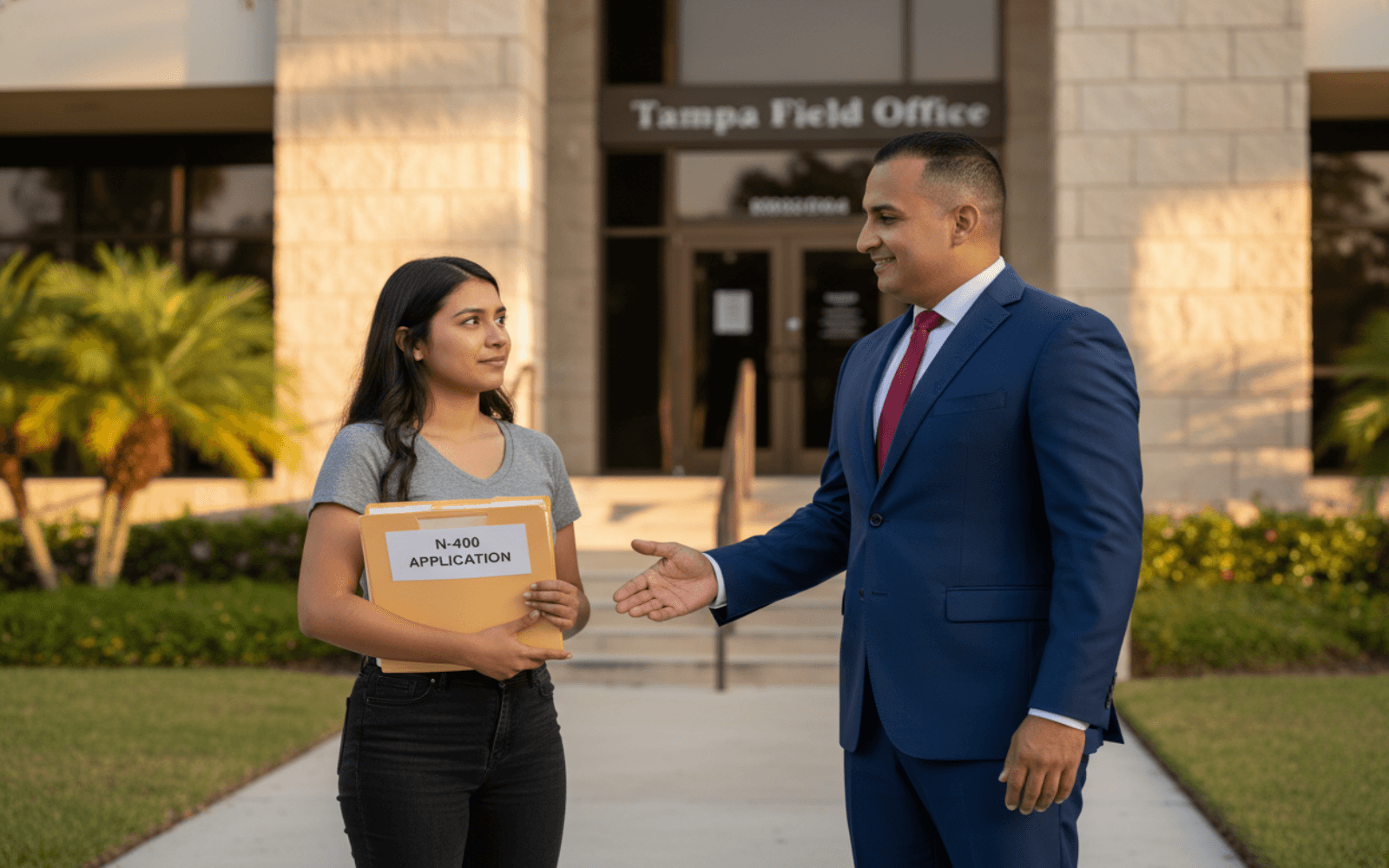
Why Is My N-400 Citizenship Delayed in Florida? (2026)
Facing a citizenship delay in Florida can be disheartening, especially with the ongoing N-400 processing challenges and USCIS backlog in 2026. This comprehensive guide from Florida Immigration Lawyers provides crucial insights into understanding why your naturalization application might be delayed, detailing the step-by-step process, and outlining essential documents. We cover common pitfalls to avoid, explain how to monitor your case status, and clarify when it's critical to seek professional legal assistance. Whether you're in Coral Springs or elsewhere in Florida, our firm is dedicated to helping you navigate the complexities of U.S. citizenship. Learn how to address delays and ensure your application is on the right track.
William J. VásquezPublished on March 10, 2026
250 views
A citizenship delay in Florida can be incredibly frustrating, often stemming from USCIS processing backlogs, complex case issues, or incomplete documentation. Understanding the typical N-400 processing steps and knowing when to seek legal counsel is crucial for applicants in Coral Springs and across Florida. You can generally check your case status online and inquire about significant delays.
Check your USCIS case status regularly for updates.
Common reasons for delays include background checks and high application volume.
You can submit an inquiry if your case exceeds normal processing times.
Legal assistance from Florida Immigration Lawyers can help address and resolve delays.
Citizenship Delay Florida: Navigating N-400 Processing in 2026
Imagine waiting for your U.S. citizenship, eagerly anticipating the day you become a naturalized citizen, only to face an unexpected citizenship delay. This can be a source of immense stress and uncertainty for individuals and families across Florida, including our neighbors in Coral Springs. The journey to naturalization is often a lengthy one, and encountering a significant N-400 processing delay can leave you feeling helpless.
This comprehensive guide will explore the common reasons for N-400 processing delays in Florida in 2026, detail the naturalization process, and explain the steps you can take to monitor your case. We understand the challenges you face and are here to provide clear, actionable information. We aim to empower you with the knowledge to navigate these complexities.
For personalized guidance on your naturalization journey or if you are experiencing a significant citizenship delay, call Florida Immigration Lawyers at 1-844-YO-PELEO for a free consultation. Our experienced team is ready to assist you.
Understanding Citizenship Application Delays in Florida
The path to becoming a U.S. citizen through naturalization is a significant milestone for many immigrants in Florida. However, it is not uncommon for applicants to experience a citizenship delay during the N-400 processing. These delays can arise from various factors, both systemic and individual to your case.
In 2026, applicants in Florida, from Miami to Jacksonville and especially in communities like Coral Springs, continue to face varying processing times. The U.S. Citizenship and Immigration Services (USCIS) field offices that serve Florida, such as those in Miami, Orlando, Tampa, and Jacksonville, each have their own operational capacities. These capacities can significantly impact how quickly applications are reviewed and processed.
The Current Landscape of N-400 Processing in 2026
USCIS processing times are dynamic and subject to change based on application volume, staffing levels, and national security priorities. In 2026, we continue to see periods of significant USCIS backlog affecting various immigration petitions, including the N-400 application for naturalization. This backlog is a primary driver of extended waiting periods for many applicants.
While USCIS strives for efficiency, the sheer number of applications often leads to longer waits than initially anticipated. It is important for applicants to regularly check the official USCIS website for the most up-to-date processing timeframes for their specific field office. This helps manage expectations and identify when a delay becomes unreasonable.
Featured: Citizenship Delay Florida: Navigating N-400 Processing in 2026
Common Reasons for a Citizenship Delay
Several factors can contribute to a citizenship delay. Understanding these can help you proactively address potential issues or understand why your N-400 processing is taking longer than expected. One frequent cause is the need for extensive background checks and security clearances. These checks are mandatory for all applicants and can sometimes involve multiple agencies, leading to extended review periods.
Other common reasons include incomplete applications, missing documentation, or errors on the submitted forms. A Request for Evidence (RFE) from USCIS indicates that they need more information, which will naturally prolong your case. Furthermore, if you have a complex immigration history, previous criminal records, or have traveled extensively outside the U.S., your case may require additional scrutiny, contributing to a longer naturalization timeline. In some cases, an unreasonable delay may warrant legal action, such as a writ of mandamus, under 8 U.S.C. § 1447(b).
Navigating the N-400 Processing Journey: A Step-by-Step Guide
The naturalization process, while seemingly straightforward, involves several critical steps. Each stage is an opportunity for potential delays, making it essential to understand what to expect. Knowing this guide can help you prepare for and potentially mitigate a citizenship delay.
File Form N-400 (Application for Naturalization): This is the initial step. You must accurately complete and submit Form N-400 along with all required supporting documents and the correct filing fee to USCIS. Any omissions or errors here can trigger an immediate delay. Ensure all information is current and consistent with your immigration records. Our firm can assist with ensuring your application is thorough and complete. Learn more about general immigration processes on our immigration practice area page.
Biometrics Appointment: After filing, you will receive a notice for a biometrics appointment at an Application Support Center (ASC). At this appointment, USCIS collects your fingerprints, photograph, and signature. These are used for background and security checks. Delays in scheduling or attending this appointment can stall your N-400 processing.
Interview Scheduling: Once your biometrics are processed and initial background checks are underway, USCIS will schedule your naturalization interview. The wait time for this interview can vary significantly depending on the USCIS field office processing your case and the current USCIS backlog. This is often where many applicants first experience a noticeable citizenship delay.
Naturalization Interview: During the interview, a USCIS officer will review your N-400 application, test your English proficiency (reading, writing, and speaking), and administer a civics test. They will also ask questions about your eligibility, good moral character, and attachment to the U.S. Constitution. Being well-prepared for this interview is vital to avoid further delays or potential denials. If you have concerns about your interview, especially regarding past issues, our team at Florida Immigration Lawyers can provide crucial deportation defense insights that may be relevant.
Decision and Oath Ceremony: After a successful interview, USCIS will issue a decision. If approved, you will receive a notice for your Oath of Allegiance ceremony. This is the final step to becoming a U.S. citizen. Sometimes, the oath ceremony can be scheduled immediately, or it may take several weeks or months, adding another layer to the overall naturalization timeline. If your case involves complex family matters, our family immigration services can be invaluable.
Essential Document Checklist for Your Naturalization Application
A complete and accurate application package is your best defense against a citizenship delay. Gathering all necessary documents before filing your N-400 is critical. Missing or incorrect documentation is a leading cause of RFEs and extended processing times. Here is a general checklist of documents typically required for your naturalization application:
Form N-400, Application for Naturalization
Copy of your Permanent Resident Card (Green Card), front and back
Copies of all current and expired passports
Two passport-style photographs (if required by USCIS instructions)
Marriage Certificate (if applicable, and if you are applying based on marriage to a U.S. citizen)
Divorce decrees or death certificates for any previous marriages (for you or your spouse, if applicable)
Birth certificates of your children (if applicable)
Tax returns for the past 3-5 years, depending on your eligibility category
Travel records, including dates of all trips outside the U.S. since becoming a permanent resident
Court records, probation records, and arrest records (even if charges were dismissed or expunged), if applicable
Evidence of Selective Service Registration (for male applicants aged 18-26)
Proof of payment of child support or alimony (if applicable)
Any other documents requested by USCIS to establish eligibility
Ensuring every item on this list is accounted for can significantly reduce the likelihood of a citizenship delay due to administrative issues. Always refer to the most current USCIS instructions for Form N-400 for a precise and updated list of requirements.
N-400 Processing Times and Expectations in Florida for 2026
One of the most common questions we receive from clients in Coral Springs and across Florida is: "How long does it take to get citizenship after applying in Florida?" The answer is not always simple, as processing times can vary widely. While the average N-400 processing time has historically ranged from 8 to 14 months, it is crucial to understand that a citizenship delay can extend this significantly, sometimes to two years or more, especially with current USCIS backlog issues in 2026.
Several factors influence these timelines, including the specific USCIS field office handling your application, the complexity of your case, and the volume of applications USCIS is currently managing. It is essential to manage your expectations and prepare for potential extended waiting periods.
Checking Your USCIS Case Status
Regularly checking your case status online is a proactive step you can take. You can do this by visiting the official USCIS website and using their "Case Status Online" tool. You will need your application receipt number to access this information. This tool provides updates on your application's progress and can sometimes indicate if your case is experiencing a particular hold-up. Visit uscis.gov/casestatus for the most accurate information.
When to Submit an Inquiry (Service Request)
If your application has been pending beyond the normal processing times posted for your specific USCIS field office, you may be eligible to submit an "e-Request" or call the USCIS Contact Center to inquire about your case. This is an important step when you suspect an unreasonable citizenship delay. USCIS generally provides guidance on when to submit an inquiry based on the processing times published on their website. For example, if your N-400 processing time has significantly exceeded the upper end of the stated range, it may be time to act.
It is important to note that submitting an inquiry too early may not yield results, as USCIS will typically direct you to wait until your case is outside the normal processing range. Patience is key, but so is knowing when to advocate for your application. This addresses the question, "Is there a delay in the U.S. citizenship application?" - yes, often, and knowing when to inquire is crucial. You might also ask, "Why is my citizenship application delayed?" or "Why is N-400 taking so long?" - often due to the reasons discussed and the general USCIS backlog.
Cost Factors and Fee Breakdown for Naturalization
Understanding the costs associated with your naturalization application is an important part of planning your journey to U.S. citizenship. While USCIS filing fees are subject to change, they are a primary cost factor. As of 2026, applicants typically pay a filing fee for Form N-400, Application for Naturalization, and a separate biometrics services fee. It is crucial to always check the most current fee schedule on the USCIS website before submitting your application. This will prevent your application from being rejected due to incorrect payment.
Beyond the government fees, you may also incur other costs. These can include fees for obtaining necessary supporting documents, such as birth certificates, marriage licenses, or court records. Translation services for any documents not in English can also add to the overall expense. Furthermore, many applicants choose to seek legal assistance from an experienced immigration attorney. While this is an additional cost, it can be a valuable investment, especially if you anticipate potential complications or wish to avoid a costly citizenship delay.
Legal fees for assistance with N-400 processing vary depending on the complexity of your case and the services required. Florida Immigration Lawyers offers transparent fee structures and can discuss your specific needs during a free consultation. We believe that professional legal guidance can significantly streamline the process and increase your chances of a successful outcome, potentially saving you time and stress in the long run.
Do not navigate this complex process alone, especially when facing a citizenship delay. Contact Florida Immigration Lawyers today to discuss your N-400 processing and explore your options. We are here to provide the support you need.
Common Mistakes to Avoid During Your Naturalization Process
Avoiding common pitfalls can significantly reduce the risk of a citizenship delay or even a denial. The naturalization process demands attention to detail and honesty. Here are 12 common mistakes applicants often make:
Submitting an Incomplete Application: Failing to fill out every required section of Form N-400 or omitting necessary supporting documents. USCIS will issue an RFE or reject your application, causing significant N-400 processing delays.
Failing to Disclose Criminal History: Not disclosing all arrests, citations, or convictions, even if they were minor, expunged, or occurred long ago. Omissions can be seen as a lack of good moral character, leading to denial and potential deportation defense issues.
Lying or Misrepresenting Facts During the Interview: Providing false information during your naturalization interview. This is a severe offense that can lead to immediate denial, criminal charges, and even revocation of your Green Card.
Not Updating Your Address with USCIS: Moving without notifying USCIS of your new address. You might miss important notices, interview appointments, or RFEs, leading to delays or even case abandonment.
Not Meeting Continuous Residence Requirements: Spending too much time outside the U.S. or breaking your continuous residency. This can make you ineligible for naturalization, requiring you to restart the residency period.
Poor English Language Skills: Failing the English reading, writing, or speaking test during the interview. You will typically be given another chance, but it will cause a delay in your N-400 processing.
Failing the Civics Test: Not answering enough civics questions correctly. Similar to the English test, this will lead to a re-test and a delay in your naturalization.
Ignoring USCIS Requests for Evidence (RFEs): Not responding to an RFE by the deadline. This can lead to your application being denied, forcing you to refile and incur additional fees and a new citizenship delay.
Not Paying Child Support or Alimony: If legally obligated, failing to pay child support or alimony can be considered a lack of good moral character, jeopardizing your application.
Forgetting to Register for Selective Service: Male applicants between 18 and 26 years old must register for Selective Service. Failure to do so can prevent naturalization, though there are specific exceptions and remedies.
Applying Too Early: Submitting your N-400 before meeting the required period of permanent residency. This will result in rejection and wasted filing fees.
Not Seeking Legal Advice for Complex Cases: Attempting to navigate complex situations (e.g., prior arrests, long absences, marriage fraud allegations) without an attorney. This significantly increases the risk of denial or prolonged citizenship delay.
When to Call a Lawyer for Your Citizenship Application
While some N-400 applications are straightforward, many benefit significantly from legal counsel, especially when facing a citizenship delay or other complications. Knowing when to consult with an attorney can save you time, stress, and potentially prevent a denial. Florida Immigration Lawyers are experienced in N-400 processing and naturalization cases, ready to assist you in Coral Springs and throughout Florida.
Consider contacting our experienced attorneys if you encounter any of the following scenarios:
Unreasonable Processing Delays: If your case has been pending significantly longer than the posted USCIS processing times for your field office, an attorney can help you understand your options, including filing a Writ of Mandamus (a lawsuit compelling USCIS to act on your case).
Requests for Evidence (RFEs) or Notices of Intent to Deny (NOIDs): These are critical communications from USCIS that require a thorough and timely response. An attorney can help you gather the correct evidence and craft a compelling legal argument.
Complex Immigration History: If you have previous immigration violations, past deportations, or have applied for asylum, these complexities can impact your naturalization eligibility. Our firm also handles asylum cases and can provide comprehensive support.
Criminal Record: Any arrests, charges, or convictions, even minor ones, can affect your "good moral character" requirement for citizenship. An attorney can assess your record and advise on the best course of action.
Extensive Travel Outside the U.S.: Long absences can break your continuous residency. A lawyer can help determine if your travel history will impact your eligibility and how to address it.
Interview Anxiety or Language Barriers: If you are concerned about representing yourself effectively at the interview or have difficulty with English, an attorney can prepare you thoroughly and may attend the interview with you.
Previous Denials: If a prior naturalization application was denied, an attorney can review the reasons for denial and advise on whether to appeal or refile.
Do not wait until a problem becomes insurmountable. Proactive legal guidance can make all the difference. Our dedicated team is here to help you navigate the complexities of your citizenship delay or N-400 application. Visit our contact page to schedule a consultation with our attorneys.
About Florida Immigration Lawyers: Why Is My N-400 Citizenship Delayed in Florida? (2026)
Florida Immigration Lawyers is an immigration law firm dedicated to serving individuals and families across the entire state of Florida, including communities like Coral Springs. We understand the profound impact that immigration matters have on your life. Our mission is to provide compassionate, effective, and results-driven legal representation for all your immigration needs.
Our experienced attorneys focus on a wide range of immigration services, including family-based petitions, business immigration solutions, deportation defense, asylum claims, and the complex naturalization process. We pride ourselves on offering personalized attention, clear communication, and strategic advocacy to achieve the strongest possible outcomes for our clients.
Why choose Florida Immigration Lawyers? We offer a wealth of experience, a deep understanding of U.S. immigration law, and a commitment to client success. We are available 24/7 to address your urgent needs and provide free, confidential consultations. Our bilingual team ensures that language is never a barrier to receiving quality legal advice. Let us put our experience to work for you.
Code of Federal Regulations (CFR) - 8 CFR Part 316, General Requirements for Naturalization
USCIS Policy Manual - Volume 12, Citizenship and Naturalization
This article provides general legal information and is not intended as legal advice. Every case is unique, and outcomes depend on specific facts and circumstances. Contact an attorney for advice about your particular situation. Laws are subject to change, and information provided reflects the general understanding as of 2026-03-10.
If you are experiencing a citizenship delay in Florida or have questions about your N-400 processing, don't wait. Proactive legal guidance can be the key to a successful outcome. Call Florida Immigration Lawyers at 1-844-YO-PELEO for a free, confidential consultation today. Se Habla Español - Estamos aquí para ayudarle.
Do Not Navigate This Process Alone
Our experienced immigration attorneys are ready to fight for you. Get a free, confidential case review today.
Citizenship application delays in Florida can stem from several factors. Common reasons include extensive USCIS backlogs, particularly in high-volume field offices like Miami, Orlando, and Tampa. Additional delays can be caused by complex background checks, security clearances, or issues with an applicant's criminal history or immigration record. USCIS may also request additional evidence (RFE), which prolongs processing. Furthermore, incomplete applications or errors made by the applicant can lead to significant setbacks, requiring more time for review and resolution by immigration officers. Staying informed and proactive is key.
You can check the current processing times for N-400 applications directly on the USCIS website. Navigate to the 'Check Case Processing Times' tool and select 'N-400, Application for Naturalization' as the form type. Then, choose your specific USCIS field office (e.g., Miami, Orlando, Tampa) and the service center where your application is being processed. The displayed times are estimates and can fluctuate, but they provide a general idea of how long similar cases are taking. It's advisable to check these times regularly as they are updated monthly by USCIS.
If your N-400 application is significantly delayed beyond the posted processing times, there are several actions you can take. First, submit an 'e-Request' through the USCIS website to inquire about your case status if it's outside normal processing. If that doesn't yield results, you can contact the USCIS Contact Center. For persistent delays, especially those exceeding 18-24 months without clear reason, consulting with an experienced immigration attorney is highly recommended. An attorney can help escalate your case, identify potential issues, and, if necessary, file a 'Writ of Mandamus' lawsuit to compel USCIS to make a decision.
Yes, the specific USCIS field office in Florida can significantly affect N-400 processing times. Larger, high-volume offices such as Miami, Orlando, and Tampa often experience longer backlogs due to the sheer number of applications they process. Smaller field offices might have slightly different processing speeds depending on their staffing levels and current caseloads. While the general USCIS policy applies nationwide, the operational efficiency and local demand at each field office play a crucial role in determining how quickly your naturalization application moves through the system. Always check the specific processing times for your local office.
The USCIS backlog continues to be a significant factor impacting N-400 naturalization timelines in 2026. While USCIS has made efforts to reduce the backlog, the sheer volume of applications combined with resource constraints means that many applicants may still experience longer-than-average waiting periods. This backlog can extend the time from application submission to interview scheduling and final decision. Applicants should anticipate potential delays and plan accordingly, ensuring all documentation is meticulously prepared to avoid further setbacks. The ongoing backlog emphasizes the importance of early and accurate application submission.
Expediting an N-400 citizenship application is generally difficult and only granted under very specific, limited circumstances. USCIS typically considers expedite requests for severe financial loss to a company or individual, urgent humanitarian reasons, or in cases where the request is in the U.S. government's interest. Simply wanting to become a citizen faster is not a valid reason. You would need to provide substantial evidence to support your request. It's highly advisable to consult with an immigration attorney to assess if your situation meets the stringent criteria for an expedite request, as most N-400 applications do not qualify.
After your N-400 interview, if there's a delay in receiving a decision, it can be due to several reasons. The USCIS officer might need to review additional documents, await the results of background checks, or consult with a supervisor. Sometimes, a 'Request for Evidence' (RFE) might be issued if more information is needed. If you don't receive a decision within 120 days of your interview, you have the right to request a hearing with an immigration officer or even file a lawsuit in federal court (a 'Writ of Mandamus') to compel USCIS to make a decision. An attorney can guide you through these post-interview delay options.
Legal representation is highly important, especially when experiencing N-400 delays in Florida. An experienced immigration attorney can help identify the root cause of the delay, communicate effectively with USCIS on your behalf, and ensure all necessary steps are taken to resolve the issue. They can assist in preparing and submitting inquiries, responding to RFEs, and navigating complex legal procedures. In cases of prolonged or unexplained delays, an attorney can advise on filing a 'Writ of Mandamus' lawsuit, which often prompts USCIS to act. Their expertise can significantly streamline the process and increase the likelihood of a positive outcome.
While your N-400 application is pending, it's crucial to keep all your personal and immigration documents updated and readily accessible. This includes your green card, passport, driver's license, and any travel documents. You should also maintain records of all tax filings, employment history, residence addresses, and any changes in marital status or criminal history. If you travel internationally, keep your travel records. USCIS may request updated information or additional evidence at any point, and having these documents organized ensures you can respond promptly, preventing further delays in your naturalization process.
William J. Vásquez
Founding Attorney · Vasquez Law Firm
U.S. Air Force veteran and immigration attorney with years of hands-on U.S. immigration experience. J.D., NCCU School of Law. AILA member. Admitted to the 4th, 5th, and 11th Circuit Courts.
Available 24/7 - Free Evaluations
Reviewed for legal accuracy by William J. Vásquez
Licensed in North Carolina; U.S. immigration is federal practice.