Change of Status: Navigating Student Visas in Florida
Navigating a change of status for a student visa in Florida can be complex. This guide covers essential steps, common pitfalls, and when to seek legal help. Call Florida Immigration Lawyers for a free consultation.
- Understand eligibility criteria for F-1 student visas.
- Prepare necessary documentation accurately.
- Be aware of USCIS processing times and fees.
- Consult with a lawyer for guidance through the process.
- Stay informed about immigration policy changes that may affect your application.
Introduction
For many international students in Florida, the journey begins with an F-1 student visa. However, life circumstances or educational goals may lead to a need for a change of status. Navigating this process can be daunting, especially in light of recent changes in U.S. immigration policies. This article will guide you through the steps of changing your student visa status in Jacksonville, Florida, and provide you with essential information on what you can expect during the process.
Call Florida Immigration Lawyers at 1-844-YO-PELEO for a free consultation.
Understanding the F-1 Student Visa
The F-1 visa is designed for international students who wish to study at an accredited U.S. college or university. This visa allows you to remain in the United States for the duration of your academic program, plus any authorized practical training period. However, if you need to change your status, whether to extend your stay or switch to another visa type, you must follow specific procedures.
In Florida, particularly in Jacksonville, the student population is diverse, reflecting a broad spectrum of international origins. The availability of educational institutions in this region makes it a popular destination for foreign students.
Step-by-Step Guide to Change of Status
- Determine Eligibility: Before applying, ensure you meet the eligibility requirements for the new visa category.
- Gather Required Documents: Collect all necessary documents, such as your current I-20, passport, and financial statements.
- File Form I-539: Submit the Application to Extend/Change Nonimmigrant Status with the USCIS. Ensure all information is accurate to avoid delays.
- Pay the Application Fee: Check the current fee schedule on the USCIS website as fees are subject to change.
- Attend Biometrics Appointment: USCIS may require you to attend a biometrics appointment to collect fingerprints and photos.
- Wait for Decision: Processing times can vary; check the USCIS website for estimated processing times.
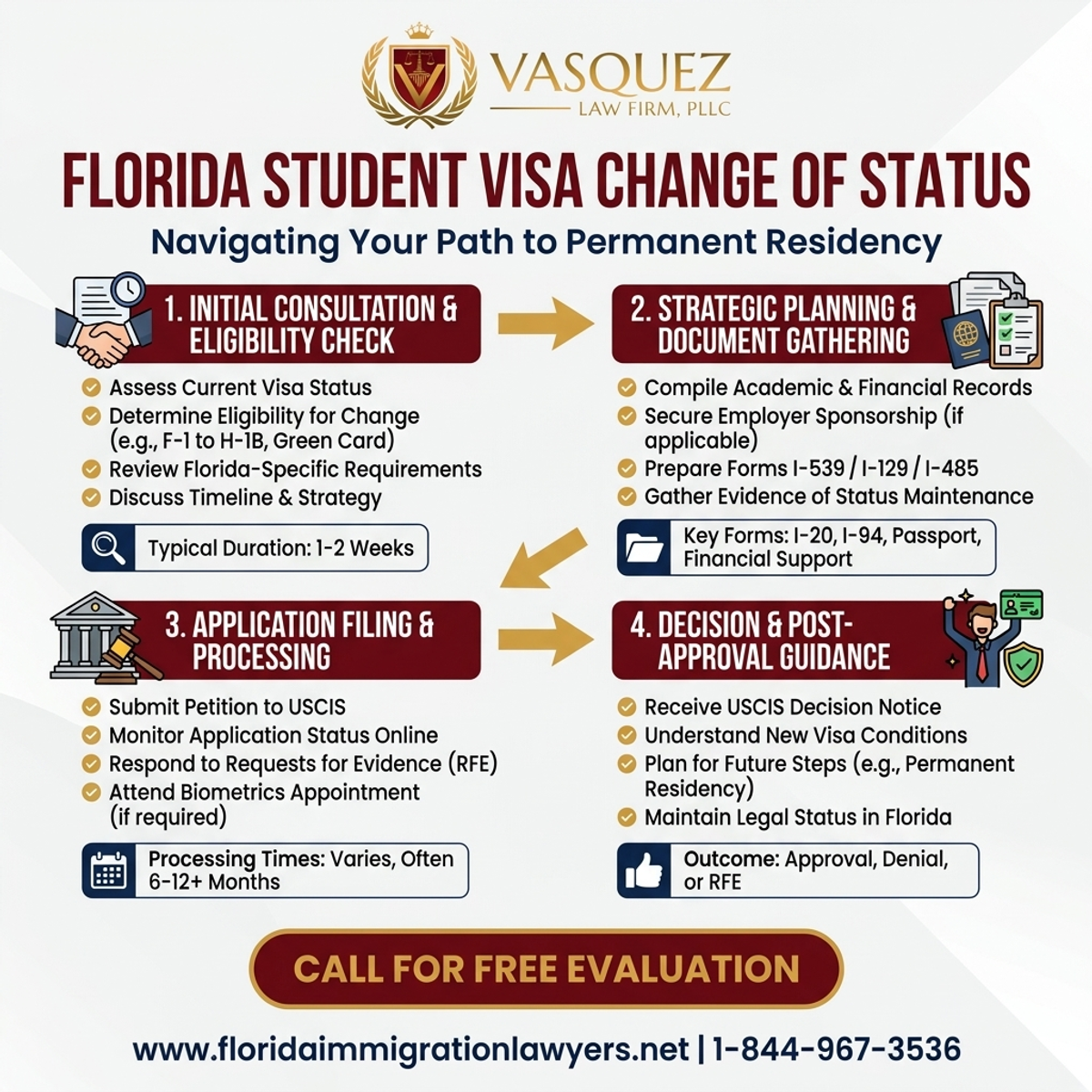
Step-by-Step Process — Change of Status: Navigating Student Visas in Florida
Document Checklist
- Form I-539
- Current I-94 Arrival/Departure Record
- Valid passport with expiration date
- Financial support evidence
- I-20 form from your school
- Proof of SEVIS fee payment
Timeline and Processing Expectations
In Florida, processing times for a change of status request can vary significantly. Typically, you should expect a processing time of several months. It is crucial to apply as early as possible to ensure you maintain your legal status throughout the duration of your stay.
Factors influencing processing times include the completeness of your application, current USCIS workload, and any recent policy changes.
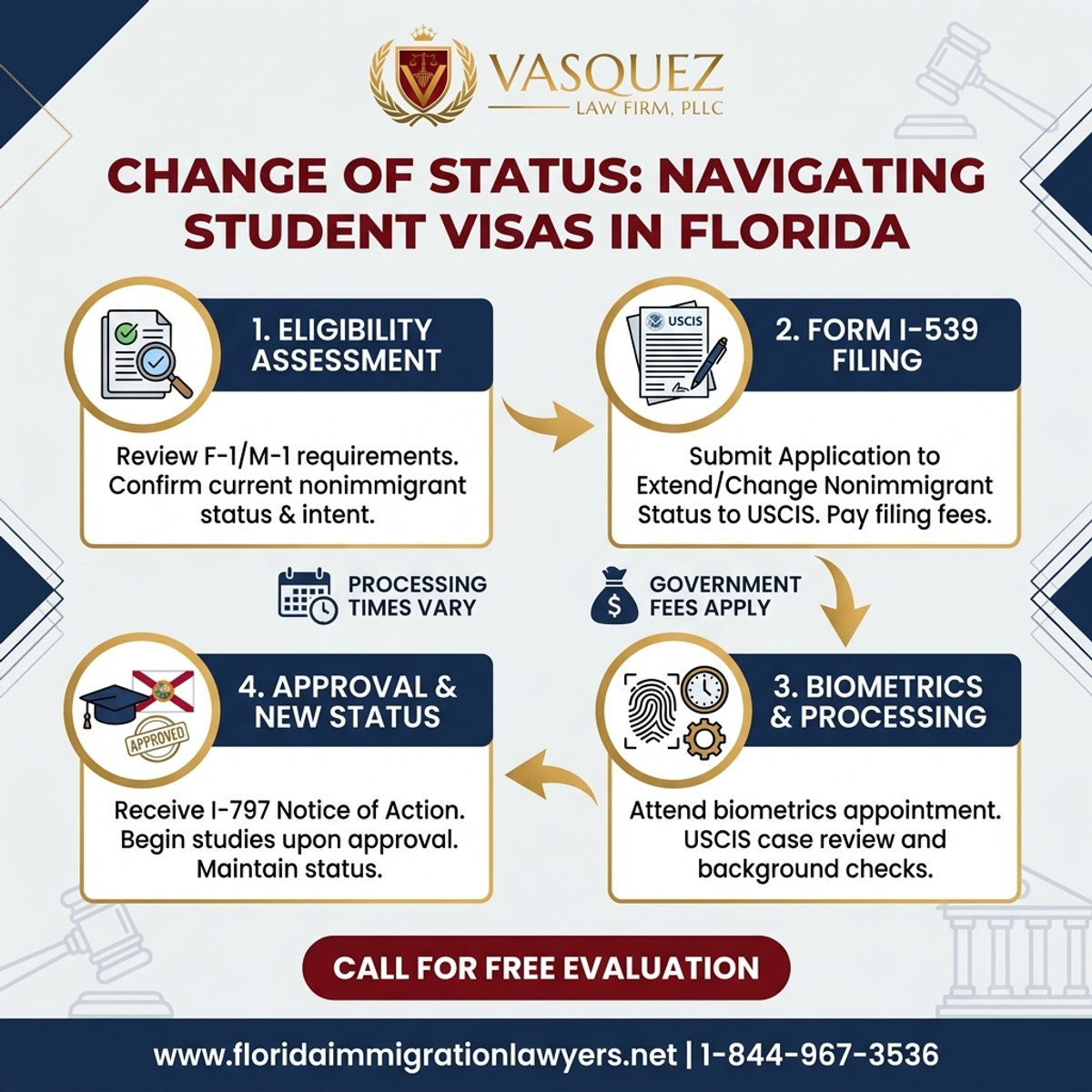
Key Statistics — Change of Status: Navigating Student Visas in Florida
Cost Factors and Fee Breakdown
The costs associated with changing your visa status can include filing fees, possible legal fees, and costs related to gathering necessary documentation. These fees can vary, so it's important to budget accordingly and consult with a legal expert to understand all potential expenses.
Do not navigate this process alone. Contact Florida Immigration Lawyers today.
Common Mistakes to Avoid
- Submitting Incomplete Applications: Missing documentation can lead to delays or denials.
- Not Understanding Visa Requirements: Each visa type has specific requirements; misunderstanding these can jeopardize your status.
- Ignoring Deadlines: USCIS deadlines are strict; missing them can result in status violations.
- Providing Inaccurate Information: Any discrepancies can lead to suspicion and potential denial.
- Failing to Maintain Full-Time Enrollment: If you're on an F-1 visa, you must maintain full-time student status.
- Not Consulting an Attorney: Professional guidance is crucial, especially for complex cases.
- Not Keeping Copies: Always keep copies of all submitted documents for your records.
When to Call a Lawyer
Changing your student visa status involves legal intricacies that can be challenging to navigate alone. You should consider contacting an immigration lawyer if:
- You are unsure about eligibility criteria.
- Your application has been delayed or denied.
- You need assistance in understanding complex USCIS requirements.
- There are changes in your personal circumstances affecting your status.
Florida Immigration Lawyers are equipped to assist you with all aspects of your immigration journey. Call us at 1-844-YO-PELEO.
About Florida Immigration Lawyers
Florida Immigration Lawyers is dedicated to providing personalized and comprehensive immigration services across all of Florida. Our team of experienced attorneys is available 24/7 to assist with your immigration needs, offering free consultations and bilingual services to ensure you have the support you need every step of the way. Contact us at 1-844-YO-PELEO or visit our website.
Sources and References
- U.S. Citizenship and Immigration Services (USCIS)
- Executive Office for Immigration Review (EOIR)
- 8 U.S.C. Chapter 12 - Immigration and Nationality Act
- U.S. Department of State
Related services: immigration practice areas, family immigration services, citizenship and naturalization, deportation defense.
This article provides general legal information and is not intended as legal advice. Every case is unique, and outcomes depend on specific facts and circumstances. Contact an attorney for advice about your particular situation.
Call Florida Immigration Lawyers at 1-844-YO-PELEO for a free consultation. Se Habla Español - Estamos aquí para ayudarle.
If you need legal assistance, learn more about Florida immigration legal team, or call us at 1-844-YO-PELEO for a free consultation.
Do Not Navigate This Process Alone
Our experienced immigration attorneys are ready to fight for you. Get a free, confidential case review today.
Se Habla Español
Or leave your details and we’ll call you:
Free Evaluation in 24 Hours
Or talk to us right now
AI voice assistant — available 24/7
FreeFrequently Asked Questions

William J. Vásquez
Founding Attorney · Vasquez Law Firm
U.S. Air Force veteran and immigration attorney with years of hands-on U.S. immigration experience. J.D., NCCU School of Law. AILA member. Admitted to the 4th, 5th, and 11th Circuit Courts.
Available 24/7 - Free Evaluations
Reviewed for legal accuracy by William J. Vásquez
Licensed in North Carolina; U.S. immigration is federal practice.
Related Legal Services
Our Florida immigration attorneys can help you with immigration practice areas, free immigration consultation and business immigration. Call today at 1-844-YO-PELEO for a free case review.
Related Links
Related Topics
Free Legal Case Review
Discuss your case with our experienced attorneys. We're available 24/7.
Se Habla Español - Estamos aquí para ayudarle.
Related Articles
EAD Advance Parole Combo Card in Florida: What You Need
An EAD advance parole combo card allows individuals with pending adjustment applications to both work and travel abroad without jeopardizing their green card application. Learn how to apply in Florida, what documents you need, and common mistakes to avoid.
PERM Labor Certification in Florida: A 2026 Guide
Learn all about the PERM labor certification process in Florida, essential for employers sponsoring green card applicants. Understand the steps, document requirements, and common mistakes to avoid in this 2026 guide.
Dual Citizenship Lawyer in Florida: What You Need to Know
For Florida residents, the concept of dual citizenship, or holding two passports, offers a compelling blend of opportunities and challenges. While the U.S. generally permits dual nationality, the path to achieving this status requires a meticulous understanding of both U.S. immigration laws and the citizenship policies of your country of origin. This guide explores the definition of dual citizenship, the detailed step-by-step process for U.S. naturalization, and the significant benefits and potential pitfalls involved. We cover essential documentation, typical timelines, and cost considerations for 2026, providing crucial insights for anyone in Orlando, Miami, or across Florida considering this important legal step. Learn about common mistakes to avoid and understand when to seek professional legal counsel to navigate this complex process successfully. Florida Immigration Lawyers is here to provide expert, bilingual support for your dual citizenship journey.
Immigration Lawyer Orlando Free Consultation in Florida
For individuals and families in Orlando, Florida, navigating the complexities of U.S. immigration law requires expert guidance. An immigration lawyer in Orlando offers crucial support for everything from visa applications and green card processes to naturalization and deportation defense. This comprehensive guide details what a free consultation covers, providing a step-by-step overview of immigration pathways, essential document checklists, and expected timelines in 2026. We also highlight common mistakes to avoid, discuss the critical role of legal counsel in deportation and asylum cases, and explain why choosing a local Orlando immigration attorney is beneficial. Florida Immigration Lawyers is dedicated to serving the diverse community of Orlando with compassionate, effective legal solutions, ensuring you receive personalized advice and robust representation for a successful immigration journey.